
Finding a reliable student housing furniture supplier is a critical purchasing decision for universities, student accommodation developers, construction contractors and international furniture importers. Unlike individual furniture purchases, student housing projects require consistent product specifications, practical room layouts, durable furniture components and coordinated bulk delivery.
Professional buyers need more than attractive dormitory furniture. They need a manufacturing partner that understands project drawings, Bill of Quantities (BOQ), material specifications, minimum order quantities, quality inspections and international shipping.
Starwood Industry Co., Ltd. is a China-based OEM/ODM panel furniture manufacturer supplying customized flat-pack furniture for student housing, apartments and commercial projects. Our manufacturing services help buyers develop practical beds, wardrobes, desks, bookcases and storage furniture for large-scale accommodation programs.
This guide explains how to source student housing furniture directly from a factory, control procurement costs and prepare a successful bulk furniture order.
Table of Contents
- Why Work With a Student Housing Furniture Supplier?
- Student Housing and Dormitory Furniture Applications
- Essential Furniture for Student Accommodation Projects
- Space-Saving Dormitory Furniture Design
- Panel Materials and Hardware for Student Housing
- Bunk Bed Safety and Project Compliance
- Preparing a Student Housing Furniture BOQ
- MOQ and Bulk Furniture Pricing
- OEM/ODM Student Furniture Manufacturing Process
- Production Lead Time and Delivery Planning
- Quality Control and Factory Inspection
- Flat-Pack Packaging and International Shipping
- Material Certification and Responsible Sourcing
- Evaluating a Student Housing Furniture Manufacturer
- Why Source Student Furniture From Starwood?
- Frequently Asked Questions
- Request a Factory-Direct Quotation
Why Work With a Student Housing Furniture Supplier?
Student accommodation furniture is purchased and managed differently from ordinary household furniture.
A university residence or private student housing development may require hundreds of identical beds, desks and wardrobes. Every product must fit the approved room layout and meet the project’s technical requirements.
A professional supplier should provide manufacturing consistency, documented specifications and dependable communication throughout the order.
Factory-Direct Procurement for Student Housing Projects
Purchasing directly from a panel furniture manufacturer can simplify the process between design approval and production.
Instead of coordinating separately with multiple trading intermediaries, buyers can communicate with the manufacturing team about materials, dimensions, construction details and packaging requirements.
Typical benefits include customized dimensions, coordinated product finishes, bulk production planning, prototype development and export-ready packing.
However, the lowest factory price does not necessarily represent the best project value.
Buyers should compare total landed costs, installation requirements, maintenance expenses and expected furniture service life.
For universities and property operators, reducing furniture replacement costs can be just as important as reducing the original purchase price.
Why Production Consistency Matters
Even small differences in panel thickness, drilling positions or hardware specifications can cause problems when furniture is assembled across hundreds of rooms.
An experienced dormitory furniture manufacturer should establish approved specifications before bulk production.
This helps ensure that furniture manufactured in different batches maintains consistent dimensions, finishes and assembly requirements.
Student Housing and Dormitory Furniture Applications
Student accommodation projects vary considerably in size, room layout and operating model.
The furniture specification should reflect how the accommodation will be used and maintained.
University Dormitories and Campus Residences
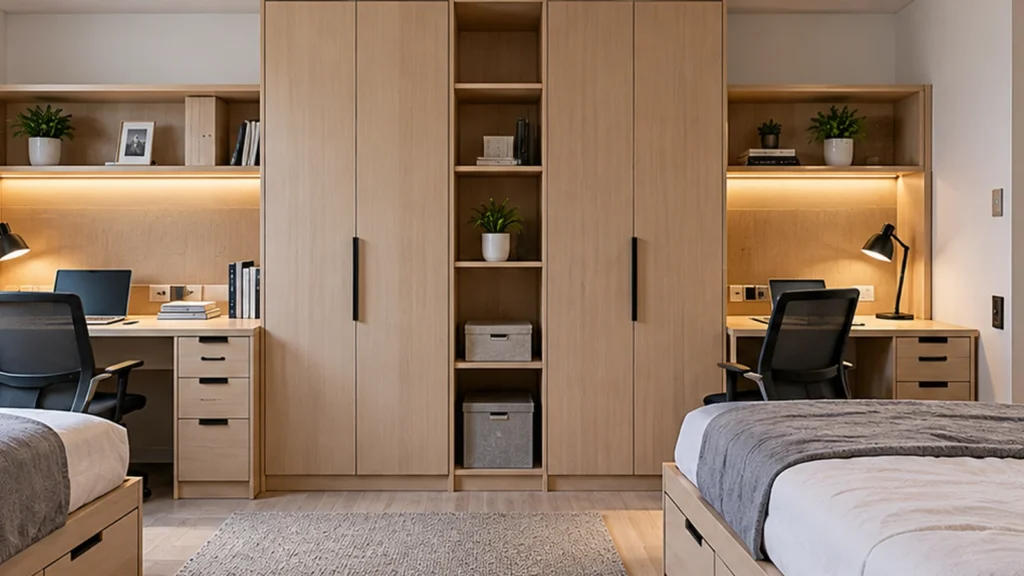
University residence halls often have standardized bedrooms designed for single or shared occupancy.
Common furniture requirements include single beds, study desks, wardrobes, bookshelves and under-bed storage.
Where rooms are shared, furniture layouts should provide sufficient personal storage and comfortable working space for each occupant.
Project buyers should consider room circulation, cleaning access, electrical outlet locations and furniture installation requirements.
Purpose-Built Student Accommodation (PBSA)
PBSA developments are designed specifically for student living and may contain private bedrooms, shared kitchens, communal study areas and common spaces.
These projects typically require a consistent furniture package across multiple room types.
A standardized furniture program makes procurement, installation and future replacement easier for operators.
PBSA buyers may also require several finish combinations or room configurations within one development.
Student Apartments and Co-Living Projects
Student apartments often combine residential features with high-density accommodation requirements.
Bedrooms may need wardrobes, desks and storage beds, while shared areas require shelving, cabinets and other functional panel furniture.
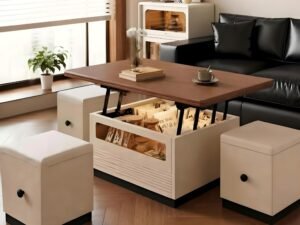
For compact properties, multifunctional furniture can reduce unused space while providing better storage capacity.
Starwood supports these applications through its project furniture manufacturing services.
Essential Furniture for Student Accommodation Projects
A reliable student housing furniture supplier should understand which furniture categories are required for each room type.
For panel furniture manufacturing, the main focus is usually on wardrobes, desks, bookcases, cabinets, bed structures and storage systems.
Student Beds and Under-Bed Storage
Beds are among the most important products in a student furniture package.
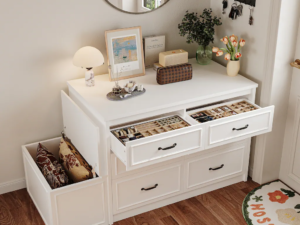
For standard rooms, single beds with under-bed drawers can provide additional storage without increasing furniture footprint.
Buyers should confirm bed dimensions, mattress compatibility, structural specifications, drawer access and assembly requirements.
The manufacturer should also identify whether the bed design requires additional structural testing.
Study Desks and Bookshelves
A student desk should support everyday studying, laptop use and writing activities.
Important specifications include tabletop dimensions, support structure, drawer configurations and surface durability.
Integrated shelving can improve storage efficiency, but the furniture must remain stable and suitable for the planned installation.
Cable openings and power outlet positions should be coordinated with the room layout.
Wardrobes and Personal Storage Cabinets
Student wardrobes generally prioritize practical storage over decorative complexity.
Common configurations include hanging compartments, adjustable shelves and drawers.
For shared rooms, separate lockable compartments may be desirable, depending on the accommodation operator’s requirements.
A consistent wardrobe design also makes replacement components easier to manage.
Explore our bedroom furniture manufacturing solutions for customized furniture and storage applications.
Space-Saving Dormitory Furniture Design
Efficient room planning can significantly affect student housing furniture procurement.
In compact accommodation, the challenge is not simply to fit more furniture into the room. The objective is to balance sleeping, studying, storage and movement.
Standardize Furniture Dimensions Across Room Types
A project may contain single rooms, twin rooms and accessible accommodation.
Instead of creating an entirely different furniture collection for each layout, buyers can standardize selected cabinet modules, desk components and finishes.
Standardization reduces the number of unique production parts and can simplify future reorders.
Consider Installation and Maintenance Access
Furniture should be evaluated against the physical constraints of the building.
Narrow corridors, lifts, stairways and door openings can influence whether products should be shipped assembled or flat-packed.
Buyers should also consider access to hardware and replaceable components.
Furniture that cannot be repaired conveniently may create unnecessary long-term maintenance costs.
Panel Materials and Hardware for Student Housing
Material selection affects product cost, appearance, durability and compliance.
A professional panel furniture export factory should recommend materials according to the intended furniture application and destination market.
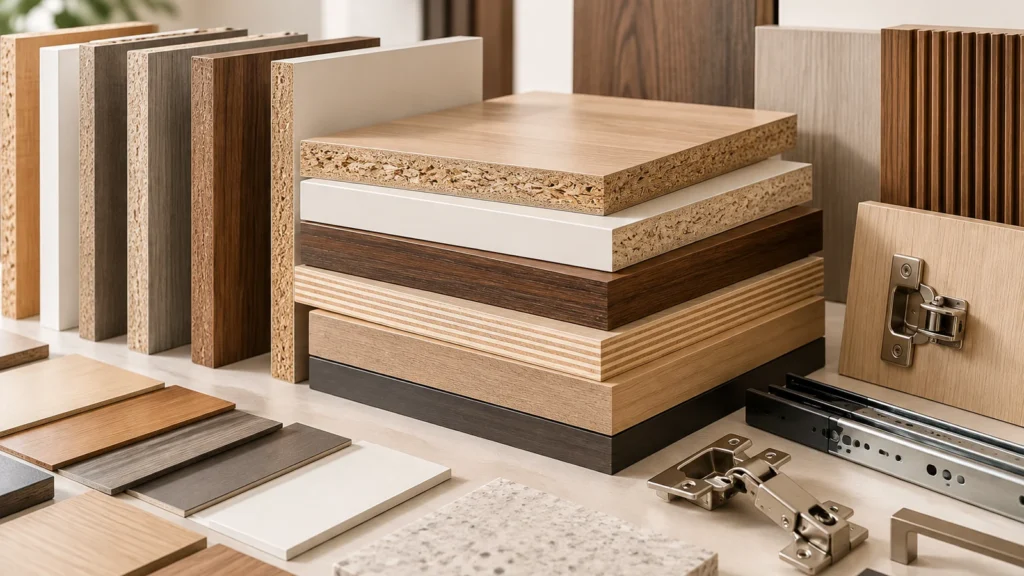
Melamine-Faced Particleboard (MFC)
MFC is commonly selected for wardrobes, desks, bookshelves and storage cabinets.
Its advantages include decorative finish options, efficient production and competitive material costs.
For student accommodation, buyers should specify board thickness, substrate quality, surface finish and edge-banding requirements.
MFC should not be selected solely because it is less expensive than other materials. The intended loading conditions and product construction must also be considered.
Medium-Density Fiberboard (MDF)
MDF is suitable for furniture requiring smooth painted surfaces, decorative machining or particular finishing requirements.
However, painted MDF may involve additional production processes and costs compared with melamine-faced panels.
Buyers should identify whether standard or moisture-resistant material grades are required.
Plywood and Selected Structural Components
Plywood may be appropriate for specific furniture structures where its properties support the engineering design.
The suitability of any panel depends on grade, bonding, dimensions, connections and intended use.
Plywood should not automatically be treated as a substitute for tested structural components in elevated beds.
Furniture Hardware and Edge Banding
Hardware selection influences furniture performance during daily use.
Important components include drawer slides, hinges, furniture connectors, handles and adjustable feet.
Buyers should specify relevant load requirements, functionality and inspection criteria.
Edges should be finished appropriately to reduce exposed panel cores and improve surface quality.
Bunk Bed Safety and Project Compliance
Some student housing projects require bunk beds or loft beds to optimize available floor space.
These products require particular attention because elevated sleeping surfaces introduce safety considerations beyond those of standard cabinets.
Confirm the Applicable Safety Standards
For the United States, the Consumer Product Safety Commission’s official bunk bed business guidance explains requirements for general-use and children’s bunk beds.
Depending on the product classification, the relevant regulations include 16 CFR Part 1213 or Part 1513.
Buyers should confirm guardrails, openings, ladder access, mattress requirements, structural testing and labeling obligations.
Requirements in European and other markets may differ.
A supplier should not claim that a bunk bed complies with a standard unless appropriate testing and documentation support that claim.
Bunk or loft beds should be quoted and approved separately from ordinary panel furniture if structural certification is required.
Preparing a Student Housing Furniture BOQ
A detailed Bill of Quantities (BOQ) helps a manufacturer prepare an accurate and comparable quotation.
Without a BOQ, buyers may receive quotations based on different materials, product dimensions or hardware assumptions.
Example: Furniture Schedule for a Student Residence
Consider a hypothetical student residence with 150 twin-occupancy rooms.
| Furniture Item | Per Room | Total Quantity |
|---|---|---|
| Single bed structure | 2 | 300 |
| Study desk | 2 | 300 |
| Wardrobe | 2 | 300 |
| Bookshelf | 2 | 300 |
| Under-bed storage unit | 2 | 300 |
| Shared storage cabinet | 1 | 150 |
Illustrative purchasing example only; not an actual completed factory project.
Information Required for a Factory Quotation
Each BOQ item should identify its product reference, dimensions, materials, finish, hardware, quantity and packaging requirements.
The purchasing team should also provide relevant room layouts, technical drawings and destination market information.
If different room types require different furniture packages, each package should have its own reference code.
This allows the factory to evaluate total material consumption, cutting arrangements and container loading quantities.
For accurate purchasing comparisons, suppliers should quote against the same technical specifications.

MOQ and Bulk Student Housing Furniture Pricing
MOQ, or minimum order quantity, is an essential consideration for project furniture buyers.
Starwood’s published purchasing information indicates a usual starting MOQ of one 20-foot general-purpose container, subject to confirmation for the actual order.
The quantities available within that container depend on the furniture models, product dimensions and packing volume.
What Determines Student Furniture Prices?
A factory quotation depends on material usage, hardware specifications, manufacturing complexity, finish requirements, packaging and production quantity.
Special sizes or low-volume custom models may require additional engineering or manufacturing setup.
A buyer requesting multiple finishes and small quantities per model should not expect the same pricing structure as a standardized bulk order.
Optimize Cost Per Student Room
For larger projects, it is useful to calculate the total furniture cost per student room or bed space.
This provides a clearer purchasing benchmark than comparing individual product prices.
A lower-priced desk may not reduce the overall project cost if it requires special installation, additional packaging or frequent replacement.
Where appropriate, buyers can improve manufacturing efficiency by standardizing materials, hardware and furniture dimensions across room categories.
OEM/ODM Student Housing Furniture Manufacturing Process
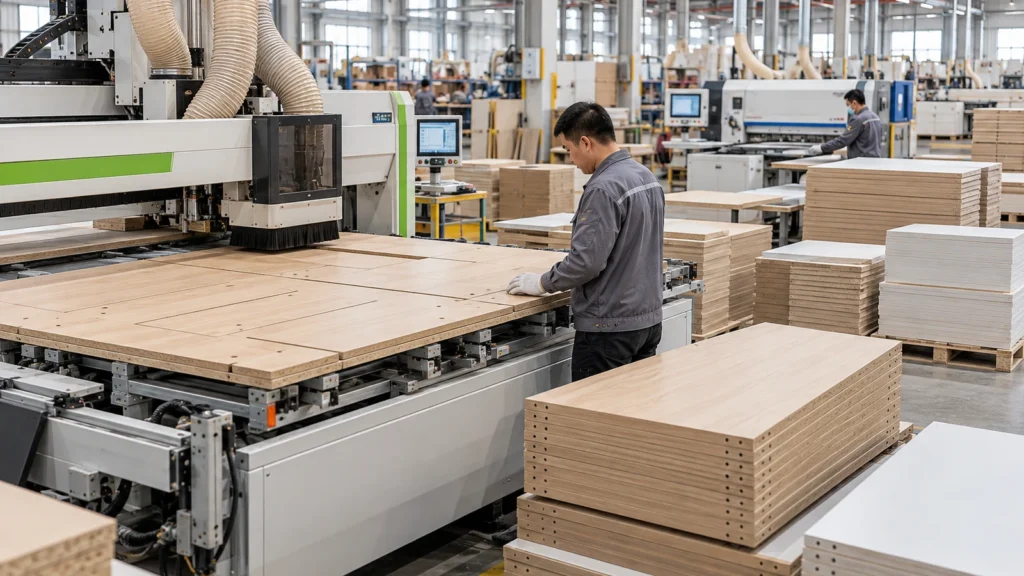
A professional OEM ODM furniture supplier should provide a documented workflow from product development to final shipment.
Starwood supports customized manufacturing through technical evaluation, sample development, panel production, inspection and export packaging.
Learn more about our OEM/ODM furniture manufacturing services.
OEM Manufacturing From Approved Drawings
OEM manufacturing is suitable when the buyer provides CAD drawings, specifications and approved furniture designs.
The factory evaluates construction feasibility, material consumption, hardware compatibility and production requirements.
For university or PBSA projects with established interior standards, this approach helps preserve design consistency.
ODM Development for New Student Furniture Collections
ODM cooperation is suitable when a buyer needs design development or manufacturing optimization.
For example, a developer may request a compact student furniture system combining a wardrobe, bookcase and study desk.
The factory can evaluate the proposed configuration and develop practical production solutions before prototyping.
Sample Approval Before Bulk Production
Sampling should confirm furniture dimensions, structural construction, finishes, hardware and assembly requirements.
Once approved, the sample and technical documents become important production references.
Changes after approval should be documented because they can affect materials, prices and delivery schedules.
The normal order workflow is:
- Project inquiry and drawings
- Technical evaluation
- Material and hardware confirmation
- Factory quotation
- Prototype and sample approval
- Bulk production
- Quality inspection
- Export packaging and shipment
Production Lead Time and Delivery Planning
Student housing projects often operate under fixed academic-year deadlines.
A delayed furniture shipment may disrupt room preparation and accommodation handover.
For this reason, procurement should begin early enough to include technical approval, sampling, production, shipping and installation.
Factory Production Timeline
Starwood’s published FAQ provides a general production reference of approximately 35–40 working days after deposit clearance, depending on the order.
This should not be interpreted as a guaranteed lead time for every customized student housing project.
The actual production schedule must be confirmed after reviewing product specifications, sample requirements, material availability and order quantity.
Coordinate Furniture Delivery With Building Readiness
Contractors should confirm when individual buildings or floors will be available for furniture installation.
For a multi-building project, phased deliveries may be useful, provided the factory and shipping arrangements support them.
Production completion, vessel departure, customs clearance and final site delivery are separate milestones.
A reliable purchasing schedule should allocate sufficient time for each stage.
Quality Control and Factory Inspection
Bulk student furniture requires consistent dimensions and reliable assembly across repeated units.
Quality assurance should begin with the approved material and product specifications.
Incoming Material and In-Process Inspection
Important checks include board type, thickness, surface finish and component dimensions.
During manufacturing, cutting accuracy, drilling positions and edge-banding quality should be monitored.
A component with incorrectly positioned holes can cause installation problems even when its surface appears acceptable.
Trial Assembly and Functional Inspection
Representative products should undergo trial assembly before packing.
This confirms whether the components, connectors and instructions work together.
The inspection process should also review drawer operation, cabinet alignment, exposed edges and the required furniture stability criteria.
For large projects, buyers can agree on inspection procedures and acceptance limits before production.
Spare Parts and Replacement Management
Student accommodation furniture is subject to repeated use and periodic tenant turnover.
Standardized screws, hinges, slides and replacement panels can simplify property maintenance.
Buyers should discuss spare parts, component identification and reorder procedures when confirming the purchase contract.
Flat-Pack Packaging and International Shipping
Packaging affects freight costs, handling efficiency and the likelihood of shipping damage.
Flat-pack furniture is particularly suitable for many student housing programs because large numbers of similar components can be packed and distributed systematically.
Carton Labeling by Room or Furniture Type
For complex projects, cartons can be identified by furniture model, building, floor or room package.
Clear labeling helps receiving teams distribute goods to the correct installation areas.
Depending on the project, packaging may include reinforced cartons, corner protection, hardware bags and assembly instructions.
Explore Starwood’s flat-pack furniture export packaging solutions.
Container Loading and Packaging Requirements
Container loading should account for product dimensions, package strength, cargo weight and safe handling.
Where regulated solid-wood packaging is used, importers must consider phytosanitary requirements.
The USDA APHIS guidance on ISPM 15 wood packaging explains requirements relevant to wooden pallets, crates and other regulated packaging entering the United States.
Confirm International Delivery Terms
Buyers should specify the quotation currency, named delivery point and applicable Incoterms rule.
The International Chamber of Commerce’s official Incoterms guidance explains how different rules allocate transportation responsibilities, costs and risks.
A factory quotation should not be compared with another supplier’s offer without considering these conditions.
Material Certification and Responsible Furniture Sourcing
International student housing buyers may need documentation covering material emissions, responsible sourcing and product safety.
Requirements depend on the destination market and actual furniture specifications.
Composite Wood Formaldehyde Requirements
For products entering the United States, the U.S. Environmental Protection Agency’s TSCA Title VI guidance explains formaldehyde emission requirements for regulated composite wood products.
Buyers should request relevant panel documentation and determine which labeling, testing and recordkeeping obligations apply.
FSC and Wood Material Traceability
Projects with responsible sourcing requirements may request forest certification and traceability information.
The Forest Stewardship Council’s Chain of Custody guidance explains how certified forest-based materials are tracked through the supply chain.
FSC claims should only be made when supported by valid certification scope and transaction documentation.
Quality Management Documentation
Institutional buyers may also request evidence of a supplier’s quality management procedures.
The International Organization for Standardization’s certification guidance provides background on certification and independent conformity assessment.
Certification claims should always be verified against the supplier’s actual documents and applicable scope.
How to Evaluate a Student Housing Furniture Manufacturer
Before selecting a supplier, buyers should assess manufacturing capability, product specialization, technical communication and export experience.
The supplier should be able to explain how furniture specifications will be reviewed, approved and controlled during production.
Ask for suitable product samples, material specifications, inspection arrangements and packaging details.
For complex projects, confirm which products are manufactured directly and whether any furniture categories require additional sourcing partners.
Supplier Questions Before Ordering
Professional buyers should establish the following before placing an order:
- Can the factory manufacture according to approved drawings?
- What is the MOQ for the required product mix?
- Can materials and finishes remain consistent across batches?
- What testing or documentation is available?
- How are engineering changes managed?
- Can cartons be labeled by room or building?
- How will replacement parts and quality claims be handled?
- What production and shipping milestones will be documented?
A supplier’s ability to provide clear answers is often more valuable than broad claims about being the cheapest manufacturer.
Why Source Student Housing Furniture From Starwood Industry Co., Ltd.?
Starwood Industry Co., Ltd. is a panel furniture manufacturer located in Jiangmen, Guangdong Province, China.
The company has focused on OEM and ODM panel furniture manufacturing since 2013, serving furniture importers, wholesalers, brands and commercial project buyers.
Our manufacturing focus includes engineered-wood furniture, custom wardrobes, storage beds, desks, cabinets and space-saving furniture solutions.
For student housing projects, we can review furniture drawings, material preferences, production quantities and packaging requirements to evaluate suitable manufacturing arrangements.
Our factory-direct service focuses on technical communication, sample approval, consistent production and export-oriented packing.
For more information, visit Starwood’s factory and company profile.
Frequently Asked Questions About Student Housing Furniture Suppliers
What furniture does a student housing furniture supplier provide?
A student housing furniture supplier may provide beds, desks, wardrobes, bookcases, storage cabinets and room furniture packages. The exact products depend on the manufacturer’s capabilities and project specifications.
Can dormitory furniture be customized for different room sizes?
Yes. OEM/ODM manufacturers can review architectural drawings, product dimensions, materials and functional requirements to develop customized furniture for single, twin and other student room layouts.
What is the MOQ for student housing furniture?
MOQ depends on product design, quantity and packaging. Starwood generally lists one 20-foot container as its starting MOQ, while the exact product mix must be confirmed during quotation.
How long does bulk dormitory furniture production take?
Production time depends on design approval, materials and order volume. Starwood’s published general reference is around 35–40 working days after deposit clearance, but customized project lead times require confirmation.
What materials are used in student dormitory furniture?
Common materials include melamine-faced particleboard, MDF and plywood. The final specification depends on furniture structure, appearance, budget and destination-market requirements.
Can a student housing furniture factory supply bunk beds?
Bunk or loft bed manufacturing must be evaluated separately for structural design and relevant safety compliance. Buyers should confirm actual production capability, testing and certification before ordering.
Can student furniture be shipped flat-packed?
Yes. Many wardrobes, desks, bookshelves and standard bed structures can use knock-down packaging. Flat-pack construction can improve transportation efficiency and simplify distribution.
Can furniture cartons be labeled for individual student rooms?
Room-based or building-based carton identification can be discussed during packaging development. The final labeling method should be agreed before production and packing.
How can buyers request a bulk student furniture quotation?
Prepare a BOQ, drawings, quantities, material requirements, destination market and required delivery timeline. These documents help the factory prepare a more accurate technical and commercial quotation.
Request a Factory-Direct Student Housing Furniture Quotation
Are you looking for a reliable student housing furniture supplier in China for a university residence, PBSA development or bulk dormitory furniture program?
Starwood Industry Co., Ltd. supports OEM/ODM panel furniture manufacturing for international furniture importers, accommodation developers, contractors and wholesale buyers.
Send us your furniture list, drawings, estimated quantities, material specifications and destination market.
Our team can review your requirements and discuss practical manufacturing, sampling, packaging and export options.
Request Your Student Housing Furniture Quotation
Company: Starwood Industry Co., Ltd.
Email: info@plywoodmfr.com
WhatsApp / Phone: +86 136 9199 4727
Factory Location: Jiangmen, Guangdong Province, China
Starwood Industry Co., Ltd. — Factory-Direct OEM/ODM Panel Furniture Manufacturing for Student Housing, Apartments and Commercial Projects.