For apartment developers, hotel project contractors, furniture importers, and commercial furniture distributors, space-saving cabinets are not simply small storage products. They are project furniture solutions that help improve room usability, reduce wasted space, and support better tenant or guest experience. When buyers source from a panel furniture export factory, they need more than a beautiful product photo. They need stable materials, practical structures, export packaging, clear MOQ, reliable lead time, and OEM/ODM customization capability. This guide shares factory-side experience for sourcing space-saving storage cabinets for apartments in real B2B projects.

Table of Contents
- Why B2B Buyers Search for Space-saving Cabinets
- Common Apartment Project Applications
- Factory-side Design Logic for Small Apartment Storage
- Materials Used for Export Apartment Storage Cabinets
- OEM/ODM Customization Options for B2B Projects
- MOQ, Lead Time, Sampling, and Mass Production
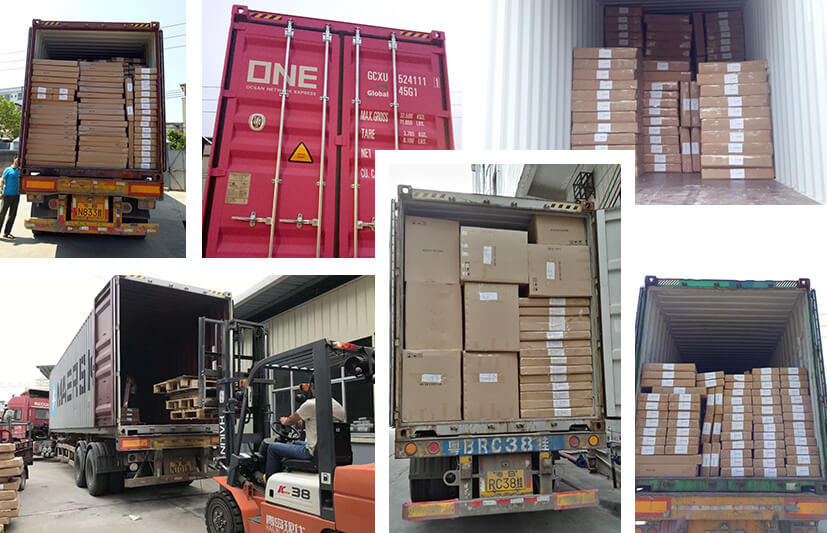
- Export Packaging and Container Loading Considerations
- Quality Control Points Buyers Should Check
- Project Case Examples from Factory Practice
- How to Choose a Reliable Panel Furniture Export Factory
- Inquiry Checklist for Faster Quotation
- FAQ
- Final CTA
Why B2B Buyers Search for Space-saving Cabinets
Apartment space is becoming more compact in many urban markets. Developers, serviced apartment operators, rental housing brands, and hotel project buyers all need furniture that can do more within limited square meters. This is why search terms such as space-saving cabinets, small apartment storage cabinets, custom apartment storage solutions, and OEM apartment furniture supplier are becoming more relevant for B2B procurement.
For a project buyer, the key question is not only “Does the cabinet look good?” The more important questions are:
Can the cabinet fit different apartment layouts?
Can the same design be adjusted for multiple room types?
Can the structure survive long-term tenant use?
Can the factory control color consistency across bulk production?
Can the goods be packed safely for export shipping?
Can the supplier support OEM or ODM development?
As a commercial furniture manufacturer and panel furniture export factory, the real value is not only producing cabinets. The value is helping buyers convert apartment layouts into stable, repeatable, cost-controlled furniture solutions.
For space planning and compact living references, project buyers may review professional design discussions from Architectural Digest:
https://www.architecturaldigest.com/story/small-space-storage-solutions
This type of design reference is useful at the concept stage. However, during procurement, buyers still need a factory partner that can turn the concept into manufacturable panel furniture.
Common Apartment Project Applications
Studio Apartment Storage Cabinets
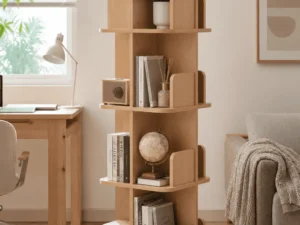
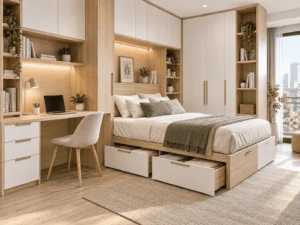
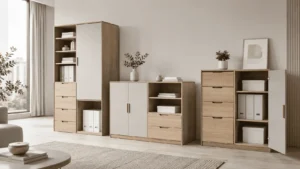
Studio apartments usually have one open living area, so storage must be integrated carefully. A common mistake is using too many separate furniture pieces, which makes the room feel crowded. For studio projects, space-saving storage cabinets for apartments are often designed as vertical storage units, wall cabinets, entryway cabinets, compact wardrobes, and multifunctional TV storage cabinets.
From a factory perspective, studio apartment cabinets should use simple modular dimensions. This makes production more efficient and helps reduce mistakes during installation. For example, one standard cabinet body can be used across several room types, while only the door panel color, handle type, or internal shelf layout changes.
Serviced Apartment Furniture Packages
Serviced apartments need furniture that looks residential but performs closer to hospitality furniture. Storage cabinets must handle frequent use, cleaning, and replacement. Buyers usually prefer durable laminated surfaces, stable edge banding, and easy-to-maintain finishes.
For serviced apartment projects, we often recommend modular cabinet systems, including:
Entryway shoe cabinets
Compact kitchen storage cabinets
Wardrobe and luggage storage combinations
Wall-mounted bathroom storage units
TV wall storage cabinets
Bedside or headboard storage systems
These products can be developed as a coordinated apartment furniture package through OEM/ODM furniture manufacturing services. Buyers can learn more about factory customization capability here:
https://plywoodmfr.com/oem-odm-furniture-manufacturing-services/
Hotel and Long-stay Room Storage
Hotels, aparthotels, and long-stay rooms often need storage cabinets that are compact, easy to clean, and visually consistent with the interior design. In these projects, buyers may require custom laminate colors, special handle styles, moisture-resistant panels, or specific hardware brands.
For hotel project procurement, the storage cabinet must match the room design and operational requirements. A cabinet that works for a private home may not always work for commercial use. Hospitality buyers should check panel thickness, hardware cycle performance, anti-scratch surface options, packaging strength, and after-sales replacement support.
Rental Housing and Student Apartment Projects
Rental housing and student apartments are cost-sensitive. Buyers need a balance between price, durability, and simple installation. In these projects, small apartment storage solutions should avoid overly complex hardware or fragile decorative details. A clean structure, practical laminate finish, and standardized production size usually work better.
For large-volume rental housing projects, the key is repeatability. The factory should be able to produce consistent cabinet dimensions and colors across multiple batches. This is where a professional panel furniture export factory can help buyers reduce project risk.
Factory-side Design Logic for Small Apartment Storage
Use Vertical Space First
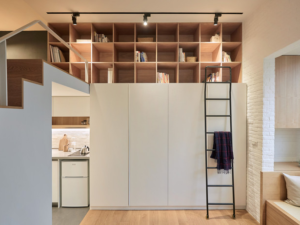
In small apartments, floor area is limited, but wall height is often underused. Vertical cabinets help create storage capacity without taking up too much walking space. Tall cabinets, wall cabinets, and floor-to-ceiling storage designs are practical options for apartment developers.
From a production point of view, vertical storage cabinets must be designed with safe structure and stable installation. For export projects, we usually recommend KD structure, reinforced back panels, wall fixing accessories, and clear installation instructions.
Keep the Cabinet Depth Practical
A common problem in small apartment furniture design is cabinet depth. If the cabinet is too deep, it takes up valuable space. If it is too shallow, it becomes impractical. For apartment storage cabinets, the ideal depth depends on application.
Entry cabinets may require a shallower depth. Wardrobes need enough depth for clothing. TV storage cabinets can use mixed depths to create a lighter visual effect. Kitchen or pantry cabinets need to consider appliances, food storage, and cleaning access.
This is why B2B buyers should send layout drawings or reference dimensions before quotation. A good OEM furniture supplier will review the actual use scenario instead of only quoting from a product photo.
Combine Open and Closed Storage
For apartments, not everything should be hidden behind doors. Open shelves make daily-use items easy to access, while closed cabinets keep the room clean and organized. A balanced storage system can improve both function and appearance.
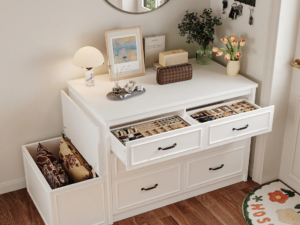
For example, a TV wall cabinet can include closed base cabinets, open display shelves, and vertical side storage. A wardrobe can combine hanging space, drawers, shelves, and luggage storage. An entryway cabinet can combine shoe storage, hooks, and a small bench.
Design for Easy Installation
B2B apartment projects often involve many rooms and tight installation schedules. A cabinet that is beautiful but difficult to install may delay the whole project. Therefore, factory-side design must consider assembly time, part labeling, hardware packing, carton sequence, and installation manual clarity.
For export buyers, we recommend confirming whether the factory can provide:
KD structure design
Numbered panels
Hardware bags by cabinet set
Installation diagrams
Carton labels by room or product type
Spare hardware ratio
Replacement part support
These details may look small, but they directly affect project delivery efficiency.
Materials Used for Export Apartment Storage Cabinets
Plywood for Stronger Structure
Plywood is widely used in export furniture because of its strength, screw-holding ability, and resistance to deformation. For apartment storage cabinets, plywood can be used for cabinet bodies, shelves, or high-load areas. Buyers who need stronger durability or humid-market performance may prefer plywood-based structures.
For buyers concerned about responsible sourcing, FSC information can be reviewed here:
https://www.fsc.org/en
When sourcing from a factory, buyers can request FSC-related material options if their market or project requires environmental documentation.
H2: MDF for Smooth Painted Finishes
MDF is commonly used for painted cabinet doors and smooth decorative surfaces. It is suitable for modern apartment furniture, especially where buyers need matte, high-gloss, or shaped door designs. However, MDF selection should depend on the use area. For wet or humid environments, buyers should discuss moisture-resistant options with the factory.
Particle Board for Cost-effective Projects
Particle board with melamine or laminate finish is often used for cost-controlled apartment projects. It is suitable for large-volume orders where budget and consistent appearance matter. For B2B buyers, the important points are panel density, surface quality, edge banding quality, and formaldehyde emission standard.
Surface Finishes
Common surface finishes for custom storage cabinets for apartments include:
Melamine
Laminate
PVC finish
Painted finish
Wood veneer
PET or UV surface
Textured wood grain finish
For B2B projects, finish selection should consider not only appearance but also scratch resistance, cleaning frequency, color consistency, and replacement availability.
Hardware Selection
Hardware affects long-term user experience. In apartment projects, we often recommend soft-close hinges, durable drawer slides, strong hanging rails, adjustable shelves, and stable wall fixing accessories.
Buyers should avoid selecting hardware only by price. Low-quality hinges or slides can create after-sales problems, especially in rental housing, hotels, and serviced apartments.
For general quality management reference, buyers can check ISO 9001 standards here:
https://www.iso.org/iso-9001-quality-management.html
A reliable furniture factory should have its own internal quality control process, even when the buyer does not require formal certification.
OEM/ODM Customization Options for B2B Projects
Custom Dimensions
Apartment projects rarely use one universal size. Room dimensions, wall positions, window locations, and electrical points may vary. This is why OEM apartment storage cabinets should be adjustable by project.
Buyers can provide CAD drawings, room measurements, reference photos, or interior design renderings. The factory can then suggest manufacturable dimensions and structure improvements.
Custom Colors and Finishes
Color consistency is very important for project furniture. A developer or hotel buyer may need the same wood grain across wardrobes, kitchen cabinets, TV cabinets, and desks. Before mass production, buyers should confirm color samples, finish codes, and approval process.
A professional ODM panel furniture factory can help develop project-specific color combinations that match the buyer’s interior design concept.
Custom Structure
Space-saving cabinets often need special structures, such as:
Sliding doors
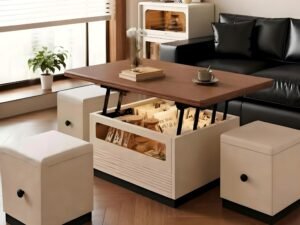
Foldable work surfaces
Hidden storage compartments
Wall-mounted cabinets
Built-in wardrobes
Corner cabinets
Under-bed storage units
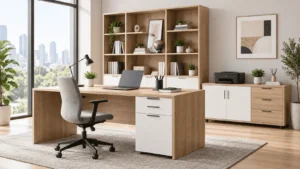
Integrated desk and cabinet systems
Entryway shoe cabinet with seating bench
For each structure, the factory should review production feasibility, packing method, installation difficulty, and cost impact.
Branding and Private Label Support
For furniture distributors, importers, and hospitality groups, private label support may be important. OEM/ODM options can include logo labels, custom packaging marks, instruction manual branding, carton printing, and product series naming.
For buyers building their own furniture brand, this helps create a more complete market offering.
To understand our factory background and export capability, buyers can visit:
https://plywoodmfr.com/the-company/
MOQ, Lead Time, Sampling, and Mass Production
MOQ for Space-saving Cabinets
MOQ depends on product complexity, material selection, color, hardware, and packaging requirements. For standard panel furniture, the MOQ may be easier to manage. For customized colors, special hardware, or new molds, MOQ may be higher.
Typical B2B project discussions may include:
Sample order before bulk production
Trial order for one apartment type
Mixed container order with several cabinet models
Full project order for apartment or hotel rooms
Repeat order based on construction schedule
Buyers should not only ask, “What is your MOQ?” A better question is, “What MOQ is practical for this material, this finish, and this project quantity?”
Sample Development
For project procurement, samples help confirm structure, color, finish, hardware, and packaging. A sample may be a full cabinet, a door panel sample, a material sample board, or one complete room furniture set.
Factory-side sample development usually includes drawing confirmation, material preparation, cutting, edge banding, drilling, trial assembly, finishing, QC check, and packing.
Production Lead Time
For space-saving storage cabinets for apartments, production lead time depends on order quantity and customization level. A general production timeline may include:
Drawing confirmation
Material ordering
Panel cutting
Edge banding
Drilling
Surface finishing
Hardware preparation
Trial assembly or QC inspection
Packing
Container loading
For many export projects, lead time is commonly around 30–60 days after final confirmation, depending on order size and factory schedule. For urgent projects, buyers should confirm production capacity early.
Mass Production Control
During mass production, buyers should pay attention to:
Panel thickness consistency
Edge banding adhesion
Hole position accuracy
Door gap control
Hardware installation quality
Color matching
Carton labeling
Spare parts preparation
Final inspection report
A professional OEM ODM furniture supplier should communicate these points clearly before shipment.
Export Packaging and Container Loading Considerations
Why Packaging Matters for B2B Furniture Buyers
For international furniture procurement, packaging is not an afterthought. Poor packaging can cause scratches, broken panels, missing hardware, and installation delays. For apartment projects, damaged goods can affect room handover schedules.
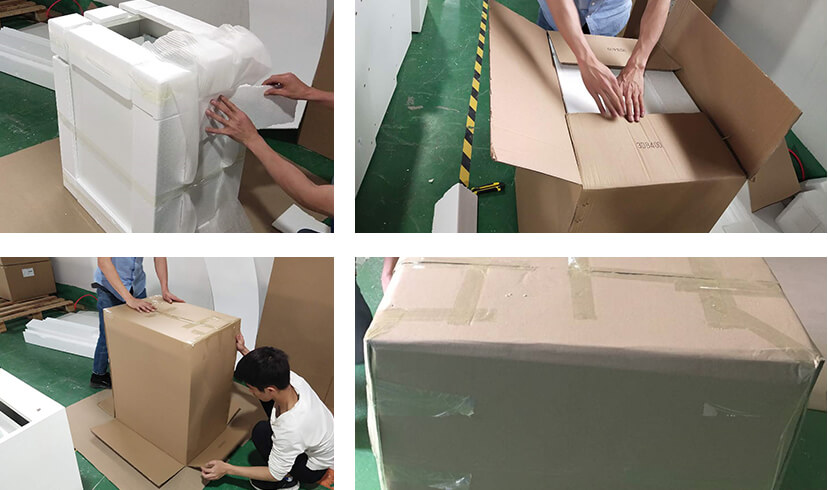
For panel furniture export, common packaging solutions include:
Flat-pack KD cartons
Corner protectors
Foam or EPE protection
Plastic bag protection
Hardware bags
Instruction manuals
Outer corrugated cartons
Palletized packing when required
Container loading plan
For general international shipping and maritime safety references, buyers can review the International Maritime Organization:
https://www.imo.org/en
KD Packing for Apartment Cabinets
KD packing is widely used for apartment storage cabinets because it saves container space and reduces shipping cost. However, KD packing must be carefully designed. Each panel should be protected, hardware should be separated clearly, and cartons should be labeled for easy site installation.
A factory experienced in export projects will consider both production efficiency and installation convenience.
Carton Marks and Project Labels
For apartment or hotel projects, carton marks should be clear. Buyers may request labels by product model, room type, building number, floor number, or installation sequence. This makes warehouse handling and project installation much easier.
For large projects, we recommend confirming carton label format before mass packing.
Quality Control Points Buyers Should Check
Material Inspection
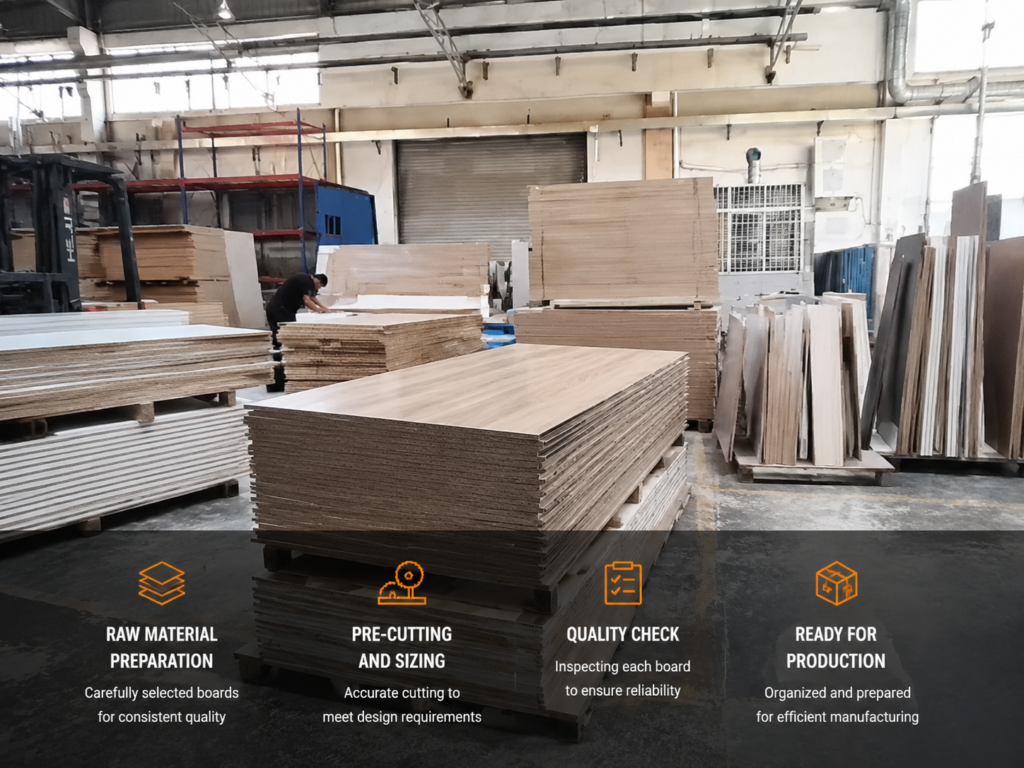
Before production, the factory should check panel grade, thickness, moisture content, surface finish, and color. If the project requires special environmental standards, documents should be prepared before shipment.
Cutting and Edge Banding
Panel cutting accuracy affects cabinet assembly. Edge banding affects durability and appearance. Poor edge banding may peel, crack, or expose the panel core. For apartment cabinets, this is especially important because tenants frequently touch cabinet edges and doors.
Drilling Accuracy
Panel furniture depends heavily on drilling accuracy. If holes are misaligned, cabinets may be difficult to assemble or unstable after installation. For export KD furniture, drilling accuracy must be controlled before packing.
Hardware Testing
Hinges, slides, handles, and connecting fittings should be checked before shipment. In project furniture, one small hardware issue can become a big installation problem if repeated across hundreds of units.
Pre-shipment Inspection
A practical pre-shipment inspection may include:
Quantity check
Product dimension check
Color and finish check
Assembly test
Hardware check
Packing drop or protection review
Carton mark check
Loading photo record
This is the type of process B2B buyers should expect from a reliable commercial furniture manufacturer.
Project Case Examples from Factory Practice
Case 1 — Studio Apartment Project
A buyer working on a compact studio apartment project needed storage cabinets that could fit narrow rooms without making the space feel crowded. The project required entryway shoe cabinets, wardrobe units, and wall-mounted storage.
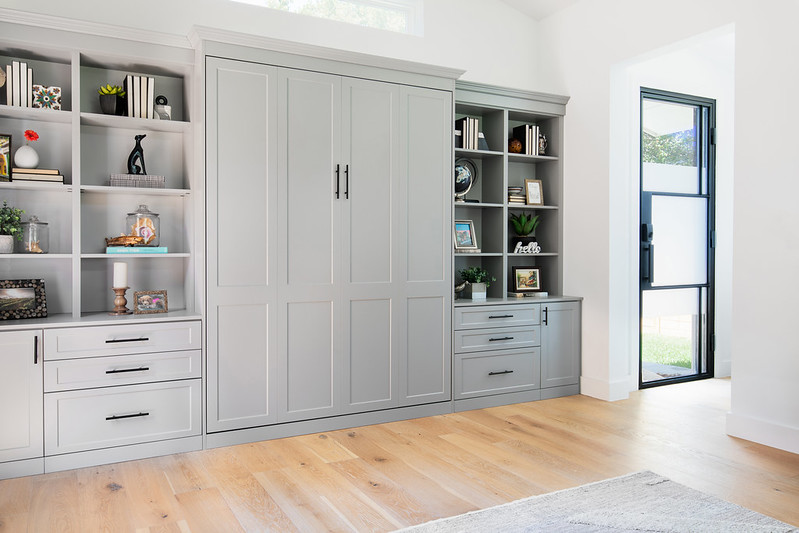
From the factory side, we suggested using vertical cabinet structures, light wood grain melamine, and a simple handleless design. The cabinet depth was controlled to maintain walking space. The internal structure included adjustable shelves so the same cabinet model could serve different room types.
The buyer’s main concern was budget control. We adjusted the panel specification and simplified the hardware while keeping the overall design clean and durable. This helped the buyer create a practical apartment furniture package suitable for rental housing.
Case 2 — Serviced Apartment Furniture Package
A serviced apartment operator needed custom storage cabinets for long-stay guests. The rooms required a more premium appearance than standard rental housing, but the furniture still needed strong durability.
We developed a coordinated furniture package including wardrobe cabinets, TV storage cabinets, small kitchen storage units, and bedside storage. The buyer selected a warm wood grain finish with black metal handles. Soft-close hinges were used for key storage areas.
The biggest challenge was color consistency across multiple product categories. Before mass production, sample boards and one complete sample set were confirmed. During production, panels were purchased in one batch to reduce color variation.
Case 3 — Hotel Apartment Project
For a hotel apartment project, the buyer required compact cabinets with strong packaging because the goods needed to be shipped by sea and handled by multiple contractors on site. The project included wall cabinets, wardrobe storage, and luggage storage units.
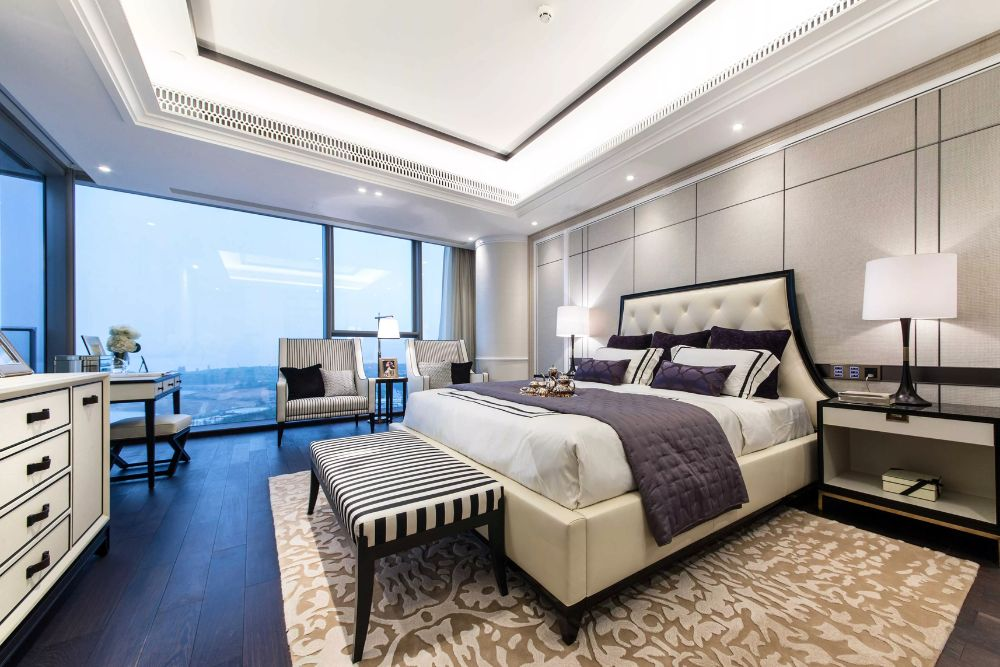
We recommended stronger carton protection, clear carton marks, and spare hardware bags. The cabinet structure was designed for faster assembly because installation time was limited. The buyer also requested custom instruction manuals for the installation team.
This project showed that successful B2B furniture procurement is not only about unit price. Packaging, labeling, installation support, and production communication all affect final project results.
How to Choose a Reliable Panel Furniture Export Factory
Check Real OEM/ODM Capability
Many suppliers claim to offer OEM/ODM service, but not every supplier can support project development. A reliable factory should be able to review drawings, suggest material options, create samples, adjust structures, and manage bulk production.
Buyers should ask:
Can you make products according to our apartment layout?
Can you provide material samples?
Can you support custom color matching?
Can you adjust cabinet structure for container loading?
Can you provide installation instructions?
Can you support repeat orders?
Check Export Experience
Export furniture requires different experience from domestic furniture. The factory must understand carton strength, container loading, moisture protection, shipping marks, documentation, and international buyer communication.
For buyers importing to multiple markets, this experience can reduce many hidden risks.
Check Communication Efficiency
In B2B projects, slow communication can delay procurement. A good factory should provide clear replies about quotation, MOQ, lead time, drawing confirmation, sample progress, packing details, and shipment status.
Check Product Range Compatibility
If the buyer needs a full apartment furniture package, it is better to work with a factory that can produce multiple panel furniture categories. This helps maintain consistent material, color, and quality across the project.
You can start from our main website to review our panel furniture manufacturing focus:
https://plywoodmfr.com/
Inquiry Checklist for Faster Quotation
To get a faster and more accurate quotation for space-saving cabinets for apartments, B2B buyers should prepare the following information:
Project type: apartment, serviced apartment, hotel, rental housing, student housing, or distributor order
Product type: wardrobe, shoe cabinet, TV cabinet, kitchen storage, wall cabinet, bathroom cabinet, or complete room package
Target quantity
Cabinet dimensions or layout drawings
Preferred material: plywood, MDF, particle board, or mixed structure
Surface finish requirement
Hardware requirement
Packaging requirement
Destination country and port
Expected delivery time
Certification or compliance requirement
Branding or private label requirement
Installation method: factory-assembled or KD flat-pack
The more complete the information, the more practical the quotation will be.
FAQ
What are space-saving cabinets for apartments?
Space-saving cabinets for apartments are compact, modular, or multifunctional storage cabinets designed to maximize usable space in small living areas. They are commonly used in studio apartments, serviced apartments, hotel rooms, rental housing, and student apartments.
Can your factory customize apartment storage cabinets for OEM/ODM projects?
Yes. As an OEM/ODM panel furniture supplier, we can customize cabinet dimensions, materials, finishes, internal layouts, hardware, packaging, and branding based on the buyer’s apartment layout or project requirements.
What materials are commonly used for apartment storage cabinets?
Common materials include plywood, MDF, particle board, melamine board, laminate panels, painted MDF, and wood veneer surfaces. The best choice depends on budget, design, durability requirements, and target market.
What is the MOQ for custom space-saving cabinets?
MOQ depends on the cabinet design, material, finish, and customization level. For B2B projects, buyers can contact us with the target quantity and product details so we can suggest a practical MOQ for production.
How long does production usually take?
Production lead time usually depends on order quantity, customization details, material availability, and factory schedule. For many export cabinet orders, the estimated lead time is often around 30–60 days after final confirmation.
Can you provide samples before bulk production?
Yes. Samples can be arranged to confirm dimensions, structure, color, finish, hardware, and packaging before mass production. For project orders, sample confirmation is strongly recommended.
How are apartment storage cabinets packed for export?
Most apartment storage cabinets are packed in KD flat-pack cartons with foam or EPE protection, hardware bags, instruction manuals, and clear carton marks. Pallet packing can also be arranged if required.
Are space-saving cabinets suitable for hotel and serviced apartment projects?
Yes. Space-saving cabinets are widely used in hotels, serviced apartments, long-stay rooms, and rental housing projects. The structure, material, and finish can be adjusted for commercial use.
Can you support private label or branded packaging?
Yes. We can support private label requirements such as logo labels, carton marks, branded instruction manuals, and customized packaging details for furniture distributors, importers, and hospitality groups.
What information should buyers provide for a quotation?
Buyers should provide product type, quantity, dimensions, layout drawings, material preference, finish requirement, hardware requirement, packaging details, destination port, and expected delivery schedule.
Final CTA
Choosing the right space-saving cabinets for apartment projects requires more than selecting a standard furniture model. B2B buyers need a factory partner that understands layout optimization, panel material selection, OEM/ODM development, export packaging, lead time control, and project delivery requirements.
As a panel furniture export factory supporting apartment, hotel, serviced apartment, and commercial furniture projects, we help buyers turn practical storage ideas into manufacturable and export-ready cabinet solutions.
Send us your apartment layout, cabinet quantity, target material, finish requirement, and destination port. Our team will review your project and provide a practical OEM/ODM quotation for Apartment Storage Space-saving Cabinets.
Internal Inquiry Links:
Company Overview: https://plywoodmfr.com/the-company/
OEM/ODM Services: https://plywoodmfr.com/oem-odm-furniture-manufacturing-services/
Main Website: https://plywoodmfr.com/