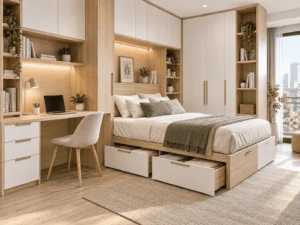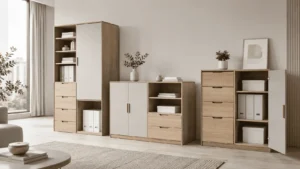
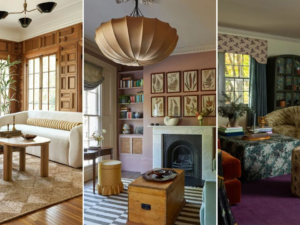
Modern apartments are becoming more design-focused, but not necessarily larger. In urban residential projects, serviced apartments, rental communities, and compact hotel suites, every square meter counts. That is why a small space coffee table is no longer just a decorative addition. It has become a functional furniture piece that affects circulation, storage, layout efficiency, and the overall value of a room.
For B2B buyers, this matters even more. A poorly chosen coffee table can make a model room feel crowded, reduce walking space, create maintenance problems, and weaken the visual impact of the entire furniture package. A well-designed compact coffee table can do the opposite. It can improve usability, support storage, and strengthen the style direction of the project while staying within budget and specification requirements.
As a panel furniture export manufacturer serving apartment, hospitality, and OEM/ODM buyers, we see a growing demand for coffee tables that combine multiple functions in one compact footprint. Buyers are no longer asking for a table that is simply smaller. They want a product that solves practical problems at the same time: limited floor area, hidden storage, easy cleaning, flat-pack shipping, reliable structure, and customization for projects.
This guide explains how to choose the right space saving coffee table for modern apartments from a sourcing and project perspective. It covers room planning, shape selection, storage functions, material options, compliance concerns, logistics efficiency, and supplier evaluation.
Table of Contents
- Why small space coffee tables matter in modern apartment projects
- Start with circulation and room planning
- Choose the right shape for compact layouts
- Prioritize multifunctional features
- Select materials that match project requirements
- Do not overlook safety, compliance, and indoor air quality
- Match the table style to the apartment’s target market
- Think like an operator: maintenance, durability, and replacement
- Evaluate packaging, shipping, and installation efficiency
- Work with an OEM/ODM manufacturer that understands B2B projects
- FAQ
Why Small Space Coffee Tables Matter in Modern Apartment Projects
In compact living spaces, furniture must work harder. A coffee table in a small apartment often serves more than one purpose. It can be a display surface, storage solution, work table, dining support, and central anchor for the living room. In some layouts, it also acts as a bridge between the sofa area and media unit without interrupting movement.
This is why a well-planned apartment coffee table adds real value. It helps improve how the room looks, feels, and functions on a daily basis. For project buyers, that means better presentation in showrooms, better usability for residents or guests, and better long-term satisfaction after installation.
For buyers who need a reference on apartment and housing design trends, the U.S. Census Bureau provides useful housing and residential construction data that reflects the importance of compact living formats in modern housing development:
https://www.census.gov/construction/chars/
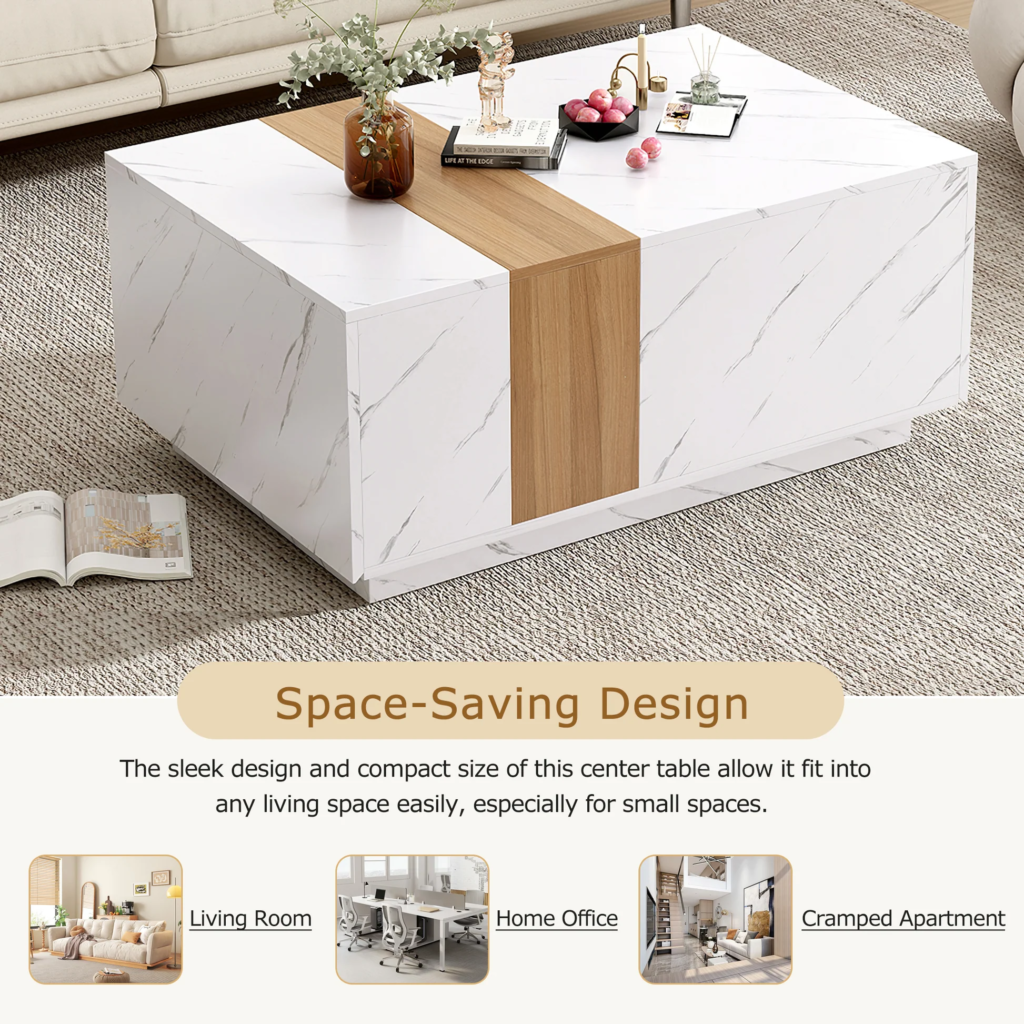
A good small space coffee table can help projects achieve several goals at once. It can save floor area, increase hidden storage, improve room flexibility, reduce visual clutter, and reduce the need for additional furniture pieces.
Start with Circulation and Room Planning
Before selecting colors, finishes, or lift-top functions, the first step is always room planning. A coffee table should be chosen according to the actual usable area of the room, not the total room dimensions shown on a floor plan.
Measure the usable zone
Professional buyers should review the following dimensions before approving a coffee table:
- sofa width and depth
- TV cabinet depth
- walking path from entry to balcony or bedroom
- door clearance
- side seating if included
- cleaning access around the table
Many compact apartment layouts look larger on plan drawings than they feel in reality. A coffee table that is technically small can still be too large if it interrupts circulation.
For projects that want better space planning references, ADA design guidance is useful for understanding clear floor space and movement requirements in tighter layouts:
https://www.ada.gov/law-and-regs/design-standards/
Use proportional sizing
A common practical rule is to keep the coffee table length around one-half to two-thirds of the sofa width. This usually creates a balanced look while preserving movement space. Width should also be controlled carefully in narrow apartment living rooms so the room does not feel blocked.
Project tip
Do not approve from product images alone. Ask the factory to provide dimensioned room mockups, scale references, or simple CAD layout views showing the table in a standard apartment setup.
Choose the Right Shape for Compact Layouts
Shape plays a major role in both visual openness and daily usability.
Rectangular coffee tables
A rectangular compact coffee table is often the most practical choice for modern apartments. It suits linear furniture planning and provides good usable surface area. This shape works especially well in developer packages, rental apartments, and hotel apartments where layouts are standardized.
Round coffee tables
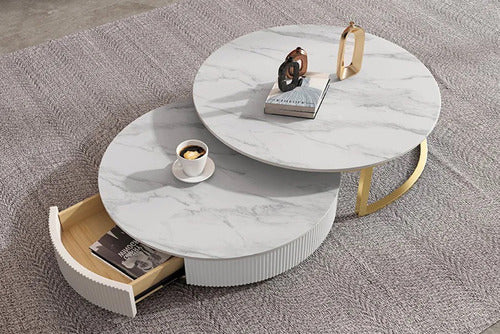
A round table improves flow and softens the room visually. Because there are no sharp corners, it is often easier to move around in tight spaces. This can be a good solution for studio apartments, family-friendly layouts, and hospitality-inspired interiors.
Oval coffee tables
Oval shapes offer a balance between rectangular efficiency and round softness. They can work well in modern premium apartments where buyers want a more elegant silhouette without taking up too much usable space.
Nesting coffee tables
Nesting designs are useful when flexibility matters. Residents can separate the tables when they need more surface space and tuck them away when the room needs to feel larger.
Project tip
The best shape is not always the trendiest one. For B2B furnishing, it is the one that works in the highest number of room types while reducing future complaints and maintaining good circulation.
Prioritize Multifunctional Features
In small apartments, furniture with only one function often feels inefficient. This is why multifunctionality has become a strong selling point.
Lift-top design
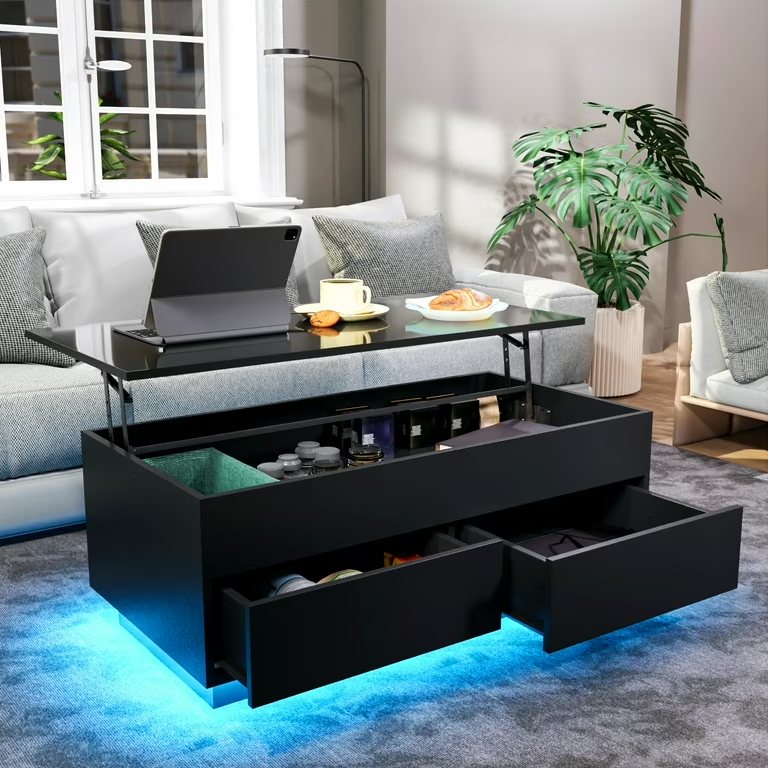
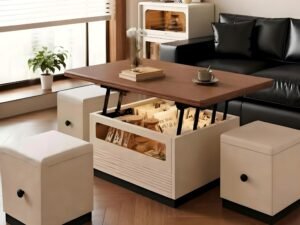
A lift top coffee table adds strong practical value in apartments and studios. It allows residents to work, eat, or use a laptop without needing a separate desk. For compact living, this function is highly attractive because it supports flexible daily use.
Hidden storage
Storage is one of the biggest advantages in a space saving coffee table. Buyers should consider options such as:
- hidden compartments under the top
- open shelves
- drawers for remotes and daily items
- divided storage sections
- lift-up panels with large internal storage space
Foldable and extendable features
Foldable or extendable coffee tables are especially useful for micro-apartments, student housing, and flexible hospitality spaces. They help reduce the need for extra furniture and make the room more adaptable.
Project tip
Do not choose mechanisms just because they look attractive in a catalog. Make sure hinges, lift systems, slides, and hardware are tested for repeated use. In B2B projects, unreliable hardware increases claims and replacement costs.
Select Materials That Match Project Requirements
Material choice affects appearance, price, durability, compliance, and shipping efficiency.
Engineered wood and panel furniture
For apartment and hospitality projects, panel-based construction is often the most practical solution. It offers stable dimensions, cost control, consistent finishes, and easier flat-pack packaging. It is also well suited for OEM/ODM customization.
Common finish options
Melamine is a strong choice for volume projects because it is cost-effective and easy to maintain.
Laminate offers higher surface durability for projects with heavier use.
Veneer provides a more premium look and is often selected for upscale apartments or boutique hospitality interiors.
Metal frames and mixed materials
Adding metal legs or frames can improve durability and give the design a more modern architectural look. This is especially suitable for urban apartments and hospitality-inspired projects.
Indoor air quality and emissions
For export markets, emissions compliance is increasingly important. The U.S. EPA provides guidance on formaldehyde emission standards for composite wood products used in finished furniture:
https://www.epa.gov/formaldehyde/formaldehyde-emission-standards-composite-wood-products
For California-related requirements, CARB also provides useful information on composite wood product standards:
https://ww2.arb.ca.gov/our-work/programs/composite-wood-products-program
For buyers focused on healthier indoor environments, UL GREENGUARD is also a widely recognized reference for low chemical emissions:
https://www.ul.com/services/ul-greenguard-certification
Sustainability sourcing
If your project includes responsible sourcing or sustainability goals, FSC certification can support those requirements in the furniture supply chain:
https://fsc.org/en/businesses/furniture
Project tip
Ask your manufacturer for a full material specification sheet including substrate, finish, edge banding, hardware, and compliance documents for the destination market.
Do Not Overlook Safety, Compliance, and Indoor Air Quality
Style matters, but project safety and compliance matter more in the long run.
Rounded corners, stable bases, anti-pinch hardware, and durable construction are important in apartments, serviced residences, and hotel environments. Compact rooms naturally create more contact with furniture, which means instability and exposed corners become more noticeable.
For buyers who supply hospitality, residential rental, or institutional spaces, furniture standards also matter. BIFMA provides an overview of furniture standards related to safety, performance, and sustainability:
https://www.bifma.org/
A professional buyer should check:
- formaldehyde compliance if composite wood is used
- hardware quality and cycle testing
- edge safety
- surface durability
- table stability on uneven floors
- packaging protection for export delivery
Project tip
If the furniture will be used in family apartments, furnished rentals, or serviced apartments, specify rounded edges, easy-clean surfaces, and reliable lift mechanisms during product development.
Match the Table Style to the Apartment’s Target Market
A coffee table should match the room’s commercial purpose, not only the designer’s personal preference.
Rental apartments
For standard rental units, neutral finishes and practical storage functions are usually the safest choice. Oak-look, walnut-look, black, white, and greige remain commercially strong.
Serviced apartments
Serviced apartments benefit from higher functionality. Lift-top features, concealed storage, and more refined finishes can help improve user experience.
Aparthotels and boutique hospitality
In these projects, the coffee table may also contribute to brand identity. Buyers may prefer more distinctive forms, mixed materials, or stronger visual detailing while still keeping the footprint compact.
Build-to-rent and developer packages
In standardized developments, repeatability matters. A table that works across multiple unit types is often more valuable than a highly specialized design.
Project tip
The right coffee table is the one that supports the target user profile, wear level, budget expectations, and the overall design language of the project.
Think Like an Operator: Maintenance, Durability, and Replacement
A coffee table should be evaluated from the operator’s point of view, not only the showroom point of view.
Ask these questions before final approval:
Will the surface be easy to wipe clean?
Will the finish show scratches or fingerprints easily?
Can the same finish be reordered in future?
Can spare hardware be supplied?
Will housekeeping or tenants damage the edges quickly?
Is assembly simple enough for project installation teams?
In hotels, rentals, and apartment communities, the best furniture is not only attractive. It is also practical to maintain, easy to reorder, and consistent in quality.
Evaluate Packaging, Shipping, and Installation Efficiency

For export projects, a coffee table should save space in the container as well as in the room.
Flat-pack advantage
Flat-pack construction improves loading efficiency, reduces shipping cost, and simplifies warehouse handling. This is one of the major benefits of panel furniture in B2B projects.
Packaging details to review
Ask your factory about:
- drop-test standards
- protective corner packaging
- separate hardware bags
- barcode or carton labeling
- project-based packaging methods
- room-by-room delivery identification if needed
Easy installation matters
Simple assembly saves labor cost on site and reduces delays during project installation. This matters especially in apartments, hotels, and large residential developments where installation speed affects handover schedules.
Project tip
A good small space coffee table should reduce cost and complexity across the full supply chain, from production to shipping to installation.
Work With an OEM/ODM Manufacturer That Understands B2B Projects
Choosing the right supplier is often as important as choosing the right design.
A capable OEM/ODM manufacturer should support:
- size customization
- finish development
- project sampling
- compliance documentation
- flat-pack packaging optimization
- stable mass production
- consistent QC
- after-sales support for repeat orders
As a panel furniture export manufacturer, we recommend that buyers assess suppliers based not only on catalog style, but also on their ability to support the entire project lifecycle from concept to shipment.
Questions buyers should ask the supplier
Can you customize dimensions for different apartment layouts?
What board options do you offer?
Do you support EPA, CARB, FSC, or low-emission requests?
Can you provide project packaging or mail-order packaging?
What is the MOQ for OEM finishes?
Can you develop matching living room sets?
Can you support hotel or apartment projects with repeated SKUs?
These questions reveal whether the supplier understands real B2B needs or only retail-level selling.
Conclusion
A small space coffee table is more than a decorative furniture piece. In modern apartments, it influences circulation, storage, room flexibility, maintenance, and project efficiency. For importers, developers, contractors, hospitality groups, and furniture distributors, the right product is usually the one that balances footprint, functionality, durability, compliance, and scalable OEM/ODM execution.
When those factors come together, a coffee table becomes a practical asset for compact living projects rather than just an item placed in the center of the room.
Need a compact coffee table for your project or store? Contact us for OEM/ODM options.
Recommended internal links:
/living-room-furniture/coffee-table/
/contact/
Recommended product page anchor text:
Smart Lift-Up Foldable Coffee Table for Small Spaces
FAQ
What is the best coffee table size for a small apartment?
The best size depends on the sofa, walking space, and room width. In most cases, the coffee table should feel proportional to the sofa while leaving comfortable circulation space around it.
Is a lift-top coffee table good for small apartments?
Yes. A lift-top coffee table adds workspace, dining support, and hidden storage without requiring another furniture piece, which makes it highly practical for studios and compact apartments.
Which shape is best for a small space coffee table?
Rectangular tables work well in narrow rooms, while round and oval tables improve movement flow and reduce sharp corners in tighter layouts.
What material is best for apartment coffee tables?
Engineered wood with melamine or laminate finish is often the best balance of cost, durability, consistency, and export efficiency for apartment and hospitality projects.
What should B2B buyers ask an OEM coffee table supplier?
Buyers should ask about dimensions, material options, compliance documents, MOQ, hardware quality, packaging, lead time, and customization capability for projects.