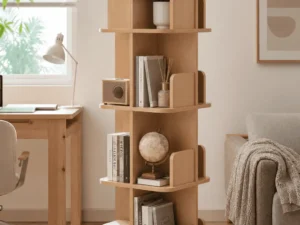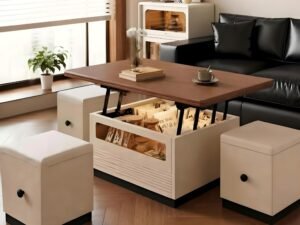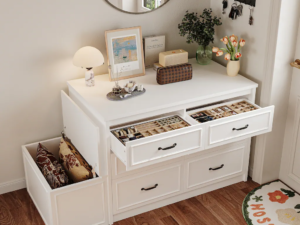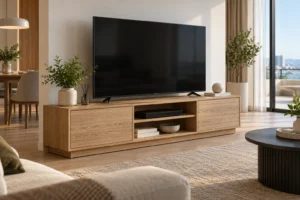
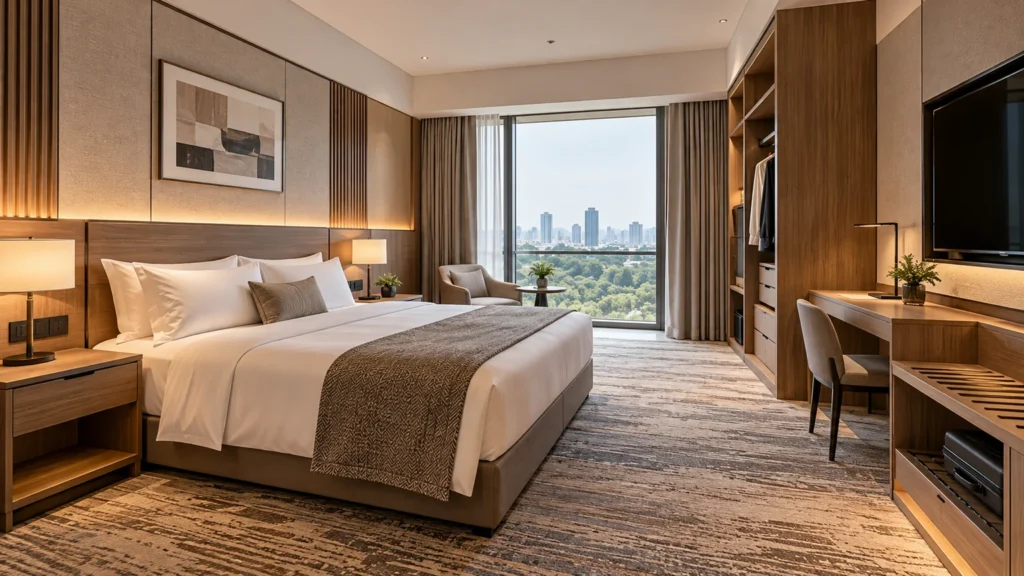
For hotel developers, FF&E purchasing managers, importers and fit-out contractors, choosing a hotel guest room furniture manufacturer means buying a repeatable room solution—not merely ordering beds, wardrobes and desks. A successful bulk order has to match approved drawings, control finish consistency across room types, arrive in the correct installation sequence and leave the operator with furniture that can be maintained after opening. Pricing is important, but an incomplete quotation can create extra spending on packing, freight, on-site assembly and replacement parts. This project-focused guide explains how a panel furniture export factory approaches room packages, OEM/ODM development, materials, minimum order quantities, production milestones and international delivery so professional buyers can issue clearer RFQs and reduce costly handovers.
Table of Contents
- What a guestroom furniture purchase order should cover
- Plan furniture by room type, not by product catalog
- Standardize the package without compromising design
- Match materials and hardware to hotel operations
- Choose OEM or ODM support according to drawing readiness
- Request factory quotations that reflect installed-room cost
- Align MOQ, samples and production capacity with the rollout
- Protect quality through mock-up and batch controls
- Prepare flat-pack packaging and room-coded deliveries
- Coordinate phased shipping and site installation
- How Starwood supports panel furniture export projects
- RFQ example: a 180-room hotel program
- Send a project enquiry
- Frequently asked questions
What a Guestroom Furniture Purchase Order Should Cover
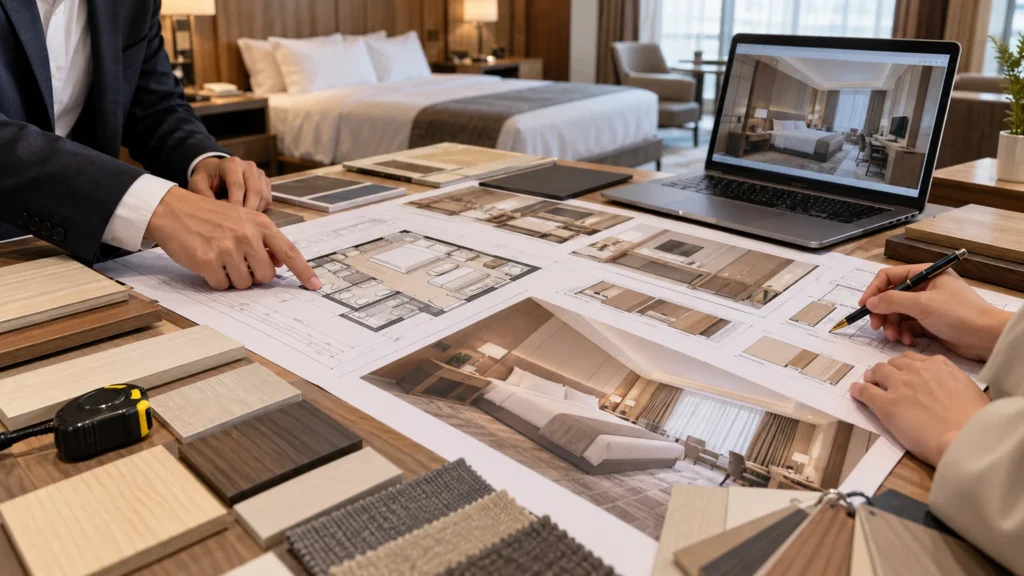
A professional hotel guestroom furniture supplier must first distinguish the furniture package from the full room fit-out. Hotel guests see one interior, but its components often come from several trades: joinery, upholstered seating, bed systems, lighting, mirrors, curtains, stonework, appliances and electrical installation. A specialist panel furniture factory typically focuses on repeatable engineered-board products: wardrobes, writing desks, nightstands, TV cabinets, dressers, luggage racks or units, minibar enclosures, shelving and selected headboard panels.
That scope distinction is not a limitation; it is a control point. A buyer should specify whether a headboard is an upholstered assembly, a wood-based panel or a combined item. Similarly, a minibar cabinet may include the enclosure and ventilation cut-outs but exclude the appliance. A TV wall can be a decorative panel package without including the screen or brackets. A hotel project should never assume everything visible in a rendering is included in the factory price.
Start with a responsibility matrix listing each item, its specification owner, manufacturing supplier, installation contractor and site dependency. Mark uncertain interfaces—such as electrical outlets behind desks, wall fixings, skirting, safe locations and bathroom door clearances—before requesting final production drawings. This reduces disputes between the purchasing team and the site team after the containers arrive.
For buyers planning hotel, serviced-apartment or multi-property supply programs, our project furniture manufacturing services provide a starting point for discussing repeatable panel-based product packages. Other furniture categories should be scoped separately or identified as partner-sourced components when applicable.
Plan Furniture by Room Type, Not by Product Catalog
Build a room-type matrix before comparing suppliers
The most useful first document is a room-type matrix. A property may contain standard kings, twins, connecting rooms, accessible rooms, family rooms and suites. They may share a finish palette but not exactly the same dimensions, storage functions or furniture counts. Translating a plan into one generic “bedroom set” price hides these differences.
Each row of the matrix should show the room code, quantity of rooms, relevant furniture SKUs, approved drawings, material/finish codes and whether products are wall-mounted or freestanding. Identify right-hand and left-hand desk configurations and door swings. A mirrored layout may appear equivalent on a floor plan but require a reversed cabinet or different cable openings.
The bill of quantities (BOQ) must be an extension of this matrix, not an independently typed summary. Count two bedside units where the design calls for two; avoid treating “one room set” as a universal shipping unit. Link each quantity to the drawing revision. A late change to 40 twin rooms should alter only the affected SKUs, rather than forcing the factory to guess which panels have changed.
Decide which items can share a platform
A room matrix also exposes opportunities for standardization. Several room types may use the same wardrobe carcass with different doors, or a common bedside cabinet with alternative hardware. This is where a commercially minded manufacturer adds value: identifying shared cut sizes and components while preserving the architect’s visible design.
Standardize the Package Without Compromising Design
Guest experience must be consistent across rooms
Hospitality furniture is evaluated every day by guests and housekeeping teams. A desk that looks attractive in a render might be too shallow for a laptop and guest belongings. A nightstand can have a convenient drawer but obstruct bedside charging access. A wardrobe can hold hangers yet leave no logical place for luggage. These are operational questions as much as design questions.
Accessibility needs a distinct approval path
Accessible guestroom furniture should not be treated as a cosmetic variation of a standard room. Reach, clear floor space, usable storage and circulation must be reviewed against the approved accessible-room layout and local rules. U.S. buyers can consult the U.S. Access Board’s ADA Accessibility Standards when coordinating applicable guestroom requirements. Furniture manufacture alone cannot establish whether a complete room complies: the site designer and responsible professionals must verify actual installed clearances.
Match Materials and Hardware to Hotel Operations
Specify engineered panels by application
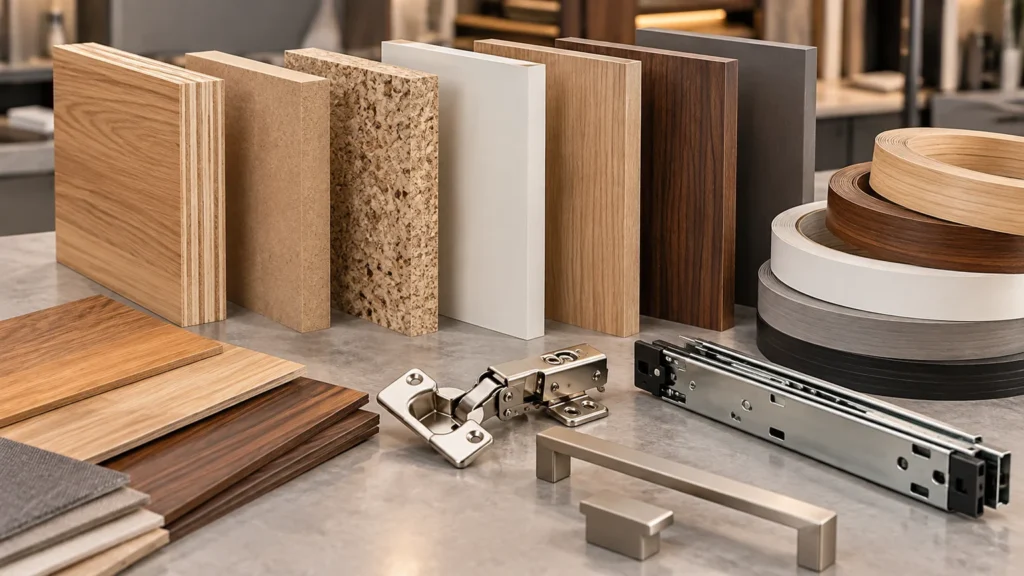
A commercial furniture manufacturer working with panel-based casegoods may use particleboard, MDF, plywood or combinations of engineered materials. The appropriate choice depends on the product structure, finish, cost target and site conditions. A supplier should not substitute one substrate for another simply because the exposed surface looks similar.
Particleboard can be efficient for repeatable cabinet components when the grade and construction are suitable. MDF may work for smooth-faced doors and selected shaped details. Plywood can serve applications where its construction is appropriate. Buyers should specify core type, thickness, density or grade where relevant, surface treatment, back-panel design, exposed-edge protection and fixing methods. Extra attention is warranted for cabinets near bathrooms, air-conditioning condensation or other moisture-sensitive areas.
For U.S.-bound shipments containing regulated composite wood products, the U.S. Environmental Protection Agency’s TSCA Title VI guidance explains relevant formaldehyde emission requirements and documentation obligations. Do not mistake a general “E0” or “environmentally friendly” marketing label for evidence of the market-specific compliance required for the delivered goods.
Control grain direction, edging and hardware
A unified wood-look package only works when visible surfaces match. Establish a finish master sample with its color code, sheen, texture and grain direction. Describe the edge-banding material and finish for tops, vertical edges and internal exposed areas. Ask the factory to retain a signed control sample for comparing production batches.
Hardware deserves its own schedule. Specify drawer runners, hinges, soft-close requirements, handles, magnetic catches, locks, hanging rails, adjustable feet and assembly connectors. Include functional expectations such as drawer extension and replacement access. The factory should identify equivalent hardware proposals clearly, rather than silently replacing the approved specification after costing.
For storage cabinets, ISO 7170:2021 provides methods for testing strength, durability and stability; the project still needs to define applicable performance requirements and acceptance criteria. Test methods do not automatically establish that every unit meets a particular hotel’s operating needs.
Verify sourcing claims before marketing them
If your hotel operator or brand requests responsibly sourced wood, ask for the specific product claim and traceability records. The Forest Stewardship Council’s chain-of-custody information explains how material claims are controlled through certified supply chains. A company profile or a wood-colored logo is not proof that a particular batch of finished furniture carries a valid FSC claim. Check certificate scope and sales documentation where certification is required.
Choose OEM or ODM Support According to Drawing Readiness
OEM: build to the buyer’s controlled specification
In an OEM guestroom furniture program, the buyer generally supplies the design intent, dimensions, finish requirements and technical performance targets. The manufacturing team reviews whether those details can be produced repeatably. Even complete architect drawings often need manufacturing clarification: how boards join, where fasteners are placed, which components are preassembled and how oversized parts can move through hotel corridors and lifts.
ODM: engineer a manufacturable solution around the brief
ODM support is useful when the buyer has mood boards, target dimensions or a desired guest experience but lacks complete manufacturing drawings. The factory can propose panel construction, modular components, practical hardware and packing solutions. The buyer still approves appearance and function; ODM does not mean the supplier has authority to substitute finishes or alter the design unilaterally.
Starwood’s OEM and ODM furniture manufacturing services cover product development, sampling and export-oriented panel furniture. Buyers should describe whether they need exact drawing execution, engineering development or cost optimization when submitting an enquiry. A clear development scope helps avoid comparing a sample-development quotation with a finished-product quotation.
Request Factory Quotations That Reflect Installed-Room Cost
Price a complete room package, then audit by SKU
A cheap individual nightstand is not necessarily a cheap hotel room package. Compare suppliers using a unit schedule that includes each furniture SKU, finish, specified hardware, quantities and carton count. Then calculate the indicative furniture cost per completed room type. This makes it easier to identify whether a premium suite, twin layout or accessible room is driving cost changes.
Ask whether quotations include prototypes, engineering, assembly instruction development, mock-up costs, spare hardware, labeling, corner protection, packing cartons and loading. Site installation, customs charges, insurance, VAT or local sales tax and inland freight should be explicitly included or excluded. Require every bidder to use the same scope and equivalent material quality before comparing totals.
Use a consistent export trade term
A price marked EXW cannot be compared directly with a quote covering delivery to the destination. The International Chamber of Commerce’s Incoterms rules define commonly used allocations of delivery obligations, costs and risks. Request the exact named place or port and agreed term, and calculate freight and related costs on a consistent basis. Incoterms do not replace separate agreements on payment, product conformity or ownership transfer.
Align MOQ, Samples and Production Capacity With the Rollout
Calculate MOQ from product commonality and shipping plans
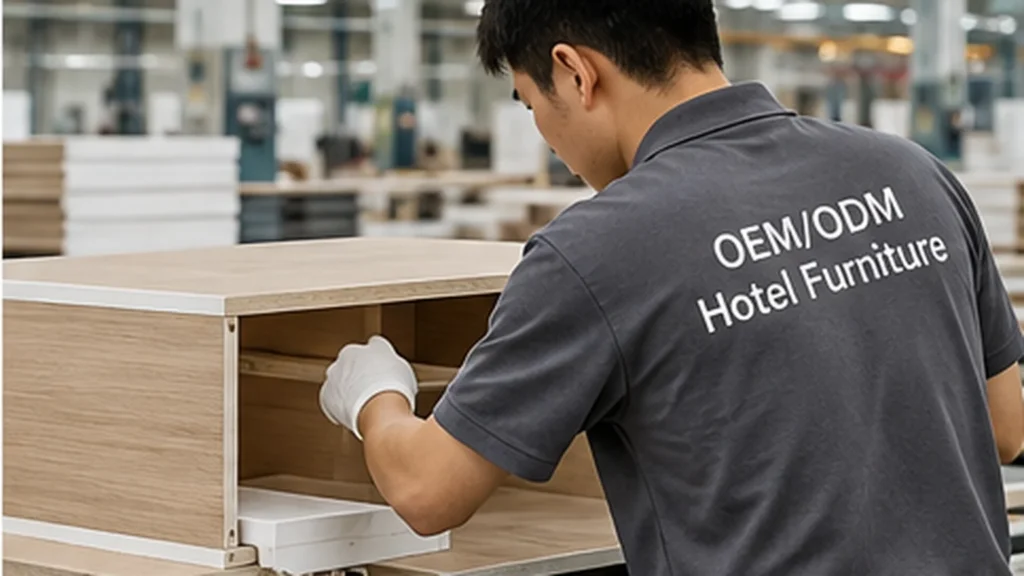
For an export factory, MOQ depends on factory scheduling, decorative board availability, hardware sourcing and container efficiency. Starwood’s published homepage identifies one container as a general MOQ reference, but the feasibility of a mixed hotel order still needs confirmation by SKU, finish and required shipment stage. Buyers should not assume that every custom design can be supplied in any small quantity or that a container commitment guarantees a single standardized price.
Treat sample lead time as a separate workstream
A hotel opening schedule may be fixed while furniture drawings are still under development. That makes sample approval a critical-path activity. The timeline should distinguish engineering review, finish sampling, representative mock-up production, approval, bulk material purchasing, manufacturing, QC, packing, ocean or air transport and installation.
Ask for a realistic milestone plan once drawings are frozen. A general lead-time promise is not enough if unusual board decors, imported hardware or late design changes remain unresolved. The factory and buyer should keep a change log showing the expected cost and schedule effect of each new instruction.
Protect Quality Through Mock-Up and Batch Controls
Use the model guestroom as the production benchmark
A model room should be reviewed as an integrated space, not as a collection of unrelated samples. It tests visual matching, clearances, cable positions, opening directions, fixing methods, assembly accessibility and whether the design functions for real guests and housekeeping teams. Buyers should distinguish the approved furniture sample from the approved site installation: both matter.
Inspect at the operations that create the most risk
Panel furniture quality can be affected by incorrect CNC hole positions, damaged laminate surfaces, inconsistent edge banding, warped components, missing connectors and mistaken left/right parts. The most practical QC plan places checks where rework is still manageable: incoming board verification, first-piece cutting inspection, drilling checks, edge inspection, trial assembly and final packing checks.
Buyers should ask for a defined inspection record rather than a vague “100% quality” promise. Agree in advance on measurable tolerances, functional tests, visible-surface defect criteria and sampling or inspection arrangements. Check one complete packed furniture set against the packing list and assembly instructions. This often reveals problems that a showroom sample cannot show.
Prepare Flat-Pack Packaging and Room-Coded Deliveries
Choose flat-pack, assembled or hybrid delivery deliberately
Panel furniture often lends itself to flat-pack or knock-down construction. For international projects this can improve handling flexibility and support efficient container loading, but freight savings are not automatic. Additional installation labor, carton waste or site damage may outweigh a smaller shipping volume on some products. A tall wardrobe may benefit from modular panels; a complicated drawer unit might be safer partially assembled.
Give every carton a site-facing identity
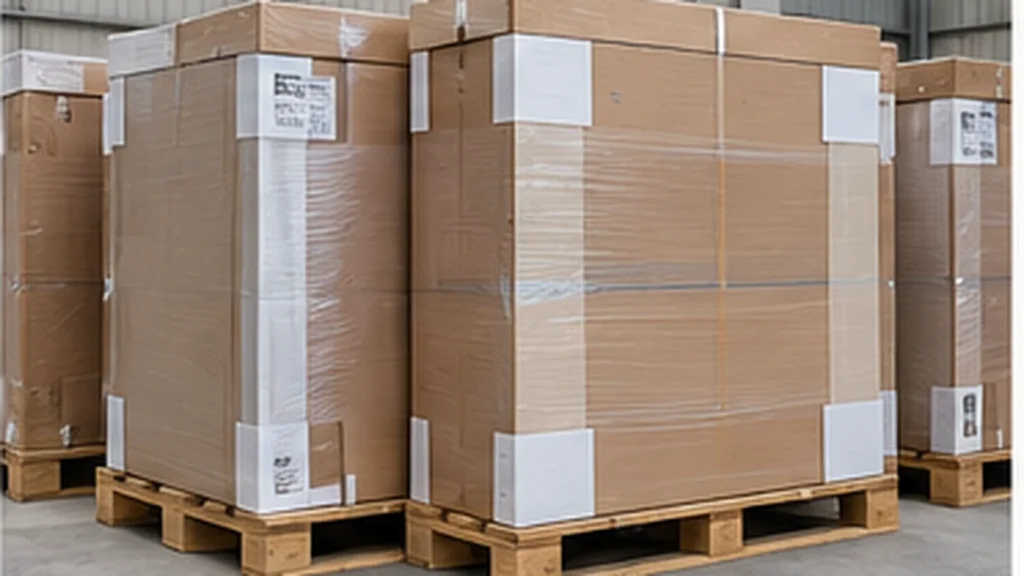
An individual carton should tell the installation team what it contains without opening it. Agree on project name, SKU, drawing revision, finish code, package number, room-type code, destination floor or zone where needed, gross weight and handling marks. If a product ships in three cartons, all three should have matching references.
Include clear instructions and hardware identification inside the package. A missing connector can hold up completion of an entire room even if the major panels arrived intact. Define how shortage claims will be recorded and how urgent replacement parts will be dispatched.
Where solid-wood pallets, crates or dunnage are used for U.S. imports, the USDA APHIS guidance on ISPM 15 wood packaging explains applicable treatment and marking requirements. This is a logistics compliance issue separate from the decorative panel specifications of the furniture itself.
Coordinate Phased Shipping and Site Installation
Release furniture according to room readiness
A hotel renovation can be more difficult to supply than a new build because some floors remain operational. The procurement team should establish the site release schedule before selecting the packing plan. Which floors will be empty first? Is there temporary storage? Are service lifts available? Will installation take place after flooring and painting? Are there restrictions on noisy work?
A phased hotel furniture delivery plan should link production batches to room types, floors, planned container loading and site access dates. Site managers need enough buffer to unload, inspect and stage packages, but not so much early inventory that cartons fill corridors or get damaged by other trades.
Plan spares and repeatability after opening
Hotel owners care about maintenance for years after the project is complete. Obtain an agreed spare-parts list covering high-wear hardware, drawer fronts, shelves, edge strips and cabinet connectors. Discuss the possibility of future matching finishes: decorative surfaces can be discontinued, and a replacement order may need a new material lot.
How Starwood Supports Panel Furniture Export Projects
Starwood Industry Co., Ltd. is a China-based panel furniture export factory focused on OEM/ODM and flat-pack products for global brands, importers, wholesalers and project customers. The company states that it has specialized in flat-pack panel furniture since 2013. Its published manufacturing workflow covers technical review, sampling, CNC processing, edge banding, production checks, export packaging and shipment coordination.
For hotel guestroom buyers, the practical opportunity is to combine cabinet-oriented SKUs under consistent manufacturing controls. Typical project discussions include wardrobes, nightstands, desks, TV cabinets, dressers, storage units and selected wood-based headboard components. Buyers seeking mattresses, upholstered sofas or other non-panel categories should confirm the supplier of those components rather than assume they are all manufactured in one panel factory.
The value of an OEM ODM furniture supplier is not only willingness to customize; it is the ability to take an approved design through repeatable production and export documentation. For background on capability and product categories, review our company and factory profile and the Starwood furniture manufacturing homepage. For project-specific coordination, the best next step is to send the actual BOQ and layout documents for a feasibility review.
RFQ Example: A 180-Room Hotel Program
Consider a hypothetical 180-room hotel with 120 king rooms, 48 twin rooms and 12 accessible rooms. This is a procurement illustration, not a claim about an actual Starwood contract, selling price or delivery performance.
| Room type | Room count | Furniture planning focus |
|---|---|---|
| Standard king | 120 | Shared wardrobe, desk/TV combination, approved bedside layout |
| Standard twin | 48 | Confirm bedside quantity and bed spacing; mirror any furniture variations |
| Accessible | 12 | Separate approved layouts, clearances, reach and storage review |
| Total | 180 | Consolidated BOQ with distinct room codes and SKU revisions |
Assume most rooms share one wood-look finish. Rather than request “180 complete bedroom sets,” the buyer issues a matrix containing a wardrobe, nightstand and desk/TV unit for each relevant room type. The quotation then shows how many identical cabinet bodies can be produced across the hotel and where dimensions or hardware differ. A finish sample and representative room mock-up are approved before mass production.
The opening schedule is divided into a model-room phase, a first group of ready floors and later floors. The buyer requests packing by floor and room package, plus a few approved spare parts. The factory responds with MOQ feasibility, a documented production schedule and packing assumptions. The site team receives furniture in the order it can actually install, reducing the risk of storing an entire hotel’s inventory at once.
Send Your Hotel Guest Room Furniture Project Enquiry
If you are sourcing bulk guestroom wardrobes, nightstands, desks, TV units or coordinated cabinet furniture for a hotel, serviced apartment or renovation, send Starwood a project RFQ. Include your property location, room counts by type, BOQ, drawings or reference images, finishes, hardware expectations, target shipment windows, destination market and preferred export term. Please also identify any brand standards, environmental documentation or accessible-room requirements.
We can review OEM/ODM feasibility, panel material choices, mixed-SKU MOQ, sample requirements, production milestones, room-coded flat-pack packaging and international shipping preparations. Price, lead time and order minimums are confirmed against the actual specification rather than presented as generic guarantees.
Request a project quotation from Starwood or email info@plywoodmfr.com with the subject “Hotel Guest Room Furniture RFQ – [Country / Room Count / Project]”. A well-structured RFQ is the fastest way to move from a concept design to a procurement decision.
Frequently Asked Questions
What furniture can a hotel guest room furniture manufacturer provide?
A panel-based manufacturer commonly supplies wardrobes, nightstands, desks, dressers, TV cabinets, luggage or minibar enclosures, storage furniture and selected headboard panels. The scope depends on construction and the factory’s specialization. Separate upholstered items, mattresses and electrical equipment should be confirmed explicitly.
What is the minimum order quantity for bulk hotel room furniture?
MOQ depends on SKU complexity, board and finish commonality, hardware, packaging and shipment planning. Starwood publishes one container as a general MOQ reference, but actual feasibility must be confirmed after reviewing a hotel’s room matrix and BOQ.
How long does custom hotel guestroom furniture production take?
A dependable schedule is created after the buyer confirms drawings, finish samples, quantities and the production release. Track drawing review, sampling, approval, material procurement, factory production, QC, packing and freight separately. Transit and site installation are additional activities.
Can one factory customize furniture for different hotel room types?
Yes, an OEM/ODM panel furniture factory can evaluate multiple room types under one project program. Standard king, twin, suite and accessible-room variants should have controlled drawings and identifiable SKUs so changes do not introduce incorrect quantities or parts.
Are flat-pack hotel wardrobes and desks suitable for export?
Many panel wardrobes and desks can be designed for KD or flat-pack export. Buyers should check carton protection, assembly trials, hardware sets, local installation labor and site handling requirements. Flat-pack construction should be chosen based on total delivery and installation cost, not carton volume alone.
What documents should I send to a hotel furniture supplier for a quotation?
Send room-type counts, an itemized BOQ, drawings or renders with dimensions, approved or target finish information, hardware expectations, quantities, target delivery phases, shipping destination and preferred trade term. Add brand standards, compliance documents and packing instructions when available.
How can I compare quotes from China hotel furniture manufacturers?
Require a consistent specification and named Incoterm, with matching assumptions for material grades, hardware, samples, carton protection, inspection and freight. Compare cost per completed room type and review suppliers’ documented production and QC capabilities instead of ranking bids only by the lowest individual unit price.
Does purchasing directly from a panel furniture factory guarantee the lowest cost?
No. Factory-direct procurement may simplify communication and technical control, but the landed and installed cost also depends on order mix, packaging, shipping terms, local handling, installation and after-sales support. Evaluate the full project scope before deciding.