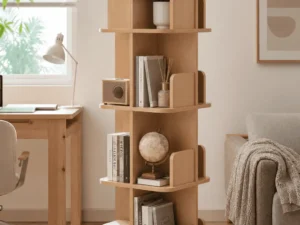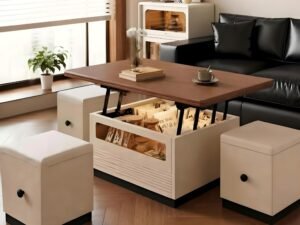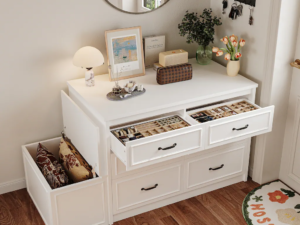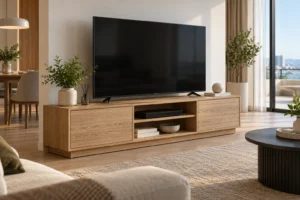
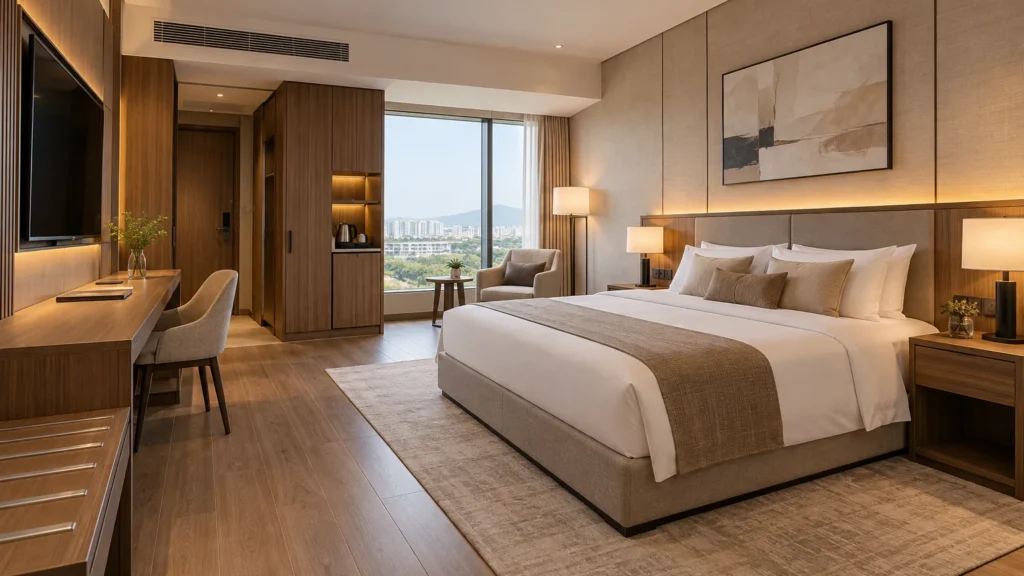
Choosing a hotel casegoods manufacturer is a purchasing decision with consequences well beyond the factory unit price. For hotel developers, FF&E procurement teams, contractors and hospitality importers, the real objective is to receive the right wardrobes, nightstands, desks, TV cabinets and storage units for every room type—on specification, within budget and ready for installation. A quotation that omits hardware, mock-ups, packaging or delivery phases can become expensive after approval. This factory-side RFQ guide shows how to compare hotel furniture suppliers on the details that determine actual project cost, lead time and repeatable quality, whether you are fitting out a new property or renovating an operating hotel.
Table of Contents
- Why hotel casegoods quotes are difficult to compare
- Twelve RFQ cost checks for hotel casegoods buyers
- Which hotel and apartment projects suit panel casegoods?
- Example: a room-by-room purchasing plan
- How OEM/ODM casegoods move from RFQ to export
- What a panel furniture export factory should show you
- Request a hotel casegoods quotation
- Frequently asked questions

Why Hotel Casegoods Quotes Are Difficult to Compare
Hotel casegoods normally include the cabinet-based, non-upholstered furniture that repeats across guestrooms: wardrobes, bedside cabinets, writing desks, TV units, dressers, minibars, luggage units and storage cabinets. Headboard panels and selected cabinet-based bed components may also fall within the factory’s scope, depending on construction. Loose seating, mattresses, lighting and stonework should not be assumed to come from the same manufacturing line.
Two suppliers can quote a similar-looking wardrobe at very different prices because one has included thicker panels, premium drawer runners, moisture-resistant components, assembled delivery and protective packing, while the other has not. Neither price is meaningful until the specifications match.
At Starwood Industry Co., Ltd., our core manufacturing focus is OEM/ODM flat-pack panel furniture for brands, importers and project buyers. We approach hotel casegoods as repeatable room packages rather than isolated retail products. That means checking the project BOQ, technical drawings, finish schedule, shipping method and installation requirements before treating a unit price as final.
12 RFQ Cost Checks When Choosing a Hotel Casegoods Manufacturer
1. Break the BOQ Down by Room Type and Furniture SKU
Start with the bill of quantities (BOQ), not a gallery of inspiration images. A king room, twin room, accessible room and suite can each need a different casegoods package. If quantities are merged into one overall number, factories may calculate the wrong hardware requirements, material consumption and packing volumes.
Ask for a line-item quote identifying the room code, SKU, drawing revision, product dimensions, ordered quantity and number of cartons. For example, a twin room may require two nightstands, while a king room needs only one or has a different bedside configuration. A compact room might use a combined desk-and-TV unit rather than separate pieces.
Buyer action: send a room-by-room BOQ, mark repeated modules and identify which variations are intentional. Ask the manufacturer to flag unclear items before quoting. This is one of the simplest ways to prevent an attractive but incomplete bid.
2. Define What Is Included in the Casegoods Package
A buyer searching for a custom hotel casegoods supplier may expect a full guestroom solution. A panel furniture factory may instead be responsible for wardrobes, desks, cabinets and decorative panels, while a separate vendor supplies mattresses, soft seating, mirrors, lights or stone tops. The responsibility boundary must be visible in the quotation.
State whether the quote includes handles, hanging rails, hinges, drawer slides, locks, cable grommets, brackets, fasteners, wall-fixing provisions and assembly instructions. For integrated minibar cabinets, clarify appliance cutouts, ventilation space and whether the appliance itself is excluded. For headboards, identify electrical penetrations and whether upholstery is handled separately.
Buyer action: require an “included / excluded / by others” column for each SKU. Confirm installation labor, site measurement, taxes, freight and unloading separately. A clear scope makes competitor quotations genuinely comparable.
3. Specify the Board Substrate Before Accepting a Price
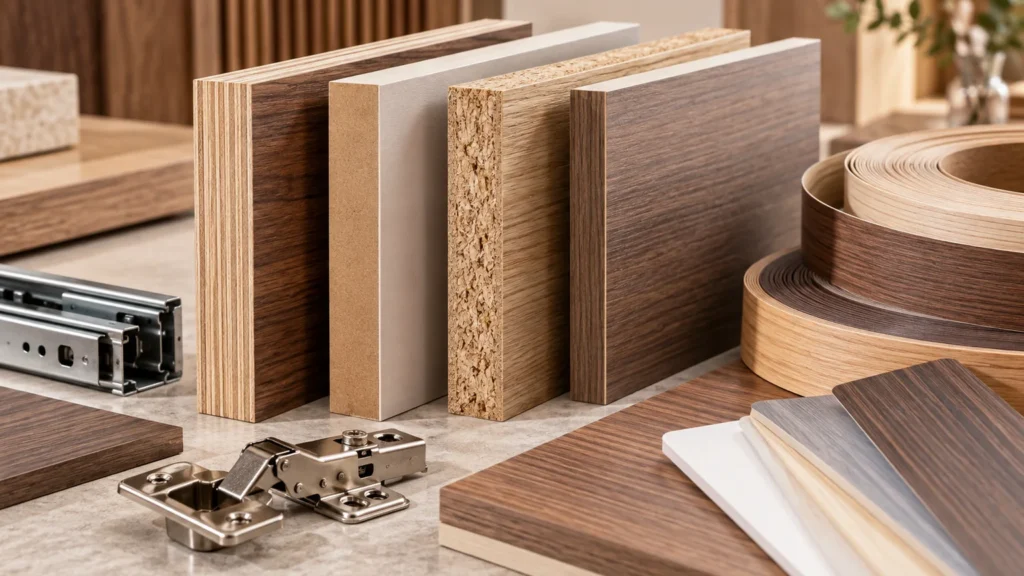
For panel-based hospitality furniture, material selection is a balance of structural needs, surface appearance, environmental requirements and target price. Common substrates include particleboard, MDF and plywood. These are not interchangeable simply because a decorative laminate covers the face.
Particleboard can be practical for volume cabinet construction when the correct thickness and grade are specified. MDF offers a smooth substrate for selected finishes and routed profiles. Plywood may be preferred where a particular construction, fixing condition or material specification calls for it. For wet or humid locations, ask about suitable moisture-resistant construction rather than assuming all engineered boards behave alike.
The RFQ should identify board type, thickness, grade, face finish, back-panel thickness and exposed-edge treatment for each component. The same desk might combine different substrates in the top, cabinet box and back panel.
For U.S.-bound furniture containing regulated composite wood, review the U.S. EPA’s TSCA Title VI formaldehyde standards and request applicable documentation from the supplier. Do not equate a verbal “low-emission board” claim with verified compliance.
4. Lock the Finish Schedule, Edge Banding and Grain Direction
A hotel room is experienced as one coordinated design. The wardrobe doors, desk fascia, nightstand front and TV panel should not arrive with visibly different wood tones or grain directions. Even when the same decorative name is used, batches and suppliers can vary.
Before mass production, approve physical swatches for laminate, melamine, veneer or other specified finishes. Record the manufacturer or reference code where possible, plus color, texture, sheen, grain orientation and edge-banding appearance. Define which edges are visible and which need a particular thickness or profile. For exposed surfaces, ask how the factory manages chipping, glue lines and finish consistency.
One approved finish board can often be shared across multiple SKUs, but this should be engineered, not guessed. Standardizing finishes across the room package can reduce procurement complexity and unnecessary minimum-order exposure.
Buyer action: keep a signed finish-control sheet and retained approval sample. Require approval before any material substitution, even when the proposed alternative looks similar in a photo.
5. Price the Hardware and Maintenance Requirements Explicitly
A hotel wardrobe may be opened many times a day. Drawer slides, hinges and connectors influence guest experience, maintenance workload and replacement costs. A low cabinet price may conceal a hardware specification that does not suit the operator’s maintenance plan.
Confirm hinge opening angle, soft-close requirements, drawer load expectation, runners, locks, handle finish, hanging-rail construction, shelf supports and KD connectors. Where the hotel group nominates a hardware brand or model, quote it as specified. If a cost alternative is proposed, identify it as an alternative—not a silent replacement.
Ask whether a damaged drawer front, hinge or side panel can be replaced without dismantling an entire fitted run. Repairability matters particularly in operational hotels, where a room taken out of service may cost more than the replacement part.
Buyer action: request a hardware list by SKU and a spare-parts recommendation as a separate quotation line.
6. Approve a Mock-Up Room and Measurable QC Criteria
Renderings help explain appearance, but they do not demonstrate drawer operation, panel rigidity, exposed joints or real installation tolerances. For substantial hotel orders, a representative sample or mock-up room should be a controlled purchase milestone.
Check the first-article sample for external dimensions, drilling positions, door gaps, finish, edge integrity, hardware operation, assembly sequence and carton completeness. If the project includes accessible rooms or uncommon layouts, those variants need appropriate review rather than automatic approval by similarity.
For storage furniture, ISO 7170:2021 describes test methods for strength, durability and stability. The standard provides methods, not universal pass/fail criteria; buyers must agree on relevant performance requirements and any required third-party testing.
Buyer action: produce a signed sample-approval record, photos, an open-points list and written acceptance criteria. Freeze the approved revision before batch production. “Looks good” is not a reliable inspection standard.
7. Ask for MOQ by SKU, Finish and Delivery Phase
Hotel casegoods MOQ is not always a single room count. It may depend on board decor, hardware purchasing, CNC setup, batch size, packaging artwork and how many product variations the project requires. For example, two wardrobes with identical construction but different finishes can create a different purchasing problem from two identical wardrobes.
Ask the supplier to show MOQ constraints for each SKU or shared material family. If the first hotel phase is small, discuss whether standardizing board finishes, handles and construction can make the order more efficient. For a larger development, establish whether quantities can be released across phases under one approved material program.
Starwood’s published service information describes flexible order support, but a responsible project quote should confirm feasibility after reviewing your exact drawings and quantities. We do not recommend treating any generic MOQ figure as a factory commitment.
Buyer action: include expected initial quantity, possible repeat orders, finish splits and phased release dates in the RFQ.
8. Separate Sample Lead Time from Mass-Production Lead Time
Buyers often ask, “What is your hotel casegoods lead time?” The more useful question is, “What are the lead times for engineering, materials, sampling, approval, production, packing and shipment?” A factory cannot reserve a dependable project completion date if drawings and finishes remain under revision.
Create a milestone plan covering RFQ clarification, shop-drawing confirmation, sample production, sample approval, material purchasing, CNC machining, edge banding, assembly inspection, final QC and packing. Add buffer for buyer approvals and destination shipping; shipping transit is not factory production time.
Ask whether long-lead decorative boards, custom handles or special hardware affect the critical path. If a hotel is opening in stages, prioritize by room release sequence and confirm whether cartons can be labeled for that sequence.
Buyer action: request a dated milestone schedule after specification freeze. Treat any timeline quoted before drawings and samples are approved as preliminary, not guaranteed.
9. Compare Landed Cost, Not Just EXW Unit Price
A procurement team may receive one quote on an EXW basis and another on FOB or CIF terms. Comparing those unit prices alone can lead to a misleading award decision. Freight, origin handling, packing volume, insurance, import charges, unloading and installation preparation can materially change the budget.
Ask suppliers to identify the chosen Incoterm, named place or port, export packing, carton count, gross weight, loading quantity and whether any service charges are excluded. The International Chamber of Commerce’s Incoterms rules explain how delivery responsibilities, costs and risks are allocated; Incoterms do not, by themselves, define product specifications or payment terms.
A more useful comparison is landed cost per completed room package, with assumptions documented. It should include expected logistics and the cost of packaging or assembly choices. Do not simply select the lowest cabinet unit price if the installed result is more expensive.
Buyer action: request at least one consistent trade-term basis from all bidders before making a cost comparison.
10. Engineer Flat-Pack Cartons for the Installation Site
For a panel furniture export factory, flat-pack or knock-down construction can help buyers manage shipment space, handling and storage. But packing must match the actual hotel site. A carton that is efficient in the container can still be inefficient if installers cannot identify its contents by room and floor.
Agree on fully assembled, partially assembled or KD delivery at SKU level. Request trial assembly, illustrated instructions, protection for visible corners, correctly bagged hardware and carton labels carrying SKU, finish, quantity and project identifiers. Where practical, organize carton marks by room type, zone or installation phase. Check maximum carton handling dimensions with the destination contractor.
If solid-wood pallets, crates or dunnage are used, relevant destination rules may require ISPM 15 treatment and marking. See the USDA APHIS guidance on wood packaging material when planning U.S. shipments. This is distinct from specifications for the furniture panels themselves.
Buyer action: ask for a packing proposal, carton dimensions and a trial-packed sample before production packing begins.
11. Verify Destination-Market and Project Requirements
A factory familiar with international exports should ask where the furniture will be installed and what the project specification requires. Product requirements may include formaldehyde documentation, performance tests, accessibility clearances, fire-related finish requirements or material traceability, depending on product, market and design.
For responsible wood sourcing, the Forest Stewardship Council’s chain-of-custody guidance explains what is involved in making traceable FSC claims. An FSC-related request should specify the required claim and verification documents; buyers should not assume every factory or product is certified.
For U.S. projects, the U.S. Access Board’s ADA accessibility standards provide design requirements relevant to accessible guestrooms, including clear floor space and storage provisions. Accessibility is a project-design responsibility that must be checked against the approved room layout; a factory should not promise compliance on furniture dimensions alone.
Buyer action: give the manufacturer a market-specific compliance checklist and request applicable test reports or documents before awarding the order.
12. Put Change Control, Spares and Claims Handling into the Purchase Order
Even a well-managed hotel project can change. A revised wall dimension, altered finish or different minibar cutout may affect several hundred panels. Without revision control, the factory may cut material from an outdated drawing while the contractor expects the new layout.
Specify who can authorize technical changes, how revised drawings are numbered, what happens to materials already purchased and how cost and schedule impacts are approved. Define inspection access, pre-shipment acceptance, labeling, packing documentation and the procedure for dealing with transit damage or missing hardware.
Reserve spare panels and commonly replaced components where practical, especially for large hotels or repeat apartment programs. Clarify the warranty scope, documentation for claims and whether future replacement parts can match the approved decor.
Buyer action: attach the approved BOQ, drawings, finish list, hardware schedule and packing specification to the purchase agreement. A controlled document set is more valuable than an informal promise to “follow the sample.”
Which Hotel and Apartment Projects Suit Panel Casegoods?
A specialist commercial furniture manufacturer should define its product scope honestly. Panel casegoods are especially suitable where room layouts repeat and purchasers want coordinated finishes, efficient production and export-ready packaging. Common applications include:
- Limited-service and business hotels: wardrobes, luggage units, desk-and-TV combinations, bedside tables and compact minibar cabinets.
- Full-service guestrooms and suites: coordinated dressers, writing desks, storage units, wall panels and selected custom cabinets, often alongside products supplied by other FF&E contractors.
- Serviced apartments and aparthotels: wardrobes, TV units, kitchen storage, bathroom cabinets and durable long-stay furniture packages.
- Student accommodation and rental projects: repeatable wardrobes, study desks, bookcases, bedside furniture and storage-focused combinations.
- Hotel renovation programs: replacement casegoods made to approved room dimensions, installation access and phased delivery schedules.
For wider examples of applications and coordinated production, review our project furniture manufacturing services. Where projects require non-panel categories, the buyer should confirm whether those elements are supplied by another manufacturer or procured separately.
Example: A Room-by-Room Purchasing Plan
Consider a hypothetical 120-room property with 80 king rooms, 30 twin rooms and 10 accessible rooms. The numbers below illustrate how to structure an RFQ; they are not a completed Starwood project or a factory price quotation.
Before seeking prices, the purchasing team could prepare the following matrix:
| Package | Quantity basis | Key RFQ difference |
|---|---|---|
| King-room nightstand | 80 rooms, per approved layout | One or two units per room; confirm explicitly |
| Twin-room nightstand | 30 rooms, per approved layout | Bed spacing and bedside quantity may differ |
| Wardrobe | 120 rooms, grouped by drawing | Check accessible-room layout separately |
| Desk / TV storage | 120 rooms, grouped by room type | Cable access, width and fixing conditions |
| Luggage / minibar unit | Per actual BOQ | Equipment openings and ventilation |
The team should then total each SKU, distinguish common panels from custom variants, and issue one revision-controlled BOQ. Quotes become more useful when each supplier prices the same combination of finish, hardware, carton type and trade term.
A factory can also propose value-engineering alternatives—such as reducing unnecessary finish changes or sharing cabinet modules—without silently downgrading the agreed design.
How OEM/ODM Hotel Casegoods Move From RFQ to Export
Our OEM and ODM furniture manufacturing services cover buyer-drawing production and customized product development. For hospitality projects, a practical workflow looks like this:
- Project enquiry: buyer shares room count, types, BOQ, drawings, target finish, destination and planned opening or installation dates.
- Feasibility and clarification: factory reviews dimensions, construction, substrate, hardware, packaging and areas requiring site confirmation.
- Comparable quotation: factory returns a defined scope, pricing basis, MOQ assumptions, sample costs, production assumptions and exclusions.
- Engineering and sampling: shop drawings, finish samples and representative mock-up items are developed and checked.
- Approval and specification freeze: buyer confirms controlled drawings, signed samples, quality criteria and permitted tolerances.
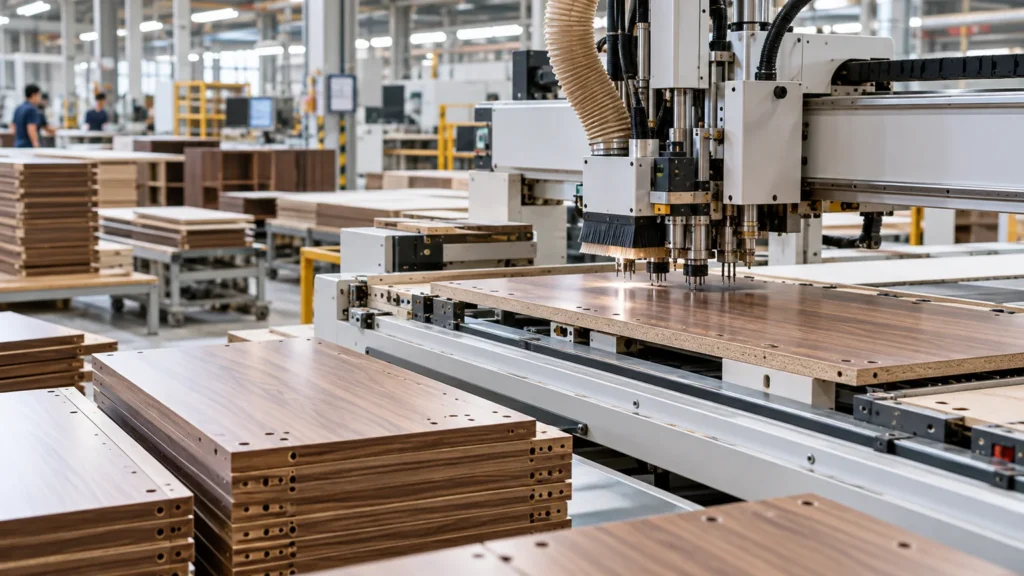
- Batch production: panels are processed through suitable cutting, CNC drilling, edge-banding and assembly or KD-preparation operations.
- Inspection and trial assembly: representative units are checked for fit, operation, finish, correct hardware and packaging completeness.
- Packing and dispatch: finished items receive protective export packing, item identification and shipping documentation as agreed.
The key procurement discipline is to distinguish buyer approval time from factory production time. A delayed finish decision can shift the manufacturing schedule even when the machines and labor are available. Progress updates should reference the approved project milestone plan rather than vague percentages.
What a Panel Furniture Export Factory Should Show You
Supplier selection should be evidence-based. Starwood Industry Co., Ltd. is based in Jiangmen, Guangdong, China, and its published company profile describes panel furniture manufacturing and OEM/ODM export support since 2013. Our core strengths are cabinet-oriented product development, repeatable panel processing, customization and KD/export packaging—not an unsupported claim that we produce every type of hotel FF&E.
When vetting any OEM ODM furniture supplier or panel furniture export factory, request specific evidence relevant to the purchase:
- Production photos or video of current panel processing and edge finishing.
- A sample drawing review showing how technical questions are resolved.
- Physical material, edge-band and hardware samples.
- A complete example of assembly instructions and carton marks.
- QC checkpoints and an agreed defect / corrective-action process.
- A workable plan for replacement parts and future matching orders.
You can review our factory and company information and the broader Starwood panel furniture manufacturing website before sending a live RFQ. The strongest long-term supplier relationship is built on clear written specifications and verifiable deliverables, not on an unqualified promise of the lowest price.
Request a Hotel Casegoods Manufacturer Quote
If you are sourcing wardrobes, nightstands, hotel desks, TV cabinets, minibars or other panel-based guestroom furniture, we welcome a project-specific RFQ. To help us evaluate the order, send your room-type BOQ, drawings or reference photos, estimated quantities, board and finish requirements, destination country, preferred trade term and target delivery phases. Include your packaging preference and any applicable compliance requirements.
We can then discuss OEM/ODM feasibility, material choices, samples, cost alternatives and export packaging based on the actual project. MOQ, price and lead time will be confirmed through quotation rather than presented as generic guarantees.
Request a hotel casegoods quotation from Starwood or email info@plywoodmfr.com with the subject “Hotel Casegoods RFQ – [Project / Country / Room Count]”.

Frequently Asked Questions
What Does a Hotel Casegoods Manufacturer Supply?
A hotel casegoods manufacturer typically makes non-upholstered guestroom furniture such as wardrobes, desks, nightstands, TV cabinets, dressers, luggage units and storage cabinets. Exact scope depends on factory specialization. Panel furniture factories should clarify exclusions such as mattresses, soft seating, electrical equipment and stonework before quoting.
What Is the Minimum Order Quantity for Custom Hotel Casegoods?
There is no universal MOQ. The workable quantity depends on SKU complexity, shared board finishes, custom hardware, tooling, packing requirements and delivery phases. Send the BOQ and quantities by room type so the factory can assess a realistic MOQ and possible consolidation options.
How Long Does Custom Hotel Casegoods Production Take?
Lead time depends on engineering review, sample approval, material availability, order volume and production scheduling. Ask for separate milestones for sampling, approved mass production, QC and dispatch. Do not treat ocean transit or installation time as part of factory production time.
Which Material Is Best for Hotel Wardrobes and Cabinets?
Particleboard, MDF and plywood can all be appropriate when matched to the product design and approved performance requirements. Buyers should select specific board grades, thicknesses, finishes, edge treatments and compliance documentation rather than requesting a material name alone.
Can Hotel Casegoods Be Shipped Flat-Packed?
Yes, many panel-based guestroom units can be engineered for flat-pack or knock-down shipment. The best packing method depends on construction, installation labor, handling conditions and freight cost. Request assembly trials, carton protection, complete hardware kits and room- or SKU-based labels.
What Should I Send to Get an Accurate Hotel Furniture RFQ?
Send the room schedule, BOQ, drawings with revision numbers, dimensions, target board and finishes, hardware requirements, approximate quantities, sample expectations, delivery destination, preferred Incoterm, packing method and installation timeline. The more complete the brief, the easier it is to compare suppliers on equal terms.