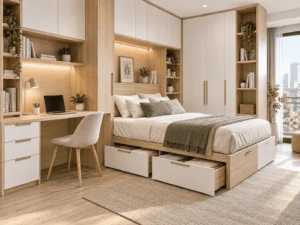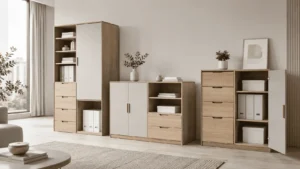
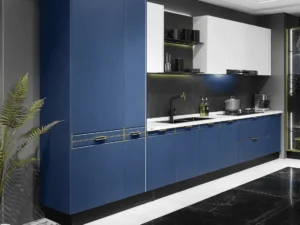
If you are sourcing flat pack kitchen cabinets for wholesale, apartment projects, hotel kitchens, rental housing, retail programs or private-label furniture collections, choosing the right supplier is not only about price. A reliable flat pack kitchen cabinet supplier should understand drawings, materials, drilling accuracy, export packaging, container loading, MOQ, lead time and after-sales risk control. This guide is written from a factory-side B2B perspective to help importers, contractors, project buyers and furniture brands evaluate a real OEM/ODM panel furniture manufacturer before placing bulk orders.
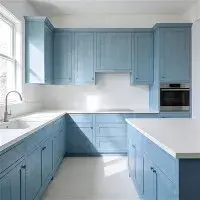
Table of Contents
- Why Flat Pack Kitchen Cabinets Are Popular for B2B Projects
- What Makes a Reliable Flat Pack Kitchen Cabinet Supplier
- Materials Buyers Should Confirm Before Quotation
- OEM/ODM Customization Options for Kitchen Cabinet Orders
- MOQ, Lead Time and Production Planning
- Export Packaging, Carton Marks and Container Loading
- Quality Control Points Buyers Should Not Ignore
- Buyer Checklist Before Sending an Inquiry
- Why Work with a Panel Furniture Export Factory
- FAQ
- Final CTA
Why Flat Pack Kitchen Cabinets Are Popular for B2B Projects
Flat pack kitchen cabinets are widely used by importers, wholesalers, real estate developers, hotel apartment operators, furniture retailers and e-commerce brands because they balance cost, shipping efficiency and customization flexibility.
For overseas buyers, one of the biggest costs is not only the product itself but also ocean freight, warehouse handling, damage rate and installation efficiency. Compared with fully assembled kitchen cabinets, flat pack or RTA kitchen cabinet structures can reduce shipping volume, improve container loading, simplify storage and make overseas distribution easier.
For apartment projects, rental housing, serviced apartments and hotel kitchen areas, buyers often need repeatable cabinet modules: base cabinets, wall cabinets, pantry cabinets, drawer units, sink cabinets, corner cabinets and kitchen storage units. A professional flat pack kitchen cabinet manufacturer can standardize cabinet structures while still supporting custom size, finish, hardware and packaging requirements.
For retail and private-label programs, flat pack cabinets also make SKU management easier. Buyers can develop several standard models, test the market, improve packaging and then repeat bulk production with better cost control.
That is why many B2B buyers search for terms such as flat pack kitchen cabinet supplier, flat pack kitchen cabinet manufacturer, kitchen cabinet factory China, OEM kitchen cabinet supplier and RTA kitchen cabinet manufacturer when looking for a long-term supply partner.
What Makes a Reliable Flat Pack Kitchen Cabinet Supplier?
A good supplier should not only say “yes” to every request. In real export manufacturing, a professional factory should review your drawings, understand the target market and point out possible production or installation risks before mass production.
1. Real Factory Capability
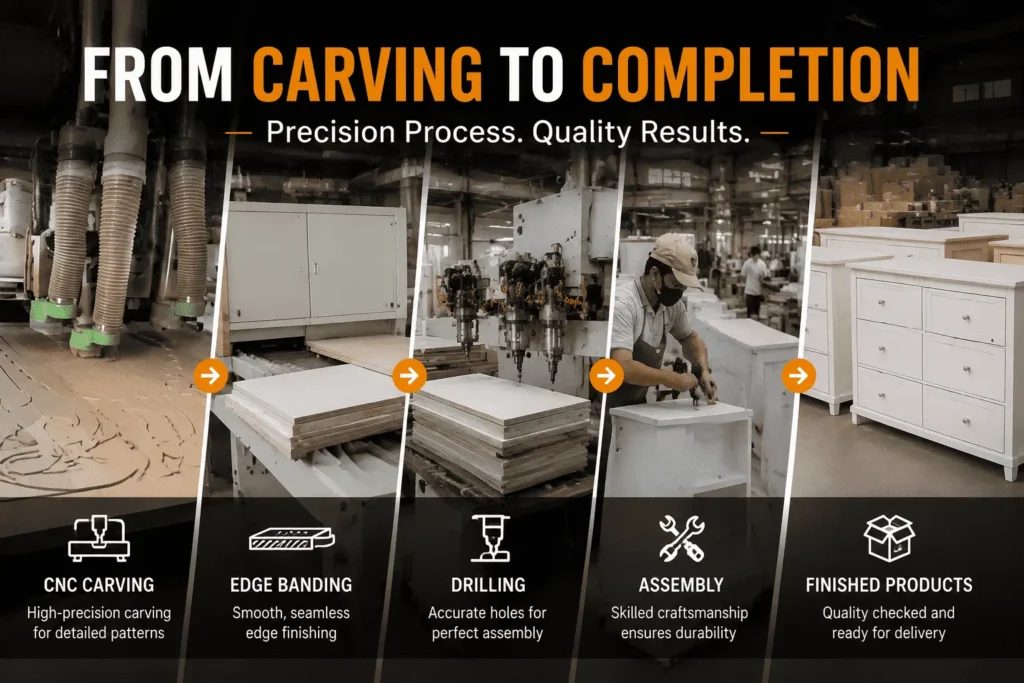
For B2B buyers, factory capability matters more than a beautiful catalog. A reliable flat pack kitchen cabinet factory should have stable panel processing capacity, CNC cutting, accurate drilling, edge banding, surface handling, hardware packing, QC checking and export packing experience.
When evaluating a supplier, ask practical questions:
Can the factory read CAD drawings or cabinet layout drawings?
Can it provide structure suggestions before quotation?
Can it adjust drilling, hinges, drawer slides and hardware positions?
Can it support sample development before mass production?
Can it pack hardware kits and assembly instructions clearly?
Can it plan container loading for bulk export orders?
These questions help separate a real OEM cabinet factory from a general trading company.
You can also review our factory positioning here: About Our Factory.
2. B2B Communication Experience
Kitchen cabinet sourcing involves many details: cabinet dimensions, board thickness, edge banding, hinge type, drawer slide length, finish color, carton layout, barcode labels, spare parts and destination market standards.
A factory with B2B export experience should respond with clear questions, not vague promises. For example, before quoting, the supplier should ask about order quantity, material requirement, packaging method, target price, loading port, destination market and whether the project needs private label packaging.
For hotel, apartment and contractor orders, the factory should also ask for project schedule, room quantity, cabinet list, installation sequence and whether the furniture is delivered by floor, by room or by model.
3. Stable OEM/ODM Support
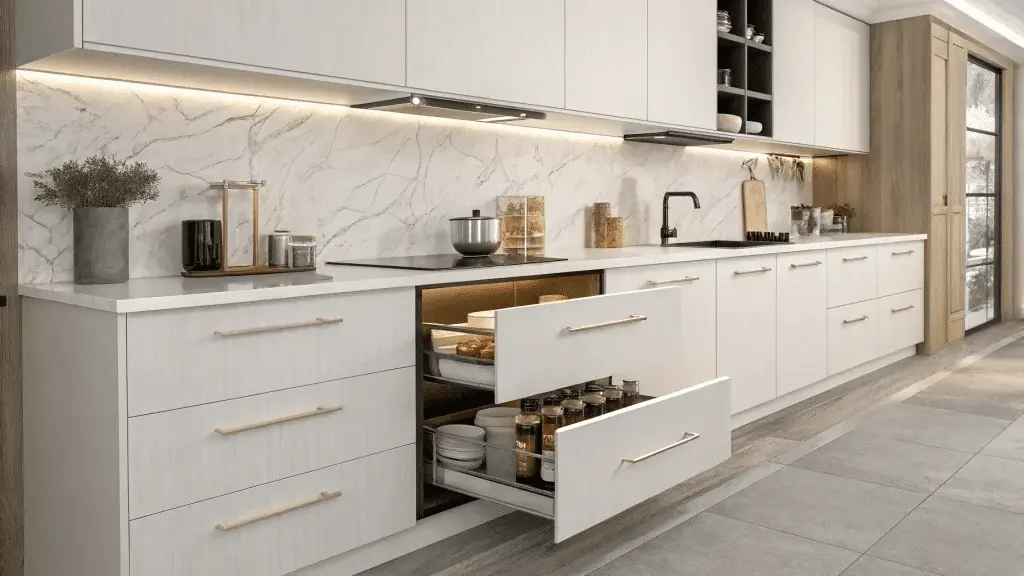
OEM means the buyer provides drawings, samples or existing designs, and the factory manufactures according to those requirements. ODM means the factory helps develop a product based on market needs, target price, style direction and function.
For kitchen cabinet programs, both OEM and ODM are common. Importers may already have drawings, while retailers may only have reference photos and target price. Project buyers may have room layouts but need factory support to turn them into practical flat pack cabinet modules.
Learn more about our customization service here: OEM & ODM Furniture Manufacturing Services.
Materials Buyers Should Confirm Before Quotation
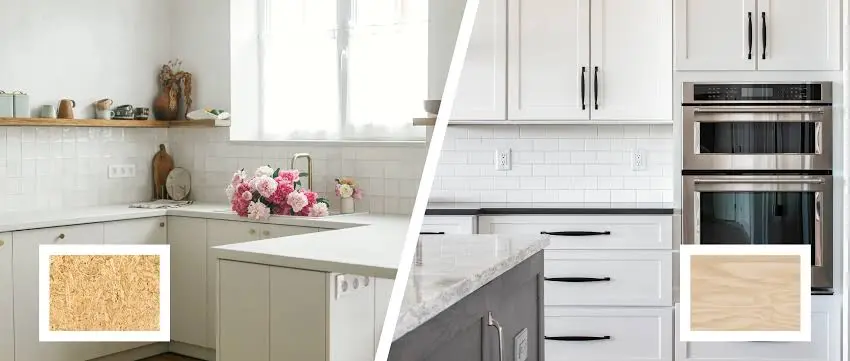
Material selection directly affects cost, durability, weight, moisture resistance, surface appearance and market positioning. A professional flat pack kitchen cabinet supplier should help buyers choose materials according to the target market instead of recommending only the cheapest option.
Common Board Materials
Particle Board
Particle board is widely used for cost-effective flat pack kitchen cabinets, especially for retail, rental housing and large-volume projects. It works well with melamine surfaces and can provide competitive pricing for bulk orders.
MDF
MDF has a smooth surface and is suitable for painted, lacquered, PET or film finishes. It is often used for cabinet doors, decorative panels and modern kitchen designs where surface quality matters.
Plywood
Plywood is stronger and more stable in many cabinet applications, especially where buyers need better screw holding, higher strength or improved moisture resistance. It is often used for higher-positioned kitchen cabinet programs, apartment projects and contractor orders.
Melamine Board
Melamine board is practical for flat pack cabinet manufacturing because it offers many colors, wood grains and surface textures. It is cost-effective, easy to clean and suitable for large-volume kitchen storage programs.
Laminate, PET, Veneer or Painted Finish
These finish options are used when buyers need a higher-end look, modern style or specific market positioning. The factory should confirm finish samples before mass production.
Formaldehyde and Market Compliance
For buyers selling into the U.S. market, composite wood products may need to meet TSCA Title VI requirements. The U.S. EPA explains that regulated composite wood products include hardwood plywood, MDF and particleboard, which are commonly used in furniture and kitchen cabinets. Buyers can review the official EPA guidance here: EPA Formaldehyde Emission Standards for Composite Wood Products.
For California-related markets, buyers may also review CARB composite wood product requirements. CARB and EPA requirements are often checked by importers, distributors and retailers when sourcing panels or finished goods. Reference: CARB and EPA TSCA Title VI Comparison.
For buyers requesting responsible wood sourcing or FSC-related supply chain documents, FSC chain of custody certification can help verify forest-based materials through the supply chain. Reference: FSC Chain of Custody Certification.
When sending an inquiry, buyers should clearly state the destination market and any required emission standard, test report, certification request or labeling requirement.
OEM/ODM Customization Options for Kitchen Cabinet Orders
A strong OEM kitchen cabinet supplier should support customization beyond simple color changes. For B2B buyers, customization should improve market fit, reduce installation problems and support repeat orders.
Custom Size and Layout
Kitchen cabinet dimensions vary by market. Standard cabinet sizes for one country may not fit another market or project layout. For apartment and hotel projects, buyers may need custom cabinet width, height, depth and module combinations.
Common customization items include:
Base cabinet size
Wall cabinet size
Pantry cabinet height
Drawer cabinet width
Sink cabinet structure
Corner cabinet layout
Kitchen island dimensions
Back panel thickness
Adjustable shelf positions
Toe kick height
Drilling positions
For project furniture manufacturing, stable size control is important because one mistake can affect many rooms or units. If you are sourcing for apartments, hotels or rental housing, you can also review our project support page: Project Furniture Manufacturing.
Door Style and Surface Finish
Kitchen cabinet appearance is usually decided by the door panel. Buyers can customize shaker doors, slab doors, high-gloss doors, matte finish doors, wood grain panels or two-tone color combinations.
For retail collections, finish consistency is very important. The factory should confirm color samples, finish codes and production tolerance before bulk orders. For repeat orders, keeping the same finish standard helps avoid customer complaints.
Hardware Options
Hardware affects user experience and project durability. Buyers should confirm hinge type, drawer slide type, handles, soft-close function, screw quality and hardware packing method.
For hotel apartments and rental properties, soft-close hinges and durable drawer slides may reduce maintenance problems. For cost-sensitive wholesale programs, the buyer may choose standard hardware but should still confirm load capacity and installation accuracy.
Private Label and Packaging
Many importers, retailers and e-commerce sellers need private label support. A qualified flat pack kitchen cabinet factory should support:
Carton marks
Logo labels
Barcode labels
SKU labels
Instruction manuals
Hardware bags
Spare parts packing
Retail-ready cartons
Project-based carton numbering
Pallet or container loading plan
Good packaging is not only about appearance. It reduces warehouse confusion, installation mistakes and transport damage.
MOQ, Lead Time and Production Planning
MOQ and lead time are two of the most important topics for B2B buyers.
Typical MOQ Discussion
For flat pack kitchen cabinet orders, MOQ usually depends on material, finish, hardware, carton design and production complexity. A standard melamine cabinet program may have a lower MOQ than a customized painted door program. If the buyer requests a special color, special board thickness, unique hardware or private packaging, MOQ may increase because the factory needs to control material purchasing and production setup costs.
For export furniture programs, many factories prefer container-based orders because flat pack products are designed for efficient loading. Buyers can usually plan by 20GP, 40GP or 40HQ containers depending on product mix and destination.
When sending an inquiry, do not only ask “What is your MOQ?” Instead, provide the product list, estimated quantity, target market and whether you need sample testing. A professional supplier can then suggest a realistic MOQ for your project.
Sample Lead Time
Sampling is important for OEM/ODM kitchen cabinet projects. A sample helps confirm structure, material, surface finish, drilling, hardware, assembly logic and packaging. Sample lead time depends on the design complexity and material availability.
For a new kitchen cabinet project, buyers should prepare enough time for:
Drawing review
Quotation confirmation
Material sample approval
Cabinet sample production
Assembly check
Packaging test
Final adjustment before mass production
Skipping the sample stage may save time at the beginning, but it can create larger risks during bulk production.
Bulk Production Lead Time
Bulk lead time depends on order quantity, material availability, production schedule, finish process and packaging complexity. For repeat orders with approved materials and stable packaging, production is usually faster. For first orders, buyers should allow more time for confirmation and pre-production preparation.
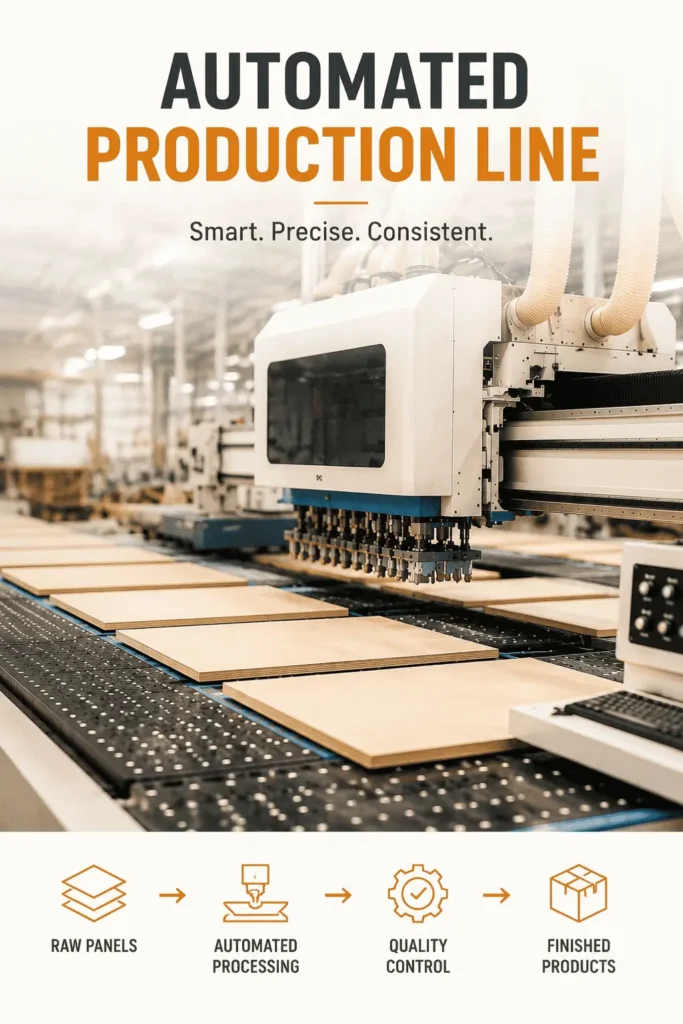
A practical factory will not only give a delivery date. It should also explain key milestones: material purchasing, panel cutting, edge banding, drilling, trial assembly, QC inspection, packaging and loading.
Export Packaging, Carton Marks and Container Loading
Flat pack kitchen cabinets are export-friendly only when the packaging is designed correctly. Poor packing can cause panel scratches, edge damage, missing hardware, carton deformation and installation complaints.
What Good Export Packaging Should Include
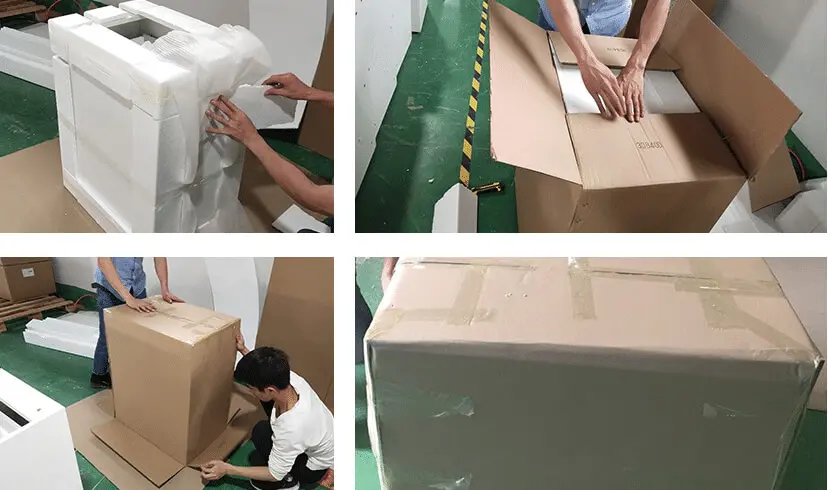
For kitchen cabinet export orders, packaging should protect both appearance and structure. Common packaging methods include foam protection, corner protection, edge protection, hardware bags, clear assembly instructions, reinforced cartons and organized carton marks.
For RTA kitchen cabinets, each carton should clearly show model number, color, size, quantity, destination mark and buyer-required barcode if needed. Hardware should be packed separately and labeled clearly. Assembly instructions should match the actual drilling and hardware.
Carton Logic for Projects
For apartment and hotel projects, carton logic can be more important than retail appearance. Project buyers may prefer carton marks by room, building, floor, unit or cabinet type. This makes installation easier and reduces site confusion.
For example, a serviced apartment project may need cabinet sets grouped by unit type. A contractor may need all kitchen modules for one room delivered together. These details should be discussed before mass production.
Wood Packaging and ISPM 15
If wooden pallets, crates or wood packaging materials are used for international shipment, buyers should pay attention to ISPM 15-related requirements. USDA APHIS explains that regulated wood packaging material used to support, protect or carry cargo must be treated and certified according to ISPM 15 to help prevent the spread of wood-boring pests. Reference: USDA APHIS Wood Packaging Material Guidance.
For flat pack kitchen cabinet exports, many shipments use cartons loaded directly into containers, but if pallets or wooden supports are required, buyers should confirm packaging requirements with the supplier and forwarder before shipment.
Quality Control Points Buyers Should Not Ignore
A low price is not meaningful if the shipment causes high damage rates, installation complaints or repeated after-sales issues. Kitchen cabinets are detail-sensitive products, so buyers should check more than surface appearance.
Panel Cutting Accuracy
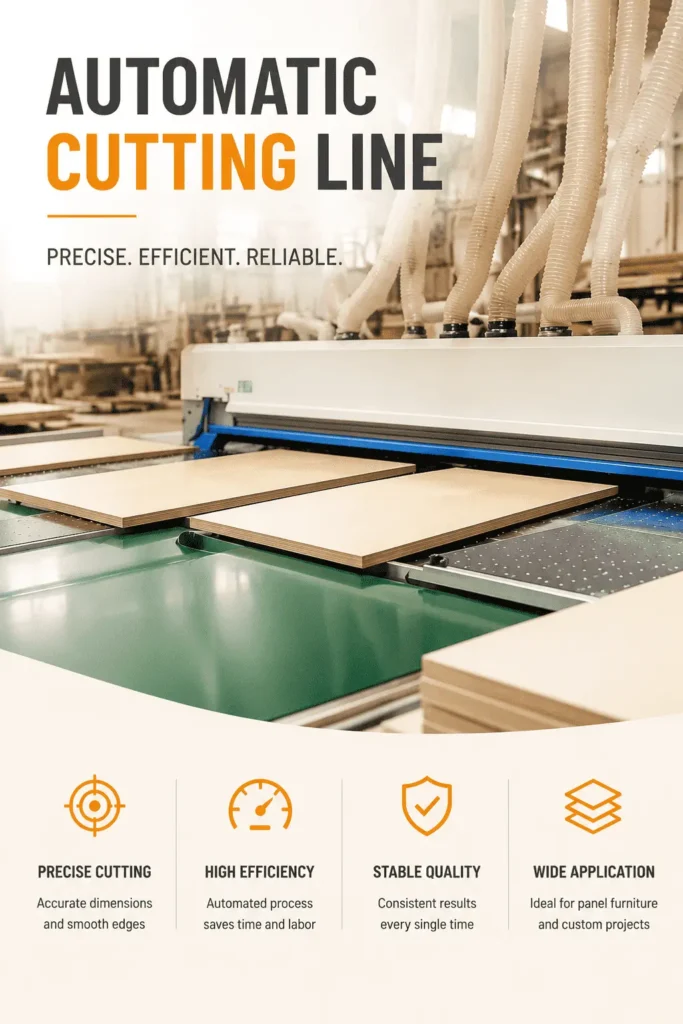
Flat pack cabinets depend on accurate panel size. Even a small deviation can affect assembly, door gaps and cabinet stability. CNC cutting and production control are important for repeat cabinet modules.
Edge Banding Quality
Kitchen cabinets are often exposed to moisture, cleaning and daily use. Poor edge banding can lead to peeling, swelling or poor appearance. Buyers should check edge thickness, glue line, corner trimming and sealing quality.
Drilling Accuracy
Flat pack cabinets require accurate drilling for hinges, cam locks, dowels, screws and drawer slides. Incorrect drilling creates installation problems and customer complaints. During sampling, buyers should assemble the product and confirm all hardware positions.
Hardware Fit
Hinges, drawer slides, handles and connectors should match the cabinet structure. The supplier should check whether the selected hardware works with the board thickness and cabinet design.
Surface Consistency
Color difference, scratches, glue marks and uneven finish can affect retail sales and project acceptance. Buyers should confirm acceptable tolerance before bulk orders.
Packing Drop and Handling Risk
Export shipments go through factory handling, container loading, sea transport, port unloading, warehouse movement and final delivery. The packaging must survive real logistics conditions, not only look good in the factory.
Commercial Furniture Sustainability Reference
For commercial furniture buyers, sustainability and responsible purchasing may also be part of tender documents. BIFMA’s ANSI/BIFMA e3 Furniture Sustainability Standard is a recognized furniture sustainability reference covering environmental, health, wellness and social impacts. Buyers can review the official BIFMA information here: ANSI/BIFMA e3 Furniture Sustainability Standard.
Even when a project does not require formal certification, understanding these standards helps buyers ask better questions about materials, packaging, durability and responsible manufacturing.
7 Smart Tips to Choose a Flat Pack Kitchen Cabinet Supplier
Tip 1: Ask for Factory Process, Not Only Product Photos
Product photos can be reused by many sellers. A serious buyer should ask about production process, machinery, QC steps, packing method and previous export experience. A real panel furniture factory should be able to explain how the cabinet is made, packed and shipped.
Tip 2: Send Complete Inquiry Information
A clear inquiry saves time and improves quotation accuracy. Include drawings, reference photos, dimensions, material requirements, finish color, hardware specification, order quantity, packaging request, destination country and target price if available.
Tip 3: Confirm Material Standards Early
Do not wait until production to discuss board grade, emission standard or finish requirement. If your market needs TSCA Title VI, CARB, E1, FSC-related materials or buyer-specific documentation, mention it at the quotation stage.
Tip 4: Request Sample Before Bulk Production
For new OEM/ODM kitchen cabinet programs, sampling is strongly recommended. The sample should be assembled and checked for structure, drilling, hardware, finish and packaging.
Tip 5: Review Packaging Like a Product
Flat pack furniture packaging is part of the product. Ask for carton layout, hardware bag photos, instruction manual, corner protection, carton marks and loading plan before shipment.
Tip 6: Compare Total Cost, Not Only Unit Price
A cheaper unit price may create higher freight cost, damage rate or installation complaints. B2B buyers should compare total landed cost, including product price, packaging strength, container loading efficiency, damage risk and after-sales cost.
Tip 7: Choose a Supplier That Understands Repeat Orders
For importers, wholesalers, retailers and project buyers, the best supplier is not only for one order. You need a factory that can keep material records, finish samples, packaging files, drawings and QC standards for repeat production.
Buyer Checklist Before Sending an Inquiry
Before contacting a flat pack kitchen cabinet manufacturer, prepare the following information:
Product type: base cabinet, wall cabinet, pantry cabinet, island cabinet, drawer cabinet or complete set
Quantity: trial order, container order or project quantity
Dimensions: width, height, depth and layout requirements
Material: particle board, MDF, plywood, melamine board or specified material
Finish: melamine, laminate, PET, lacquer, veneer or custom color
Hardware: hinge, drawer slide, handle, connector and soft-close request
Packaging: flat pack, RTA, private label, barcode, carton marks and instruction manual
Market: U.S., Canada, Europe, Australia, Middle East or other destination
Compliance: TSCA Title VI, CARB, E1, FSC-related request or buyer standard
Delivery plan: sample deadline, bulk order deadline and shipping schedule
Documents: commercial invoice, packing list, loading photos, test reports if required
The more complete your inquiry is, the faster the supplier can quote accurately.
Why Work with a Panel Furniture Export Factory?
A professional panel furniture export factory can support more than kitchen cabinets. Many B2B buyers need coordinated furniture programs for apartments, hotels, rental housing and retail collections. A factory experienced in panel furniture can manufacture wardrobes, storage cabinets, bathroom cabinets, desks, beds, TV cabinets, kitchen storage and space-saving furniture with consistent material and finish direction.
This is especially useful for project buyers who need multiple room categories from one source factory. Instead of sourcing kitchen cabinets from one supplier and wardrobes from another, buyers can coordinate materials, colors, packaging and shipment more efficiently.
For kitchen cabinet buyers, working with a broader OEM/ODM furniture supplier also supports future product expansion. You may start with flat pack kitchen cabinets and later add pantry cabinets, bathroom storage, apartment wardrobes or project furniture collections.
View related product and service pages:
Kitchen Cabinet Manufacturer in China
OEM & ODM Furniture Manufacturing Services
Project Furniture Manufacturing
About Our Factory
FAQ
1. Are you a flat pack kitchen cabinet supplier or manufacturer?
We are a China-based OEM/ODM panel furniture manufacturer producing flat pack kitchen cabinets, RTA kitchen furniture, modular kitchen storage, pantry cabinets and custom cabinet solutions for importers, wholesalers, retailers, apartment projects, hotel projects and contractors.
2. Can you customize kitchen cabinet size, color and structure?
Yes. We support custom dimensions, cabinet structure, door style, surface finish, board thickness, hardware, drilling, carton marks, private label packaging and assembly instructions based on buyer requirements.
3. What materials are available for flat pack kitchen cabinets?
Common options include particle board, MDF, plywood, melamine board, laminate, PET finish, lacquer, veneer and other engineered wood materials. Material selection depends on target market, budget, durability requirement and project use.
4. Do you support OEM and ODM kitchen cabinet production?
Yes. For OEM projects, buyers can provide drawings, samples or existing designs. For ODM projects, we can help develop cabinet structures, materials, finishes and packaging based on your market needs and target price.
5. What is the MOQ for flat pack kitchen cabinet orders?
MOQ depends on material, finish, hardware, packaging and customization level. Container-based orders are usually more efficient for export furniture. Buyers can send product lists and estimated quantities for a practical MOQ recommendation.
6. How long does sample and bulk production take?
Sample time depends on design complexity and material availability. Bulk production lead time depends on order quantity, finish process, packaging and factory schedule. For first orders, buyers should allow time for drawing review, sample approval and pre-production confirmation.
7. Can you provide private label packaging?
Yes. We support private label packaging, carton marks, barcode labels, instruction manuals, hardware bags, SKU labels and project-based carton numbering for importers, retailers, e-commerce brands and project buyers.
8. What information should I send for a quotation?
Please send drawings or reference photos, dimensions, material and finish requirements, hardware specifications, order quantity, packaging requirements, destination country, compliance needs and target price if available.
9. Are flat pack kitchen cabinets suitable for hotel and apartment projects?
Yes. Flat pack kitchen cabinets are suitable for apartments, serviced apartments, rental housing, student housing, hotel rooms and contractor projects because they are cost-effective, easy to transport and practical for repeat installation.
10. How do you reduce shipping damage for export orders?
We use export-oriented packaging methods such as panel protection, corner protection, hardware separation, clear carton marks, reinforced cartons and container loading planning. Packaging details can be adjusted according to buyer requirements and shipment method.
Final CTA
Send us your drawings, reference photos, cabinet list, materials, quantity, packaging request and destination market. Our team can review your requirements and provide practical factory suggestions for material selection, structure optimization, MOQ, lead time, export packaging and quotation.
Contact Starwood Industry Co., Ltd. today to start your OEM/ODM flat pack kitchen cabinet project.