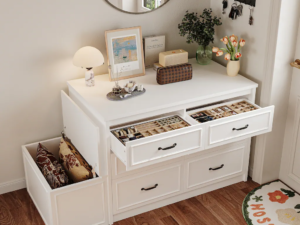

Finding a reliable bulk dressing table supplier is a procurement decision that affects your product margins, inventory planning, delivery commitments, and customer satisfaction. For furniture importers, wholesalers, private-label brands, hotel purchasing teams, and apartment developers, a competitive factory quotation is only the starting point.
The real challenge is securing consistent engineered wood panel furniture at an acceptable landed cost, with clearly defined MOQ, product specifications, production lead times, quality standards, and export packaging.
At Starwood Industry Co., Ltd., we support international B2B buyers with OEM and ODM panel furniture manufacturing, including customizable dressing tables for wholesale distribution and commercial furniture projects.
This practical sourcing guide explains what purchasing teams should verify before confirming a bulk dressing table order.
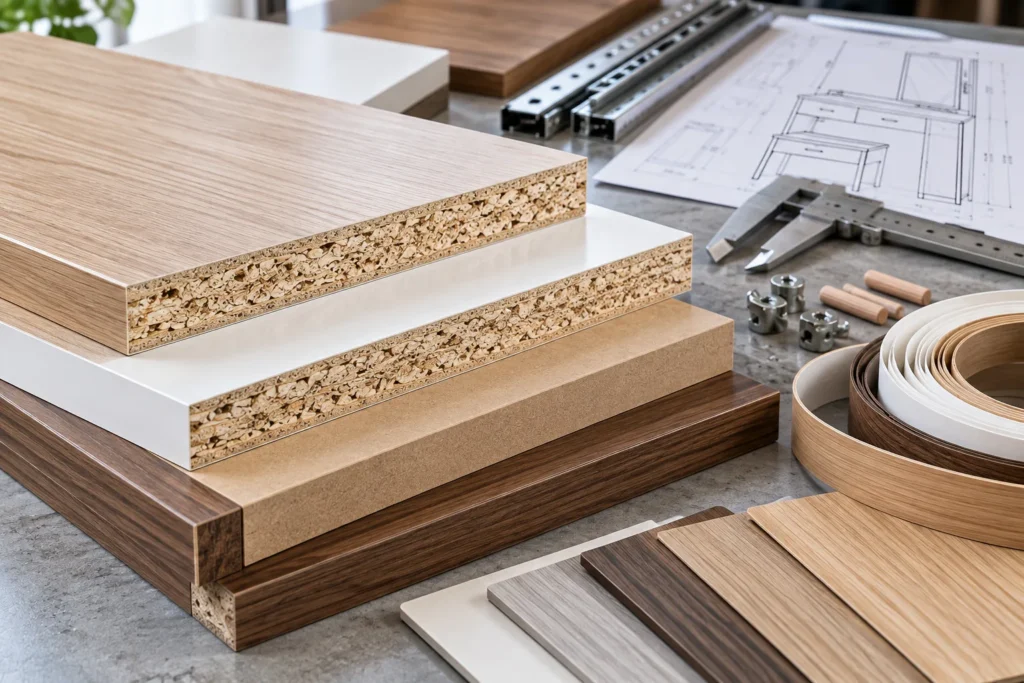
Table of Contents
- What Makes a Reliable Bulk Dressing Table Supplier?
- Five Critical Price and MOQ Checks Before Ordering
- Factory-Direct Manufacturing Capabilities
- Dressing Table Options for Different B2B Markets
- MDF, Particleboard and Decorative Panel Specifications
- How Bulk Dressing Table Pricing Works
- MOQ, Mixed SKUs and Sample Development
- Production Lead Times and Delivery Planning
- KD Packaging and International Shipping
- Quality Control and Destination-Market Compliance
- Hotel and Apartment Furniture Procurement
- OEM and ODM Order Development Process
- Bulk Dressing Table RFQ Requirements
- Shipping Terms and Export Documentation
- Why Work with Starwood?
- Frequently Asked Questions
- Request a Bulk Dressing Table Quotation
What Makes a Reliable Bulk Dressing Table Supplier?
A reliable wholesale dressing table supplier should do more than offer attractive product photographs and competitive quotations.
For repeat import programs, the supplier needs to understand production engineering, material availability, order quantity planning, quality verification, packaging performance, and delivery coordination.
A typical bulk dressing table program can involve several versions of the same product, each with different sizes, panel finishes, mirror configurations, or drawer arrangements.
The purchasing team may need these variations delivered in a single container or according to an agreed project schedule.
This creates operational requirements that are not always visible in the finished furniture.
Why Factory-Direct Sourcing Matters
Working with a manufacturer can provide a more direct process for discussing design changes, component specifications, production feasibility, and quality control.
When buyers request a different board thickness or drawer system, the factory can evaluate how the modification affects machining, material usage, assembly, and packing.
These details should be confirmed before the purchasing contract is finalized.
Starwood is a China-based OEM and ODM panel furniture manufacturer specializing in engineered wood products, knock-down furniture construction, and export-oriented production.
Buyers can learn more about our background and manufacturing operations on our factory and company information page.
For professional sourcing teams, supplier reliability means producing the agreed specification consistently—not simply producing an attractive sample once.
Five Critical Price and MOQ Checks Before Ordering
When purchasing dressing tables in bulk, buyers should verify the following commercial and technical details before comparing supplier quotations.
1. Confirm the Exact Product Specification
The first priority is establishing what the quoted dressing table actually includes.
Two products may look almost identical in photographs but have significantly different component costs.
One may use a thinner engineered wood panel, a basic drawer slide, and a simple mirror mounting system. Another may use different hardware, improved edge protection, and a more complex drawer structure.
Before requesting a final quotation, define:
- Overall dimensions and product configuration.
- Board material, thickness, and decorative finish.
- Drawer quantity and slide specifications.
- Mirror dimensions and attachment details.
- Included stool, lighting, handles, and accessories.
- Knock-down construction and assembly requirements.
- Private-label and carton marking requirements.
The factory should understand which specifications are mandatory and which can be adjusted to meet the target price.
For example, a distributor may need to maintain the overall appearance of a vanity while simplifying internal panel construction.
A project buyer may prioritize repeatable hardware and easy maintenance over decorative features.
These decisions should be made deliberately rather than allowing suppliers to quote different specifications.
2. Verify MOQ by Model, Finish and Production Batch
Minimum order quantity is one of the most important commercial questions when dealing with a bulk dressing table supplier.
However, MOQ is not always determined by the total number of dressing tables ordered.
A factory may need to consider separate production quantities for each color, size, mirror configuration, and hardware specification.
For instance, an order containing several models in multiple colors may be more complicated to manufacture than an equivalent quantity of one standardized design.
Buyers should therefore ask:
- Is the MOQ calculated per SKU or per purchase order?
- Can several compatible models be consolidated into one shipment?
- Is there a minimum quantity for a customized finish?
- Are special mirrors or hardware subject to separate purchasing minimums?
- Can repeat orders use the same approved materials and specifications?
Starwood supports flexible OEM and ODM inquiries, with the final MOQ evaluated according to product requirements and manufacturing feasibility.
We recommend discussing the complete product mix early, particularly for wholesalers planning their first container or expanding an existing furniture collection.
3. Compare the Complete Factory Quotation
A low unit price is not automatically a better purchasing decision.
Importers should compare quotations on an equivalent specification and commercial basis.
The quotation should identify whether mirrors, stools, upgraded hardware, packaging materials, testing, and customized labeling are included.
Buyers should also confirm the currency, payment terms, quotation validity, and agreed shipping basis.
A practical quotation comparison should evaluate product cost together with expected packaging, freight, receiving, and assembly expenses.
If a supplier excludes important components from the quoted price, the buyer may face additional charges after the purchase order is issued.
For repeat wholesale programs, pricing consistency across subsequent orders can be just as important as the initial offer.
Ask how changes in materials, hardware, carton design, or order quantity will be handled commercially.
4. Evaluate Carton Volume and Total Landed Cost
Flat-pack dressing tables can be suitable for containerized furniture imports because disassembled components may be arranged into relatively compact cartons.
However, packing efficiency depends on the actual furniture structure and protective packaging.
A smaller carton does not necessarily produce a lower overall cost if inadequate protection increases breakage or replacement expenses.
When evaluating a bulk order, request:
- Final outer carton dimensions.
- Net weight and gross weight.
- Number of cartons per furniture set.
- Estimated container loading quantity.
- Palletization requirements, if applicable.
- Mirror and panel protection details.
This information allows importers to estimate freight and warehouse space more accurately.
For e-commerce programs, carton dimensions may also influence parcel handling and fulfillment expenses.
A useful purchasing comparison is the expected landed cost per saleable furniture set, rather than factory unit price alone.
5. Confirm the Production and Inspection Schedule
The final critical check concerns manufacturing timing and acceptance standards.
A quotation may specify an estimated lead time, but the purchasing team must understand when that period begins.
Does the timeline start after the purchase order, deposit, approved sample, confirmed drawings, or receipt of special materials?
For custom dressing tables, these milestones can materially affect the schedule.
Before confirming the order, agree on the specification approval date, production plan, inspection requirements, packing completion target, and shipment arrangements.
Where delivery dates are essential for hotel openings or retail promotions, communicate those deadlines before sample approval.
A reliable supplier should review the requirements and provide a realistic production commitment for the actual order.
Factory-Direct Dressing Table Manufacturing Capabilities
Starwood Industry Co., Ltd. is located in Jiangmen, Guangdong, China, and has specialized in flat-pack panel furniture manufacturing since 2013.
Our manufacturing activities focus on engineered wood panel processing, OEM and ODM customization, product development, bulk production, quality inspection, and export preparation.
CNC Processing and Panel Furniture Engineering
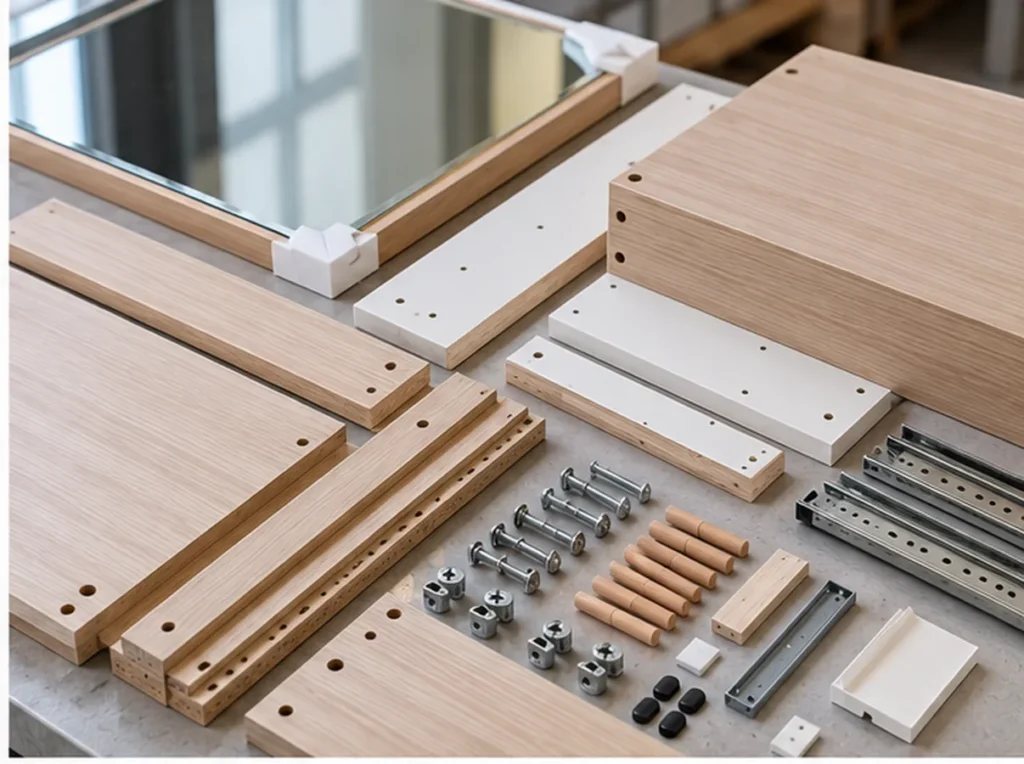
Panel furniture manufacturing depends on accurate component dimensions, drilling positions, edge treatments, and hardware compatibility.
Typical manufacturing operations include CNC cutting, drilling, edge banding, component preparation, and trial assembly.
For repeat dressing table orders, using approved drawings and consistent component specifications helps reduce variation between batches.
A small drilling error may cause problems during assembly, even when the surface finish looks acceptable.
Production engineering therefore needs to consider both the individual components and the complete assembled furniture.
OEM and ODM Support
OEM buyers can submit existing drawings, product samples, material requirements, and target specifications.
ODM customers may begin with reference photographs, target retail positioning, functional requirements, and desired dimensions.
Our OEM and ODM furniture manufacturing services support technical review, customization, sampling, mass production, quality verification, and export packaging coordination.
For international buyers, these capabilities help connect the initial product concept with practical manufacturing requirements.
Dressing Table Options for Different B2B Markets
The appropriate product configuration depends on the customer’s sales channel and intended application.
Furniture Importers and Wholesale Distributors
Importers typically need a repeatable collection of dressing tables that can be sold through retailers, dealers, or regional distribution networks.
Popular product directions may include compact dressing tables, mirrored vanity desks, drawer-storage designs, and coordinated bedroom furniture sets.
For wholesale supply, standardized dimensions and finish selections can make purchasing and inventory management easier.
Distributors should also consider replacement component availability and consistency between repeat orders.
Private-Label Furniture Brands
Private-label buyers often need an identifiable appearance together with controlled manufacturing costs.
Customization may involve decorative board colors, drawer fronts, handles, mirror shapes, product dimensions, or branded packaging.
The factory should evaluate these requirements against the target order quantity.
Maintaining a common internal structure across several external designs may help reduce unnecessary component variation.
Our dressing table with mirror product page demonstrates the types of configurations that can be considered for customized B2B furniture programs.
Hotel and Serviced Apartment Projects
Hospitality projects require more emphasis on room dimensions, finish coordination, hardware durability, installation schedules, and long-term maintenance.
A dressing table may also function as a writing desk or storage surface.
Developers should consider how the furniture integrates with wardrobes, bedside cabinets, beds, and other fitted or freestanding items.
A consistent material and hardware schedule can simplify procurement across multiple room types.
For coordinated commercial furniture requirements, buyers can review our project furniture manufacturing capabilities.
MDF, Particleboard and Decorative Panel Specifications
As a panel furniture export factory, our dressing table sourcing discussions focus on engineered wood materials rather than solid-wood construction.
For importers, selecting the correct panel specification is essential to achieving the desired relationship between cost, appearance, product performance, and repeatability.
Melamine-Faced Particleboard
Melamine-faced particleboard is commonly considered for cost-controlled panel furniture programs.
It provides decorative surface options such as white, beige, grey, oak-look, and walnut-look finishes.
The visible wood grain is a decorative surface, not a solid wood component.
Buyers should specify the required board thickness, surface color, texture, edge banding, and relevant quality requirements.
MDF and Other Engineered Panels
MDF may be appropriate for smooth surfaces, particular machining requirements, or selected painted components.
Plywood can also be considered where the agreed structure and material requirements justify its use.
The best material cannot be determined from appearance alone.
A supplier should evaluate the board specification together with the intended product design, hardware connections, and destination-market requirements.
Edge Banding and Surface Consistency
Edge quality is particularly important because dressing tables have visible tabletops, side panels, drawer fronts, and storage compartments.
Poorly finished edges can affect the appearance and serviceability of the product.
For a bulk order, buyers should approve a physical finish sample and define acceptable color variation, edge quality, and surface defects.
When matching other bedroom furniture, using an approved finish reference across the collection can reduce inconsistencies.
How Bulk Dressing Table Pricing Works
Wholesale dressing table pricing is influenced by material consumption, panel processing, hardware, accessories, packaging requirements, and production quantity.
The price of an OEM model cannot be evaluated reliably without knowing these specifications.
Main Cost Drivers
A wider dressing table consumes more panel material and may require a different support structure.
Additional drawers introduce more panels, slides, connectors, and assembly steps.
Special mirrors, decorative panels, lighting components, and custom packaging can also increase manufacturing complexity.
The cost implications should be reviewed during product development.
Tiered Pricing for Bulk Orders
Buyers may request quotations at several projected order quantities to understand possible manufacturing economies.
However, price reductions are not necessarily proportional to the number of units ordered.
Material purchasing minimums, panel utilization, hardware sourcing, finish changes, and production efficiency all influence the quotation.
For accurate comparisons, request pricing for the same approved design under clearly defined quantity scenarios.
Protecting Retail Margins
Importers should calculate an expected margin using the full landed cost.
This may include product price, ocean freight, insurance where applicable, customs charges, local transportation, warehouse handling, and anticipated after-sales costs.
For a private-label collection, packaging damage and missing hardware can erode margins even when the original factory price is competitive.
Controlling those risks is an important part of sourcing.
MOQ, Mixed SKUs and Sample Development
MOQ and sample approval should be managed as connected purchasing decisions.
A buyer developing a new dressing table program may need to balance product variety with economically practical production quantities.
Mixed SKU Container Planning
For example, a wholesaler may wish to launch several finish options within one shipment.
The factory must review whether the requested board colors, mirrors, and hardware can be purchased and produced efficiently.
Where feasible, common panel structures and hardware specifications may support a more manageable product program.
The final MOQ remains subject to the actual product and order requirements.
Sample Approval Before Bulk Production
A reference photograph or drawing is not a substitute for confirming the final manufacturing specification.
For customized orders, sample development provides an opportunity to check dimensions, color, drawer function, mirror mounting, assembly and packaging.
The approved sample should be linked to a written product specification.
If the buyer requests changes afterward, the resulting cost and production implications should be confirmed.
This helps prevent avoidable disputes during the bulk manufacturing stage.
Production Lead Times and Delivery Planning
Overseas buyers should request lead times based on the confirmed scope of work rather than relying on a general production estimate.
The schedule may include technical review, sample development, material procurement, component production, inspection, packing and shipping preparation.
What Can Change the Delivery Schedule?
Special hardware, customized board finishes, non-standard mirrors, lighting components, and new packaging designs may require additional preparation.
Large orders may also need phased production or shipment planning.
Buyers should identify which materials and accessories have the greatest effect on the schedule.
Managing Repeat Orders
For ongoing wholesale programs, maintaining approved drawings, material codes, hardware specifications, and packing records can simplify reorder discussions.
However, material availability, production capacity, and final lead time should still be reconfirmed for each order.
For projects with fixed installation dates, factory-ready dates should be coordinated with freight booking and the buyer’s receiving schedule.
KD Packaging and International Shipping
Export packaging is an essential part of bulk dressing table manufacturing.
Products may contain decorative engineered panels, glass mirrors, drawer slides, connectors, and other components that must arrive together and in usable condition.
Protective Flat-Pack Cartons
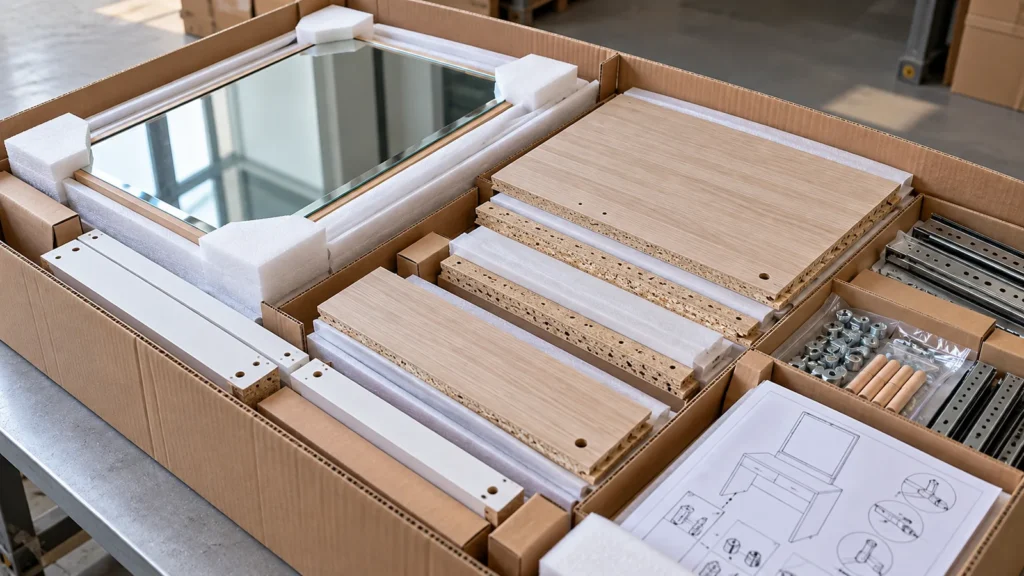
Depending on the product, packing solutions may include separated panels, protective corner materials, foam cushioning, individual hardware bags, and assembly instructions.
Mirror protection deserves particular attention because direct contact with metal fittings or furniture panels can cause damage during handling.
Where multiple cartons form one furniture set, clear carton identification helps avoid incomplete deliveries.
Packaging Requirements by Distribution Channel
A container shipment delivered to a furniture warehouse may have different handling requirements from a product shipped individually to online customers.
Professional buyers should define their intended distribution route before approving the carton design.
The International Safe Transit Association’s official test procedures explain packaging evaluation methods for different transport and distribution environments.
For furniture shipments, buyers may evaluate an appropriate furniture-package or parcel-distribution test according to their handling requirements.
No packaging should be described as ISTA-certified or tested unless relevant testing has actually been completed.
Learn more about our flat-pack furniture export packaging approach.

Quality Control and Destination-Market Compliance
Quality inspection should verify that the bulk dressing tables match the approved specifications.
For panel furniture, the inspection process should cover construction, surface finish, hardware operation, packaging, and assembly completeness.
Practical Inspection Requirements
Important checks may include panel dimensions, drilling accuracy, edge-banding finish, drawer alignment, mirror condition, hardware quantity, and carton markings.
A sample assembly can help identify missing hardware, unclear instructions, and incompatible components.
For repeat orders, the supplier and buyer should agree on inspection criteria and procedures for handling nonconforming products.
Composite Wood Emissions
For the United States, importers should review the U.S. Environmental Protection Agency’s TSCA Title VI requirements for composite wood products.
The requirements can apply to regulated MDF, particleboard, hardwood plywood, and finished goods containing these materials.
Relevant material documentation should correspond to the actual panels used in the order.
The EPA also provides a compliance guide specifically for importers, distributors, and retailers, which is useful when developing the purchasing documentation checklist.
Responsible Material Sourcing
Buyers requesting certified forest-based materials can refer to the Forest Stewardship Council’s chain-of-custody certification guidance.
Certification claims require appropriate supporting evidence and cannot be assumed merely because a product uses engineered wood.
For European supply chains, importers should review the European Commission’s official information on deforestation-free products and verify which requirements, implementation dates and product categories apply to their business.
Furniture Safety Requirements
Certain dressing table designs may have additional safety considerations.
Where a product could fall within a regulated furniture category, classification should be evaluated according to its actual structure and intended use.
For example, the U.S. Consumer Product Safety Commission’s clothing storage unit guidance describes requirements for furniture meeting the definition of a clothing storage unit.
Not every dressing table falls into that category. Buyers should verify applicability rather than automatically applying or ignoring the requirements.
Hotel and Apartment Furniture Procurement
Project purchasing is different from ordering products for ordinary retail distribution.
A hotel or apartment development may need hundreds of coordinated furniture items with consistent colors, sizes, hardware and installation details.
A supplier should review the overall furniture schedule rather than considering each dressing table as an unrelated product.
Room Schedules and Custom Dimensions
Project buyers should provide room types, required quantities, drawings, finish schedules, and installation constraints.
Dressing table dimensions may need adjustment for wall outlets, room circulation, nearby wardrobes, and mirror placement.
Mock-Up Approval and Installation
A sample room or furniture mock-up can help confirm that the approved design works in the intended space.
Buyers should check tabletop clearance, drawer movement, mirror position, stability, and accessibility.
Coordinated Furniture Packages
Our project furniture manufacturing service supports coordinated panel furniture requirements for hospitality, apartments, rental housing and other commercial developments.
A common specification system can help simplify material approvals, production planning and receiving procedures.
OEM and ODM Order Development Process
For international purchasing teams, a clear manufacturing workflow makes project responsibilities easier to manage.
Inquiry and Technical Review
The buyer submits reference photographs or drawings, target quantity, materials, finish requirements, destination market, and commercial expectations.
The factory reviews the information and identifies technical questions.
Quotation and Sample Development
After the product scope is sufficiently defined, the factory prepares a quotation and discusses sample arrangements.
Sample approval should cover the functional product as well as material and finish details.
Bulk Production and Quality Verification
Following final specification approval and agreed commercial arrangements, bulk production can be scheduled.
Panel processing, hardware preparation, inspection and packing should follow the approved documents.
Packing and Shipment Coordination
The factory prepares the finished goods according to the agreed packing requirements.
The buyer and supplier coordinate the final inspection, shipping terms, carton quantities and required export documentation.
This workflow is designed to reduce unapproved changes and improve repeat order consistency.
Bulk Dressing Table RFQ Requirements
A complete RFQ helps the manufacturer quote the correct product and reduces time spent on clarification.
We recommend including the following information in your initial inquiry.
Product Requirements
- Product photographs, drawings, or reference models.
- Overall dimensions and required storage layout.
- MDF or particleboard specifications and thickness.
- Melamine finish or other decorative surface requirements.
- Mirror size, frame design, and mounting arrangement.
- Hardware, drawer slides and optional accessories.
Quantity and Commercial Requirements
- Estimated quantity for each model and finish.
- Trial order or repeat purchasing program.
- Required destination country and market.
- Expected shipment date.
- Preferred Incoterms rule and quotation currency.
- Packaging, labeling and private-brand requirements.
Example Purchasing Request
Product: OEM flat-pack dressing table with mirror
Material: Melamine-faced engineered particleboard
Finish: Customer-approved decorative oak-look surface
Size: Based on the attached product drawing
Hardware: KD connectors and specified drawer slides
Order plan: Bulk purchasing program with selected SKUs
Packaging: Export KD cartons, mirror protection and assembly instructions
Market: Destination country to be confirmed by buyer
Quotation required: MOQ, sample arrangements, unit pricing, carton specifications, production lead time and shipping terms
With this information, the supplier can evaluate the product more accurately than with a general request for the lowest price.
Shipping Terms and Export Documentation
Before placing a bulk furniture order, buyers should understand the commercial responsibilities associated with the quotation.
EXW and FOB quotations, for example, represent different allocations of responsibilities and costs.
The International Chamber of Commerce’s Incoterms 2020 guidance provides an official reference for the rules governing different international trade terms.
The agreed Incoterms rule and named place or port should be clearly identified in the purchase agreement.
Buyers should also confirm required invoices, packing lists, shipping paperwork, origin documents where applicable, and destination-market compliance records.
Additional inspections or special documentation should be agreed before order confirmation.
Why Work with Starwood as Your Bulk Dressing Table Supplier?
Starwood Industry Co., Ltd. focuses on OEM and ODM panel furniture manufacturing for international business customers.
Our manufacturing operations include engineered wood processing, CNC cutting, drilling, edge banding, customization support, sampling, quality inspection, and flat-pack export preparation.
We understand that furniture wholesalers and project buyers need more than an attractive finished product.
They need consistent specifications, practical ordering arrangements, clear communication, manageable manufacturing risks, and shipping-ready furniture.
Whether you are developing a private-label dressing table collection, expanding your wholesale product range, or purchasing for a hotel or apartment project, our team can review your requirements.
Explore our bedroom furniture manufacturing range and OEM/ODM manufacturing capabilities to learn more about how we support international buyers.
Frequently Asked Questions
What is the MOQ when ordering dressing tables in bulk?
MOQ depends on the dressing table design, board material, finish, hardware, packaging requirements, and purchasing quantity. Different SKU combinations may involve separate production requirements. Buyers should send their planned product mix for evaluation rather than assuming a fixed MOQ applies to every design.
Can I order different dressing table designs in one container?
Mixed-model shipment requests can be reviewed according to product specifications, production batch requirements, material availability, and shipping feasibility. The factory should confirm the quantities and commercial terms for each SKU before accepting the order.
Do you supply MDF and particleboard dressing tables instead of solid wood furniture?
Yes. Starwood specializes in engineered wood panel furniture, including MDF, particleboard, and suitable decorative panel constructions. Wood-grain finishes may imitate natural oak or walnut, but they should not be represented as solid wood materials.
Can I customize dressing tables for my private-label furniture brand?
OEM and ODM customization can include dimensions, storage configuration, mirror details, decorative finishes, hardware, carton markings, and assembly instructions. The available options depend on technical feasibility, production quantity, and the agreed product specification.
How do I get factory-direct wholesale dressing table prices?
Send the product drawings or reference photographs, dimensions, panel specifications, mirror and hardware requirements, expected quantities, packing requirements, and destination market. A detailed RFQ helps the factory provide a quotation based on the actual requested product.
What is the production lead time for bulk dressing table orders?
Lead time depends on material procurement, customization requirements, sample approval, production quantity, factory scheduling, and packaging arrangements. The confirmed lead time should be stated in the quotation or purchase agreement for the specific order.
Can you supply dressing tables for hotels and apartment projects?
Yes. Starwood supports custom panel furniture manufacturing for hospitality and residential projects. Buyers can provide room drawings, furniture schedules, finish requirements and quantity plans for review. Dressing tables may be coordinated with wardrobes, cabinets, desks and other bedroom furniture.
How are flat-pack dressing tables protected during international shipping?
Packaging may include individual panel protection, mirror cushioning, corner guards, separated hardware bags, reinforced cartons, and assembly instructions. Final carton specifications and any required transport testing should be agreed according to the intended distribution channel.
Request a Factory-Direct Bulk Dressing Table Quotation
Are you looking for a dependable bulk dressing table supplier for your furniture distribution business, private-label collection, hotel development, or apartment furniture project?
Starwood Industry Co., Ltd. supports international buyers with OEM and ODM panel furniture development, bulk manufacturing, custom materials and finishes, KD packaging, quality control, and export shipment preparation.
To request a quotation, send us your product drawings or reference images, expected order quantities, panel and hardware specifications, finish requirements, target market, and preferred shipment arrangements.
Our team can review your sourcing requirements and discuss the available manufacturing options, MOQ, sample arrangements, production schedule, and quotation details.
Starwood Industry Co., Ltd.
Factory: Jiangmen, Guangdong, China
Email: info@plywoodmfr.com
WhatsApp / Phone: +86 136 9199 4727
Request Your Bulk Dressing Table Quotation
Explore Our OEM & ODM Furniture Manufacturing Services
View Our Hotel and Apartment Furniture Manufacturing Solutions
Build your next wholesale dressing table program with a China-based panel furniture manufacturer focused on practical OEM development, repeatable specifications, and export-ready production.