Best Coffee Table with Storage for Family Living Rooms
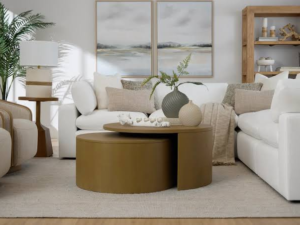
For many furniture buyers, a coffee table with storage is no longer just a decorative center table. In today’s market, especially for family-oriented living spaces, it is expected to solve several problems at once. It should help organize remotes, toys, books, blankets, chargers, and daily clutter, while still looking clean enough for modern interiors. For importers, distributors, and project buyers, this makes the category more commercially important than it may first appear.
A well-developed coffee table with storage can serve multiple channels. It works for residential retail, build-to-rent apartments, serviced residences, family-focused hotel suites, and turnkey furnishing projects where practical storage is a selling point. For buyers developing OEM or ODM collections, the best models are not simply trend-driven. They balance usability, safety, materials, packaging efficiency, and stable bulk production.
In busy homes, the living room often functions as a lounge, play area, entertainment zone, and flexible work corner. That is why demand continues to grow for a hidden storage coffee table or lift-top design that helps reduce visible clutter without making the room feel crowded. For exporters and wholesalers, this creates a clear product opportunity: family buyers want furniture that is practical, safe, durable, and easy to live with every day.
This guide explains what makes the best coffee table with storage for family living rooms, with a strong focus on B2B sourcing, OEM development, family-friendly design details, materials, MOQ, lead time, packaging, and quality expectations.
Table of Contents
- Why a coffee table with storage matters in family living rooms
- Hidden storage is more valuable than open clutter
- Safe edges and stable construction should come first
- Durable materials make a better family room table
- Lift-top and modular features add practical value
- OEM customization helps buyers match different markets
- MOQ, lead time, and packaging should be planned early
- The best coffee table with storage combines function and long-term sales potential
- FAQ
- Conclusion
1. Why a Coffee Table with Storage Matters in Family Living Rooms
A standard coffee table may look attractive in a showroom, but family buyers usually expect more. In real homes, living rooms collect small items throughout the day: toys, tablets, coasters, blankets, books, remote controls, charging cables, and hobby supplies. A coffee table with storage helps turn one piece of furniture into both a visual anchor and an organizer.
For B2B buyers, this matters because family-oriented furniture categories increasingly sell on function, not just style. A table that helps reduce mess is easier to position in:
- family apartment packages
- suburban residential retail collections
- show flats for developers
- serviced apartments
- family suites in hospitality projects
- e-commerce furniture catalogs focused on practical living
A good living room organizer should also support the room’s overall layout. It should create order without adding visual heaviness. In compact spaces, this is especially important. A table that stores daily items inside can reduce the need for extra side cabinets or baskets, which makes the room feel more open.
That is one reason the coffee table with storage category continues to perform well: it meets a very clear everyday need.
2. Hidden Storage Is More Valuable Than Open Clutter
When buyers evaluate a hidden storage coffee table, the key issue is not just whether storage exists. It is how that storage works in daily use.
Open shelves may look useful in product photos, but in busy family homes they can quickly become clutter zones. Hidden compartments, drawers, lift-top cavities, and enclosed spaces usually offer better long-term value because they help keep the living room visually cleaner.
Common storage formats that work well
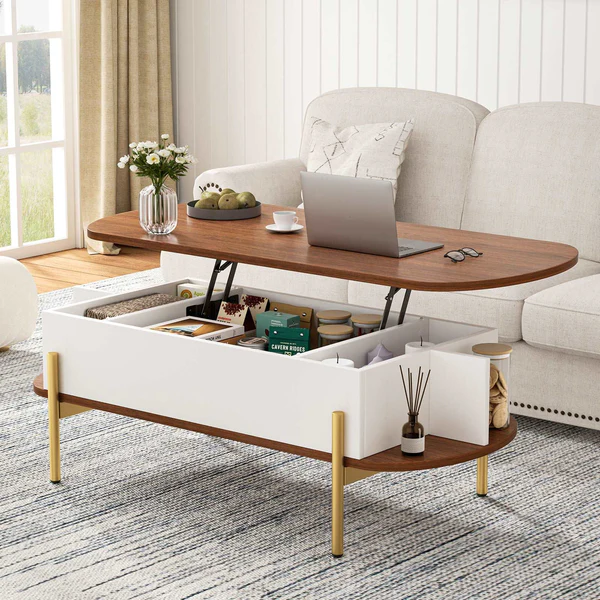
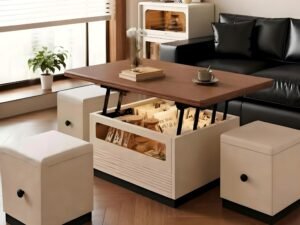
Lift-top internal storage
This format is popular because it combines a usable top surface with concealed internal space. It is practical for remotes, gaming accessories, notebooks, and small children’s items.
Drawers on one or both sides
Drawers help separate different household items and are easier for end users to organize.
Sliding top or split-top compartments
These are useful when buyers want a more design-led look while still offering concealed storage.
Open shelf plus hidden section
This mixed format works well when a table needs both display space and clutter control.
For family-oriented collections, the best solution is often not the one with the most storage volume. It is the one with the most usable storage logic. A coffee table with storage should support daily routines without making access awkward or the structure too complex.
3. Safe Edges and Stable Construction Should Come First
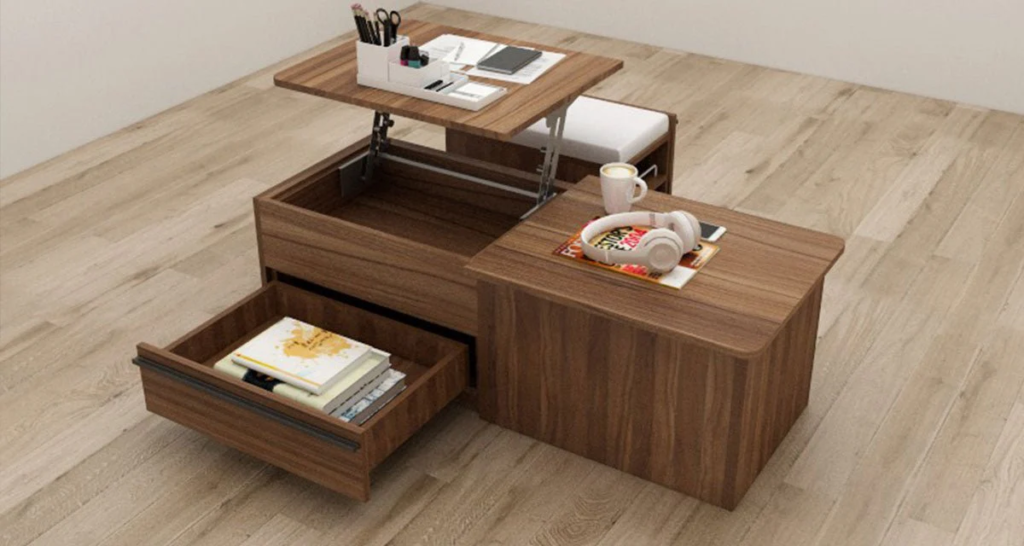
For a family living room, safety is part of good design. Buyers developing this category should think beyond appearance and pay attention to form, stability, and safe everyday use.
Rounded corners, softened edge profiles, and stable base construction are especially valuable in homes with children. While not every coffee table faces the same safety risks as tall storage furniture, broader U.S. furniture guidance and product instability data still show why stable design and safer furniture use matter in household settings. The U.S. Consumer Product Safety Commission provides furniture guidance and publishes product instability and tip-over injury information that is relevant when manufacturers discuss safer furniture design and home use.
Family-friendly features buyers should prioritize
- rounded edges instead of sharp corners
- stable leg or base structure
- balanced proportions that reduce wobble
- soft-close or controlled hardware where possible
- lift-top mechanisms that operate smoothly
- surfaces that are easy to clean and maintain
A family room table should also feel secure in daily use. If the top lifts, the mechanism should feel controlled rather than abrupt. If the table has drawers, they should move smoothly and not jam easily. If it includes hidden compartments, the hinges and supports should be durable enough for repeated opening and closing.
For project buyers, safe geometry is also commercially attractive because it makes the product easier to market as family-friendly without requiring highly specialized construction.
4. Durable Materials Make a Better Family Room Table
Materials have a direct effect on performance, cost, and product positioning. For a coffee table with storage, material choice also affects weight, finish durability, hardware installation, and export practicality.
Plywood and engineered wood panels
For many exporters, plywood and other engineered wood constructions offer a good balance of strength, machinability, and finish flexibility. A plywood-based coffee table with storage can support veneer, melamine, laminate, or painted finishes while remaining suitable for OEM production.
If the product uses hardwood plywood, MDF, or particleboard, buyers serving the U.S. market should review composite wood compliance early in development. The U.S. EPA explains that TSCA Title VI covers hardwood plywood, medium-density fiberboard, particleboard, and finished goods containing these materials, while California’s CARB program also regulates formaldehyde emissions for these panel types and finished goods sold or supplied in California.
Natural paragraph for direct use in the article:
When sourcing a coffee table with storage for the U.S. market, buyers should confirm whether any hardwood plywood, MDF, or particleboard components fall under TSCA Title VI or California CARB formaldehyde requirements for composite wood products and finished goods.
Veneer and surface finishes
For mid-range and premium collections, veneer can create a warmer and more residential look. Oak, walnut-look, ash-tone, and smoked finishes are popular because they balance practicality with design appeal.
Laminate and melamine surfaces
These are often chosen for family-focused products because they can resist scratches, stains, and daily wear better than some more delicate finishes.
Hardware and moving parts
Storage tables rely on hinges, drawer runners, lift-top supports, and connectors. Hardware quality matters more here than in a simple fixed coffee table because the product is used dynamically.
Responsible sourcing
If your brand or buyer brief includes sustainability goals, it is worth reviewing how forest-based materials are traced through the supply chain. FSC states that chain-of-custody certification verifies how forest-based materials move from source to finished goods, which makes it relevant for wood furniture programs and documented sourcing claims.
5. Lift-Top and Modular Features Add Practical Value
A coffee table with storage becomes much more attractive when it supports more than one use scenario. This is why lift-top and modular features remain commercially strong.
Why lift-top tables perform well
A lift-top design allows the table to function as:
- a casual work surface
- a snack or dining surface
- a laptop table
- a play or homework support table
- a hidden storage unit
For family homes, this flexibility is highly practical. In apartments and smaller living rooms, it helps one furniture piece serve multiple daily routines.
Modular or flexible formats
Some buyers also prefer modular storage tables or nesting combinations with hidden compartments. These are useful for:
- compact urban apartments
- family condos
- mixed-use living spaces
- furniture collections aimed at younger households
A hidden storage coffee table with modular logic can also help importers build wider collections. For example, one core design platform can be developed in different widths, top structures, or base styles to meet several price levels.
Design caution
Added function should not create unnecessary complexity. The more moving parts a product has, the more important sample testing, hardware review, and packaging protection become.
That is why OEM buyers should not ask only whether a feature looks attractive. They should also ask whether it is durable, easy to produce consistently, and safe in repeated home use.
6. OEM Customization Helps Buyers Match Different Markets
For importers and distributors, the ideal coffee table with storage is rarely one universal model. Different markets have different needs. Some want a compact lift-top table for apartments. Some want a larger family room table with drawers. Others want a premium veneer version for mid-to-high-end retail.
OEM and ODM development allows buyers to adapt the product more precisely.
Common customization options
- table size and proportions
- top construction
- drawer or compartment layout
- finish color
- veneer or panel material
- leg style or base form
- handle design
- packaging artwork
- logo labels
- KD or assembled structure
Application scenarios for B2B buyers
Apartment furnishing projects
Compact sizes, easy-clean surfaces, and efficient storage are usually most important.
Family-focused retail collections
Lift-top function, safer corners, and warmer residential finishes often perform better.
Hospitality and serviced residences
Project buyers may want clean-lined tables with hidden storage for remotes, printed materials, and housekeeping convenience.
Private label programs
Distributors often need a recognizable design language across several SKUs and sizes.
A strong OEM manufacturer should be able to explain which changes are simple finish updates and which ones affect engineering, MOQ, tooling, or lead time.
7. MOQ, Lead Time, and Packaging Should Be Planned Early
Many sourcing problems happen not because the design is wrong, but because operational details were discussed too late. For a coffee table with storage, MOQ, lead time, and packaging should be clarified at the quotation stage.
MOQ
MOQ can vary depending on:
- whether the design is based on an existing model
- the number of finish options
- hardware type
- packaging customization
- whether the product is KD or assembled
- whether special mechanisms are used
A basic storage table with standard panels may support a lower MOQ than a lift-top model with custom veneer, upgraded hardware, and branded cartons.
Lead time
Lead time is influenced by:
- technical review
- drawing confirmation
- material sourcing
- sample development
- revision and approval
- bulk production
- inspection
- final packaging
For buyers working on seasonal retail programs or apartment projects, a milestone-based schedule is better than a single broad lead-time promise.
Packaging
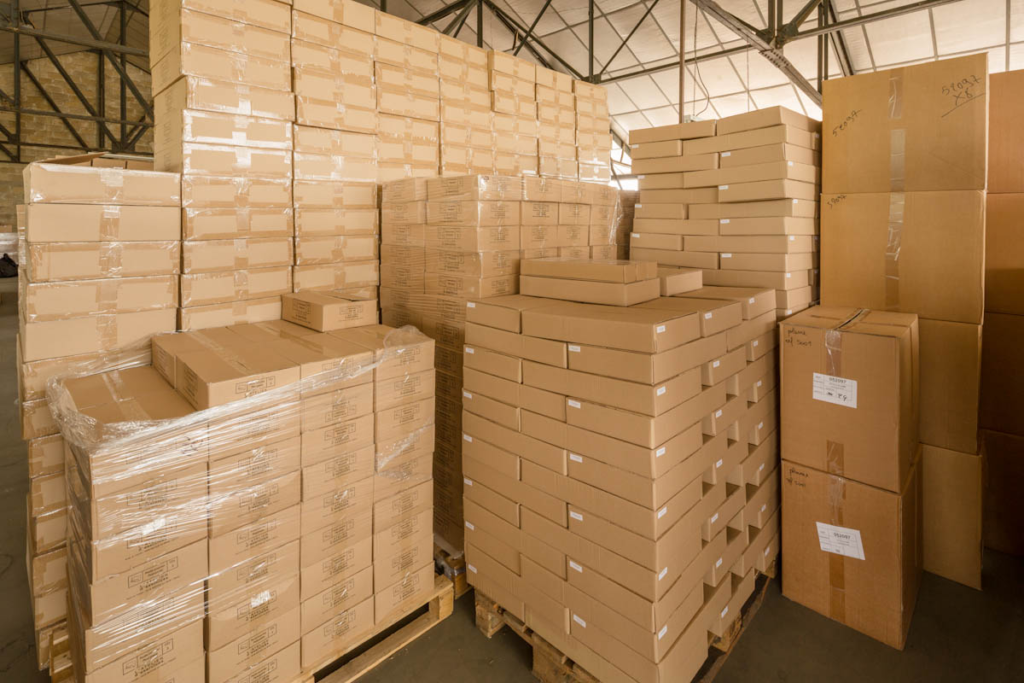
Storage tables often include moving hardware and larger top panels, so protective packaging matters. Export-grade packing should consider:
- corner and edge protection
- foam or honeycomb support
- hardware bag identification
- top-surface protection
- carton marks
- installation instructions if KD
- project labeling if needed
Good packaging is not only about reducing damage. It also improves warehouse handling and installation efficiency.
8. The Best Coffee Table with Storage Combines Function and Long-Term Sales Potential
The best coffee table with storage is not necessarily the most complex one. For B2B buyers, the strongest model usually combines five things well:
Practical storage
It solves a real clutter problem.
Family-friendly safety
It has stable construction, softer edges, and dependable hardware logic.
Durable material strategy
It uses materials and finishes that match the target market and daily wear expectations.
Commercial manufacturability
It can be sampled, quoted, packed, and reproduced consistently.
Market flexibility
It works across retail, apartment, and project channels with limited adjustment.
This is why category planning matters. A product that performs well in one showroom photo is not enough. Buyers need a coffee table with storage that works in homes, survives shipping, and supports repeat orders.
For buyers serving contract and commercial channels, it is also useful to understand broader furniture standards language. BIFMA states that it develops and maintains safety, performance, and sustainability standards for furniture, making it a useful reference point in discussions about durability expectations and commercial-grade quality. FSC chain-of-custody and BIFMA sustainability references can also support sourcing and environmental positioning conversations when relevant.
Natural paragraph for direct insertion:
For buyers positioning a family-friendly coffee table with storage in better-quality retail or project channels, references such as BIFMA performance standards and FSC chain-of-custody sourcing can help strengthen product communication with importers and end customers.

What Buyers Should Also Review Before Finalizing a Storage Coffee Table
When developing a coffee table with storage for family living rooms and international markets, buyers should look beyond styling and also review material compliance, sourcing transparency, and general furniture performance expectations. If the product includes hardwood plywood, MDF, or particleboard, it is useful to refer to the U.S. EPA TSCA Title VI guidance and the CARB composite wood products program to better understand formaldehyde requirements for composite wood materials and finished goods. If responsible sourcing is part of the product brief, the FSC chain-of-custody framework is also worth reviewing, as it explains how forest-based materials are tracked through the supply chain. For buyers discussing durability, quality benchmarks, or sustainability positioning, the BIFMA standards overview and the ANSI/BIFMA e3 furniture sustainability standard can also serve as useful references. In addition, the U.S. Consumer Product Safety Commission furniture guidance provides helpful background when household furniture stability and broader safety discussions are part of the sourcing conversation. These resources can help importers and project buyers communicate more clearly with manufacturers when evaluating a storage coffee table for family use. The EPA and CARB pages cover composite wood emission requirements for relevant panels and finished goods, FSC explains chain-of-custody traceability, BIFMA covers furniture performance and sustainability standards, and CPSC provides broader furniture safety guidance.
Conclusion
A coffee table with storage succeeds in family living rooms because it solves a practical everyday problem. It helps reduce clutter, supports flexible use, and improves how the room functions without requiring extra furniture. For importers, distributors, and project buyers, that makes it a strong category for both residential retail and family-oriented furnishing programs.
The best products in this category usually share the same strengths: concealed storage that is easy to use, safe edges, stable construction, durable materials, practical hardware, and export-ready packaging. OEM buyers who plan size, finish, MOQ, lead time, and packaging early are more likely to build a successful product line that can be reordered consistently.
Whether you are sourcing for a retail collection, a private label launch, a serviced apartment project, or a family-focused furniture program, a well-designed coffee table with storage offers both user value and commercial potential.
Looking for practical storage coffee tables in bulk? Send us your requirements today.
You can also explore our Space-Saving Lift Top Coffee Table | Hidden Storage & Modular Design and visit our FAQ page for more product and sourcing details.
FAQ
What is the best coffee table with storage for a family living room?
The best coffee table with storage for a family living room usually combines hidden compartments, safe edges, stable construction, durable materials, and practical dimensions that fit daily household use.
Why is hidden storage better than open shelving for family rooms?
A hidden storage coffee table helps reduce visible clutter, keeps small items organized, and makes the living room look cleaner in everyday use.
What materials are best for a storage coffee table?
Plywood, engineered wood panels, veneer, laminate, and durable hardware are common choices. The best option depends on the target market, finish expectations, and daily wear requirements.
Is a lift-top coffee table good for family use?
Yes. A lift-top coffee table with storage can provide concealed storage and a flexible tabletop for snacks, laptops, homework, or casual daily use.
What safety features should buyers consider?
Rounded edges, stable construction, dependable lift-top mechanisms, smooth drawer operation, and easy-to-clean surfaces are all useful for family-oriented living room furniture.
Can a coffee table with storage be customized for OEM orders?
Yes. OEM buyers can often customize size, finish, storage layout, hardware, packaging, logo application, and structural details based on target-market needs.
What affects MOQ for a storage coffee table?
MOQ may depend on the design complexity, finish options, hardware specification, packaging type, and whether the product is based on an existing model or a new OEM development.
What should buyers confirm before placing a bulk order?
They should confirm dimensions, materials, hardware, finish standards, packaging, lead time, MOQ, sample approval, and any compliance expectations for the destination market.