Choosing a custom panel furniture manufacturer is not only about comparing unit prices. For importers, wholesalers, furniture retailers and project buyers, the real purchasing decision also depends on specification control, finish consistency, hardware compatibility, quality inspection, export packaging and reliable shipment preparation.
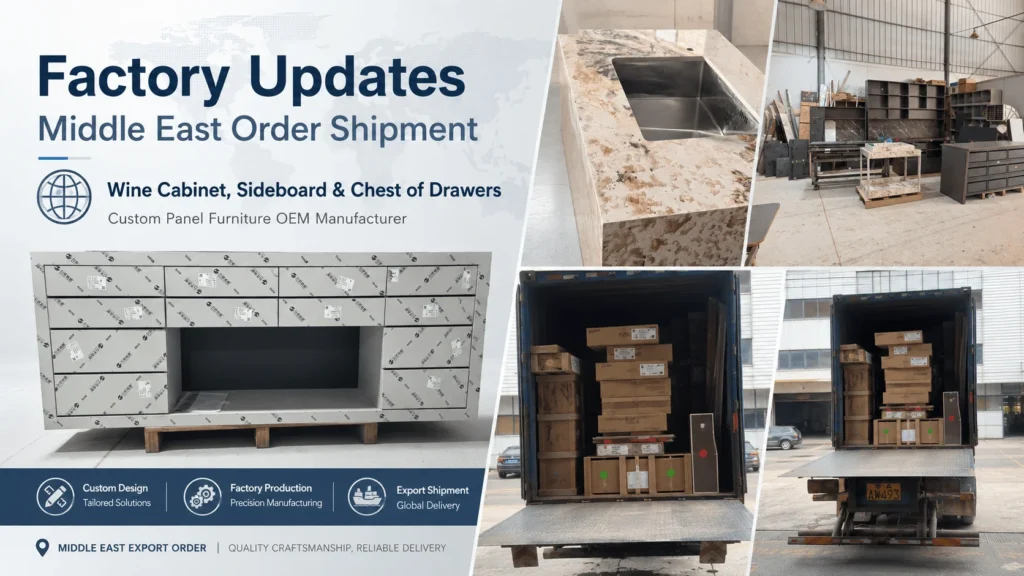
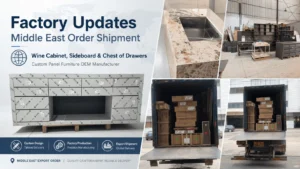
This factory update documents a customized furniture order prepared for the Middle East market. The shipment includes wine cabinets, sideboards and chests of drawers, manufactured according to the buyer’s product requirements and organized for export loading.
The photos show several important stages of the order, including furniture assembly, surface protection, component preparation, workshop inspection, export packing and truck loading.
Middle East Furniture Order Overview
| Order Information | Details |
|---|---|
| Destination market | Middle East |
| Product categories | Wine cabinets, sideboards and chests of drawers |
| Service type | OEM panel furniture manufacturing |
| Customization | Dimensions, layouts, finishes, hardware and packaging |
| Production stage | Completed and prepared for shipment |
| Buyer types | Importers, distributors, retailers and project buyers |
| Shipment support | Export packing, carton identification and loading preparation |
For a B2B buyer, these factory updates provide more than production photos. They help demonstrate whether a supplier can manage a multi-product furniture order from confirmed specifications through final shipment.
1. Product Specifications Confirmed Before Production
The first buyer check is whether the factory follows an approved product specification rather than relying only on reference images.
Before bulk production, the buyer and manufacturer should confirm:
- Overall product dimensions
- Cabinet and drawer layouts
- Board material and thickness
- Surface finish and color
- Edge-banding specifications
- Hardware and fittings
- Internal storage requirements
- Packaging structure
- Carton marks and product labels
This is particularly important for coordinated collections containing wine cabinets, sideboards and drawer units. Even when the products have different functions, their colors, materials, proportions and design language may need to remain consistent across the collection.
Clear specifications also make quotations easier to compare. A low quotation based on different materials, thinner panels or simplified hardware cannot be accurately compared with a quotation based on the buyer’s full requirements.
2. Materials and Finishes Matched to the Target Market
A professional custom panel furniture manufacturer should review materials according to the product position, target price, intended use and destination-market requirements.
Depending on the confirmed project specification, panel furniture may use MDF, particle board, plywood or other engineered panels. Surface directions can include woodgrain finishes, solid colors, stone-look patterns and buyer-specified decorative finishes.
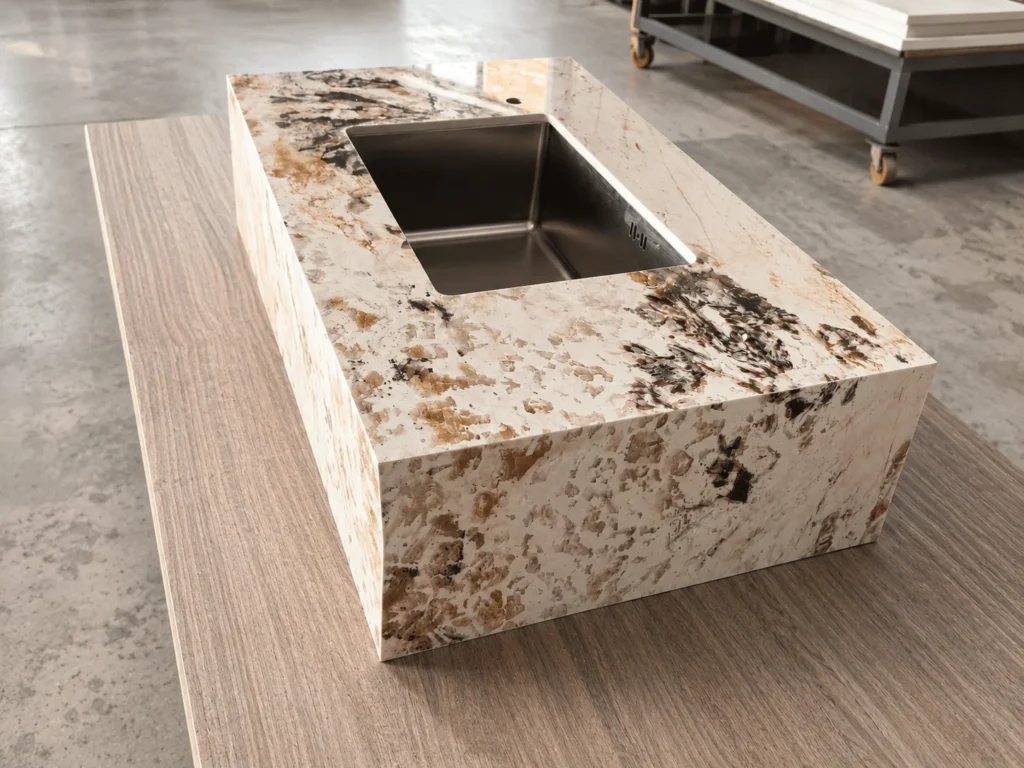
For this Middle East order, the collection includes modern cabinet forms, dark storage furniture and decorative stone-look elements. Protective film remains on selected surfaces during production and handling to reduce the risk of scratches before final delivery.
B2B buyers should confirm the approved finish using physical samples, finish codes or signed reference panels before mass production. For repeat orders, the previous approved sample should remain part of the production reference.
3. Functional Structure and Hardware Readiness
Appearance is only one part of cabinet quality. Procurement teams also need to evaluate how the product functions after assembly and regular use.
For wine cabinets, sideboards and chests of drawers, important structural points can include:
- Drawer alignment and movement
- Door clearances
- Shelf positions
- Internal storage divisions
- Hardware compatibility
- Connector locations
- Panel drilling accuracy
- Stability after assembly
- Left-hand and right-hand component identification
A sideboard with several drawers and an open central compartment requires accurate panel processing so that the drawer gaps remain consistent and the main structure stays square.
A chest of drawers requires coordinated drawer fronts, runners and internal components. A wine cabinet may require buyer-specific shelf layouts, display sections, doors, lighting provisions or storage divisions.
These details should be agreed during drawing review and sampling rather than after bulk production has started.
4. Quality Control Before Export Packing
Quality control is one of the most important concerns for furniture importers because a repeated production issue may affect an entire shipment rather than one individual unit.
Before packing, inspection should cover the visible surfaces, panel edges, drilled areas, components, hardware and assembly readiness.
Typical checks include:
- Surface scratches, dents or stains
- Edge-banding adhesion and appearance
- Color and finish consistency
- Hole and groove positions
- Drawer and door alignment
- Correct component quantities
- Final cleaning and packing readiness
For private-label or retail furniture programs, quality consistency directly affects the buyer’s brand, customer complaints, replacement costs and the potential for repeat orders.
More information about the factory’s inspection process can be linked to the existing panel furniture quality control article on the website. Your current QC page already covers surfaces, edges, drilling, hardware, components and pre-packing inspection in detail.
5. Export Packaging Based on Product Risk
Export packaging should not be treated as a standard carton added after production. Packaging needs to reflect the product structure, finish, hardware and transport route.
Different furniture components face different risks:
- Large panels may suffer corner or edge damage.
- High-gloss or decorative surfaces may be scratched by friction.
- Drawer fronts and doors may move during transportation.
- Stone-look components and integrated tops may require additional protection.
- Hardware may be lost when it is not packed and identified clearly.
- Mixed products can be difficult to distribute when carton marks are unclear.
For export orders, packaging may include protective film, internal separators, corner protection, reinforced cartons, wooden frames or crates, component labels and assembly instructions, depending on the agreed specification.
B2B buyers should confirm the packaging standard during quotation because packaging materials, carton dimensions and crate requirements can affect product cost, loading quantity and transport risk.
6. Carton Marks and Container Loading Organization
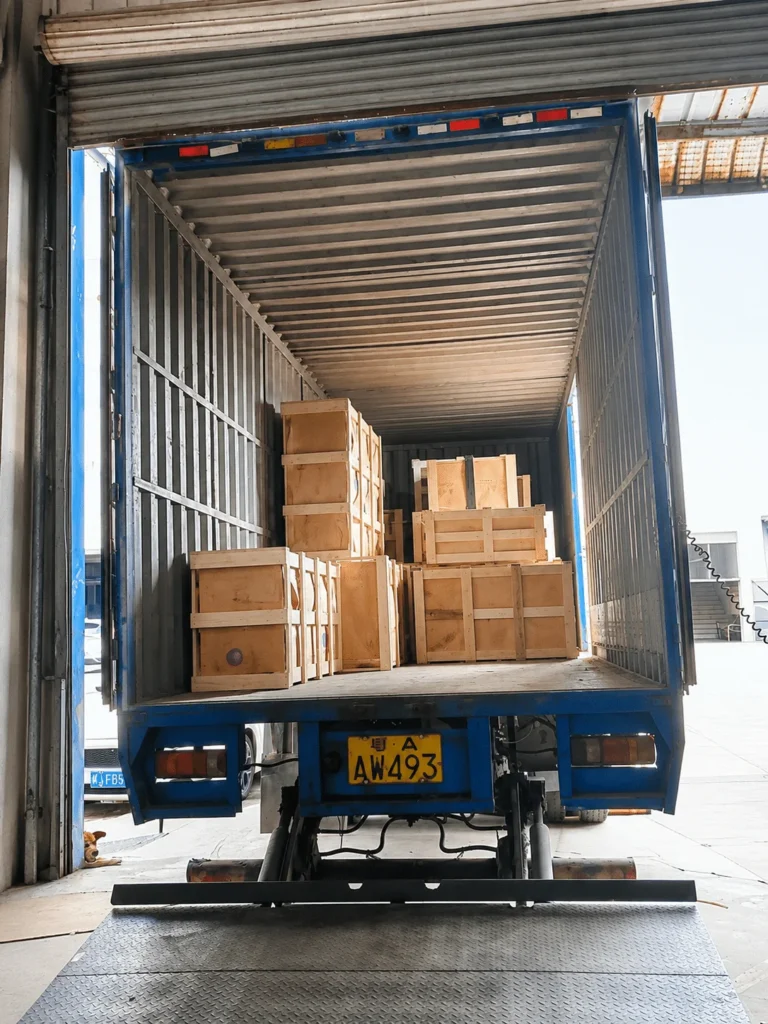
The shipment photos show the completed packages arranged inside the truck for transportation.
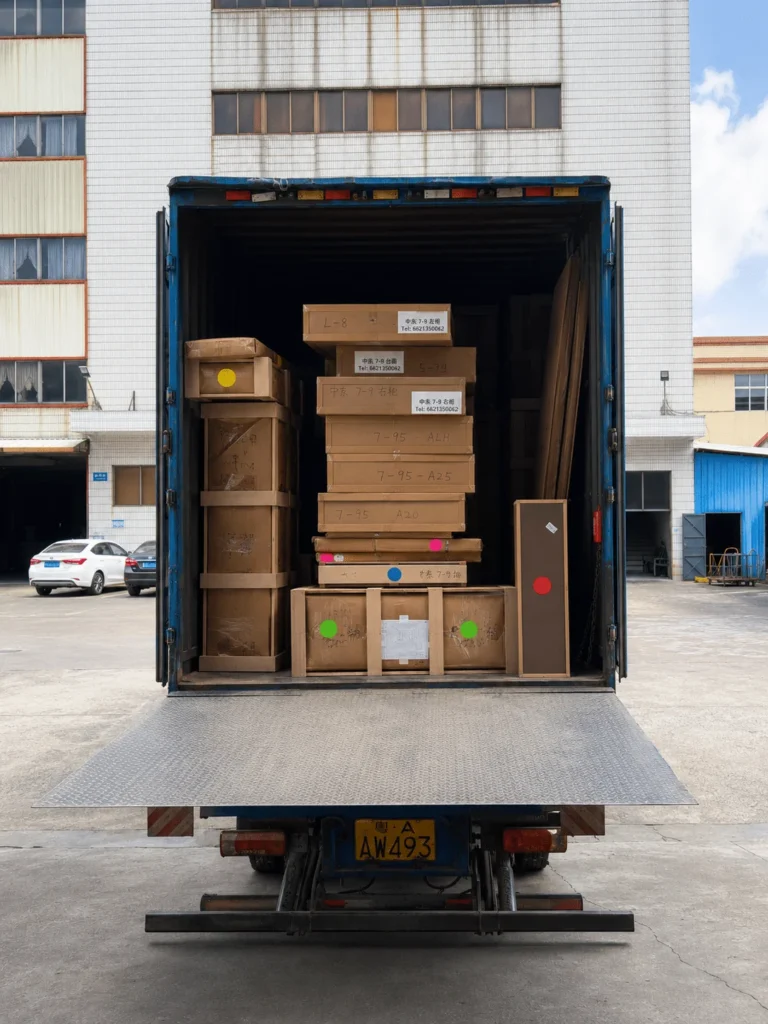
Container loading is a procurement issue as well as a logistics issue. Poor loading organization may create unused space, unstable stacks or difficulties when products arrive at the destination warehouse.
For a mixed furniture order, the factory should organize packages by:
- Product model
- SKU or item number
- Left-hand and right-hand components
- Carton sequence
- Customer reference number
- Room or project area
- Color-coded identification where required
Clear carton marks help importers count packages, organize warehouse receiving and distribute products to stores or project locations.
Loading plans should also consider carton size, package weight, fragile components and unloading sequence. Final loading quantities depend on the confirmed product dimensions, packaging structure and container type.
7. Repeat-Order Readiness
A successful shipment is not only the completion of one purchase order. For most B2B buyers, the more important question is whether the same supplier can reproduce the approved product in future orders.
Repeat-order readiness depends on maintaining:
- Approved drawings
- Material specifications
- Finish references
- Hardware lists
- Packaging requirements
- Carton marks
- Quality criteria
- Product and component codes
This documentation helps reduce communication errors when the buyer reorders the same models or expands the collection with related products.
Working with one custom panel furniture manufacturer for sampling, bulk production, quality control, packing and shipment can also reduce the number of parties involved in the supply chain.
Products Included in This Shipment
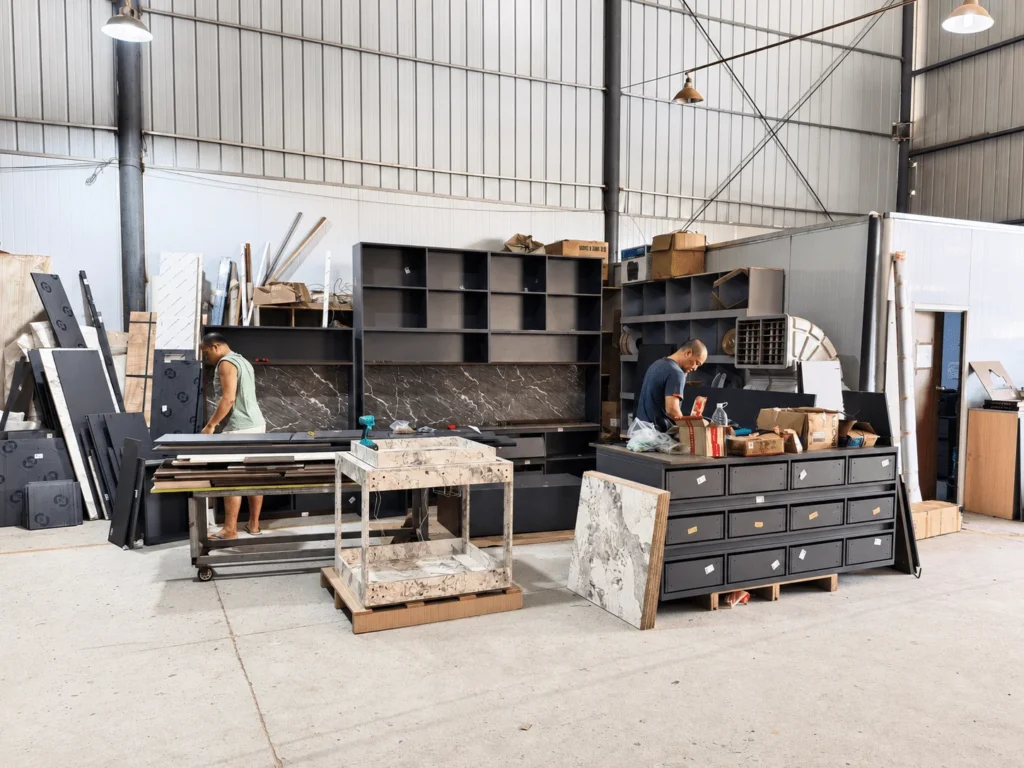
Custom Wine Cabinets
Wine cabinets can be developed for residential projects, furniture retailers, distributors and hospitality-related applications.
Available customization may include cabinet dimensions, door configurations, shelf arrangements, display storage, internal divisions, finish direction, hardware and packaging.
The final configuration should be based on the buyer’s drawings, reference samples and target-market requirements.
OEM Sideboards
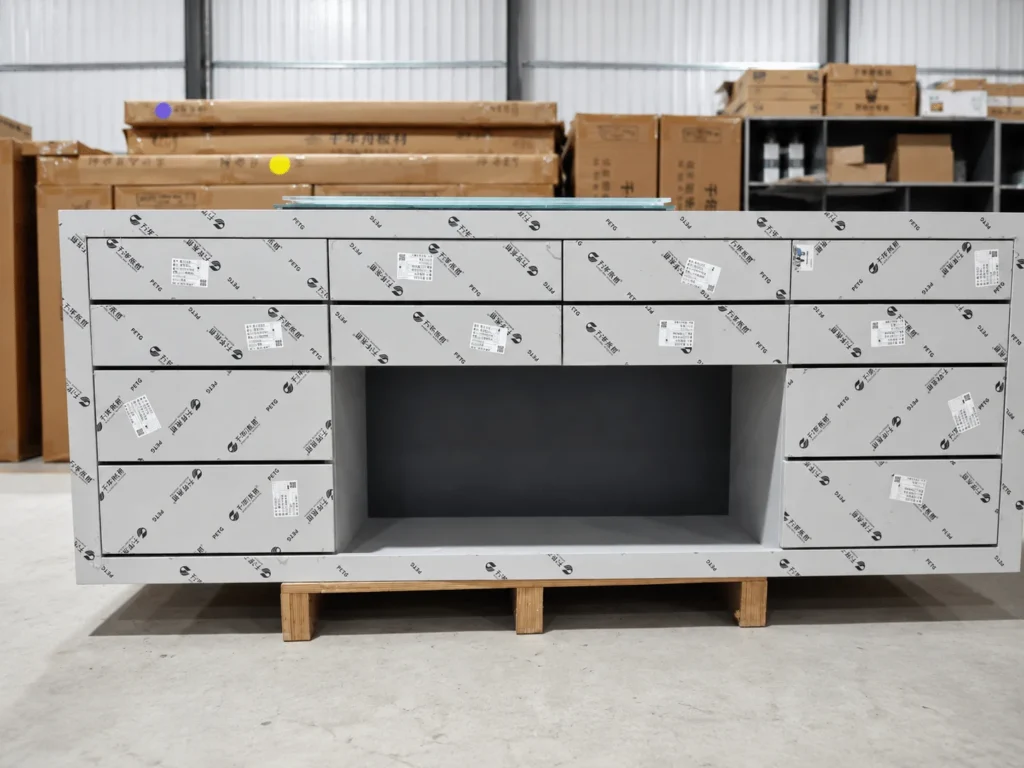
Sideboards are widely used in dining rooms, living rooms, apartments and hospitality spaces.
OEM sideboard programs can include combinations of drawers, doors, shelves and open storage. Buyers may also specify dimensions, finishes, handles, runners, hinges, decorative panels and top materials.
For wholesalers and furniture brands, coordinated sideboard collections can be developed to match TV units, cabinets, dining furniture or other storage products.
Custom Chests of Drawers
Chests of drawers can be produced for bedrooms, living spaces, retail collections and residential projects.
Important purchasing points include drawer capacity, overall dimensions, runner specifications, drawer-front alignment, surface finish, packaging volume and assembly method.
For flat-pack furniture programs, drilling accuracy and clearly identified hardware are especially important for efficient final assembly.
What Buyers Should Send for a Faster Quotation
To receive a more accurate quotation from an OEM furniture manufacturer in China, buyers should provide as much of the following information as possible:
- Product drawings or reference images
- Required dimensions
- Board material and thickness
- Finish or color reference
- Hardware specifications
- Quantity required for each SKU
- Packaging requirements
- Private-label or carton-mark requirements
- Destination country and port
- Required testing or documentation
- Target delivery schedule
- Sample requirements
The final MOQ, production lead time, packing method and loading quantity should be confirmed after the factory reviews the complete product specification.
Shipping responsibilities, costs and risks should also be clearly defined in the purchase contract using the applicable Incoterms® rule. ICC describes Incoterms® as standardized trade terms used to clarify the obligations, costs and risks between buyers and sellers.
Looking for a Furniture Supplier for the Middle East?
Starwood Industry Co., Ltd. supports OEM and ODM panel furniture manufacturing for importers, wholesalers, furniture brands, retailers and project buyers.
Our service scope covers product review, material and finish selection, sampling, bulk production, quality inspection, export packing and shipment preparation.
Send us your drawings, product list, dimensions, quantities and destination information for project review.
Request an OEM Furniture Quote
Send Drawings and Specifications
Discuss a Middle East Furniture Order
Frequently Asked Questions
What products can a custom panel furniture manufacturer produce?
A custom panel furniture manufacturer can produce products such as wine cabinets, sideboards, chests of drawers, TV units, wardrobes, storage cabinets, desks, kitchen cabinets and other board-based furniture according to the factory’s equipment and production scope.
Do you support OEM wine cabinets, sideboards and chests of drawers?
Yes. Products can be manufactured according to buyer drawings, reference samples, dimensions, finishes, hardware requirements and packaging specifications. Final feasibility is confirmed after the factory reviews the project details.
Can the furniture dimensions and finishes be customized?
Yes. Dimensions, internal layouts, board materials, colors, decorative finishes, handles, hinges, runners and storage details can be discussed according to the order requirements.
Can buyers request a sample before bulk production?
Yes. Sampling can be arranged when required so that the buyer can review the structure, dimensions, materials, finish, hardware and packaging before approving mass production.
What information is required for an OEM furniture quotation?
Buyers should provide product images or drawings, dimensions, materials, finishes, hardware requirements, quantity by SKU, packaging requirements, destination and target delivery schedule.
How is panel furniture inspected before packing?
Inspection may cover panel surfaces, edges, drilling positions, color consistency, drawer and door alignment, components, hardware, labels, cleanliness and packaging readiness.
What packaging is suitable for furniture exported to the Middle East?
The packaging method depends on the furniture structure and agreed buyer requirements. Options may include protective film, internal separators, corner protection, reinforced cartons, wooden frames, crates, component labels and assembly instructions.
Can different furniture models be loaded in one shipment?
Mixed-SKU loading can be discussed for wine cabinets, sideboards, drawer units and related products. The factory should review carton dimensions, package weights, quantities and loading sequence before confirming the loading plan.
Do you support private-label furniture packaging?
Private labels, buyer logos, carton marks, product labels and assembly instructions can be discussed during quotation and sampling.
What affects MOQ and production lead time?
MOQ and lead time depend on the product design, material availability, finish, hardware, order quantity, packaging requirements, sample approval and current production schedule. They should be confirmed for each individual project.