Table of Contents
- Why Waterproof Bathroom Cabinet Materials Matter
- What “Waterproof” Really Means in Bathroom Furniture
- 7 Best Waterproof Bathroom Cabinet Materials
- Material Comparison for B2B Buyers
- Best Applications: Hotels, Apartments, Retail, and OEM/ODM Projects
- Surface Finishes, Edge Sealing, and Hardware Selection
- MOQ, Lead Time, Packaging, and Export Considerations
- Customization Process for OEM/ODM Bathroom Cabinets
- How to Choose the Right Supplier
- FAQ
- Final CTA
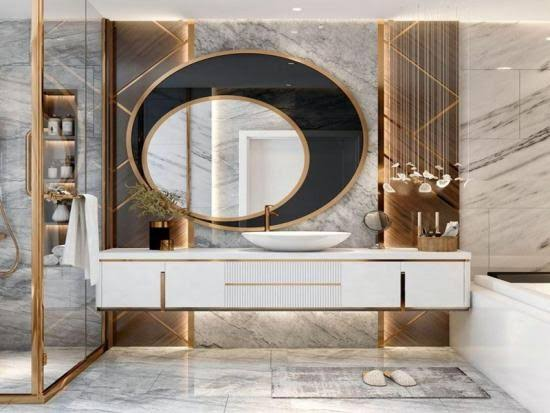
Why Waterproof Bathroom Cabinet Materials Matter
Choosing the right waterproof bathroom cabinet materials is one of the most important decisions for importers, wholesalers, hotel developers, apartment contractors, and private-label furniture brands.
Bathroom furniture is different from bedroom or living room furniture. It works in a humid environment. It may face steam, water splashes, wet towels, cleaning chemicals, temperature changes, and frequent daily use. For B2B buyers, material mistakes can lead to swelling panels, peeling edges, loose hinges, surface bubbling, mold risk, customer complaints, replacement costs, and project delays.
That is why professional bathroom cabinet sourcing should start with material planning, not only design selection. A beautiful vanity cabinet is not enough if the board core, surface finish, edge sealing, hardware, and packaging are not suitable for the bathroom environment.
At Starwood Industry Co., Ltd., we manufacture OEM and ODM flat-pack panel furniture for global buyers, including bathroom vanities, wall-mounted bathroom cabinets, mirrored cabinets, tall storage units, and project bathroom furniture for hotels, apartments, residential developments, wholesalers, and retail channels. For bathroom furniture programs, we help buyers balance moisture resistance, cost control, structure strength, surface appearance, MOQ, lead time, packing method, and target market positioning.
For buyers developing a waterproof vanity cabinet collection, the goal is not simply to choose the most expensive material. The goal is to choose the right material system for the product price level, order quantity, project environment, shipping method, and after-sales expectation.
What “Waterproof” Really Means in Bathroom Furniture
Before comparing materials, B2B buyers should understand an important point: in cabinet manufacturing, “waterproof” is often used as a market term, but real performance depends on the complete structure.
A bathroom cabinet is not waterproof only because the panel name says “waterproof.” It becomes moisture-resistant through a combination of:
Board material
Surface finish
Edge banding
Back panel design
Sink and countertop sealing
Drawer and door structure
Hardware selection
Installation method
Packaging and transportation protection
End-user maintenance
For example, moisture resistant MDF may perform well in bathroom vanity fronts if the surface is properly laminated, painted, or sealed. Plywood may offer better screw-holding strength and structural stability, but exposed edges still need protection. PVC foam board can resist water very well, but buyers must consider strength, surface feel, screw performance, and price positioning. Stainless steel and aluminum are highly durable, but may not fit every furniture collection style or budget.
In addition, many export buyers also need to consider formaldehyde regulations for composite wood products. For reference, the U.S. Environmental Protection Agency explains TSCA Title VI formaldehyde emission standards for composite wood products here:
https://www.epa.gov/formaldehyde/formaldehyde-emission-standards-composite-wood-products
Similarly, buyers selling into California should understand CARB’s Composite Wood Products Program, which covers products such as hardwood plywood, particleboard, MDF, and finished goods containing these materials:
https://ww2.arb.ca.gov/our-work/programs/composite-wood-products-program
Therefore, when discussing bathroom cabinet materials with a factory, buyers should ask not only “Is it waterproof?” but also:
Which board core is used?
What is the surface finish?
How are the edges sealed?
What emission standard is required?
What hardware is used?
What is the target market?
What packing method will protect the product during export shipment?
Can samples be tested before bulk production?
7 Best Waterproof Bathroom Cabinet Materials
1. Moisture Resistant MDF
Moisture resistant MDF is one of the most common materials for bathroom cabinet production, especially for vanity doors, drawer fronts, side panels, and decorative surfaces.
Compared with standard MDF, moisture resistant MDF is designed to perform better in humid indoor environments. It has a smooth surface, which makes it suitable for painting, PVC membrane pressing, melamine finish, PET finish, UV coating, or other decorative surfaces.
For B2B buyers, moisture resistant MDF is attractive because it offers a balance of cost, surface quality, machining performance, and design flexibility. It can be used for modern bathroom vanities, wall-mounted cabinets, hotel vanity fronts, apartment storage cabinets, and private-label bathroom furniture.
However, moisture resistant MDF is not the same as fully waterproof plastic or metal. If water enters through unsealed edges, screw holes, damaged surfaces, or poor sink installation, swelling may still happen. Therefore, the production details are very important.
Best applications:
Hotel bathroom vanity doors
Apartment bathroom cabinet fronts
Wall-mounted bathroom storage units
Painted or laminated vanity collections
OEM bathroom furniture lines requiring smooth finishes
Retail bathroom cabinet collections with competitive pricing
Buyer tips:
Use moisture resistant MDF instead of standard MDF for humid bathroom applications.
Require proper edge sealing on all exposed sides.
Confirm surface finish samples before bulk production.
Check whether the board meets your market’s emission requirements.
Avoid leaving cut edges exposed near sinks or wet zones.
For buyers who need a cost-effective but professional material, moisture resistant MDF is often a practical choice. It is especially suitable when the visual finish is important and the cabinet will be used in normal indoor bathrooms rather than outdoor or constantly wet environments.
2. Plywood
Plywood is another strong option for bathroom cabinets, especially when buyers need better screw-holding strength, structural support, and dimensional stability.
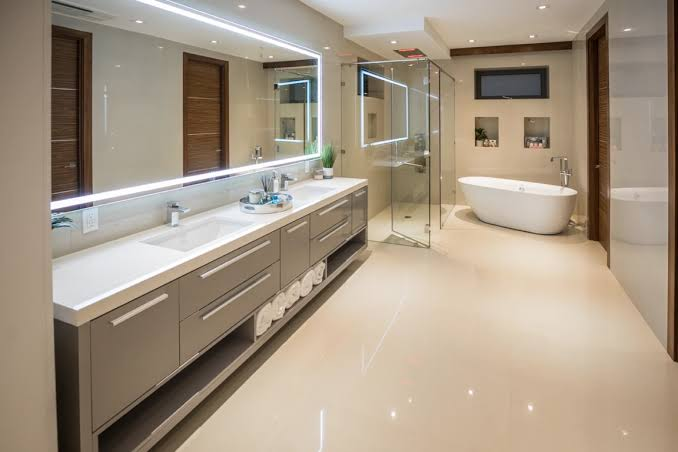
Because plywood is made from multiple layers of wood veneer bonded together, it generally offers stronger structural performance than many low-density boards. For bathroom vanity cabinets, plywood is often used for cabinet boxes, side panels, drawer boxes, and premium project furniture.
Plywood can be finished with melamine, veneer, laminate, paint, or other decorative surfaces. In bathroom applications, the edges and surfaces still need proper sealing. A high-quality plywood core does not mean the finished cabinet can tolerate standing water without protection.
For technical reference, APA – The Engineered Wood Association provides resources related to plywood and engineered wood products here:
https://www.apawood.org/plywood
For hardwood and decorative plywood standards, buyers can also refer to Decorative Hardwoods Association resources related to ANSI/HPVA HP-1:
https://www.decorativehardwoods.org/pdfs-available-download
Best applications:
Premium bathroom vanity cabinets
Hotel bathroom projects
Apartment bathroom furniture
Wall-mounted vanity structures
Cabinet boxes requiring stronger screw holding
Projects where long-term stability is important
Buyer tips:
Ask the factory what plywood grade and thickness are used.
Confirm whether the plywood is suitable for bathroom cabinet production.
Require sealed edges and moisture-resistant surface treatment.
Check screw-holding performance for hinges, slides, and wall-mounted installation.
For export markets, confirm emission and documentation requirements.
Plywood is often selected by buyers who want a stronger product position. It may cost more than standard MDF or particle board, but it can support a better quality image, especially for hotel, apartment, and premium retail bathroom furniture programs.
3. PVC Foam Board
PVC foam board is highly water-resistant and is often used when buyers want a material that does not absorb moisture like wood-based boards.
For bathroom cabinets, PVC foam board can be used for cabinet carcasses, side panels, doors, and storage units. It is lightweight, resistant to water, and suitable for humid areas. This makes it attractive for markets where customers strongly focus on waterproof performance.
However, PVC foam board also has limitations. It may have different screw-holding strength compared with plywood. It may feel less premium depending on thickness, density, surface finish, and product design. Some buyers also need to consider environmental positioning, market preference, and price acceptance.
Best applications:
Budget waterproof bathroom cabinets
Rental apartment bathroom storage
Small bathroom wall cabinets
Moisture-prone bathroom areas
Projects where water resistance is the top selling point
Buyer tips:
Check board density and thickness.
Confirm hinge and screw performance.
Ask for samples before placing bulk orders.
Evaluate surface feel and visual quality.
Use suitable hardware and structure design to improve durability.
PVC foam board can be a good option when waterproof performance is more important than a traditional wood feel. It is especially useful for buyers targeting rental housing, budget bathroom furniture, and highly humid markets.
4. HPL Compact Board
High Pressure Laminate compact board is a durable material option for bathroom cabinet applications that require impact resistance, water resistance, and strong surface performance.
HPL compact board is often used in commercial washrooms, public facilities, schools, hospitals, offices, and other high-traffic environments. For bathroom furniture, it can be used for partitions, vanity surfaces, cabinet panels, and commercial storage solutions.
This material is usually more expensive than MDF or particle board. It is best suited for buyers who need long service life, strong surface durability, and a more technical product position.
Best applications:
Commercial bathroom furniture
Public washroom cabinets
Hotel public area washrooms
School and office washrooms
High-traffic project bathrooms
Premium apartment public facilities
Buyer tips:
Confirm thickness and laminate grade.
Ask whether the material is suitable for cabinet doors, carcasses, or countertops.
Evaluate edge finishing and machining details.
Use it where durability justifies the higher material cost.
Confirm color, texture, and surface finish availability.
HPL compact board is not always necessary for normal residential vanities, but it can be valuable for projects where durability and water resistance are key purchasing criteria.
5. Melamine-Faced Moisture Resistant Particle Board
Particle board is widely used in panel furniture manufacturing because it offers cost efficiency, stable supply, and good surface compatibility with melamine finishes.
For bathroom cabinet applications, standard particle board is not ideal for wet areas. However, moisture resistant particle board with proper melamine surface and sealed edges can be considered for cost-sensitive bathroom furniture, especially where the cabinet is not directly exposed to water.
This material is suitable for entry-level retail bathroom cabinets, apartment storage units, and flat-pack bathroom furniture where price competitiveness is important.
Best applications:
Cost-effective bathroom storage cabinets
Flat-pack bathroom furniture for retail
Apartment bathroom storage units
Over-the-toilet cabinets
Wall cabinets away from direct water exposure
Wholesale bathroom cabinet programs
Buyer tips:
Do not use standard low-grade particle board for wet bathroom zones.
Require sealed edges and quality edge banding.
Use moisture resistant board when possible.
Avoid exposed cutouts near sinks or plumbing.
Confirm packing protection because corners can be vulnerable during shipping.
For B2B buyers, moisture resistant particle board can help control cost, but it should be used carefully. It is best for furniture positioned away from constant water contact.
6. Aluminum and Stainless Steel
Metal materials such as aluminum and stainless steel can offer excellent water resistance and long service life. They are often used in high-humidity environments or modern bathroom furniture collections.
Aluminum bathroom cabinets can be lightweight, corrosion-resistant, and suitable for certain markets. Stainless steel can be stronger and more durable, but it may feel more commercial or industrial depending on the design.
For furniture brands and project buyers, metal bathroom cabinets can provide a strong waterproof selling point. However, the style, cost, surface finish, noise control, and packaging requirements must be considered.
Best applications:
High-humidity bathroom environments
Modern waterproof bathroom cabinet collections
Rental apartments
Commercial bathrooms
Project supply where durability is important
Markets that prefer metal bathroom furniture
Buyer tips:
Confirm surface treatment and corrosion resistance.
Check hinge and drawer system compatibility.
Evaluate whether the design fits your target market.
Consider packaging protection against scratches and dents.
Compare metal cabinet cost with plywood or MDF alternatives.
Metal cabinets are not the default choice for every project, but they can be a strong solution when waterproof performance is the leading selling point.
7. Solid Wood with Proper Sealing
Solid wood can create a premium appearance, but it needs careful treatment in bathroom environments. Wood naturally reacts to humidity and temperature changes. Without proper sealing, it can expand, shrink, crack, or deform.
For bathroom cabinets, solid wood is usually more suitable for doors, frames, decorative elements, or premium vanity collections rather than budget flat-pack products. Buyers should consider market positioning, climate conditions, finishing quality, and after-sales expectations.
Best applications:
Premium bathroom vanity collections
Luxury hotel bathroom furniture
Decorative cabinet fronts
High-end residential projects
Classic or natural-style bathroom designs
Buyer tips:
Confirm wood species and drying process.
Require full surface sealing.
Avoid poor-quality finishes in humid markets.
Use stable construction design to reduce deformation risk.
Provide end-user maintenance guidance.
Solid wood can be beautiful, but it requires a more careful supply chain. For many B2B buyers, engineered panels with moisture-resistant treatment may be more practical for large-volume bathroom cabinet production.
Material Comparison for B2B Buyers
When choosing waterproof bathroom cabinet materials, buyers should not only compare “waterproof” claims. The better method is to compare performance, cost, manufacturing feasibility, appearance, packaging, and target market value.
Moisture resistant MDF offers smooth finishing and cost efficiency. It is suitable for painted or laminated vanity fronts and many OEM bathroom furniture programs.
Plywood offers better structure strength and screw-holding performance. It is suitable for premium vanities, hotel projects, apartment cabinets, and wall-mounted structures.
PVC foam board offers strong water resistance and lightweight performance. It is suitable for budget waterproof cabinets and humid markets, but screw performance and surface feel should be checked.
HPL compact board offers excellent durability for commercial projects, but it is usually higher in cost.
Moisture resistant particle board helps control cost for flat-pack bathroom furniture, but it must be used with proper edge sealing and away from direct water exposure.
Aluminum and stainless steel offer strong water resistance, but design style, price, and scratch protection must be considered.
Solid wood offers premium appearance, but it requires careful sealing and climate control.
For most importers, wholesalers, and project buyers, the practical choice is often a material combination. For example:
Plywood cabinet box + moisture resistant MDF doors
Moisture resistant MDF cabinet body + sealed melamine finish
PVC board body + aluminum handle system
HPL compact panels for high-traffic commercial areas
Moisture resistant particle board for budget wall storage away from wet zones
A professional bathroom furniture factory can recommend the right combination based on your target price, order quantity, product style, and destination market.
Best Applications: Hotels, Apartments, Retail, and OEM/ODM Projects
Hotel Bathroom Cabinets
Hotel bathrooms require stable quality, consistent finishing, easy cleaning, and reliable replacement planning. Buyers should consider plywood, moisture resistant MDF, HPL compact board, or well-sealed engineered panels.
For hotel vanity cabinets, material selection should focus on:
Long-term moisture resistance
Stable appearance across rooms
Strong drawer and hinge performance
Easy maintenance
Replacement consistency
Export packing safety
Project delivery schedule
Hotel buyers often need bulk production with consistent color and dimensions. Before mass production, it is recommended to confirm sample approval, finish board, hardware model, basin opening size, installation drawings, and packaging method.
Apartment Bathroom Vanities
Apartment projects usually need a balance between cost, durability, and installation efficiency. Moisture resistant MDF, plywood, and moisture resistant particle board can all be used depending on budget and product position.
For rental apartments, buyers may prefer stronger surfaces and easy-to-replace components. For serviced apartments or premium residential projects, plywood and higher-end finishes can improve perceived value.
Retail and Wholesale Bathroom Furniture
Retail bathroom furniture needs good appearance, competitive price, flat-pack design, and attractive packaging. Buyers should focus on materials that support efficient production and shipping.
Moisture resistant MDF and melamine-faced engineered panels are common choices. For a stronger waterproof selling point, PVC foam board or aluminum cabinets may also be considered.
OEM and ODM Bathroom Furniture Programs
For OEM production, buyers usually provide drawings, reference samples, dimensions, material requirements, target price, and packaging instructions. The factory reviews feasibility and provides quotation, sample, and production support.
For ODM development, the factory can help develop new bathroom cabinet collections based on market demand, room size, style direction, and price level.
At Starwood, our OEM/ODM support can include:
Material recommendation
Size customization
Structure optimization
Surface finish selection
Hardware matching
Mirror and lighting options
Flat-pack design
Carton mark and private label support
Sample development
Bulk production
QC and export packing
Surface Finishes, Edge Sealing, and Hardware Selection
A bathroom cabinet material is only as good as its finishing system. Even strong boards can fail if the edges are poorly sealed or if hardware is not suitable for humid conditions.
Surface Finishes
Common bathroom cabinet finishes include:
Melamine
PVC membrane
Painted finish
PET finish
UV coating
HPL laminate
Wood veneer with protective coating
Each finish has a different price, appearance, durability, and MOQ requirement. For bathroom applications, the finish should be easy to clean and resistant to daily moisture.
Edge Sealing
Edge sealing is critical. Water often enters from the weakest points: cut edges, screw holes, sink openings, back panel joints, and bottom panels.
For better performance, buyers should discuss:
Edge banding thickness
Glue quality
Sealed sink cutouts
Back panel protection
Bottom panel structure
Wall-mounted installation details
Packaging protection for corners
Hardware
Bathroom cabinet hardware should support long-term performance in humid environments. Buyers should consider:
Soft-close hinges
Drawer slides
Wall-hanging brackets
Handles
Mirror cabinet hinges
Adjustable feet
Anti-rust screws
Moisture-resistant connectors
Hardware brands and specifications can be customized according to buyer requirements, price level, and market positioning.
MOQ, Lead Time, Packaging, and Export Considerations
MOQ
For bathroom cabinet OEM/ODM production, MOQ depends on material, finish, size, structure, hardware, packaging, and order complexity.
As a general B2B principle, customized colors, special finishes, new molds, unique hardware, or private-label packaging may require higher MOQ than standard models.
Buyers should prepare:
Product drawings or reference images
Target size
Material preference
Finish color
Quantity estimate
Destination market
Packaging requirements
Target price
Required certification or documentation
For container-based export orders, MOQ is often planned around loading efficiency, carton size, SKU mix, and production scheduling.
Lead Time
Lead time usually includes:
Quotation and technical review
Material confirmation
Sample production
Sample approval
Bulk material preparation
Mass production
Quality control
Packing
Container loading
Shipping arrangement
For new OEM/ODM bathroom cabinet development, buyers should allow enough time for sampling and adjustment. For repeat orders, lead time can be more stable after materials, structure, packaging, and QC standards are confirmed.
Packaging
Bathroom cabinets require strong export packaging because panels, corners, mirrors, basins, hardware, and surface finishes can be damaged during long-distance transportation.
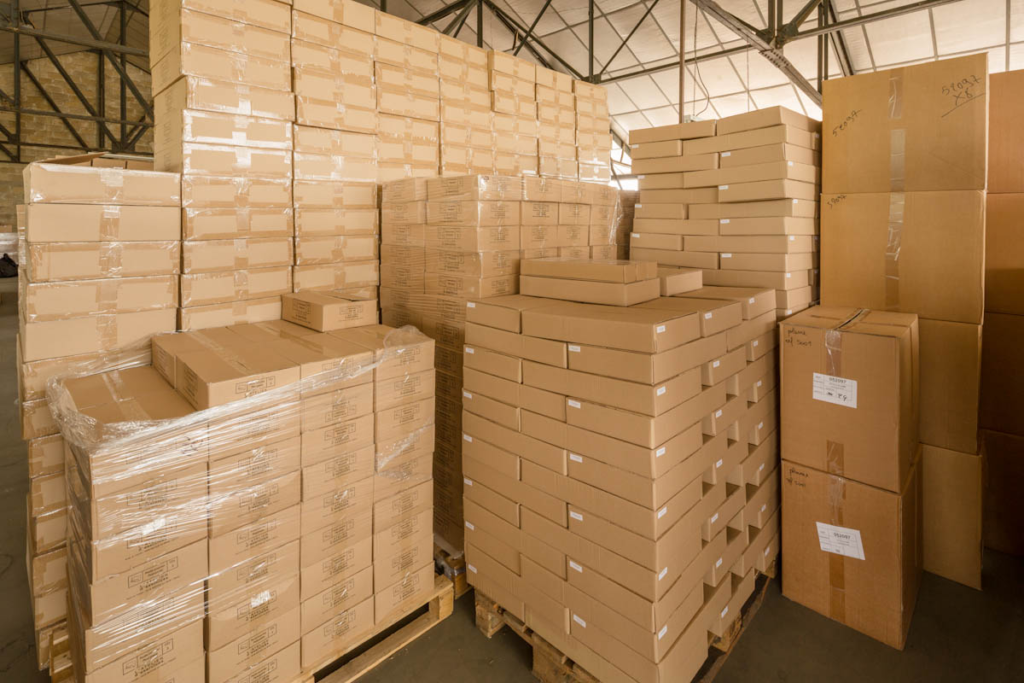
Good flat-pack packaging may include:
Reinforced cartons
Foam or honeycomb protection
Corner protection
Hardware bags
Assembly instructions
Carton labels
Private-label marks
Drop-test consideration
Container loading plan
For B2B buyers, packaging is not only a cost item. It directly affects damage rate, customer satisfaction, and repeat orders.
Customization Process for OEM/ODM Bathroom Cabinets
A clear customization process helps buyers reduce misunderstanding and speed up development.
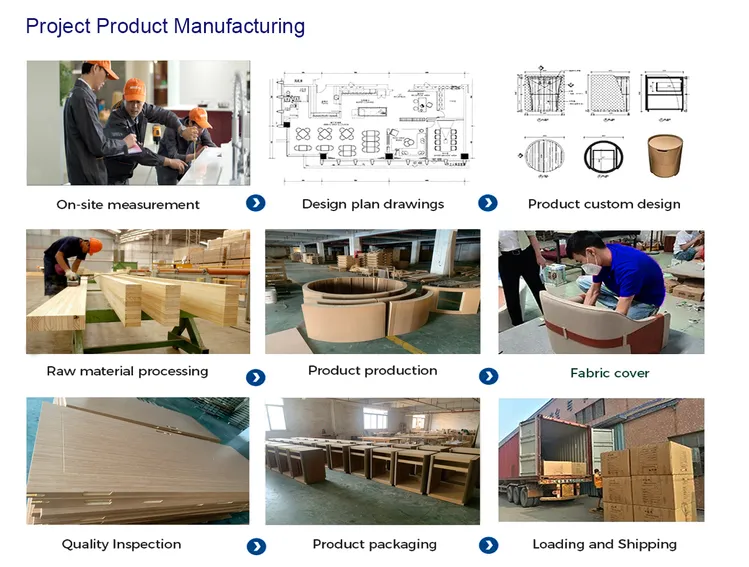
Step 1: Send Project Requirements
Send drawings, reference photos, target dimensions, material preferences, finish colors, sink type, mirror requirements, hardware level, packaging needs, and estimated quantity.
Step 2: Factory Review and Material Recommendation
The factory reviews structure feasibility, board options, finish choices, moisture-resistance needs, and target cost. At this stage, buyers can compare moisture resistant MDF, plywood, PVC foam board, particle board, or other suitable materials.
Step 3: Quotation
The quotation should include material, size, finish, hardware, packaging, MOQ, sample cost, lead time, payment terms, and shipping support.
Step 4: Sample Development
Samples help confirm appearance, size, structure, finish, hardware, edge sealing, assembly logic, and packaging details. For bathroom cabinets, sample review is especially important because moisture resistance depends heavily on details.
Step 5: Sample Approval
After sample approval, the factory confirms bulk production standards. Any changes should be recorded clearly before mass production begins.
Step 6: Bulk Production
Production includes panel cutting, edge banding, drilling, finishing, hardware preparation, assembly check, QC inspection, packing, and loading preparation.
Step 7: Export Packing and Shipment
For flat-pack bathroom furniture, packing should protect surface finish, panel corners, mirror parts, hardware, and assembly instructions. Proper container loading helps reduce transport risk and improve shipping efficiency.
Responsible Sourcing and Compliance
Many B2B buyers need materials that support responsible sourcing and market compliance.
For wood and wood-based products, buyers may ask about FSC or PEFC options. FSC provides information about certified wood and responsible forest management here:
https://fsc.org/en/businesses/wood
PEFC also provides information about forest certification and sustainable sourcing here:
https://www.pefc.org/
For composite wood products, buyers should confirm the emission requirements of the destination market. The EPA TSCA Title VI page is useful for U.S. market buyers:
https://www.epa.gov/formaldehyde/formaldehyde-emission-standards-composite-wood-products
For California-related sales, CARB’s official Composite Wood Products Program is also important:
https://ww2.arb.ca.gov/our-work/programs/composite-wood-products-program
Using compliant materials can help importers, retailers, and project buyers reduce supply chain risk and improve confidence when selling bathroom furniture in regulated markets.
How to Choose the Right Supplier for Waterproof Bathroom Cabinets
Choosing the right material is only one part of the sourcing decision. The supplier’s production ability, communication, QC process, and export experience also matter.
A reliable bathroom cabinet manufacturer should be able to support:
Material comparison
OEM and ODM development
Sample production
Stable bulk manufacturing
Moisture-resistant structure suggestions
Flat-pack packaging design
Private-label support
Carton mark customization
Quality control
Export documentation
Container loading support
Buyers should avoid choosing a supplier only by the lowest price. Bathroom furniture failures can be expensive after shipment. A slightly cheaper material may lead to swelling, complaints, returns, or project rework.
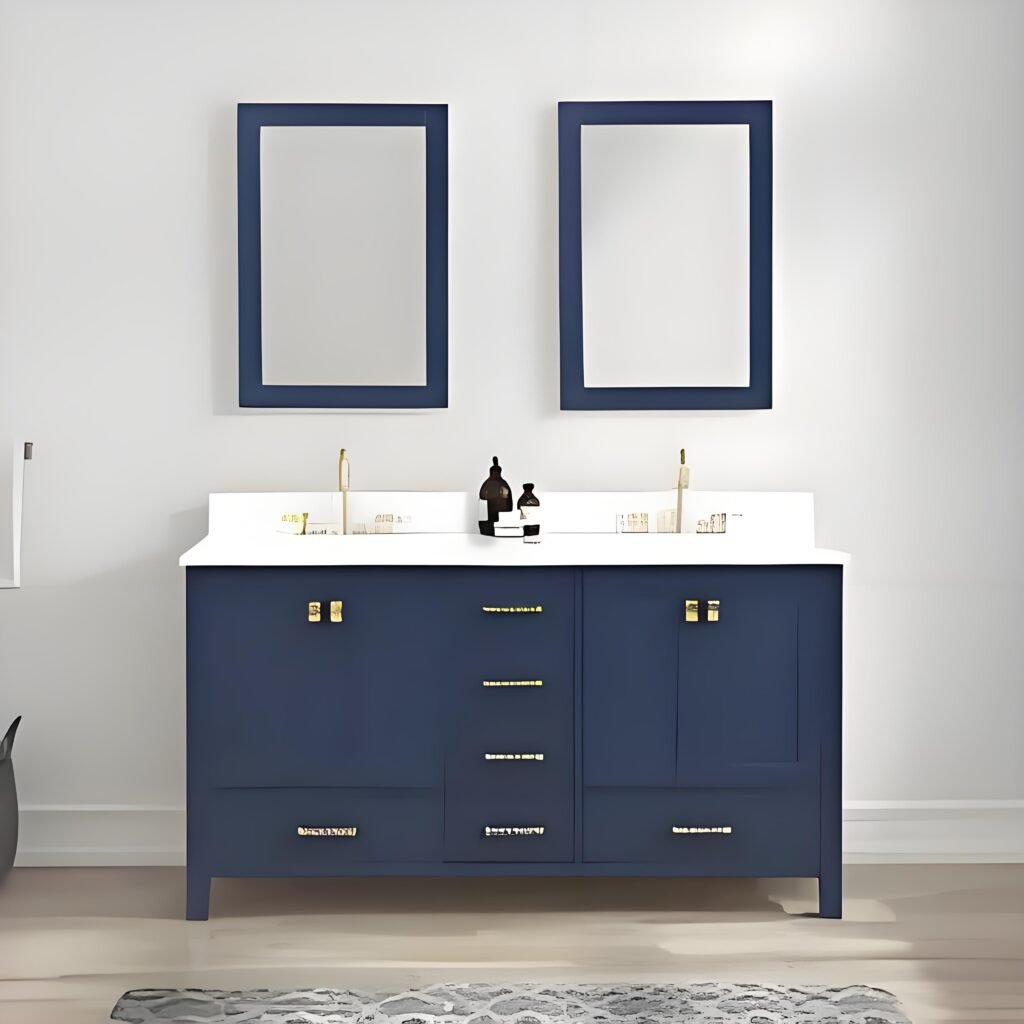
Before placing an order, ask these questions:
What board material do you recommend for our target market?
Can you provide moisture resistant MDF or plywood options?
How do you seal edges and sink openings?
What finish options are suitable for bathroom use?
What hardware do you recommend?
Can you make samples before bulk production?
What is the MOQ?
What is the normal lead time?
Can you support flat-pack export packaging?
Can you customize carton marks and private labels?
Can you provide material documents if required?
A professional factory should answer these questions clearly and provide practical suggestions based on product use, market positioning, and order requirements.
FAQ
What are the best waterproof bathroom cabinet materials?
The best waterproof bathroom cabinet materials depend on the project. Common options include moisture resistant MDF, plywood, PVC foam board, HPL compact board, moisture resistant particle board, aluminum, stainless steel, and sealed solid wood. For most OEM/ODM bathroom furniture programs, moisture resistant MDF and plywood are practical choices because they balance cost, finish quality, and production flexibility.
Is moisture resistant MDF good for bathroom cabinets?
Yes, moisture resistant MDF can be suitable for bathroom cabinets when the surface is properly finished and the edges are sealed. It is commonly used for vanity doors, drawer fronts, and cabinet panels. However, it should not be left with exposed raw edges near water sources.
Is plywood better than MDF for bathroom cabinets?
Plywood usually offers better screw-holding strength and structural stability, while MDF offers smoother surface finishing and cost efficiency. For premium bathroom cabinets, plywood is often preferred for cabinet boxes or structural parts. For painted or laminated doors, moisture resistant MDF can be a good choice.
Can particle board be used for bathroom cabinets?
Moisture resistant particle board can be used for some bathroom storage cabinets, especially cost-sensitive flat-pack furniture. However, it should be well sealed and used away from direct water exposure. Standard low-grade particle board is not recommended for wet bathroom zones.
What material is best for hotel bathroom vanity cabinets?
For hotel bathroom vanity cabinets, plywood, moisture resistant MDF, HPL compact board, or well-sealed engineered panels are commonly considered. The best choice depends on hotel grade, budget, installation method, finish requirement, and expected service life.
What material is best for apartment bathroom cabinets?
For apartment bathroom cabinets, buyers often choose moisture resistant MDF, plywood, or moisture resistant particle board depending on cost level and durability needs. Rental apartments may require stronger finishes and easy replacement planning.
Do you support OEM/ODM waterproof bathroom cabinet projects?
Yes. Starwood supports OEM and ODM bathroom cabinet projects, including material selection, size customization, finish options, hardware matching, flat-pack structure, private-label packaging, sampling, bulk production, QC, and export packing.
What information should buyers provide for a quotation?
Buyers should provide product drawings or reference images, dimensions, material preference, finish color, hardware requirement, quantity, destination market, packaging requirements, and target price. This helps the factory recommend suitable waterproof bathroom cabinet materials and provide a more accurate quotation.
What is the MOQ for custom bathroom cabinets?
MOQ depends on product size, material, finish, hardware, packaging, and customization level. Standard models usually have lower MOQ, while custom colors, special finishes, private-label packaging, and new structures may require higher MOQ.
How can buyers reduce damage during export shipping?
Buyers can reduce shipping damage by using flat-pack packaging, reinforced cartons, corner protection, foam or honeycomb protection, organized hardware bags, clear assembly instructions, carton labels, and proper container loading plans.
Final Recommendation
For B2B buyers, the best decision is not simply choosing one “waterproof” material. The best decision is choosing a complete bathroom cabinet material system that matches your project environment, target price, design style, order quantity, packaging method, and market requirements.
If your goal is a cost-effective bathroom vanity collection, moisture resistant MDF with sealed edges and durable finish may be a strong solution. If your goal is premium hotel or apartment bathroom furniture, plywood or mixed plywood/MDF construction may provide better stability. If your market strongly focuses on waterproof selling points, PVC foam board, aluminum, or stainless steel may be considered. For commercial washrooms, HPL compact board can offer strong durability.
Starwood Industry Co., Ltd. supports global buyers with OEM and ODM flat-pack bathroom furniture manufacturing, including bathroom vanity cabinets, wall-mounted bathroom cabinets, mirrored cabinets, tall storage units, and project bathroom furniture.
If you are developing a new waterproof vanity cabinet collection, send us your drawings, material requirements, target price, quantity, packaging needs, and destination market. We can help recommend suitable waterproof bathroom cabinet materials, prepare samples, and support bulk production with export-ready packaging.
Request samples of waterproof cabinet materials today. Contact Starwood for OEM/ODM bathroom furniture quotation, sample development, and project manufacturing support.
Contact page:
https://plywoodmfr.com/contact/
Bathroom Furniture page:
https://plywoodmfr.com/bathroom-furniture/
OEM & ODM service page:
https://plywoodmfr.com/oem-odm-furniture-manufacturing-services/