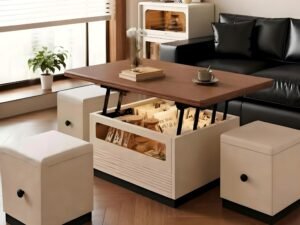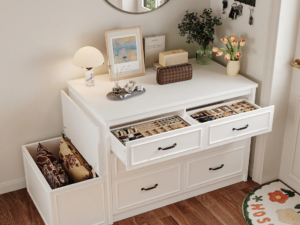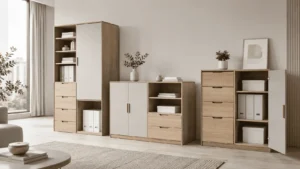
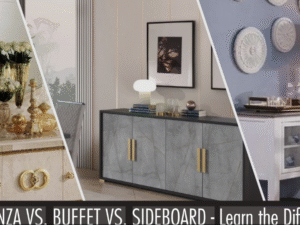
For many furniture buyers, the terms sideboard buffet and buffet table sound almost interchangeable. In daily retail language, they often overlap. In B2B sourcing, however, the difference matters.
A sideboard buffet is usually a storage-focused cabinet placed along a dining room wall. It often includes drawers, doors, shelves, wine storage, glass display sections, or concealed compartments. A buffet table is usually more open and serving-focused. It may be used for food presentation, breakfast service, catering layouts, hotel dining areas, restaurant stations, apartment clubhouses, or event spaces.
For homeowners, the choice may simply depend on style. For importers, wholesalers, hotel buyers, serviced apartment developers, restaurant contractors, and OEM/ODM furniture brands, the choice affects product structure, material specification, carton size, MOQ, lead time, damage rate, assembly logic, and final project cost.
This guide compares sideboard buffet vs buffet table from a professional furniture manufacturing point of view. It will help you choose the right dining room storage solution for bulk supply, hotel rooms, apartments, restaurants, retail collections, and customized flat-pack furniture programs.
For project buyers who need a ready manufacturing partner, you can also explore our buffet sideboard furniture options for OEM/ODM sideboard and buffet cabinet development.
Table of Contents
- What Is a Sideboard Buffet?
- What Is a Buffet Table?
- Sideboard Buffet vs Buffet Table: Key Differences
- Which One Fits Different Project Scenarios?
- Materials, Structure, and Compliance Considerations
- MOQ, Lead Time, Packaging, and Customization Process
- How to Send a Better RFQ for OEM/ODM Production
- Final Recommendation
- FAQ
What Is a Sideboard Buffet?
A sideboard buffet is a low-to-medium-height storage cabinet designed for dining rooms, living rooms, hotel suites, serviced apartments, restaurants, and open-plan interiors. It is normally placed against a wall and used to store tableware, cutlery, linens, wine bottles, glassware, small appliances, decorative items, or hospitality accessories.
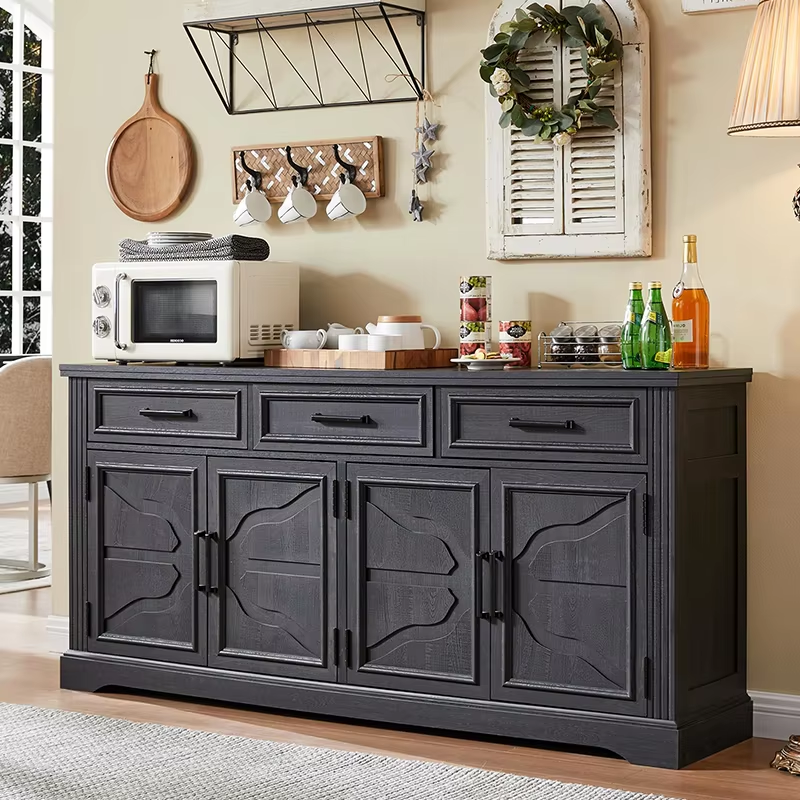
In modern B2B furniture sourcing, a sideboard buffet is not only a decorative cabinet. It is a practical storage unit that can support different market positions:
- Retail dining room furniture collections
- Hotel guestroom and restaurant casegoods
- Serviced apartment dining storage
- Multi-family apartment furniture packages
- Restaurant storage and display furniture
- Online furniture SKUs with flat-pack delivery
- Private-label furniture programs for importers and wholesalers
A sideboard buffet can include several storage layouts. Some designs use drawers on the upper section and cabinet doors below. Some use glass doors for display. Some include wine racks, adjustable shelves, open cubbies, soft-close hinges, cable holes, LED lighting, metal legs, fluted panels, or high-gloss finishes.
From a manufacturing perspective, a sideboard buffet is usually more complex than a simple table. It requires accurate panel cutting, stable cabinet structure, door alignment, hardware selection, edge banding quality, packaging protection, and clear assembly instructions. This is why B2B buyers should evaluate not only the appearance, but also the internal structure and export packing solution.
What Is a Buffet Table?
A buffet table is usually a table-style furniture piece used for serving, staging, or display. In hospitality projects, it may be used for breakfast service, catering setups, restaurant self-service zones, conference refreshment areas, hotel banquet spaces, or apartment clubhouse dining areas.
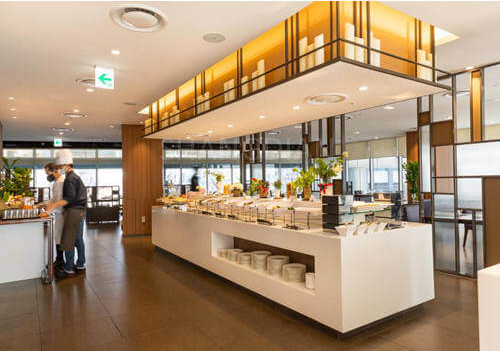
Compared with a sideboard buffet, a buffet table is often more open. It may have fewer enclosed compartments, less internal storage, and a simpler structure. Some buffet tables are designed as mobile serving stations, while others are fixed furniture pieces with shelves, drawers, or lower storage.
For commercial buyers, the buffet table is often selected when the main function is presentation rather than concealed storage. It can support food trays, beverage dispensers, coffee machines, service equipment, display baskets, or decorative arrangements.
However, a buffet table may not be the best option when the project requires organized dining room storage, hidden tableware, dust protection, branded cabinet styling, or long-term apartment use. In those cases, a sideboard buffet usually offers more value.
Sideboard Buffet vs Buffet Table: Key Differences
The best choice depends on how the furniture will be used. Below is a practical comparison for importers, wholesalers, contractors, and project buyers.
| Comparison Point | Sideboard Buffet | Buffet Table |
|---|---|---|
| Main Function | Storage, display, and serving support | Serving, staging, and presentation |
| Typical Structure | Cabinet body with doors, drawers, shelves, or glass sections | Table-style structure, sometimes with shelves |
| Best Placement | Against dining room wall, hotel suite wall, apartment dining area | Restaurant line, hotel breakfast zone, event space |
| Storage Capacity | Higher | Lower to medium |
| Visual Style | More furniture-like and decorative | More service-oriented and functional |
| Customization | High: size, layout, material, finish, hardware, packing | Medium: size, surface, base, shelf layout |
| Export Packing | Usually flat-pack / KD / RTA possible | Flat-pack or assembled, depending on structure |
| Project Suitability | Apartments, hotels, wholesale, retail, dining rooms | Hospitality serving, restaurants, events |
| Buyer Risk | Hardware, alignment, loading, carton protection require control | Surface durability and stability require control |
The simple rule is this: choose a sideboard buffet when storage, room style, and long-term use matter. Choose a buffet table when serving access, open layout, and flexible food presentation matter more.
For many B2B projects, the most profitable solution may be a hybrid design: a sideboard buffet with a durable top surface that can also function as a serving station.
1. Choose a Sideboard Buffet for Dining Room Storage
If your buyers are looking for dining room storage, a sideboard buffet is usually the better product category. It provides enclosed storage, better organization, and stronger visual value for modern interiors.
For apartment projects, a sideboard buffet helps residents store dishes, wine glasses, linens, serving trays, and small kitchen items without adding bulky cabinetry. For hotel suites, it can work as a hospitality cabinet, minibar support, coffee station, or dining storage unit. For residential retail collections, it can be sold as a matching item with dining tables, TV units, console cabinets, and storage cabinets.
A sideboard buffet also gives brands more flexibility in design differentiation. Buyers can customize:
- Width, depth, and height
- Number of doors and drawers
- Open shelves or closed storage
- Glass doors or solid doors
- Metal legs, wooden legs, or plinth base
- Handle style or handle-free push-open design
- Wood grain, matte color, high-gloss, fluted, or two-tone finish
- Private-label packaging and assembly instructions
This makes sideboard buffet furniture especially suitable for OEM/ODM programs. If you are building a collection for wholesale, retail, e-commerce, apartment projects, or hospitality supply, the sideboard buffet is easier to position as a value-added furniture item rather than a simple table.
2. Choose a Buffet Table for Serving and Hospitality Flow
A buffet table is often the better choice when the project is mainly about food service, guest flow, or flexible event layout.
For example, hotel breakfast areas need surfaces that allow guests to access food, drinks, plates, and utensils quickly. Restaurant service zones need practical surfaces that are easy to clean and arrange. Conference venues may need movable or modular buffet tables that can be reconfigured for different events.
In these cases, buyers should pay attention to:
- Surface durability
- Scratch resistance
- Moisture resistance
- Table stability
- Edge protection
- Easy cleaning
- Load-bearing performance
- Mobility, if casters are required
- Heat and stain resistance, depending on use
A buffet table does not always need deep storage. Instead, it needs a practical top surface, stable support, and a layout that improves service efficiency.
For hospitality projects, you may also need to consider accessibility and circulation. The ADA Standards for Accessible Design are a useful reference when planning accessible public spaces in the United States. Even when your project is outside the U.S., accessibility thinking can help improve guest experience and reduce layout problems.
3. Match the Product to the Room Type
A common sourcing mistake is choosing furniture by product name only. In real projects, the room type should guide the product specification.
For Residential Dining Rooms
A sideboard buffet is usually better because it adds storage and improves the overall furniture collection. Buyers can match the finish with dining tables, chairs, TV units, bookshelves, or living room cabinets.
Recommended features:
- 1200–1800 mm width for common layouts
- 350–450 mm depth for apartment-friendly storage
- Drawers for cutlery and small items
- Cabinets for plates, bowls, and tableware
- Durable melamine, veneer, or painted finish
- Anti-tip hardware where required
For Small Apartments
A slim sideboard buffet is often more practical than a buffet table. Small apartments need furniture that can do more than one job. A narrow sideboard buffet can work as dining storage, console storage, entryway storage, or living room storage.
Recommended features:
- Narrow depth
- Sliding doors or compact swing doors
- Adjustable shelves
- Wall-side placement
- Flat-pack structure
- Lightweight but stable panel construction
For Hotels and Serviced Apartments
A sideboard buffet can be used as a minibar cabinet, coffee station, dining storage, or decorative casegood. A buffet table is better for public breakfast areas, banquet spaces, and restaurant serving stations.
Recommended features for hotel sideboard buffet units:
- Contract-grade surface finish
- Strong edge banding
- Easy-clean panels
- Stable hardware
- Reinforced carton packaging
- Clear item coding and room package coordination
For Restaurants and Cafés
A buffet table is suitable for service areas, while a sideboard buffet works better for front-of-house storage or decorative dining zones. Restaurants may need both: open serving tables for operation and enclosed sideboards for backup storage.
4. Pay Attention to Materials and Panel Selection
For export furniture, material selection affects price, weight, durability, compliance, packaging, and customer satisfaction. A professional furniture buyer should never approve a sideboard buffet or buffet table based on appearance only.
Common materials include:
MDF
MDF offers a smooth surface for painting, veneer, PVC foil, and melamine finishes. It is suitable for modern flat panels, routed details, fluted designs, and painted surfaces. It is often used when buyers need a clean and refined appearance.
Particle Board
Particle board is widely used in cost-sensitive flat-pack furniture. It works well with melamine paper and is suitable for large-volume retail or online furniture programs. Buyers should pay attention to board density, screw-holding strength, edge banding, and moisture resistance.
Plywood
Plywood provides good structural strength and is often selected for higher-end panel furniture, better screw holding, and stronger cabinet structure. It may be useful for hospitality projects, project furniture, and upgraded storage units.
Engineered Panels
Engineered panels allow manufacturers to balance cost, weight, surface quality, and structural needs. For a sideboard buffet, a smart solution may use different materials in different positions: stronger panels for load-bearing parts, cost-effective panels for internal sections, and upgraded finishes for visible surfaces.
When exporting furniture to regulated markets, buyers should also consider formaldehyde emission requirements. For U.S. market projects, the EPA Formaldehyde Emission Standards for Composite Wood Products are important for composite wood products. For California-related sales, buyers may also review the California Air Resources Board Composite Wood Products Program, which covers composite wood products such as hardwood plywood, particleboard, and MDF.
If sustainability is important for your market, the FSC furniture guidance is also useful when discussing responsible forest-based material sourcing and chain-of-custody requirements.
5. Review Stability, Strength, and Safety Early
A sideboard buffet and buffet table may look simple, but stability and strength are important in real use. Dining storage furniture may hold heavy plates, bottles, small appliances, trays, and decorative items. Buffet tables may need to support food containers, drink dispensers, coffee machines, or service equipment.
For storage units, buyers can refer to ISO 7170:2021 storage unit test methods, which cover strength, durability, and stability testing for storage units. For commercial furniture buyers, the ANSI/BIFMA standards overview is also a helpful reference for understanding safety, performance, and sustainability standards in furniture.
For B2B purchasing, ask your supplier these questions:
- What is the recommended load capacity for the top panel?
- What is the load capacity for each shelf?
- Are adjustable shelves supported by metal shelf pins?
- Is anti-tip hardware included?
- What is the back panel thickness?
- Are drawer slides tested for repeated use?
- Are hinges soft-close or standard?
- Is the cabinet stable when doors and drawers are open?
- Can the structure be optimized for hotel or apartment use?
For sideboard buffet cabinets, the most common quality risks are door gaps, drawer alignment, weak back panels, poor edge banding, unstable legs, loose hardware, and carton damage during shipment. These risks can be reduced through proper engineering, pre-production samples, QC standards, and export packaging design.
6. Compare MOQ, Lead Time, and Customization Needs
For B2B furniture sourcing, MOQ and lead time are part of the real purchasing decision. A sideboard buffet usually has more components than a buffet table, so the sample and production process may require more coordination.
Typical OEM/ODM discussion points include:
MOQ
MOQ depends on size, material, finish, hardware, packaging, and whether the design uses standard components. A simple buffet table may have a lower development barrier. A customized sideboard buffet with special finish, hardware, glass doors, lighting, or private-label packaging may require a higher MOQ.
For test orders, buyers can ask whether mixed models, shared finishes, or standard hardware can help reduce risk.
Sample Lead Time
Sample lead time depends on design complexity. A simple panel structure can usually be developed faster than a complex cabinet with drawers, glass doors, special hardware, or custom finish matching.
Buyers should prepare:
- Product drawing or reference image
- Target dimensions
- Board material request
- Finish color or sample chip
- Hardware requirement
- Packing method
- Target price range
- Compliance market
- Estimated order quantity
Bulk Production Lead Time
Bulk production lead time depends on material availability, order quantity, production schedule, finish process, packaging design, and inspection requirements. For project orders, buyers should confirm the production schedule early and leave time for sample approval, packaging drop-test discussion, label confirmation, and shipment booking.
Customization Scope
A professional OEM/ODM sideboard buffet factory can usually support:
- Custom dimensions
- Material selection
- Surface finish matching
- Drawer and door layout
- Glass door options
- Metal frame or wooden base
- Handle style
- Hardware brands
- Flat-pack structure
- Assembly instruction design
- Carton marks
- Private label packaging
- Project item coding
At Starwood, buyers can start from drawings, reference photos, target market requirements, or existing product ideas. You can review our OEM & ODM furniture manufacturing services to understand how the process moves from inquiry and quotation to sampling, production, QC, packing, and shipment.
7. Do Not Ignore Packaging and Export Handling
For international furniture buyers, packaging is not a minor detail. A beautiful sideboard buffet can still become a loss if carton protection is weak, hardware is not organized, panels are scratched, or assembly instructions are unclear.
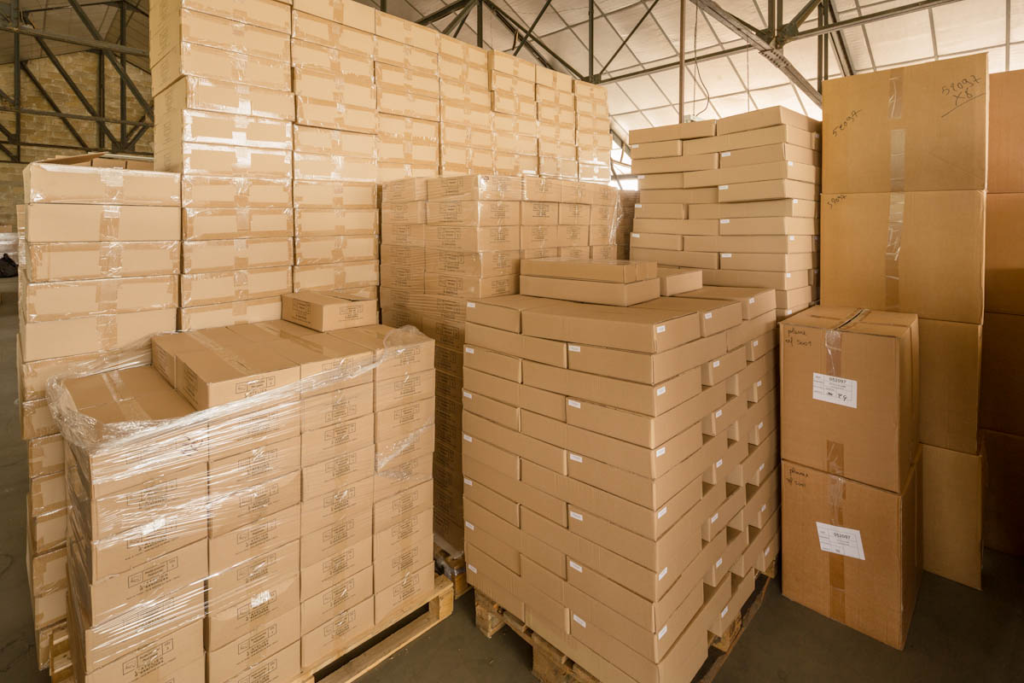
A sideboard buffet usually has more parts than a buffet table. Doors, drawers, shelves, side panels, back panels, hardware bags, legs, rails, and glass components must be packed carefully. For flat-pack furniture, the carton layout should protect visible panels and reduce movement during shipping.
Recommended export packaging considerations:
- Reinforced outer carton
- Corner protection
- Foam or honeycomb board where needed
- Separated hardware bag
- Clear assembly instruction
- Carton mark and item code
- Glass protection if glass doors are used
- Drop-test discussion for e-commerce orders
- Container loading plan
- Spare parts policy for project orders
For online furniture sellers, packaging is even more important because the item may go through courier handling, warehouse sorting, last-mile delivery, and customer self-assembly. For hotel and apartment projects, carton labeling and room package organization can reduce installation confusion.
If you are comparing suppliers, ask them not only for product price, but also for packing photos, carton dimensions, gross weight, loading quantity, and damage prevention methods.
Sideboard Buffet vs Buffet Table: Which One Should You Choose?
Choose a sideboard buffet if your project needs:
- Better dining room storage
- Enclosed cabinet space
- Stronger furniture value
- Retail collection potential
- Apartment or hotel room storage
- OEM/ODM customization
- Private-label product development
- Long-term use in residential or commercial interiors
Choose a buffet table if your project needs:
- Open serving surface
- Flexible hospitality layout
- Restaurant or breakfast service
- Event or banquet use
- Simple structure
- Easy access from multiple sides
- Display or staging function
Choose a hybrid solution if your buyer wants both storage and serving. For example, a sideboard buffet with a durable top surface, drawers, doors, adjustable shelves, and easy-clean finish can serve as both dining storage and a light serving station.
This hybrid direction is often the best option for hotels, serviced apartments, clubhouses, model rooms, and modern residential furniture collections.
How to Build a Better OEM/ODM RFQ
A clear RFQ helps the factory quote faster and reduces misunderstanding. Instead of sending only a product photo, include technical and commercial details.
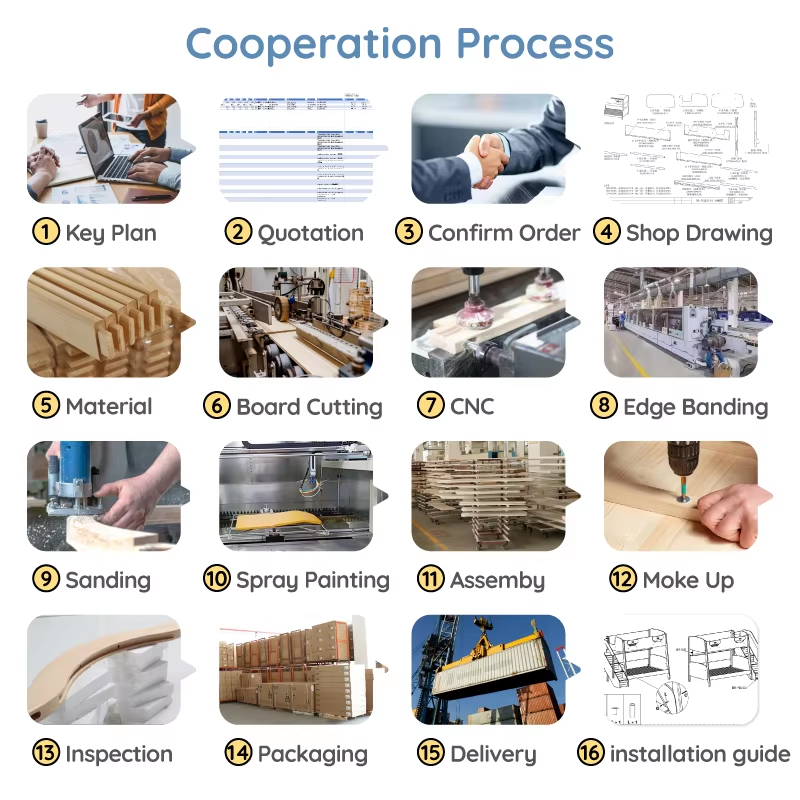
Recommended RFQ checklist:
- Product type: sideboard buffet, buffet table, or hybrid cabinet
- Target market: U.S., EU, UK, Middle East, Australia, or other region
- Application: hotel, apartment, restaurant, retail, wholesale, e-commerce, or project use
- Dimensions: width, depth, height
- Material: MDF, particle board, plywood, engineered panel, or buyer-specified board
- Finish: melamine, veneer, painted, high-gloss, matte, fluted, wood grain, or custom color
- Storage layout: drawers, doors, shelves, glass doors, wine rack, open cubbies
- Hardware: hinges, slides, handles, legs, wall anchor, soft-close options
- Packing: flat-pack, KD, assembled, mail-order packaging, or project carton packing
- Compliance: TSCA Title VI, CARB, FSC, GREENGUARD, or buyer-specific requirements
- Quantity: sample quantity, trial order quantity, annual forecast
- Branding: logo, carton mark, instruction manual, private label
- Delivery requirement: target shipment date and destination port
If you are not sure which structure is best, send your room size, reference style, target price, and order quantity. A professional manufacturer can suggest a more practical specification before sampling.
For buyers who want a reliable source factory, Starwood Industry Co., Ltd. is a professional flat-pack furniture manufacturer based in China, supporting global importers, wholesalers, brands, e-commerce sellers, hotel buyers, apartment projects, and contractors. You can also learn more about the company before sending your project brief.
CTA: Start Your Sideboard Buffet Project
If you are sourcing sideboard buffet furniture for hotels, apartments, restaurants, retail collections, or wholesale distribution, we can help you compare structure, material, finish, packing, MOQ, and lead time before production.
Send us your room size, product reference, target market, estimated quantity, and preferred style. Our team can support custom dimensions, OEM/ODM development, sampling, bulk production, QC, flat-pack packaging, and export shipment.
Explore our buffet sideboard furniture or contact us for a tailored quotation.
Final Recommendation
The difference between a sideboard buffet and a buffet table is not just a naming issue. It is a sourcing decision.
A sideboard buffet is better when buyers need storage, style, customization, and long-term room value. A buffet table is better when the project needs serving, open access, and flexible hospitality use. For many modern hotels, apartments, restaurants, and retail furniture programs, the best solution may be a customized sideboard buffet that also works as a serving surface.
For B2B buyers, the right decision should consider application scenario, material, structure, compliance, MOQ, lead time, packaging, and after-sales risk. When these details are confirmed early, your sideboard buffet or buffet table project becomes easier to quote, sample, produce, ship, and repeat.
FAQ
Q1: What is the main difference between a sideboard buffet and a buffet table?
A sideboard buffet is mainly a storage cabinet with doors, drawers, shelves, or display sections. A buffet table is mainly a serving or presentation table. For dining room storage, hotel suites, apartments, and retail furniture collections, a sideboard buffet is usually more practical. For breakfast service, catering, and restaurant serving areas, a buffet table may be more suitable.
Q2: Is a sideboard buffet suitable for hotel and apartment projects?
Yes. A sideboard buffet is suitable for hotel suites, serviced apartments, rental apartments, clubhouses, model rooms, and dining areas. It can be customized as dining storage, minibar cabinet, coffee station, display cabinet, or multi-purpose wall-side storage.
Q3: What materials are commonly used for sideboard buffet furniture?
Common materials include MDF, particle board, plywood, and engineered panels. The best choice depends on target price, finish requirement, strength, weight, compliance market, and project positioning. Buyers can also request specific board grades, surface finishes, and hardware options.
Q4: Can sideboard buffet furniture be customized for OEM/ODM orders?
Yes. OEM/ODM customization can include dimensions, storage layout, board material, surface finish, hardware, handles, legs, glass doors, packaging, carton marks, assembly instructions, and private-label branding. Buyers can send drawings, reference photos, target prices, and market requirements for quotation.
Q5: What MOQ is recommended for sideboard buffet production?
MOQ depends on the design, material, finish, hardware, and packaging requirements. Standard designs and shared finishes may support more flexible trial orders, while fully customized models may require higher MOQ. Buyers should discuss sample quantity, trial order quantity, and annual forecast with the factory.
Q6: How long does sideboard buffet production take?
Lead time depends on sample approval, material availability, order quantity, finish complexity, packaging requirements, and factory schedule. For smooth sourcing, buyers should confirm drawings, material, finish, hardware, packaging, labels, and inspection standards before mass production starts.
Q7: Is flat-pack packaging suitable for sideboard buffet export?
Yes. Flat-pack / KD / RTA packaging is widely used for export sideboard buffet furniture. It improves container loading efficiency and supports international shipping. However, packaging must be engineered carefully to protect panels, corners, hardware, glass parts, and visible surfaces.
Q8: Which is better for wholesalers: sideboard buffet or buffet table?
For wholesalers and furniture distributors, sideboard buffet furniture usually offers better retail value because it combines storage, style, and room function. Buffet tables are better for hospitality, catering, restaurant, and event-related buyers. The best choice depends on your customer group.