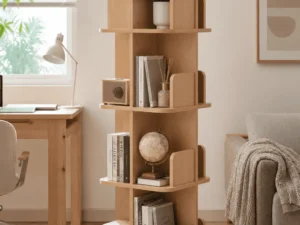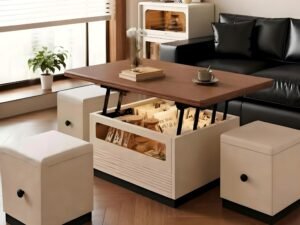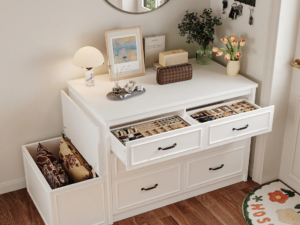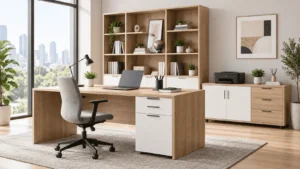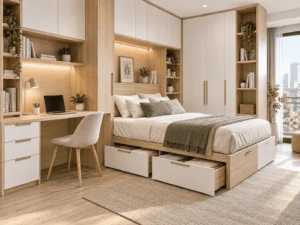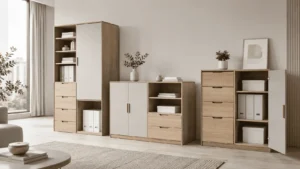
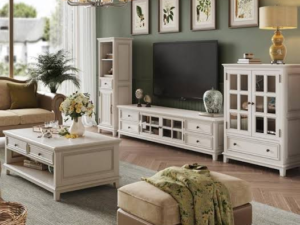
For global furniture buyers, the TV stand is no longer just a basic storage unit placed under a screen. In 2026-oriented product development, it is increasingly treated as a design anchor for the living room, a practical media solution, and an important part of the overall furniture collection strategy. For importers, distributors, and project buyers, this shift matters because the right TV stand can now influence not only aesthetics, but also packaging efficiency, project coordination, retail appeal, and long-term reorder potential.
The rise of the modern plywood TV stand is closely linked to broader market direction. Recent design coverage points to stronger demand for warm materials, mixed textures, media-wall styling, sculptural forms, and softer visual lines in living spaces. Publications covering current living room and TV-unit directions consistently point to texture-rich wood looks, integrated media storage, and more architectural treatment of the television zone, which supports plywood-based product development for 2026 collections.
For a panel furniture exporter, plywood is especially relevant because it balances structure, machinability, finish flexibility, and export practicality. Compared with heavier solid-wood constructions or lower-position materials that may not meet target-market expectations, plywood gives manufacturers room to develop competitive modern designs with better cost control and more stable production logic. That makes it particularly suitable for OEM/ODM programs, hotel and apartment projects, and private label furniture collections.
This article explores 9 exciting modern plywood TV stand trends for 2026 from a B2B buyer’s perspective. It covers design direction, application scenarios, materials, MOQ, lead times, packaging, customization, and sourcing considerations, so you can evaluate not only what is trending, but also what is commercially workable.
Table of Contents
- Why the TV stand still matters in 2026
- Floating and wall-mounted formats remain strong
- Fluted and textured fronts keep gaining attention
- Warm natural plywood finishes outperform cold glossy looks
- Curved edges and softer geometry are becoming mainstream
- Mixed-material TV stand design is growing in premium segments
- Storage-first layouts are more important for projects and retail
- OEM customization is shaping modern plywood TV stand collections
- Export-ready design now matters as much as style
- FAQ
- Conclusion
1. Why the TV Stand Still Matters in 2026
Some buyers once assumed that wall-mounted televisions would reduce demand for the TV stand, but current design direction suggests the opposite. As living spaces become more curated and multi-functional, the TV area is being treated as a visual zone rather than an afterthought. That means the TV stand is evolving from a simple cabinet into a low-profile focal point with storage, cable management, display value, and architectural presence.
From a buying perspective, this shift is commercially useful. A well-developed modern plywood TV stand can serve multiple channels:
- furniture retail collections
- e-commerce media consoles
- apartment furnishing packages
- hotel suite living rooms
- serviced residence projects
- developer show units
- private label living room furniture lines
The strongest products are not only attractive in photos. They also work across several room sizes, pack efficiently, and support stable repeat production.
For OEM/ODM suppliers, this means trend-led development should still be grounded in practical selling logic. Buyers want looks that feel updated, but they also want dimensions that fit standard global living spaces, materials that meet compliance needs, and structures that can withstand transportation.
2. Floating and Wall-Mounted Formats Remain Strong
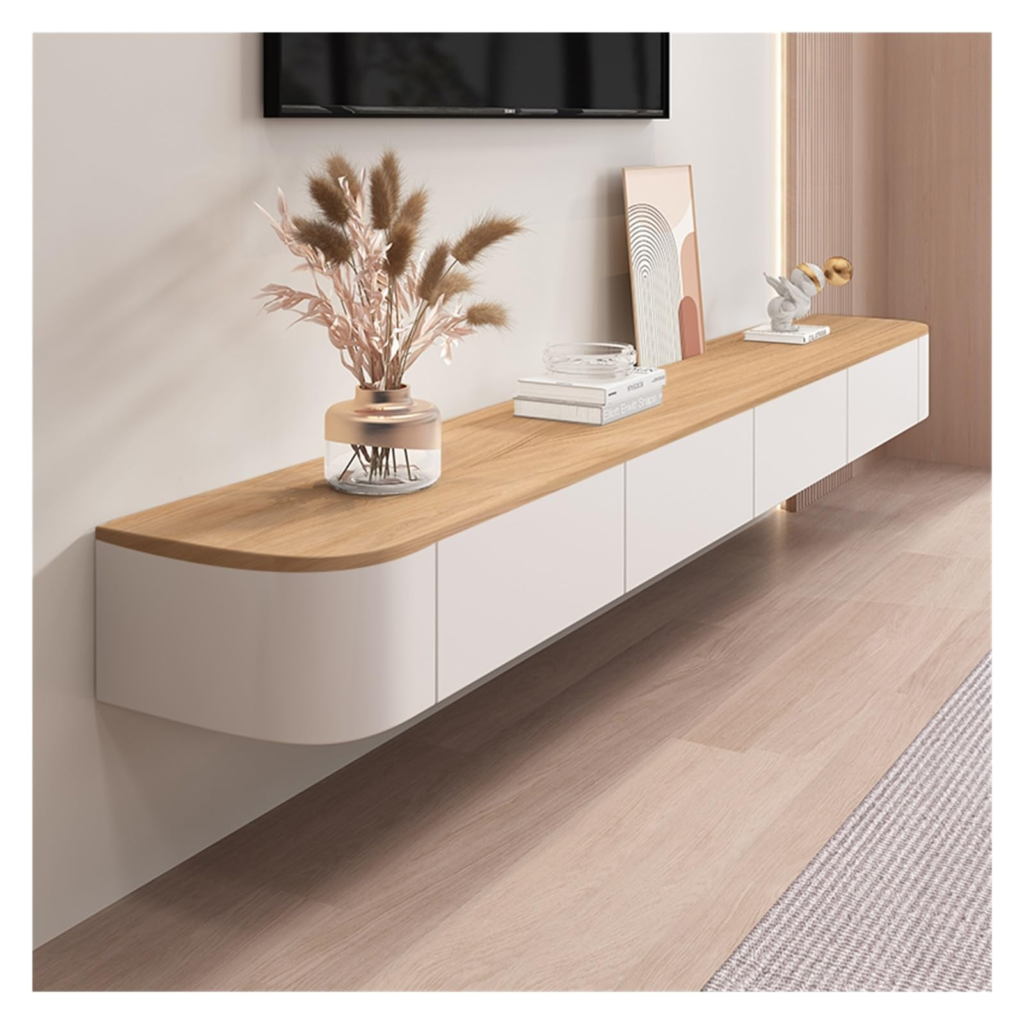
One of the clearest directions for 2026 is the continued popularity of floating or visually light TV stand formats. Recent design coverage around TV zones and media walls highlights the ongoing move away from bulky entertainment centers toward lower-profile, cleaner, more architectural solutions.
For B2B buyers, this trend matters in two ways.
Visual benefit
A floating modern plywood TV stand creates a lighter, more premium look. It works especially well in:
- compact apartments
- contemporary villas
- hotel suites
- model rooms
- Scandinavian or Japandi-style interiors
Commercial benefit
Even when the final product is not literally wall-mounted, many buyers want a “floating look” created by recessed bases, shadow gaps, slim plinths, or hidden support structures. This makes the product easier to adapt for broader markets while preserving the trend direction.
For project buyers, floating styles are also useful because they make spaces feel less crowded and improve perceived floor area. For exporters, however, it is important to confirm installation expectations early. Some markets want a fully wall-mounted product, while others prefer floor-standing units with a floating appearance for easier installation and fewer liability concerns.
3. Fluted and Textured Fronts Keep Gaining Attention
Texture is becoming one of the defining design languages in modern living room furniture. Design editors and product trend coverage continue to point toward fluted fronts, slatted surfaces, and tactile wood details as a way to add warmth and visual depth to media furniture.
For a modern plywood TV stand, this trend is highly adaptable. Common executions include:
- fluted MDF-over-plywood front panels
- routed wave patterns
- slatted door details
- ribbed veneer effects
- mixed smooth-and-textured door combinations
This is a good example of a trend that works in both retail and project business. In retail, texture improves shelf appeal and online visual differentiation. In hospitality and apartment projects, it helps simple cabinet forms look more refined without requiring expensive structural changes.
From a factory perspective, buyers should still assess production feasibility. Some textured doors are decorative and efficient to produce, while others add machining time, finishing complexity, or cleaning concerns. If the project is cost-sensitive, ask the supplier whether the fluted appearance is created by routing, attached strips, thermoformed panels, or veneer treatment.
4. Warm Natural Plywood Finishes Outperform Cold Glossy Looks
Another strong signal moving into 2026 is the preference for warmer, more natural-looking living spaces. Recent design coverage highlights mixed textures, layered materials, and visually softer rooms rather than highly reflective, cold, minimalist environments.
For TV stand development, that means buyers are increasingly asking for:
- light oak tones
- natural ash looks
- walnut-inspired finishes
- smoked wood tones
- low-sheen surfaces
- visible grain character
This is one reason the modern plywood TV stand remains commercially attractive. Plywood and plywood-based constructions can support a wide range of veneer, melamine, laminate, and engineered wood looks while staying aligned with export manufacturing logic.
For panel furniture exporters, finish selection should be based not only on appearance, but also on market positioning. A hotel buyer may prefer darker walnut or smoked oak tones for a more premium look, while an apartment project may need lighter wood tones that visually enlarge compact units. Retail buyers may want two finish options under one design platform to support broader market coverage.
If you market responsible sourcing, finish and panel selection should also be discussed together with certification and traceability. FSC explains that chain-of-custody certification is used to verify how forest-based materials move through the supply chain into finished goods, which is directly relevant to wood-based furniture programs.
Natural insert sentence for正文可直接保留:
For brands and importers that promote responsible sourcing, an FSC chain-of-custody aligned plywood TV stand program can strengthen both buyer confidence and project documentation.
5. Curved Edges and Softer Geometry Are Becoming Mainstream
A noticeable shift in current interiors is the move from sharp, boxy forms toward softer silhouettes. Architectural Digest’s 2025 living room trend roundup highlighted multidimensional seating and richer, softer visual composition, and TV-unit trend coverage for 2026 similarly points to soft curves and sculptural forms in media furniture.
For a TV stand, this often appears in more achievable ways than many buyers expect:
- rounded side panels
- bullnose front edges
- radius corners
- curved plinth bases
- oval-profile handles
- arched leg details
This trend is important because it changes the emotional positioning of the product. A modern plywood TV stand with slightly softened geometry feels more residential, more premium, and more “designed,” even when the internal cabinet structure is still efficient for production.
For export suppliers, the key question is whether the curved detail is decorative or structural. Mild radius edges are usually easy to industrialize. Fully curved plywood bodies are more complex and may affect MOQ, tooling, finish consistency, and freight efficiency. Buyers should confirm early which version is being quoted.
6. Mixed-Material TV Stand Design Is Growing in Premium Segments
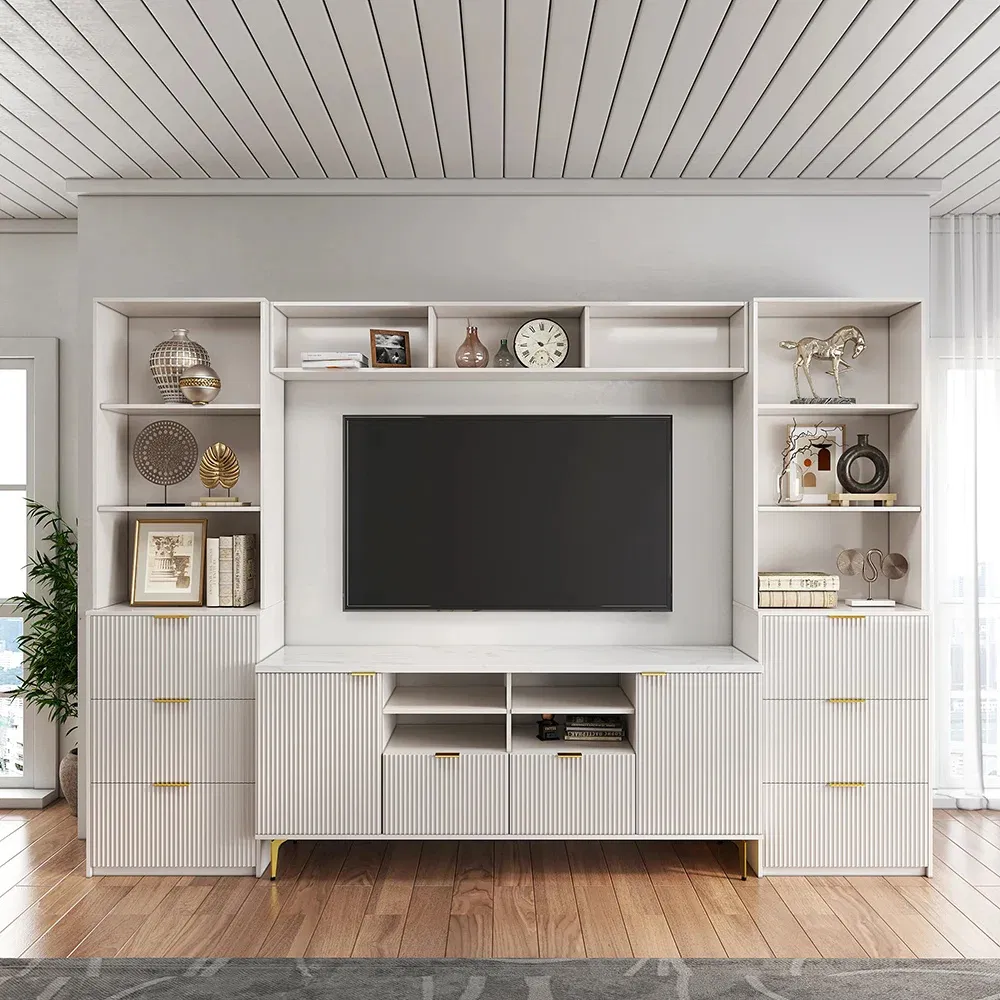
In 2026-oriented development, a TV stand is less likely to be purely one-note. Design signals increasingly support combinations such as wood plus stone-look tops, wood plus metal legs, wood plus glass shelving, or wood plus fabric/acoustic details in media-wall systems. Recent design trend coverage also points to layered materiality and mixed textures as a defining direction in current interiors.
For B2B buyers, mixed-material construction can help a modern plywood TV stand move into a better price position without losing manufacturing practicality. Common commercial combinations include:
Plywood + sintered stone or faux-stone top
Used for a more premium look in residential retail and upscale apartment packages.
Plywood + powder-coated metal base
Useful for contemporary urban collections and easier visual differentiation.
Plywood + glass shelf or glass door accent
Often used in media furniture where display and openness matter.
Plywood + acoustic slat back panel
Relevant to media-wall styling and integrated living room systems.
This trend is especially suitable for OEM/ODM programs because buyers can create multiple SKUs from one shared body structure. For example, the same cabinet carcass can support different fronts, bases, and top materials across value, mid-range, and premium tiers.
7. Storage-First Layouts Are More Important for Projects and Retail
A beautiful TV stand without functional storage is difficult to scale commercially. Current product direction increasingly favors media units that combine cleaner exterior design with practical storage planning. Even trend-focused coverage of TV stands keeps returning to cable control, concealed storage, and flexible layouts because today’s buyers expect the unit to manage devices, remotes, routers, decorative objects, and clutter.
For project and export business, storage logic matters for several reasons:
Apartment and hotel application
Projects usually need a TV stand that can hide cables, support housekeeping, and reduce visible clutter.
Retail and e-commerce demand
End customers increasingly expect a media console to function as both storage and style.
Reorder efficiency
A practical storage layout is easier to keep in line for long-term repeat orders than a highly experimental design.
Popular storage features in a modern plywood TV stand for 2026 include:
- push-open doors
- concealed cable holes
- central shelf for media devices
- asymmetric drawer-and-door combinations
- hidden rear access panels
- modular left/right configurations
For OEM buyers, one useful strategy is to create a platform design: keep the core carcass consistent, then vary the front treatment, base design, and finish to produce several market-specific models from the same engineering logic.
8. OEM Customization Is Shaping Modern Plywood TV Stand Collections
For manufacturers and importers, trends only become profitable when they can be turned into repeatable products. That is why OEM/ODM development is central to the future of the modern plywood TV stand.
Buyers commonly customize:
- dimensions
- finish color
- veneer type
- hardware
- cable management layout
- drawer configuration
- carton artwork
- private label logo
- installation method
- packaging structure
In project business, customization often starts from application. A hotel suite may need a lower-profile TV stand with a premium veneer and minimal open shelving. An apartment buyer may prefer a compact knock-down design with stronger carton efficiency. A distributor may want one trend-led front design across multiple widths for different retailers.
MOQ
MOQ depends on finish, hardware, packaging, and whether the design is new or based on an existing model. A standard plywood TV stand with adjusted dimensions may support a lower MOQ than a newly developed fluted-radius mixed-material model.

Lead time
A normal OEM process usually includes drawing confirmation, finish approval, sampling, revision, bulk production, inspection, and loading. Trend-led products with special fronts, mixed materials, or custom packaging may require longer preparation time.
Sample process
A good supplier should move through:
- buyer brief
- technical review
- quotation
- drawing confirmation
- sample development
- revision
- approval
- bulk production
For B2B buyers, the best trend products are rarely the most extreme ones. They are the ones that balance visual freshness with manufacturability, freight logic, and repeat-order control.
9. Export-Ready Design Now Matters as Much as Style
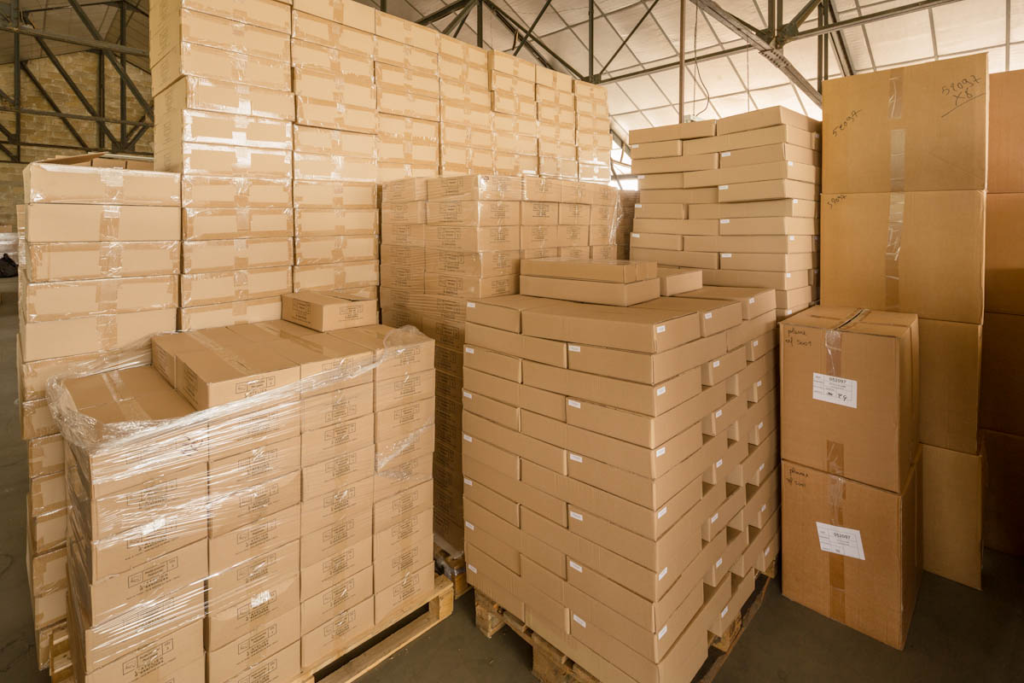
A TV stand may look excellent in a catalog image and still fail commercially if it is difficult to ship, install, or maintain. This is why export-readiness is now part of trend evaluation, especially for panel furniture exporters.
Packaging
For bulk orders, buyers should confirm:
- knock-down or assembled packing
- corner protection
- top and bottom reinforcement
- hardware bag identification
- carton mark layout
- pallet rules if required
- project room-label logic
Compliance
If the product includes plywood, MDF, or particleboard components, market compliance should be reviewed early. The EPA states that finished goods containing regulated composite wood products are subject to TSCA Title VI labeling and compliance requirements, and California CARB continues to regulate hardwood plywood, particleboard, MDF, and finished goods containing them.
Natural insert sentence for:
When exporting a plywood TV stand to the U.S. market, buyers should confirm early whether any plywood, MDF, or particleboard components fall under TSCA Title VI and CARB-related compliance expectations.
Safety and performance
For furniture sold into developed markets, buyers also benefit from understanding broader furniture safety and performance standards. BIFMA states that it develops and maintains furniture safety, performance, and sustainability standards, while the ANSI/BIFMA e3 standard remains a major sustainability reference in the furniture sector. CPSC also continues to publish information on furniture safety and tip-over hazards relevant to product stability discussions.
For a plywood exporter, this means the design conversation should cover not only appearance, but also panel selection, hardware quality, stability, load expectations, labeling, and packaging method. A commercially strong modern plywood TV stand is one that looks current and arrives safely.
When developing a modern plywood TV stand for international markets, buyers should look beyond style and also review material compliance, sourcing transparency, and product performance expectations. If the product includes wood-based panels, it is helpful to refer to the U.S. EPA TSCA Title VI guidance and the CARB composite wood products program to better understand formaldehyde compliance requirements for composite wood materials and finished goods. If sustainability is part of the sourcing strategy, the FSC chain-of-custody framework is also worth reviewing, as it explains how forest-based materials are tracked through the supply chain. For buyers discussing durability, quality benchmarks, or environmental positioning with suppliers, the BIFMA standards overview and the ANSI/BIFMA e3 furniture sustainability standard can also serve as useful references. In addition, the U.S. Consumer Product Safety Commission furniture guidance provides helpful background when product stability and general furniture safety are part of the conversation. These resources can help importers and project buyers communicate more clearly with manufacturers when evaluating a plywood TV stand for different markets.
FAQ
What makes a modern plywood TV stand attractive for 2026 buyers?
A modern plywood TV stand is attractive because it combines warm natural finishes, flexible design options, practical storage, and strong OEM potential. It can fit both retail and project-based living room collections.
Is plywood a good material for TV stand manufacturing?
Yes. Plywood is widely used in TV stand manufacturing because it offers structural stability, good machining performance, finish flexibility, and practical export value for OEM and ODM development.
What TV stand styles are expected to grow in 2026?
Floating formats, fluted fronts, warm wood tones, curved-edge designs, and mixed-material combinations are among the strongest directions for 2026-oriented collections, based on recent design and product trend signals.
What should importers ask before placing a TV stand order?
Importers should confirm dimensions, material composition, finish standards, MOQ, lead time, packaging method, cable management details, compliance expectations, and sampling process.
Is a modern plywood TV stand suitable for hotel and apartment projects?
Yes. It is especially suitable for apartments, serviced residences, and hotel suites because plywood TV stand products can be customized for size, storage, finish, and project packaging needs.
What affects MOQ for a plywood TV stand?
MOQ may depend on the finish, veneer, front design, hardware, packaging customization, and whether the item is newly developed or adapted from an existing model.
Why is packaging important for TV stand exports?
Packaging reduces damage risk, supports warehouse handling, improves installation efficiency, and helps maintain product quality throughout international shipping.
What compliance issues matter for plywood TV stands sold to the U.S.?
If the product contains regulated composite wood products such as hardwood plywood, MDF, or particleboard, buyers should review TSCA Title VI and California CARB-related requirements early in development.
How can buyers evaluate a TV stand supplier?
Buyers should review sample capability, technical communication, finish consistency, packaging knowledge, compliance awareness, and the supplier’s ability to maintain quality in repeat bulk production.
Conclusion
For importers and project buyers, the future of the TV stand category is not just about following style. It is about turning trend direction into commercially successful products. In 2026, the strongest modern plywood TV stand collections are likely to combine floating visual language, textured fronts, warm finishes, softer forms, practical storage, and export-ready engineering. That direction is consistent with recent design and product signals emphasizing tactile materials, layered interiors, and more architectural media zones.
As a panel furniture exporter, the real opportunity is not to chase every trend, but to select the ones that work best for your buyer type, target market, MOQ expectations, packaging method, and production strengths. A good TV stand program should look current, ship safely, install smoothly, and support repeat orders with stable quality.
If you are developing a new living room collection, furnishing an apartment or hotel project, or sourcing for wholesale distribution, now is a good time to review how your modern plywood TV stand range can better align with 2026 demand.
Request a catalog for bulk orders and explore our Plywood TV Stand solutions for global markets.