
Table of Contents
- Introduction: Why Channel-Specific Bedside Cabinets Matter
- Market Overview: Online vs Offline & European Style Trends
- Amazon & Online Channels: How to Choose the Best Nightstands
- Wholesale & Retail Stores: Big Nightstand and Colorful Nightstands Differentiation
- Hospitality & Project Business: Nightstands Bedside Tables for Hotels and Apartments
- Structures and Materials: MDF, Plywood, Metal Frame and More
- One Design, Many Channels: OEM/ODM Strategy for Multiple SKUs
- Conclusion: Working with an OEM/ODM Factory for Series Development
- FAQ: Common Questions About Channel-Specific Bedside Cabinets
- FAQ Schema (JSON-LD)
- Article Schema / Blog Post Schema (JSON-LD)
- Image Suggestions with ALT / Title / Captions
- Sample Article Comments
1. Introduction: Why Channel-Specific Bedside Cabinets Matter
For professional buyers, importers and project managers, the term bedside cabinets no longer refers to a single item. It covers an entire family of products. These include compact bedroom side tables with drawers for apartments and a simple bedroom stand for budget rooms. You can also find statement pieces like a big nightstand for premium retail. Additionally, there are efficient nightstands bedside tables for hotel and serviced apartment chains.
The challenge is that different channels care about completely different details:
- On Amazon, customers compare photos, read hundreds of reviews and expect easy assembly and safe packaging.
- In offline retail, shoppers touch the surface, open and close drawers and decide based on design and perceived quality.
- In hotel or apartment projects, owners and designers focus on long-term durability, unified style and maintenance costs.
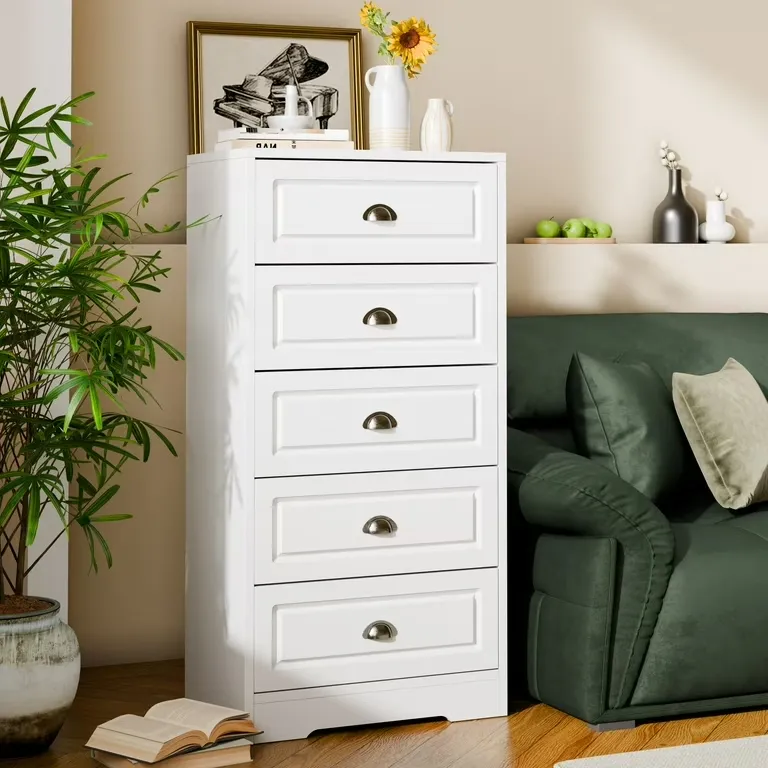
You often end up with high return rates online. This happens if you try to use the same bedside cabinet model for every channel. There is also a weak visual impact in retail. Additionally, there are constant complaints from project owners. The smarter strategy is to design one platform that can be adapted into multiple SKUs for Amazon, retail and projects.
In this article we explain how to select the best nightstands for each channel. We discuss how to use materials like MDF, plywood, and metal frames correctly. We also cover how to work with an OEM/ODM factory to turn one design into a whole series. This includes everything from a slim dorm nightstand to a hotel-grade beige nightstand or black modern nightstand.
2. Market Overview: Online vs Offline & European Style Trends
2.1 Online vs Offline Buying Behavior
Online (Amazon and other marketplaces)
Online buyers search using keywords. These include bedside cabinets, best nightstands, dorm nightstand, or bedroom side tables with drawers. They do not see the product physically, so they rely on:
- High-quality images and lifestyle photos
- Clear dimensions and internal drawer sizes
- Honest descriptions about materials and load-bearing
- Other buyers’ comments about smell, damage, assembly and color accuracy
Small errors here create large problems. Missing 1–2 cm in width can lead to negative reviews. This happens when a bedside cabinet unit does not fit between the bed and the wall. Poor packaging design causes edge damage and high return rates. Hard-to-follow instructions quickly destroy a product’s rating, even if the materials are good.
Offline retail & wholesale
In physical stores, customers interact directly with the product:
- They pull and push the drawers of a bedroom stand to test the runner quality.
- They look at the alignment and gap between drawer fronts.
- They compare the weight and feel of a big nightstand versus lightweight competitors.
Retail buyers therefore want more visual impact and richer colors. They prefer colorful nightstands and blue bedside cabinets as accent pieces. Slightly oversized nightstands are used to anchor a queen or king bed display.
2.2 Key European Style Directions
For export to Europe or European-inspired markets, three style directions are particularly important:
- Scandi / Nordic minimalism
- Clean lines, light oak or birch, soft-touch matt finishes.
- White fronts similar to bedside tables ikea white with wood legs are still very popular.
- Works well for online and mid-market retail.
- Mid-century modern
- Recognisable by angled legs, warm walnut finishes and rounded corners.
- Ideal for mid century nightstands that can be offered as both bedside cabinets and living-room side tables.
- Popular in design-driven retail and serviced apartments.
- Modern minimal / hotel style
- Simple rectangular shapes, thin edges, and neutral tones such as grey and beige.
- A black modern nightstand or beige nightstand works across hotels, rental apartments and premium online listings.
These directions help you define the “design DNA” of your series. Once that is clear, you can build channel-specific variations. You can create SEO-friendly products. These can include bedside tables thin, thin bedside drawers, or bedside table decor sets around the same platform.
3. Amazon & Online Channels: How to Choose the Best Nightstands
For Amazon and other online marketplaces, success is not just about design. It is about optimising for ratings, returns and cost-to-deliver.
3.1 Size, Function and Small-Space Solutions
Online consumers often live in compact apartments or shared houses. They want products that work in tight spaces yet still offer storage:
- bedside tables thin and thin bedside drawers:
The width should be 30–35 cm. This size is ideal for narrow spaces between the bed and wardrobe. Emphasise in the description that the product is small but still holds night-time essentials. - dorm nightstand:
For student dormitories and youth rooms, prioritize smaller footprints. Include extra open storage for books. Ensure cable management for phones and laptops. Use keywords like dorm nightstand explicitly in the bullet points. - bedroom side tables with drawers:
A compact unit with one drawer is useful. It also has one open shelf. This can be the best nightstand solution. This is even true for small bedrooms. It is ideal for small bedrooms.
Clear, legible dimension diagrams are essential. Use both metric and imperial units and show the internal space of each drawer to reduce confusion and returns.
3.2 Packaging, Testing and Authority References
Packaging is one of the main reasons bedside cabinets get damaged in transit. To reassure buyers and reduce claims, you can:
- Use reinforced corner protectors and drop-tested foam structures.
- Add messaging like “drop-tested packaging for safer delivery” in your product page.
- Refer to known standards and organisations to support your claims:
- FSC – sustainable wood sourcing:
https://www.fsc.org/ - BIFMA – furniture strength & durability guidance:
https://www.bifma.org/ - EPA – indoor air quality and VOC information:
https://www.epa.gov/ - ECHA – European chemical safety and REACH legislation:
https://echa.europa.eu/ - UL GREENGUARD – low-emission certification:
https://www.ul.com/resources/ul-greenguard-certification-program
- FSC – sustainable wood sourcing:
These links act as authority external links that build trust. They can be inserted in your A+ content or brand story.
3.3 Assembly Experience and Return-Rate Control
Return reasons on Amazon for nightstands bedside tables are remarkably consistent:
- “Smells bad” – due to poor material selection or lack of airing.
- “Too complicated to assemble” – too many pieces and unclear instructions.
- “Color not accurate” – especially for blue bedside cabinets or colorful nightstands.
To position your product as one of the best nightstands options in the category:
- Use pre-drilled holes and logical step numbering in the manual.
- Include QR codes linking to a short assembly video.
- Show real-life photos taken in natural light to avoid exaggerated color rendering.
You can even create an upsell set that combines the nightstands with coordinated bedside table decor. Include items like lamps, vases, and storage boxes. This can increase basket size and differentiate from low-cost competitors.
4. Wholesale & Retail Stores: Big Nightstand and Colorful Nightstands Differentiation
Wholesale and brick-and-mortar retail buyers think differently from Amazon sellers. They focus on floor impact, story-telling and product margin.
4.1 Big Nightstand as a Visual Anchor
In a showroom, a very small table next to a large bed tends to disappear. That is why many retailers prefer a big nightstand:
- Height around 55–65 cm to align with thick mattresses.
- Wider tops for lamps, books and decor.
- Deeper drawers to justify a higher price point.
As a supplier, you can use the same structural platform as your online model. Scale it to create a more substantial bedroom stand for physical stores. The larger size and upgraded finish will be perceived as more premium, even though the internal structure remains efficient.
4.2 Using Color as a Differentiation Tool
Retail buyers love colorful nightstands because they attract attention from the aisle:
- Offer highlight colors such as navy, teal or dusty pink for blue bedside cabinets and other accent pieces.
- Keep the bed and wardrobe in neutral tones, and let the bedside cabinets function as “color pops”.
By simply changing front panels or handles, you can generate multiple SKUs from the same base. This is a typical OEM/ODM approach: same underlying construction, different finishes for different retailers.
4.3 Function, Storage and Tactile Quality
In store, customers will always open the drawers and test the hardware. To succeed:
- Use metal runners with soft close for the premium series.
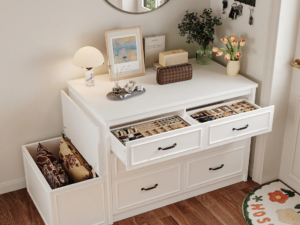
- Offer at least one deeper drawer and one shallow drawer in your bedroom side tables with drawers models.
- Round the front edges and corners to make the product feel “safe” and more expensive.
For retail buyers, it is easier to tell a story when they can point at several coordinated items:
- Two big nightstands on each side of a bed
- A matching chest of drawers
- Optional bedside table decor package that uses the same color palette
This way, your series becomes a complete lifestyle proposal, not just a single SKU.
5. Hospitality & Project Business: Nightstands Bedside Tables for Hotels and Apartments
Hotel, serviced apartment and build-to-rent projects have their own priorities: durability, consistent style and easy maintenance.
5.1 Coordinated Sets for Different Room Types
Project clients rarely order one unit at a time. They need hundreds of nightstands bedside tables, often in multiple room types. A good project series might include:
- Standard room: compact beige nightstand with one drawer and one open shelf.
- Deluxe room: wider black modern nightstand with two drawers and integrated power outlets.
- Suite: mid century nightstands with a more distinctive leg design and richer veneer.
All of these can share the same “family” look. They can have the same handle shape, edge radius, and color palette. At the same time, they can vary in size and functionality.
5.2 Regulations, Safety and Environmental Requirements
Many project owners operate across regions and must comply with multiple standards. As a supplier, you can add value by understanding and referencing:
- Formaldehyde and VOC limits guided by EPA and ECHA information.
- Fire-retardant treatments where required by local code.
- Recycled materials and sustainably sourced wood, supported by FSC documentation.
These references, combined with test reports and technical data sheets, help your nightstands pass technical approval for large hotel chains.
5.3 Maintenance, Spare Parts and Lifetime Cost
Project buyers look beyond the purchase price. They want bedside cabinets that:
- Use standardised hardware so spare parts are easy to stock.
- Have robust drawer boxes and runners that survive thousands of opening cycles.
- Can be easily refinished or refurbished if damaged.
A good OEM/ODM factory can design the internal structure so drawers from one model fit into another. This dramatically simplifies maintenance and reduces long-term cost for the project client.
6. Structures and Materials: MDF, Plywood, Metal Frame and More
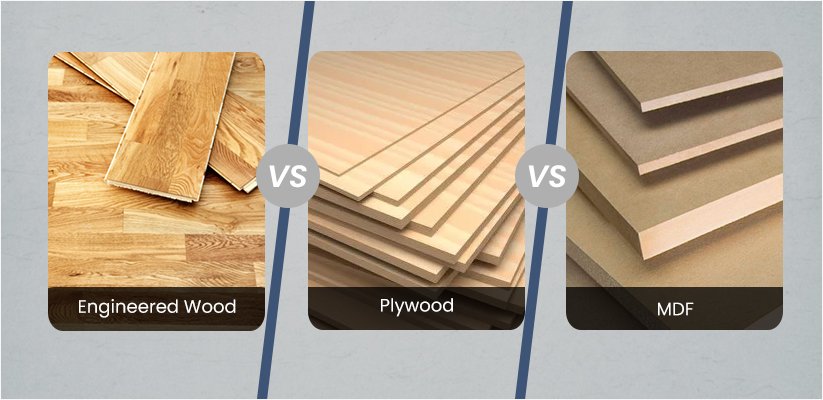
Choosing the right structure is a technical task. The same design can perform very differently depending on the material used. Materials such as MDF, plywood, particle board, or a hybrid with a metal frame can influence performance.
6.1 MDF: Versatile and Great for Painted Surfaces
MDF is often the go-to solution for:
- Smooth painted fronts on bedside tables ikea white style units
- Curved edges and routed details
- Value-driven products that still feel refined
For Amazon and mid-market retail, MDF is a strong choice for compact bedside cabinets. Combined with a durable lacquer, it gives a premium look at a manageable cost.
6.2 Plywood: Strength and Premium Feel
Plywood offers higher strength and better moisture resistance, ideal for:
- High-traffic hospitality projects
- Premium mid century nightstands with visible layered edges
- Designs where the user is likely to put heavy items on the top surface
Plywood costs more. It is typically used in higher price segments. Additionally, it is used in key load-bearing parts such as top panels, sides, and structural frames.
6.3 Particle Board and Hybrid Constructions
For cost-sensitive SKUs, particle board can be used effectively. This is particularly true for a dorm nightstand or an entry-level bedroom stand. Good edge-banding and smart construction are essential.
A hybrid might use:
- Particle board for non-visible parts
- MDF for front panels and visible edges
- Metal frames for legs or thin supporting structures in bedside tables thin designs
This creates slender-looking thin bedside drawers that remain stable in daily use.
6.4 Metal Frames and Modern Industrial Designs
Metal frames can instantly modernise the look:
- A black metal frame combined with wood-effect panels makes a striking black modern nightstand.
- Slim metal legs give the impression of lightness while supporting heavy loads.
For online channels, metal frames also help reduce thickness of panels and overall weight, which can cut shipping cost.
6.5 Surface Finishes, Health and Environment
Your choice of finish affects not only design but also smell and emissions. To meet increasing consumer and project requirements:
- Use low-VOC lacquers and laminates, referencing EPA and UL GREENGUARD information where relevant.
- Consider water-based coatings for light colors on blue bedside cabinets and colorful nightstands to avoid yellowing.
These choices can be highlighted in your marketing, especially when appealing to eco-conscious buyers.
7. One Design, Many Channels: OEM/ODM Strategy for Multiple SKUs
From a factory point of view, the ideal scenario is to design one platform that can be extended across channels. This is where OEM/ODM collaboration is most powerful.
7.1 Step 1: Define the Common Platform
Work with your OEM/ODM factory to define:
- A standard drawer structure and hardware set
- A common panel thickness and internal construction
- A set of base dimensions (e.g., widths of 35, 45 and 55 cm) that can cover bedside tables thin, standard units and big nightstand models
This platform becomes the “engine” behind all of your bedside cabinets, nightstands bedside tables and bedroom stand variants.
7.2 Step 2: Channel-Specific Variations
From that platform, you can quickly develop:
- Amazon / Online variants
- Compact width
- Lighter materials
- Flat pack construction to keep carton size down
- Straightforward, tool-friendly assembly
- Retail store variants
- Larger top surfaces for display
- Additional color options for colorful nightstands and blue bedside cabinets
- Upgraded handles and soft-close runners
- Project variants
- More robust materials and hardware
- Built-in power outlets or wireless charging
- Additional cable management features
You can even position some models as unique nightstands -ai by integrating design or technology features guided by data—e.g., optimising drawer depth. Include charging ports and shelf space based on usage analytics. Then, use that phrase as part of your brand’s naming or marketing.
7.3 Step 3: Documentation, QC and Brand Alignment
To make this strategy work in the long run:
- Create a clear specification sheet for every SKU derived from the platform.
- Document all finishes, hardware codes and carton details.
- Align your online content and in-store labels so customers see a consistent story.
With this approach, a single well-designed beige nightstand can become:
- A compact Amazon unit for small bedrooms
- A wider store display version for retail
- A project-grade nightstand for hotel and apartment rooms
—all based on the same engineering platform.
8. Conclusion: Working with an OEM/ODM Factory for Series Development
Channel-specific bedside cabinets are no longer a “nice-to-have”; they are a competitive requirement. Buyers and project managers who understand the different needs of Amazon customers, retail shoppers and hotel guests can:
- Reduce return rates online
- Increase average order values in stores
- Lower lifetime costs in projects
Partnering with an OEM/ODM factory is beneficial. The factory should understand both engineering and market positioning. This partnership allows you to turn a single design into an entire product ecosystem. The range includes slim bedside tables and dorm nightstand solutions. It extends all the way up to premium mid century nightstands for design hotels.
The key is to think in platforms and series, not isolated SKUs. When you do, your next range of bedside cabinets and nightstands bedside tables will be easier to sell. They will be easier to maintain. They will also be much more profitable across all your channels.
9. FAQ: Common Questions About Channel-Specific Bedside Cabinets
Q1. What is the biggest mistake when buying bedside cabinets for Amazon?
The biggest mistake is to copy retail designs without adapting them for online logistics and user expectations. A piece that looks great in store may be:
- Too heavy or too wide for economical shipping
- Too complex to assemble for the average customer
- Prone to damage because the packaging was not designed for parcel networks
For Amazon, always start with clear dimensions. Use robust packaging. The assembly process should be completed by one person in around 30–40 minutes.
Q2. Should physical stores focus on big nightstand or bedside tables thin?
Physical stores typically need at least one big nightstand as a visual anchor next to a king or queen bed. The larger unit showcases storage capacity and supports more elaborate bedside table decor.
Retailers can address customers living in compact apartments. They can offer a small section of thin bedside tables or thin bedside drawers. A balanced assortment usually includes both a hero big nightstand and a smaller footprint alternative.
Q3. Why do hotels prefer coordinated nightstands bedside tables series?
Hotels and serviced apartments prefer coordinated nightstands bedside tables because:
- Different room types (twin, double, suite) can share the same design language.
- Spare parts and maintenance are simplified when hardware and structures are standardised.
- Reorders and refurbishments are easier, as replacement units match the existing rooms.
A consistent series keeps the brand identity strong. Perhaps a beige nightstand for standard rooms and a black modern nightstand for suites will help. This approach also simplifies operations.
Q4. How should I brief an OEM/ODM factory if I want one design for multiple channels?
When briefing an OEM/ODM factory, include:
- Channel split (e.g., 50% Amazon, 30% retail, 20% projects).
- Target style direction (Scandi, mid-century, modern hotel, etc.).
- Cover key keywords. These include bedside cabinets, bedroom side tables with drawers, mid century nightstands, and dorm nightstand.
- Technical requirements (panel thickness, preferred materials, compliance needs).
- Price targets and key SKUs (a compact model, a big nightstand, and a project variant).
This gives the factory enough information to design a single platform that can be adapted into multiple SKUs and channels.