
Table of Contents
- Introduction
- What Is Wooden Bedroom Furniture for Hotels?
- Why Hotel Furniture Material Choice Matters
- Solid Wood Bedroom Furniture for Hotels
- Advantages of Solid Wood
- Limitations of Solid Wood
- Best Applications in Hotels
- Engineered Wood Bedroom Furniture for Hotels
- Plywood
- MDF
- Multi-layer Boards
- Particle Board
- Comparison Chart
- Solid Wood vs Engineered Wood for Hotels: Which One to Choose?
- Cost and Durability in Hotel Furniture
- Environmental and Sustainability Considerations for Hotel Projects
- Why Hotels Choose Engineered Wood for Bedroom Furniture
- Our Factory Capabilities for Hotel Furniture Manufacturing
- Frequently Asked Questions (FAQ)
- Conclusion
1. Introduction
The choice of bedroom furniture materials is one of the most critical decisions in the hospitality industry. It is especially important when outfitting hotel rooms with durable furniture. The furniture must be cost-effective and aesthetically pleasing. Hotel room furniture must not only be functional but also meet high standards for longevity and aesthetic appeal.
When it comes to hotel bedroom furniture, one important decision is whether to choose solid wood or engineered wood. The global demand for hotels, serviced apartments, and luxury resorts is growing. Project managers, architects, and interior designers must understand the advantages of each material. They also need to understand the limitations.
In this article, we’ll dive deep into the differences between solid wood and engineered wood for hotel bedroom furniture. We will help you make the best choice for your next hotel project.
2. What Is Wooden Bedroom Furniture for Hotels?
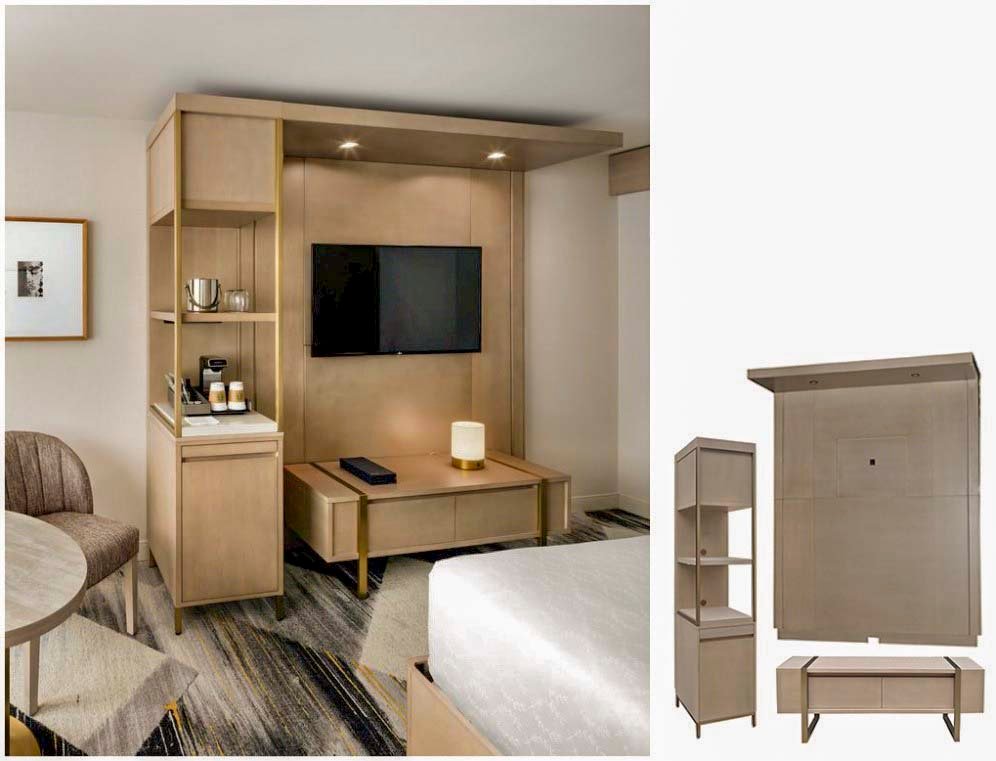
Wooden bedroom furniture for hotels includes the essential elements such as:
- Bed frames
- Nightstands
- Wardrobes and cabinets
- Dressers and consoles
- Headboards
- TV panels and side tables
These pieces must stand up to the demands of high-traffic hotel environments while maintaining an appealing, luxurious appearance. The materials selected play a critical role in ensuring the furniture is both durable and stylish.
Materials Used for Hotel Furniture:
- Solid Wood
- Engineered Wood (Plywood, MDF, Particle Board, Multi-layer Boards)
3. Why Hotel Furniture Material Choice Matters
When choosing furniture materials for hotel rooms, several factors need to be considered:
✔ Durability
Hotels need furniture that will withstand years of heavy use, including exposure to moisture, wear, and frequent cleaning.
✔ Cost Efficiency
Material costs directly affect the overall project budget. Choosing the right material can significantly reduce overall costs without sacrificing quality.
✔ Consistency
Engineered wood, particularly plywood and MDF, offers consistent quality and uniformity across multiple furniture pieces. This consistency is crucial for large-scale hotel projects.
✔ Maintenance
Furniture in hotel rooms must be easy to clean. It should be resistant to damage. It must also maintain its appearance for a long time.
✔ Aesthetics
The materials used must not only be durable but also contribute to the overall aesthetic experience of the hotel room.
4. Solid Wood Bedroom Furniture for Hotels
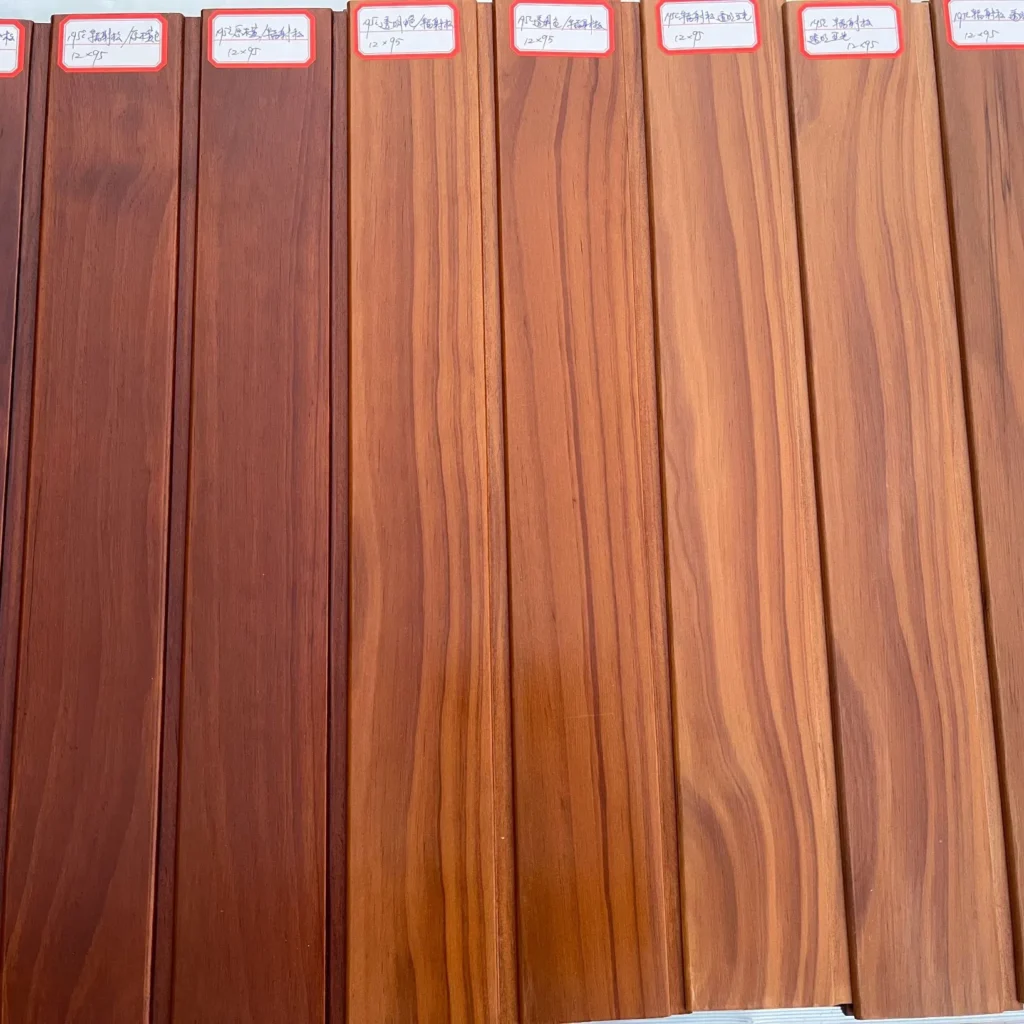
Solid wood furniture is made from natural timber that is processed into planks. This material is a timeless choice for high-end, luxury furniture. It offers a natural aesthetic that engineered materials cannot match.
Advantages of Solid Wood for Hotels
1. Premium Appearance
The natural grain and texture of solid wood offer a luxurious and sophisticated look. This appearance is highly valued in premium hotel rooms.
2. Durability
Solid wood is incredibly strong and can last for decades with proper maintenance, making it a good long-term investment.
3. Repairable
Any minor damage, such as scratches or dents, can be sanded and refinished. This ensures the furniture is restored to its original appearance.
4. Natural Insulation
Solid wood provides natural insulation against temperature fluctuations, making it ideal for maintaining comfort in hotel rooms.
Limitations of Solid Wood for Hotel Use
1. High Cost
Solid wood is typically more expensive than engineered wood, which can increase the overall project cost.
2. Heavy Weight
Solid wood furniture is often heavy, making it difficult and costly to transport and install, especially in large hotel projects.
3. Moisture Sensitivity
Solid wood is more vulnerable to moisture, which can lead to warping or cracking in high-humidity hotel environments.
4. Limited Customization
Natural wood has inherent variations, making it challenging to achieve a consistent look for large-scale projects.
Best Applications in Hotels
Solid wood is typically used for high-end, luxury hotel furniture, including:
- High-end bed frames and headboards
- Decorative furniture (e.g., custom-designed nightstands)
- High-end suites and villas
- Furniture that requires a premium aesthetic appeal
For large-scale hotel projects, solid wood is often used sparingly, with engineered wood dominating the rest of the furniture pieces.
5. Engineered Wood Bedroom Furniture for Hotels
Engineered wood includes a range of materials that are made by binding wood fibers, chips, or veneers together with adhesives. The most commonly used types of engineered wood for hotel furniture are:
- Plywood
- MDF (Medium Density Fiberboard)
- Particle Board
- Multi-layer Boards
These materials are often more cost-effective and stable than solid wood, making them ideal for large-scale hotel projects.
Plywood for Hotel Furniture
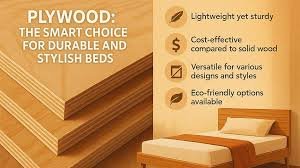
Plywood consists of multiple layers of thin wood veneers, which are glued together at right angles to each other. This structure gives plywood its strength and stability.
Advantages:
- Strength and Durability
Plywood is stronger than solid wood in terms of resistance to cracking and splitting. - Consistency
Plywood ensures that each piece of furniture has the same finish. It also provides a uniform texture. This consistency is ideal for mass production in hotel projects. - Lightweight
Plywood is lighter than solid wood, reducing shipping and installation costs.
MDF (Medium Density Fiberboard) for Hotel Furniture
MDF is made by compressing wood fibers and resin into a dense board. It has a smooth surface that makes it ideal for painting.
Advantages:
- Smooth Surface
MDF has a smooth surface. It is perfect for painted finishes. This makes it a popular choice for hotel furniture. - Cost-Effective
MDF is typically cheaper than plywood and solid wood, making it ideal for cost-sensitive projects.
Disadvantages:
- Moisture Sensitivity
MDF can swell and weaken when exposed to moisture. This can be a concern in hotel environments with high humidity.
Particle Board and Multi-layer Boards
Particle board and multi-layer boards are used for budget-friendly furniture in hotel rooms.
Advantages:
- Low Cost
These materials are inexpensive and are often used in non-load-bearing furniture pieces. - Good for Light Use
Ideal for decorative or functional pieces like wardrobes and cabinets in budget-friendly hotel rooms.
Comparison Table: Solid Wood vs Engineered Wood for Hotels
| Material | Strength | Cost | Moisture Resistance | Durability | Ideal Use |
|---|---|---|---|---|---|
| Solid Wood | ★★★★★ | $$$$ | ★★★★ | ★★★★ | Luxury suites |
| Plywood | ★★★★ | $$ | ★★★★ | ★★★★★ | Hotel bedroom sets |
| MDF | ★★★ | $ | ★★ | ★★★ | Painted furniture |
| Particle Board | ★★ | $ | ★ | ★★ | Budget rooms |
6. Solid Wood vs Engineered Wood for Hotels: Which One to Choose?
The choice between solid wood and engineered wood depends on several factors:
- Budget
If you have a high budget for luxury hotels, solid wood might be a better choice. For more budget-conscious projects, engineered wood offers a better cost-to-performance ratio. - Project Scope
For large-scale hotel chains, engineered wood is the most cost-efficient and scalable solution. - Aesthetic Preferences
If the hotel is aiming for a premium aesthetic, solid wood might be the best option. However, engineered wood can be made to look just as attractive with the right finishing.
7. Cost and Durability in Hotel Furniture
When working with hotel projects, the cost-to-durability ratio is crucial. Engineered wood, especially plywood, provides the best balance of cost and durability. For instance, plywood is highly durable. It is resistant to moisture and relatively affordable. This makes it ideal for both standard rooms and high-end hotel suites.
8. Environmental and Sustainability Considerations for Hotel Projects
Sustainability is an increasing concern in the hospitality industry, and the materials used in hotel furniture play an essential role. Both solid wood and engineered wood can be sustainable if sourced responsibly.
- FSC Certification for solid wood ensures that the wood is harvested sustainably.
- Engineered wood often uses more of each log, making it more efficient and reducing waste.
For more information, check the following external references:
- FSC Certification: FSC
- EPA Formaldehyde Standards: EPA
- Sustainable Timber Regulations: EU Timber Regulation
9. Why Hotels Choose Engineered Wood for Bedroom Furniture
Many hotels choose engineered wood for its cost-effectiveness, stability, and ease of maintenance. With engineered wood, hotels can ensure consistency and longevity across a large number of rooms while keeping costs down. This is why plywood and MDF are widely used for hotel bedroom furniture.
10. Our Factory Capabilities for Hotel Furniture Manufacturing

At Starwood, we specialize in producing OEM/ODM hotel furniture tailored to meet the specific needs of our clients. Our factory is equipped to handle large-scale hotel furniture projects with:
- Fast lead times
- Custom designs
- Cost-effective solutions
- Global delivery capabilities
We help clients create high-quality hotel bedroom furniture at competitive prices. We ensure that every piece is manufactured to the highest standards.
11. Frequently Asked Questions (FAQ)
1. Is solid wood worth the extra cost for hotel furniture?
Solid wood is ideal for luxury hotels where the aesthetic appeal is a priority. However, for larger projects, engineered wood provides a similar look at a lower cost.
2. What type of engineered wood is best for hotel furniture?
Plywood is the best option for hotel furniture due to its strength, stability, and cost-effectiveness. It is used in many 4- and 5-star hotels worldwide.
3. How can I make my hotel furniture more sustainable?
Choose FSC-certified solid wood or opt for high-quality engineered wood, which uses more of each log and reduces waste. Additionally, ensure that the materials are sourced responsibly.
12. Conclusion
Choosing the right materials for hotel bedroom furniture is crucial for balancing cost, durability, and aesthetics. Both solid wood and engineered wood have their place in the hospitality industry. However, for most large-scale hotel projects, engineered wood—especially plywood—offers the best balance of quality and affordability.
For OEM/ODM hotel furniture manufacturing, our factory provides tailored solutions to meet the specific needs of your hotel projects.