In hotel rooms, serviced apartments and compact rental units, every square meter matters. Bathrooms are often the smallest rooms in the entire project. However, guests still expect comfort. They also want storage and a clean, modern look.
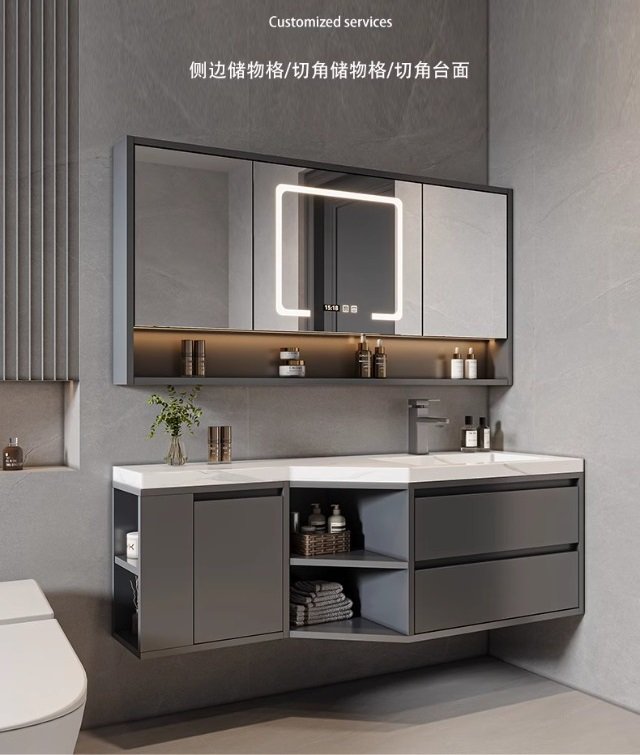
Corner vanities for bathrooms turn otherwise “dead” corner space into functional storage and countertop area. This is a powerful tool for B2B buyers such as hotel owners, developers, and wholesalers. It helps solve layout problems without increasing floor area.
As a bathroom cabinet vanity manufacturer and wholesale bathroom vanity supplier, we work with hospitality and multifamily clients who need corner solutions that are:
- Space-efficient
- Durable and easy to clean
- OEM/ODM-ready for bulk production
- Compatible with green building and hygiene requirements
This article will guide you through corner vanity design types. It covers materials and project planning. You’ll also learn how to order in bulk for hotel and apartment projects.
Table of Contents
- Why Corner Vanities Are Ideal for Small Bathrooms
- Types of Corner Bathroom Cabinet Vanity Designs
- Space Planning Tips for Corner Vanities in Projects
- Material Selection for Corner Vanities
- Floating vs Floor-Standing Corner Vanities
- Our Corner Vanity Product Range for Projects
- Custom Corner Vanities for Hotel and Apartment Projects
- Ordering and Shipping for Corner Vanity Projects
- FAQ: Practical Project Questions + Contact Us
- Recommended External Resources
1. Why Corner Vanities Are Ideal for Small Bathrooms
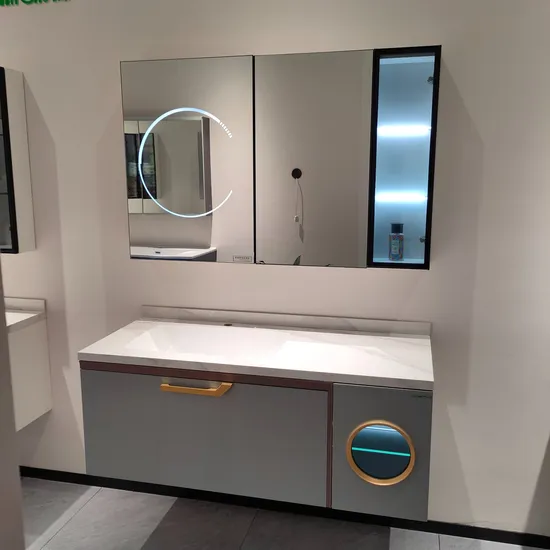
In many small hotel and apartment bathrooms, the main layout constraints are:
- Door swing or sliding door clearances
- Circulation around the toilet and shower
- Window or shaft positions that break up usable wall space
Standard rectangular vanities can easily block circulation or make the bathroom feel cramped. A corner vanity moves the basin and cabinet into the corner, freeing wall length and improving movement.
From a project point of view, this offers several benefits:
- Better space utilization – unused corners become functional storage and counter area
- Improved guest experience – more “free” floor in front of the basin makes the bathroom feel larger
- Flexible plumbing – corner layouts can work around awkward pipe positions, especially in renovations
Good bathroom design is strongly connected to health, hygiene and overall occupant wellbeing. Global frameworks for healthy buildings emphasize adequate hygiene, comfort and space as part of a healthy built environment.
Corner vanities support this by making small bathrooms more usable and easier to keep organized.
2. Types of Corner Bathroom Cabinet Vanity Designs
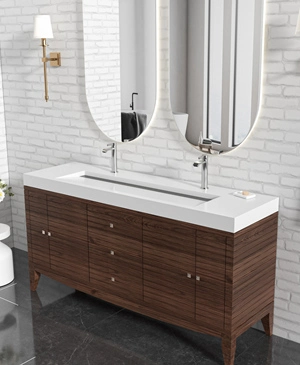
“Corner vanities for bathrooms” is a broad category. For B2B projects, we usually refine them into several practical design types.
You will also see common misspellings online like “corner vanities forbathrooms”, “bathroom vanities forsmall bathrooms” or “bathroom vanity with tallcabinet”. Search engines still understand the intent. All of them point to the same idea: maximizing small bathroom space with specialized vanity solutions.
2.1 Classic Triangle Corner Vanity
- 90° back edges fit directly into the corner
- Front can be straight, angled, or curved
- Basin sits centered over the cabinet
This is the most common design for small guest bathrooms where a single user needs a compact but functional basin.
2.2 Curved Front Corner Vanity
- Front edge is a soft curve
- Reduces projections into the circulation path
- Feels more “soft” and premium in design
Curved front versions are popular in lifestyle hotels and high-end rentals where design is part of the brand identity.
2.3 L-Shaped Corner Vanity
- Two cabinet runs meet at 90° in the corner
- Provides more countertop and storage
- Works well where two walls are free and longer
In some layouts, an L-shaped corner vanity can support double vanity sinks for bathrooms. One basin can be placed on each leg of the “L”. This setup still uses space efficiently.
2.4 Corner Vanity with Tall Cabinet
A bathroom vanity with tall cabinet can also be adapted to corner layouts:
- Corner basin cabinet + tall cabinet on one side
- Tall cabinet may be full depth or reduced depth
- Additional mirror cabinet above the basin
Buyers often search “bathroom vanity with tallcabinet” when looking for this kind of storage-rich setup. This is ideal for serviced apartments and long-stay rentals.
2.5 Corner Vanity with Open Shelves
For budget hotels and student housing, we often specify:
- Closed storage under the basin
- Open corner shelves above or beside the vanity
This provides visual openness and easy access to towels and amenities without adding cost.
2.6 Custom Built Bathroom Vanity for Irregular Corners
In older buildings, corners are not always a perfect 90°. In such cases, a custom built bathroom vanity with a slightly adjusted angle or cut-out can make all the difference. This adjustment can avoid costly wall work. With OEM/ODM support, these custom angles can still be produced efficiently in bulk.
3. Space Planning Tips for Corner Vanities in Projects
Choosing the right corner vanities for bathrooms is only half the job. Project success depends on careful space planning.
3.1 Check Door Swing and Circulation
Key dimensions to consider:
- Clear width in front of the vanity (typically 750–900 mm for comfortable movement)
- Door swing path, especially if it opens into the bathroom
- Distance from vanity corner to toilet and shower entry
A corner vanity often frees up more usable space. This is more effective in front of the door than a straight vanity on one wall.
3.2 Coordinate with Shower and Toilet
For hotel rooms and rentals:
- Avoid placing the corner vanity so close to the shower that guests bump into it when entering
- Ensure enough distance from the toilet for comfortable use
- Consider glass partitions and their opening direction
Using corner units is especially effective in bathroom vanities for small bathrooms. They are ideal where a straight vanity would reduce circulation too much.
3.3 Think in Standard Modules
From a wholesale bathroom vanity supplier perspective, it is best to standardize:
- 600–700 mm front width for compact corner units
- 750–900 mm for more generous layouts
- Standard heights for different regions and user groups
Standardization simplifies drawing, production, logistics, and future replacements.
3.4 Plan for Future Replacement
When planning the initial layout, it is wise to think about how do you replace a bathroom vanity later:
- Ensure there is enough access to remove the old unit without demolishing tiles
- Use standard fixing points and adjustable feet or brackets
- Avoid “trapping” the vanity between immovable elements
Good planning here can save large renovation costs in 5–10 years’ time.
4. Material Selection for Corner Vanities

Corner vanities sit in the most humid, splash-prone area of the bathroom. Material selection must balance durability, cost, and cleaning requirements.
4.1 Carcass Materials
For project use, we typically recommend:
- Melamine on moisture-resistant (MR) particle board or MR-MDF
- Cost-effective, large range of finishes
- Suitable for hotels and rentals when edges are well sealed
- Plywood
- Better screw holding and edge stability
- Ideal for high-end hotels or very humid climates
4.2 Fronts and Doors
- MR-MDF for painted or routed fronts
- Melamine fronts for tough, easy-clean surfaces
- Occasional use of veneer or laminate for premium design lines
4.3 Countertops and Basins
For corner vanities for bathrooms, popular options include:
- Integrated ceramic basins
- Solid surface tops with under-mount or semi-recessed basins
- Quartz or engineered stone in higher-end projects
To support water efficiency and green building targets, many projects now specify WaterSense-labeled faucets in their bathrooms. They also utilize other efficient fixtures. These products are tested to reduce water use while maintaining performance.
Such fixtures can contribute towards LEED water efficiency credits. This happens where reduced water use and efficient plumbing fixtures are rewarded in green building certification.
4.4 Cleaning and Hygiene
Bathrooms must be easy to clean and disinfect, especially in commercial settings. Health authorities emphasize that regular cleaning with appropriate products is essential to reduce germs on surfaces and improve hygiene.
Choose:
- Smooth, non-porous finishes
- Minimal grooves where dirt can collect
- Hardware that withstands regular cleaning chemicals
Organizations such as WHO emphasize global water, sanitation, and hygiene (WASH) work. This work underlines the importance of well-designed sanitation facilities for health outcomes. They focus on essential aspects, not vanity design details.
5. Floating vs Floor-Standing Corner Vanities
For corner vanities for bathrooms, you will typically choose between:
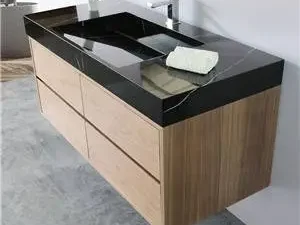
5.1 Floating (Wall-Hung) Corner Vanities
Advantages
- Exposes more floor area, making the room feel larger
- Easier floor cleaning—important in hotels and high-turnover rentals
- Can improve accessibility in some layouts
Considerations
- Requires solid wall construction or reinforced backing
- Plumbing must be coordinated carefully
- Installation accuracy is critical
Floating versions pair very well with bathroom vanity with tall cabinet concepts. The base is light. The tall unit brings extra storage.
5.2 Floor-Standing Corner Vanities
Advantages
- Easier load transfer to the floor
- More forgiving in walls with unknown or weak construction
- Sometimes cheaper to install
Considerations
- Plinth or legs must be moisture-resistant
- Floor edges should be sealed to prevent water ingress
- Cleaning around feet and plinths takes slightly more time
In many bathroom vanities for small bathrooms projects, a hybrid approach combines a slightly raised floor-standing vanity with higher legs. This design choice eases cleaning while keeping installation simple.

6. Our Corner Vanity Product Range for Projects
From a B2B perspective, you don’t just need one nice sample. You need a coherent product range that works across multiple room types. It should also function across various projects.
As a bathroom cabinet vanity manufacturer and wholesale bathroom vanity supplier, a typical corner range can include:
- Compact Triangle Corner Vanities (Economy Hotels)
- 600–650 mm front width
- Integrated ceramic basin
- One door or drawer + open shelf
- Curved Corner Vanities (Lifestyle Hotels & Serviced Apartments)
- Curved front to soften the space
- Optional matching side panel or tall cabinet
- Upgraded hardware and finishes
- L-Shaped Corner Vanities (Suites & Larger Apartments)
- More countertop and storage
- Option to integrate double vanity sinks for bathrooms in an L layout
- Ideal for long-stay or family units
- Corner Vanity with Tall Cabinet Set
- Corner base + side tall cabinet + mirror cabinet
- Standard heights for different markets
- Open and closed storage mix
- Entry-Level Project Range for Rental Apartments
- Robust melamine finishes
- Simple hardware for easy maintenance
- Designed to hit tight budgets without sacrificing performance
All these models can be supplied as OEM bathroom vanity solutions. They can also be ODM bathroom vanity solutions with your own branding. You can also include specific project tweaks.
7. Custom Corner Vanities for Hotel and Apartment Projects
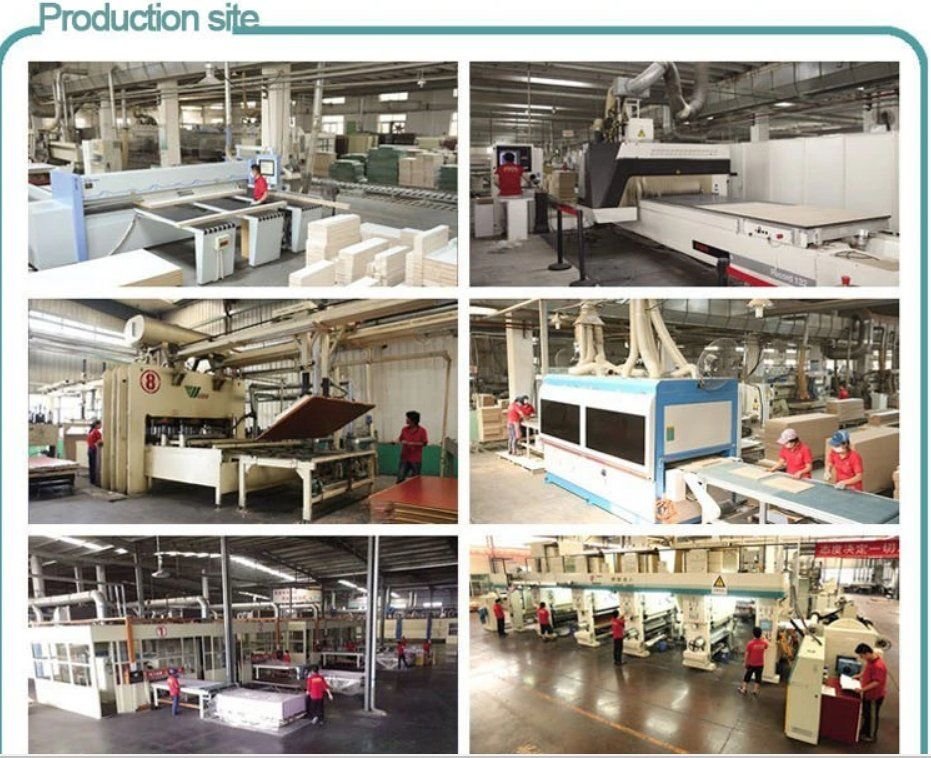
Many hotel and apartment projects need something beyond standard catalog items. This is where custom built bathroom vanity solutions come in.
7.1 OEM/ODM Engineering Support
Professional OEM/ODM support usually includes:
- Full technical drawings (plan, elevation, section, details)
- Advice on clearances, fixing points, and sequence of installation
- Coordination with your MEP engineers for plumbing and electrical points
This is particularly important when using corner vanities for bathrooms together with features like:
- Under-counter lighting
- Integrated power outlets near the mirror
- Special storage for hair dryers or amenity boxes
7.2 Adapting to Different Markets
Regional differences include:
- Typical bathroom sizes
- User height and accessibility needs
- Local codes for safety and accessibility
We frequently adjust:
- Vanity height and projection
- Door swing direction and handle design
- Internal shelf spacing for local product sizes
7.3 Branding and Design Consistency
Hotel groups and large landlords want consistent brand identity:
- Same color and finish palette across multiple properties
- Recognizable handle styles and hardware finishes
- Corner and straight vanities that “belong” to the same family
A coordinated corner vanities for bathrooms range is available. Additionally, straight vanities for other layouts ensure easy maintenance of a unified look.
8. Ordering and Shipping for Corner Vanity Projects
Ordering corner vanities for bathrooms for a project is very different from buying a single retail unit.
8.1 Define Scope and Quantities
Start with:
- Number of room types and typical layouts
- Number of units per room type
- Whether accessible or special rooms need variants
This enables your manufacturer to optimize batch sizes, tooling, and packing.
8.2 Technical & Commercial Confirmation
A complete project package typically includes:
- Final approved drawings and 3D views
- Material specifications and hardware brands
- Packaging and labeling requirements
- Agreed Incoterms and shipping plan
For renovation projects, you need a clear answer. How do you replace a bathroom vanity in existing rooms without excessive downtime? Corner vanities can be designed as modular units that are quick to install in phased refurbishments.
8.3 Logistics, Labeling, and On-Site Assembly
For export projects, good logistics planning is essential:
- Flat-pack or semi-assembled options to reduce volume
- Room-by-room labeling for easy distribution on site
- Clear installation manuals and hardware kits in each package
This minimizes on-site confusion and speeds up installation, especially when dealing with multiple corner types and room layouts.
9. FAQ: Practical Project Questions + Contact Us
Q1. Are corner vanities for bathrooms strong enough for hotel use?
Yes—if they are designed and built for commercial use. Choose moisture-resistant boards or plywood, quality hardware, and proper wall or floor fixing. Avoid light, purely residential units for high-turnover hotel bathrooms.
Q2. Can I use double vanity sinks for bathrooms with corner layouts?
Yes. In larger suites or villas, double vanity sinks for bathrooms can be integrated into an L-shaped corner configuration. This gives more counter and storage space while keeping the circulation clear.
Q3. Are corner vanities suitable for accessible bathrooms?
They can be, but accessibility codes must be respected:
- Knee clearance for wheelchair users
- Adequate turning radius in front of fixtures
- Appropriate basin height and reach distances
Floating corner vanities are often helpful when carefully designed for accessibility.
Q4. How do you replace a bathroom vanity with a new corner vanity in an operating hotel?
To answer “how do you replace a bathroom vanity” in a running hotel:
- Survey existing bathrooms and confirm dimensions and services.
- Prefabricate new corner units off-site, including cut-outs and fixing points.
- Plan floor-by-floor or stack-by-stack closures.
- Coordinate demolition, installation, plumbing reconnection, and cleaning in one tight sequence.
This minimizes downtime and protects guest satisfaction.
Q5. Which materials are best for corner vanities in humid climates?
For humid climates and coastal areas:
- Plywood carcasses with high-quality edge banding
- MR-MDF for painted or routed fronts
- Non-porous countertops (solid surface, engineered stone, or ceramic)
These choices resist swelling and ensure long-term stability.
Q6. Can I mix corner vanities for bathrooms with standard vanities in the same project?
Absolutely. Many projects use corner vanities for bathrooms in the smallest room types and standard straight vanities in larger rooms. With OEM/ODM support, both can share the same finishes and hardware for a unified brand look.
If you are planning a hotel, serviced apartment, or rental project, reach out to our team. You can depend on us for reliable corner vanities for bathrooms. We are a professional bathroom cabinet vanity manufacturer. We can provide drawings and quotations. We also offer OEM/ODM cooperation.
10. Recommended External Resources
For projects aiming to reduce water use in small bathrooms, the U.S. EPA’s WaterSense program offers guidance and product labels for high-efficiency faucets, showerheads, and toilets: https://www.epa.gov/watersense- EPA WaterSense Bathroom Faucets
To choose efficient bathroom faucets that maintain good performance, see the WaterSense information on bathroom sink faucets and accessories:
https://www.epa.gov/watersense/bathroom-faucets - LEED USGBC
If your hotel or apartment project is targeting LEED certification, the U.S. Green Building Council’s water efficiency credit category explains how efficient fixtures and plumbing strategies contribute to points:
https://www.usgbc.org/category/leed-credit-categories/water-efficiency - World Green Building Council
For a broader view on how bathroom and interior design influence occupant health and comfort, the Health & Wellbeing Framework by the World Green Building Council is a useful reference:
https://worldgbc.org/healthy-equity-resilience/health-framework - WHO WASH
To understand the global importance of safe water, sanitation, and hygiene, you can learn about WHO’s work on WASH. This work covers all types of buildings. They focus on many aspects. This work applies to all types of buildings. This includes hotels and apartments. For more details, see the following link:
https://www.who.int/health-topics/water-sanitation-and-hygiene-wash - CDC
For housekeeping teams planning cleaning procedures in commercial bathrooms, the CDC offers guidance. This guidance is up-to-date on cleaning and disinfecting surfaces:
https://www.cdc.gov/hygiene/cleaning-disinfecting/index.html