For B2B buyers, sourcing kids bunk beds is not only about choosing a cute design. Importers, wholesalers, hotel apartment operators, student housing contractors and kids furniture brands need a stable factory that can control structure, material, safety details, packaging, MOQ, lead time and repeat production. This guide is written from a panel furniture export factory perspective to help you source OEM kids bunk beds with fewer quality risks and better project efficiency.
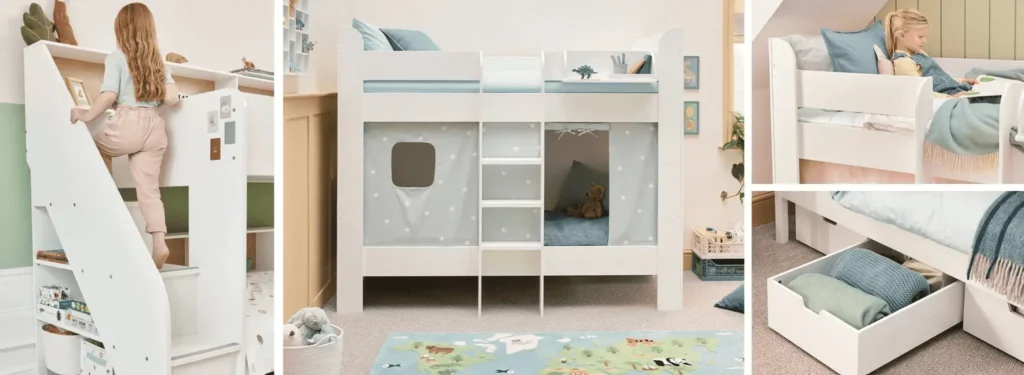
Table of Contents
- Why Kids Bunk Beds Are a Strong B2B Product Category
- Choose a Real Kids Bunk Beds Manufacturer, Not Only a Trading Offer
- Confirm Safety Structure Before Price Negotiation
- Select the Right Panel Materials for Your Market
- Plan OEM/ODM Customization for Retail and Projects
- Check MOQ, Sampling and Lead Time Before Bulk Orders
- Build Export Packaging Around Real Logistics Risk
- Application Scenarios for Kids Bunk Beds
- Factory Production Process for OEM Kids Bunk Beds
- Buyer Checklist Before Placing an Order
- Why Work With Starwood as a Panel Furniture Export Factory
- FAQ
- Inquiry CTA
Why Kids Bunk Beds Are a Strong B2B Product Category
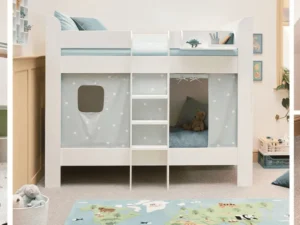
Kids bunk beds are one of the most practical products in children’s furniture because they solve a real space problem. For families with two children, small apartments, vacation homes, rental properties, dormitories and compact residential projects, a bunk bed creates two sleeping areas while saving floor space.
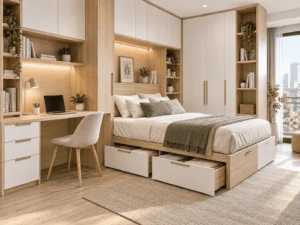
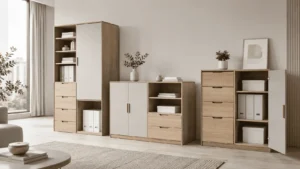
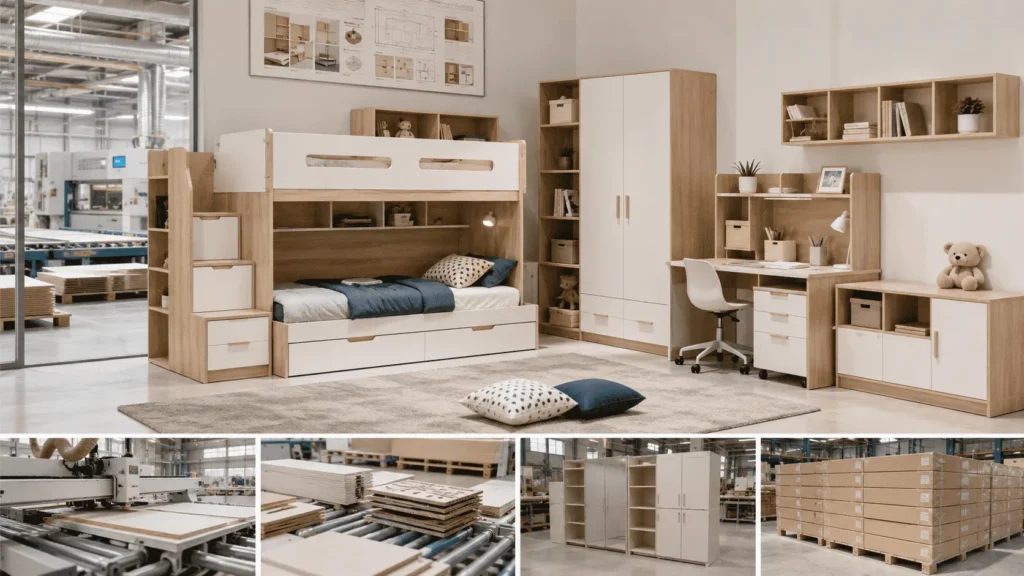
For B2B buyers, this product category can also support repeat sales. A kids bunk bed can be sold alone, but it can also become part of a complete kids bedroom furniture program with wardrobes, study desks, nightstands, bookshelves, toy storage and underbed drawers. That makes it suitable for importers building a children’s furniture line, retailers developing private-label collections and project buyers sourcing multiple room types from one factory.
When buyers search online, they usually do not only search “kids bunk beds.” More procurement-focused searches include “kids bunk beds manufacturer,” “kids bunk beds factory,” “OEM kids bunk beds supplier,” “bunk bed furniture manufacturer,” and “flat pack kids bunk bed factory.” This article is designed for those buying intentions.
As a panel furniture export factory, the practical question is simple: can the product be safely designed, efficiently packed, consistently produced and delivered with stable quality for repeat orders?
Choose a Real Kids Bunk Beds Manufacturer, Not Only a Trading Offer
The first buying tip is to identify whether the supplier is a real manufacturer or only a trading company collecting quotations from different factories. For simple furniture, this may not always matter. For kids bunk beds, it matters a lot.
A bunk bed includes structural parts, load-bearing panels, guardrails, ladder parts, hardware kits, drilling accuracy, assembly instructions and carton protection. If these details are not controlled at factory level, the buyer may face inconsistent assembly, missing parts, weak screw holding, color differences or high after-sales claims.
A real kids bunk beds manufacturer should be able to discuss:
- Panel thickness and structure
- Guardrail design and height
- Ladder position and step width
- Hardware specification
- Edge banding quality
- Surface finish options
- KD / RTA assembly method
- Carton size and loading efficiency
- MOQ and production lead time
- OEM packaging and private label requirements
For buyers who need a long-term supply chain, the best supplier is not always the lowest quotation. The better choice is usually a factory that understands export standards, can support OEM/ODM development and can repeat the same product quality across multiple production batches.
You can review our factory background here: Factory / The Company. For custom development, see our OEM & ODM Furniture Manufacturing Services.
Confirm Safety Structure Before Price Negotiation
Kids bunk beds are safety-sensitive furniture. Before discussing price, buyers should confirm the structure. A low price is not useful if the product creates assembly issues, weak support, unstable guardrails or customer complaints.
For the U.S. market, buyers may review the official CPSC bunk beds business guidance and the related eCFR requirements for children’s bunk beds. For voluntary performance and labeling references, buyers can also check ASTM F1427 Standard Consumer Safety Specification for Bunk Beds.
From factory experience, buyers should pay attention to these practical structure points:
Guardrails
Guardrails are one of the most important parts of kids bunk beds. Buyers should confirm whether the guardrail is continuous, how it connects to the bed ends, what panel thickness is used and whether the rail design matches the mattress height planned for the target market.
A common mistake is reviewing only the product render. A render may look safe, but the final structure depends on exact production drawings, panel connection method and hardware selection.
Ladder Design
The ladder should be easy to climb and stable after assembly. Buyers should confirm whether the ladder is vertical or angled, whether the steps are made from panel or solid components, whether the edges are smooth and whether the ladder position can be customized for different room layouts.
For apartment projects and hotel-style family rooms, ladder position is often decided by room layout. A flexible OEM factory can adjust left-side or right-side ladder placement based on drawings.
Bed Foundation
The foundation supports the mattress and daily use. Buyers should confirm slat material, spacing, center support, weight requirement and assembly method. For KD flat-pack furniture, the drilling accuracy and hardware quality directly affect how stable the bunk bed feels after installation.
Edge and Corner Details
Children’s furniture should avoid sharp edges. Smooth edge banding, rounded corner options and clean finishing are important for both retail presentation and end-user safety perception. These details should be confirmed during sampling, not after mass production.
Select the Right Panel Materials for Your Market
As a panel furniture manufacturer, we usually discuss material selection based on target price, product positioning, destination market and required finish. Kids bunk beds may use plywood, MDF, particle board, OSB or mixed-material structures depending on design and buyer requirements.
Plywood
Plywood is valued for strength, screw holding and dimensional stability. It is often considered for structural areas or higher-positioned kids furniture programs. For buyers focusing on durability and longer product life, plywood can be a strong option.
MDF
MDF has a smooth surface and is suitable for painted finishes, decorative shapes and clean modern designs. It can help create a premium visual effect, especially for white, pastel or themed kids bedroom furniture.
Particle Board / Melamine Board
Particle board with melamine finish is widely used in flat-pack panel furniture because it supports cost control, color variety and efficient mass production. For retail furniture collections, it can be a practical choice when the structure is properly engineered.
OSB or Cost-Focused Engineered Options
For some cost-sensitive markets, OSB or other engineered panel options may be considered. The buyer should confirm appearance requirements, screw holding, surface finish and market acceptance before using these materials for a kids bunk bed program.
Formaldehyde and Composite Wood Considerations
For composite wood products, buyers selling into the U.S. market should understand formaldehyde requirements under EPA TSCA Title VI. The U.S. Environmental Protection Agency provides useful guidance on formaldehyde standards for composite wood products.
For sustainability-focused buyers, FSC-related sourcing may also be requested. Buyers can review FSC’s furniture information at FSC furniture resources. When FSC material or other certified material is required, it should be discussed before quotation because it affects sourcing, documentation, cost and lead time.
Plan OEM/ODM Customization for Retail and Projects
Many B2B buyers do not want a standard bunk bed only. They want a product that fits their brand, market and sales channel. This is where OEM/ODM furniture manufacturing becomes important.
OEM kids bunk beds are usually based on the buyer’s drawing, reference sample, brand requirement or existing product line. ODM kids bunk beds are developed together with the factory based on market need, target price, room function and production feasibility.
At Starwood, kids bunk bed customization may include:
- Overall size
- Mattress size
- Guardrail style
- Ladder position
- Panel thickness
- Color and finish
- Underbed storage drawers
- Desk or wardrobe combination
- Hardware grade
- Carton mark
- Barcode label
- Instruction manual
- Private-label packaging
- Collection matching with other kids room furniture
For importers and wholesalers, the best strategy is not to create one isolated bunk bed. A better strategy is to create a kids room furniture series. For example, one bunk bed design can be matched with a wardrobe, study desk, nightstand, storage cabinet and bookshelf. This improves catalog value and gives local buyers a complete room solution.
For project buyers, customization is usually more practical. The buyer may need a bunk bed for student housing, apartment family rooms, long-stay serviced apartments or compact rental properties. In this case, the factory needs room drawings, target quantity, installation schedule and packaging requirements.
Learn more about project-based supply here: Project Furniture Manufacturing.
Check MOQ, Sampling and Lead Time Before Bulk Orders
MOQ and lead time should be discussed early because they affect budget, launch schedule and container planning.
For standard or existing models, MOQ may be lower. For new OEM designs, special colors, new molds, custom packaging or full collection development, MOQ is usually higher. A serious kids bunk beds factory should explain MOQ based on production reality, not only give a number.
Typical factors affecting MOQ include:
- Whether the model already exists
- Whether special material is required
- Whether the finish is standard or customized
- Whether packaging is private label
- Whether hardware is standard or buyer-specified
- Whether the buyer needs one SKU or a full collection
- Whether shipment is LCL, mixed container or full container
Sampling is also important. For kids bunk beds, buyers should not approve mass production only by picture. A sample review should check structure, assembly, surface finish, carton packing, instruction manual and hardware bag.
Lead time depends on sample approval, material availability, production schedule and order volume. For many flat-pack furniture programs, buyers should plan enough time for sample development, correction, mass production, inspection, packaging and shipment booking. For urgent project orders, drawings and specifications should be confirmed as early as possible.
A practical quotation request should include:
- Product size
- Material requirement
- Target market
- Finish color
- Estimated quantity
- Packaging requirement
- Logo or private label request
- Destination port
- Compliance needs
- Expected delivery time
The more complete the inquiry, the more accurate the factory quotation will be.
Build Export Packaging Around Real Logistics Risk
For B2B furniture buyers, packaging is not just a carton. It is part of product quality. A good kids bunk bed can still create claims if the packaging is weak, hardware bags are unclear or panels move inside the carton during long-distance shipping.
Kids bunk beds usually include long panels, guardrails, ladder parts, slats, hardware and instructions. These parts must be packed in a way that protects corners, surfaces and drilling positions.
A practical export packaging plan may include:
- Strong outer carton
- Corner protection
- EPE or paper protection
- Layer separation for panels
- Hardware bag by section
- Clear part labels
- Assembly manual
- Carton mark
- SKU label
- Barcode label
- Drop-test or transport-test discussion when required
For international packaging references, buyers may review ISTA test procedures. ISTA-related testing is often used by brands, retailers and logistics teams to evaluate how packaging performs during transport.
For our factory packaging approach, see Flat-Pack Export Packaging.
From factory experience, the most common packaging problems are not always caused by carton strength alone. They often come from unclear hardware packing, mixed parts, insufficient corner protection or carton sizes that do not match handling reality. That is why packaging should be reviewed during sample stage.
Application Scenarios for Kids Bunk Beds
A procurement-focused kids bunk bed should be designed around real use scenarios. Different buyers may need different product structures.
Retail Furniture Stores
Retail buyers need products that look attractive, assemble smoothly and fit common home bedroom sizes. They may prefer clean designs, neutral colors, storage options and clear product photography. Private-label packaging and retail-friendly instructions are important.
Importers and Wholesalers
Importers usually care about price level, container loading, stable quality and repeat supply. They may source multiple furniture categories from one panel furniture export factory to reduce supplier management cost.
E-Commerce Brands
E-commerce buyers need compact packaging, clear assembly instructions, barcode labeling and strong carton protection. Product claims can quickly damage online reviews, so assembly accuracy and packaging consistency are very important.
Apartment and Rental Projects
Apartment projects need cost-effective, durable and easy-to-install bunk beds. The product may be used in family units, compact bedrooms or shared accommodation. Project buyers usually need stable lead time and coordinated furniture packages.
Hotels and Serviced Apartments
Hotels and serviced apartments may use kids bunk beds in family rooms, holiday apartments or resort-style rooms. These buyers often care about design appearance, durability, cleaning convenience and matching furniture.
Student Housing and Dormitories
Student housing projects need practical structure, strong assembly and simple maintenance. In these projects, the buyer may need bunk beds, wardrobes, desks and storage cabinets from one factory for better consistency.
Factory Production Process for OEM Kids Bunk Beds
A professional kids bunk beds manufacturer should have a clear process from inquiry to shipment. The process helps buyers reduce misunderstandings and control risk.
Step 1: Requirement Review
The buyer sends drawings, reference photos, target size, material preference, quantity and destination market. The factory reviews structure feasibility, material options and estimated cost range.
Step 2: Quotation and Technical Confirmation
The factory provides quotation based on specification. At this stage, buyers should confirm what is included: material, hardware, finish, packaging, MOQ, sample cost, production lead time and payment terms.
Step 3: Drawing and Sample Development
For OEM/ODM projects, drawings should be confirmed before sample production. The sample should reflect real mass production structure, not only a display prototype.
Step 4: Sample Review
The buyer reviews structure, color, assembly, guardrail, ladder, stability, surface finish and packaging. Any changes should be recorded clearly before bulk order.
Step 5: Mass Production
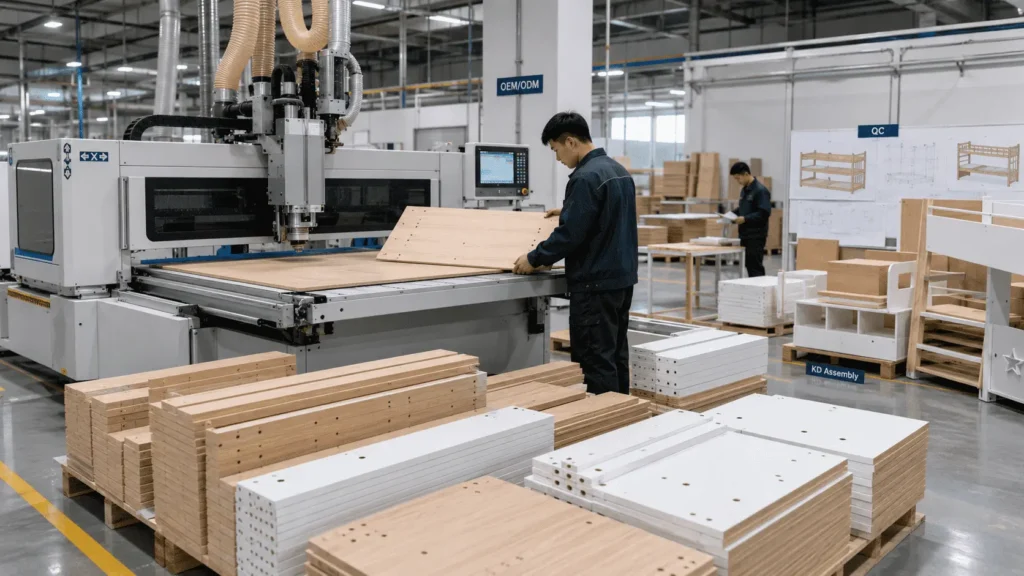
After deposit and final confirmation, the factory begins material preparation, panel cutting, drilling, edge banding, finishing, QC and packing.
Step 6: Quality Control
Quality control should check panel size, holes, edge banding, color, hardware, carton label and product completeness. For kids bunk beds, assembly checking is especially important because small drilling errors can create big installation problems.
Step 7: Packing and Loading
Flat-pack cartons are prepared for shipment. Carton marks, labels, loading method and shipping documents should match buyer requirements.
This production process is one reason buyers should choose an OEM/ODM panel furniture supplier instead of buying only by picture and price.
Buyer Checklist Before Placing an Order
Before confirming an order for kids bunk beds, B2B buyers can use the following checklist.
Product Structure
- Is the guardrail design confirmed?
- Is the ladder position confirmed?
- Is the bed foundation strong enough?
- Is the mattress size clear?
- Are panel thickness and hardware confirmed?
- Are edges smooth and child-friendly?
Material and Finish
- Which panel material is used?
- Is the finish melamine, painted, veneer or another surface?
- Is the color standard or customized?
- Are formaldehyde or market compliance requirements discussed?
- Is FSC or certified material required?
OEM/ODM Details
- Is the product based on buyer drawing or factory design?
- Is private label required?
- Are carton marks and barcode labels needed?
- Is the bunk bed part of a full kids bedroom furniture collection?
- Are matching wardrobes, desks or storage cabinets needed?
MOQ and Lead Time
- What is the MOQ for this model?
- What is the sample lead time?
- What is the bulk production lead time?
- Is the order suitable for LCL, mixed container or full container?
- Are urgent project deadlines realistic?
Packaging and Shipment
- Is the packaging suitable for export?
- Are hardware bags clearly separated?
- Is the assembly manual included?
- Are carton strength and corner protection confirmed?
- Is container loading optimized?
Commercial Terms
- Is the quotation based on clear specification?
- Are payment terms confirmed?
- Are inspection requirements clear?
- Is the destination port confirmed?
- Are after-sales responsibilities discussed?
This checklist helps buyers compare suppliers more professionally. It also helps the factory quote more accurately.
Why Work With Starwood as a Panel Furniture Export Factory
Starwood Industry Co., Ltd. is a China-based panel furniture manufacturer focused on OEM/ODM flat-pack furniture for global buyers. Our product scope includes kids room furniture, bedroom furniture, wardrobes, desks, cabinets, storage furniture and project furniture solutions.
For kids bunk beds, we support both standard product supply and customized OEM/ODM development. Buyers can source a single bunk bed model or build a complete kids bedroom furniture program with matching storage and study furniture.
Our factory support includes:
- Panel furniture production
- OEM/ODM development
- Kids room furniture programs
- Flat-pack / KD / RTA structure
- Export packaging
- Private-label support
- Project furniture coordination
- Sample and bulk order support
- Container loading support
For buyers developing children’s furniture programs, the advantage of working with one panel furniture export factory is coordination. Instead of sourcing bunk beds, wardrobes, desks and storage cabinets from different suppliers, buyers can develop a more consistent product line with matching materials, colors, packaging and delivery schedules.
View our kids furniture category here: Kids Room Furniture. You can also review our product example: Ultimate Kids Bunk Bed with Guardrails & Ladder.
FAQ
1. What is the best way to source kids bunk beds from a manufacturer?
The best way is to send clear specifications including size, material, finish, target market, quantity, packaging requirement and compliance needs. A professional kids bunk beds manufacturer can then quote based on real production details instead of a rough picture.
2. Can kids bunk beds be customized for OEM or ODM projects?
Yes. OEM kids bunk beds can be made according to buyer drawings or reference samples. ODM development can start from market needs, room function, target price and design direction. Custom options include size, color, guardrail, ladder position, underbed storage, hardware, packaging and branding.
3. What materials are commonly used for kids bunk beds?
Common materials include plywood, MDF, particle board, melamine board and engineered panel combinations. The best choice depends on structure, price level, finish requirement and destination market.
4. What MOQ is suitable for kids bunk bed orders?
MOQ depends on whether the design is standard or customized. Existing models may support lower trial quantities, while private-label OEM projects or full furniture collections usually require higher MOQ. Buyers should confirm MOQ by SKU, finish and packaging requirement.
5. How long does production usually take?
Lead time depends on sample approval, material availability, order quantity and customization level. Buyers should plan time for drawing confirmation, sampling, corrections, mass production, QC, packing and shipment booking.
6. Can bunk beds be shipped as flat-pack furniture?
Yes. Most panel kids bunk beds can be designed as KD / RTA flat-pack furniture. This helps improve container loading, reduce shipping volume and simplify warehouse handling. Good assembly instructions and hardware packing are important.
7. Are kids bunk beds suitable for hotel or apartment projects?
Yes. Kids bunk beds are suitable for family hotel rooms, serviced apartments, student housing, dormitories, rental properties and compact apartment projects. Project buyers should provide room drawings, quantity schedule and installation requirements.
8. Can we build a full kids bedroom furniture collection with bunk beds?
Yes. A bunk bed can be developed together with wardrobes, desks, nightstands, bookshelves and storage cabinets. This is a good strategy for importers, wholesalers and retail brands that want a complete kids room furniture program.
Inquiry CTA
Looking for a reliable kids bunk beds manufacturer, OEM kids bunk beds supplier or panel furniture export factory?
Send us your product size, material requirement, target quantity, finish color, packaging method and destination market. Our team can help you develop safe, practical and export-ready kids bunk beds for wholesale, retail, apartment, hotel and project furniture programs.
Request a quotation here: Contact Starwood
Explore OEM/ODM support: OEM & ODM Furniture Manufacturing Services
View kids furniture products: Kids Room Furniture