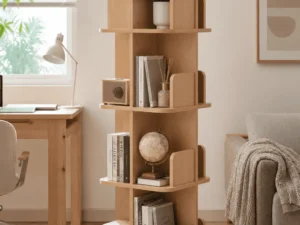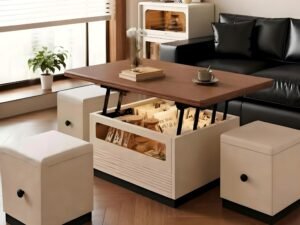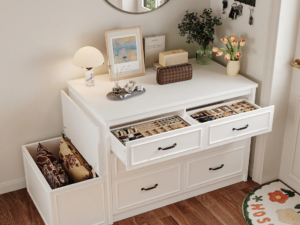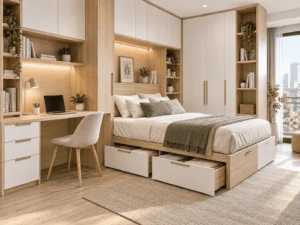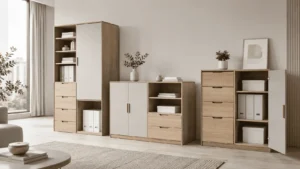
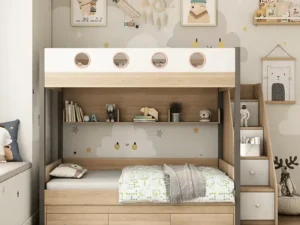
For retailers, importers, wholesalers, e-commerce sellers, hotel apartment contractors, and project furniture buyers, choosing a wholesale kids bedroom furniture supplier is not only about finding attractive designs. It is about stable supply, safe structure, repeatable quality, reasonable MOQ, export packaging, private label support, and a factory team that understands how retail furniture programs actually work. If you are building a kids bedroom furniture line, the right OEM/ODM factory can help you reduce sourcing risk, improve margin, and launch products faster.
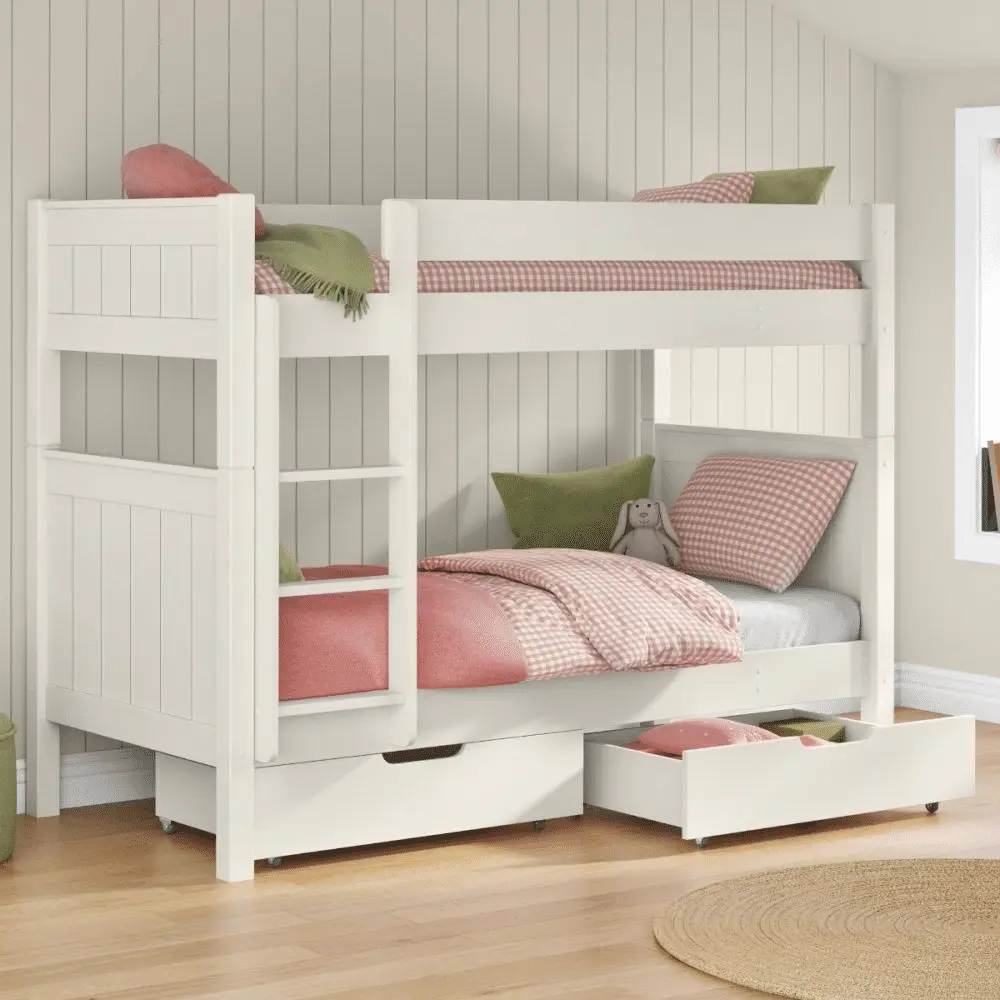
Table of Contents
- Why Retailers Need a Factory-Level Kids Bedroom Furniture Supplier
- What Makes Kids Bedroom Furniture Different from General Bedroom Furniture
- 7 Smart Checks Before Choosing a Wholesale Kids Bedroom Furniture Supplier
- Product Applications for Retail, E-Commerce, Hotel, Apartment, and Project Buyers
- Materials, Finishes, and Hardware Options for Kids Bedroom Furniture
- MOQ, Lead Time, Sampling, and Bulk Production Planning
- Export Packaging and Container Loading for Flat-Pack Furniture
- OEM/ODM Customization Process from Factory Experience
- Internal Links for Product Sourcing
- Final Buyer Checklist
- FAQ
Why Retailers Need a Factory-Level Kids Bedroom Furniture Supplier
Retailers usually search for “wholesale kids bedroom furniture supplier for retailers” because they are not looking for a single decorative bed. They are looking for a repeatable product program that can be sold season after season.
A good kids bedroom furniture factory should help buyers answer practical purchasing questions:
Can the same design be produced consistently in bulk?
Can the size, color, structure, carton, label, and manual be customized?
Can the supplier control panel quality, drilling accuracy, edge banding, and hardware matching?
Can the supplier support flat-pack packaging for export containers?
Can the factory provide product development support instead of only copying photos?
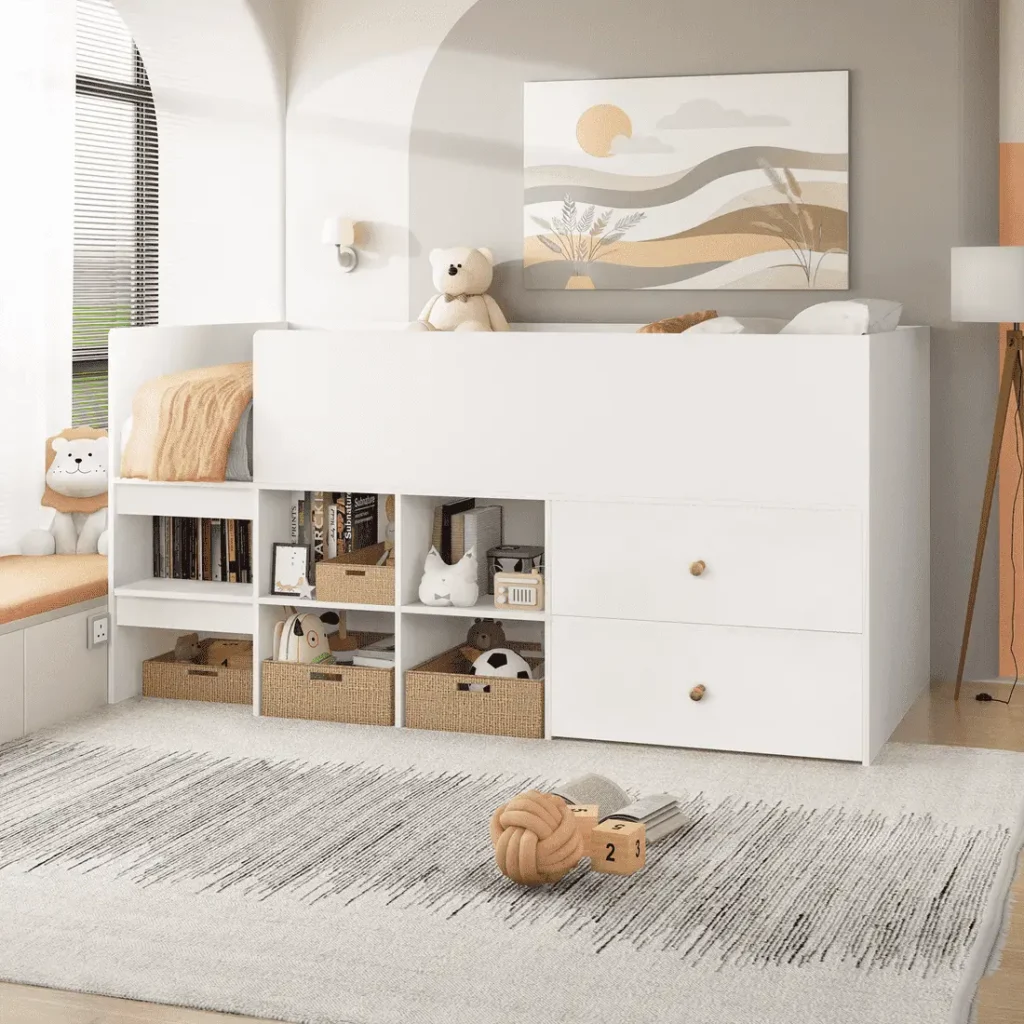
For B2B buyers, these questions matter more than a beautiful product image. A product may look good online, but if the guardrail is weak, the cartons are easy to damage, the drilling tolerance is unstable, or the assembly instruction is unclear, the final cost for retailers will be much higher.
As a panel furniture export factory, we see this often in real projects. Buyers do not only compare unit price. They compare total landed cost, return rate, assembly complaints, retail margin, delivery stability, and after-sales risk.
That is why choosing a wholesale kids bedroom furniture manufacturer should be treated as a supply chain decision, not only a product selection decision.
What Makes Kids Bedroom Furniture Different from General Bedroom Furniture
Kids bedroom furniture has different purchasing logic from adult bedroom furniture. The buyer must consider safety-focused design, practical storage, space-saving layouts, child-friendly colors, durable surfaces, and easy assembly.
Common products include:
Kids beds
Bunk beds
Loft beds
Storage beds
House beds
Kids wardrobes
Study desks
Bookshelves
Toy storage cabinets
Nightstands
Complete kids bedroom sets
Apartment kids room furniture packages
School dormitory and rental property furniture
For retailers, a complete kids room furniture program is often more valuable than one single SKU. A bed can be matched with a wardrobe, desk, bookshelf, toy cabinet, nightstand, and storage unit. This improves basket value and helps the retailer build a stronger category.
For project buyers, especially apartment, rental property, school dormitory, serviced apartment, and hotel family room projects, the priorities are slightly different. They care more about durability, space efficiency, easy installation, replacement parts, carton identification, and consistent delivery.
A professional OEM kids bedroom furniture supplier should understand both retail and project scenarios.
7 Smart Checks Before Choosing a Wholesale Kids Bedroom Furniture Supplier
1. Check Whether the Supplier Is a Real Factory or Only a Trading Middleman
When sourcing kids furniture from China, many buyers search for “kids furniture wholesaler China” or “kids bedroom furniture supplier China.” The search results may include factories, trading companies, catalog resellers, and small workshops.
For retail and project buyers, a real factory has several advantages:
Better control over product structure
More stable production schedule
Faster technical feedback
Better customization flexibility
Clearer QC responsibility
More practical packaging improvement
Better cost control for long-term programs
A trading company may be useful for small mixed orders, but if you are developing a serious kids bedroom furniture line, a factory partner is usually more suitable.
When evaluating a factory, ask for:
Factory photos or videos
Production process details
Main equipment list
Previous export market experience
Panel material options
Sample process
MOQ policy
Packaging standard
QC inspection process
Product categories already produced
OEM/ODM capability
A reliable panel furniture factory should be able to discuss cutting, drilling, edge banding, lamination, hardware fitting, assembly testing, carton structure, and loading plan in practical terms. If a supplier can only send a price list but cannot answer manufacturing details, the buyer should be cautious.
For buyers who need an OEM/ODM panel furniture export factory, you can also review our factory background here:
About Our Factory
2. Check Whether the Factory Understands Retail Margin and Product Positioning
Retailers do not buy furniture only because it is cheap. They buy products that can sell.
A good wholesale kids bedroom furniture supplier for retailers should understand how to balance design, material, cost, packaging, and retail price.
For example, a bunk bed with thick panels, complex stairs, many drawers, and premium hardware may look attractive, but it may not match the buyer’s target retail price. On the other hand, a very low-cost design may reduce safety feeling, customer trust, and product reviews.
Before quotation, buyers should share:
Target market
Target retail price
Expected order quantity
Product style
Material preference
Color direction
Package type
Sales channel
Required certifications or testing needs
Competitor reference products
Container loading target
Private label requirements
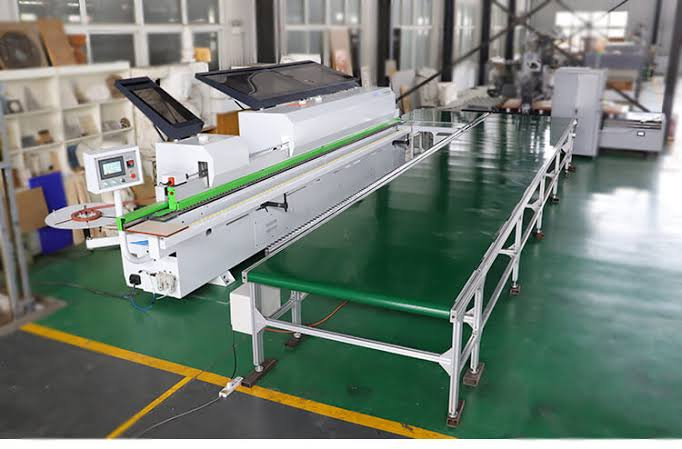
From factory experience, the best sourcing projects start with clear product positioning. If you sell through offline furniture stores, the product may need a stronger showroom appearance. If you sell online, the product needs better flat-pack carton size, easy assembly, clear photos, and lower shipping damage risk. If you supply apartments or school projects, the product must be durable, simple to maintain, and easy to install in batches.
A mature kids bedroom furniture OEM factory should help buyers adjust structure and material according to the sales channel.
3. Check Safety-Focused Structure and Buyer Market Requirements
Kids bedroom furniture must be designed with safety-focused details. This does not mean every product uses the same standard, because requirements vary by destination market and product type. However, factories should be able to discuss safety from a practical manufacturing angle.
Important details include:
Stable bed frame structure
Guardrail design for bunk beds and loft beds
Rounded or softened edges
Strong ladder connection
Proper screw and hardware selection
Drawer stop or smooth drawer movement
Anti-tip hardware for storage units when required
Panel thickness suitable for load-bearing areas
Surface finish suitable for children’s rooms
Clear warning labels and assembly instructions
Strong carton protection for long panels and corners
For clothing storage units sold in the United States, buyers should pay attention to CPSC guidance on clothing storage units and the STURDY-related rule. The U.S. Consumer Product Safety Commission explains that certain clothing storage units manufactured after September 1, 2023 must comply with ASTM F2057-23 requirements:
CPSC Clothing Storage Units Guidance
For buyers comparing dresser, wardrobe, drawer chest, or storage cabinet programs, this type of official guidance is useful during product planning. It helps the buyer and factory discuss whether the item falls into the relevant category and what testing or warning requirements may apply.
For furniture tip-over prevention, CPSC also provides consumer-facing guidance through its Anchor It! campaign:
CPSC Anchor It! Furniture Tip-Over Safety
A responsible OEM kids bedroom furniture supplier should not casually promise compliance without checking product type, destination market, structure, testing plan, and buyer requirements. Instead, the factory should work with the buyer to confirm technical details before mass production.
4. Check Materials: MDF, Particle Board, Plywood, Melamine, Laminate, and Finish
Most flat-pack kids bedroom furniture is made from engineered panels because they are suitable for stable production, modern finishes, cost control, and container shipping.
Common materials include:
MDF
Particle board
Plywood
Melamine board
Laminated panels
Lacquered panels
PVC edge banding
ABS edge banding
Metal hardware
Drawer slides
Cam locks and dowels
Screws, brackets, and connectors
Each material has different advantages.
MDF is suitable for smooth surfaces, painted finishes, shaped panels, and modern kids bedroom designs. Particle board is cost-effective for many flat-pack furniture programs and works well with melamine finishes. Plywood can be used where higher structural strength or screw-holding performance is needed. Melamine board is popular for retail kids furniture because it provides many color and texture options, good surface consistency, and efficient production.
For buyers selling into the U.S. market, composite wood products may need to meet formaldehyde emission requirements under EPA TSCA Title VI. The EPA explains that covered composite wood products include hardwood plywood, MDF, and particleboard, as well as finished goods containing these products:
EPA Formaldehyde Emission Standards for Composite Wood Products
For California-related sales, buyers may also review CARB’s Composite Wood Products Program, which focuses on formaldehyde emissions from hardwood plywood, particleboard, MDF, and finished goods containing those materials:
CARB Composite Wood Products Program
For buyers who request responsible wood sourcing, FSC Chain of Custody can be relevant. FSC explains that the FSC label on a finished product indicates the materials have met chain-of-custody requirements through the supply chain:
FSC Chain of Custody Certification
In real factory sourcing, buyers should not only ask, “Is the material good?” A better question is:
Which material best matches my target market, price level, design structure, testing requirement, and packaging method?
That is where an experienced panel furniture export factory can provide practical support.
5. Check MOQ, Sample Lead Time, and Bulk Production Capacity
MOQ is one of the most important questions for B2B buyers.
For kids bedroom furniture, the MOQ depends on product size, panel color, hardware, packaging, finish, and whether the item is a standard factory model or a fully custom OEM product.
For export orders, a practical MOQ is often planned by container. For many flat-pack panel furniture programs, buyers may plan one container as a starting production order. Mixed models can sometimes be discussed if the products share similar materials, colors, hardware, or packaging requirements.
A typical sourcing discussion may include:
Sample quantity
Sample cost
Sample lead time
Bulk MOQ
Mixed container options
Color MOQ
Hardware MOQ
Packaging MOQ
Private label MOQ
Spare parts ratio
Container loading plan
Payment terms
Production schedule
As a practical reference, sample development may take around 15–25 days depending on design complexity, material availability, and surface finish. Bulk production may take around 35–60 days after sample approval, deposit, material confirmation, and packaging confirmation. Actual lead time should always be confirmed based on order quantity, season, product complexity, and factory production schedule.
For retailers, lead time should be discussed early. If you plan seasonal launches, back-to-school sales, Christmas promotions, or new catalog releases, production and shipping time must be calculated backward.
A good wholesale kids bedroom furniture manufacturer should help you plan:
Design confirmation
Quotation
Sample making
Sample review
Modification
Pre-production sample
Bulk production
Inline QC
Final inspection
Packaging
Container loading
Shipping documents
Retail buyers should avoid choosing a supplier only by the lowest FOB price. If the factory cannot deliver on schedule, a lower price may become expensive.
6. Check Export Packaging, Carton Strength, and Assembly Experience
Kids bedroom furniture often includes long panels, bed rails, drawer fronts, ladder parts, desk boards, wardrobe panels, hardware bags, and instruction manuals. If the packaging is weak, damage may happen during container loading, sea freight, warehouse handling, last-mile delivery, or customer assembly.
A professional flat-pack kids furniture supplier should be able to discuss:
KD / RTA / flat-pack structure
Carton size
Carton weight
Panel stacking method
Foam, EPE, corner protection, honeycomb board, or paper protection
Hardware bag labeling
Instruction manual layout
Barcode label
Carton mark
Drop test requirement
Pallet option
Container loading quantity
Spare parts planning
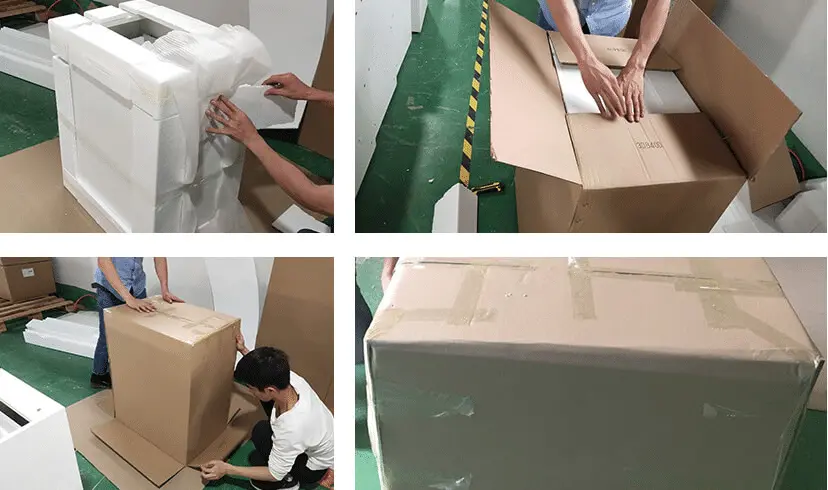
For e-commerce retailers, packaging is even more important. A product may be handled many times before it reaches the final customer. If the carton is too weak, the retailer may face returns, negative reviews, replacement cost, and customer service pressure.
For packaging design and distribution testing, buyers can refer to ISTA resources. ISTA explains that its procedures include tests used early in the design process and tests that simulate transportation hazards:
ISTA Test Procedures
This does not mean every order must use the same test. Instead, it reminds buyers to treat packaging as part of product development. For flat-pack kids bedroom furniture, packaging is not an afterthought. It is part of the product.
From factory experience, packaging improvement often reduces total cost more than chasing a few cents on hardware. Better carton structure, better panel separation, clearer hardware packing, and improved assembly instructions can reduce complaints and protect long-term retail reputation.
7. Check OEM/ODM Customization Ability
Many buyers want more than standard catalog items. They may need a private label kids bed set, a new color collection, a unique loft bed structure, a storage bed for small apartments, or a complete children’s bedroom furniture series.
A capable OEM/ODM kids bedroom furniture supplier should support:
Custom dimensions
Custom colors
Custom surface finishes
Custom guardrail design
Custom ladder structure
Custom storage drawers
Custom wardrobe layout
Custom desk combinations
Custom packaging
Private label and barcode labels
Carton mark design
Assembly instruction customization
Hardware selection
Material optimization
Cost engineering
Sample development
Bulk production
OEM means the buyer may provide drawings, dimensions, or reference products, and the factory produces according to the buyer’s requirements. ODM means the factory can support product development, structure suggestions, design improvement, and practical manufacturing solutions.
For buyers developing new kids room furniture programs, we recommend sharing:
Reference photos
Product drawings
Target dimensions
Target material
Target color
Destination market
Order quantity
Packaging requirement
Target price
Retail channel
Testing requirement
Branding requirement
Delivery schedule
Then the factory can review whether the design is suitable for panel cutting, drilling, edge banding, hardware installation, flat-pack packing, and container loading.
To learn more about OEM/ODM cooperation, visit:
OEM & ODM Furniture Manufacturing Services
Product Applications for Retail, E-Commerce, Hotel, Apartment, and Project Buyers
A wholesale kids bedroom furniture supplier for retailers should not only produce furniture. The factory should understand where the product will be used.
Retail Furniture Stores
Retail stores usually need attractive designs, coordinated room sets, competitive pricing, and repeatable supply. A complete kids room collection may include a bed, wardrobe, desk, bookshelf, toy storage cabinet, and nightstand.
For retailers, the product must be easy to explain to customers. The style, color, function, and price point should be clear.
E-Commerce Sellers
E-commerce sellers need strong packaging, compact carton size, clear assembly instructions, good product photos, and lower return risk. Buyers should pay attention to carton weight, hardware packing, manual clarity, and replacement part management.
For online sales, customer assembly experience is part of the product. A design that is difficult to assemble may create negative reviews even if the furniture itself is good.
Importers and Wholesalers
Importers and wholesalers usually care about container loading, SKU planning, price stability, and repeat orders. They may need a supplier who can produce several models in one program, including bunk beds, loft beds, desks, wardrobes, and storage units.
A factory with stable production and export packaging experience is important for this buyer group.
Hotel Family Rooms and Serviced Apartments
Hotels, serviced apartments, and rental properties may use kids bedroom furniture for family rooms or long-stay apartments. They usually need durable structure, easy cleaning surfaces, neutral colors, and simple replacement parts.
In these projects, buyers should focus on durability, installation efficiency, and long-term maintenance.
School Dormitories, Student Housing, and Project Contractors
For dormitory and student housing projects, bunk beds, loft beds, wardrobes, desks, and storage cabinets are common. The priority is usually strength, space efficiency, stable supply, and easy installation in large batches.
Project buyers should provide room layout, quantity, installation timeline, and performance expectations before quotation.
Materials and Finish Recommendations from Factory Experience
For kids bedroom furniture, material selection should match the buyer’s market position.
For price-sensitive retail programs, melamine particle board may be a practical option. It supports many colors, efficient production, and competitive pricing.
For mid-range product lines, MDF or mixed panel structures can improve surface quality and design flexibility.
For parts that need stronger support, selected plywood or reinforced structures may be used depending on design.
For surfaces, popular choices include:
White melamine
Wood grain melamine
Pastel colors
Matte finish
Lacquer finish
Laminate finish
Two-tone color combinations
Neutral apartment-style finishes
Retail collection colors
Edge banding is also important. Smooth edge treatment improves user experience and gives the furniture a more finished appearance. For kids furniture, buyers often prefer softened edges, stable hardware, and finishes that are easy to clean.
The factory should help buyers avoid over-design. A product with too many colors, too many hardware types, or too many special parts may increase cost, MOQ, production risk, and spare part complexity.
MOQ and Quotation: What Buyers Should Prepare
To receive a faster and more accurate quotation, buyers should prepare complete information.
Please send:
Product name
Reference photo or drawing
Size
Material requirement
Color and finish
Panel thickness requirement
Hardware requirement
Packaging requirement
Order quantity
Destination country
Target price if available
Private label requirement
Testing or compliance requirement
Expected delivery date
For custom kids bedroom furniture OEM projects, one photo is often not enough. A better quotation requires dimensions, structure details, material direction, and target market.
If you are not sure which material or structure is best, you can send your target retail price and market. A practical factory team can suggest options.
For example:
Option A: cost-effective retail version
Option B: stronger structure for project use
Option C: premium finish for brand collection
Option D: compact packaging version for e-commerce
This type of comparison helps buyers make better purchasing decisions.
Export Packaging and QC Points Before Shipment
Before mass production, buyers should confirm the packaging standard. Important points include:
Carton material
Carton size
Gross weight
Net weight
Panel protection
Corner protection
Hardware bag details
Instruction manual
Carton mark
Barcode label
Logo label
Drop test requirement
Pallet or non-pallet loading
Container loading quantity
Spare hardware policy
QC should include:
Material inspection
Panel cutting accuracy
Edge banding quality
Drilling position
Hardware fitting
Surface finish
Color consistency
Trial assembly
Carton drop or handling review if required
Final random inspection
Loading supervision if needed
For kids bedroom furniture, trial assembly is very important. A product may look correct in separate parts, but problems may appear during assembly. For example, a hole position may be slightly wrong, a screw may be too short, a drawer may not slide smoothly, or a guardrail connection may need reinforcement.
A factory that conducts practical assembly review can help buyers avoid after-sales issues.
OEM/ODM Customization Process
Our recommended OEM/ODM process for kids bedroom furniture is:
Step 1: Buyer Sends Project Requirements
The buyer sends drawings, reference photos, product size, material request, order quantity, packaging requirement, target market, and target price.
Step 2: Factory Reviews Structure and Cost
The factory checks whether the design is suitable for panel production, flat-pack structure, hardware installation, packaging, and container loading.
Step 3: Quotation and Technical Feedback
The buyer receives quotation options, material suggestions, possible structure improvements, MOQ information, sample lead time, and bulk production lead time.
Step 4: Sample Development
The factory produces a sample for structure, finish, color, hardware, packaging, and assembly review.
Step 5: Sample Modification and Approval
The buyer checks the sample and requests changes if needed. The factory updates drawings, parts list, packaging, and production details.
Step 6: Bulk Production
After sample approval and order confirmation, the factory prepares materials and starts mass production.
Step 7: QC and Trial Assembly
The factory checks material, cutting, edge banding, drilling, hardware, surface finish, assembly, packaging, and carton details.
Step 8: Export Packing and Shipment
Products are packed in flat-pack cartons with hardware kits, manuals, carton marks, and loading plans.
Step 9: Long-Term Program Improvement
After the first shipment, buyer feedback can be used to improve packaging, manual clarity, hardware, carton labeling, and product details for the next order.
This is how a factory becomes more than a supplier. It becomes a long-term manufacturing partner.
Recommended Kids Bedroom Furniture Products to Source
If you are building a kids bedroom furniture retail program, consider the following product groups:
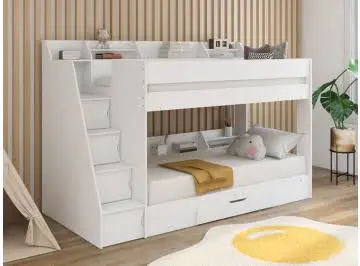
Kids bunk beds with guardrails
Kids loft beds with desk and storage
Storage beds with drawers
House beds and themed beds
Twin kids beds
Kids wardrobes
Study desks and bookcases
Toy storage cabinets
Kids nightstands
Complete kids bedroom sets
Small apartment kids room solutions
Flat-pack children’s room furniture programs
You can view our kids bed set manufacturing page here:
Wholesale Kids Bedroom Furniture
You can also explore the kids room furniture category here:
Custom Kids Room Furniture Factory
Final Buyer Checklist Before Sending an Inquiry
Before contacting a wholesale kids bedroom furniture supplier, prepare this checklist:
Target market
Sales channel
Product type
Size requirement
Material preference
Color and finish
Safety-focused structure needs
Order quantity
MOQ expectation
Packaging requirement
Private label requirement
Testing or compliance needs
Target price
Delivery schedule
Destination port
Reference photos or drawings
The more complete your information, the faster the factory can provide useful feedback.
Work with a Panel Furniture Export Factory for Your Kids Bedroom Furniture Program
If you are looking for a wholesale kids bedroom furniture supplier for retailers, importers, wholesalers, e-commerce brands, hotel apartment buyers, or project contractors, Starwood can support your OEM/ODM kids room furniture program with factory-direct panel furniture manufacturing, flat-pack packaging, custom design support, and export experience.
We manufacture kids beds, bunk beds, loft beds, storage beds, wardrobes, desks, nightstands, bookshelves, and complete kids bedroom sets for global buyers.
Send us your drawings, reference photos, dimensions, materials, target quantity, packaging needs, and destination market. Our team will review your project and provide practical quotation options, lead time, MOQ details, and manufacturing suggestions.
Start your sourcing project here:
Contact us for wholesale kids bedroom furniture options and lead times
FAQ
FAQ 1: Are you a wholesale kids bedroom furniture supplier for retailers?
Yes. We support retailers, importers, wholesalers, e-commerce sellers, furniture brands, apartment projects, hotel family room projects, and contractors with wholesale kids bedroom furniture, including kids beds, bunk beds, loft beds, wardrobes, desks, storage units, and complete kids bedroom sets.
FAQ 2: Are you a manufacturer, factory, or trading company?
We are a panel furniture export factory in China, supporting OEM and ODM flat-pack furniture manufacturing for global buyers. We provide product development, sampling, bulk production, QC, export packaging, and shipment support.
FAQ 3: Can you customize kids bedroom furniture for our retail brand?
Yes. We can customize size, color, material, finish, guardrail design, ladder structure, storage layout, hardware, packaging, carton marks, barcode labels, instruction manuals, and private label details according to your market requirements.
FAQ 4: What materials do you use for kids bedroom furniture?
Common material options include MDF, particle board, plywood, melamine board, laminated panels, lacquered panels, PVC or ABS edge banding, metal hardware, drawer slides, cam locks, dowels, screws, and connectors. The final material depends on target price, design, structure, and destination market.
FAQ 5: What is the MOQ for wholesale kids bedroom furniture?
For most export-oriented flat-pack panel furniture orders, MOQ is usually planned by container. Mixed models may be discussed depending on material, color, hardware, packaging, and production schedule. Please send your product list and quantity for a practical MOQ recommendation.
FAQ 6: What is the lead time for sample and bulk production?
Sample development may take around 15–25 days depending on design and material. Bulk production may take around 35–60 days after sample approval, deposit, material confirmation, and packaging confirmation. Actual lead time depends on order quantity and production schedule.
FAQ 7: Do you support flat-pack, KD, or RTA packaging?
Yes. We specialize in flat-pack, KD, and RTA panel furniture packaging for export orders. We can provide protected panels, hardware kits, assembly instructions, carton marks, barcode labels, and container loading support.
FAQ 8: Can you make kids bedroom furniture for apartments, hotels, or school projects?
Yes. We support kids bedroom furniture programs for apartments, rental properties, serviced apartments, hotel family rooms, school dormitories, student housing, and other project furniture needs. Please send room layout, quantity, product requirements, and installation schedule.
FAQ 9: Can you provide private label packaging?
Yes. We can support private label packaging, logo labels, carton marks, barcode labels, instruction manuals, hardware bag labels, and customized export or retail packaging according to your brand requirements.
FAQ 10: What should we send to get a quotation?
Please send product drawings or reference photos, dimensions, material and finish requirements, order quantity, packaging requirements, destination market, target price if available, private label needs, and required testing or compliance information.