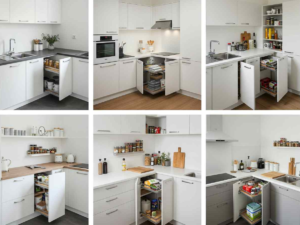
For importers, retailers, wholesalers, apartment developers, hotel projects, and kitchen cabinet distributors, choosing a reliable RTA kitchen cabinet manufacturer is not only about buying lower-cost cabinets. It is about controlling freight volume, product consistency, carton strength, hardware matching, installation experience, MOQ, lead time, private-label packaging, and repeat supply. A good factory should help buyers turn drawings, cabinet sizes, material requirements, finishes, hardware, and packaging needs into stable bulk production. This guide explains the practical benefits of sourcing RTA kitchen cabinets from a China-based panel furniture export factory.
Table of Contents
- What RTA kitchen cabinets mean for B2B buyers
- Why importers and retailers choose RTA kitchen cabinets
- Main application scenarios for RTA cabinet orders
- Benefit 1: Lower shipping volume and better container loading
- Benefit 2: Flexible OEM/ODM cabinet customization
- Benefit 3: Better SKU planning for importers and retailers
- Benefit 4: Practical materials for different price levels
- Benefit 5: Export packaging designed for long-distance shipping
- Benefit 6: MOQ and lead time planning for bulk orders
- Benefit 7: QC control before mass production and loading
- Benefit 8: Suitable for apartment, hotel, and commercial projects
- Why work with Starwood as your RTA cabinet manufacturer
- Buyer checklist before sending an inquiry
- FAQ
What RTA Kitchen Cabinets Mean for B2B Buyers
RTA means ready-to-assemble. In the kitchen cabinet business, RTA cabinets are manufactured as flat pack or knock-down cabinet components, packed in cartons with panels, hardware, and assembly instructions. The final buyer, installer, contractor, or distributor assembles the cabinets after delivery.
For B2B buyers, RTA kitchen cabinets are not only a product style. They are a supply chain solution. They help reduce shipping volume, improve warehouse handling, support SKU planning, simplify private-label programs, and make international cabinet sourcing more efficient.
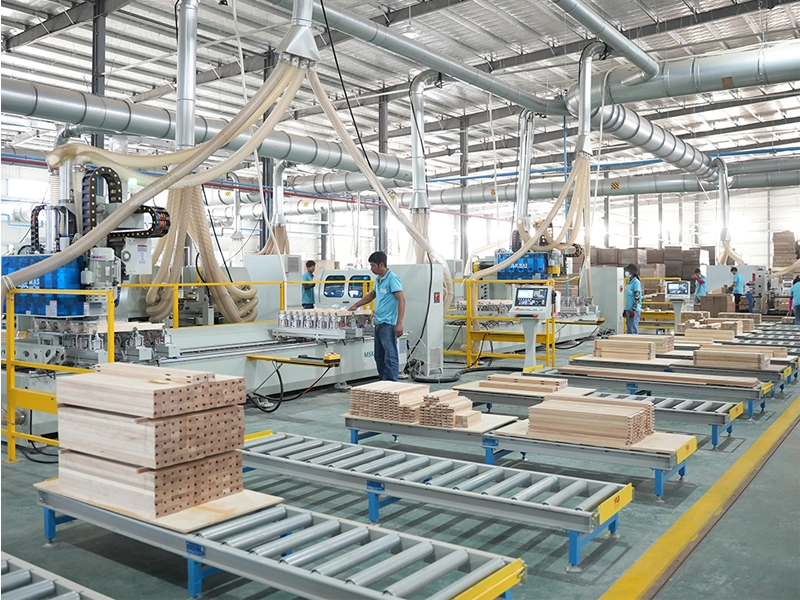
A professional RTA kitchen cabinet manufacturer should understand both cabinet production and export logistics. The factory should not only cut panels. It should help buyers manage cabinet structure, board materials, drilling accuracy, edge banding, door finish, drawer systems, hinges, hardware bags, carton marks, loading plans, and shipment documents.
This is especially important for importers, retailers, wholesalers, real estate developers, apartment projects, hotel projects, rental housing operators, and commercial furniture buyers who need repeatable production.
Starwood Industry Co., Ltd. is a China-based flat-pack panel furniture manufacturer supporting global brands, importers, wholesalers, and project buyers. You can view our main manufacturing positioning here: Flat-Pack Furniture Manufacturer in China.
Why Importers and Retailers Choose RTA Kitchen Cabinets
Importers and retailers choose RTA kitchen cabinets because they need a balance of cost, flexibility, shipping efficiency, product variety, and stable quality. Compared with fully assembled cabinets, RTA cabinets are usually easier to ship in containers and easier to organize as SKUs for retail or wholesale channels.
For overseas buyers, the main business benefits include:
- Lower container space per cabinet set
- Easier warehouse storage
- Better SKU flexibility
- Suitable for private-label packaging
- Easier mixed-container planning
- Practical for retail and e-commerce channels
- Suitable for apartment and project furniture supply
- Easier replacement and repeat orders
- Better cost control for bulk programs
However, RTA cabinets also require stronger factory accuracy. If hole positions, panel sizes, hardware, or instructions are wrong, the final installation experience will suffer. A good factory must understand that RTA cabinets are assembled after shipment, so production accuracy and packaging logic are critical.
When buyers evaluate a supplier, they should not only ask for cabinet photos. They should ask how the factory controls panel processing, hardware matching, packing, carton marks, trial assembly, and QC before loading.
Main Application Scenarios for RTA Cabinet Orders
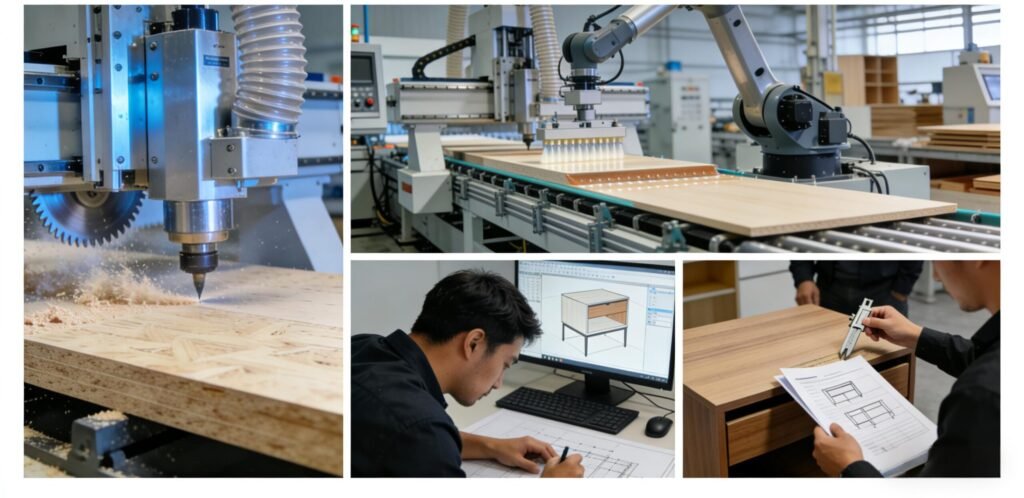
RTA kitchen cabinets can serve different B2B channels. Before requesting a quotation, buyers should define the sales or project application clearly.
Retail Cabinet Programs
Retailers need attractive cabinet designs, clear SKU structure, stable packaging, readable assembly instructions, and repeatable supply. The factory should support private-label packaging, carton marks, barcode labels, product photos, and consistent finishes.
Retail buyers often need cabinet lines that are easy to explain to customers. Standard base cabinets, wall cabinets, tall cabinets, pantry cabinets, corner units, drawer units, and sink base cabinets should be organized clearly.
Importers and Wholesalers
Importers and wholesalers usually focus on container planning, factory-direct pricing, carton durability, repeat orders, and product consistency. They may need a broad cabinet range for different distributors, contractors, or retail clients.
A good RTA cabinet supplier should help importers organize product codes, carton marks, hardware bags, packing lists, and loading plans.
Apartment and Rental Housing Projects
Apartment kitchens often require cost-controlled, durable, easy-to-install cabinet solutions. RTA kitchen cabinets are suitable for apartment developers and rental housing operators because they can be shipped efficiently and installed according to unit layouts.
For apartment projects, buyers should focus on practical finishes, durable hinges, easy-to-clean surfaces, stable board quality, and standardized sizes.
Hotel and Serviced Apartment Projects
Hotels and serviced apartments may need pantry cabinets, kitchenette cabinets, bathroom storage cabinets, minibar cabinets, and compact kitchen storage. These cabinets should match the room design and withstand repeated guest use.
For hospitality projects, finish consistency and hardware quality are especially important.
Commercial Spaces and Staff Housing
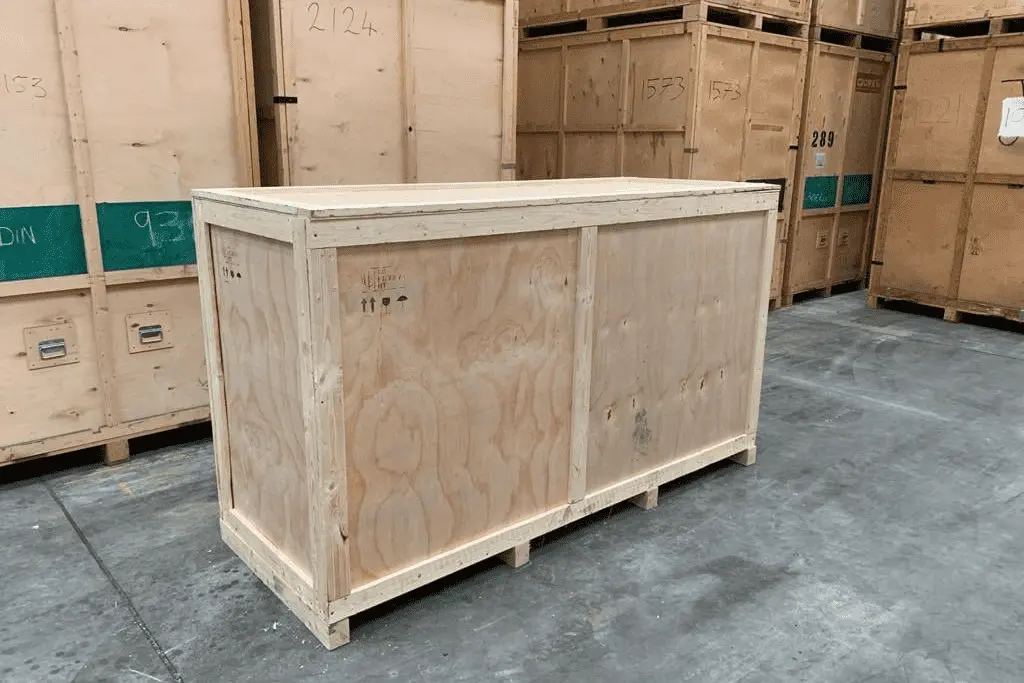
RTA cabinets can also be used in offices, staff dormitories, break rooms, retail spaces, small kitchens, and commercial storage areas. For these projects, buyers usually need practical structure, simple installation, stable materials, and clear packing.
For project-based cabinet sourcing, you can also review our Project Furniture Manufacturing page, which covers apartments, hotels, offices, rental properties, student housing, and commercial spaces.
Benefit 1: Lower Shipping Volume and Better Container Loading
One of the biggest reasons importers choose RTA kitchen cabinets is shipping efficiency. Fully assembled cabinets take more container space, while RTA cabinets are packed flat or knock-down. This helps buyers load more products into one container and reduce the shipping cost per unit.
For B2B buyers, freight cost can strongly affect final selling price. A cabinet line with beautiful design but poor packing efficiency may become difficult to sell after ocean freight, warehouse cost, local delivery, and retail margin are added.
A professional flat pack kitchen cabinet manufacturer should consider shipping efficiency from the product design stage. The factory should review:
- Panel sizes
- Carton dimensions
- Carton weight
- Hardware packing
- Loading sequence
- Mixed-container planning
- Pallet or non-pallet loading
- Warehouse handling requirements
Good flat pack cabinet design is not only about making panels smaller. It is about balancing structure, installation, carton protection, and loading efficiency.
For importers, the best cabinet program is one that can be manufactured consistently, packed safely, loaded efficiently, and sold repeatedly.
Benefit 2: Flexible OEM/ODM Cabinet Customization
Many buyers do not want standard cabinets only. They need private-label cabinet programs, custom sizes, market-fit finishes, specific hardware, branded cartons, or cabinet lines developed for local market demand.
This is where OEM/ODM capability becomes important.
OEM RTA Kitchen Cabinets
OEM production is suitable when the buyer already has drawings, product specifications, existing cabinet samples, target dimensions, or a current product line. The factory manufactures according to the buyer’s confirmed design.
OEM customization may include:
- Cabinet dimensions
- Door style
- Board thickness
- Panel material
- Surface finish
- Edge banding
- Hinges and slides
- Handles
- Drawer boxes
- Hardware bags
- Assembly instructions
- Carton marks
- Private-label packaging
ODM RTA Kitchen Cabinets
ODM development is suitable when the buyer has a market idea but needs factory support to develop the cabinet program. For example, a retailer may want a compact apartment cabinet line, a wholesaler may want a budget cabinet series, or a project buyer may need kitchen storage for rental housing.
The factory can help review structure, materials, finish options, cost targets, packing logic, and production feasibility.
A practical ODM workflow includes:
- Buyer sends target market, reference photos, project needs, or price range
- Factory reviews cabinet structure and production feasibility
- Material, finish, and hardware options are discussed
- Quotation is prepared
- Sample cabinet is produced
- Buyer checks assembly, finish, and packing
- Sample is revised if needed
- Final sample is approved
- Bulk production starts
- QC, packing, and loading are arranged
Starwood supports both OEM and ODM manufacturing for flat-pack panel furniture and cabinet programs. You can view our customization service here: OEM & ODM Furniture Manufacturing Services.
Benefit 3: Better SKU Planning for Importers and Retailers
RTA kitchen cabinets are suitable for structured SKU programs. This is useful for importers, retailers, wholesalers, and distributors who need cabinet lines that can be sold repeatedly.
A clear cabinet SKU system may include:
- Base cabinets
- Wall cabinets
- Tall cabinets
- Pantry cabinets
- Sink base cabinets
- Drawer base cabinets
- Corner cabinets
- Open shelves
- End panels
- Toe kicks
- Fillers
- Decorative panels
- Hardware packs
For retail buyers, SKU planning affects how customers select cabinets, how warehouses store goods, and how sales teams manage inventory. For wholesalers, SKU planning affects repeat orders, stock control, and replacement parts.
Before production, buyers should ask the factory to confirm:
- Product code
- Carton code
- Panel quantity
- Hardware quantity
- Carton size
- Gross weight
- Net weight
- CBM
- Loading quantity
- Finish code
- Replacement part logic
If an RTA cabinet program has poor SKU organization, buyers may face warehouse confusion, missing-part complaints, and difficult repeat ordering.
A strong panel furniture export factory should help buyers make cabinet programs more organized, not just manufacture individual cabinets.
Benefit 4: Practical Materials for Different Price Levels
RTA kitchen cabinet orders must be based on clear material specifications. If buyers only ask for “best price,” suppliers may quote different materials, different board thicknesses, and different hardware levels. The result is not a fair comparison.
Common RTA cabinet materials include:
- MDF
- Particle board
- Plywood
- Melamine board
- Laminated panels
- Engineered panels
- Painted or printed surface panels
Each material has different cost, weight, appearance, screw-holding performance, moisture resistance, and market positioning.
Board Thickness
Board thickness affects cabinet strength, cost, weight, and customer perception. Buyers should confirm:
- Side panel thickness
- Shelf thickness
- Door panel thickness
- Back panel thickness
- Drawer panel structure
- Base support structure
- Wall cabinet hanging method
- Load-bearing requirements
For apartment and rental housing projects, buyers may need a balance of durability and cost. For retail cabinet programs, buyers may need more attractive finish options and better packaging.
Surface Finish
Surface finish affects cabinet appearance, cleaning, scratch resistance, and market value. Common options may include melamine, laminate, veneer effect, painted finish, wood grain finish, and custom colors.
For RTA cabinet programs, finish consistency is very important. Retailers and project buyers may order the same cabinet line repeatedly. Color and texture should remain stable across batches.
Edge Banding
Edge banding affects cabinet durability and appearance. Poor edge banding can cause peeling, rough edges, visible glue lines, and moisture-related complaints. Buyers should confirm edge banding color, thickness, adhesion, and corner finishing.
Hardware
Hardware directly affects cabinet function. Hinges, drawer slides, handles, screws, cam locks, connectors, wall brackets, and adjustable feet should be confirmed before sample approval.
For kitchen and vanity cabinet quality discussions, buyers can review the Kitchen Cabinet Manufacturers Association’s KCMA Certifications, including its A161.1 quality certification and Environmental Stewardship Program. This is a useful reference when buyers discuss cabinet performance, durability expectations, and sustainability topics with suppliers.
For buyers importing composite wood products or finished goods containing MDF, particle board, or plywood into the United States, the U.S. EPA provides information on Formaldehyde Emission Standards for Composite Wood Products. This reference is useful when discussing material compliance, labeling, and documentation with cabinet suppliers.
Benefit 5: Export Packaging Designed for Long-Distance Shipping
For RTA kitchen cabinets, packaging is part of the product. A cabinet may be well made, but if the carton fails during shipping, the buyer still receives a damaged product.
Export packaging should protect panels, corners, surfaces, hardware, and instructions during long-distance transportation.
A professional RTA kitchen cabinet manufacturer should confirm:
- Carton strength
- Panel protection
- Corner protection
- Foam, paper, or honeycomb inserts
- Hardware bag position
- Assembly instruction placement
- Carton marks
- SKU labels
- Barcode labels if required
- Drop-test expectations
- Pallet or non-pallet loading
- Container loading sequence
Hardware Bag Organization
Hardware bags should be clearly labeled and matched with each cabinet. For RTA cabinets, missing screws or wrong connectors can create major after-sales problems.
A good hardware system should include:
- Hardware separated by type
- Clear quantity control
- Matching part numbers
- Extra hardware if required
- Simple connection to assembly instructions
- Strong bag sealing
Assembly Instructions
Assembly instructions should be clear enough for installers, contractors, retailers, and final users. A good instruction sheet should include:
- Panel list
- Hardware list
- Step-by-step diagrams
- Screw and connector identification
- Door and drawer adjustment notes
- Wall cabinet safety notes
- Maintenance suggestions if needed
Carton Marks
Carton marks are important for importers, warehouses, retailers, and project installers. A good carton mark may include product code, color code, carton number, quantity, gross weight, net weight, destination, and project name if required.
For structured logistics labeling, buyers may refer to the GS1 Logistic Label Guideline. Not every cabinet program needs GS1 labels, but the concept of clear logistic unit identification is useful for export cabinet orders, warehouse handling, and retail distribution.
Benefit 6: MOQ and Lead Time Planning for Bulk Orders
MOQ and lead time should be discussed early because RTA cabinet orders often involve multiple SKUs, different finishes, cartons, hardware, and loading plans.
What Affects MOQ?
MOQ may depend on:
- Cabinet type
- Number of SKUs
- Material selection
- Custom finish
- Door style
- Hardware level
- Carton printing
- Private-label packaging
- Mixed-container plan
- Sample approval requirement
- Production setup cost
For importers and wholesalers, MOQ is often planned by container or cabinet series. For project buyers, MOQ may be based on apartment units, hotel rooms, or total project quantity.
If buyers only ask MOQ for one cabinet size, the answer may not be useful. A better method is to send the full cabinet list, finish requirement, estimated quantity, and destination market so the factory can review container planning.
Sample Lead Time
Sampling is important for RTA cabinets because buyers need to check structure, dimensions, finish, hardware, packing, and assembly.
Before sample production, confirm:
- Sample cost
- Sample lead time
- Final material or substitute material
- Final hardware or temporary hardware
- Whether packaging sample is included
- Whether assembly instruction is included
- Whether sample cost can be refunded after bulk order
Bulk Production Lead Time
Bulk lead time depends on material purchase, finish preparation, hardware availability, carton production, machine schedule, QC, packing, and loading.
A practical RTA cabinet order timeline includes:
- Buyer sends cabinet list, drawings, reference photos, or target sizes
- Factory reviews structure, material, and packing feasibility
- Quotation is prepared
- Sample is produced
- Buyer checks sample and assembly
- Final specifications are confirmed
- Deposit is paid
- Materials and hardware are prepared
- Mass production starts
- QC and trial assembly are arranged
- Packing and carton marks are checked
- Container is booked and loaded
- Shipment documents are prepared
A reliable factory should keep the process clear and communicate before problems become delays.
Benefit 7: QC Control Before Mass Production and Loading
Quality control is especially important for RTA kitchen cabinets because the product is assembled after shipment. A small factory mistake may only appear when the buyer or installer starts assembly.
A practical QC process should include:
- Incoming board inspection
- Board thickness checking
- Color and finish confirmation
- Cutting accuracy inspection
- Drilling position check
- Edge banding inspection
- Door and drawer fitting
- Hardware matching
- Trial assembly
- Surface defect inspection
- Packing verification
- Carton mark checking
- Loading check
Trial Assembly
Trial assembly is important for RTA cabinets. It helps confirm whether panels, holes, connectors, doors, drawers, and hardware match correctly.
Buyers should ask whether the factory can trial assemble samples or random production units before shipment.
Finish and Batch Control
Finish consistency matters for both retail and project orders. If a buyer orders white shaker-style cabinets, wood grain cabinets, grey cabinets, or custom color cabinets, color difference between batches can create customer complaints.
A factory should confirm color samples and batch control before mass production.
Quality Management Reference
When discussing quality management with suppliers, ISO 9001 is a useful reference because it is a globally recognized quality management standard. For cabinet buyers, the key point is not only whether a supplier mentions quality, but whether the factory has a repeatable inspection process, clear records, and corrective action.
Benefit 8: Suitable for Apartment, Hotel, and Commercial Projects
RTA kitchen cabinets are not only for retail stores. They are also suitable for apartments, rental housing, hotels, serviced apartments, staff housing, student accommodation, offices, and commercial spaces.
Apartment Projects
Apartment projects need cabinets that are cost-effective, durable, easy to install, and suitable for repeated daily use. Standardized cabinet sizes and finishes help reduce procurement and installation complexity.
Rental Housing
Rental housing operators often need practical cabinets that can be replaced or reordered later. RTA cabinet programs make repeat supply easier if product codes and finishes are controlled well.
Hotel and Serviced Apartments
Hotels and serviced apartments may need compact kitchenettes, pantry cabinets, minibar cabinets, bathroom cabinets, and storage cabinets. RTA cabinets can help control shipping and installation cost when the project requires many similar units.
Commercial Spaces
Offices, staff rooms, retail backrooms, and commercial pantry areas may need kitchen storage, base cabinets, wall cabinets, and utility cabinets. For commercial spaces, buyers should focus on surface durability, hardware quality, load-bearing structure, and easy maintenance.
For kitchen design and planning discussions, the National Kitchen & Bath Association provides Kitchen and Bath Planning Guidelines covering clearance, fixture location, equipment location, and accessibility recommendations. These guidelines can help buyers and designers discuss cabinet layouts more clearly before manufacturing.
For commercial furniture performance discussions, buyers may also review BIFMA’s furniture standards overview, especially when cabinets are part of office, institutional, or commercial furniture programs.
Compliance, Sustainability, and Import Documentation
RTA kitchen cabinet buyers should discuss compliance and documentation before placing bulk orders. Requirements vary by target country, product type, material, and buyer policy.
Responsible Wood Sourcing
For buyers with sustainability requirements, responsible material documentation should be discussed early. The Forest Stewardship Council explains FSC Chain of Custody Certification as a system designed for companies that produce and distribute forest-based products.
If your retail chain, hotel group, apartment developer, or distributor requires FSC-related claims, confirm the requirement before quotation. Do not print sustainability claims on cartons or product pages unless the documents support them.
Import Documents
Importers should confirm documents with their customs broker or freight forwarder. Common shipment information may include commercial invoice, packing list, bill of lading information, carton quantity, CBM, gross weight, net weight, product description, loading photos, container number, and seal number.
The International Trade Administration provides a useful reference on China Import Requirements and Documentation, noting that necessary documents vary by product and may include standard documents such as bill of lading, invoice, shipping list, customs declaration, insurance policy, and sales contract.
For B2B cabinet buyers, the safest approach is to confirm document requirements before production and shipment.
Why Work with Starwood as Your RTA Kitchen Cabinet Manufacturer?
Starwood Industry Co., Ltd. is a China-based flat pack panel furniture manufacturer supporting global brands, importers, wholesalers, retailers, e-commerce sellers, apartment projects, hotel projects, and commercial furniture buyers.
We manufacture OEM and ODM panel furniture for:
- Kitchen cabinets
- Kitchen storage units
- Bathroom cabinets
- Wardrobes
- Storage beds
- TV stands
- Shoe cabinets
- Desks
- Bookshelves
- Apartment furniture
- Hotel furniture
- Commercial project furniture
As an RTA kitchen cabinet manufacturer, we support custom cabinet sizes, panel material selection, finish options, hardware matching, sample production, bulk manufacturing, QC, flat pack packaging, carton marks, and container loading.
As an OEM ODM furniture supplier, we help buyers turn drawings, cabinet lists, reference photos, apartment layouts, hotel requirements, and retail cabinet concepts into practical production.
As a panel furniture export factory, we focus on export-ready flat pack solutions for importers, wholesalers, retailers, and project buyers.
Learn more about our factory: Starwood Factory Page
Learn more about customization: OEM & ODM Furniture Manufacturing Services
Learn more about project supply: Project Furniture Manufacturing
Visit our homepage: Flat-Pack Furniture Manufacturer in China
Buyer Checklist Before Sending an RTA Cabinet Inquiry
To receive a faster and more accurate quotation, prepare the following information before contacting a factory.
Cabinet Product Details
- Cabinet type
- Product photos or reference links
- Drawings or dimensions
- Cabinet list by SKU
- Door style
- Board material
- Board thickness
- Surface finish
- Edge banding
- Hardware requirements
- Drawer slide requirements
- Hinge requirements
- Assembly method
- Packaging requirements
Business Details
- Buyer type
- Importer, retailer, wholesaler, project buyer, or distributor
- Target market
- Estimated order quantity
- Number of SKUs
- MOQ expectation
- Target price range
- Private-label requirement
- Barcode or carton mark requirement
- Inspection requirement
- Shipment destination
Project Details
For apartment, hotel, rental, or commercial projects, also prepare:
- Project type
- Number of rooms or units
- Kitchen layout if available
- Cabinet quantity per unit
- Finish requirement
- Installation schedule
- Delivery deadline
- Packing by room or unit if required
- Special document requirements
A complete inquiry helps the factory review production feasibility, packing logic, MOQ, lead time, and container loading more accurately.
Final CTA: Source RTA Kitchen Cabinets from a China Factory
Looking for a reliable RTA kitchen cabinet manufacturer for your import business, retail cabinet program, apartment project, hotel project, or commercial furniture order?
Send us your cabinet list, drawings, reference photos, dimensions, material requirements, finish samples, hardware requirements, target quantity, packaging needs, and delivery schedule. Our team can review your project, suggest suitable panel cabinet solutions, prepare quotation details, arrange samples, and support export-ready bulk production.
Contact Starwood Industry Co., Ltd. today and start your RTA kitchen cabinet order with a China-based OEM/ODM panel furniture factory.
Website: https://plywoodmfr.com/
Factory: https://plywoodmfr.com/the-company/
OEM/ODM Service: https://plywoodmfr.com/oem-odm-furniture-manufacturing-services/
Project Furniture: https://plywoodmfr.com/project-furniture-manufacturing/
FAQ
What is an RTA kitchen cabinet manufacturer?
An RTA kitchen cabinet manufacturer produces ready-to-assemble kitchen cabinets packed in flat pack or knock-down cartons with panels, hardware, and assembly instructions. These cabinets are suitable for importers, retailers, wholesalers, apartment projects, hotel projects, and commercial buyers.
Why do importers choose RTA kitchen cabinets?
Importers choose RTA kitchen cabinets because they help reduce shipping volume, improve container loading, simplify warehouse storage, support SKU planning, and allow flexible private-label programs. RTA cabinets are also suitable for repeat orders and bulk distribution.
Can RTA kitchen cabinets be customized?
Yes. RTA kitchen cabinets can be customized by dimensions, materials, board thickness, door style, finish, edge banding, hinges, drawer slides, handles, hardware bags, assembly instructions, carton marks, and private-label packaging.
What materials are commonly used for RTA kitchen cabinets?
Common materials include MDF, particle board, plywood, melamine board, laminated panels, and engineered panels. Buyers should confirm board thickness, finish, edge banding, hardware level, and compliance requirements before quotation.
Are RTA kitchen cabinets suitable for apartment and hotel projects?
Yes. RTA kitchen cabinets are suitable for apartments, rental housing, hotels, serviced apartments, staff housing, student accommodation, offices, and commercial spaces because they support efficient shipping, custom sizes, controlled cost, and practical installation.
What should buyers check before placing an RTA cabinet order?
Buyers should check factory capability, cabinet dimensions, materials, board thickness, finish consistency, edge banding, hardware, sample quality, MOQ, lead time, packaging, carton marks, QC process, loading plan, and shipment documents.
What is the MOQ for RTA kitchen cabinet manufacturing?
MOQ depends on cabinet type, material, finish, number of SKUs, hardware, carton printing, private-label packaging, and container loading plan. For export orders, MOQ is often planned by container, cabinet series, or total project quantity.
How long does RTA kitchen cabinet production take?
Lead time depends on drawing confirmation, material approval, sample production, sample approval, bulk production, QC inspection, packing, container booking, and shipment preparation. Buyers should confirm sample lead time and bulk production lead time separately.
Can Starwood support OEM/ODM RTA kitchen cabinet manufacturing?
Yes. Starwood supports OEM and ODM RTA kitchen cabinet manufacturing for importers, retailers, wholesalers, apartment projects, hotel projects, rental housing, commercial spaces, and furniture brands.