Furniture Brands and Private-Label Retailers
Established brands usually prefer OEM for proprietary designs, private label furniture programs, and controlled specifications.
New brands and private label furniture buyers may begin with ODM to reduce custom furniture manufacturing development time.
After the final drawings and samples are approved, repeat orders can operate as a controlled OEM program.
Importers and Wholesalers
ODM helps importers build coordinated collections from proven product directions.
OEM is effective for stable best-selling SKUs.
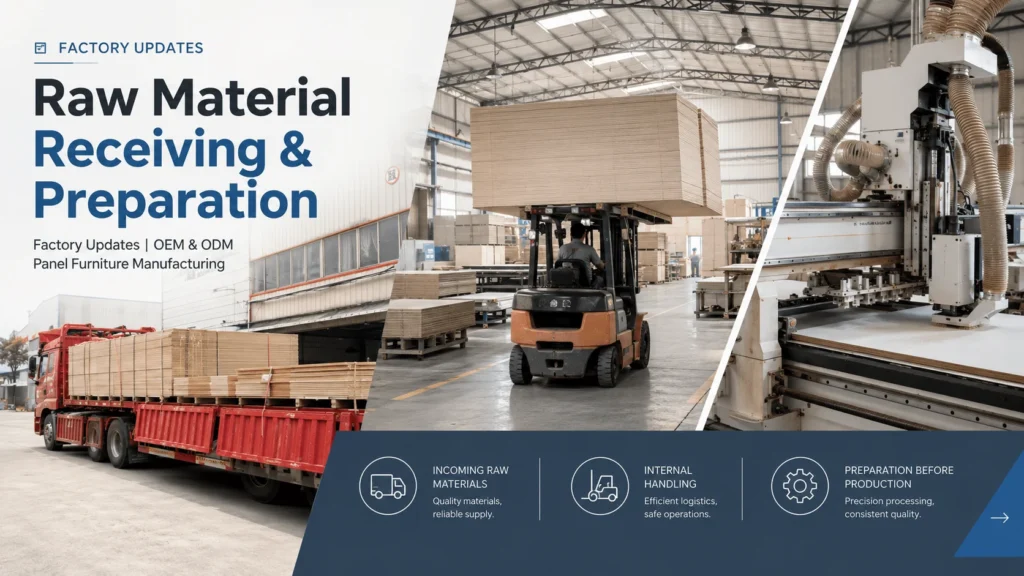
For mixed-container programs, shared board colors, hardware, carton structures, and components can improve MOQ planning and loading efficiency.
Hotels and Serviced Apartments
Hotel and serviced-apartment projects often use a hybrid model.
The designer or contractor controls:
- Visual appearance
- Room dimensions
- Finish schedules
- Project budget
The factory develops:
- Internal construction
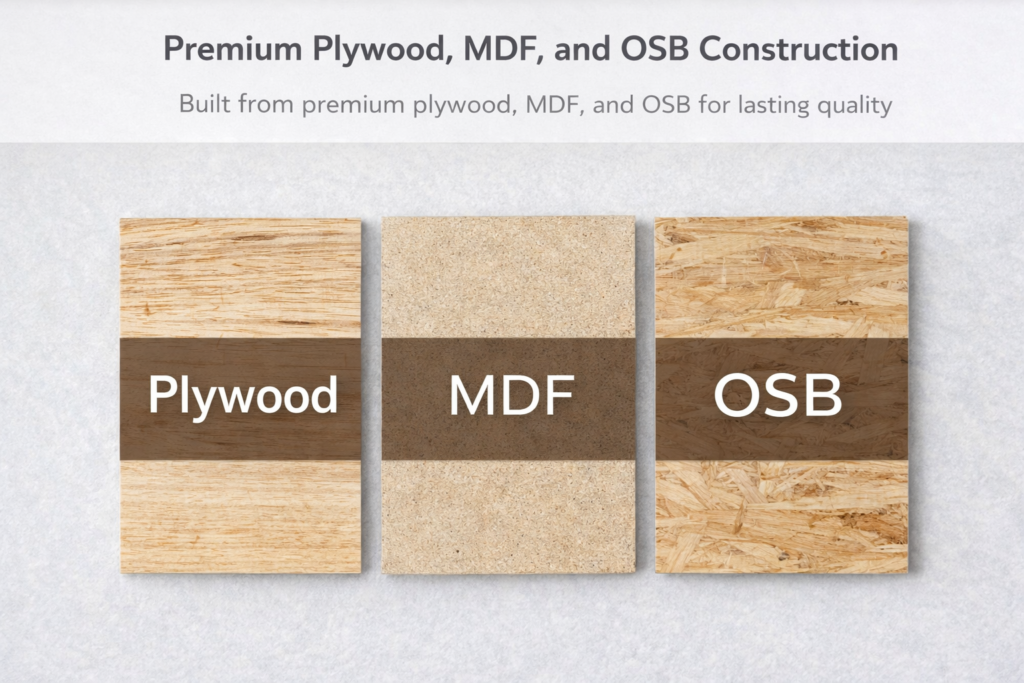
- Panel breakdown
- Hardware
- Flat-pack structure
- Packaging
- Installation logic
Important project controls include:
- Room-by-room schedules
- Mock-up approval
- Finish consistency
- Replacement parts
- Delivery batches
- Carton identification
Apartments, Rental Housing, and Student Housing
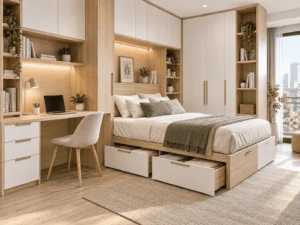
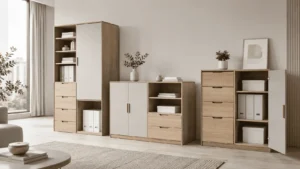
ODM can be used to develop modular:
- Wardrobes
- Desks
- Beds
- Bookcases
- TV units
- Shoe cabinets
- Kitchen storage
- Bathroom cabinets
Products can be designed around standard room types.
OEM becomes more appropriate after the room package has been approved for bulk repetition.
E-Commerce and RTA Furniture
E-commerce buyers must consider assembly and packaging from the first design meeting.
A product may look attractive but fail commercially when:
- The carton is oversized.
- Individual cartons are too heavy.
- Parts are difficult to identify.
- Assembly takes too long.
- Hardware is poorly organized.
- Parcel delivery causes damage.
ODM can help optimize product structure, carton size, instructions, labels, and hardware organization.
OEM is more suitable after the product has stable specifications and market-performance data.
MOQ, Lead Time, and Packaging in OEM vs ODM Furniture Manufacturing
MOQ
For export panel furniture, MOQ depends on:
- Product dimensions
- Board color
- Surface finish
- Hardware
- Carton printing
- SKU mix
- Container utilization
Our normal commercial production is generally planned around container-based orders.
Buyers can discuss mixed SKUs when products share compatible boards, finishes, hardware, and packaging materials.
Samples, prototypes, and hotel mock-up rooms are handled separately from bulk-production MOQ.
Lead Time
A reliable factory should not promise one universal lead time before reviewing:
- Drawing readiness
- Material availability
- Custom colors
- Hardware sourcing
- Sample revisions
- Quantity
- Number of SKUs
- Testing
- Packaging
- Production capacity
Buyers should separate the schedule into:
- Product development
- Sample production
- Sample approval
- Material preparation
- Mass production
- Inspection
- Packing
- Container loading
Bulk production should begin only after drawings, samples, materials, finishes, packaging, and order details are confirmed.
Slow buyer approval can delay a project just as much as factory production.
Export Packaging
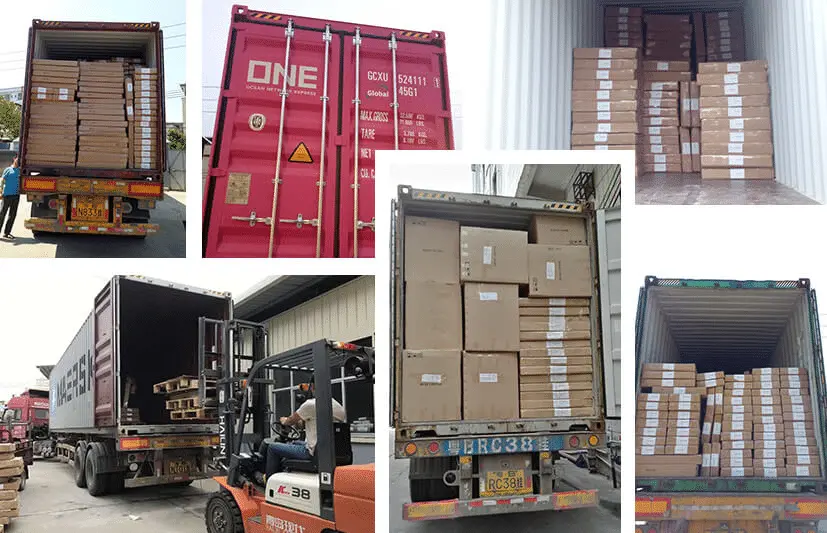
Packaging should be approved before mass production because carton dimensions can affect:
- Product breakdown
- Drilling positions
- Panel length
- Hardware bags
- Assembly instructions
- Warehouse handling
- Container loading
For project furniture, cartons may be identified by:
- Building
- Floor
- Apartment unit
- Hotel room
- Furniture item
For retail and e-commerce furniture, packaging may include:
- SKU labels
- Barcodes
- Handling marks
- Customer-facing graphics
- Assembly instructions
- Spare-parts information
Our Custom Furniture Manufacturing Process
Starwood Industry Co., Ltd. focuses on export-oriented flat-pack panel furniture for brands, importers, wholesalers, e-commerce sellers, hotels, apartments, student housing, and commercial projects.
Step 1: Inquiry and Buyer Brief
Send:
- Drawings
- Reference images
- Product lists
- Room layouts
- Target quantities
- Destination market
- Packaging requirements
- Required schedule
Step 2: OEM or ODM Classification
We identify whether the project:
- Is ready for OEM production
- Needs ODM development
- Should use a hybrid OEM/ODM process
Step 3: Technical and Commercial Review
We review:
- Dimensions
- Structure
- Panel materials
- Finish
- Hardware
- Assembly
- Packaging
- Quantity
- Cost objective
- Production feasibility
Step 4: Quotation and Value Engineering
The quotation follows the confirmed project scope.
When useful, we may suggest alternatives for:
- Materials
- Hardware
- Panel structure
- Packaging
- SKU standardization
- Container loading
Step 5: Drawings and Samples
OEM samples verify the buyer’s specification.
ODM samples help develop and refine the product.
Critical dimensions, colors, fittings, labels, assembly details, and packaging should be approved in writing.
Step 6: Pre-Production Confirmation
Before mass production, both sides confirm:
- Final drawings
- Material list
- Finish
- Hardware
- Packaging
- Carton marks
- Instructions
- Order quantity
- Inspection requirements
Step 7: Mass Production and Quality Control
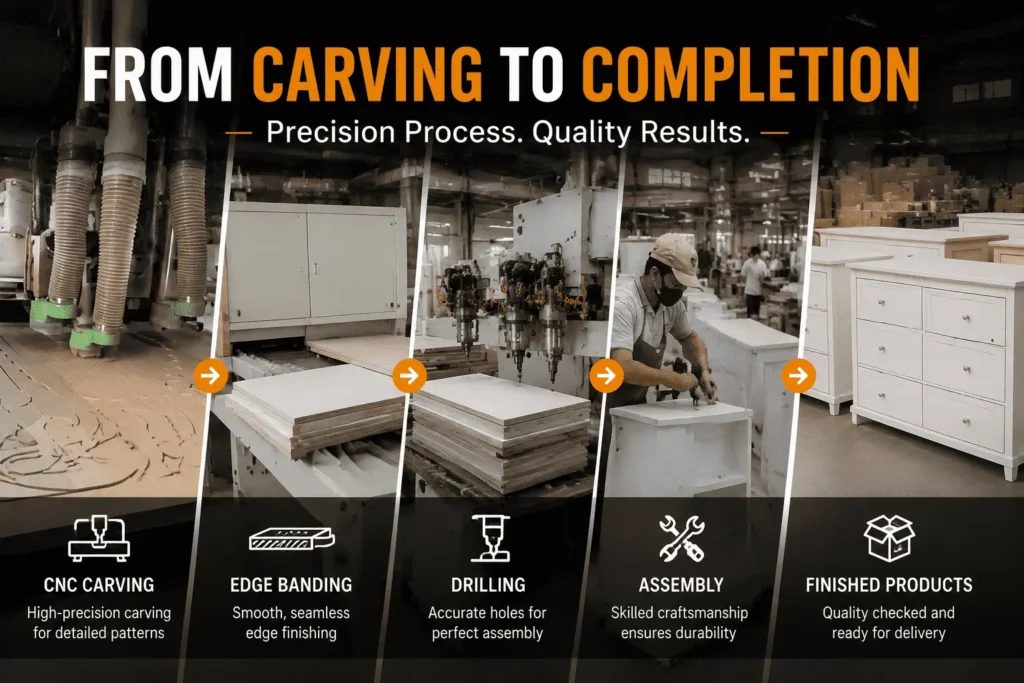
Production may include:
- Panel preparation
- CNC cutting
- CNC drilling
- Edge banding
- Surface processing
- Hardware preparation
- Trial assembly
- Cleaning
- Inspection
- Packing
Step 8: Packing, Loading, and Repeat-Order Records
We organize:
- Flat-pack cartons
- Hardware bags
- Assembly instructions
- Carton labels
- Protective materials
- Container loading plans
- Shipment documents
- Approved specifications
These records support future repeat orders.
Buyer Checklist Before Requesting a Quotation
Before sending an inquiry, confirm the following:
- Are you requesting OEM, ODM, or a factory recommendation?
- What is the product category?
- Where will the furniture be used?
- Do you have drawings, samples, room plans, or reference photos?
- What dimensions are required?
- What is the quantity by SKU?
- Which board material do you prefer?
- Which surface finish and color are required?
- Are specific hardware brands required?
- Should the product be knock-down, semi-assembled, or assembled?
- Is private-label packaging required?
- What is the destination country?
- What is the destination port?
- Which sales channel will receive the furniture?
- Which compliance documents or tests are required?
- What is the requested delivery schedule?
- Who will approve drawings and samples?
- Is there a target price?
- Is a mock-up room required?
- Are repeat orders expected?
A practical inquiry can read:
“Hello, we are sourcing an OEM/ODM panel furniture program for serviced apartments. The project includes wardrobes, bedside tables, TV cabinets, desks, and bathroom storage. We have room layouts and reference images but need factory support for structure, materials, hardware, flat-pack packaging, MOQ, and quotation. The destination market is ____. The estimated quantity is ____ rooms. Please advise whether OEM, ODM, or a hybrid process is more suitable.”
Which OEM vs ODM Furniture Manufacturing Model Is Better?
Choose OEM furniture manufacturing when you have:
- Complete drawings
- Strict product control
- Approved materials
- Defined hardware
- Confirmed packaging
- A stable repeat-order plan
Choose ODM furniture manufacturing when you need:
- Product development
- Market adaptation
- Cost engineering
- Structural optimization
- Packaging development
- Faster use of a proven manufacturing platform
Choose a hybrid OEM/ODM model when your team controls the brand, appearance, function, and market requirements while the factory develops construction, panel structure, hardware, assembly, packaging, and cost optimization.
For many B2B buyers comparing OEM vs ODM furniture manufacturing, the hybrid model is the most practical route.
It keeps commercial control with the buyer while using the factory’s manufacturing experience.
Starwood Industry Co., Ltd. has specialized in OEM and ODM panel furniture manufacturing since 2013. We support furniture brands, importers, wholesalers, e-commerce sellers, and commercial projects with CNC production, sampling, quality control, flat-pack packaging, and export support.
Tell us whether you have complete drawings or only an idea, and we will recommend the right production model.
Send your product list, dimensions, reference photos, quantity, destination market, packaging requirements, and required schedule through our contact page.
You can also review our B2B furniture sourcing guides before preparing your inquiry.
Frequently Asked Questions
1. What is the main difference in OEM vs ODM furniture manufacturing?
OEM starts with the buyer’s existing drawings, samples, or technical specification. ODM starts with a product idea, target market, room plan, functional requirement, or price objective, and the factory provides more development and engineering support.
2. Is OEM or ODM better for a new furniture brand?
ODM is often more efficient for a new furniture brand because the factory can help develop production-ready structures, materials, hardware, packaging, and samples. After approval, repeat orders can be controlled as an OEM program.
3. Can a furniture project use both OEM and ODM?
Yes. Many hotel, apartment, student housing, and private-label orders use a hybrid model. The buyer controls design and project requirements, while the factory optimizes construction, manufacturing, assembly, and packaging.
4. What should I send for an OEM furniture quotation?
Send drawings, dimensions, materials, finishes, hardware requirements, quantity by SKU, packaging requirements, destination market, required standards, and delivery schedule. Samples or clear product photos are also helpful.
5. Can you develop furniture from a photo or rough idea?
Yes. A reference photo or rough concept can start an ODM discussion. The factory will still need dimensions, target use, material direction, budget, quantity, destination market, and packaging requirements.
6. What is the MOQ for OEM or ODM panel furniture?
MOQ depends on product size, board color, finish, hardware, packaging, and SKU mix. Normal export production is generally planned around container-based orders, while samples and development quantities are discussed separately.
7. How long does OEM or ODM furniture production take?
Lead time depends on drawing readiness, sample development, material availability, revisions, order quantity, packaging, testing, and approval speed. A reliable schedule can be provided after the technical scope is defined.
8. Do you provide private-label and export packaging?
Yes. We support flat-pack or KD cartons, carton marks, SKU labels, barcodes, assembly instructions, hardware bags, protective materials, private-label presentation, and container loading planning.