Introduction
In today’s competitive global furniture market, B2B buyers demand more than standard catalog furniture. Projects like hotels, apartments, and retail chains require custom dimensions, materials, finishes, packaging, and reliable delivery schedules. An OEM ODM furniture factory offers a comprehensive solution — providing design input, engineering support, material optimization, and full-scale production.
By choosing an OEM ODM partner, buyers can reduce risks, maintain consistent quality, and accelerate time-to-market while ensuring compliance with international standards.
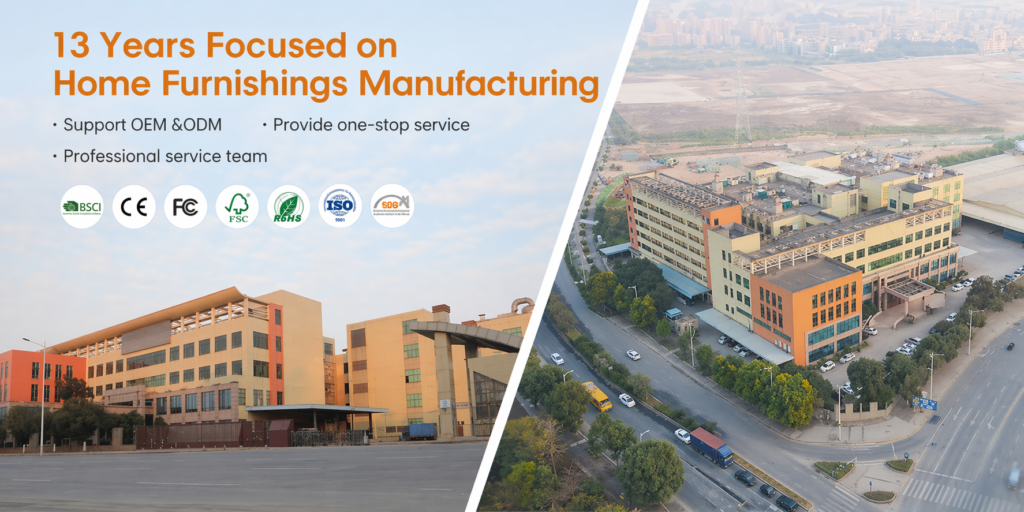
This guide explains how buyers can leverage an OEM ODM furniture factory for project success, covering materials, MOQ, lead time, packaging, compliance, and the structured customization process.
Table of Contents
- Understanding OEM and ODM Furniture Factories
- Why B2B Buyers Should Consider OEM ODM Solutions
- Common Project Application Scenarios
- Materials, Engineering, and Hardware Choices
- Regulatory Compliance and Industry Standards
- Minimum Order Quantity (MOQ) and Sampling Process
- Lead Time and Production Planning
- Export Packaging and Shipping Optimization
- The OEM ODM Customization Workflow
- Evaluating Factory Capabilities
- Cost Management and Project Efficiency Tips
- FAQ
- Call to Action
1. Understanding OEM and ODM Furniture Factories
OEM (Original Equipment Manufacturer)
OEM factories manufacture furniture based on buyers’ supplied designs and specifications. They focus on production execution with reliable quality and repeatability.
ODM (Original Design Manufacturer)
ODM factories offer design and production support, providing pre-tested design templates, structural optimization, and material recommendations. This reduces development timelines while enabling customization.
Many modern B2B projects combine OEM and ODM elements: ODM for faster initial design and prototype validation, OEM for large-scale production adhering to approved specifications.
2. Why B2B Buyers Should Consider OEM ODM Solutions
2.1 Tailored Project Execution
Hotels, apartments, and commercial facilities require furniture with precise dimensions, consistent finishes, and functional layouts. OEM ODM factories adapt to project-specific requirements, ensuring smooth installation.
2.2 Streamlined Supplier Management
An integrated OEM ODM partner reduces multiple vendor coordination, handling design, material sourcing, and production under a single workflow.
2.3 Enhanced Product Quality
Engineering and design expertise at the factory level ensures structural integrity, durability, and consistency across repeated units.
2.4 Cost and Time Efficiency
Optimized board layouts, pre-tested hardware selections, and flat-pack solutions reduce waste, shipping volume, and assembly labor, lowering overall project costs.
2.5 Compliance Confidence
Factories experienced in OEM ODM manufacturing help buyers meet international standards for safety, emissions, and sustainability.
3. Common Project Application Scenarios
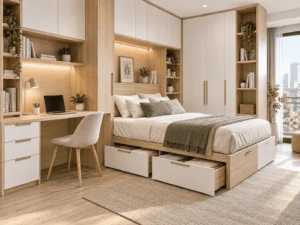
- Hotels: Wardrobes, beds, TV stands, desks, and seating units that withstand daily commercial use.
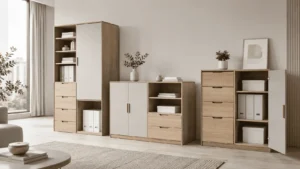
- Apartments & Multi-family Housing: Wardrobes, kitchen cabinets, media units, storage furniture.
- Retail & E-commerce Brands: Flat-pack furniture optimized for packaging, logistics, and assembly instructions.
- Contract & Institutional Projects: Libraries, hospitals, student housing, and offices requiring durable, compliant furniture.
4. Materials, Engineering, and Hardware Choices
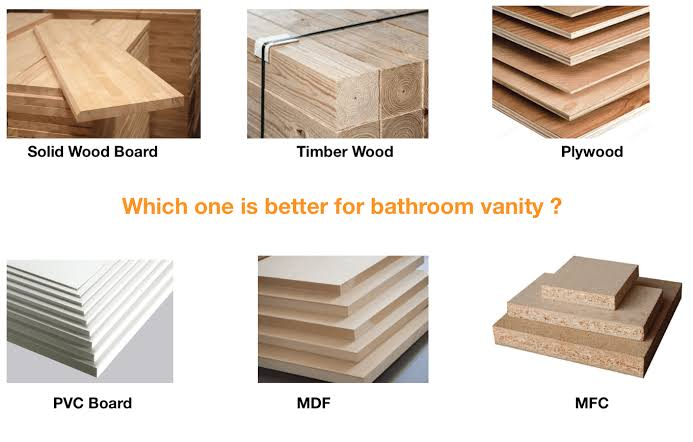
Core Materials
- Plywood: Strong, moisture-resistant, excellent for commercial applications.
- MDF: Smooth surface, ideal for painting and detailed profiles.
- Particle Board: Cost-effective, commonly laminated or melamine-faced.
- Melamine/Laminates: Durable surface finishes suitable for export.
Hardware
- Drawer slides, hinges, leveling feet, anti-tip devices.
- Critical for B2B durability and reducing maintenance issues.
5. Regulatory Compliance and Industry Standards
Buyers often require factories to adhere to standards like:
- EPA TSCA Title VI – formaldehyde emissions (EPA reference)
- California CARB Program – hardwood plywood, MDF, particleboard (CARB link)
- FSC Certified Wood – sustainable sourcing (FSC link)
- ISO 9001 Quality Management – process consistency (ISO link)
- BIFMA Furniture Standards – safety, performance, sustainability (BIFMA link)
6. Minimum Order Quantity (MOQ) and Sampling Process
- MOQ varies by SKU, finish, and custom features.
- Sample workflow: design validation → structural prototype → finish verification → compliance testing → approval for production.
7. Lead Time and Production Planning
- Sample development: 1–3 weeks
- Pre-production approval: 1 week
- Bulk production: 3–8 weeks depending on order scale
- Container loading: 1–2 weeks
Phased delivery and container scheduling are common for large hotel or apartment projects.
8. Export Packaging and Shipping Optimization

- KD packaging, reinforced cartons, protective corner guards
- Room/floor labeling for apartment/hotel projects
- Spare hardware kits, assembly manuals, barcodes
- Optimized container loading to reduce transit damage
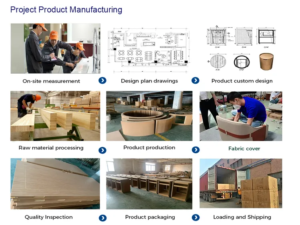
9. The OEM ODM Customization Workflow
- Project Brief & Design Requirements
- Concept & Engineering Evaluation
- Material Selection & Quotation
- Prototyping & Sample Review
- Final Approval & Documentation
- Pre-production QC Alignment
- Production & Packing
- Shipment & After-sales Support
10. Evaluating Factory Capabilities
- Track record with project delivery
- Quality control systems
- Compliance and documentation experience
- Design & engineering capacity
- Export packaging knowledge
11. Cost Management and Project Efficiency Tips
- Standardize components across SKUs
- Optimize board cuts and material usage
- Consolidate packaging for container efficiency
- Negotiate tiered pricing for MOQ
- Plan raw material procurement early
12. FAQ
- What is an OEM ODM furniture factory?
A factory providing both design and production services, enabling project-specific customization. - How is ODM different from OEM?
ODM contributes design input; OEM executes buyer-provided designs. - Is this suitable for hotel and apartment projects?
Yes, ideal for repeated-unit projects with strict timelines and quality requirements. - Which materials are commonly used?
Plywood, MDF, particle board, melamine, laminates, veneer, and commercial-grade hardware. - How to verify compliance?
Review EPA TSCA Title VI, CARB, FSC, ISO 9001, and BIFMA documentation.
13. Call to Action
Looking for a reliable OEM ODM furniture factory for your next hotel, apartment, retail, or contract project?
Starwood provides:
- design & engineering support
- materials & compliance documentation
- sample development & prototype validation
- export packaging & logistics
- project-based delivery & quality control