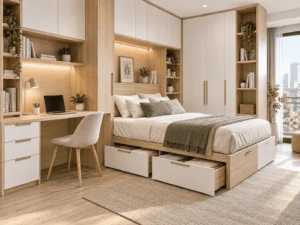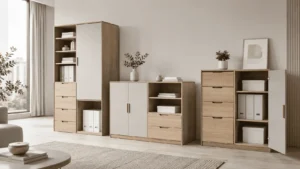

When global buyers search for an OEM furniture manufacturer, they are not simply looking for a low-cost supplier. They are looking for a factory partner that can turn product ideas, project specifications, and target-market requirements into stable, repeatable production.
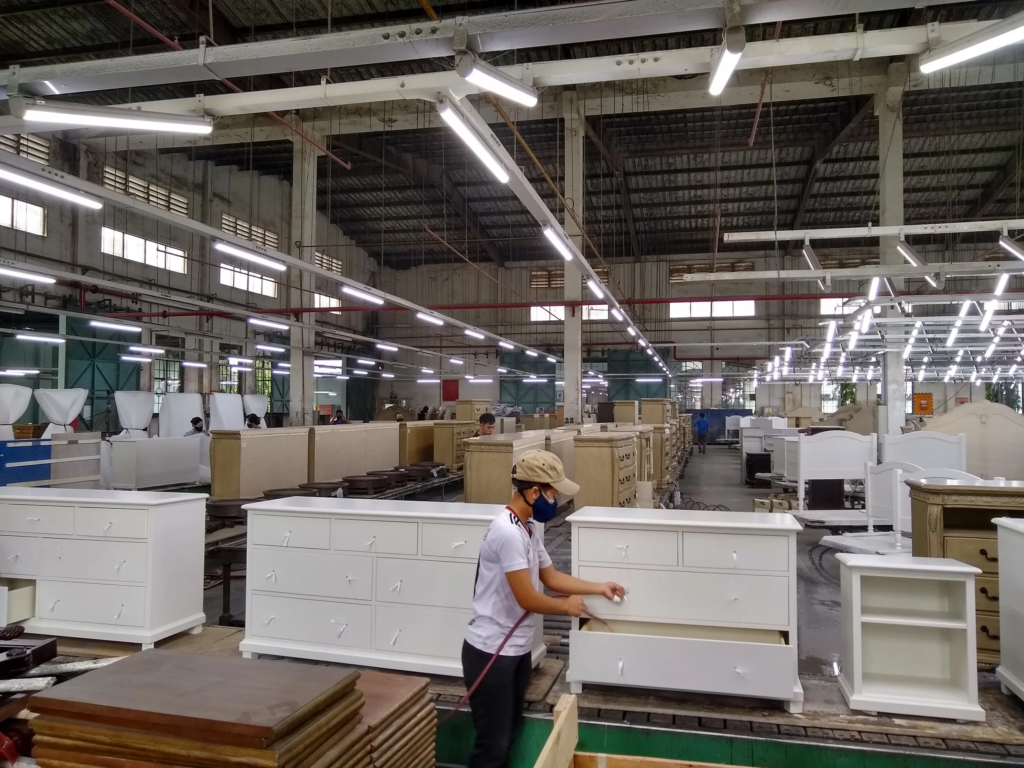
That is especially true in B2B business. A hotel group may need consistent room furniture across multiple properties. An apartment developer may require a full package of wardrobes, TV stands, desks, vanities, and storage units delivered in phases. A furniture brand may need private-label production with custom finishes, compliant materials, and reliable export packing. In all of these cases, the value of the right OEM manufacturer is not only price. It is execution.
A professional OEM furniture manufacturer helps buyers control cost, quality, lead time, design consistency, and after-sales risk. For project buyers, wholesalers, and importers, this matters far more than choosing a supplier based only on a quote sheet.
This guide explains how industry buyers can evaluate an OEM/ODM furniture factory, what materials and engineering details matter, and how to manage MOQ, lead time, packing, and customization with fewer surprises.
Table of Contents
- What an OEM furniture manufacturer really does
- Why OEM matters for project buyers
- OEM vs ODM in furniture manufacturing
- Common application scenarios
- Materials that affect performance and price
- Compliance and certification buyers should check
- MOQ, sampling, and lead time expectations
- Packaging standards for export furniture
- A practical custom development process
- How to reduce risk in hotel and apartment projects
- What makes a strong long-term OEM partner
- FAQ
What Does an OEM Furniture Manufacturer Actually Do?
In furniture sourcing, an OEM furniture manufacturer produces items according to the buyer’s design, brand, dimensions, finish requirements, target price, and packaging standard. The buyer may provide drawings, reference images, samples, material requirements, branding guidelines, or a complete bill of materials.
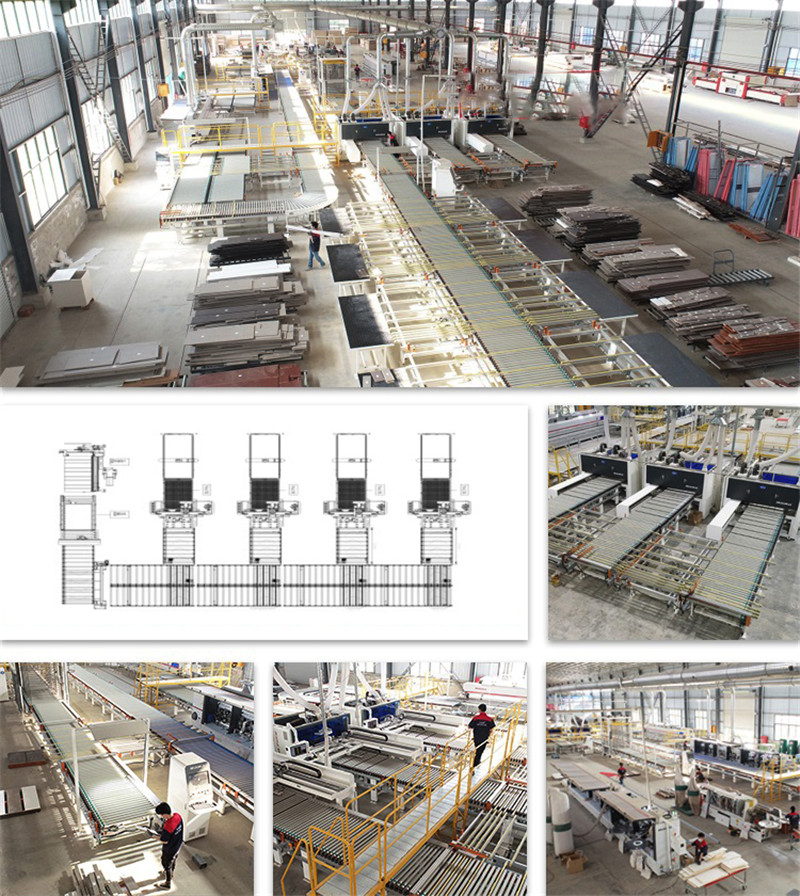
The factory’s role typically includes:
- engineering review
- structure optimization
- material recommendation
- sample development
- hardware matching
- finish approval
- production planning
- in-line quality control
- export packing
- shipment coordination
For many B2B buyers, this is more efficient than buying standard catalog products. Instead of adapting your business to a supplier’s fixed designs, you build products around your market, your project, and your margin goals.
That is why OEM is especially relevant for buyers serving:
- hotels
- serviced apartments
- student housing
- rental properties
- retailers
- e-commerce brands
- interior contractors
- import wholesalers
Why OEM Matters for Hotel, Apartment, and Engineering Buyers
1. Better fit for project-specific layouts
Project furniture is rarely one-size-fits-all. Hotel guestrooms, apartment kitchens, compact studios, and multi-unit housing projects all have dimension constraints, circulation requirements, storage targets, and installation conditions.
An OEM manufacturer can adapt width, depth, height, panel thickness, hardware selection, and finish details to match the project instead of forcing the buyer to redesign around stock items.
2. More consistent brand presentation
For brand owners and developers, consistency matters. You may need the same wood tone, edge color, handle finish, and construction logic across multiple SKUs. OEM production makes it easier to build a coordinated product line rather than mixing items from unrelated factories.
3. Lower total landed cost through engineering
The cheapest unit price does not always create the lowest total cost. Good OEM factories help reduce waste through structure simplification, smart board yield, optimized KD design, and practical export packing. That can lower freight volume, damage claims, and installation issues.
4. Easier margin protection for wholesalers and retailers
If your products are exclusive to your brand, it is harder for the market to compare them directly with generic catalog SKUs. OEM gives importers and distributors better control over differentiation and pricing strategy.
OEM vs ODM in Furniture Manufacturing
These two terms are often used together, but buyers should separate them clearly.
OEM furniture manufacturing
The buyer provides the product concept, design direction, or detailed specifications. The factory manufactures to those requirements.
ODM furniture manufacturing
The factory provides an existing design platform or develops the design with the buyer, then adjusts materials, dimensions, finishes, branding, or packaging for the buyer’s market.
For many panel furniture exporters, the best projects combine both models. A buyer may begin with an ODM structure for speed, then convert it into an OEM program with custom dimensions, packaging, and brand-specific finishes after market validation.
This hybrid approach is useful when buyers need faster sample development but still want product differentiation.
Common Application Scenarios for an OEM Furniture Manufacturer
Hotel furniture projects
Hotel buyers need repeatability, visual consistency, durability, and delivery discipline. Typical products include headboards, wardrobes, writing desks, luggage benches, vanity units, TV consoles, and storage cabinets. Commercial-use expectations make hardware durability, finish consistency, and packing reliability especially important.
Apartment and multi-family projects
Apartment developers and contractors often require wardrobes, shoe cabinets, kitchen storage, bathroom vanities, sideboards, desks, and media units in repeated layouts. The challenge is balancing cost, aesthetics, installation speed, and replacement convenience.
E-commerce and retail private label
Retailers and online sellers need flat-pack structures, cost-efficient dimensions, durable carton protection, and reduced return risk. A strong OEM partner helps optimize packaging, assembly logic, instruction manuals, and spare part management.
Wholesale distribution
Wholesalers typically need scalable SKUs that fit multiple customer types. They often look for flexible MOQ, stable finish batches, and container planning support.
Materials That Influence Cost, Durability, and Positioning
Material selection is one of the most important decisions in OEM furniture development. It affects price, product life, market acceptance, and compliance.
Plywood
Plywood is valued for strength, screw-holding performance, and dimensional stability. It is often preferred for mid-to-high-end furniture, humid environments, and products requiring stronger structural performance.
MDF
MDF provides a smooth surface and is useful for painted components and certain detailed profiles. It can work well when cost control and finish appearance are priorities, but buyers should evaluate moisture resistance and edge performance carefully depending on the application.
Particle board
Particle board is widely used in cost-effective flat-pack furniture. With suitable lamination, edge banding, and sound engineering, it can be practical for many residential and commercial applications. However, target market, loading conditions, and expected product life should guide selection.
Melamine-faced panels
Melamine surfaces are common in modern panel furniture because they support clean visuals, practical maintenance, and scalable production. They are often selected for wardrobes, cabinets, shelving, TV stands, and apartment furniture systems.
Veneer and decorative finishes
For buyers targeting a warmer or more natural look, veneer or synchronized decorative finishes may improve perceived value. The right finish choice depends on project budget, target segment, and long-term maintenance expectations.
Hardware
Slides, hinges, connectors, levelers, hanging rails, and anti-tip components directly affect the customer experience. In B2B projects, hardware quality is not a minor detail. It affects installation efficiency, warranty rates, and user satisfaction.
To evaluate composite wood compliance in the US market, buyers can review the EPA TSCA Title VI formaldehyde standards for composite wood products, which are highly relevant for many panel-based furniture programs. For California-focused programs, the California Air Resources Board composite wood products program is also an important reference for material selection and documentation.
Compliance and Certification Buyers Should Check
A professional OEM furniture manufacturer should be able to discuss not only production, but also the compliance logic behind the products.
Formaldehyde and composite wood compliance
For markets using composite wood components, emission compliance is a critical topic. US buyers often focus on TSCA Title VI documentation, while California buyers may also reference CARB requirements. These rules are directly tied to panel selection and supply-chain control. The EPA’s official overview and California’s CARB program pages are useful benchmarks during sourcing discussions. EPA TSCA Title VI and CARB Composite Wood Products Program should both be familiar to any export-oriented panel furniture supplier.
Responsible sourcing
If your market values sustainability or chain-of-custody claims, it is smart to ask whether the factory can support FSC-related material sourcing. The Forest Stewardship Council furniture resources provide a useful reference point for buyers discussing responsible wood sourcing.
Quality management
A serious manufacturer should run documented procedures, inspection standards, corrective action systems, and traceable approvals. Buyers often ask about quality systems because process discipline matters as much as finished product appearance. The ISO 9001 standard overview remains a strong reference for understanding why structured quality management supports consistency in manufacturing.
Performance expectations
For commercial and institutional settings, performance standards and testing language often matter. Buyers comparing contract-grade expectations can review the BIFMA standards overview, which helps frame conversations around safety, durability, and sustainability performance in furniture.
Not every residential panel furniture item requires the same testing path, but a capable OEM partner should understand how performance expectations change by market, channel, and use case.
MOQ, Sampling, and Lead Time: What Buyers Should Expect
One of the biggest sourcing mistakes is discussing only unit price without aligning on MOQ, sample path, and production timing.
MOQ
MOQ depends on product complexity, material mix, finish consistency, and packing setup. For panel furniture OEM projects, MOQ may be based on:
- per SKU
- per color
- per collection
- per container mix
- per trial order stage
For example, a factory may support lower MOQ for standard board colors and proven hardware, but require higher quantities for custom foil, custom paint, new molds, or exclusive packaging.
Sample development
A realistic sample path usually includes:
- requirement confirmation
- drawing or reference review
- engineering adjustment
- material and finish confirmation
- prototype making
- sample inspection and revision
- final approval for production
For new developments, buyers should confirm whether the first sample is for structural approval, finish approval, or full commercial approval. These are not always the same.
Lead time
Lead time is influenced by raw material booking, board finishing, hardware purchasing, sample approval speed, production line loading, and packing complexity. For many export furniture programs, typical lead time is discussed in stages:
- sample lead time
- pre-production preparation time
- bulk production time
- container loading schedule
For project orders, phased delivery planning is often more useful than discussing one single lead time number.
Packaging Standards That Matter in Export Furniture

Packaging is not an afterthought. For flat-pack and panel furniture exporters, it is part of product engineering.
A good OEM furniture manufacturer should be able to optimize packaging around:
- carton strength
- edge and corner protection
- internal buffering
- hardware bag labeling
- assembly instruction placement
- drop-test thinking
- container loading efficiency
- barcode and shipping mark requirements
- pallet or non-pallet shipment logic
For hotel and apartment projects, packaging also needs to match the destination workflow. Some buyers need floor-by-floor delivery labels. Others need room-based packing codes, project batch numbers, or spare hardware kits packed separately.
If packaging is weak, even well-made furniture can fail in the customer’s eyes. This is why experienced factories treat packing as a quality-control function, not just a warehouse task.
A Practical OEM/ODM Customization Process
Below is a workable process that many professional buyers expect.
Step 1: Requirement intake
The buyer shares drawings, reference images, product dimensions, target market, finish direction, packaging needs, and order forecast.
Step 2: Technical evaluation
The factory reviews structure feasibility, material options, hardware logic, KD possibility, and cost drivers.
Step 3: Quotation and solution proposal
A serious supplier does more than send a price. It explains the proposed material structure, construction method, estimated MOQ, lead time, and packing approach.
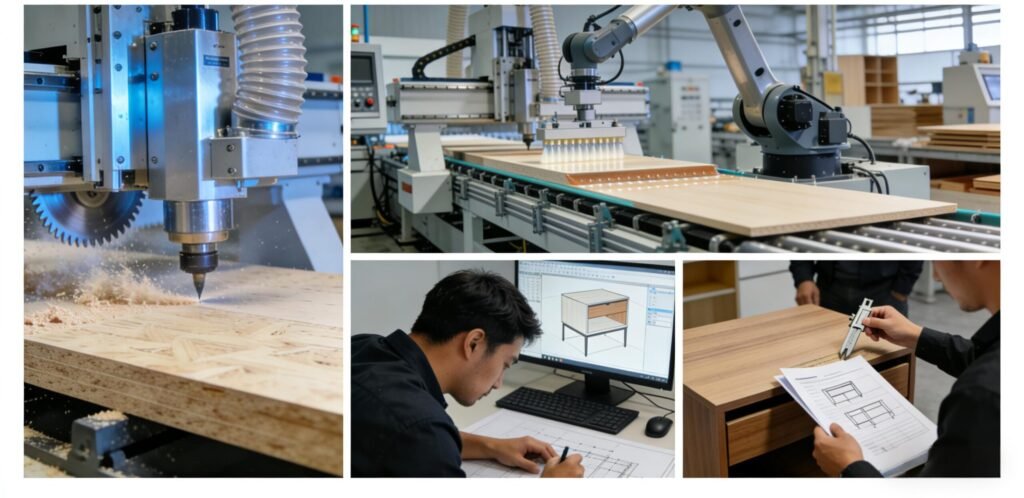
Step 4: Sample development
Prototype making verifies dimensions, assembly, finish, and visual intent.
Step 5: Approval and correction
The buyer confirms all open points, including details often missed in rushed projects: edge color, hole positions, hardware brand level, carton marks, spare parts, and instruction language.
Step 6: Pre-production control
Before mass production, the factory should freeze the approved standard and align production, QC, and packing teams.
Step 7: In-line and final inspection
Key checks include panel damage, dimension tolerance, color consistency, assembly fit, hardware completeness, and carton compliance.
Step 8: Shipment and after-sales support
For export projects, document readiness, replacement part support, and claims response are part of the supplier’s real service level.
How to Reduce Risk in Hotel and Apartment Furniture Projects
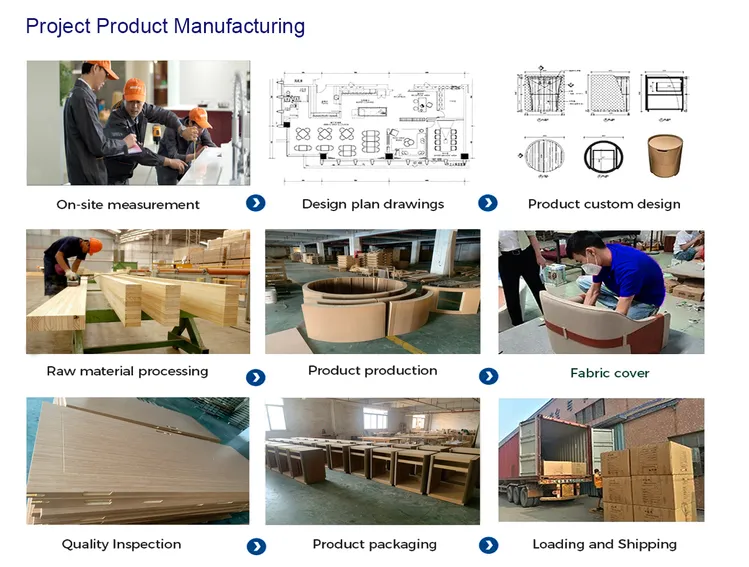
Project orders create pressure because delays and defects multiply across many units. Buyers can reduce risk by checking the following early:
Standardize where possible
Not every dimension needs to be unique. Controlled standardization across repeated units improves cost, consistency, and lead time.
Lock materials before sample approval
Last-minute changes in panel grade, board supplier, or decorative finish often create quality gaps.
Confirm installation logic
For apartment and hotel projects, installation conditions matter. Wall fixing, anti-tip details, service gaps, toe kick structure, and assembly sequence should be discussed before bulk production.
Ask for carton and labeling review
Projects often fail during delivery and installation, not only during production. Clear labels, area coding, and replacement-part tracking save time on site.
Define acceptance standards in writing
Buyers should align on color tolerance, chip allowance, panel flatness, hardware function, and carton appearance before production.
What Makes a Strong Long-Term OEM Furniture Manufacturer?
The best factory is not always the one with the lowest initial quote. For professional B2B buyers, a strong partner usually shows these qualities:
Commercial clarity
The supplier communicates MOQ, pricing conditions, tooling impact, and lead-time assumptions clearly.
Engineering discipline
It can explain why a structure will work, where risks are, and how to improve manufacturability.
Stable quality control
It has in-line inspection checkpoints, final inspection logic, and corrective action habits.
Export experience
It understands carton strength, shipping marks, container loading, customs documentation support, and after-sales response.
Customization flexibility
It can support OEM, selective ODM, private label, and project adaptation without confusion.
Project thinking
It understands phased delivery, room-package logic, repeated-unit consistency, and installation realities.
In short, a real OEM partner helps buyers scale with less friction.
MOQ, Lead Time, Packing, and Customization: A Direct Buyer Summary
To make supplier comparisons easier, buyers can use the following framework:
MOQ
Ask whether MOQ is based on SKU, color, or total order mix. Also ask which materials or finishes increase MOQ.
Lead Time
Separate sample lead time from bulk lead time. For project business, ask about phased shipment options.
Packaging
Confirm KD or assembled shipment, carton standards, internal protection, shipping marks, and spare part policy.
Customization
Clarify what is customizable: dimensions, material, finish, hardware, logo, instructions, labels, and packing method.
Documentation
Ask what documents the supplier can support for materials, compliance, inspection, and shipment.
This approach helps buyers compare suppliers on execution capability, not just on price.
Final Thoughts: Why the Right OEM Manufacturer Creates Real B2B Value
For industry buyers, choosing an OEM furniture manufacturer is a strategic decision. The right factory does more than make furniture. It supports product development, protects margin, reduces quality risk, improves logistics efficiency, and helps projects run more smoothly.
That matters whether you are sourcing wardrobes for a rental apartment chain, vanities for a hospitality renovation, or private-label flat-pack furniture for a distribution business.
If your business depends on stable repeat orders, project coordination, and long-term buyer confidence, then the right OEM/ODM manufacturing partner becomes part of your growth system.
A supplier that understands materials, compliance, packaging, and project execution is usually worth far more than a supplier that competes only on initial price.
Call to Action
Looking for an experienced OEM furniture manufacturer for hotel, apartment, wholesale, or private-label projects?
At PlywoodMFR, we support OEM/ODM panel furniture development for global B2B buyers with:
- custom sizes and finishes
- plywood, MDF, particle board, and melamine options
- flat-pack export packaging
- sample development support
- project-based production planning
- quality control for bulk orders
- flexible solutions for hotel, apartment, and retail programs
Send us your drawings, reference images, target quantities, and material requirements. Our team can help you evaluate structure, finish options, MOQ, lead time, and packaging for your next furniture project.
FAQ
1: What is an OEM furniture manufacturer?
An OEM furniture manufacturer produces furniture based on a buyer’s design, specifications, brand requirements, and packaging needs. This model is widely used by importers, wholesalers, retailers, and project buyers who need customized products rather than standard catalog items.
2: What is the difference between OEM and ODM furniture?
OEM means the product is made according to the buyer’s design direction or requirements. ODM means the factory provides an existing design or development base, then adapts it for the buyer with custom finishes, dimensions, branding, or packaging.
3: Is OEM furniture manufacturing suitable for hotel and apartment projects?
Yes. OEM is often a strong fit for hotel, apartment, student housing, and rental furniture programs because it allows buyers to control dimensions, finishes, structure, packaging, and repeated-unit consistency.
4.What materials are commonly used in OEM panel furniture?
Common materials include plywood, MDF, particle board, melamine-faced panels, veneer-faced panels, laminates, and commercial hardware systems. The best combination depends on the target market, budget, and performance expectations.
5: How do buyers evaluate quality when choosing an OEM furniture manufacturer?
Buyers should review material specifications, sample accuracy, structure logic, finish consistency, hardware quality, inspection process, packaging method, and the supplier’s ability to maintain standards during bulk production.
6: What should buyers ask about MOQ and lead time?
Buyers should ask whether MOQ is based on SKU, color, or total order mix, and whether the lead time quoted is for samples or bulk orders. It is also wise to confirm raw material readiness, packing complexity, and shipment scheduling.
7: Why is export packaging so important in panel furniture?
Because many quality complaints happen during transit or installation, not during production. Strong export packaging helps reduce damage, missing hardware, handling errors, and costly claims.
8: Can an OEM furniture manufacturer also provide ODM development?
Yes. Many factories support both OEM and ODM. Buyers may begin with an existing structure for faster development, then customize the product into an OEM version for their market.