Introduction
In today’s competitive global market, simply sourcing catalog furniture is no longer enough for B2B buyers who demand product differentiation, performance, and repeatable execution. Instead, many professional buyers are turning to an ODM furniture manufacturer — a manufacturing partner who not only builds what you need, but also helps design, engineer, optimize, and deliver furniture solutions tailored to your project requirements.
Whether you are a hotel operator, apartment developer, commercial interior contractor, or private‑label furniture brand, working with an ODM partner means faster innovation, fewer quality surprises, stronger compliance documentation, and smarter cost control. This comprehensive guide is tailored for B2B buyers seeking a competitive edge through an experienced ODM furniture manufacturer.
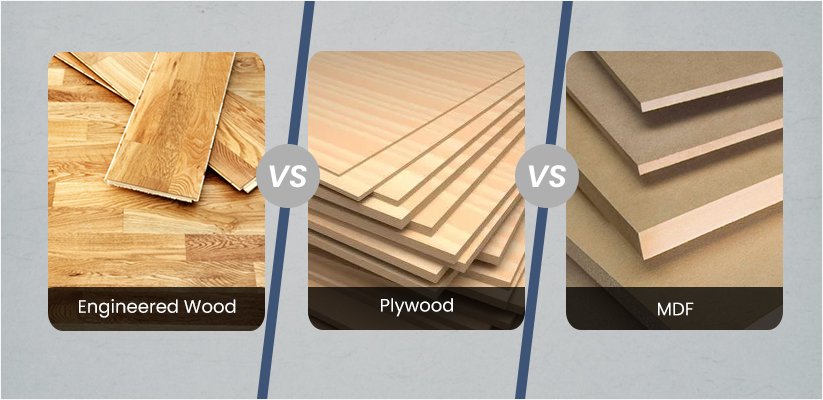
Table of Contents
- What Is an ODM Furniture Manufacturer?
- Why ODM Matters for B2B Projects
- Common Application Scenarios
- Materials and Engineering Considerations
- Quality Standards and Compliance Buyers Should Know
- MOQ, Samples, and Lead Time Explained
- Packaging & Export Logistics for Panel Furniture
- A Practical ODM Development Process
- How to Assess ODM Partners for Projects
- Cost Optimization Tips for B2B Buyers
- FAQ
- Final Call to Action
1. What Is an ODM Furniture Manufacturer?
An ODM furniture manufacturer (Original Design Manufacturer) is a partner that provides both design and production services. Instead of just manufacturing products based on the buyer’s supplied drawings, an ODM partner often contributes design expertise, structural engineering, material optimization, and prototype development.
In contrast to traditional OEM (Original Equipment Manufacturer) models which primarily execute to provided designs, ODM enriches the partnership by:
- offering a library of tested design platforms
- proposing optimized structures for strength and cost
- recommending material substitutions for performance or compliance
- aiding in finish, hardware, and packaging selections
The goal is to provide B2B buyers with lower risk, higher quality, and faster time‑to‑market solutions.
2. Why ODM Matters for B2B Furniture Projects
2.1 Faster Solution Development
For project buyers with tight schedules — such as hotel renovations or phased apartment deliveries — starting from scratch with design engineers and then moving to manufacturers can cause delays. An ODM partner reduces this timeline by leveraging pre‑tested design modules that still allow customization.
2.2 Better Structural Integrity
Design quality influences long‑term performance, especially under commercial use. Furniture in hotels, rental apartments, student housing or coworking spaces see heavier cycles than typical residential items. Choosing proper materials and intelligent joinery can reduce maintenance and replacement costs.
2.3 Consistent Visual Identity
Many B2B buyers require a unified look across hundreds or thousands of units. An ODM partner can enforce design standards across product lines — from wardrobes and vanities to seating and workstations — ensuring brand identity and spatial harmony.
2.4 Cost Visibility and Control
ODM partners help buyers control costs not only through negotiated material pricing, but also by optimizing designs to reduce waste, improve board yield, and streamline assembly logic.
2.5 Reduce Supplier Overhead
Instead of juggling multiple vendors for design, engineering, and manufacturing, an ODM furniture manufacturer becomes a one‑stop solution, which simplifies project management for buyers and internal teams.
3. Common Application Scenarios
Hotel Furniture
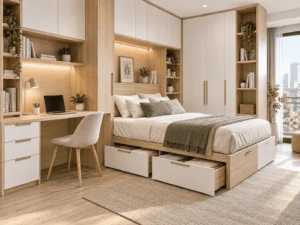
Hotel projects demand coordinated design, strict timelines, durability, and consistent finishes. Typical products include headboards, nightstands, desks, TV cabinets, wardrobes, and seating. An ODM furniture manufacturer can ensure designs that withstand daily use and yet retain aesthetic integrity.
Apartment & Multi‑Family Developments
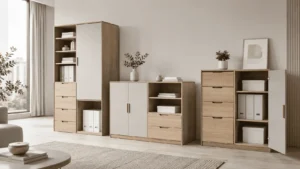
Apartment buyers often need systems such as closets, kitchen cabinets, media units, and storage across hundreds of units, each potentially with slight variations. ODM expertise in modular design and repeatable quality is crucial.
Retail & E‑Commerce Brands
Private‑label furniture brands selling through online channels benefit from ODM design platforms that are optimized for flat pack shipping, assembly instructions, protective packaging, and cost‑effective hardware.
Contract & Institutional Projects
Spaces like student housing, hospitals, libraries, and corporate offices require furniture that meets safety standards, performance expectations, and budget constraints — all of which are essential considerations in ODM development.
4. Materials and Engineering Considerations
Material choice profoundly affects price, durability, appearance, and performance. Common materials used in panel furniture include:
Plywood
Plywood provides excellent strength, screw holding, and moisture resistance — making it suitable for high‑use environments like hospitality and contract spaces.
MDF (Medium‑Density Fiberboard)
MDF is ideal for smooth painted surfaces and detailed profiles. However, moisture considerations should guide its application in certain environments.
Particle Board
Particle board offers cost advantages and is commonly used in wardrobes, cabinets, and shelving. It should be paired with robust edge banding and quality hardware.
Melamine and Laminate Finishes
Melamine‑faced boards deliver consistent finish quality and are excellent for large surface areas. Laminates provide additional texture and design options.
Hardware and Accessories
Drawer slides, hinges, leveling feet, and anti‑tip systems directly influence functionality and longevity. Heavy‑duty hardware in contract applications helps reduce service calls and warranty costs.
When selecting materials, buyers should also consider compliance with applicable standards, such as formaldehyde emissions. For example, compliance with EPA standards (EPA TSCA Title VI) is essential for many US furniture programs. Buyers can refer directly to the EPA’s formaldehyde emission standards for composite wood products for material requirements.
5. Quality Standards and Compliance Buyers Should Know
Professional buyers often expect documentation that supports regulatory compliance and long‑term performance. Key standards include:
Formaldehyde and Emission Standards
In addition to EPA rules, markets like California maintain their own formaldehyde control programs (e.g., California Air Resources Board Composite Wood Products Program), which may affect material selection for imported furniture components.
Sustainable Sourcing
Buyers focused on sustainability might require chain‑of‑custody documentation. The Forest Stewardship Council furniture resources are a valuable reference for FSC‑certified materials and responsible sourcing discussions.
Quality Management Systems
ISO certification, particularly ISO 9001 Quality Management Systems, reinforces a manufacturer’s consistency and process discipline.
Safety and Performance Benchmarks
For contract environments, furniture performance standards, such as those outlined by organizations like BIFMA (Business and Institutional Furniture Manufacturers Association), help buyers benchmark durability and safety expectations.
In your ODM partner discussions, ask for documentation supporting these benchmarks — or a plan to help you achieve them with mutual agreement.
6. MOQ, Samples, and Lead Time Explained
Minimum Order Quantity (MOQ)
MOQ varies based on product complexity, materials, finishes, and packaging. For example, a single custom finish on a wardrobe may require higher MOQ than a standard finish.
Buyers often negotiate:
- MOQ per SKU
- MOQ per finish/color
- MOQ for pilot orders
- Incremental delivery options for phased shipments
Samples and Prototypes
Effective sample development includes:
- structural prototype
- finish mock‑ups
- assembly validation
- packaging test
- compliance sign‑off
Successful ODM partners provide structured sample programs that balance buyer cost and project risk.
Lead Time Expectations
Lead times typically include:
- sample development time
- pre‑production sample confirmation
- raw material booking
- fabrication and assembly time
- packing and labeling
- container booking and shipment preparation
For projects, buyers should agree on milestone delivery dates rather than a single “finish date.”
7. Packaging & Export Logistics for Panel Furniture

Export packaging is a critical part of ODM furniture execution. A quality partner will optimize:
- carton board strength
- internal protection (corner guards, bubble wrap)
- labeling and SKU‑based packing lists
- palletization vs non‑pallet shipments
- container load planning for maximum efficiency
Localized packaging considerations for hotel or apartment projects might include:
- room‑specific cartons
- freight door clearance planning
- handling instructions
- spare hardware kits
Good packaging design reduces damage claims, transit costs, and assembly errors.
8. A Practical ODM Development Process
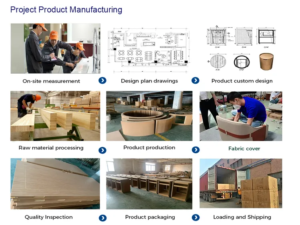
Below is a structured workflow that professional buyers can follow with an ODM partner:
Step 1: Initial Brief
Share project scope, dimensions, performance expectations, styles, target markets, and brand priorities.
Step 2: Concept & Engineering Review
The manufacturer proposes design concepts and structural logic.
Step 3: Costing & Material Options
Discuss detailed material, hardware, finish options, and projected pricing with MOQ implications.
Step 4: Prototyping & Refinement
Build prototypes for structural, functional, and aesthetic validation.
Step 5: Final Approval & Documentation
Confirm all technical drawings, material specs, packaging plans, and test results.
Step 6: Pre‑Production & QC Alignment
Prepare materials, assign inspection checkpoints, and validate packing routines.
Step 7: Production, Packing & Shipment
Execute formal production runs, QC checks, and container shipments.
9. How to Assess ODM Partners for Projects
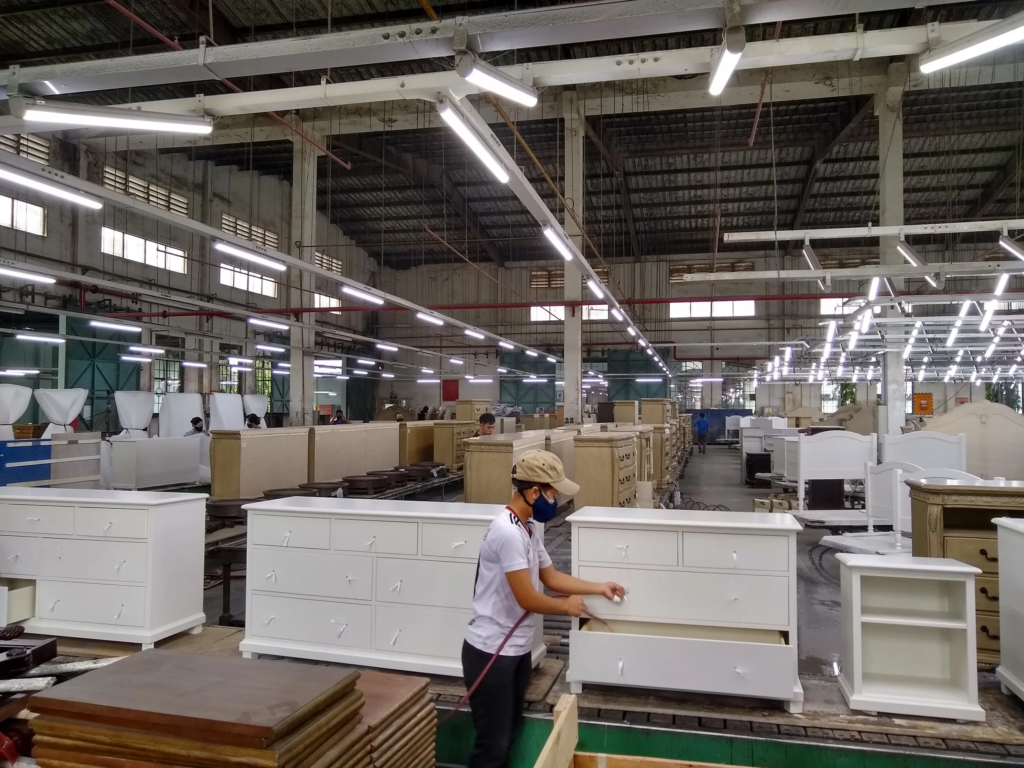
When evaluating ODM furniture manufacturers, ask:
- Do they manage design and materials or just execute drawings?
- Do they support performance expectations for contract use?
- How structured is their quality control system?
- Can they provide compliance documentation?
- What is their track record with project delivery?
- Can they optimize packaging for export?
A strong partner understands both design logic and on‑the‑ground manufacturing realities.
10. Cost Optimization Tips for B2B Buyers
- standardize components across SKUs
- optimize board cut patterns for yield
- select finishes that balance price and durability
- agree MOQ thresholds with clear tier pricing
- plan raw material bookings early
- consolidate packaging for container efficiency
These practical decisions help buyers keep landed cost under control while maintaining performance.
FAQ
What is an ODM furniture manufacturer?
An ODM furniture manufacturer provides design and production services — not just manufacturing. They help shape concept, material, structure, and packaging based on buyer needs.
How is ODM different from OEM in furniture?
OEM executes manufacturing to provided designs. ODM contributes design input, structure solutions, and technical optimization.
Can ODM services support hotel and apartment projects?
Yes. ODM partners help tailor designs, finishes, and packaging for repeated units, phased deliveries, and contract use cases.
Why are compliance standards important?
Standards like EPA, CARB, FSC, and BIFMA help buyers ensure safety, environmental responsibility, and longevity expectations for their furniture programs.
What should buyers prepare before contacting an ODM partner?
Prepare dimensions, target materials, performance needs, sample expectations, packaging preferences, and desired delivery timelines.
CTA
Looking for a reliable ODM furniture manufacturer for your next hotel, apartment, retail, or contract project?
At Starwood, we support B2B buyers worldwide with:
- design & engineering support
- material selection & compliance documentation
- sample development & prototype validation
- export packaging & logistics planning
- project‑based delivery & quality control