The global furniture market continues to shift toward products that do more with less space. For importers, wholesalers, project buyers, and hospitality procurement teams, this trend creates a clear opportunity: buyers now prefer furniture that combines organization, visual simplicity, and practical daily use in one solution. In other words, storage furniture is no longer just about adding cabinets to a room. It is about improving how a space works.
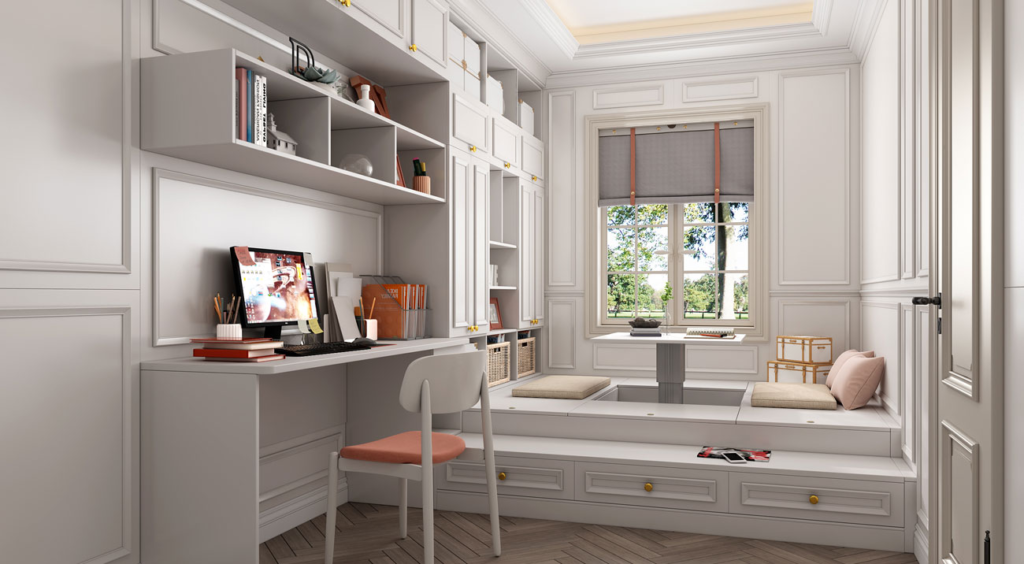
That is why multi-functional storage has become one of the most commercially valuable categories in modern interior furnishing. Whether the target market is residential retail, serviced apartments, student housing, rental units, or hotel projects, end users want cleaner layouts, smarter organization, and products that justify every square meter. For professional furniture buyers, this demand translates into stronger sales potential, better project efficiency, and wider customization possibilities.
As a panel furniture export manufacturer, we see the same request from different markets: storage solutions must be practical, attractive, durable, easy to ship, and flexible enough for OEM or ODM development. Buyers want products that can fit modern lifestyles while also matching real project requirements such as room dimensions, compliance expectations, installation needs, and target price points.
In this guide, we break down twelve multi-functional storage solutions every furniture buyer should know. We also cover where these products are commonly used, how material choices affect performance, what OEM and ODM customization usually includes, and which supply factors matter most when placing an order.
Table of Contents
- Why Multi-functional Storage Matters for Furniture Buyers
- Key Considerations Before You Source Storage Furniture
- 12 Multi-functional Storage Solutions Every Furniture Buyer Should Know
- Entryway Storage Benches
- Storage Beds
- Bedside Cabinets with Extra Utility
- Wardrobes with Internal Zoning
- TV Units with Hidden Storage
- Sideboards for Dining and Living Areas
- Modular Open Shelving Systems
- Storage Ottomans and Benches
- Kitchen Islands with Storage
- Bathroom Tall Cabinets
- Home Office Storage Units
- Room Divider Storage Cabinets
- Materials and Construction for Long-term Performance
- OEM / ODM Customization Options
- MOQ, Lead Time, and Export Packaging
- Typical Custom Development Process
- Why Work with a Direct Furniture Manufacturer
- FAQ
- Article Schema Content
Why Multi-functional Storage Matters for Furniture Buyers
For professional buyers, multi-functional storage is valuable because it solves several market needs at the same time.
First, it helps maximize limited living space. Urban apartments, furnished rentals, and compact hotel rooms all need furniture that serves more than one purpose.
Second, it improves home organization and visual order. Products that reduce clutter are easier to market because their value is immediately visible to the end customer.
Third, it supports better room planning for developers and hospitality operators. When a product can combine storage with seating, display, partitioning, or work support, the total furniture count in a room can often be reduced.
Fourth, it fits current sustainability and compliance expectations. Buyers increasingly pay attention to material sourcing, emissions, and product durability. Official guidance from the U.S. EPA on formaldehyde emissions for composite wood products, CARB’s composite wood requirements in California, FSC’s furniture-related certification resources, and BIFMA’s furniture standards framework all influence how professional buyers evaluate engineered wood furniture for export and project use.
Key Considerations Before You Source Storage Furniture
Before selecting a product line or requesting OEM development, buyers should review several practical factors:
Space efficiency
The product should make the room more useful without creating visual heaviness.
Construction durability
The structure should be stable, repeatable in production, and suitable for the intended usage level.
Material suitability
Panel type, surface finish, edge banding, and hardware must match the target market and price range.
Packaging logic
Storage furniture must be protected well during export and optimized for loading efficiency.
Market positioning
A product developed for e-commerce retail may differ significantly from one designed for hotel projects or furnished apartments.
Customization flexibility
The manufacturer should be able to adapt dimensions, finish, layout, hardware, and packaging to the buyer’s needs.
12 Multi-functional Storage Solutions Every Furniture Buyer Should Know
1. Entryway Storage Benches
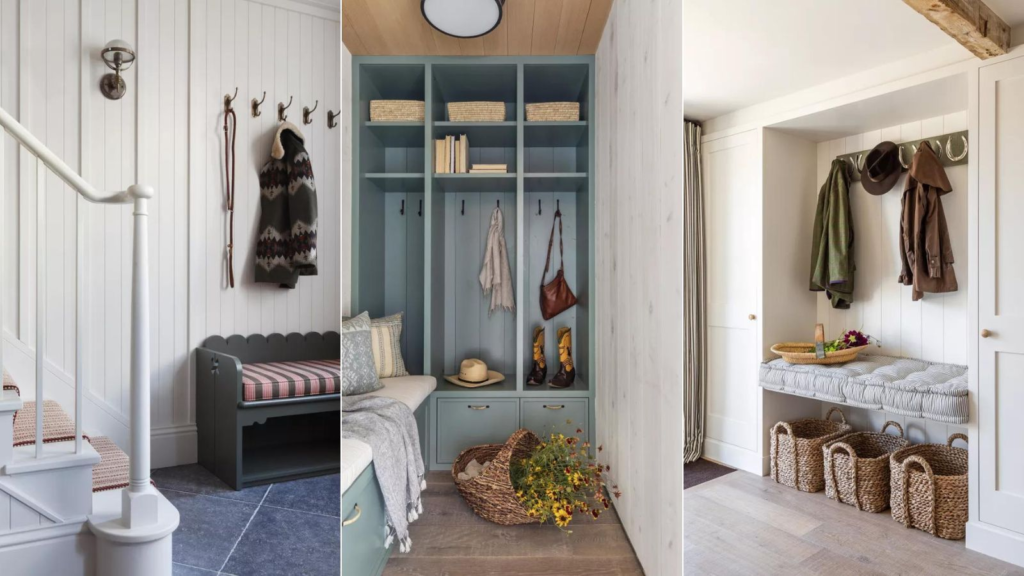
Entryway benches are one of the most practical forms of multi-functional storage because they combine seating with organization. In one compact unit, buyers can offer a product that provides shoe storage, concealed compartments, open cubbies, or even hooks and side shelves depending on the design.
Why buyers like this solution
It solves an everyday problem immediately. Shoes, bags, umbrellas, and personal items can all be organized in one place. For apartment and residential buyers, this type of furniture improves the first impression of the home. For rental and furnished housing projects, it adds value without requiring much floor area.
Application scenarios
- Apartments
- Residential developments
- Furnished rentals
- Compact homes
- Entry zones in serviced apartments
2. Storage Beds
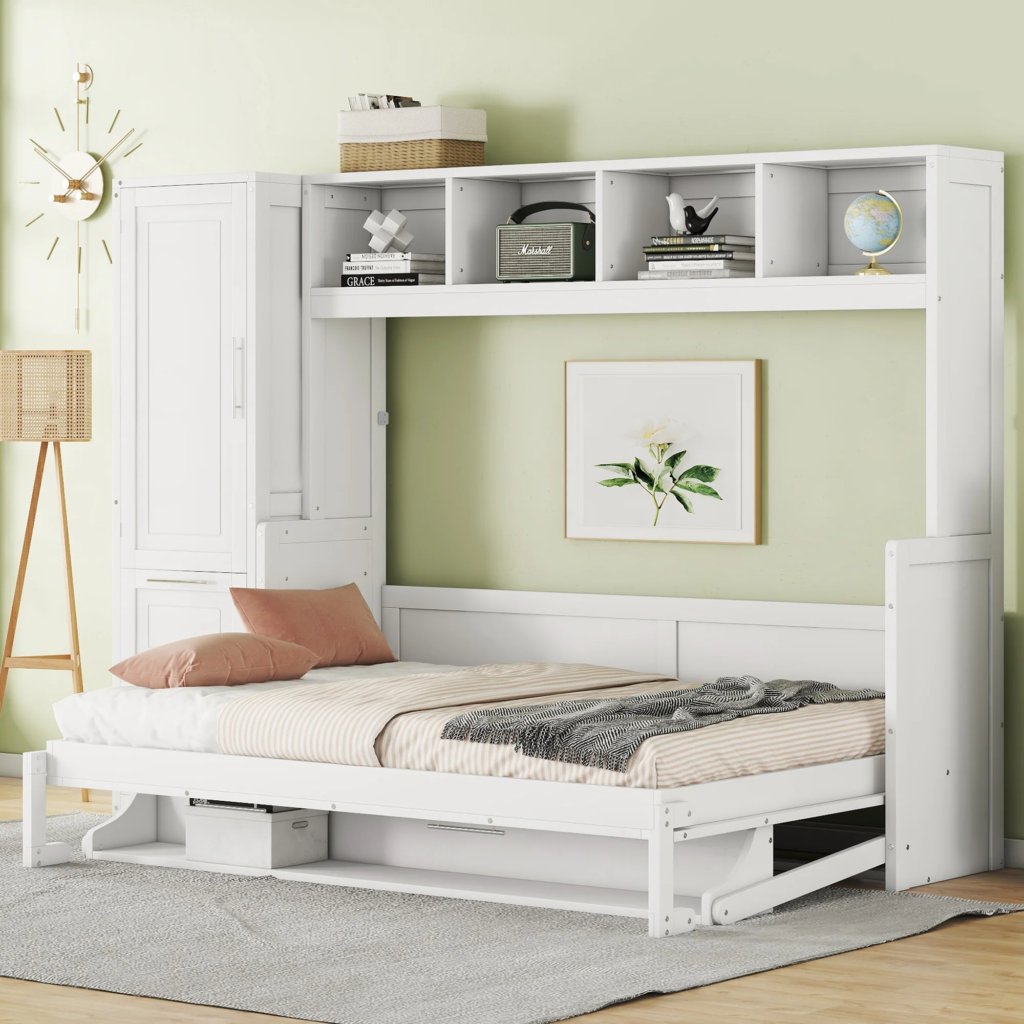
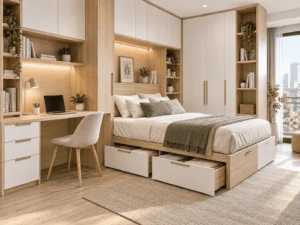
Beds with integrated drawers or lift-up storage bases are among the strongest-selling solutions in space-conscious markets. They turn the largest furniture footprint in the bedroom into a productive storage area.
Why buyers like this solution
A storage bed helps reduce the need for extra cabinets, which is especially useful in smaller bedrooms. It also creates a strong selling point for residential furniture collections because the function is easy to understand and easy to promote.
Application scenarios
- Apartment bedrooms
- Student housing
- Guest rooms
- Hospitality residences
- Compact family homes
B2B note
For project buyers, storage beds can help improve room efficiency while maintaining a clean furniture layout.
3. Bedside Cabinets with Extra Utility
Modern bedside cabinets are no longer just small drawer boxes. Buyers increasingly request units with open shelves, charging space, concealed cable routing, display areas, and even pull-out trays.
Why buyers like this solution
It adds value to a familiar category without increasing product complexity too much. A better bedside cabinet can serve both storage and convenience functions, which is useful in both home and hospitality environments.
Application scenarios
- Residential bedroom sets
- Hotel guest rooms
- Serviced apartments
- Furnished rental projects
4. Wardrobes with Internal Zoning
Wardrobes become far more functional when internal layouts are carefully designed. Hanging sections, shelves, drawers, accessory compartments, and luggage spaces all improve usability.
Why buyers like this solution
The external design can remain simple while the internal function becomes much more competitive. For B2B buyers, this means stronger value positioning without always needing a more complicated outward appearance.
Application scenarios
- Master bedrooms
- Compact apartments
- Hotel wardrobes
- Student accommodation
- Long-stay hospitality units
OEM / ODM potential
Wardrobes are highly customizable in size, internal layout, finish, door style, and hardware selection.
5. TV Units with Hidden Storage
TV units remain a core category in living room furniture, but today’s buyers want more than a decorative cabinet. They want concealed storage for electronics, organized cable management, and a balanced mix of display and closed storage.
Why buyers like this solution
It combines aesthetics and function in one of the most visible furniture categories in the home. This makes it attractive for both retail and show-unit furnishing.
Application scenarios
- Living rooms
- Model apartments
- Hotel suites
- Family housing projects
- Home organization collections
6. Sideboards for Dining and Living Areas
A sideboard can function as storage, display, serving support, and space definition furniture at the same time. It is especially useful where dining and living areas overlap.
Why buyers like this solution
It works across different room types and gives designers flexibility. For importers and wholesalers, sideboards also fit well into coordinated furniture collections.
Application scenarios
- Dining rooms
- Open-plan apartments
- Hospitality lounges
- Apartment showrooms
- Residential retail programs
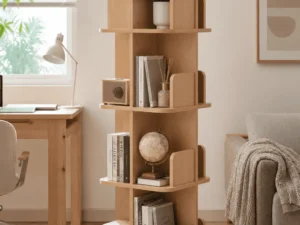
7. Modular Open Shelving Systems
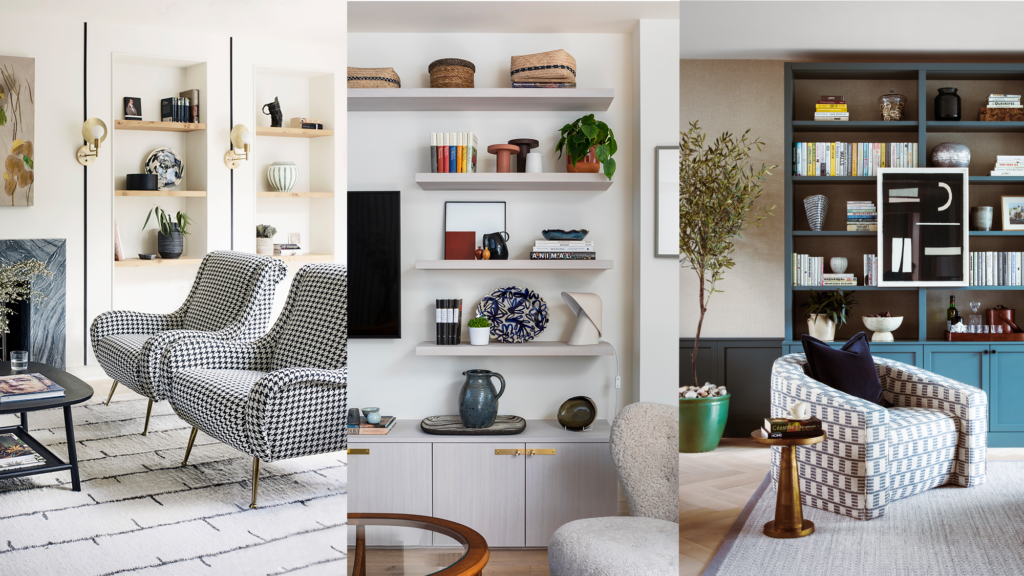
Modular shelving systems are highly adaptable. They can be used for books, décor, baskets, home office supplies, and small accessory organization. They can also act as light partitions between spaces.
Why buyers like this solution
A modular system can generate multiple SKUs from one core concept. This is commercially useful for furniture brands and distributors because it broadens the product line without requiring a completely different design language.
Application scenarios
- Living rooms
- Home offices
- Apartments
- Co-living projects
- Retail furniture collections
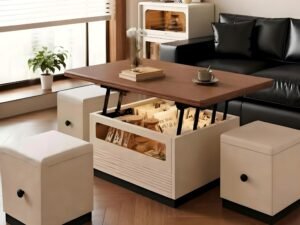
8. Storage Ottomans and Benches
Storage ottomans and end-of-bed benches combine seating, hidden storage, and decorative presence. These products are especially valuable in compact residential markets.
Why buyers like this solution
They offer a low-footprint solution with visible lifestyle appeal. They are also easier to place in smaller rooms than larger cabinet units.
Application scenarios
- Bedrooms
- Entryways
- Living rooms
- Hotel rooms
- Apartment projects
9. Kitchen Islands with Storage
A storage island can act as a prep station, small dining point, and kitchen storage center in one piece. In open-plan interiors, it can also help define the kitchen zone.
Why buyers like this solution
Kitchen islands with cabinets, drawers, shelving, or mobile bases improve functionality while adding perceived value to the room.
Application scenarios
- Apartments
- Serviced apartments
- Compact homes
- Open kitchens
- Residential project furnishing
Customization note
Countertop finish, base structure, storage layout, and mobility features can all be adjusted for different markets.
10. Bathroom Tall Cabinets
Bathrooms and utility spaces often have limited footprint but strong storage needs. Tall cabinets help use vertical space while keeping toiletries, cleaning products, and daily-use items organized.
Why buyers like this solution
They provide practical organization in a narrow footprint. For project buyers, this is a strong solution for compact bathrooms where efficient planning is critical.
Application scenarios
- Apartments
- Hotels
- Guest bathrooms
- Laundry areas
- Residential projects
Material note
Moisture-resistant board specifications and surface finishes should be selected carefully for humid environments.
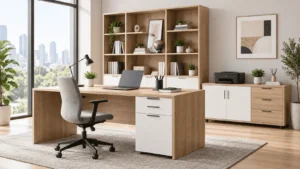
11. Home Office Storage Units
As hybrid work remains common in many markets, compact home office storage furniture continues to perform well. Cabinets, credenzas, drawer units, and desk-integrated storage systems help make home offices more organized and more visually acceptable within a residential setting.
Why buyers like this solution
It bridges residential and work needs. This makes it especially appealing in modern apartment and home collections.
Application scenarios
- Home offices
- Studio apartments
- Co-living spaces
- Furnished rentals
- Residential work corners
12. Room Divider Storage Cabinets
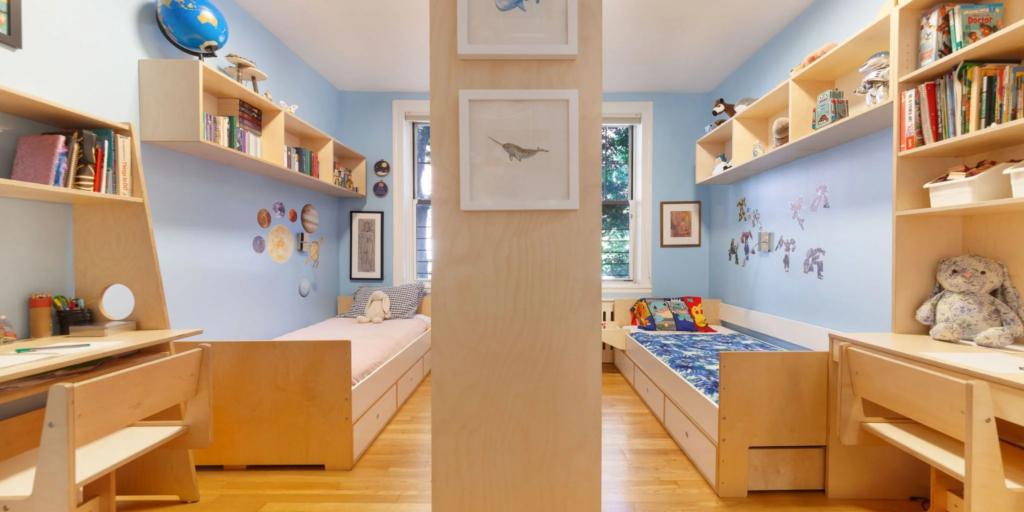
Room divider cabinets are one of the most effective multi-functional storage solutions for open-plan living. They provide separation, storage, and display at the same time without requiring a solid wall.
Why buyers like this solution
They are ideal for studio units, shared spaces, and flexible room layouts. For developers and operators, this type of furniture helps create functionally distinct zones while maintaining openness.
Application scenarios
- Studio apartments
- Open-plan homes
- Co-living units
- Serviced apartments
- Mixed-use residential interiors
Materials and Construction for Long-term Performance
For engineered storage furniture, the right material combination affects durability, appearance, compliance, and price positioning.
Common board options
- Plywood
- Particle board
- MDF
- Melamine-faced panels
- Veneered panels
Plywood
Plywood is often preferred when better screw holding, durability, and structural stability are required.
Particle board
Particle board is widely used for value-oriented flat-pack furniture when cost efficiency is important and production quality is well controlled.
MDF
MDF offers a smooth surface and works well for painted or decorative applications.
Surface options
- Melamine
- Wood veneer
- Laminate
- Painted finishes
- PVC edge banding
- Textured surfaces
When specifying engineered wood storage furniture for export or project use, buyers often review official guidance on material compliance, sustainability, and product standards. For example, the U.S. EPA formaldehyde resource center and the EPA composite wood product standards page are useful references for products made with composite wood. Buyers shipping to California may also review the CARB composite wood products program. For responsible sourcing, many furniture brands pay attention to FSC furniture resources, while commercial furniture buyers often use the BIFMA standards overview as a reference point for safety, performance, and sustainability expectations.
OEM / ODM Customization Options
As a board furniture export manufacturer, we know that many professional buyers need more than standard catalog items.
Typical OEM / ODM customization includes
- Product dimensions
- Board type and thickness
- Surface finish and color
- Internal layout
- Hardware brand and specification
- Door style and handle design
- Packaging type
- Logo, labels, and instructions
- Project-specific sizing
- Mixed product collection development
OEM
OEM is suitable for buyers who already have drawings, product specs, or a clear brand direction.
ODM
ODM is suitable for buyers who want the factory to help adapt an existing concept for their market more efficiently.
Suitable buyer groups
- Importers
- Wholesalers
- Private-label retailers
- Apartment developers
- Hotel procurement teams
- Contractors and furnishing companies
MOQ, Lead Time, and Export Packaging
MOQ
MOQ depends on the product complexity, finish requirements, packaging method, and whether the program is standard or customized. For mixed-container export programs, MOQ is often more flexible than for highly customized single-item production.
Lead time
Lead time generally depends on sample confirmation, raw material preparation, production scheduling, and packaging approval. New OEM or ODM projects usually require extra time for drawing review and prototype adjustment before bulk production.
Packaging
Export packaging should protect the product while controlling freight cost.
Common packaging options
- Flat-pack carton packaging
- Knock-down packaging
- Honeycomb reinforcement
- Foam protection
- Corner protectors
- Hardware blister bags
- Palletized loading for selected project shipments
- Mail-order packaging if required
Why packaging matters
Good packaging reduces damage claims, supports smoother warehouse handling, and improves delivery reliability for wholesalers, retailers, and project buyers.
Typical Custom Development Process
Step one: Requirement discussion
The buyer shares reference images, drawings, target dimensions, finish needs, quantity expectations, and target market requirements.
Step two: Product review
The factory reviews structure, material feasibility, hardware choice, packaging direction, and estimated cost range.
Step three: Drawing and sample preparation
Technical drawings and prototypes are prepared for approval.
Step four: Revision and confirmation
Any necessary changes are made before the final version is approved.
Step five: Mass production
Bulk production begins after deposit, specification confirmation, and packaging sign-off.
Step six: Inspection and shipment
Quality control, carton checks, shipping mark confirmation, and container loading are completed before dispatch.
Why Work with a Direct Furniture Manufacturer
A direct manufacturer can usually provide stronger support in the following areas:
- Better control over materials and workmanship
- Faster communication during OEM / ODM development
- More stable repeat-order quality
- Better coordination of packaging and shipment details
- More efficient response to apartment and hotel project requirements
- Better support for mixed collections and customized structures
For furniture buyers working on residential, apartment, or hospitality projects, choosing a capable manufacturer is not only about cost. It is about reducing sourcing risk and improving overall execution.
Conclusion
Multi-functional storage is one of the most strategic furniture categories in today’s market. It answers the needs of modern living, compact planning, organized interiors, and flexible room use. For furniture buyers, it also offers strong product potential across home collections, furnished apartments, hospitality spaces, and private-label programs.
From entryway storage benches and storage beds to modular shelving, home office units, and room divider cabinets, these solutions help transform limited space into higher-value living environments. With the right materials, reliable engineering, thoughtful packaging, and flexible OEM or ODM support, multi-functional storage can become a competitive and scalable product line for global buyers.
If you are sourcing multi-functional storage furniture for home organization, residential retail, apartment fit-outs, or hotel furnishing projects, working with an experienced panel furniture export manufacturer can help you achieve better product consistency, better customization, and more reliable supply.
CTA / Inquiry Line
Looking for a reliable OEM / ODM partner for multi-functional storage furniture? Send us your drawings, target dimensions, preferred materials, and quantity plan to discuss your next project.
FAQ
What is multi-functional storage furniture?
Multi-functional storage furniture is furniture designed to combine storage with one or more extra uses, such as seating, display, partitioning, or work support.
Why is multi-functional storage important for apartment and hotel projects?
It helps maximize usable space, improves organization, and reduces the need for extra furniture pieces in compact interiors.
Which materials are commonly used for multi-functional storage furniture?
Plywood, MDF, particle board, melamine-faced panels, and veneered panels are among the most common materials.
Can these products be customized for OEM or ODM orders?
Yes. Buyers can usually customize dimensions, finishes, internal layouts, hardware, packaging, and branding.
What should buyers confirm before mass production?
Buyers should confirm drawings, dimensions, materials, finishes, hardware, packaging, labels, and shipping marks before approving production.
Is flat-pack packaging available for multi-functional storage products?
Yes. Many multi-functional storage products can be developed with flat-pack packaging for export efficiency.