1. Introduction
As urban living spaces continue to shrink worldwide, the demand for space-saving kids room furniture has grown rapidly. This trend is especially evident in:
- Apartments in major cities
- Hotel family suites
- Student housing projects
- Residential developments
For B2B buyers such as developers, wholesalers, and contractors, selecting the right furniture is no longer just about aesthetics—it is about functionality, durability, cost efficiency, and scalability.
This guide provides 15 proven kids furniture solutions specifically designed for small spaces, along with professional insights from a panel furniture export manufacturer.
2. Why Small Space Furniture Matters in Modern Projects
According to the
National Association of Home Builders (NAHB): https://www.nahb.org
Modern homes are becoming smaller, especially in urban environments. This creates a strong need for furniture that can:
- Maximize limited space
- Serve multiple functions
- Maintain safety standards
- Reduce overall project costs
For commercial buyers, this translates into:
- Higher ROI per square meter
- Better customer satisfaction
- Improved usability of compact rooms
3. Key Design Principles for Compact Kids Rooms
3.1 Vertical Space Utilization
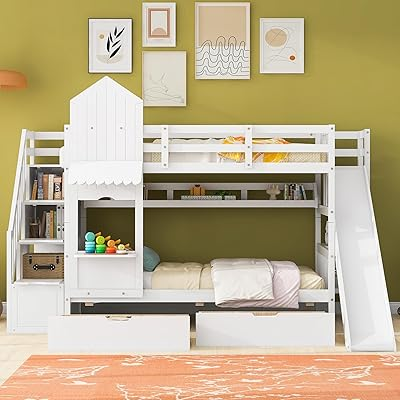
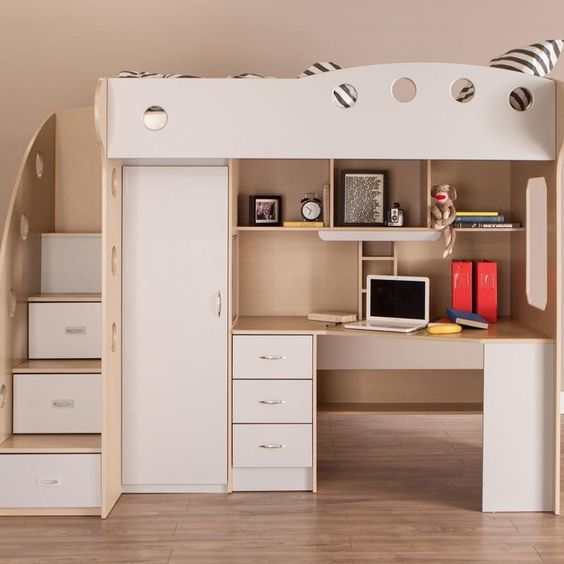
Instead of expanding horizontally, smart designs use vertical space through bunk beds, loft beds, and wall storage.
3.2 Multifunctional Design
Furniture should combine multiple functions, such as:
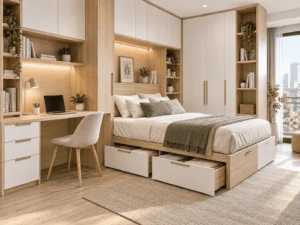
- Bed + storage
- Desk + shelving
- Seating + storage
3.3 Safety & Compliance
Kids furniture must comply with international safety standards.
Reference:
Consumer Product Safety Commission (CPSC): https://www.cpsc.gov
3.4 Flexibility & Modularity
Modular designs allow easy upgrades and layout changes, which is crucial for long-term projects.
4. 15 Smart Kids Room Furniture Ideas
1. Bunk Beds with Integrated Storage
Bunk beds remain one of the most efficient solutions for shared rooms. Adding drawers or cabinets underneath increases storage capacity without extra space.
2. Loft Beds with Study Area
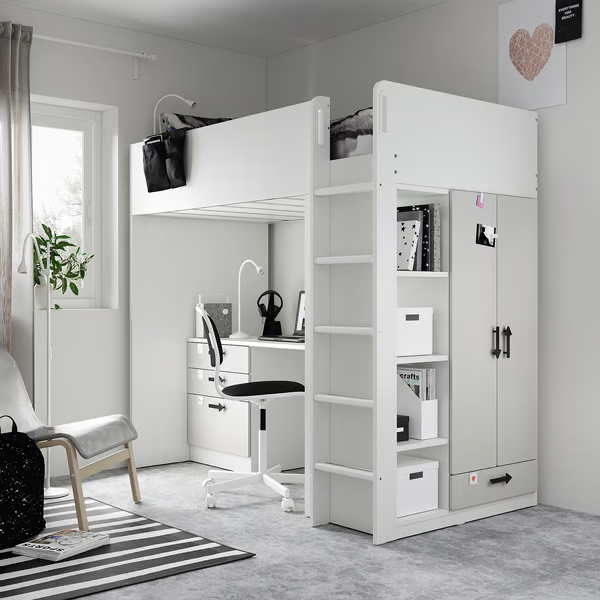
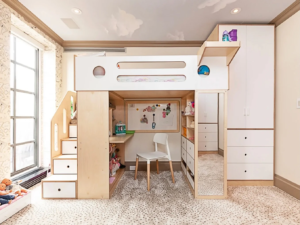
Loft beds elevate the sleeping area and free up space below for desks or play zones—ideal for apartments and dorm-style layouts.
3. Foldable Beds
Foldable or wall-mounted beds are perfect for multipurpose rooms.
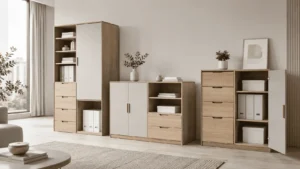
4. Modular Storage Systems
Customizable units that can be rearranged based on needs.
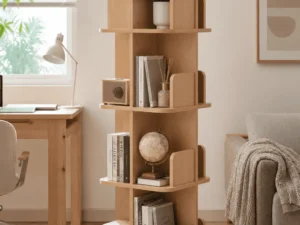
5. Wall-Mounted Shelving
Keeps floors clear and improves accessibility.
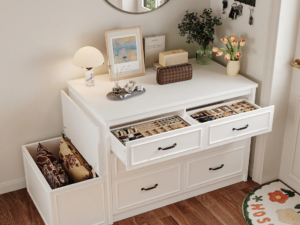
6. Under-Bed Storage Drawers
A simple yet effective solution for storing toys and clothes.
7. Convertible Sofa Beds
Suitable for hotel or guest-use environments.
8. Corner Furniture Units
Efficiently utilize unused corner areas.
9. Sliding Door Wardrobes
Save space compared to traditional hinged doors.
10. Stackable Furniture
Flexible solutions for changing room layouts.
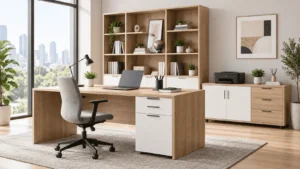
11. Study Desk with Built-in Storage
Combines learning and organization.
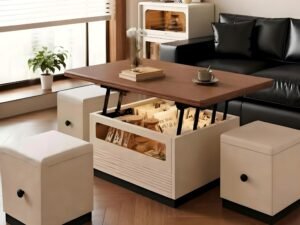
12. Storage Benches
Dual-purpose seating and storage.
13. Murphy Beds
Ideal for ultra-compact rooms.
14. Compact Wardrobes
Slim yet functional designs.
15. Custom Built-in Furniture
Best suited for large-scale real estate or hotel projects.
5. Material Selection for Durability & Compliance
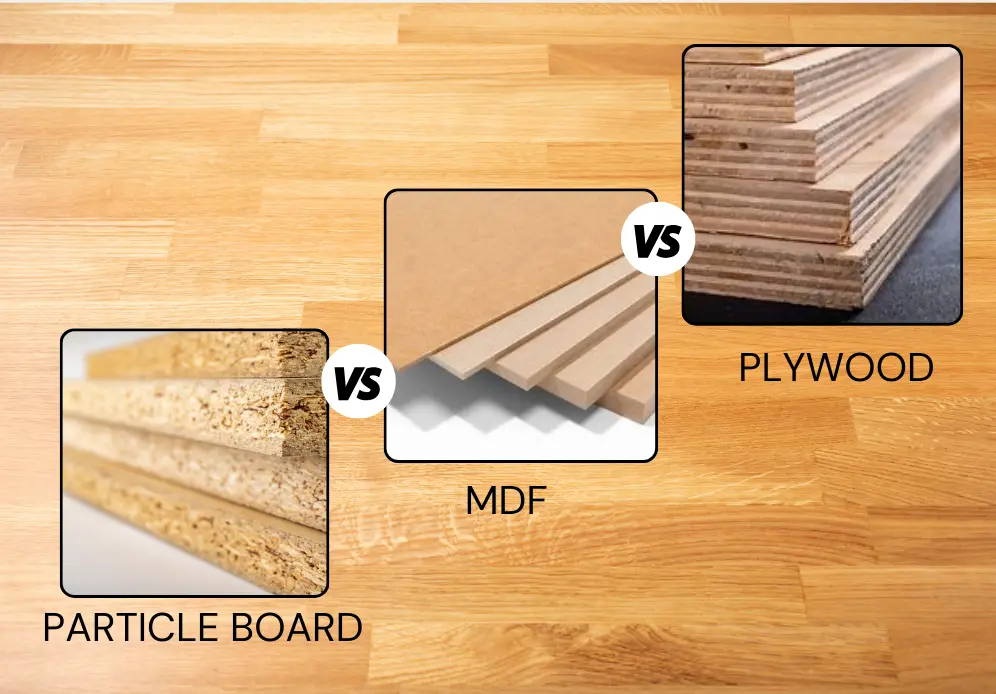
Choosing the right materials is essential for both quality and export compliance.
Common Materials:
✔ Plywood
- High strength
- Moisture resistance
- Cost-effective
- Ideal for export
✔ MDF with Laminate
- Smooth surface
- Good for modern designs
✔ Solid Wood
- Premium option
- Higher cost
Reference:
Forest Stewardship Council (FSC): https://www.fsc.org
Environmental & Safety Considerations
Indoor air quality is critical for kids.
Reference:
EPA Guidelines: https://www.epa.gov
6. OEM / ODM Customization for Project Buyers
For B2B clients, customization is often required.
OEM Services:
- Private labeling
- Custom packaging
- Brand-specific production
ODM Services:
- Design development
- Engineering optimization
- Prototype creation
Advantages:
- Competitive pricing
- Product differentiation
- Scalability for large projects
Reference:
ISO Standards: https://www.iso.org
7. Cost Optimization & Bulk Purchasing Strategy
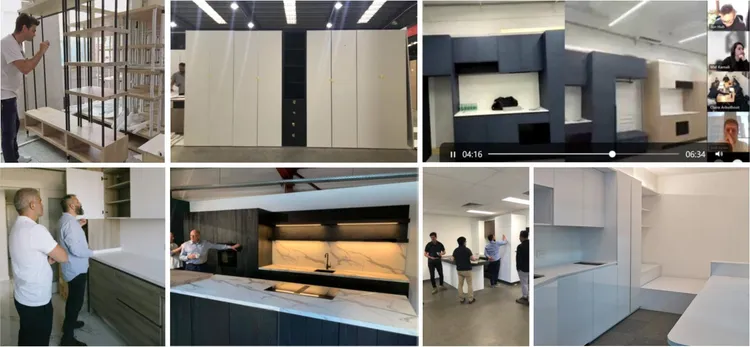
Key Cost Factors:
- Material selection
- Design complexity
- Order quantity
- Packaging method
Tips for Buyers:
- Standardize designs across projects
- Use flat-pack packaging
- Optimize container loading
Bulk orders can reduce costs significantly—often 15–25% savings.
8. Installation, Logistics & Packaging
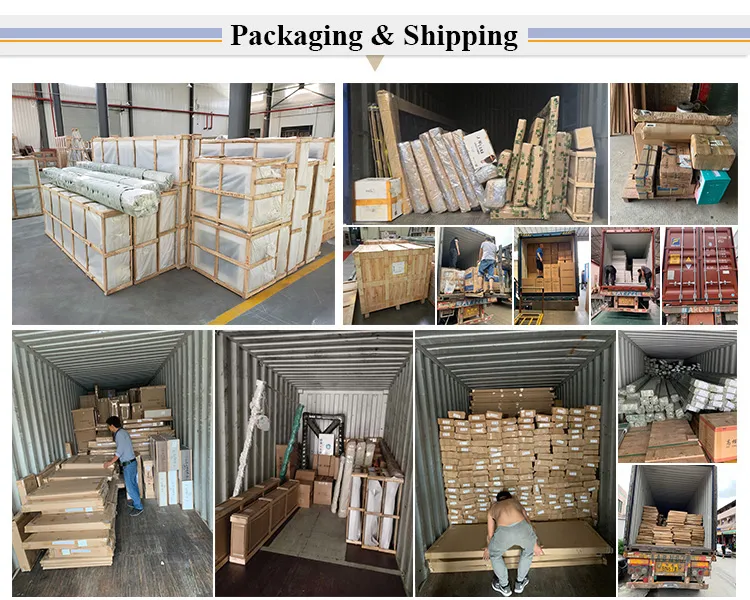
Flat-Pack Packaging Advantages:
- Lower shipping cost
- Easier handling
- Reduced damage risk
Installation Considerations:
- Simple assembly instructions
- Hardware standardization
- On-site efficiency
For export buyers, packaging design is as important as product design.
9. Internal Link Recommendation
Explore more products here:
https://plywoodmfr.com/kids-room-furniture/
10. FAQ
Q1: What furniture is best for small kids rooms?
Multifunctional furniture such as bunk beds, loft beds, and storage beds.
Q2: Is plywood suitable for kids furniture?
Yes, plywood offers excellent durability and cost efficiency.
Q3: Can furniture be customized for projects?
Yes, OEM and ODM services allow full customization.
Q4: What safety standards should be followed?
CPSC and international standards like EN and ISO.
11. Conclusion
Small space kids room furniture is no longer a niche—it is a necessity in modern housing and commercial projects.
For B2B buyers, the right supplier should offer:
- Strong manufacturing capability
- Flexible customization
- Competitive pricing
- Reliable quality
By combining smart design with professional manufacturing, you can deliver furniture solutions that maximize space, improve usability, and enhance project value.
🚀 CTA
👉 Get space-saving solutions now
👉 Contact us for OEM/ODM kids furniture projects
👉 Request catalog & quotation today