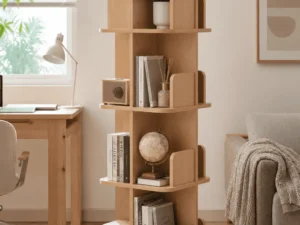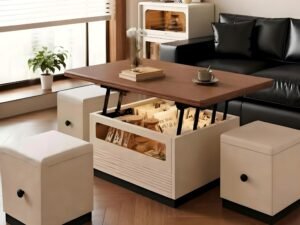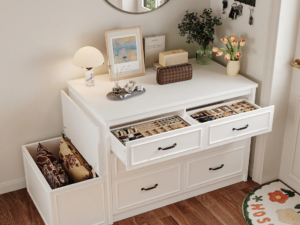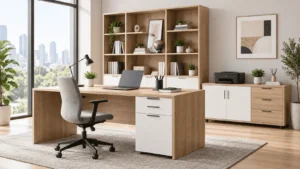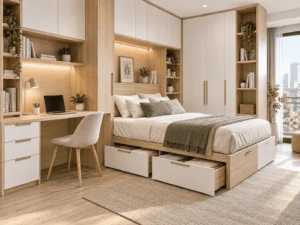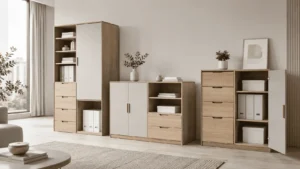
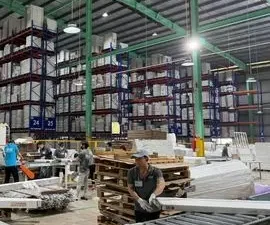
For B2B buyers, choosing a hospitality furniture manufacturer is not only about finding a lower unit price. It is about finding a factory that can understand project drawings, control panel materials, manage OEM/ODM details, pack for export, and support repeat orders for hotels, serviced apartments, student housing, rental projects, and commercial interiors. As a panel furniture export factory, Starwood Industry Co., Ltd. works with importers, distributors, brand owners, and project buyers who need practical, flat-pack furniture programs for international shipment.
Table of Contents
- Why B2B Buyers Search for a Hospitality Furniture Manufacturer
- What Makes a Factory Suitable for Hotel and Apartment Projects
- Product Applications for Hospitality and Commercial Projects
- Materials, Panels, Finishes, and Certification Support
- MOQ, Lead Time, Packaging, and Export Delivery
- OEM/ODM Customization Process for Project Buyers
- How to Prepare a Better RFQ for Faster Quotation
- Why Work With a Panel Furniture Export Factory
- Final Sourcing Checklist
- FAQ for Hospitality Furniture Manufacturing
Why B2B Buyers Search for a Hospitality Furniture Manufacturer
When a buyer searches for a hospitality furniture manufacturer, the real need is usually more specific than “furniture supplier.” The buyer may be working on a hotel renovation, a serviced apartment development, a student accommodation project, a rental apartment furnishing program, or a private-label commercial furniture collection.
In these cases, the purchasing team normally needs more than standard retail furniture. They need a factory that can handle repeated dimensions, stable finishes, export packing, carton marks, sampling, bulk production, and shipment coordination. The buyer also needs clear communication because project furniture often involves many product lines at the same time.
A normal trading company may help with sourcing, but a factory-direct panel furniture manufacturer can often provide better control over materials, structure, production details, and cost adjustment. This is important for B2B buyers who need to balance target price, quality, loading efficiency, and long-term repeat orders.
Starwood Industry Co., Ltd. is a China panel furniture manufacturer focused on flat-pack furniture for export. Our product scope includes bedroom furniture, bathroom furniture, dressing tables, cabinets, shelves, living room storage, home office furniture, kids’ room furniture, and compact space-saving furniture. Buyers can learn more about our factory background on our company page and our wider manufacturing support through our OEM/ODM furniture manufacturing services.
What Makes a Factory Suitable for Hotel and Apartment Projects
Hospitality furniture is different from ordinary household retail furniture. A hotel, apartment, or project buyer usually looks at furniture from three angles: project fit, production repeatability, and delivery reliability.
A suitable hospitality furniture factory should be able to support the following points:
Stable Panel Processing
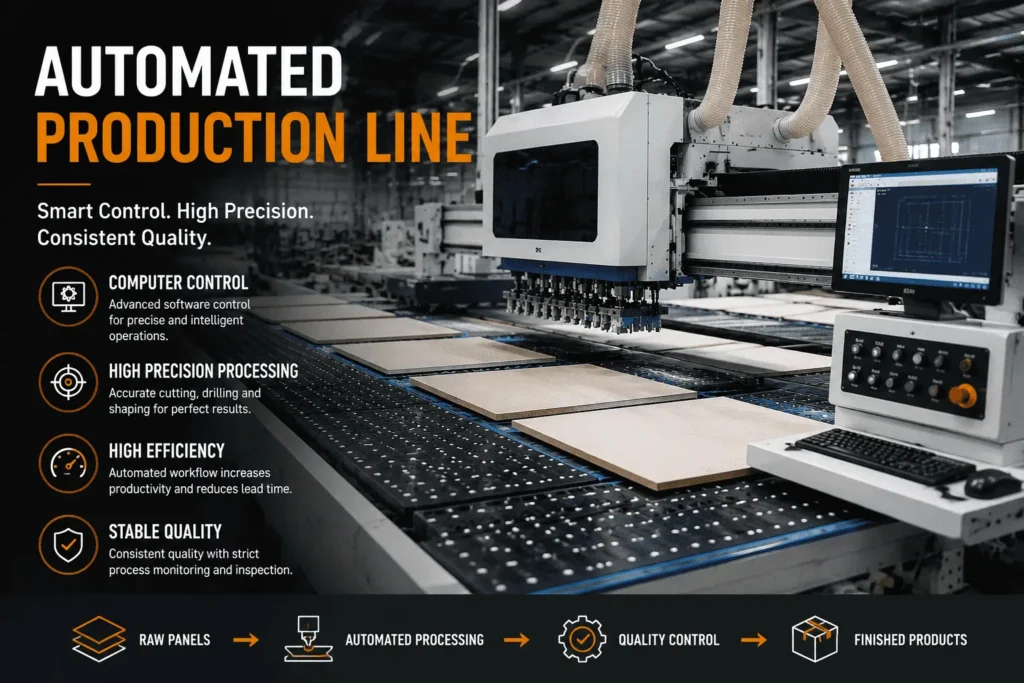
Panel furniture for hotels and apartments needs consistent cutting, edge banding, drilling, and assembly checking. If dimensions are not stable, the final installation may become difficult. This is especially important for wardrobes, bathroom cabinets, vanity units, wall-mounted storage, desks, bedside tables, and modular shelving.
As a panel furniture export factory, we focus on CNC cutting, edge banding, drilling accuracy, and flat-pack production logic. For project buyers, this helps reduce problems during assembly and installation.
Practical OEM/ODM Understanding
Many hotel and apartment buyers do not buy from a public catalog only. They often provide drawings, reference photos, sample products, mood boards, or target price levels. A good OEM hospitality furniture manufacturer should be able to turn these materials into a production plan.
For example, a buyer may send a picture of a hotel nightstand and ask for a version using melamine board, a different handle, a lower-cost structure, and KD flat-pack packaging. Another buyer may provide a bathroom vanity drawing and ask for moisture-resistant board, mirror cabinet options, and carton packing suitable for container shipment.
This kind of work requires practical factory experience, not just a price list.
Export Packing Experience
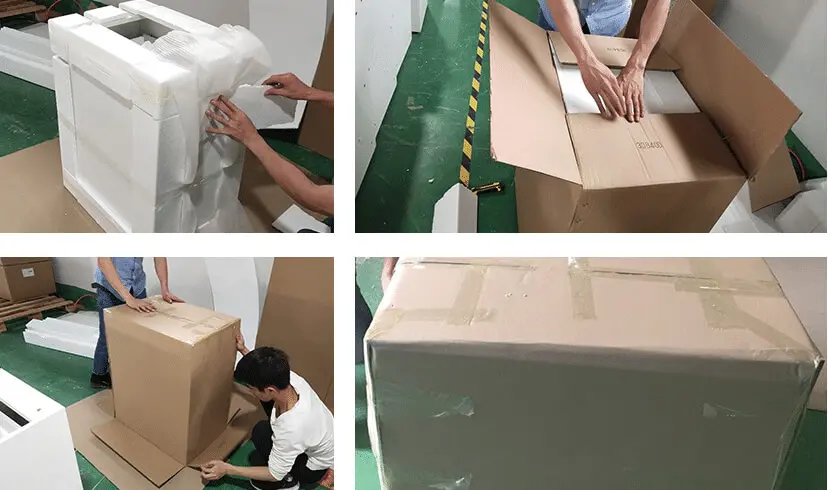
For B2B buyers, damage control is part of profit control. If the product arrives with broken panels, scratched surfaces, missing hardware, or weak cartons, the buyer loses time and money.
For hospitality and apartment projects, furniture should be designed with export packing in mind. Flat-pack or KD packing, reinforced cartons, clear carton marks, foam protection, corner protection, hardware bags, and assembly instructions can all reduce after-sales problems.
Ability to Support Repeat Orders
Commercial furniture is often purchased in repeated programs. A distributor may buy the same bathroom cabinet line every season. A hotel project may add more rooms later. An apartment developer may standardize the same wardrobe, desk, and shelving system across multiple buildings.
That is why the factory needs to keep material records, finish references, hardware details, drawings, packaging information, and order history. Repeatability is one of the most important reasons buyers prefer a real manufacturer instead of a short-term sourcing agent.
Product Applications for Hospitality and Commercial Projects
A hospitality furniture supplier should understand where the products will be used. Different projects require different structures, materials, and packaging methods.
Hotel Guest Room Furniture
Hotel guest room furniture may include wardrobes, bedside tables, desks, luggage racks, TV panels, mini-bar cabinets, vanity desks, mirror cabinets, and wall shelves. The main buying concern is usually consistency. Each room needs the same look, same size control, and same finish quality.
For hotel buyers, flat-pack panel furniture can be a practical solution because it improves container loading efficiency and reduces shipping volume. If the project has many rooms, small improvements in packaging size can create real savings.
Serviced Apartments and Rental Housing
Serviced apartments and rental housing often require furniture that is easy to install, easy to replace, and suitable for repeated layouts. Common products include wardrobes, storage beds, desks, shoe cabinets, kitchen storage units, bathroom cabinets, and compact shelving.
A panel furniture manufacturer can help buyers adjust dimensions for different room types. For example, a wardrobe depth, desk width, or cabinet height can be modified to match apartment floor plans.
For buyers working on apartment or commercial projects, our project furniture manufacturing page explains how we support project-based furniture supply.
Student Housing and Compact Living
Student housing and compact living projects need furniture that saves space and increases storage. Buyers often request loft beds, study desks, storage cabinets, wall shelves, compact wardrobes, and multifunction furniture.
For these projects, the factory should think about safety, space use, carton volume, and repeat installation. A small change in structure may make the product easier to assemble or more suitable for export packing.
Bathroom Furniture and Vanity Units
Bathroom furniture is a strong category for hospitality and apartment projects. It may include bathroom cabinets, vanity units, mirror cabinets, wall-mounted shelves, laundry storage, and compact bathroom organizers.
Buyers can view our bathroom furniture range here: bathroom furniture manufacturer.
For bathroom products, material selection is important. Buyers may request MDF, plywood, particle board, moisture-resistant board, PVC edge banding, painted finish, melamine finish, or other project-specific options. If the product includes lighting or mirror components, the electrical parts should be discussed separately.
Dressing Tables and Vanity Furniture
Dressing tables and vanity furniture are also suitable for hotels, apartments, retail brands, and e-commerce sellers. Some buyers request LED mirrors, lighted vanity tables, storage drawers, or custom packing for online sales.
You can view one of our related product pages here: modern dressing table bulk.
For LED vanity furniture, we can produce the panel furniture parts and cooperate with qualified lighting suppliers when CE, RoHS, EMC, LVD, or other electrical documents are required by the buyer’s market.
Materials, Panels, Finishes, and Certification Support
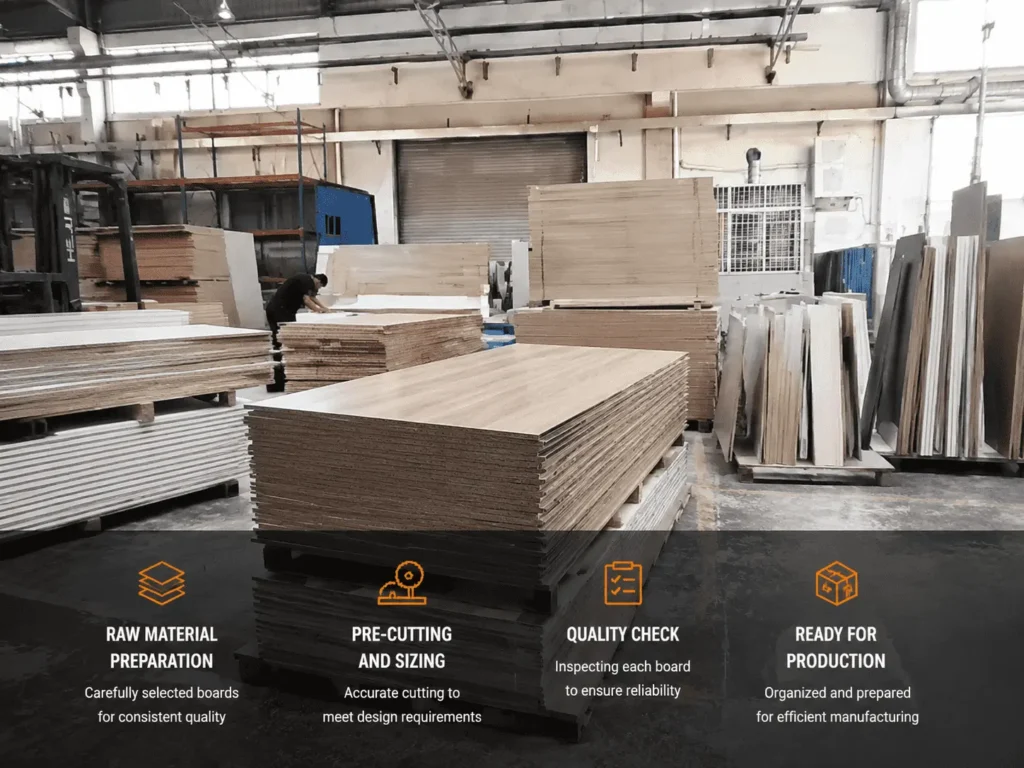
Material choice has a direct impact on price, durability, weight, packing, and market compliance. In factory practice, buyers should not only ask “What is the cheapest material?” They should ask which material is suitable for the project use, target market, and expected product life.
Common Panel Materials
For hospitality and commercial furniture, common panel materials include MDF, particle board, plywood, and engineered wood panels. Each material has different advantages.
MDF is often used for painted components, shaped panels, and furniture that needs a smooth surface. Particle board is commonly used for cost-effective flat-pack furniture with melamine finish. Plywood may be selected for stronger structures or special project requirements. Engineered panels can help buyers balance strength, appearance, and cost.
For buyers who need responsible wood sourcing documentation, it is useful to understand official resources from the Forest Stewardship Council furniture section and PEFC chain of custody information. These references help purchasing teams understand how forest certification and chain-of-custody systems are generally handled in the wood products industry.
Surface Finishes
Popular surface options include melamine, veneer, PVC, painted finish, laminated finish, and other decorative panels. For hotel and apartment projects, melamine board is widely used because it is practical, consistent, and cost-efficient for bulk production.
For higher-end projects, buyers may request wood veneer, matte finish, UV finish, painted finish, or special color matching. In OEM production, the buyer can provide a color sample, Pantone reference, board sample, or finish photo. The factory can then check available board suppliers and provide close options for approval.
Formaldehyde and Market Requirements
For furniture made with composite wood products, formaldehyde-related requirements are often important. Buyers selling to the United States may refer to the official U.S. Environmental Protection Agency page on formaldehyde emission standards for composite wood products. For European projects, buyers often ask about E1 board documents or other material declarations.
As a panel furniture export factory, we can discuss E1 board-related documents and available material support based on the actual order requirements. If the buyer has a specific test standard or importer requirement, it is best to share it before quotation so that the correct material and document route can be checked early.
EU Buyer Documentation
European buyers often ask about REACH, EUDR, wood origin information, and related declarations. These topics should be discussed clearly at the quotation stage, especially when the project involves wood-based panels and long-term import programs.
For general regulatory background, buyers can refer to the European Commission’s information on REACH Regulation and the EU page on deforestation-free products regulation. These official references are useful for importers who need to understand buyer-side and supplier-side documentation responsibilities.
A factory can support available production, material, and origin documents, but the exact document list should always be confirmed according to the importing country, product type, material, and buyer’s compliance process.
Quality Management and Furniture Standards
Project buyers may also use recognized standards as reference points during supplier evaluation. For example, ISO explains that ISO 9001 is a quality management system standard used by organizations to improve processes and meet customer expectations. For commercial and office furniture, buyers may also review BIFMA furniture standards when their market requires safety, durability, or sustainability references.
Not every hospitality furniture project needs the same certification, but serious buyers should make compliance expectations clear before sampling and mass production.
MOQ, Lead Time, Packaging, and Export Delivery
A strong B2B sourcing article should answer the practical questions that buyers ask before sending an inquiry: What is the MOQ? How long is production? How is the furniture packed? Can the factory support export delivery?
MOQ for Hospitality Furniture Orders
For factory-direct panel furniture export, MOQ is usually based on container loading, product size, material availability, and order mix. For standard bulk orders, one container is often a practical starting point because panel furniture is volume-sensitive and export packing works best when production and loading are planned together.
For new buyers, sample orders may be discussed before bulk production. However, sample cost and sample freight should be expected because furniture samples are large and require special packing.
If a buyer has several product models, the factory can help check whether they can be combined into one container. This is common for hotel, apartment, and distributor programs.
Lead Time
Lead time depends on product complexity, material availability, sample approval, order quantity, and packaging requirements. A simple flat-pack shelf may be faster than a customized bathroom cabinet with mirror, lighting, special hardware, and private-label packing.
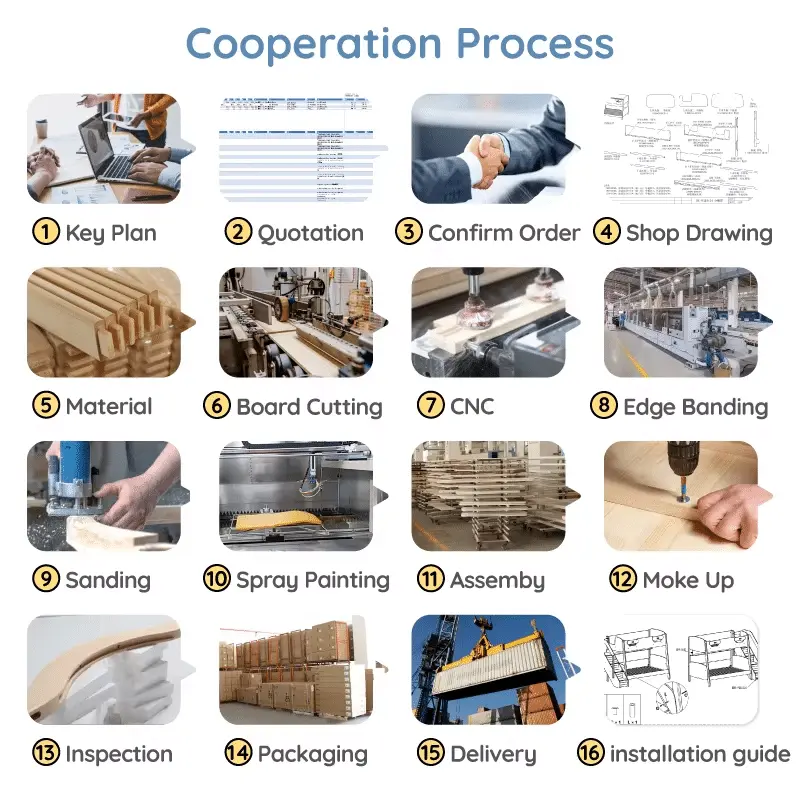
A practical project timeline usually includes:
Inquiry and product brief
Drawing or reference confirmation
Material and finish confirmation
Quotation
Sample production
Sample approval
Bulk production
Quality control and packing
Container loading and shipment
Buyers should avoid giving only a product photo and asking for “best price” without dimensions, material, quantity, and destination. A clear brief saves time and makes quotation more accurate.
Export Packing
For hospitality and apartment projects, export packing is not a small detail. It should be planned from the start.
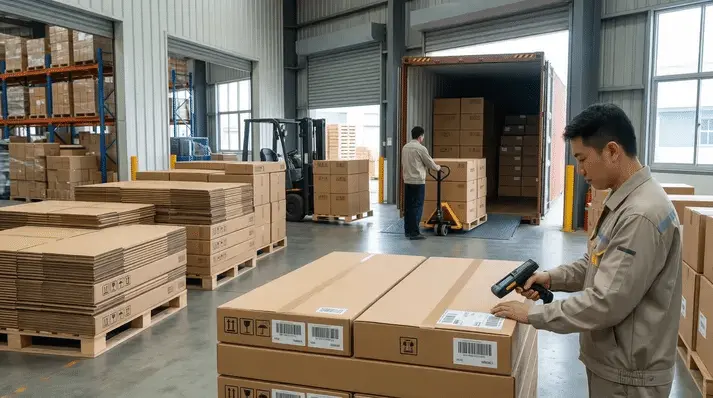
Common packing options include flat-pack cartons, KD structure packing, reinforced outer cartons, foam protection, corner protection, hardware bags, carton labels, carton marks, assembly instructions, and pallet packing if required.
Good packing helps reduce damage risk during international transport. It also makes warehouse receiving, installation, and after-sales handling easier.
Shipping Terms and Documents
International buyers should clearly confirm trade terms, shipping responsibilities, and required documents. For background on trade terms, the International Trade Administration provides a useful guide to Incoterms. In factory communication, buyers usually discuss FOB, CIF, EXW, or other terms according to their logistics arrangement.
Common export documents may include commercial invoice, packing list, bill of lading, certificate of origin if required, material documents, and other order-specific documents. The final document list depends on the destination country, importer requirements, and product category.
OEM/ODM Customization Process for Project Buyers
A reliable OEM ODM furniture supplier should make the customization process simple for the buyer. The goal is not to make communication complicated. The goal is to reduce misunderstanding before production.
Step 1: Buyer Sends Reference Information
The buyer can send drawings, CAD files, product photos, sample pictures, target dimensions, hotel room layouts, apartment floor plans, material requirements, or target price levels.
If the buyer does not have complete drawings, clear photos and approximate dimensions can still help the factory make an initial discussion.
Step 2: Factory Checks Structure and Material
The factory checks whether the design is suitable for panel production, flat-pack packing, container loading, and practical assembly. If a structure is too weak or too expensive, the factory can suggest alternatives.
For example, changing panel thickness, hardware, edge banding, or drawer structure may reduce cost while keeping the product suitable for the project.
Step 3: Quotation and Technical Confirmation
A serious quotation should be based on size, material, finish, hardware, packaging, quantity, and delivery terms. If LED lighting, mirror, glass, metal parts, or special accessories are involved, these should be quoted clearly.
For LED furniture or vanity lighting, the panel furniture and electrical accessories should be handled carefully. If CE, RoHS, EMC, LVD, or other documents are needed, the buyer should mention the target market early. The factory can then check cooperation with qualified component suppliers.
Step 4: Sample Production
Sample production helps both sides confirm size, color, material, structure, packing, and assembly details. For project furniture, sample approval is especially important before mass production.
Buyers should check not only appearance but also structure, edge quality, hardware fit, carton protection, and installation logic.
Step 5: Bulk Production
After sample approval and order confirmation, the factory moves to bulk production. During this stage, material purchasing, CNC cutting, edge banding, drilling, assembly checking, cleaning, packing, and warehouse preparation are arranged.
For repeat orders, approved samples and production records help keep quality stable.
Step 6: QC, Packing, and Shipment
Before shipment, products should be checked according to order requirements. For panel furniture, checks may include dimensions, finish, edge banding, holes, hardware, carton marks, packing quantity, and loading arrangement.
Good shipment preparation helps buyers reduce receiving problems and protect their margins.
How to Prepare a Better RFQ for Faster Quotation
Many buyers want a fast quotation, but the factory cannot quote accurately without basic information. If you want a hospitality furniture manufacturer to reply quickly, prepare the following details:
Product photos or drawings
Product dimensions
Material requirements
Panel thickness
Surface finish or color reference
Hardware requirements
Quantity per model
Target market
Required certifications or documents
Packing requirements
Logo, carton marks, or private-label needs
Destination port or trade term
Sample requirement
Expected order timeline
The more complete the RFQ, the faster the factory can check cost. A clear RFQ also helps avoid repeated revisions later.
For example, instead of asking “Please quote this bathroom cabinet,” a better inquiry would be:
“We need a wall-mounted bathroom vanity for apartment projects. Size 800W x 460D x 500H mm, white melamine MDF or moisture-resistant board option, soft-close drawers, flat-pack export carton, 300 sets, destination Hamburg, please quote FOB China and advise sample cost.”
This kind of inquiry gives the factory enough information to respond professionally.
Why Work With a Panel Furniture Export Factory
Working with a panel furniture export factory is different from buying mixed products from a general trading company. A real factory understands production constraints, material cost, packaging logic, and repeat order control.
Better Cost Control
Factory-direct communication can help buyers adjust materials, thickness, structure, and packing to reach the target price. If the buyer needs a lower price, the factory can suggest realistic changes instead of simply reducing quality.
Better Customization
Panel furniture is suitable for OEM and ODM customization. Buyers can adjust size, layout, storage function, handle style, finish, carton marks, and packaging. This is useful for hotel projects, apartment programs, e-commerce brands, and private-label distributors.
Better Export Planning
Export-ready furniture should be designed for container loading, carton protection, and international shipment. A factory with export experience can help buyers think about product volume, packing method, and loading efficiency.
Better Long-Term Cooperation
Many B2B buyers do not want one-time sourcing. They want stable cooperation. A factory that can support sampling, mass production, QC, packing, and shipment is more suitable for long-term programs.
At Starwood Industry Co., Ltd., we work with importers, distributors, project buyers, trading companies, and brand owners looking for a China source factory for panel furniture. Our factory supports flat-pack furniture, OEM/ODM manufacturing, bulk orders, and export-ready packing.
You can visit our homepage here: Starwood panel furniture export factory.
Final Sourcing Checklist
Before choosing a hospitality furniture supplier, buyers should check these points:
Can the supplier produce panel furniture directly?
Does the factory support OEM/ODM customization?
Can the factory work from drawings, photos, or samples?
Are materials, finishes, and hardware clearly confirmed?
Can the supplier support E1 board documents or forest certification documents when required?
Can the factory cooperate on LED parts with certified suppliers if needed?
Is flat-pack or KD packing available for export?
Can carton marks, labels, and assembly instructions be customized?
Is the MOQ suitable for container-based B2B orders?
Can the factory support repeat orders and project programs?
Does the supplier understand hotel, apartment, bathroom, bedroom, and compact-living applications?
If the answer is yes, the supplier is more likely to be suitable for serious B2B sourcing.
Conclusion: Build a More Reliable Furniture Program With a Factory Partner
Choosing a hospitality furniture manufacturer is a supply chain decision, not only a product decision. For hotel projects, apartment developments, distributors, and OEM brands, the right factory can help control material selection, structure, cost, packing, lead time, and repeat order stability.
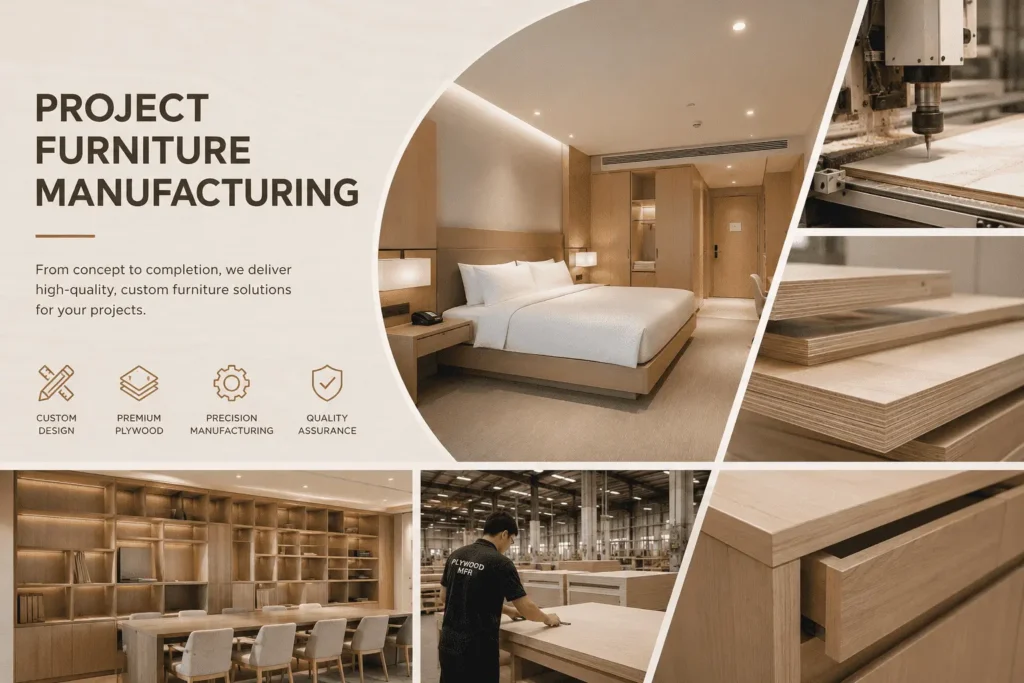
As a China panel furniture manufacturer and export factory, Starwood Industry Co., Ltd. supports B2B buyers with OEM/ODM panel furniture, bathroom furniture, bedroom furniture, dressing tables, cabinets, shelves, flat-pack furniture, and project furniture manufacturing.
If you are sourcing hospitality furniture, hotel furniture, apartment furniture, bathroom cabinets, vanity units, or OEM panel furniture collections, please send us your product drawings, photos, sizes, material requirements, estimated quantity, and target market. Our team will check the structure, material, packing, and quotation for your project.
Contact Starwood Industry Co., Ltd. to discuss your next OEM/ODM furniture order or project furniture manufacturing request.
FAQ: Hospitality Furniture Manufacturer and OEM/ODM Supply
What is a hospitality furniture manufacturer?
A hospitality furniture manufacturer produces furniture for hotels, serviced apartments, rental housing, student accommodation, commercial interiors, and similar project environments. For panel furniture, this may include wardrobes, bathroom cabinets, desks, bedside tables, shelves, dressing tables, vanity units, and storage furniture.
What is the difference between a hospitality furniture supplier and a factory?
A supplier may be a trading company, sourcing agent, or manufacturer. A factory directly controls production processes such as panel cutting, edge banding, drilling, assembly checking, packing, and bulk order management. For OEM/ODM projects, working with a factory can make communication and customization more direct.
Can Starwood support OEM/ODM hospitality furniture orders?
Yes. Starwood Industry Co., Ltd. supports OEM/ODM panel furniture production based on drawings, photos, samples, or buyer requirements. Buyers can customize size, material, finish, hardware, storage layout, packaging, carton marks, and private-label details.
What is the MOQ for hospitality furniture manufacturing?
MOQ depends on product size, material, order mix, and container loading plan. For factory-direct export orders, one container is usually a practical starting point for bulk production. Sample orders can be discussed before mass production.
Can you provide E1 board or forest certification documents?
We can discuss E1 board-related documents and forest certification support according to the project and material requirements. Buyers should share the target market and required document list before quotation so that we can check available options with material suppliers.
Can you make LED vanity furniture or bathroom mirror cabinets?
Yes, we can produce the panel furniture parts for LED vanity furniture, dressing tables, bathroom cabinets, and mirror cabinets. For LED lighting or electrical accessories, if CE, RoHS, EMC, LVD, or other certificates are required, we can cooperate with qualified component suppliers and check the related documents according to the project.
What information should buyers send for quotation?
Buyers should send product photos or drawings, dimensions, material requirements, finish, quantity, hardware details, packaging requirements, target market, certification requirements, and destination port. A clear RFQ helps the factory quote faster and more accurately.
Is flat-pack packaging suitable for hotel and apartment projects?
Yes. Flat-pack or KD packaging is commonly used for panel furniture export because it can improve container loading efficiency and reduce shipping volume. It also helps buyers handle warehouse storage and project installation more systematically.