If you are sourcing home office desks, computer desks, bookcases, filing cabinets, storage cabinets, wall-mounted workstations or compact office systems for wholesale, retail, e-commerce, apartment projects or commercial interiors, choosing the right home office furniture manufacturer is a supply-chain decision. A reliable OEM factory should understand panel materials, structure safety, flat-pack design, MOQ, lead time, packaging, container loading and repeat-order quality. This guide is written for B2B buyers who need practical factory-side advice before sending an RFQ or placing a sample order.
Table of Contents
- Why Buyers Search for a Home Office Furniture Manufacturer
- What a Real Home Office Furniture Factory Should Provide
- Main B2B Application Scenarios
- Product Types for OEM Home Office Furniture Orders
- Materials Buyers Should Confirm Before Quotation
- OEM/ODM Customization Options
- MOQ, Sample Time and Bulk Lead Time
- Export Packaging and Container Loading
- Factory Quality Control Points
- 9 Smart OEM Tips for Choosing the Right Supplier
- Why Work with a Panel Furniture Export Factory
- Buyer RFQ Checklist
- FAQ
- Final Inquiry CTA
Why Buyers Search for a Home Office Furniture Manufacturer
The global demand for home office furniture is no longer limited to simple writing desks. Importers, wholesalers, retailers, e-commerce brands, apartment developers, student housing operators and commercial project buyers now need practical workspace furniture that can support work-from-home, hybrid working, compact living, rental apartments and small commercial offices.
That is why industry buyers often search for keywords such as home office furniture manufacturer, home office furniture factory, home office furniture OEM, office desk manufacturer, OEM home office furniture supplier and panel furniture export factory. These are not general consumer search terms. They are purchasing keywords used by buyers who need a factory that can manufacture according to drawings, target prices, packaging requirements and project schedules.
For B2B buyers, home office furniture is not just about design. It must be suitable for repeated production, efficient packaging, warehouse handling, international shipping and end-user assembly. A good home office furniture manufacturer should help buyers balance cost, durability, function, packaging and market positioning.
For example, a retailer may need a compact desk with shelves for small apartments. A wholesaler may need computer desks and filing cabinets in stable container quantities. A real estate developer may need desks, bookcases and storage units for hundreds of apartment rooms. A hotel or serviced apartment project may need writing desks and storage cabinets that match the room furniture collection.
In each case, the right factory should provide more than a price. It should provide manufacturing experience.
What a Real Home Office Furniture Factory Should Provide
A professional home office furniture factory should support the full process from product idea to shipment. The buyer may start with a drawing, a reference photo, a market sample or a target price. The factory should help turn that requirement into a manufacturable product.
Drawing Review and Structure Feedback
Before quotation, the factory should review the drawing, dimensions, board thickness, storage layout, hardware position, load-bearing areas and packing method.
For example, a long computer desk may need a support panel or reinforced structure to prevent bending. A wall-mounted desk should be reviewed for fixing method and packaging protection. A bookcase with adjustable shelves should be checked for shelf support position, back panel strength and anti-tip consideration.
A reliable home office furniture manufacturer does not only accept the buyer’s drawing. It checks whether the product can be manufactured, packed, shipped and assembled without unnecessary risk.
OEM and ODM Manufacturing
OEM manufacturing is suitable when the buyer provides existing drawings, samples, product specifications or private label requirements. ODM development is suitable when the buyer has a market idea but needs factory support for structure, materials, finishes, hardware and cost optimization.
For home office furniture, both OEM and ODM are common. Retailers may already have a target desk design. E-commerce brands may need factory suggestions to improve packaging and assembly. Project buyers may need a custom desk-and-storage system based on room layouts.
For full customization support, buyers can review: OEM & ODM Furniture Manufacturing Services.
Panel Furniture Manufacturing Capability
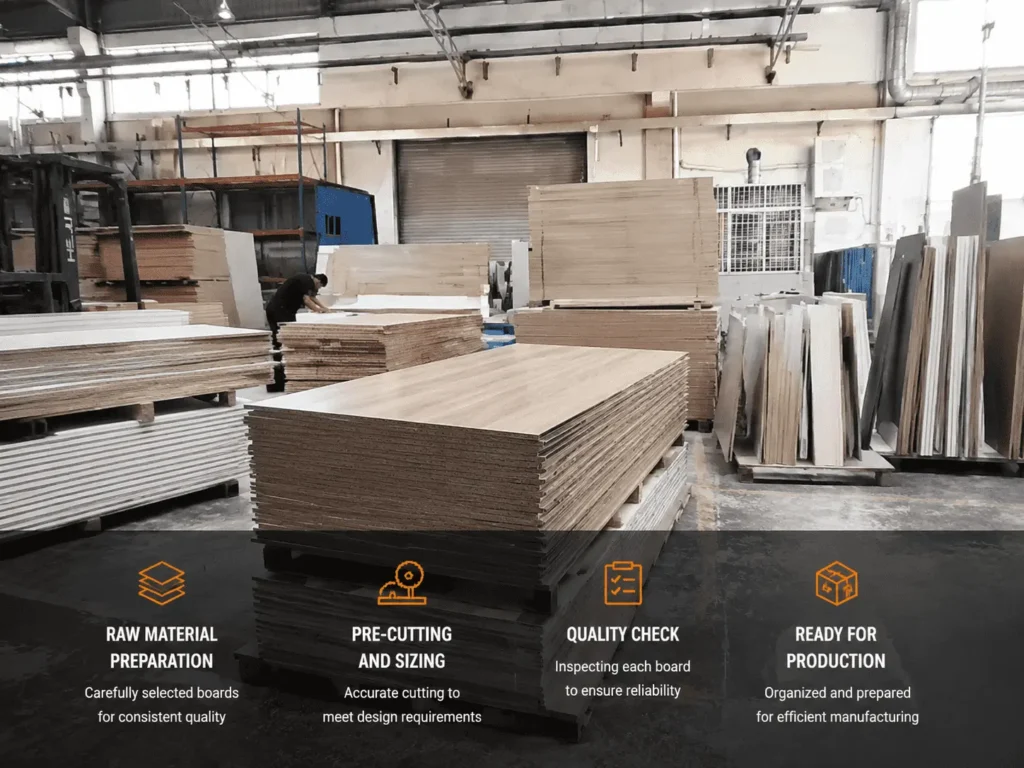
Most home office furniture is produced from panel materials such as MDF, particle board, plywood, melamine board and engineered wood panels. A factory experienced in panel furniture can better control cutting accuracy, edge banding, drilling, surface finish, hardware fitting and flat-pack packaging.
A qualified manufacturer should be able to support computer desks, workstations, bookcases, filing cabinets, wall shelves, storage cabinets, compact office systems and multi-functional furniture.
Starwood Industry Co., Ltd. is a China-based flat-pack panel furniture manufacturer supporting OEM/ODM production for global brands, importers, wholesalers, retailers, e-commerce sellers and project buyers. Learn more here: About Our Factory.
Main B2B Application Scenarios
Before sourcing home office furniture, buyers should clearly define the application scenario. Different sales channels and project types require different structures, materials, packaging and cost targets.
Retail and E-Commerce Home Office Furniture
Retailers and online sellers usually need products that are easy to understand, easy to assemble and easy to ship. Popular products include computer desks, desks with drawers, desks with shelves, wall-mounted desks, bookcases, filing cabinets and compact storage systems.
For retail and e-commerce channels, packaging is extremely important. The carton should protect the product during courier handling, warehouse movement and final delivery. Assembly instructions should be clear. Hardware bags should be organized. Carton marks, SKU labels and barcodes should match the buyer’s inventory system.
Wholesale and Distribution Programs
Wholesalers and distributors need stable specifications, competitive pricing and repeatable container supply. They may source standard office desks, writing desks, bookcases, storage cabinets and filing cabinets in bulk.
For this type of buyer, the home office furniture factory should keep production records, material codes, color samples, hardware specifications and packaging files. Repeat order stability is more important than one-time product presentation.
Apartment and Rental Housing Projects
Apartment projects often require compact desks, wall-mounted workstations, bookcases, wardrobe-desk combinations and small-space storage furniture. The furniture must be durable, cost-effective and easy to install.
For rental housing, student housing and serviced apartments, buyers often need repeated room layouts. A factory can help standardize the desk width, storage cabinet depth, shelf height and carton numbering system. This improves production efficiency and makes installation easier.
Hotel and Serviced Apartment Projects
Hotel rooms and serviced apartments may require writing desks, minibar storage, luggage cabinets, wall shelves, wardrobe-desk combinations and compact workstations. The furniture should match the overall room style and finish.
For hospitality projects, surface consistency, edge finishing and installation efficiency are important. A home office furniture manufacturer with project experience should understand how to coordinate desks with wardrobes, TV panels, storage cabinets and other room furniture.
Office and Commercial Projects
Commercial projects may include staff rooms, meeting rooms, reception areas, office storage, co-working spaces, training rooms and small office interiors. Buyers may need work desks, bookcases, filing cabinets, storage cabinets, display shelves and modular workstations.
For office furniture used in commercial environments, durability and stability are important purchasing factors. Buyers may also consider relevant office furniture performance references when defining product expectations.
For project furniture sourcing, visit: Project Furniture Manufacturing.
Product Types for OEM Home Office Furniture Orders
A home office furniture OEM project may include one product or a full collection. A stronger factory should be able to coordinate several product types with the same material and finish direction.
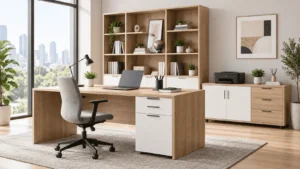
Computer Desks and Writing Desks
Computer desks and writing desks are core home office products. Buyers can customize width, depth, height, leg structure, drawer layout, cable holes, keyboard trays, shelves, hutch storage and monitor risers.
For B2B buyers, the factory should check whether the desktop thickness, span, supporting panels and connectors are suitable for the intended use. A lower price desk may not be suitable for heavy-duty use unless the structure is properly reviewed.
Desks with Storage
Desks with drawers, side cabinets, shelves or overhead storage are popular for small apartments and home offices. They increase storage function without requiring a separate cabinet.
Buyers should confirm drawer slide type, handle style, shelf load, cabinet depth and packaging logic. If the desk has multiple parts, carton organization should be simple enough for end users or installers.
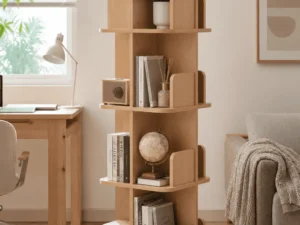
Bookcases and Shelving Units
Bookcases, shelving units and display cabinets are common home office categories. They can be used for documents, books, decorations and storage boxes.
For taller bookcases, buyers should discuss stability, back panel strength, shelf support and anti-tip accessories where needed. For modular shelving, drilling accuracy and panel matching are very important.
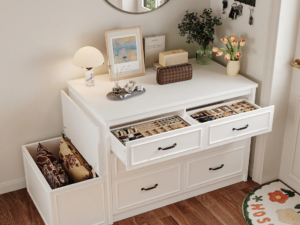
Filing Cabinets and Storage Cabinets
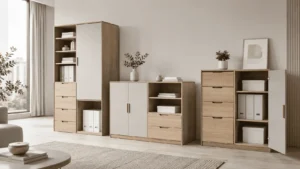
Filing cabinets and storage cabinets are used in home offices, small offices, reception rooms and project interiors. Buyers can customize drawer sizes, lock options, open shelves, doors, adjustable shelves and file storage structure.
For commercial or project use, buyers should confirm whether the cabinet is for light document storage or heavier office storage. This affects board thickness, drawer slides and structure.
Wall-Mounted Workstations
Wall-mounted desks and foldable workstations are suitable for small apartments, student rooms, co-living spaces and compact home offices. They save floor space and create a practical work area.
For these products, structure safety and installation instructions are important. The factory should help buyers confirm fixing method, hardware quality, wall-mounting parts and packaging protection.
Modular Home Office Systems
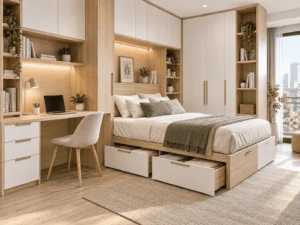
Modular systems may combine desk, bookcase, storage cabinet, wardrobe, bed or wall storage. These products are useful for apartments, student housing and multi-functional rooms.
A panel furniture export factory can support this type of project because it can coordinate different furniture categories within one production system.
Materials Buyers Should Confirm Before Quotation
Material selection affects cost, durability, weight, surface appearance, packaging and market positioning. Before asking for price, buyers should confirm the material direction.
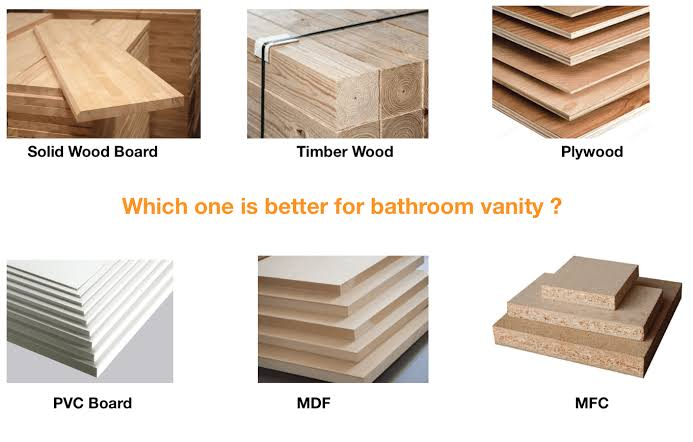
Particle Board
Particle board is widely used for cost-effective home office furniture. It is suitable for desks, bookcases, storage cabinets and large-volume retail programs. With melamine surface and good edge banding, particle board can provide a practical balance between cost and appearance.
Buyers should confirm board thickness, density, surface texture, edge banding quality and screw holding requirements before quotation.
MDF
MDF has a smooth surface and is suitable for painted finishes, decorative panels, shaped parts and higher appearance requirements. It is often used where buyers need a cleaner surface or a more refined finish.
For desks and bookcases, MDF may be used for specific visible parts while other panels use particle board or melamine board depending on cost targets.
Plywood
Plywood is often selected when buyers need stronger structure, better screw holding or higher durability. It may be used for structural parts, shelves or higher-positioned home office furniture programs.
The cost of plywood depends on grade, thickness and specification. Buyers should clearly state whether plywood is required for the full product or only key parts.
Melamine Board
Melamine board is practical for home office furniture because it offers many colors, wood grains and surface textures. It is easy to clean and suitable for flat-pack panel furniture manufacturing.
For large-volume desk, bookcase and cabinet programs, melamine board is often a practical choice.
Laminate, Veneer, PET and Painted Finishes
For higher-end home office furniture collections, buyers may request laminate, veneer, PET or painted finishes. These finishes can improve appearance but may affect MOQ, lead time, cost and packaging requirements.
Before mass production, buyers should approve physical samples. Digital images are not enough for accurate color confirmation.
Compliance and Documentation
For buyers selling into the U.S. market, composite wood products may need to meet formaldehyde emission requirements. Before confirming materials, buyers can review the official EPA information here: EPA Formaldehyde Emission Standards for Composite Wood Products.
For buyers requesting responsible wood sourcing, FSC chain of custody certification may be relevant. FSC explains how certified materials are tracked through the supply chain. Buyers can review: FSC Chain of Custody Certification.
If your brand, retailer or project owner has specific material or certification requirements, share those requirements with the factory before quotation. Material changes after pricing can affect cost, MOQ and lead time.
OEM/ODM Customization Options
A professional home office furniture manufacturer should support more than simple size changes. Real B2B customization usually involves structure, material, function, packing and branding.
Custom Dimensions and Layouts
Buyers can customize desk width, depth, height, shelf spacing, bookcase height, drawer size, cabinet layout, cable management and storage combinations.
For apartment and project furniture, the factory can adapt the dimensions to room layouts. For retail programs, the factory can adjust size to improve packaging efficiency and shipping cost.
Storage Function Customization
Home office buyers often need practical storage. Custom options may include drawers, doors, open shelves, file storage, keyboard trays, cable holes, monitor shelves, printer shelves and wall storage.
The factory should check whether each function is suitable for flat-pack production and assembly.
Surface Finish and Color
Home office furniture collections often need consistent color across desks, bookcases and storage cabinets. Buyers should confirm physical finish samples before bulk orders.
Common finishes include white, black, oak, walnut, gray, natural wood grain, matte finish and two-tone color combinations.
Hardware and Accessories
Hardware can include drawer slides, handles, hinges, cam locks, connectors, cable grommets, adjustable feet, wall-mounting parts, metal brackets and locks.
For better user experience, buyers can specify higher-grade drawer slides, soft-close hardware or stronger connectors. For cost-sensitive programs, standard hardware may be used, but the factory should still confirm durability and assembly accuracy.
Private Label Packaging
Many importers, retailers and e-commerce brands need private-label support. A home office furniture OEM factory can support logo labels, carton marks, barcode labels, SKU labels, instruction manuals, hardware bags and retail-ready packaging.
For project buyers, carton marks can also be arranged by room, unit, floor or product type.
MOQ, Sample Time and Bulk Lead Time
MOQ and lead time are important purchasing topics, but they depend on product details. A factory cannot give a reliable answer without understanding the design, material, finish, quantity and packaging.
MOQ Planning
MOQ depends on material type, surface finish, board color, hardware, packaging design and customization level.
Standard melamine desks or bookcases may have more flexible MOQ. Special colors, unique hardware, private packaging, molded parts or complex designs may require higher MOQ because the factory needs to purchase materials and arrange production setup.
For export orders, container-based purchasing is usually more cost-effective. Buyers may plan by 20GP, 40GP or 40HQ container depending on product mix and carton size.
Sample Development
For new OEM/ODM home office furniture programs, sample development is strongly recommended. A sample helps confirm dimensions, structure, materials, drilling, hardware, surface finish, packaging and assembly logic.
A practical sample process usually includes:
Requirement discussion
Drawing review
Material and finish confirmation
Quotation confirmation
Sample production
Trial assembly
Packaging review
Buyer approval
Pre-production adjustment
Skipping the sample stage may save time at the beginning, but it can create larger risks during mass production.
Bulk Production Lead Time
Bulk lead time depends on order quantity, material availability, production schedule, finish process and packaging complexity.
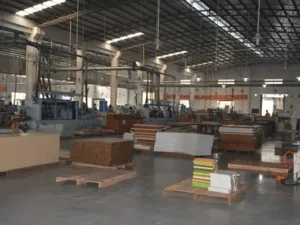
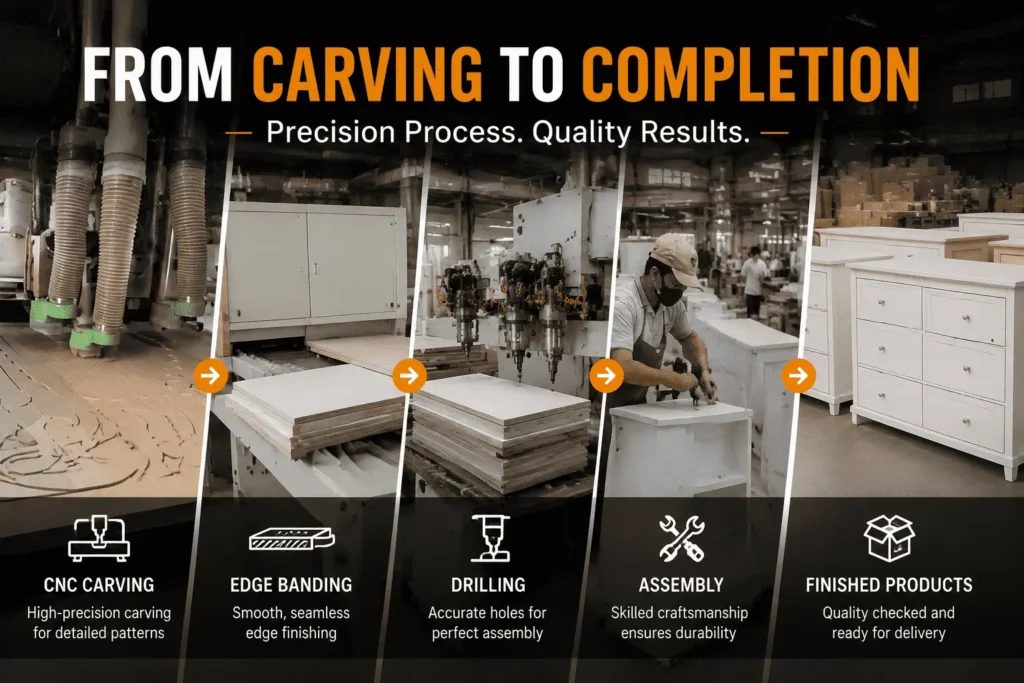
A reliable home office furniture factory should explain the production milestones: material purchasing, panel cutting, edge banding, drilling, hardware packing, QC inspection, carton packing and container loading.
For project orders, buyers should leave enough time for sample approval, bulk production, inspection, shipment and installation.
Export Packaging and Container Loading
Export packaging is a key part of home office furniture manufacturing. Many product complaints are caused not by poor furniture design, but by weak packing, missing hardware or unclear instructions.
Flat-Pack / KD / RTA Packaging
Flat-pack, KD and RTA structures are suitable for home office furniture because they reduce shipping volume and improve container loading efficiency. Products such as desks, bookcases, shelves and storage cabinets can usually be packed into cartons for international shipment.
Good packaging should include reinforced cartons, foam protection, edge protection, corner protection, hardware bags, instruction manuals, model labels and clear carton marks.
Packaging for Retail and E-Commerce
Retail and e-commerce packaging should be easy to identify and strong enough for warehouse movement and final delivery. Buyers may require barcode labels, SKU labels, color labels, model numbers and branded instruction manuals.
A well-designed hardware bag can reduce customer complaints. Missing screws, unclear labels or confusing instructions can increase after-sales cost.
Packaging for Project Orders
For apartment, hotel and office project orders, carton marks should follow installation logic. Cartons may be marked by building, floor, room, unit type, desk type or cabinet type.
This helps contractors and installation teams find the right product quickly on site.
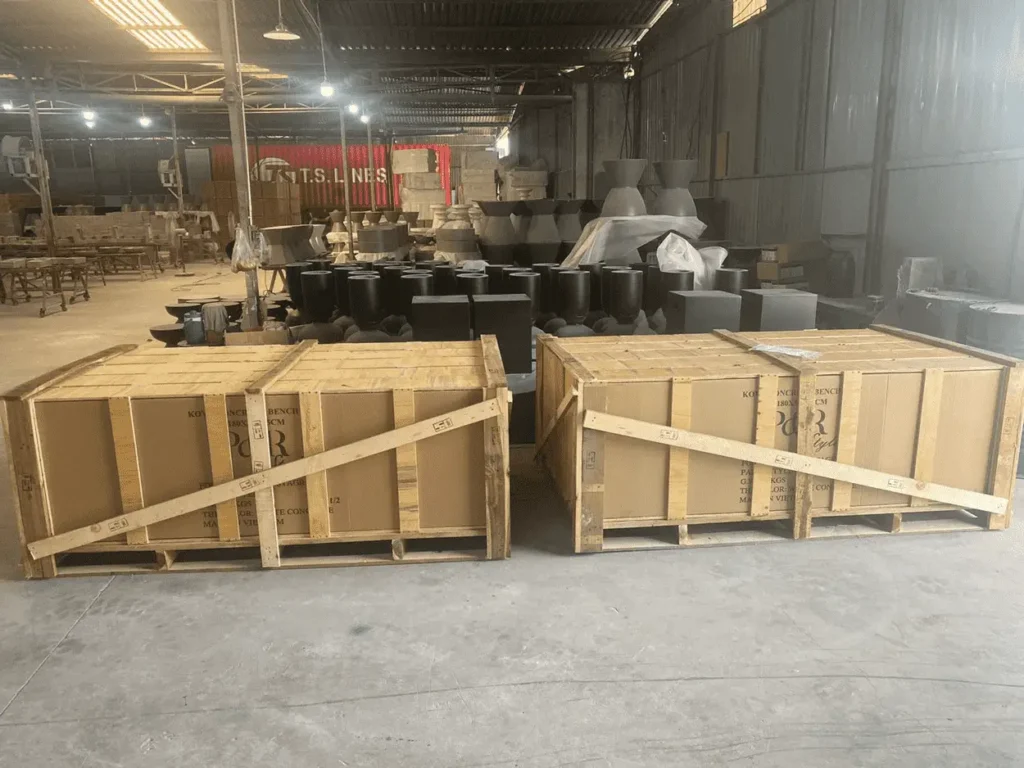
Container Loading
Flat-pack office furniture can improve container loading efficiency, but carton size and product mix must be planned carefully. A factory should consider carton dimensions, product weight, loading order and damage prevention.
Loading photos and packing lists are useful for importers, wholesalers and project buyers. They help with customs clearance, warehouse receiving and project tracking.
Wood Packaging Requirements
If wooden pallets, crates or wood supports are used in international shipment, buyers should check wood packaging requirements. USDA APHIS provides official guidance on wood packaging material and ISPM 15. Buyers can review it here: USDA APHIS Wood Packaging Material Guidance.
Even when the furniture is packed in cartons, any wooden pallet or support material should be confirmed with the supplier and forwarder before shipment.
Factory Quality Control Points
A serious home office furniture manufacturer should control quality from incoming material to final loading.
Board Thickness and Material Check
Before production, the factory should check board thickness, surface condition, color, density and material labels. If the buyer requires specific documents or test reports, these requirements should be confirmed before mass production.
Cutting Accuracy
Desks, bookcases and cabinets depend on accurate panel cutting. If the panel size is wrong, assembly gaps, drawer alignment and structure stability will be affected.
CNC cutting helps improve repeatability for bulk production and project orders.
Edge Banding Quality
Edge banding affects appearance and durability. Poor edge banding may cause rough edges, peeling, glue marks or poor customer experience.
Buyers should check edge banding thickness, glue line, trimming quality and corner finishing.
Drilling Accuracy
Flat-pack furniture requires accurate drilling for cam locks, dowels, screws, hinges, drawer slides and shelf supports. Wrong drilling positions create assembly problems and after-sales claims.
During sample approval, the product should be assembled and checked.
Hardware Fitting
Drawer slides, hinges, handles, connectors and cable accessories must match the board thickness and product structure. A desk with drawers or a storage cabinet should be tested before packing.
Surface Inspection
Surface scratches, color difference, dents, glue marks and edge defects should be checked before packaging. Dark colors and high-gloss finishes need extra attention because defects are more visible.
Stability and Use Safety
For desks, bookcases and wall-mounted units, buyers should consider stability, load-bearing and end-use conditions. BIFMA publishes office furniture standards including desk and table products, storage units and home office desk, table and storage products. Buyers can review the official BIFMA standards description here: BIFMA Standards Descriptions.
For ergonomic workstation considerations, OSHA provides a computer workstation eTool that discusses workstation components, posture and arrangement. This can help buyers think about practical desk height, monitor placement, keyboard space and user comfort. Reference: OSHA Computer Workstations eTool.
Final Packing Inspection
Before shipment, the factory should check carton labels, hardware bags, instruction manuals, model numbers, quantities and packing list accuracy.
For B2B buyers, missing hardware or wrong carton marks can create serious after-sales problems.
9 Smart OEM Tips for Choosing the Right Supplier
Tip 1: Confirm Whether the Supplier Is a Real Factory
A real home office furniture manufacturer should explain production details clearly. Ask about panel cutting, edge banding, drilling, hardware packing, QC inspection, carton design and export experience.
If the supplier only provides product photos but cannot explain the production process, the buyer should be careful.
Tip 2: Send a Complete RFQ
A complete RFQ helps the factory quote faster and more accurately. Send product drawings, reference photos, dimensions, materials, finish requirements, hardware details, quantity, packaging request, destination market and target price if available.
A vague inquiry usually leads to a vague quotation.
Tip 3: Define the Sales Channel
Tell the factory whether the product is for wholesale, retail, e-commerce, apartment projects, hotel projects, office projects or contractor supply. The application affects material selection, packaging strength, structure and cost.
A desk for e-commerce parcel delivery may need different packaging from a desk shipped by container for project installation.
Tip 4: Compare Specification Before Price
Two desks may look similar in photos but use different board thickness, edge banding, hardware, drawer slides and packaging. Buyers should compare specifications before comparing price.
The lowest unit price may increase damage rate, return rate or after-sales cost.
Tip 5: Approve a Sample Before Bulk Orders
For new home office furniture OEM projects, sample approval is important. The sample should be assembled and checked for structure, finish, hardware, drilling, stability and packaging.
A sample is not only for appearance. It is a production test.
Tip 6: Review Packaging Like a Product
Packaging affects shipping damage, customer satisfaction and warehouse efficiency. Ask for carton layout, hardware bag photos, assembly instruction design, carton marks and protection method before mass production.
For retail and e-commerce buyers, packaging quality can directly affect reviews and return rates.
Tip 7: Check Repeat Order Control
B2B buyers usually need repeat orders. A reliable factory should keep drawings, material codes, color samples, hardware specifications and packaging files.
Repeat order control helps maintain stable quality and reduce communication cost.
Tip 8: Ask About Project Delivery Experience
For apartment, hotel, office and contractor orders, the factory should understand project delivery logic. This includes carton marks by room, floor, unit or product type, clear packing lists, loading photos and installation-friendly packaging.
A factory with project experience can help buyers reduce site confusion.
Tip 9: Choose a Factory That Supports More Panel Furniture Categories
Many buyers do not only need home office furniture. They may also need wardrobes, beds, kitchen cabinets, bathroom cabinets, TV cabinets, shoe cabinets, storage cabinets or full apartment furniture packages.
Working with an OEM/ODM panel furniture export factory can help buyers keep materials, finishes, packaging and communication more consistent across different product categories.
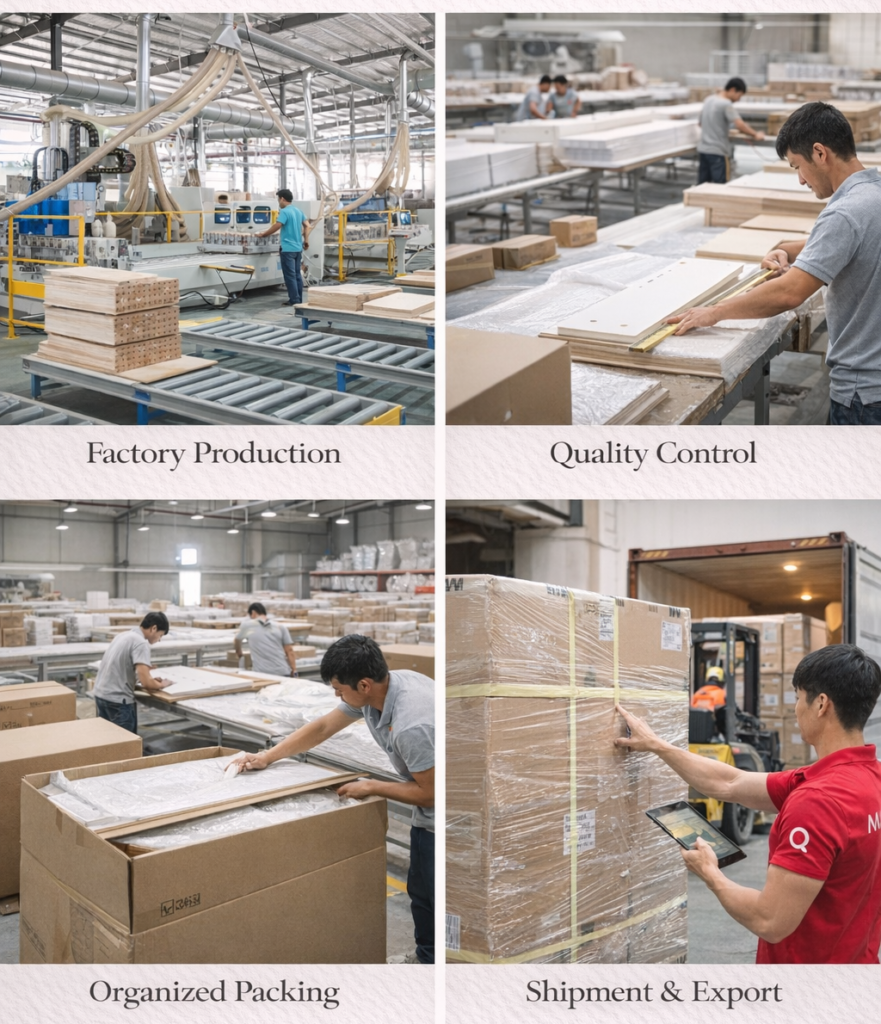
Why Work with a Panel Furniture Export Factory
A panel furniture export factory can provide stronger support for buyers who need scalable production, custom sizes, flat-pack structures and long-term supply.
Starwood Industry Co., Ltd. manufactures flat-pack panel furniture for global brands, importers, wholesalers, retailers, e-commerce sellers, real estate projects, hospitality projects and commercial spaces. Our product scope includes home office desks, computer desks, bookcases, filing cabinets, storage cabinets, wardrobes, bathroom cabinets, kitchen storage units, TV cabinets and space-saving furniture.
A buyer may start with home office desks and later expand to bookcases, apartment wardrobes, storage beds or full project furniture packages. Working with one panel furniture manufacturer helps control color consistency, material coordination, packaging style and shipment planning.
Useful internal pages:
Home – Flat-Pack Furniture Manufacturer in China
About Our Factory
OEM & ODM Furniture Manufacturing Services
Project Furniture Manufacturing
Home Office Furniture Manufacturer in China
Buyer RFQ Checklist
Before contacting a home office furniture manufacturer, prepare the following information:
Product type: computer desk, writing desk, bookcase, filing cabinet, storage cabinet, wall-mounted desk or workstation
Application: wholesale, retail, e-commerce, apartment, hotel, office project, contractor supply or private label
Quantity: sample order, trial order, container order or project quantity
Dimensions: width, depth, height and layout drawing
Material: particle board, MDF, plywood, melamine board or required panel type
Finish: melamine, laminate, veneer, PET, painted finish, matte, gloss or custom color
Function: drawers, shelves, doors, file storage, cable holes, keyboard tray or wall-mounted structure
Hardware: drawer slides, handles, hinges, cam locks, connectors, cable grommets or locks
Packaging: flat-pack, KD, RTA, retail-ready carton, private label or project carton marks
Compliance: TSCA Title VI, FSC-related request, BIFMA-related reference, E1 or buyer-specific standard
Lead time: sample deadline, production deadline and shipment schedule
Destination: country, port and shipping method
Documents: commercial invoice, packing list, loading photos, certificates or test reports if required
The more complete your RFQ is, the faster the factory can provide a realistic quotation and production suggestion.
FAQ
1. Are you a home office furniture manufacturer or trading company?
We are a China-based OEM/ODM panel furniture manufacturer supporting home office desks, computer desks, bookcases, filing cabinets, storage cabinets, wall-mounted workstations and project furniture for importers, wholesalers, retailers, e-commerce brands and project buyers.
2. Can you produce home office furniture according to buyer drawings?
Yes. Buyers can send CAD drawings, reference photos, product samples, dimensions or cabinet lists. We can review structure, materials, finishes, hardware, packaging and production details before quotation and sampling.
3. Do you support OEM home office furniture manufacturing?
Yes. We support OEM production based on buyer drawings, specifications, samples, brand requirements and packaging standards.
4. Do you support ODM home office furniture development?
Yes. For buyers who have a market idea but no complete drawings, we can support ODM development, including product structure, material selection, finish matching, hardware options, sample production and packaging suggestions.
5. What types of home office furniture can you manufacture?
We can manufacture computer desks, writing desks, desks with storage, bookcases, shelving units, filing cabinets, storage cabinets, wall-mounted desks, compact workstations and modular home office systems.
6. What materials are available for home office furniture?
Common materials include particle board, MDF, plywood, melamine board, laminate, veneer, PET and painted finishes. The best choice depends on target market, budget, durability requirement and application.
7. What is the MOQ for home office furniture orders?
MOQ depends on material, finish, hardware, customization level and packaging requirements. Container-based orders are usually more efficient for export production. Buyers can send product details for a practical MOQ suggestion.
8. Can you make home office furniture for apartments and commercial projects?
Yes. We support home office furniture manufacturing for apartments, rental housing, student housing, serviced apartments, co-working spaces, office projects and contractor supply.
9. Can you provide private-label packaging?
Yes. We support logo labels, barcode labels, SKU labels, carton marks, hardware bags, assembly instructions and buyer-specific packaging requirements.
10. How do you control quality before shipment?
We check materials, cutting accuracy, edge banding, drilling positions, hardware fitting, surface finish, packing details, carton labels and loading preparation. For new projects, sample approval is recommended before mass production.
11. What should I send for a quotation?
Please send drawings or reference photos, dimensions, materials, finish requirements, hardware details, quantity, packaging request, destination market, compliance needs and target price if available.
Final Inquiry CTA
Looking for a reliable home office furniture manufacturer, OEM office desk factory or panel furniture export supplier for your next wholesale, retail, e-commerce, apartment, hotel or commercial project?
Send us your drawings, product list, reference photos, materials, finish requirements, order quantity, packaging request and destination market. Our factory team can review your project and provide practical suggestions for material selection, structure optimization, MOQ, sample development, lead time, export packaging and quotation.
Contact Starwood Industry Co., Ltd. today to start your home office furniture OEM/ODM project.