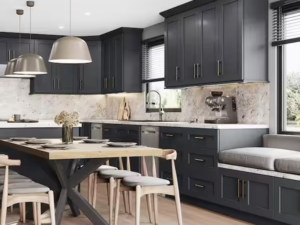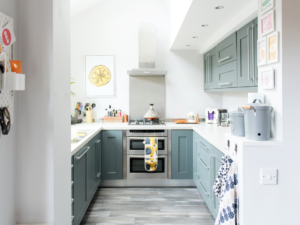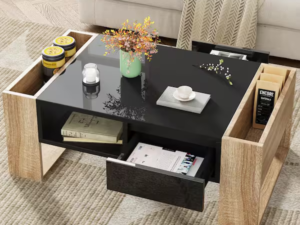
When square meters are limited, the entryway becomes one of the most overlooked yet most valuable zones in a home, apartment, hotel room entry, or serviced residence. For furniture buyers, brands, importers, and project contractors, this creates a clear opportunity: small entryway furniture is not a niche category anymore. It is a high-demand, high-function category that combines storage, organization, and first-impression design.
Small entryway furniture ideas are increasingly important for apartment projects, hotel rooms, rental properties, and compact residential developments. For importers and furniture brands, choosing the right entryway furniture for small spaces means balancing storage, style, cost, and shipping efficiency.
For B2B buyers, the best-selling products in this category are usually not oversized statement pieces. Instead, they are compact, efficient, easy-to-assemble, and commercially adaptable. They need to work in apartments, rental housing, hospitality projects, and urban residential developments. They must also be cost-effective to ship, easy to pack, and flexible enough for private-label or OEM/ODM programs.
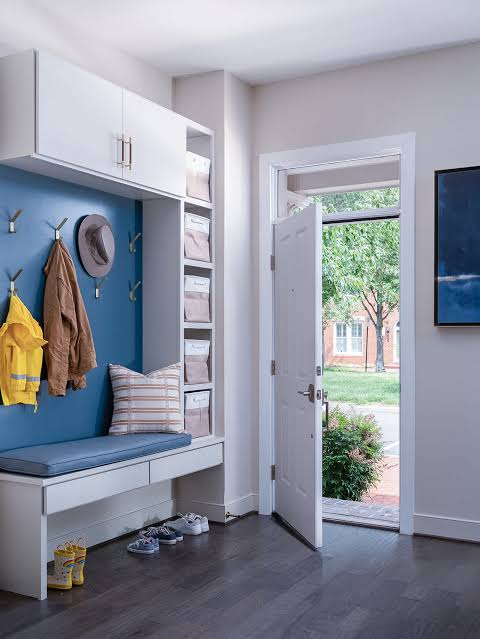
In this guide, we will break down 9 smart entryway furniture ideas for small spaces and explain what makes them commercially viable. We will also cover application scenarios, materials, compliance, MOQ, lead time, packaging, customization workflow, and sourcing considerations from the perspective of a panel furniture export manufacturer.
Table of Contents
- Why small entryway furniture matters in today’s market
- What buyers should prioritize before selecting designs
- Idea 1: Slim console tables
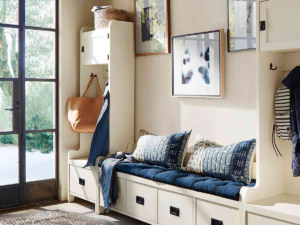
- Idea 2: Entryway benches with storage
- Idea 3: Narrow shoe cabinets
- Idea 4: Wall-mounted entryway units
- Idea 5: Hall trees for multifunction use
- Idea 6: Drawer cabinets for daily essentials
- Idea 7: Mirror-integrated entryway furniture
- Idea 8: Modular entryway furniture sets
- Idea 9: Open-and-closed mixed storage units
- Materials and construction recommendations
- MOQ, lead time, and export packaging
- OEM/ODM customization process
- Why compliance and packaging matter for overseas buyers
- FAQ
- Final call to action
Why Small Entryway Furniture Matters in Today’s Market
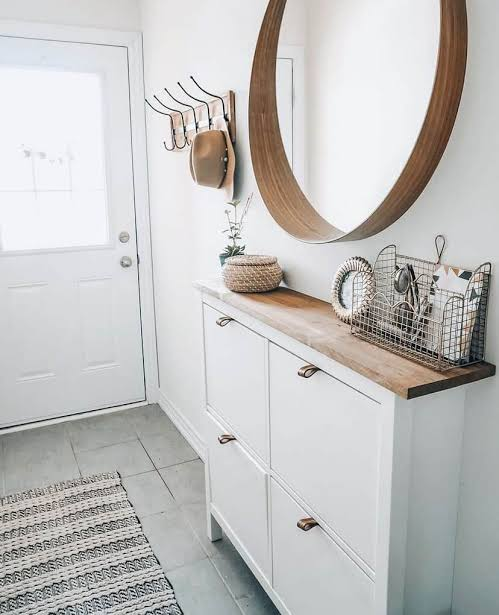
Small-space living is shaping furniture demand across North America, Europe, and many urban markets. Apartments are getting more compact, rental properties are emphasizing functionality, and hospitality operators want furniture that improves organization without making the room feel crowded.
That is exactly why entryway furniture for small spaces performs well. It solves several buyer pain points at once:
- It creates organized storage near the door
- It improves user convenience for shoes, bags, keys, and coats
- It upgrades the visual impact of compact interiors
- It fits apartment, hotel, and project applications
- It offers strong potential for flat-pack export programs
For B2B buyers, this category also supports multiple commercial channels: wholesale distribution, e-commerce, retail private label, project furnishing, and OEM collection development.
What Buyers Should Prioritize Before Selecting Designs
Before choosing specific models, buyers should evaluate small entryway furniture through five practical filters.
1. Space efficiency
The product should use vertical space, shallow depth, or dual-purpose structure.
2. Commercial usability
Designs that combine storage and everyday convenience typically outperform decorative-only models.
3. Material stability
For export markets, buyers need a balance between appearance, durability, and cost.
4. Packing efficiency
KD structure and compact packaging can significantly reduce shipping costs.
5. Market fit
A good model for apartment projects may differ from a good model for premium retail or hospitality furnishing.
Idea 1: Slim Console Tables
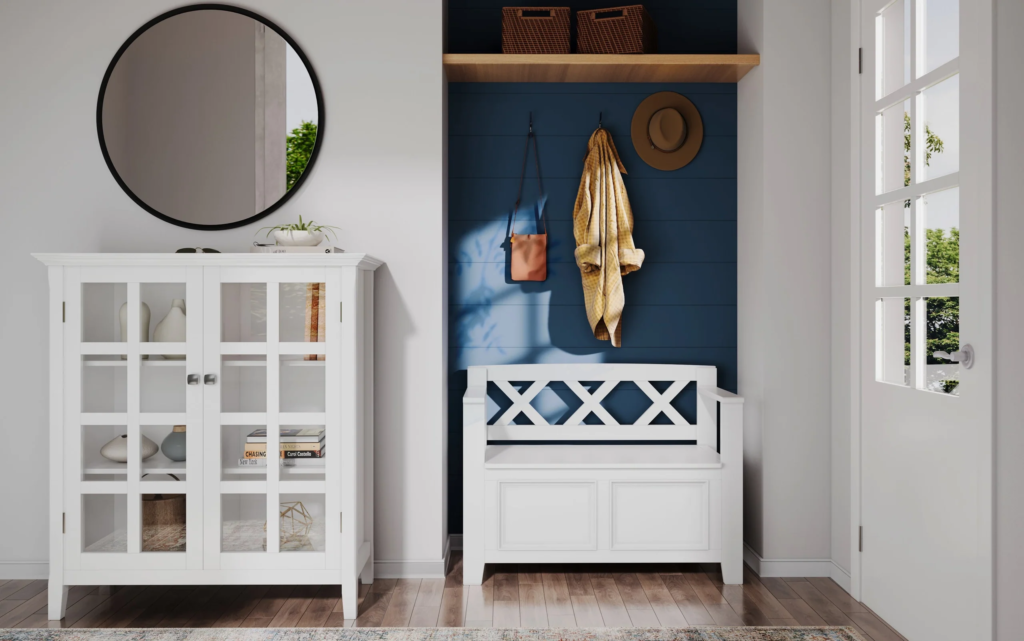
A slim console table is one of the most practical starting points for a small entryway collection. It has a light footprint, works in narrow corridors, and is easy to style for modern, Scandinavian, minimalist, or transitional interiors.
Best application scenarios
- Apartments
- Condo projects
- Model rooms
- Rental properties
- E-commerce collections
Why buyers like it
Slim console tables are visually lightweight, easy to photograph, and often easy to pack. They also work well as a base product for OEM customization because buyers can adjust dimensions, finish, drawer count, leg style, and hardware.
Recommended commercial specs
- Depth: shallow profile for compact spaces
- Optional drawer for keys and small items
- Open lower shelf for shoes or baskets
- Melamine or veneer finish for market flexibility
Idea 2: Entryway Benches with Storage
If there is one small-space product that consistently combines function and conversion value, it is the entryway bench with storage. It gives users a place to sit while changing shoes, while also offering interior storage or open shelf storage underneath.
Why it performs well
This is a highly practical category for family homes, apartments, student housing, and rental projects. Buyers like it because it solves two needs in one footprint.
Storage formats that work best
- Lift-top storage bench
- Bench with open shoe shelf
- Bench with drawers
- Bench with cubby compartments
B2B note
For project buyers, a storage bench can also be adapted for hospitality entrances or serviced apartment layouts, especially when paired with hooks or a matching shoe cabinet.
Idea 3: Narrow Shoe Cabinets
In compact entryways, shoes quickly become the biggest source of clutter. A narrow shoe cabinet addresses this directly while keeping the area visually clean.
Advantages for buyers
- High practical value
- Strong appeal for apartment and family markets
- Easy to combine with console tables or mirrors
- Can be designed in slim-depth profiles
Popular configurations
- Tilt-out shoe cabinet
- Two-door slim cabinet
- Vertical shoe tower
- Shoe cabinet with top drawer
This category is particularly suitable for importers who serve urban retail markets where floor area is limited and storage demand is high.
Idea 4: Wall-Mounted Entryway Units
Wall-mounted units help free up visible floor space, making compact interiors look more open. These units can include shelves, drawers, mirrors, hooks, or mini cabinets.
Best use cases
- Modern apartments
- High-end compact homes
- Boutique hospitality projects
- Scandinavian-style collections
Why buyers choose them
They create a more premium look while still serving a practical function. They also align well with minimalist and contemporary interior directions.
For buyers developing premium lines, floating furniture can offer better visual value than floor-standing units in the same price segment.
Idea 5: Hall Trees for Multifunction Use
A hall tree combines multiple functions into one piece: hanging, seating, storage, and organization. In larger small-entry layouts, this can be one of the most efficient product types.
Common components
- Hooks
- Bench
- Open shelf
- Closed cabinet
- Top storage
Who should source it
- Apartment furniture buyers
- Entry-level retail brands
- Contract furnishing buyers
- Hospitality or student housing projects
The key is proportion. For truly narrow spaces, the design should stay compact and vertical. Oversized hall trees may become difficult to ship and less suitable for modern small apartments.
Idea 6: Drawer Cabinets for Daily Essentials
A compact drawer cabinet is a useful option for households that want concealed storage for keys, chargers, wallets, mail, or accessories. In commercial terms, this product often works well in collections aimed at organized living.
Why drawer cabinets matter
Open shelving looks good in photos, but many consumers still want hidden storage. That is why a mixed program with drawers often sells better than open-only entryway furniture.
Recommended formats
- One-drawer slim cabinet
- Two-drawer entry console
- Narrow drawer tower
- Drawer cabinet with lower open shelf
Idea 7: Mirror-Integrated Entryway Furniture
Adding a mirror to entryway furniture increases usability and perceived value. For small spaces, mirrors also help reflect light and visually expand the area.
Product combinations that work
- Shoe cabinet with mirror
- Console table with mirror panel
- Wall-mounted shelf plus mirror
- Hall tree with mirror and bench
Commercial benefit
This type of product fits premium compact living collections and project furnishing programs where both appearance and practicality matter.
Idea 8: Modular Entryway Furniture Sets
Many importers and brands now prefer modular solutions instead of one fixed design. A modular entryway set allows customers or project planners to combine a bench, cabinet, mirror, and shelf according to available space.
Why modular sells
- Easier upsell potential
- Flexible price architecture
- Better fit across multiple markets
- Efficient for OEM collection building
For export manufacturers, modular development also allows better material standardization and component sharing.
Idea 9: Open-and-Closed Mixed Storage Units
One of the smartest approaches for small entryways is combining open and closed storage in one design. Open areas make everyday items accessible, while closed storage keeps the space visually clean.
Best examples
- Cabinet doors below with open shelf above
- Drawer plus open cubby
- Hook panel with lower cabinet
- Open shoe rack plus hidden storage compartment
This structure is especially attractive for buyers who want functional products that still look tidy in online product photography and showrooms.
Materials and Construction Recommendations
As a panel furniture export manufacturer, we usually recommend selecting materials based on market positioning, compliance requirements, and target price.
Common materials for entryway furniture
- Particle board with melamine finish
- MDF with painted or laminated finish
- Plywood for selected structural components
- Metal legs or frames for industrial-modern styles
- Glass or mirror elements for value-added models
How buyers should evaluate material choices
For mass retail, melamine-faced engineered wood remains one of the most efficient options because it balances cost, stability, surface variety, and scalability. For higher-value collections, buyers may combine engineered panels with premium textures, wood veneer accents, or powder-coated metal components.
For U.S.-bound furniture programs, composite wood products are commonly evaluated against EPA TSCA Title VI formaldehyde requirements, which apply to regulated composite wood products sold, supplied, or imported in the U.S.
For buyers serving California or customers who specifically request emission compliance, the CARB composite wood products program is another important reference point, especially for hardwood plywood, particleboard, and MDF used in finished goods. For California market requirements, many importers also refer to the CARB composite wood products program.
When sustainability is part of the brand story, many buyers also look at FSC-certified sourcing as a way to support responsible wood supply chains and strengthen environmental positioning in the market.For responsible wood sourcing, many furniture brands use FSC certification standards as a benchmark.
Practical recommendation
For most entryway furniture export programs, the most commercially balanced option is:
- E1 or compliant low-emission engineered board
- Scratch-resistant melamine surface
- Reinforced hardware points
- Stable KD construction
- Optional FSC material program depending on buyer demand
MOQ, Lead Time, and Export Packaging
For industry buyers, design is only one part of the decision. The operational side matters just as much.
Typical MOQ approach
MOQ depends on product complexity, finish count, packaging method, and customization depth. In practice, buyers often discuss MOQ based on:
- Per item
- Per finish
- Per collection
- Per container mix
For standard entryway furniture programs, a flexible MOQ structure is often more useful than a single fixed quantity. This helps buyers launch with lower inventory risk while still maintaining factory efficiency.
Lead time considerations
Lead time normally depends on:
- Sample approval status
- Material preparation
- Surface finish complexity
- Hardware sourcing
- Packaging confirmation
- Order quantity
For repeat orders, lead time is generally easier to stabilize because materials, drawings, cartons, and production flow are already approved.
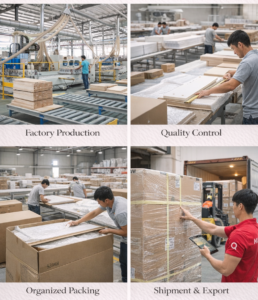
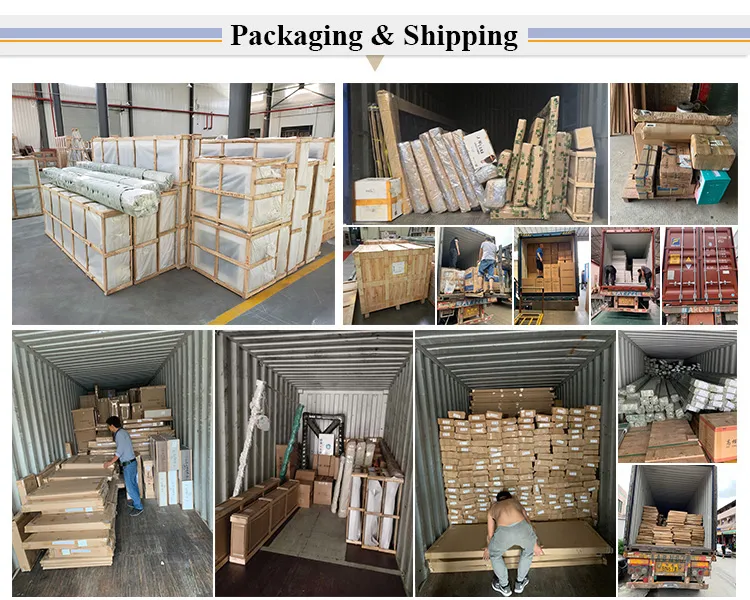
Packaging recommendations
Since entryway furniture often includes long panels, mirrors, or narrow components, export packaging must be planned carefully. Buyers should ask about:
- KD packing
- Drop-test-oriented carton design
- Corner protection
- Honeycomb or foam reinforcement
- Hardware bag labeling
- Assembly instruction clarity
When packaging performance matters, many exporters use ISTA test procedures as a reference for transit testing and packaging design evaluation. For packaging validation and transit testing, exporters often check the ISTA test procedures.
OEM/ODM Customization Process
For brands, wholesalers, and project buyers, the ability to customize is often what turns a standard product into a competitive product line.
A practical OEM/ODM workflow
Step 1: Requirement briefing
The buyer shares dimensions, target market, preferred style, finish direction, packaging request, quantity estimate, and price target.
Step 2: Drawing or concept development
The factory provides technical drawings, rendering support, or structure proposals.
Step 3: Material and hardware confirmation
Panel type, finish, edge banding, slide, hinge, and accessory details are confirmed.
Step 4: Sample production
A prototype is made for evaluation of structure, finish, dimensions, function, and packing.
Step 5: Packaging and carton test review
Packaging is adjusted before bulk order if needed.
Step 6: Bulk production
Production starts after final approval of sample, packaging, artwork, and order details.
Step 7: Inspection and shipment
Final QC, loading plan, and shipping documents are completed.
Why professional buyers care about this process
A clear customization workflow reduces errors, shortens revision cycles, and helps buyers manage timelines for retail launches or project installations.
Why Compliance and Packaging Matter for Overseas Buyers
Professional buyers do not only evaluate appearance. They also review risk.
Compliance
For composite wood furniture, emission compliance can affect import readiness, retailer acceptance, and project approvals. That is why many buyers ask about:
- Board source
- Emission grade
- Test documents
- Labeling
- Supply chain consistency
As noted above, U.S. imports involving regulated composite wood products often refer to EPA TSCA Title VI requirements, while California-focused programs frequently pay close attention to CARB expectations.For U.S. compliance requirements on composite wood products, buyers can review the EPA TSCA Title VI formaldehyde standards.
Sustainability
If a buyer is building a sustainability narrative, responsible sourcing becomes part of the commercial package. In those cases, FSC can be a relevant reference for responsibly sourced furniture materials.
Packaging and safety
For storage-oriented furniture, buyers may also care about structural safety, stability, and performance expectations in the destination market. For packaging validation and transit testing, exporters often check the ISTA test procedures.
For storage categories, BIFMA maintains relevant standards and guidance areas for filing and storage furniture.For storage furniture performance references, buyers may also review BIFMA storage furniture guidance.
Bottom line
A product that looks good but fails in packaging, compliance, or installation will create costly after-sales issues. Buyers who want long-term supply partnerships should evaluate the full system, not only the sample appearance.
Naturally Embedded Authority References for Direct Publishing
You asked for authority links that can be placed directly in the article. Here are the transitions already embedded in the body, and you can leave them as-is:
- For U.S.-bound furniture programs, composite wood products are commonly evaluated against EPA TSCA Title VI formaldehyde requirements.
- For California-focused orders, buyers often review the CARB composite wood products program.
- When sustainability is part of the buyer’s positioning, FSC furniture sourcing is often a relevant reference.
- For transit protection and carton performance, many exporters use ISTA test procedures as a packaging reference.
- For storage-oriented furniture performance expectations, buyers may also look at BIFMA filing and storage standards guidance.
Entryway Furniture for B2B Projects: What Serious Buyers Usually Ask
When we work with importers, brands, hotel buyers, apartment developers, and OEM partners, the same questions come up again and again:
Can the design be resized?
Yes. Many small entryway products can be adjusted in width, depth, height, drawer layout, and shelf structure.
Can the finish be customized?
Yes. Common options include oak look, walnut look, white, black, greige, cement look, and custom melamine patterns.
Is flat-pack available?
In most cases, yes. KD structure is often preferred for export efficiency.
Can the packaging be upgraded for e-commerce?
Yes. Packaging can be adapted depending on the target channel, drop-test expectations, and product structure.
Can the same collection be used for apartment and hotel programs?
Yes, but details should be adjusted. Hospitality projects may require stronger hardware, more consistent finish control, and project-specific packaging or installation instructions.
FAQ
What is the best type of entryway furniture for very small spaces?
Slim console tables, narrow shoe cabinets, wall-mounted units, and storage benches are usually the best options because they combine function with compact dimensions.
What material is most practical for export entryway furniture?
For many markets, engineered wood with durable melamine finish is the most practical choice because it balances cost, stability, appearance, and scalable production.
Is entryway bench with storage a good category for wholesalers?
Yes. It offers strong commercial value because it combines seating and storage, making it suitable for apartments, rentals, and family-oriented furniture collections.
What should buyers ask about packaging?
They should ask about KD design, carton strength, inner protection, mirror protection, hardware labeling, and whether the packaging has been reviewed against relevant transit-test principles.
What should buyers prepare before starting OEM or ODM development?
They should provide target dimensions, style references, finish direction, estimated quantity, packaging expectations, market destination, and target price range.
Final Thoughts
Small-space living is not a temporary trend. It is a long-term demand driver, and entryway furniture sits right at the intersection of storage, organization, and design efficiency.
For serious buyers, the best products in this category are not just visually appealing. They are:
- commercially adaptable
- easy to ship
- material-efficient
- practical for everyday use
- scalable for wholesale, retail, e-commerce, and project channels
If you are building a new collection or sourcing for apartment, hotel, or residential projects, compact entryway furniture gives you a strong category with repeat demand and broad market fit.
CTA
Looking for a reliable OEM/ODM entryway furniture manufacturer for small-space collections, apartment projects, hotel furnishing, or wholesale programs?
We can support you with:
- compact entryway furniture development
- material and finish recommendations
- low-emission panel options
- KD export packaging
- private label and OEM/ODM production
- project-based customization for hotel and apartment applications