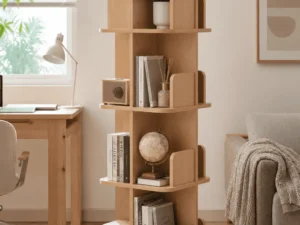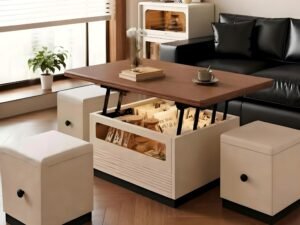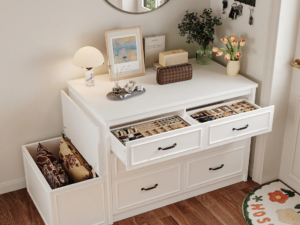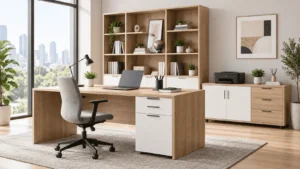
Introduction
Sourcing home office furniture from China has become a strategic move for global importers, wholesalers, and project contractors. With competitive pricing, scalable production, and strong OEM/ODM capabilities, China remains the world’s largest furniture exporter.
However, successful procurement is not just about price—it requires a structured evaluation process to avoid costly mistakes in quality, compliance, and logistics.
This guide outlines the top 10 critical checkpoints every importer should verify before placing an order with a China home office furniture supplier, especially for B2B, engineering, and large-scale residential or commercial projects.
Table of Contents
- Product Quality & Material Standards
- Supplier Credentials & Factory Capability
- MOQ (Minimum Order Quantity)
- Lead Time & Production Capacity
- OEM/ODM Customization Process
- Packaging & Shipping Protection
- Compliance & Certifications
- Cost Structure & Hidden Fees
- Communication & After-Sales Service
- Logistics & Export Experience
- FAQ
1. Product Quality & Material Standards
Quality is the foundation of long-term business relationships. When sourcing home office furniture from China, always evaluate:
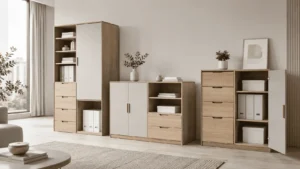
- Core materials (MDF, plywood, particle board)
- Surface finish (melamine, veneer, lacquer)
- Hardware (hinges, slides, connectors)
For example, CARB P2 compliance is essential for the U.S. market. You can verify emission standards via the California Air Resources Board:
https://ww2.arb.ca.gov/
Similarly, European buyers should ensure compliance with E1/E0 formaldehyde standards, as outlined by the European Chemicals Agency:
https://echa.europa.eu/
Pro Tip: Request material samples and third-party test reports before mass production.
2. Supplier Credentials & Factory Capability
Not all suppliers are manufacturers. Many are trading companies.
Key checks:
- Business license
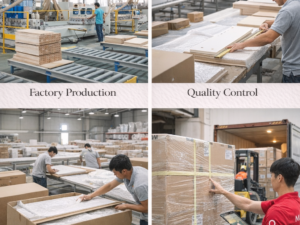
- Factory audit reports
- Production line photos/videos
- Export history
You can verify company legitimacy through platforms like:
https://www.importyeti.com/ (shipment data insights)
For deeper due diligence, consider third-party audits from SGS:
https://www.sgs.com/
3. MOQ (Minimum Order Quantity)
MOQ varies depending on:
- Product type
- Customization level
- Production complexity
Typical MOQ for home office furniture:
- Standard items: 50–100 sets
- OEM designs: 100–300 sets
For B2B buyers handling apartment or hotel projects, negotiating flexible MOQ is often possible when combining multiple SKUs.
4. Lead Time & Production Capacity
Lead time directly impacts your inventory planning.
Typical timelines:
- Sample: 7–14 days
- Mass production: 25–45 days
During peak seasons, delays are common. According to global supply chain insights from McKinsey:
https://www.mckinsey.com/
Supply chain disruptions can significantly affect delivery schedules.
Best Practice:
- Confirm production schedule in contract
- Include penalty clauses for delays
5. OEM/ODM Customization Process
China excels in OEM/ODM furniture manufacturing, which is crucial for importers building private labels.
Customization includes:
- Size & structure
- Material upgrades
- Color matching
- Branding (logo, packaging)
A standard OEM process:
- Concept discussion
- CAD drawing confirmation
- Prototype/sample
- Mass production
For engineering projects (B2B), ensure your supplier supports bulk customization with consistent quality control.
6. Packaging & Shipping Protection
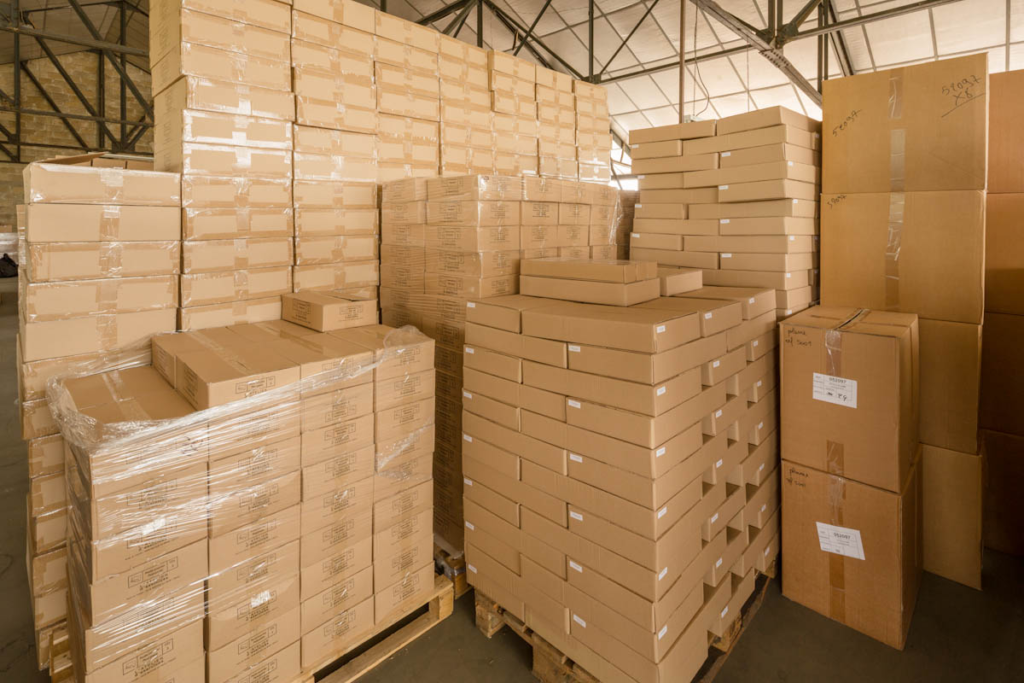
Proper packaging reduces damage rates during long-distance shipping.
Common export packaging:
- Flat-pack (KD structure)
- Carton box with foam protection
- Edge protectors
According to International Safe Transit Association (ISTA):
https://ista.org/
Proper packaging testing ensures products withstand international logistics stress.
Tip: Always request packaging photos and drop-test results.
7. Compliance & Certifications
Different markets require different certifications.
Key standards:
- FSC (sustainable wood sourcing): https://fsc.org/
- BIFMA (office furniture safety): https://www.bifma.org/
- ISO 9001 (quality management)
Compliance is especially important for:
- Government projects
- Corporate office tenders
- Hotel/apartment developments
8. Cost Structure & Hidden Fees
Understanding total landed cost is critical.
Breakdown includes:
- Product cost
- Packaging cost
- Inland transportation
- Ocean freight
- Customs duties
You can estimate duties using the U.S. International Trade Commission database:
https://hts.usitc.gov/
Avoid surprises by requesting FOB and CIF quotes.
9. Communication & After-Sales Service
Clear communication minimizes misunderstandings.
Check:
- Response speed
- English proficiency
- Technical understanding
After-sales support should include:
- Spare parts supply
- Replacement policy
- Warranty terms
For long-term partnerships, prioritize suppliers with dedicated export teams.
10. Logistics & Export Experience
Experienced exporters understand:
- Documentation (BL, CO, packing list)
- Customs clearance
- Container optimization
According to the World Bank logistics index:
https://www.worldbank.org/
Efficient logistics directly impacts delivery reliability.
Application Scenarios
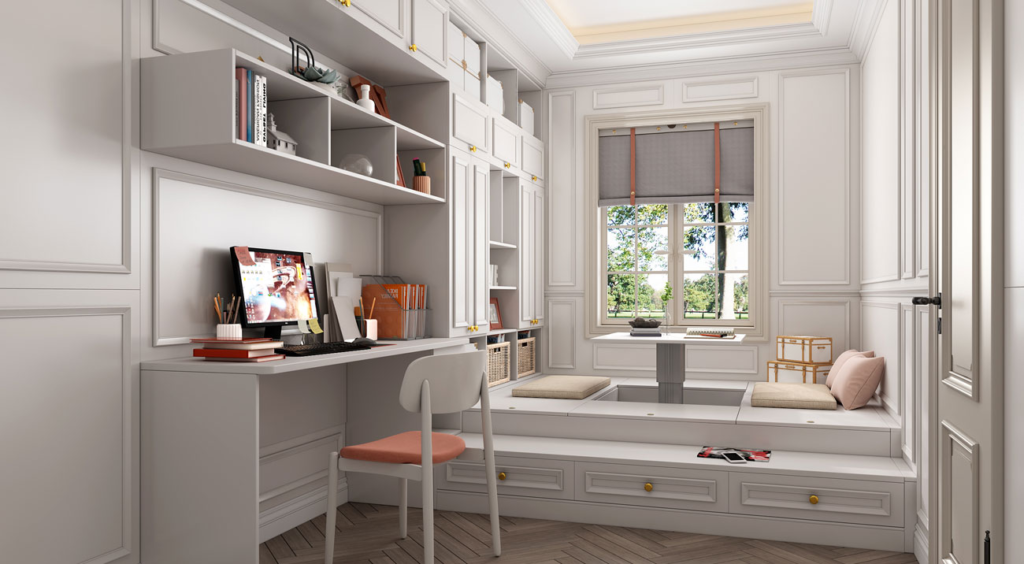
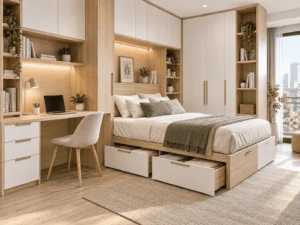
Home office furniture from China is widely used in:
- Remote work setups
- Co-living apartments
- Student housing projects
- Hotel extended-stay rooms
For B2B buyers, modular and flat-pack designs are ideal for bulk shipment and easy installation.
Materials Overview
Common materials include:
- Plywood: Durable, moisture-resistant
- MDF: Smooth surface, cost-effective
- Particle board: Budget-friendly
Material choice depends on:
- Market positioning
- Budget
- Durability requirements
MOQ, Lead Time & Packaging Summary
| Factor | Typical Range |
|---|---|
| MOQ | 50–300 sets |
| Lead Time | 25–45 days |
| Packaging | Flat-pack export carton |
Recommended Internal Links
- /home-office-furniture/
- /about-us/
CTA / Inquiry
Tell us your target market and we’ll recommend the right product mix.
Our team supports OEM/ODM solutions for importers, wholesalers, and project contractors.
Product Anchor Text
home office furniture from China
FAQ
1. What is the typical MOQ for home office furniture from China?
MOQ usually ranges from 50 to 300 sets depending on customization and product complexity.
2. How long does production take?
Standard lead time is 25–45 days after order confirmation.
3. Can I customize designs with Chinese suppliers?
Yes, most manufacturers offer full OEM/ODM services including size, material, and branding.
4. What certifications are required?
Common certifications include FSC, BIFMA, and CARB compliance depending on your market.
5. How can I ensure product quality?
Request samples, third-party inspections, and detailed specifications before production.