If you are sourcing engineered wood bathroom cabinets for hotel projects, apartment bathrooms, rental housing, wholesale programs, retail collections or OEM bathroom furniture supply, the key question is not only which material looks better. B2B buyers need to check whether the manufacturer can control moisture resistance, edge sealing, cabinet structure, export packaging, MOQ, lead time and repeat-order quality. This guide is written for importers, wholesalers, contractors, hotel buyers and apartment project buyers who need a practical factory-side procurement checklist before sending an RFQ.
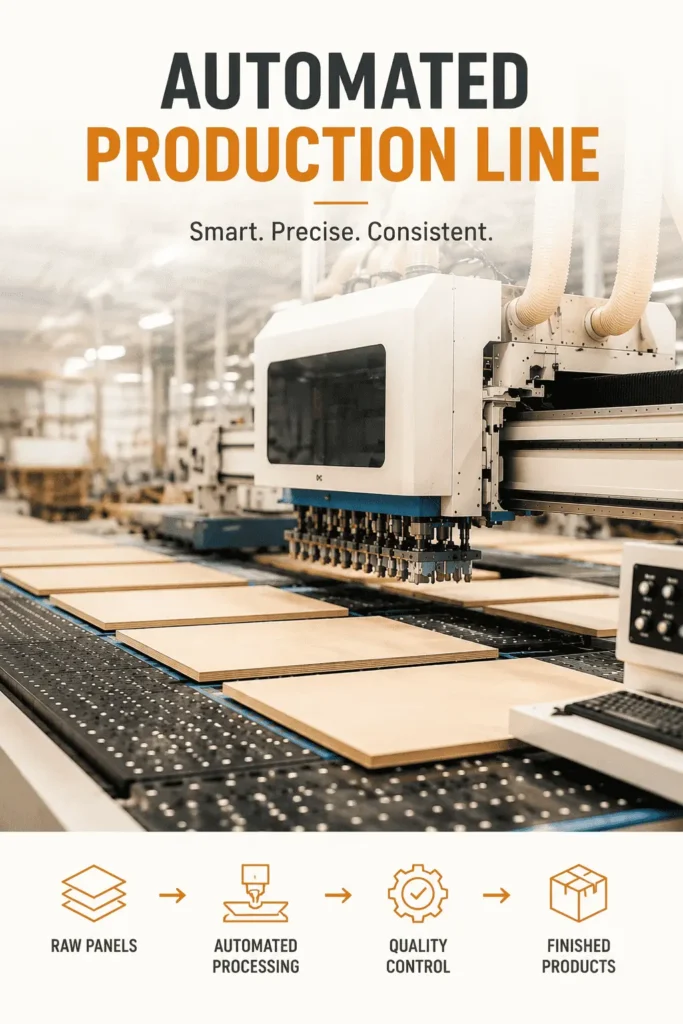
Table of Contents
- Why B2B Buyers Source Engineered Wood Bathroom Cabinets
- What a Real Bathroom Cabinet Manufacturer Should Provide
- Main Application Scenarios for Bathroom Cabinet Procurement
- Engineered Wood Materials for Bathroom Cabinet Manufacturing
- Moisture Resistance, Edge Sealing and Surface Protection
- OEM/ODM Customization Options for Bathroom Cabinets
- MOQ, Sample Time and Bulk Production Lead Time
- Export Packaging and Container Loading for Bathroom Cabinets
- Factory Quality Control Points Buyers Should Check
- 11 Buyer Checks Before Choosing a Bathroom Cabinet Factory
- Why Work with a Panel Furniture Export Factory
- Buyer RFQ Checklist
- FAQ
- Final Inquiry CTA
Why B2B Buyers Source Engineered Wood Bathroom Cabinets
Engineered wood bathroom cabinets are widely used in modern bathroom furniture production because they support stable dimensions, flexible finishes, efficient CNC processing and scalable factory cost. For importers, wholesalers, retailers, contractors, hotel developers, apartment operators and private-label furniture brands, engineered wood is practical for repeated cabinet production and export supply.
Unlike solid wood, engineered panels can be produced with consistent thickness, size and surface quality. This is important for B2B bathroom cabinet orders because buyers often need repeated sizes, standardized packing, stable color matching and predictable lead times.
Industry buyers often search for terms such as engineered wood bathroom cabinets, engineered wood bathroom cabinet manufacturer, engineered wood bathroom cabinet factory, engineered wood bathroom cabinet OEM, bathroom furniture factory and panel furniture materials. These are procurement keywords. They usually come from buyers who already need a factory, not from consumers looking for bathroom decoration ideas.
For B2B buyers, the purchasing focus is clear:
Can the factory use the right material for bathroom conditions?
Can it control moisture-sensitive edges and cut-outs?
Can it support OEM/ODM dimensions and project drawings?
Can it pack the cabinets safely for export?
Can it keep the same quality for repeat orders?
In real factory cooperation, the buyer is not only purchasing an engineered wood vanity. The buyer is purchasing material control, production consistency, export packaging and long-term supply reliability.
What a Real Bathroom Cabinet Manufacturer Should Provide
A professional engineered wood bathroom cabinet manufacturer should support the full process from inquiry to shipment. The factory should understand drawings, materials, finish selection, hardware fitting, packaging, container loading and export documentation.
Factory Capability Review
A real bathroom cabinet factory should be able to explain its production process clearly. For panel furniture, this usually includes material selection, CNC cutting, edge banding, drilling, surface inspection, hardware fitting, trial assembly, export packing and container loading.
For bathroom furniture, the factory also needs to understand humidity risk, sink openings, plumbing clearance, wall-mounted structures and edge protection. These details are more important than simply showing product photos.
Starwood Industry Co., Ltd. is a China-based flat-pack panel furniture manufacturer supporting OEM/ODM production for global brands, importers, wholesalers, retailers, contractors and project buyers. Buyers can learn more about the factory here: About Our Factory.
Drawing Review Before Quotation
Before pricing, the factory should review cabinet drawings, dimensions, sink position, countertop requirements, drawer layout, door structure, plumbing space, back panel design, board thickness and packaging method.
For example, a drawer bathroom vanity may need special clearance for plumbing. A floating vanity needs stronger wall-mounting structure. A double-sink vanity needs accurate opening positions and stable middle support. A hotel vanity cabinet may need repeated size control across many rooms.
A good engineered wood bathroom cabinet manufacturer should not quote only from one reference photo. It should review the structure and identify possible production risks before sampling.
OEM and ODM Manufacturing Support
OEM manufacturing is suitable when the buyer provides drawings, samples, specifications, brand requirements or packaging standards. ODM development is suitable when the buyer has a market idea but needs factory support for structure, material choice, finish matching, hardware selection and cost optimization.
For bathroom cabinets, both OEM and ODM are common. Importers may already have cabinet drawings. Retailers may need private-label bathroom vanities. Contractors may need project cabinets based on room layouts. Hotel buyers may need bathroom cabinets coordinated with wardrobes, desks, TV panels and storage furniture.
For full customization support, buyers can review: OEM & ODM Furniture Manufacturing Services.
Main Application Scenarios for Bathroom Cabinet Procurement
Before selecting engineered wood materials, buyers should define where the bathroom cabinets will be used. Different sales channels and project types require different specifications, packaging methods and cost levels.
Hotel Bathroom Furniture
Hotel bathroom cabinets must balance appearance, durability, cleaning convenience and project delivery. Buyers usually need stable color matching, moisture-resistant materials, soft-close hardware and repeatable dimensions.
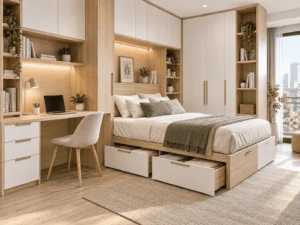
For hotel projects, bathroom cabinets may need to match wardrobes, desks, TV panels, minibar cabinets or room storage furniture. A panel furniture export factory can coordinate multiple furniture categories with the same finish direction.
Apartment and Rental Housing Projects
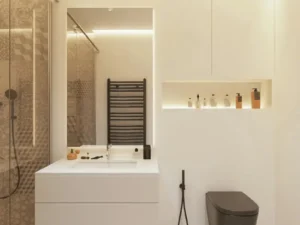
Apartment bathroom cabinets need cost control, easy maintenance and stable repeat production. Buyers may need wall-mounted vanities, freestanding vanities, mirror cabinets, laundry cabinets or compact bathroom storage units.
For rental housing and serviced apartments, the cabinet should be practical, easy to clean and strong enough for daily use. Packaging may need to be arranged by unit, floor, room type or cabinet model.
Wholesale and Distribution
Wholesalers and distributors need bathroom cabinets that are easy to stock, easy to sell and easy to reorder. Standard sizes, consistent finishes and stable packaging are important.
For wholesale programs, the supplier should keep material codes, color samples, drawings, hardware specifications and carton designs for repeat orders.
Retail and E-Commerce
Retailers and e-commerce sellers need clear product presentation, private-label packaging, barcode labels, assembly instructions and strong cartons. Engineered wood bathroom cabinets are suitable for these channels because they can be produced in consistent designs and packaged efficiently.
For online sales, packaging strength and hardware organization are critical. Missing screws, unclear manuals or weak cartons can increase returns and customer complaints.
Contractor and Project Furniture Supply
Contractors need predictable lead time, organized cartons and clear packing lists. For large projects, bathroom furniture delivery should follow installation logic. Carton marks may need to show building, floor, unit, room or product model.
For project-based sourcing, visit: Project Furniture Manufacturing.
Engineered Wood Materials for Bathroom Cabinet Manufacturing
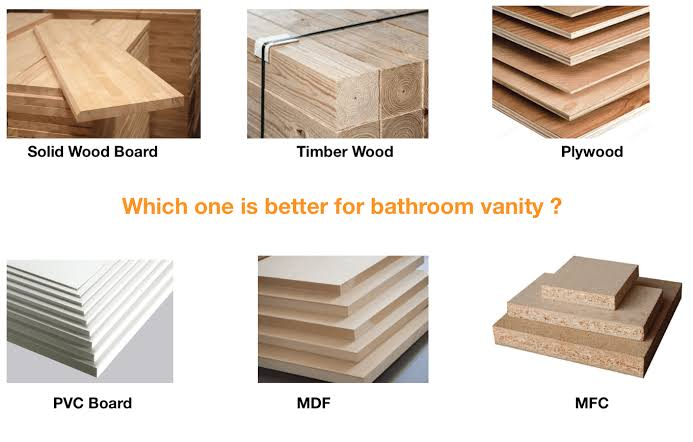
Engineered wood bathroom cabinets can be produced from different panel materials. The best choice depends on target market, project budget, moisture exposure, finish requirement and buyer standards.
Plywood
Plywood is widely used for higher-quality bathroom cabinets because it offers good strength and screw holding. It is suitable for hotel bathroom cabinets, apartment projects and premium vanity programs.
For bathroom use, buyers should confirm plywood grade, thickness, glue type, surface finish and edge sealing. Plywood can perform well when properly sealed and finished, but the specification must be clear before quotation.
Moisture-Resistant MDF
MDF is commonly used for cabinet doors, decorative panels and painted finishes because it has a smooth surface. Moisture-resistant MDF can be selected for bathroom furniture when the buyer wants painted, lacquered or PET-style doors.
However, MDF requires proper sealing, surface protection and edge treatment. For bathroom applications, buyers should confirm whether the MDF is suitable for humid conditions and whether exposed edges are fully sealed.
Particle Board
Particle board is a cost-effective material for bathroom cabinets when combined with melamine, laminate or other protective surfaces. It is often used for price-sensitive wholesale and retail programs.
For bathroom furniture, particle board must be carefully specified. Buyers should confirm board density, thickness, surface lamination and edge sealing. Poor edge treatment can increase swelling risk in humid environments.
Melamine Board
Melamine board is practical for engineered wood bathroom cabinets because it offers stable colors, wood grains and cleanable surfaces. It can be used for cabinet carcasses, shelves, side panels and storage cabinets.
For large-volume orders, melamine board supports efficient production and consistent appearance. It is commonly used in OEM bathroom furniture and project furniture.
Laminated Engineered Panels
Laminate surfaces can improve wear resistance, moisture protection and visual quality. Buyers may choose high-pressure laminate, decorative laminate, PET, PVC film or other surface materials depending on market positioning.
For hotel and apartment projects, laminate surfaces are often selected because they are easier to clean and more durable than untreated panels.
Mixed-Material Vanity Structures
An engineered wood vanity may combine several materials. For example, a buyer may choose plywood for the cabinet body, moisture-resistant MDF for doors, laminate for exposed surfaces and melamine board for internal shelves.
This mixed-material strategy helps balance cost, durability and appearance. A professional bathroom furniture manufacturer should help buyers select the right combination instead of using one material for every part.
Moisture Resistance, Edge Sealing and Surface Protection
Bathroom cabinets are used in high-humidity environments. Even good engineered wood materials can fail if the factory does not control surface protection, edge sealing and structure design.
The U.S. EPA explains that moisture control is important for reducing mold growth indoors. For bathroom furniture buyers, this means the cabinet should be designed to reduce water absorption, protect edges and support normal bathroom use. Reference: EPA Mold and Moisture Control.
Edge Sealing
Edges are often the weakest point of engineered wood bathroom cabinets. If water enters through exposed edges, swelling and delamination can occur.
Buyers should check edge banding thickness, glue quality, trimming, corner finishing and sealing of cut-out areas. Sink openings, plumbing holes and back panel cuts should receive special attention.
Surface Finish
Bathroom cabinets may use melamine, laminate, PET, lacquer, veneer, painted finish or other decorative surfaces. The surface finish should match the target market and moisture exposure.
For hotel and apartment projects, easy-clean surfaces and stable color matching are important. For retail bathroom vanities, visual appeal and packaging protection are also important.
Hardware Protection
Bathroom furniture hardware may be exposed to humidity. Buyers should confirm hinges, drawer slides, handles, screws, wall-mounting brackets and soft-close systems.
For humid markets, better hardware can reduce rust, noise and maintenance issues. For floating vanities, wall brackets and fixing accessories should be reviewed carefully.
Cabinet Structure
Bathroom cabinets should allow practical installation and maintenance. Sink cabinet backs may need open space for plumbing. Drawer vanities may need special drawer cut-outs. Mirror cabinets may need wall-mounting reinforcement.
A factory with bathroom furniture experience can suggest structure improvements before mass production.
Compliance for Composite Wood Products
For U.S. market sourcing, composite wood products may need to meet formaldehyde emission requirements. Buyers can review the official EPA information here: EPA Formaldehyde Emission Standards for Composite Wood Products.
For California-related markets, CARB composite wood product requirements may also be relevant. Buyers can review official resources here: CARB Composite Wood Products Publications.
For buyers requesting responsible wood sourcing, FSC chain of custody certification may help verify certified material through the supply chain. Reference: FSC Chain of Custody Certification.
OEM/ODM Customization Options for Bathroom Cabinets
A professional engineered wood bathroom cabinet manufacturer should support more than material selection. Real B2B customization usually covers dimensions, function, finish, hardware, packaging and branding.
Custom Dimensions
Buyers can customize cabinet width, depth, height, drawer layout, sink opening, countertop position, side panel thickness, back panel structure and mirror cabinet size.
For apartment and hotel projects, dimensions should match project drawings. For retail programs, dimensions should also consider carton size and shipping efficiency.
Vanity Types
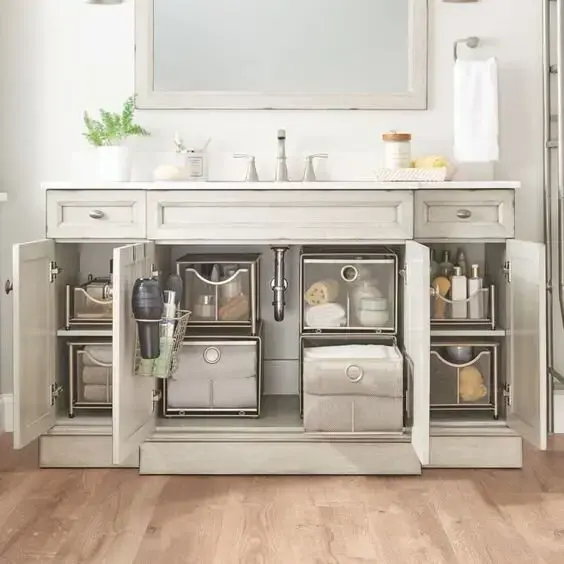
Common engineered wood bathroom cabinet types include:
Wall-mounted vanities
Freestanding vanities
Single-sink vanities
Double-sink vanities
Drawer vanities
Door-and-shelf cabinets
Mirror cabinets
Bathroom storage towers
Laundry storage cabinets
Compact bathroom cabinets
A strong OEM bathroom furniture factory should help buyers choose the structure based on application, cost and installation method.
Surface Finish and Color
Common finishes include white, grey, oak, walnut, black, matte finish, high-gloss finish, stone-look finish, wood grain and two-tone combinations.
For project orders, color consistency is very important. Buyers should approve physical samples before mass production. Digital images are not enough for accurate color confirmation.
Hardware and Functional Parts
Hardware options include hinges, drawer slides, handles, knobs, soft-close systems, wall-mounting brackets, adjustable shelves, metal legs, towel bars and mirror cabinet hinges.
For hotel and apartment projects, soft-close hardware can improve user experience and reduce maintenance complaints. For wholesale programs, standard hardware may be selected for cost control, but quality should still be stable.
Private-Label Packaging
Many importers, retailers and e-commerce brands need private-label support. A bathroom cabinet OEM factory can support logo labels, barcode labels, SKU labels, carton marks, hardware bags, assembly instructions and buyer-specific packaging.
For project orders, cartons can be marked by building, floor, room, unit type or installation sequence.
MOQ, Sample Time and Bulk Production Lead Time
MOQ and lead time are key purchasing topics, but they depend on material, finish, structure, quantity and packaging requirements.
MOQ Planning
MOQ depends on several factors:
Material type
Board thickness
Surface finish
Cabinet size
Door and drawer structure
Hardware level
Private-label packaging
Project quantity
Destination market requirement
Standard melamine or laminate bathroom cabinets may have easier MOQ planning. Special colors, painted finishes, premium plywood structures, custom hardware or private packaging may require higher MOQ because the factory needs to purchase materials and arrange production setup.
For export orders, container-based purchasing is usually more efficient. Buyers can plan by 20GP, 40GP or 40HQ container depending on cabinet size, carton volume and product mix.
Sample Development
For new engineered wood bathroom cabinet OEM projects, sample development is strongly recommended. A sample helps confirm structure, material, finish, edge sealing, drilling, hardware, packaging and installation method.
A practical sample process usually includes:
Requirement discussion
Drawing review
Material and finish confirmation
Quotation confirmation
Sample production
Trial assembly
Packaging review
Buyer approval
Pre-production adjustment
Skipping the sample stage may save time at the beginning, but it increases the risk of bulk production problems.
Bulk Production Lead Time
Bulk lead time depends on order quantity, material availability, finish process, production schedule and packaging complexity.
A reliable bathroom cabinet factory should explain the production milestones clearly: material purchasing, CNC cutting, edge banding, drilling, surface inspection, hardware packing, QC inspection, carton packing and loading.
For hotel and apartment projects, buyers should leave enough time for sample approval, production, inspection, shipping and site installation.
Export Packaging and Container Loading for Bathroom Cabinets
Export packaging is a major part of bathroom cabinet manufacturing. A cabinet may be well made, but weak packaging can still cause edge damage, surface scratches, cracked panels, missing hardware or installation complaints.
Flat-Pack and Assembled Packaging
Bathroom cabinets can be shipped flat-pack, knock-down or partially assembled depending on buyer requirements and product structure.
Flat-pack packaging improves container loading efficiency and reduces freight volume. Assembled packaging may reduce installation work but increases shipping volume and packaging cost.
A professional factory should recommend the best packaging method based on product type, sales channel and destination market.
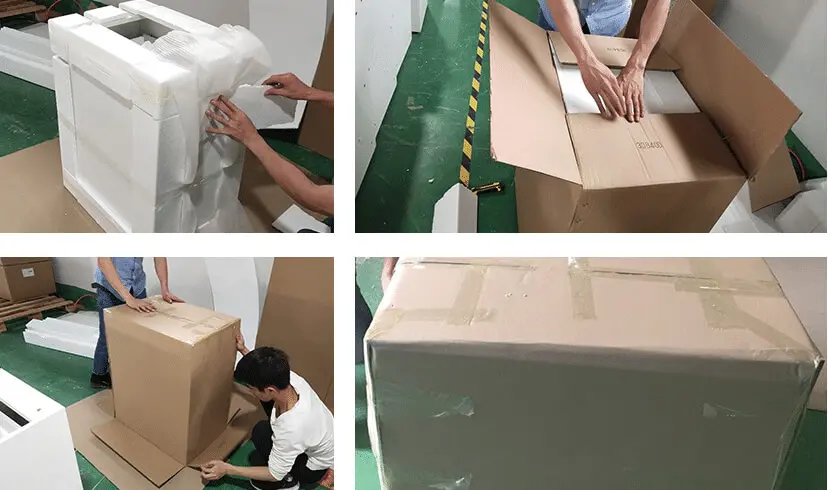
Packaging Protection
Good packaging may include reinforced cartons, foam protection, corner guards, edge protection, plastic bags, hardware bags, instruction manuals, model labels and carton marks.
For glossy surfaces, mirrors or painted finishes, extra protection should be discussed before quotation.
Packaging for Retail and E-Commerce
Retail and e-commerce packaging should be strong enough for warehouse handling and final delivery. Buyers may require barcode labels, SKU labels, model numbers, color labels and branded instruction manuals.
A clear hardware bag system can reduce customer service problems. Each screw, hinge, drawer slide and connector should be easy to identify.
Packaging for Project Orders
For hotel, apartment and contractor projects, carton marks should follow installation logic. Cartons may be marked by building, floor, unit, room type, bathroom type or cabinet model.
This helps installation teams find the correct product faster and reduce site confusion.
Container Loading
Container loading should consider carton dimensions, product weight, loading order and damage prevention. Loading photos and packing lists are useful for importers, wholesalers and project buyers.
If wooden pallets, crates or supports are used in international shipment, buyers should check wood packaging material requirements. USDA APHIS provides official guidance on ISPM 15 and wood packaging material. Reference: USDA APHIS Wood Packaging Material Guidance.
Factory Quality Control Points Buyers Should Check
A serious engineered wood bathroom cabinet factory should control quality from incoming material to final shipment.
Material Inspection
Before production, the factory should check board thickness, surface condition, density, color, moisture condition and material labels. If the buyer requires certificates or test reports, these requirements should be confirmed before mass production.
Cutting Accuracy
Bathroom cabinets depend on accurate panel cutting. If panel size is wrong, the cabinet may have poor gaps, weak structure or installation problems.
CNC cutting helps improve consistency for bulk production and project quantities.
Edge Banding and Sealing
Edge banding is especially important for engineered wood bathroom cabinets. Buyers should check edge thickness, glue line, trimming quality, corner finishing and sealing around cut-outs.
Sink openings, plumbing holes and exposed backs need careful protection.
Drilling Accuracy
Cabinet assembly depends on accurate drilling for hinges, drawer slides, cam locks, dowels, screws, shelf supports and wall brackets.
Wrong drilling positions can cause installation problems and after-sales claims. During sample approval, the cabinet should be assembled and checked.
Hardware Fitting
Hinges, drawer slides, soft-close systems, handles and wall-mounting parts should match board thickness and cabinet structure.
For drawer vanities, slide installation and drawer alignment must be checked. For wall-mounted cabinets, support structure and bracket fitting are important.
Surface Inspection
Bathroom cabinets often use visible finishes, so surface defects are easy to notice. The factory should check scratches, color difference, glue marks, dents, edge defects and finish consistency before packing.
Cabinet Performance Reference
For buyers who use formal cabinet performance references, the ANSI/KCMA A161.1 standard covers performance and construction requirements for kitchen and vanity cabinets. Buyers can review the KCMA standard here: ANSI/KCMA A161.1 Performance and Construction Standard for Kitchen and Vanity Cabinets.
For commercial furniture and project buyers, sustainability references may also appear in tender documents. BIFMA states that the ANSI/BIFMA e3 Furniture Sustainability Standard assesses environmental, health, wellness and social impacts related to furniture products. Reference: ANSI/BIFMA e3 Furniture Sustainability Standard.
Final Packing Inspection
Before shipment, the factory should check carton labels, hardware bags, instruction manuals, quantity, model numbers and packing list accuracy.
For B2B buyers, missing hardware or wrong carton marks can create serious after-sales problems.
11 Buyer Checks Before Choosing an Engineered Wood Bathroom Cabinet Manufacturer
For B2B buyers, choosing an engineered wood bathroom cabinet manufacturer should follow a procurement checklist, not only a product comparison. Importers, wholesalers, hotel buyers, apartment developers and contractors need to check factory capability, material stability, moisture protection, packaging strength, delivery schedule and repeat-order control before confirming a supplier.
Check 1: Confirm the Supplier Is a Real Manufacturer
A real engineered wood bathroom cabinet manufacturer should be able to explain panel cutting, edge banding, drilling, hardware fitting, surface finishing, packing and container loading.
If the supplier only provides product photos but cannot explain production details, the buyer should be careful.
Check 2: Review Factory Experience with Bathroom Furniture
Bathroom cabinets are different from ordinary storage cabinets. They face humidity, cleaning, water splashes and plumbing requirements.
A qualified bathroom cabinet factory should understand edge sealing, sink openings, wall-mounted structure, drawer clearance and moisture-sensitive areas.
Check 3: Match Materials with the Target Market
Buyers should not choose materials only by price. Plywood, moisture-resistant MDF, particle board, melamine board and laminated panels all have different cost and performance levels.
A hotel bathroom cabinet, apartment vanity and retail bathroom cabinet may need different material combinations.
Check 4: Confirm Edge Sealing and Moisture Protection
For engineered wood bathroom cabinets, edge sealing is one of the most important quality points.
Buyers should check edge banding thickness, glue line, trimming quality, sink cut-outs, plumbing holes and exposed back panel areas. Poor edge sealing can increase swelling risk after installation.
Check 5: Check OEM/ODM Customization Ability
A good OEM bathroom cabinet supplier should support custom dimensions, cabinet structure, drawer layout, sink position, mirror cabinet design, surface finish, hardware, carton marks and private-label packaging.
This is important for brands, wholesalers and project buyers who need repeated production.
Check 6: Ask for Sample Approval Before Bulk Orders
For new engineered wood bathroom cabinet projects, sample approval is strongly recommended.
The sample should be checked for material, finish, edge sealing, drilling accuracy, hardware fitting, assembly, packaging and installation logic before mass production.
Check 7: Confirm MOQ Based on Real Production Conditions
MOQ depends on material, finish, cabinet size, hardware, packaging and customization level.
Standard melamine or laminate bathroom cabinets may have easier MOQ planning, while special colors, premium plywood, painted finishes or private packaging may require higher MOQ.
Check 8: Check Bulk Lead Time and Production Milestones
B2B buyers should ask the factory to explain the production schedule clearly.
Key milestones include material purchasing, CNC cutting, edge banding, drilling, surface inspection, hardware packing, carton packing, QC inspection and container loading.
Check 9: Review Export Packaging Before Production
Packaging is part of the product.
Buyers should confirm carton structure, corner protection, edge protection, foam protection, hardware bags, instruction manuals, carton marks and barcode labels before mass production. Strong packaging helps reduce damage, missing parts and customer complaints.
Check 10: Confirm Project Delivery and Carton Mark Logic
For hotel, apartment and contractor projects, carton marks should follow the installation plan.
Cartons may need to be marked by building, floor, room, unit type or cabinet model. A bathroom cabinet factory with project experience can help reduce site confusion and installation delays.
Check 11: Choose a Factory That Supports Repeat Orders
B2B buyers usually need long-term supply, not one-time production.
A reliable OEM/ODM panel furniture export factory should keep drawings, material codes, finish samples, hardware specifications, packaging files and QC standards for future repeat orders.
Why Work with a Panel Furniture Export Factory
A panel furniture export factory can provide stronger support for buyers who need scalable production, custom sizes, flat-pack structures and long-term supply.
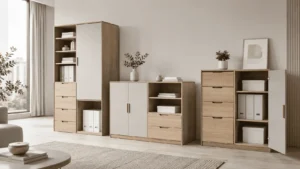
Starwood Industry Co., Ltd. manufactures flat-pack panel furniture for global brands, importers, wholesalers, retailers, e-commerce sellers, real estate projects, hospitality projects and commercial spaces. Our product scope includes bathroom cabinets, engineered wood vanities, mirror cabinets, storage cabinets, kitchen cabinets, wardrobes, desks, TV cabinets and space-saving furniture.
A buyer may start with engineered wood bathroom cabinets and later expand to apartment wardrobes, kitchen storage, vanity mirrors, hotel room furniture or full project furniture packages. Working with one panel furniture manufacturer helps control color consistency, material coordination, packaging style and shipment planning.
Useful internal pages:
Home – Flat-Pack Furniture Manufacturer in China
About Our Factory
OEM & ODM Furniture Manufacturing Services
Project Furniture Manufacturing
Bathroom Furniture
engineered wood vanity
Buyer RFQ Checklist
Before contacting an engineered wood bathroom cabinet manufacturer, prepare the following information:
Product type: wall-mounted vanity, freestanding vanity, mirror cabinet, drawer vanity, double-sink vanity or bathroom storage cabinet
Application: wholesale, retail, e-commerce, hotel, apartment, rental housing, contractor supply or private label
Quantity: sample order, trial order, container order or project quantity
Dimensions: width, depth, height, sink position and layout drawing
Material: plywood, MDF, particle board, melamine board, laminate panel or required engineered wood type
Finish: melamine, laminate, PET, lacquer, veneer, matte, gloss or custom color
Structure: doors, drawers, shelves, plumbing clearance, back panel design and wall-mounting method
Hardware: hinges, drawer slides, handles, soft-close hardware, brackets, legs or mirror cabinet accessories
Packaging: flat-pack, KD, assembled, retail-ready carton, private label or project carton marks
Compliance: TSCA Title VI, CARB, FSC-related request, ANSI/KCMA reference, E1 or buyer-specific standard
Lead time: sample deadline, production deadline and shipment schedule
Destination: country, port and shipping method
Documents: commercial invoice, packing list, loading photos, certificates or test reports if required
The more complete your RFQ is, the faster the factory can provide a realistic quotation and production suggestion.
FAQ
Are engineered wood bathroom cabinets suitable for hotel and apartment projects?
Yes. Engineered wood bathroom cabinets are suitable for hotels, serviced apartments, rental housing and residential projects when the right materials, edge sealing, surface finish and hardware are selected.
Are you an engineered wood bathroom cabinet manufacturer or trading company?
We are a China-based OEM/ODM panel furniture manufacturer supporting engineered wood bathroom cabinets, vanities, mirror cabinets, storage cabinets and project furniture for importers, wholesalers, contractors, apartment developers and hotel buyers.
Can you produce bathroom cabinets according to buyer drawings?
Yes. Buyers can send CAD drawings, reference photos, product samples, dimensions or cabinet lists. We can review structure, materials, finishes, hardware, packaging and production details before quotation and sampling.
Do you support OEM bathroom cabinet manufacturing?
Yes. We support OEM production based on buyer drawings, specifications, samples, brand requirements and packaging standards.
Do you support ODM bathroom furniture development?
Yes. For buyers who have a market idea but no complete drawings, we can support ODM development, including product structure, material selection, finish matching, hardware options, sample production and packaging suggestions.
What engineered wood materials can be used for bathroom cabinets?
Common options include plywood, moisture-resistant MDF, particle board, melamine board, laminated panels, PET panels and painted engineered wood panels. The best choice depends on target market, budget, durability requirement and bathroom application.
What is the MOQ for engineered wood bathroom cabinet orders?
MOQ depends on material, finish, hardware, customization level and packaging requirements. Container-based orders are usually more efficient for export production. Buyers can send product details for a practical MOQ suggestion.
Can you provide private-label packaging?
Yes. We support logo labels, barcode labels, SKU labels, carton marks, hardware bags, assembly instructions and buyer-specific packaging requirements.
How do you control bathroom cabinet quality before shipment?
We check materials, cutting accuracy, edge banding, sealing, drilling positions, hardware fitting, surface finish, packing details, carton labels and loading preparation. For new projects, sample approval is recommended before mass production.
What should I send for a quotation?
Please send drawings or reference photos, dimensions, materials, finish requirements, sink position, hardware details, quantity, packaging request, destination market, compliance needs and target price if available.
Final Inquiry CTA
Looking for a reliable engineered wood bathroom cabinet manufacturer, bathroom furniture OEM factory or panel furniture export supplier for your next wholesale, retail, hotel, apartment or commercial project?
Request our engineered wood cabinet catalog and send us your drawings, cabinet list, reference photos, materials, finish requirements, order quantity, packaging request and destination market.
Our factory team can review your project and provide practical suggestions for material selection, structure optimization, MOQ, sample development, lead time, export packaging and quotation.