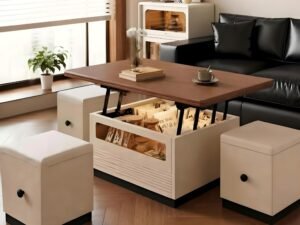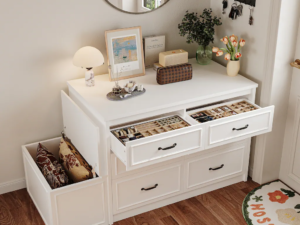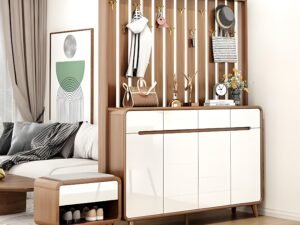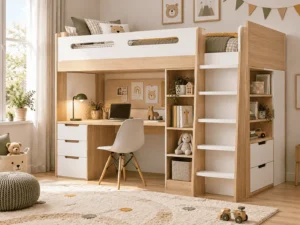
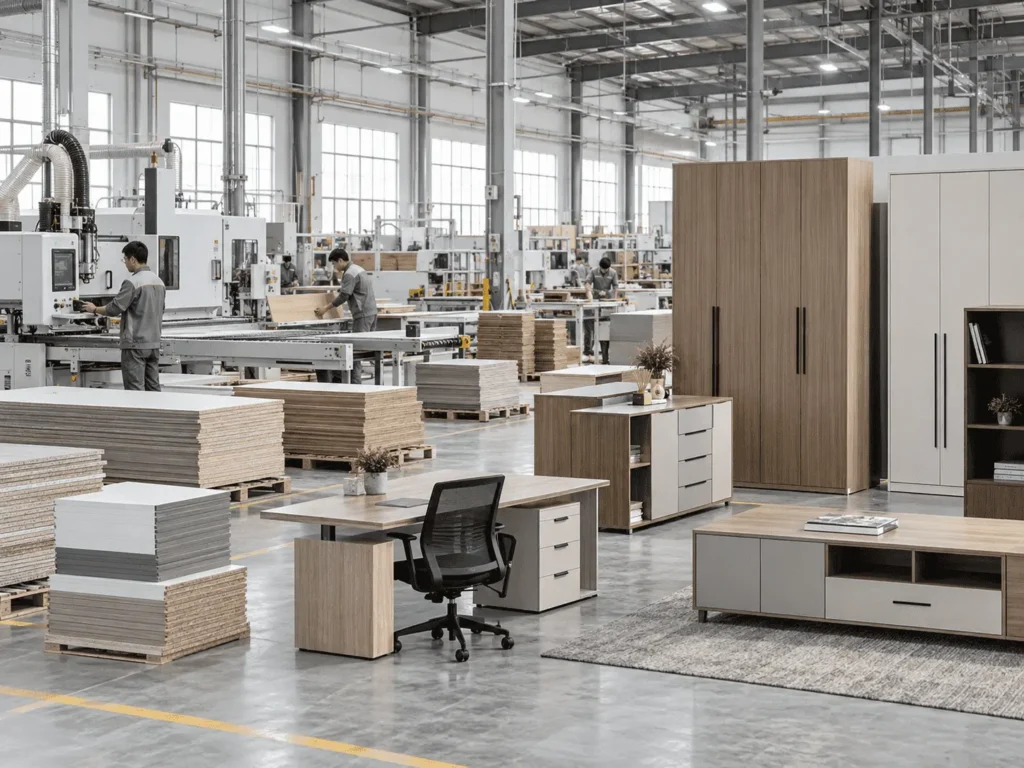
Finding a custom furniture manufacturer in China is easy. Finding a factory that can convert drawings, reference images, target costs, material requirements, packaging specifications, and project deadlines into repeatable production is much more important.
For importers, furniture brands, wholesalers, hotel procurement teams, apartment developers, contractors, and commercial project buyers, custom furniture purchasing is not simply about receiving a quotation. It is a controlled manufacturing process involving technical review, material selection, MOQ planning, sampling, approval, production scheduling, quality control, packaging, and export preparation.
This guide explains how the process works from a panel furniture factory’s perspective and what professional buyers should confirm before placing a custom OEM, ODM, hotel, apartment, or wholesale furniture order.
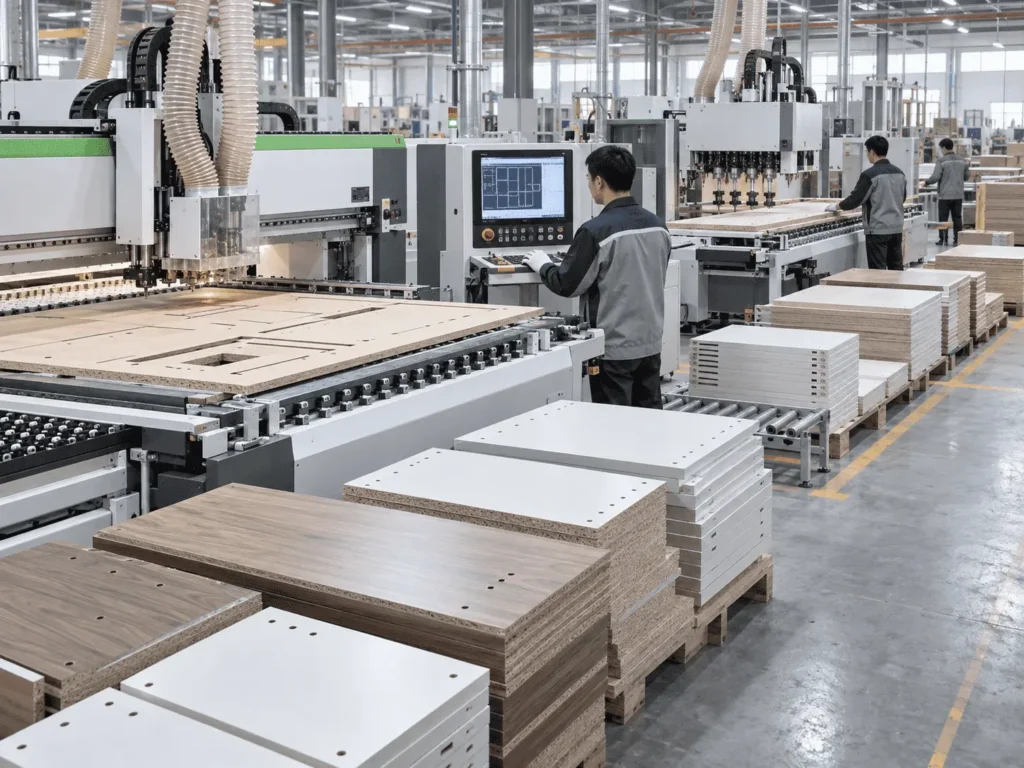
Table of Contents
- What B2B Buyers Should Expect from a Custom Furniture Manufacturer
- Step 1: Send a Manufacturing-Ready RFQ
- Step 2: Review Drawings and Product Feasibility
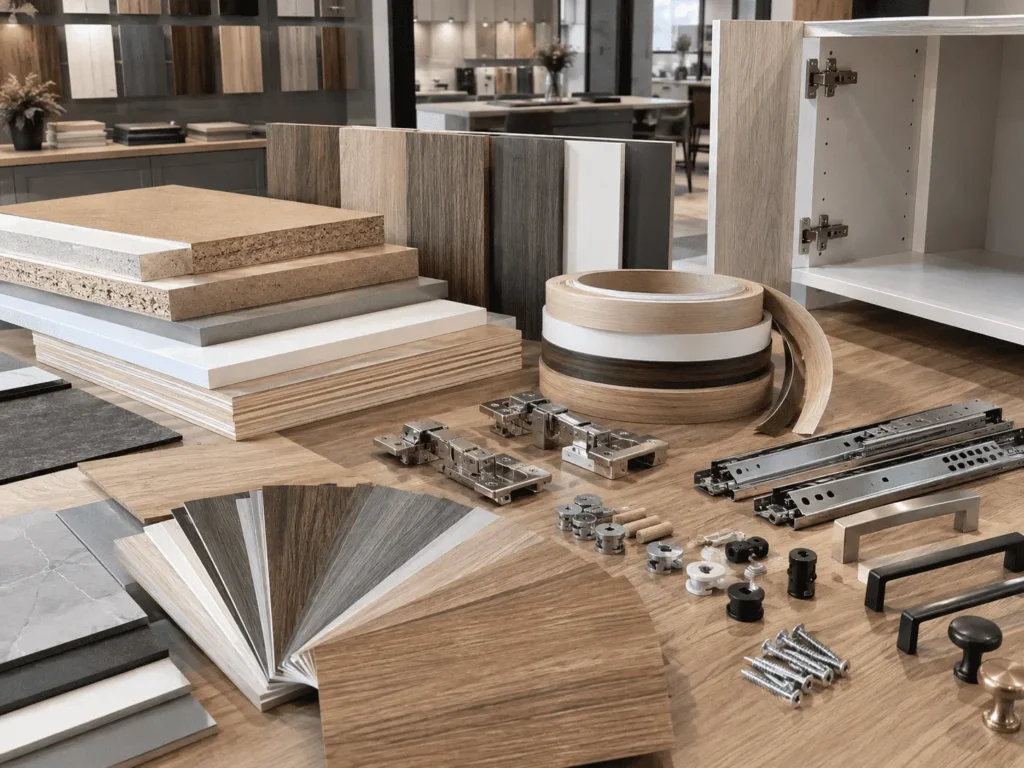
- Step 3: Confirm Materials, Finishes, and Hardware
- Step 4: Understand Custom Furniture MOQ
- Step 5: Develop and Approve the Sample
- Step 6: Confirm Lead Time Before Production
- Step 7: Control Mass Production and Quality
- Step 8: Finalize Packaging and Export Delivery
- Custom Furniture for Hotels and Apartments
- How to Compare Quotations from Chinese Furniture Factories
- What to Send for a Faster Quotation
- Frequently Asked Questions
What Should B2B Buyers Expect from a Custom Furniture Manufacturer in China?
A professional custom furniture factory should do more than change a product’s color or dimensions.
For B2B purchasing, customization may involve structure, board material, panel thickness, finish, drilling layout, hardware, storage configuration, carton dimensions, assembly instructions, branding, and destination-market requirements.
That means a factory needs to connect product development with manufacturing.
Starwood Industry Co., Ltd. specializes in flat-pack panel furniture and currently positions its production around engineered panels, CNC processing, OEM/ODM development, bulk production, quality control, export packing, and shipment preparation for brands, importers, wholesalers, and project buyers.
Buyers who want to understand the production background before sending an RFQ can first review our furniture factory in China.
Our typical product scope includes wardrobes, beds, nightstands, desks, storage cabinets, TV units, shoe cabinets, kitchen storage, bathroom cabinets, bookcases, and other panel-based furniture for retail and commercial projects. Project manufacturing also supports apartments, hotels, rental properties, offices, and other commercial environments.
The commercial value of customization is therefore not simply “make this product different.”
It is turning a buyer’s requirements into a specification that can be manufactured repeatedly at an acceptable cost and delivery schedule.
Step 1: Send a Manufacturing-Ready RFQ
The quality of a quotation depends heavily on the quality of the inquiry.
Many buyers begin by sending a reference photograph and asking:
“What is your best price?”
A photograph may be enough to start a conversation, but it is rarely enough for an accurate custom furniture quotation.
What a Good Custom Furniture RFQ Should Include
For a more useful quotation, send:
- product drawings or reference photos;
- overall dimensions;
- quantity by SKU;
- preferred panel material;
- target finish or color;
- hardware requirements;
- destination country;
- intended application;
- packaging requirements;
- private-label requirements;
- required delivery schedule;
- testing or compliance requirements.
For hotel and apartment projects, also include the BOQ, room layout, room types, furniture schedule, and installation or handover date where available.
A furniture brand developing a new retail collection should also explain its target market and target price position.
The manufacturer can then evaluate whether the proposed structure and materials are commercially realistic.
Target Price Is Useful Information
Some buyers avoid providing a target price because they worry it may affect the supplier’s quotation.
For custom manufacturing, however, target positioning can save significant development time.
A wardrobe intended for entry-level online retail cannot be engineered in exactly the same way as a premium hospitality wardrobe with different service-life expectations.
If the factory understands the target cost early, it can evaluate:
- panel thickness;
- board type;
- hardware category;
- number of components;
- construction method;
- packaging design;
- processing complexity.
The objective is not to remove necessary quality.
It is to avoid designing a product that cannot reach the buyer’s commercial target.
Step 2: Review Drawings and Manufacturing Feasibility
Custom furniture should not move directly from a reference image to bulk production.
The factory first needs to determine whether the design is suitable for the intended manufacturing system.
For panel furniture, technical review normally focuses on dimensions, board sizes, connection methods, hardware locations, machining requirements, assembly sequence, stability, packaging, and repeatability.
OEM Projects
OEM manufacturing works best when the buyer already has:
- CAD drawings;
- technical dimensions;
- BOM information;
- material specifications;
- hardware requirements;
- approved finishes;
- packaging requirements.
The factory reviews these documents and prepares them for manufacturing.
ODM Projects
ODM development is useful when the buyer has a commercial idea but does not yet have a finished production package.
For example:
“We need a compact apartment bedroom set with strong storage capacity, modern oak finish, flat-pack construction, and a target landed cost.”
The factory can then help translate that brief into a more manufacturable product direction.
Buyers developing this type of program can review our OEM & ODM furniture manufacturing services, which cover product review, sampling, bulk production, QC, export packing, and shipment preparation.
Why Manufacturing Review Matters
A visually attractive design may still create production problems.
A panel may be unnecessarily large.
A fitting may be difficult to install.
A drawer may interfere with another component.
A decorative detail may add significant machining cost without adding enough commercial value.
A carton may become too large for efficient handling.
Experienced factory engineering identifies these problems before the buyer pays for mass production.
Step 3: Confirm Materials, Finishes, and Hardware
Material selection has a direct effect on price, weight, machining, durability, appearance, compliance, and packaging.
For panel furniture programs, common materials include:
Particle Board
Particle board is widely used for flat-pack wardrobes, cabinets, desks, TV stands, storage furniture, and cost-focused retail programs.
It supports efficient panel processing and a wide range of decorative surfaces.
MDF
MDF provides a uniform surface and is useful where buyers require painted surfaces, routed profiles, certain decorative details, or specific machining characteristics.
Plywood
Plywood may be selected where project requirements call for different structural performance, screw-holding characteristics, or material positioning.
Melamine and Decorative Surfaces
Melamine-faced panels are widely used in B2B panel furniture because they can provide consistent decorative surfaces while remaining suitable for repeat production.
Finish decisions should also cover grain direction, edge-band color, gloss level, surface texture, and coordination across multiple SKUs.
Hardware Is Part of the Specification
Hinges, drawer slides, connectors, handles, rails, adjustable feet, brackets, and other fittings should not be treated as an afterthought.
Changing hardware after sample approval can change:
- drilling positions;
- drawer dimensions;
- door movement;
- assembly sequence;
- carton contents;
- product cost.
For repeat orders, the hardware specification should therefore be recorded together with the panel specification.
Confirm Destination-Market Requirements Early
Material compliance should be discussed before sampling.
For furniture entering the United States, EPA TSCA Title VI applies to regulated composite wood products including hardwood plywood, MDF, and particleboard, as well as finished goods containing them. EPA also specifies labeling, recordkeeping, third-party certification, and import requirements.
Buyers supplying the U.S. market can review the official requirements here:
U.S. EPA — Formaldehyde Emission Standards for Composite Wood Products
California buyers may also want to review the state’s Composite Wood Products Program during material approval:
California Air Resources Board — Composite Wood Products Program
For European Union projects, this deserves particular attention in 2026. Commission Regulation (EU) 2023/1464 restricts formaldehyde emissions from furniture and wood-based articles placed on the EU market after August 6, 2026, subject to the regulation’s scope, limits, test conditions, and exemptions.
EU buyers should review the official regulation when preparing specifications:
EUR-Lex — Commission Regulation (EU) 2023/1464
Compliance requirements can affect materials, testing, price, and lead time. They should not be introduced after production has already started.
Step 4: Understand Custom Furniture MOQ Before Finalizing the Collection
“What is your MOQ?” sounds like a simple question.
For custom furniture, it is usually not.
MOQ depends on how the product is manufactured.
Important factors include:
- custom board color;
- custom laminate or decorative paper;
- hardware purchasing quantities;
- carton printing;
- machining setup;
- number of SKUs;
- material sharing between SKUs;
- loading efficiency.
Starwood’s current factory positioning lists one container as the general export MOQ starting point.
However, that does not mean every SKU requires a full container.
The more useful discussion is how the container and production run can be allocated.
MOQ by SKU vs MOQ by Program
Consider a bedroom collection containing:
- wardrobe;
- bed;
- nightstand;
- dresser;
- desk.
If all five products use the same oak finish, similar board specification, and coordinated hardware, production planning may be easier than five unrelated custom products.
For B2B buyers, this creates an important procurement strategy:
design the collection as a manufacturing program, not as isolated SKUs.
That can help reduce material fragmentation, color variation, hardware complexity, and inventory risk.
Why Very Small Custom Orders Cost More
A factory still needs to complete engineering, machine setup, material handling, sample confirmation, hardware preparation, packaging development, and production administration.
Those costs are spread across fewer units when the order is very small.
That is why professional custom manufacturing should be compared on total project economics rather than expecting prototype quantities to carry mass-production pricing.
Step 5: Develop and Approve the Custom Furniture Sample
Sampling is not a formality.
It is one of the most important risk-control stages in custom furniture manufacturing.
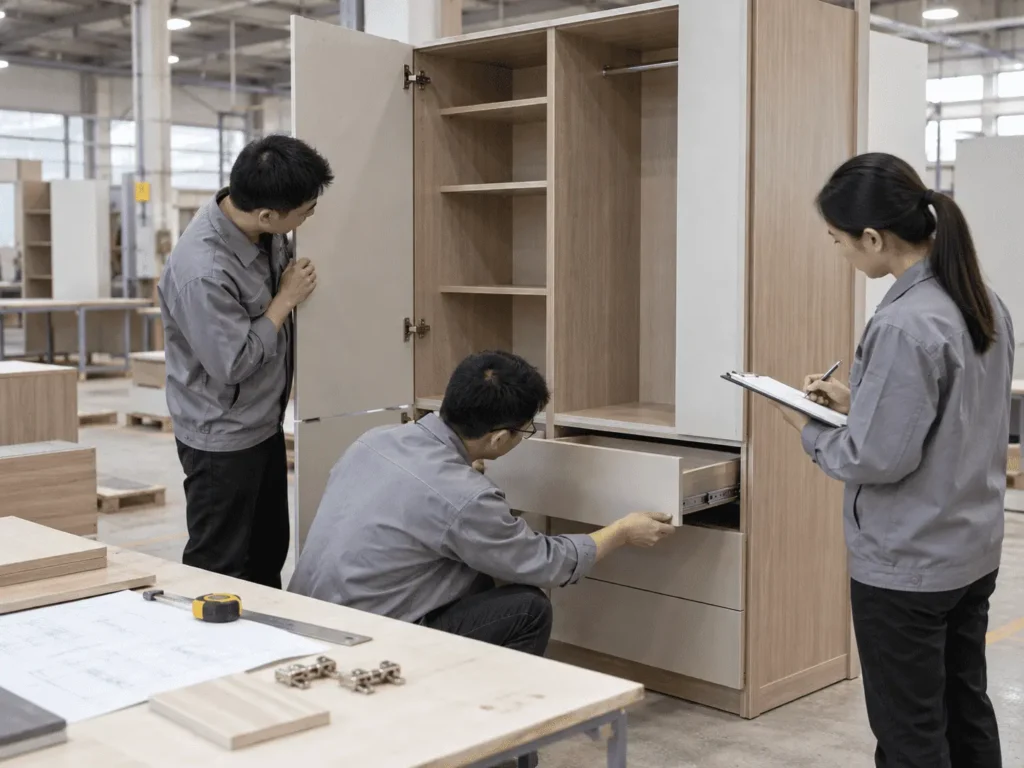
A useful sample should verify more than appearance.
What Buyers Should Check During Sample Approval
Review:
- overall dimensions;
- panel thickness;
- finish and color;
- edge-band quality;
- grain direction;
- hole positions;
- door alignment;
- drawer operation;
- hardware;
- handles;
- structural stability;
- assembly sequence;
- hardware quantity;
- packaging concept.
For flat-pack furniture, we also recommend trial assembly.
A product can look correct as individual panels while still creating installation problems when assembled.
Freeze Changes After Approval
Once the sample is approved, changes should be controlled.
A common source of manufacturing problems is continuous modification after production planning has started.
For example:
“Change the handle.”
“Move this drawer.”
“Make this panel thicker.”
“Use another hinge.”
Each change may affect several downstream components.
The safest process is therefore:
sample → correction → final sample/specification → signed approval → mass production.
The final approved version becomes the manufacturing reference.
Step 6: Confirm Custom Furniture Lead Time Before Production
Buyers often ask:
“What is your lead time?”
The better question is:
What must happen before the order can ship, and which approvals control the schedule?
Custom furniture lead time contains several stages.
Pre-Production Time
Before mass production, the project may require:
- drawing review;
- quotation approval;
- sample development;
- sample revision;
- finish confirmation;
- hardware confirmation;
- packaging approval;
- deposit;
- material procurement.
Production Time
Bulk production may then include:
- panel preparation;
- CNC cutting;
- drilling;
- edge banding;
- surface processing;
- hardware preparation;
- assembly checks;
- quality inspection;
- packing.
An existing Starwood ordering guide gives approximately 40 working days after deposit clearance as a typical production reference for its panel furniture orders, although custom projects should always be scheduled individually according to quantity and specifications.
For procurement planning, therefore, do not treat “40 working days” or any other factory number as the complete project timeline.
Sampling and buyer approvals come before it.
Inspection, booking, container loading, ocean freight, customs clearance, and local delivery come after it.
Work Backward from the Required Delivery Date
For hotel and apartment furniture projects, tell the manufacturer:
- required factory completion date;
- required shipment date;
- required destination arrival date;
- installation date;
- project handover date.
A professional project schedule should work backward from these dates.
This is much safer than asking the supplier for a generic production lead time and assuming the project will automatically arrive on time.
Step 7: Control Mass Production, Not Only the Final Inspection
One approved sample does not guarantee that every production unit will automatically match it.
Custom furniture quality control should therefore be integrated into production.
Incoming Material Control
Confirm the correct board, thickness, finish, edge banding, and hardware before processing.
CNC and Drilling Control
Dimensions and drilling positions should follow approved manufacturing information.
Incorrect drilling may not become visible until assembly.
Edge Processing
Check edge-band adhesion, color coordination, corners, joints, and visible surface quality.
Hardware Control
Verify model, quantity, installation positions, and functional performance.
Trial Assembly
For appropriate products, assembly checks can identify dimensional conflicts and hardware problems before cartons are closed.
Final Inspection
Final inspection can cover dimensions, appearance, function, hardware, quantities, carton marks, instructions, and packaging.
If buyers use their own inspection checklist, third-party inspection standard, or AQL requirement, send it to the manufacturer before production.
Commercial furniture projects may also have performance specifications beyond residential requirements. BIFMA maintains voluntary standards covering safety, durability, sustainability, storage, casegoods, seating, and other business and institutional furniture categories.
Project and office furniture buyers can review:
BIFMA — Furniture Standards Overview
For certain U.S. clothing storage units such as qualifying dressers and armoires, the CPSC’s mandatory requirements under 16 CFR Part 1261 should also be addressed during product development rather than at final inspection.
Official guidance is available here:
U.S. CPSC — Clothing Storage Units Business Guidance
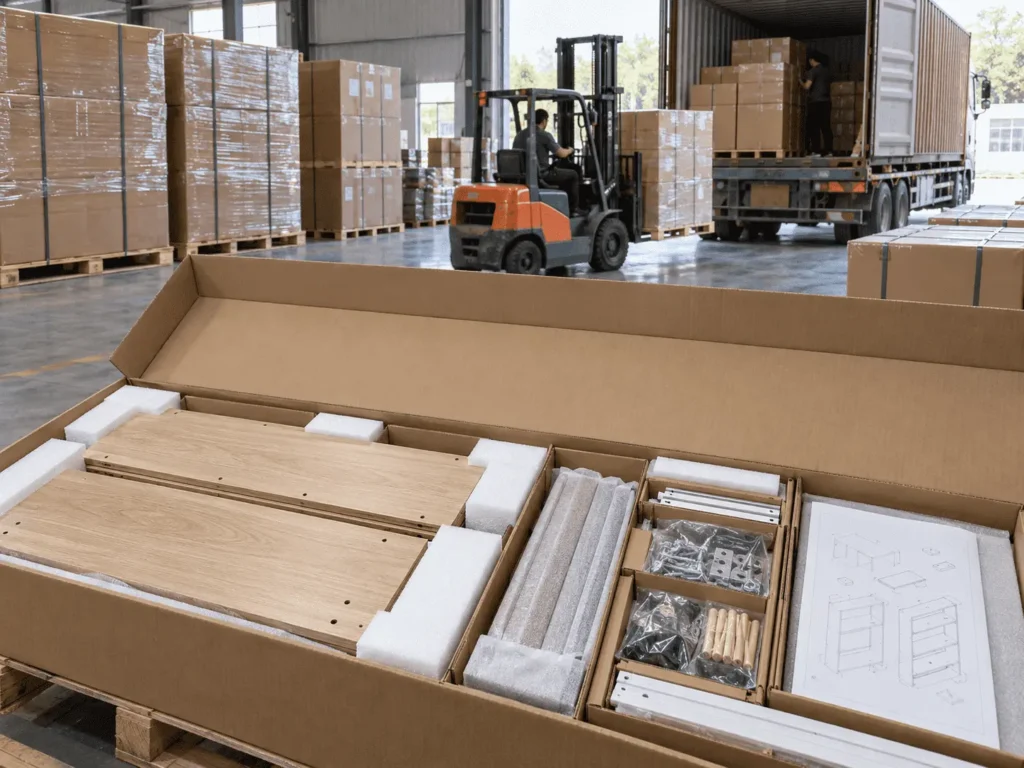
Step 8: Treat Packaging and Export Delivery as Part of Product Engineering
For an export furniture factory, manufacturing is not complete when the furniture passes inspection.
The product still has to survive warehousing, container loading, international transportation, unloading, and final distribution.
This makes packaging part of the product.
Flat-Pack Furniture Packaging Should Consider
- panel protection;
- corner protection;
- surface protection;
- hardware separation;
- carton strength;
- carton dimensions;
- assembly instructions;
- SKU identification;
- barcode or private label;
- container utilization.
A strong package is not necessarily the package with the most foam or cardboard.
The objective is to protect the product while controlling carton volume, material cost, and loading efficiency.
Packaging Should Be Evaluated Before Bulk Shipment
International buyers can also use recognized transport-testing procedures when appropriate.
ISTA Procedure 2C is specifically described as a partial simulation test for individual packaged furniture products transported in a container.
Buyers with formal packaging requirements can review:
International Safe Transit Association — Test Procedures
For retail and e-commerce furniture, this becomes particularly important because the carton may pass through multiple handling points before reaching the customer.
For project furniture, the priorities can be different.
Cartons may need room numbers, building zones, installation sequences, SKU labels, or other project identification.
Packaging strategy should therefore follow the actual delivery model.
Custom Furniture Manufacturing for Hotels, Apartments, and Commercial Projects
Custom furniture becomes particularly valuable when the room or building determines the product dimensions.
Typical applications include:
Hotel Furniture
A hotel room may require coordinated:
- wardrobes;
- beds and headboards;
- nightstands;
- desks;
- TV units;
- minibar cabinets;
- storage furniture.
The objective is consistency across repeated rooms while maintaining the approved design and finish.
Apartment and Rental Property Furniture
Apartment projects often need furniture that uses space efficiently.
Custom wardrobes, storage beds, desks, kitchen cabinets, shoe cabinets, bathroom cabinets, and TV units can be adjusted according to room dimensions and target budget.
Student Housing
Furniture may combine sleeping, storage, study, and wardrobe functions in limited floor space.
Panel construction and repeat room layouts make this suitable for controlled mass production.
Office and Commercial Furniture
Custom desks, shelving, storage cabinets, lockers, meeting-room storage, filing units, and other casegoods can be produced according to project specifications.
Buyers managing multi-room or commercial programs can review our project furniture manufacturing service for apartments, hotels, rental properties, offices, and commercial projects.
How to Compare Quotes from Custom Furniture Manufacturers in China
Two factories can quote very different prices for a product that appears identical in a photograph.
That does not automatically mean one supplier is expensive and the other is cheap.
Check whether both quotations include the same:
- board type;
- board thickness;
- finish;
- back panel;
- edge banding;
- hardware;
- connector system;
- packaging;
- testing;
- labeling;
- loading terms.
A lower quotation may simply be based on a different specification.
Compare the BOM, Not Only the Unit Price
Before making a sourcing decision, put the major specifications side by side.
For example:
Factory A may quote a wardrobe using one board thickness and standard hardware.
Factory B may quote a thicker panel, different drawer slides, reinforced carton, and private-label instructions.
Those are not directly comparable products.
Professional procurement requires specification normalization before price comparison.
Consider Total Landed Risk
Unit price is only one purchasing cost.
Also consider:
- carton volume;
- container quantity;
- damage risk;
- assembly problems;
- missing hardware;
- replacement parts;
- delayed production;
- inconsistent repeat orders.
The cheapest quotation can become expensive if it produces high claim rates at destination.
Sustainability and Responsible Material Sourcing
Some B2B furniture programs also include responsible wood sourcing requirements.
If FSC claims form part of a purchasing specification, buyers should confirm the relevant certification and Chain of Custody documentation rather than assuming a material is certified simply because the supplier uses wood.
FSC explains that Chain of Custody certification is used to track certified material through the supply chain.
Procurement teams can review:
Forest Stewardship Council — Chain of Custody Standards
As with emissions, mechanical testing, and packaging standards, certification requirements should be communicated before quotation.
Adding them after the material has already been purchased may require re-sourcing and can affect lead time.
What Information Should You Send for a Faster Custom Furniture Quote?
If you are preparing an RFQ for a custom furniture manufacturer in China, the following format makes factory review much easier.
Start with your company and purchasing channel:
“We are an importer / furniture brand / hotel contractor / apartment developer / distributor sourcing custom panel furniture for the ___ market.”
Then provide the project information:
Product: wardrobe / bed / cabinet / desk / furniture package
Dimensions: ___
Quantity: ___ units per SKU
Material: MDF / particle board / plywood / proposed alternative
Finish: ___
Hardware: ___
Destination: ___
Packaging: flat-pack / private label / project labels
Compliance: ___
Required shipment date: ___
Drawings: attached
Reference images: attached
Then ask the factory to confirm:
- recommended construction;
- material options;
- MOQ;
- sample cost;
- sample schedule;
- estimated production lead time;
- packing method;
- quotation terms.
This creates a much more useful conversation than asking only for a catalog and “best price.”
Why Work Directly with a Panel Furniture Export Factory?
Custom furniture projects involve many small decisions.
When engineering, sampling, production, quality control, packing, and shipment preparation are coordinated through one manufacturing partner, changes are easier to document.
Starwood’s current manufacturing workflow runs from product brief and costing through sampling, engineering, mass production, QC, packing, and export preparation. The factory specializes in flat-pack panel furniture and has operated in this category since 2013.
This makes direct factory cooperation especially relevant for:
- furniture importers;
- wholesalers;
- retail brands;
- e-commerce brands;
- hotel contractors;
- apartment developers;
- real estate projects;
- commercial furniture buyers.
The objective is not simply to manufacture the first order.
The larger commercial value is creating a specification that can be repeated on the second, third, and future orders.
A Better Custom Furniture Procurement Process
For most B2B programs, a controlled workflow looks like this:
RFQ → Technical Review → Material Confirmation → Quotation → Sample → Approval → Bulk Production → QC → Packing → Shipment
Skipping one stage rarely saves much time.
It normally moves risk into a later and more expensive part of the project.
A missing detail discovered during drawing review may take minutes to correct.
The same detail discovered after hundreds of panels are drilled may require rework.
This is why factory communication matters as much as production equipment.
Frequently Asked Questions
What is the MOQ for custom furniture from China?
MOQ depends on the product, material, finish, hardware, packaging, and number of SKUs. Starwood currently uses one container as its general export MOQ starting point, while SKU allocation can be reviewed according to the product program and shared materials.
How long does custom furniture manufacturing take in China?
Lead time depends on drawings, sample requirements, quantity, materials, finishes, hardware, packaging, and approvals. A Starwood general ordering guide references around 40 working days after deposit clearance for production, but a custom project should receive a specific schedule after technical review and sample approval.
Can a furniture factory manufacture from my drawings?
Yes. For OEM projects, buyers can provide CAD drawings, dimensions, samples, material requirements, hardware specifications, and packaging standards. The factory reviews production feasibility before sampling and bulk production.
What if I only have reference photos and no CAD drawings?
An ODM development process can begin with reference images, room layouts, target dimensions, target market, functional requirements, and price positioning. The factory can then help convert the concept into a manufacturable panel furniture solution.
Which materials are commonly used for custom panel furniture?
Common materials include particle board, MDF, plywood, melamine-faced panels, and other engineered wood products. Material selection should reflect application, price positioning, required finish, destination-market requirements, and manufacturing structure.
Can custom furniture be supplied for hotels and apartment projects?
Yes. Custom panel furniture is suitable for repeated hotel rooms, apartments, rental properties, student housing, offices, and other commercial projects. Dimensions, materials, colors, hardware, and packaging can be adapted according to project requirements.
Can I customize furniture packaging and branding?
Yes. OEM and project orders can include private-label cartons, SKU labels, barcodes, assembly instructions, carton marks, and other buyer-specified packaging elements, subject to project confirmation.
How should I compare quotations from different furniture factories?
Compare the actual specification rather than unit price alone. Check board type, thickness, finish, hardware, structure, packaging, testing, labeling, and commercial terms to make sure the quotations represent equivalent products.
What compliance information should I provide before ordering?
Provide the destination country and any required standards or buyer manuals before material approval. Depending on the product and market, this may include composite wood emissions, furniture stability, commercial furniture performance, packaging testing, labeling, or responsible sourcing requirements.
What should I send to get a custom furniture quotation?
Send drawings or reference photos, dimensions, quantity by SKU, materials, finish, hardware requirements, destination market, packaging requirements, required standards, and desired shipment date. The more complete the RFQ, the more useful the factory’s quotation and production assessment can be.
Start Your Custom Furniture Project in China
If you are searching for a custom furniture manufacturer in China for a wholesale collection, private-label furniture range, hotel, apartment, rental property, or commercial project, send us your requirements for factory review.
Starwood supports custom panel furniture from development and sampling through CNC production, quality control, flat-pack packaging, and export preparation.
Send:
- drawings or reference images;
- product dimensions;
- quantity by SKU;
- preferred materials;
- finish requirements;
- hardware requirements;
- destination country;
- packaging requirements;
- expected shipment date.
We can review the product structure, material options, MOQ, sample requirements, production planning, and export packing before you commit to bulk production.
Planning a new OEM/ODM furniture collection or hotel and apartment project?
Send your drawings and requirements to Starwood for a custom furniture manufacturing review
For multi-room and commercial developments, see our:
Project Furniture Manufacturing for Hotels, Apartments and Commercial Projects
Request factory pricing, MOQ, sample planning, lead time, and export packaging recommendations for your next custom furniture program.