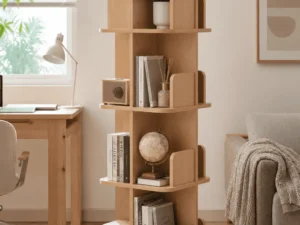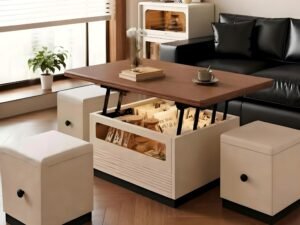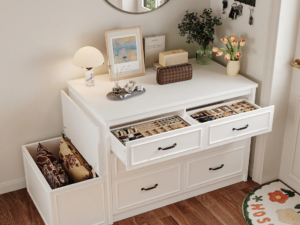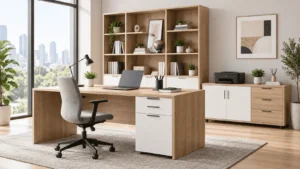
For importers, furniture brands, apartment developers, wholesalers, contractors, and hospitality procurement teams, sourcing convertible furniture for small homes is not simply about finding furniture that folds, slides, lifts, or provides extra storage.
A commercially successful product must solve several problems at the same time: limited floor area, repeated daily use, manufacturing consistency, acceptable landed cost, efficient export packaging, simple installation, and compliance with the destination market.
From a furniture factory‘s perspective, the best convertible products are not necessarily the products with the largest number of functions. They are products whose functions can be manufactured repeatedly, packed efficiently, assembled correctly, and used reliably after thousands of daily movements.
This guide explains the main sourcing priorities we recommend B2B buyers review before developing or ordering convertible furniture for small homes, apartments, student housing, serviced apartments, rental properties, hotels, and other compact-space projects.
For buyers developing customized collections, our OEM & ODM furniture manufacturing service supports product development from drawings and material selection through sampling, production, quality control, flat-pack packaging, and shipment.
Table of Contents
- Why Small-Space Furniture Has Become a B2B Product Category
- Start With the Application, Not the Furniture Mechanism
- Choose Functions Buyers Will Actually Use
- Select the Right Panel Materials
- Evaluate the Hardware and Moving Structure
- Design for Flat-Pack Manufacturing and Installation
- Define MOQ Around the Real Purchasing Program
- Plan Sampling and Lead Time Before Launch
- Engineer Export Packaging Before Mass Production
- Build Quality Control Around Functional Risk
- Consider Compliance Before Finalizing Materials
- OEM/ODM Development Process
- What Buyers Should Send for a Quotation
- Why Work With a Panel Furniture Export Factory
- FAQ
- Start Your Convertible Furniture Project
Why Small-Space Furniture Has Become a Serious B2B Category
The commercial opportunity behind compact furniture is broader than the phrase “small home.”
The same product-development logic applies to:
- Urban apartments
- Rental apartments
- Serviced apartments
- Student housing
- Hotel suites
- Co-living projects
- Studio flats
- Home offices
- Dormitories
- Compact family bedrooms
- Real estate furnishing programs
- E-commerce furniture collections
In all of these applications, floor area has measurable commercial value.
A standard desk that occupies a room permanently may not be attractive in a studio apartment. A fold-down desk combined with wall storage can provide the same working function while allowing the room to serve another purpose.
A standard bed occupies a large percentage of a bedroom. A storage bed, loft-bed system, integrated bed-and-desk combination, or properly engineered fold-away solution may create additional usable space.
This is why professional buyers searching for convertible furniture for small homes should evaluate more than appearance.
The purchasing question is:
How much usable function can the furniture deliver without creating unacceptable manufacturing, safety, packaging, installation, or after-sales complexity?
That question should guide the entire project.
1. Start With the Application, Not the Furniture Mechanism
A common sourcing mistake is starting a project with a mechanism.
For example:
“We want a folding table.”
“We need a transforming bed.”
“We want a lift-top coffee table.”
These descriptions tell the factory what the product does, but they do not explain why the buyer needs it.
A better OEM brief starts with the application.
For example:
We are developing a compact apartment furniture collection for European rental properties. The average living room is limited in size, and the table needs to work as both a coffee table and occasional dining/work surface.
Now the factory can evaluate:
- Target dimensions
- Normal operating height
- Extended dimensions
- Storage requirements
- User load
- Hardware choice
- Panel thickness
- Stability
- Packaging size
- Assembly method
- Target cost
The same principle applies to hotel suites, student apartments, home-office furniture, and compact bedrooms.
For commercial sourcing, function should come from the room requirement, not from adding mechanisms simply because they look innovative.
2. Choose Convertible Functions Buyers Will Actually Use
The most marketable dual-purpose furniture usually solves an obvious daily problem.
Examples include:
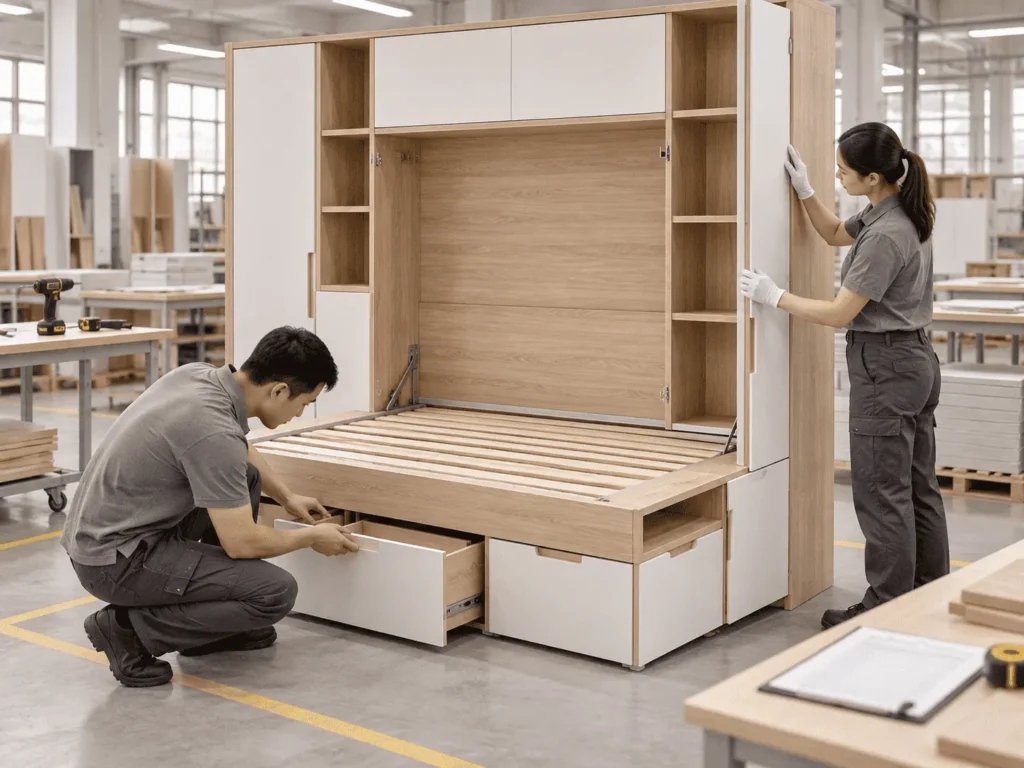
Storage Bed + Sleeping Function
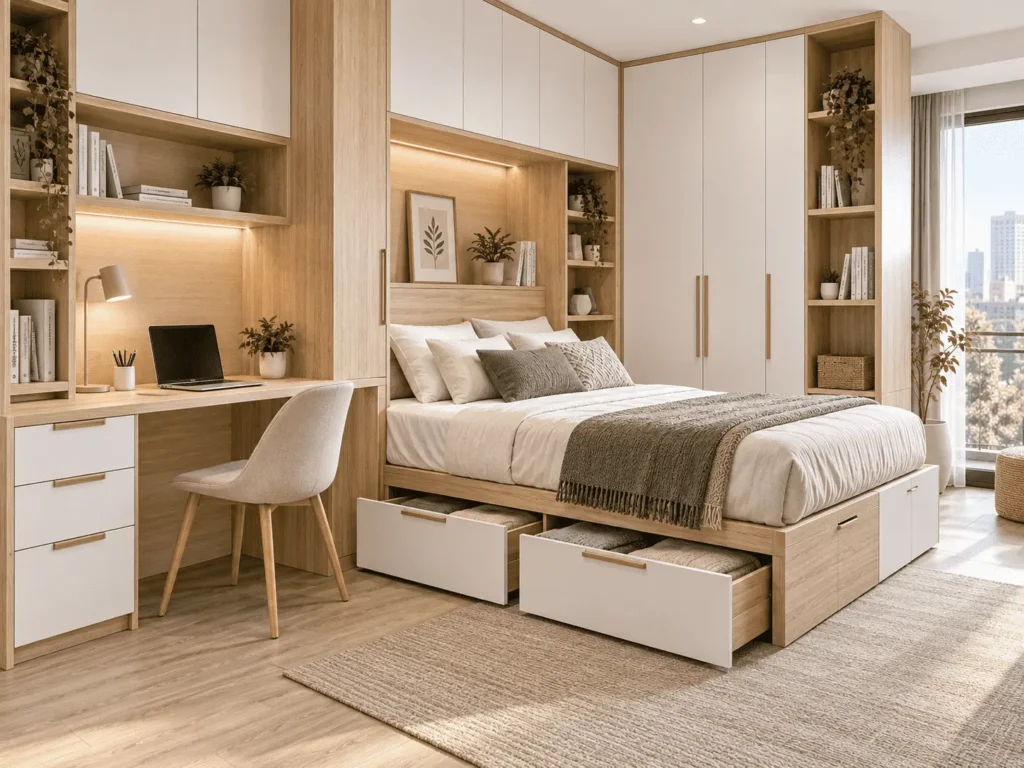
A bed can integrate drawers, lift-up storage, side cabinets, shelving, or an adjacent desk.
For apartment projects, this may reduce the need for additional standalone storage furniture.
Loft Bed + Desk + Storage
An integrated loft system can combine sleeping, study, shelving, wardrobe, and storage functions.
This configuration is especially relevant to student housing, children’s rooms, dormitories, and compact apartments.
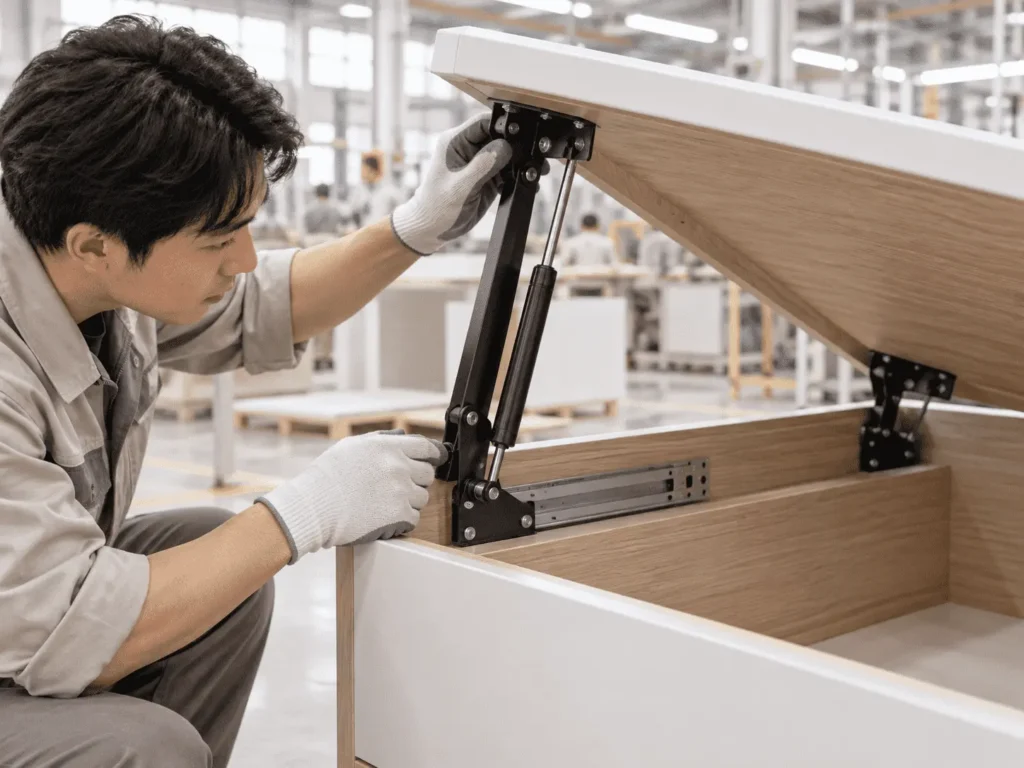
Lift-Top Coffee Table + Work Surface
A lift-top structure allows a low living-room table to provide temporary laptop, dining, or working height.
For e-commerce and retail programs, the product also remains understandable to consumers without complex installation instructions.
Fold-Down Desk + Wall Storage
A wall-mounted or cabinet-integrated desk can provide a work surface only when required.
The surrounding cabinet structure can carry shelving or concealed storage.
Bench + Shoe Storage
Entryway furniture can combine seating, shoe storage, drawers, hooks, shelving, and mirrors.
Modular Cabinet + Multiple Room Applications
A well-designed storage module may function as a sideboard, TV unit, hallway cabinet, office cabinet, or apartment storage unit depending on dimensions and internal configuration.
For a convertible furniture manufacturer, these relatively clear functions are often easier to standardize than highly complicated mechanical transformations.
The goal should not be “maximum functions.”
The goal should be maximum commercially useful functions with minimum unnecessary complexity.
3. Materials Matter More When Furniture Has Multiple Functions
Convertible furniture often experiences more mechanical stress than static furniture.
A conventional cabinet door may open several times a day.
A lift-top table mechanism may move repeatedly while also carrying load.
A storage-bed platform may need to handle sleeping loads while its storage mechanism operates safely.
A fold-down work surface places force on hinges, fixing points, fasteners, and connecting panels.
Material selection therefore needs to be evaluated together with the structure.
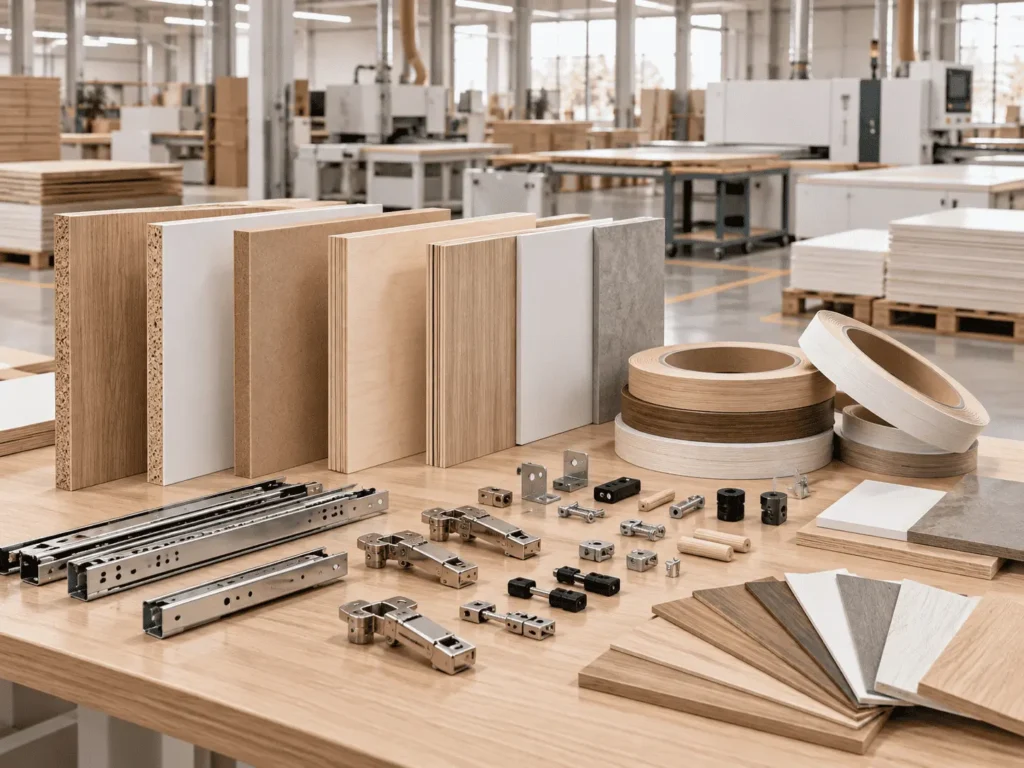
Typical panel furniture options include:
Particle Board
Particle board is widely used for cost-controlled, flat-pack furniture programs.
Its advantages can include:
- Competitive material cost
- Stable panel dimensions
- Wide availability of melamine finishes
- Efficient CNC processing
- Suitable performance for many cabinet structures
However, fixing positions and hardware loads must be engineered correctly.
MDF
MDF offers a smooth, consistent surface and is useful where painted, laminated, routed, or detailed finishes are required.
Typical applications include:
- Cabinet doors
- Decorative panels
- Drawer fronts
- Feature panels
- Painted furniture components
Plywood
Plywood can be useful where greater structural performance, screw-holding requirements, or lower panel weight is desirable, depending on the specification and construction.
It is often evaluated for products where mechanical connections or repeated movement place greater demands on certain structural components.
Mixed-Material Construction
For some transforming furniture, the best commercial structure is not a single material.
A product may combine:
- Engineered wood panels
- Plywood reinforcement
- Steel brackets
- Metal mechanisms
- Aluminum profiles
- Tempered glass
- Upholstered components
- Plastic fittings
A factory-side engineering review should determine where each material adds measurable value instead of automatically upgrading the entire product.
4. Ask About Panel Compliance Before Confirming the Specification
Material discussions should include the destination market early in the sourcing process.
For furniture sold into the United States, the U.S. EPA’s formaldehyde emission requirements apply to regulated composite wood products including hardwood plywood, MDF, and particleboard. Buyers should therefore confirm the required documentation and panel specification before final production.
U.S. EPA — Formaldehyde Emission Standards for Composite Wood Products
For buyers supplying California, CARB also provides technical information covering formaldehyde compliance testing for composite wood panels and finished goods.
California Air Resources Board — Composite Wood Product Test Methods
For European programs, buyers should discuss the required chemical compliance documentation with their supplier. ECHA explains that REACH obligations can apply to substances contained in articles, including furniture.
European Chemicals Agency — Candidate List Substances in Articles
These requirements should be discussed during RFQ and material confirmation—not after the container is ready for shipment.
5. Evaluate Hardware as a Core Component, Not an Accessory
In standard panel furniture, hardware quality matters.
In convertible furniture for small homes, it can determine whether the entire product concept succeeds or fails.
Moving furniture may depend on:
- Hinges
- Lift mechanisms
- Gas springs
- Folding brackets
- Drawer slides
- Bed mechanisms
- Connecting plates
- Locking hardware
- Casters
- Structural fasteners
Buyers should ask the factory several practical questions.
How Many Operating Cycles Are Expected?
A sample that works five times in a showroom tells you very little about long-term use.
The factory should understand how frequently the product will operate in the real application.
Is the Mechanism Replaceable?
For hotel, apartment, or rental-property projects, replacement hardware can be important.
A mechanism that requires the entire furniture unit to be replaced may create unnecessary after-sales cost.
Can the Same Hardware Be Reordered?
Private-label buyers should consider long-term repeatability.
Changing a mechanism between production batches may alter:
- Drilling positions
- Load performance
- Installation instructions
- Replacement parts
- Packaging
- User experience
Is the Hardware Matched to the Panel Structure?
A strong mechanism installed into an inadequately reinforced panel does not create a strong product.
The hardware and furniture structure must be engineered as one system.
ISO’s furniture technical committee covers furniture performance, safety, hardware, dimensional requirements, and test methods, while specific ISO standards address strength and durability testing for furniture and hardware.
ISO Technical Committee 136 — Furniture Standards
6. Design Convertible Furniture for Flat-Pack Production
A successful prototype is not automatically a successful export product.
For international B2B orders, the factory also needs to answer:
Can this product be manufactured, packed, shipped, stored, and assembled efficiently at scale?
This is where flat-pack engineering becomes important.
Starwood’s existing OEM/ODM manufacturing scope includes CNC processing, structure review, sampling, bulk manufacturing, quality control, export packaging, and shipment preparation for international buyers.
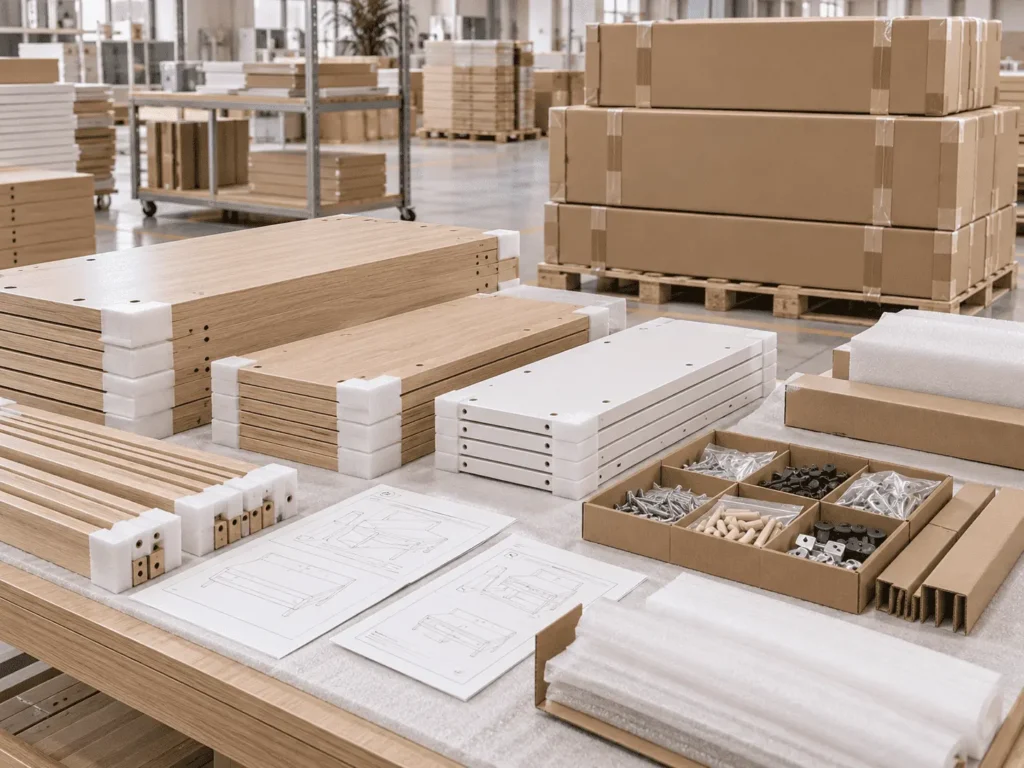
For convertible products, KD/RTA engineering may include:
- Separating large assemblies into practical panels
- Reducing carton dimensions
- Reinforcing mechanism attachment points
- Minimizing assembly steps
- Preventing left/right component confusion
- Pre-drilling hardware locations
- Labeling panels and fittings
- Separating moving hardware safely inside cartons
- Protecting exposed edges
- Designing accessible installation points
A product should not be redesigned for flat packing only after production is finished.
Packaging engineering should start while the structure is still being developed.
7. Review Container Efficiency, Not Just Factory Price
B2B buyers sometimes compare suppliers only using FOB unit price.
For space saving furniture, this can produce the wrong decision.
A slightly lower-cost product with inefficient carton dimensions may have a higher landed cost than a better-engineered flat-pack product.
Important figures include:
- Unit carton dimensions
- Gross weight
- Number of cartons per product
- CBM per set
- Units per 20GP
- Units per 40HQ
- Pallet requirement
- Mixed-SKU loading feasibility
- Warehouse handling requirements
Suppose one convertible storage system requires two oversized cartons while another version fits into three smaller, tightly optimized cartons.
The second option may initially appear more complicated, but it may improve:
- Container utilization
- Warehouse handling
- Last-mile distribution
- Damage rate
- Replacement-part logistics
For importers and furniture brands, landed cost per sellable unit matters more than an isolated factory quotation.
8. Define MOQ Around the Purchasing Program
Buyers frequently ask:
“What is your MOQ?”
The question is reasonable, but MOQ for OEM convertible furniture cannot always be reduced to one fixed number.
Starwood currently presents container-scale sourcing as its main factory program, while individual customized products may be evaluated according to specification, quantity, material, finish, and project requirements.
MOQ may be affected by:
- Custom board color
- Surface finish
- Mechanism
- Special hardware
- Number of SKUs
- Custom carton printing
- Labeling requirements
- Packaging materials
- Testing requirements
- Production setup
A better inquiry would be:
We need three convertible furniture models for an apartment retail program. Estimated first order is one mixed 40HQ container. Please advise MOQ per SKU, loading quantity, sample cost, tooling if any, and the best quantity split.
This gives the factory enough information to evaluate the program commercially.
For hotel or apartment projects, MOQ can also be discussed according to room quantity and delivery phases rather than retail SKU logic.
9. Separate Sample Time From Bulk Production Lead Time
Lead time should not be treated as one number.
A new OEM/ODM project normally moves through several stages:
Technical review → quotation → drawing confirmation → material confirmation → sample → sample revision → approval → packaging approval → bulk production → QC → shipment
Standard or previously approved furniture may move faster.
A completely new dual purpose furniture design with custom mechanisms can require more development.
Several existing Starwood product programs quote approximately 35–45 days for standard bulk manufacturing after final confirmation, while customized projects can require additional sampling and testing time.
For this reason, buyers should request separate timing for:
- Technical evaluation
- Drawing preparation
- Sample production
- Sample correction
- Testing if required
- Packaging approval
- Bulk production
- Pre-shipment inspection
- Container booking
For a project buyer, this timeline should then be matched to the building or installation schedule.
10. Packaging Must Protect Both Panels and Mechanisms
Convertible furniture creates a specific export-packaging challenge.
A conventional flat panel is mainly vulnerable to:
- Edge damage
- Corner damage
- Surface scratching
- Moisture
- Compression
A convertible product may also contain heavy metal mechanisms that can damage the surrounding panels during transport.
Packaging therefore needs to separate and control those components.
Our recommended review points include:
Panel Protection
Use appropriate corner, edge, surface, and separator protection according to panel finish and shipment distance.
Hardware Isolation
Mechanisms and metal fittings should not move freely inside the carton.
Hardware Kits
Fasteners should be grouped, labeled, and matched clearly to assembly instructions.
Part Identification
Numbering panels reduces installation errors, especially for apartment projects with repeated units.
Carton Marks
Buyer SKU, model number, carton sequence, quantity, destination, and private-label information should be confirmed before mass printing.
Drop and Handling Risk
E-commerce packaging may require a different protection strategy from full-container project delivery.
Starwood’s project manufacturing scope already includes flat-pack packaging, carton labels, assembly instructions, corner protection, hardware organization, and container-loading planning.
For a new convertible product, the packaging prototype should ideally be reviewed together with the product sample.
11. Build Quality Control Around Functional Failure Points
QC for ordinary panel furniture often focuses heavily on appearance.
Convertible furniture needs functional inspection as well.
Typical checkpoints can include:
Panel Accuracy
Confirm CNC cutting and drilling dimensions before assembly.
Edge Banding
Check adhesion, trimming, visible glue lines, corners, and exposed panel edges.
Hardware Position
Even a small drilling offset can affect the movement of a folding or lifting system.
Alignment
Check doors, drawers, sliding panels, moving tops, and adjacent modules.
Functional Movement
The product should open, close, fold, lift, slide, or lock smoothly according to its intended operation.
Stability
Furniture should remain stable in both normal and transformed positions where applicable.
Trial Assembly
Flat-pack furniture should be assembled using the same hardware and instructions that the end customer receives.
Packaging Verification
Check part quantity, hardware quantity, instruction manuals, labels, carton sequence, and protection.
For a repeat program, approved specifications and QC standards should remain consistent between production batches.
12. Safety Requirements Depend on the Product and Market
There is no single safety standard covering every type of convertible furniture.
The applicable requirements depend on whether the product is a table, bed, storage unit, children’s product, seating product, or another category.
For example, ISO 19682 provides test methods for stability, strength, and durability of tables and desks.
ISO 19682 — Furniture Tables Test Methods
For certain U.S. clothing storage units, tip-over requirements are particularly important. The U.S. Consumer Product Safety Commission explains that qualifying freestanding clothing storage furniture is subject to mandatory stability requirements under the STURDY framework.
U.S. CPSC — Clothing Storage Unit Requirements
For products incorporating wardrobes, drawers, or freestanding storage, buyers should therefore tell the factory the final market and intended use before approving the design.
Do not start compliance discussions after mass production.
13. Responsible Material Sourcing Can Be Part of the RFQ
For furniture brands and commercial projects with sustainability requirements, sourcing documentation may be part of supplier evaluation.
The Forest Stewardship Council explains how FSC chain-of-custody certification supports traceability for forest-based materials used in furniture manufacturing.
Forest Stewardship Council — Furniture and Responsible Sourcing
Buyers requiring FSC-related materials or claims should communicate this during quotation so the factory can verify the appropriate supply chain and documentation.
A buyer should never assume that using plywood or engineered wood automatically means a finished product can carry a specific certification claim.
Certification requirements must be specified and documented correctly.
14. OEM or ODM: Which Model Works Better?
Both approaches can work for convertible furniture for small homes.
OEM Manufacturing
OEM is suitable when the buyer already has:
- CAD drawings
- Engineering drawings
- Product samples
- Existing mechanism
- Confirmed dimensions
- Material specifications
- Packaging requirements
The factory focuses on converting the approved design into reliable production.
ODM Development
ODM is useful when the buyer has:
- Market concept
- Reference image
- Target retail price
- Required functions
- Room dimensions
- Competitor reference
- Target customer
- Packaging limit
The factory can then help optimize the concept for panel materials, hardware, manufacturing, flat-pack structure, and cost.
For many space-saving furniture programs, the best process is somewhere between OEM and ODM.
The buyer supplies the commercial direction; the factory supplies production engineering.
You can learn more about our OEM & ODM furniture manufacturing services for product development, sampling, bulk production, private-label packaging, and export supply.
15. A Practical Convertible Furniture Development Workflow
For B2B projects, we recommend a structured process.
Step 1 — Buyer Brief
Send:
- Reference photos
- Drawings
- Required dimensions
- Functions
- Target market
- Estimated quantity
- Target price range
- Packaging requirements
Step 2 — Factory Feasibility Review
The engineering and production team evaluates:
- Structure
- Panel materials
- Hardware
- Mechanism
- Manufacturing difficulty
- Assembly method
- Packing size
Step 3 — Quotation
Pricing should reflect the actual specification rather than a visually similar catalog model.
Step 4 — Drawing Confirmation
Confirm dimensions, panel thicknesses, hardware positions, colors, materials, and construction.
Step 5 — Sample Production
The sample validates the design in physical form.
Step 6 — Functional Review
Operate moving components and check stability, alignment, user access, assembly, and potential failure points.
Step 7 — Packaging Development
Confirm carton arrangement, hardware placement, labels, instructions, and protection.
Step 8 — Buyer Approval
Any corrections should be incorporated into the final production specification.
Step 9 — Mass Production
Production follows the approved drawings, material samples, hardware specification, and packaging standard.
Step 10 — QC and Shipment
Final checks cover furniture quality, function, carton contents, labeling, packing, and loading.
This approach reduces the risk of discovering design problems after hundreds of units have already been manufactured.
16. What Should Buyers Send for an Accurate Quotation?
If you are contacting a convertible furniture manufacturer, sending a detailed RFQ usually produces a faster and more useful response than simply asking for a catalog.
A strong inquiry can include:
Product: Convertible storage bed / lift-top table / fold-down desk / multifunctional cabinet
Application: Apartment / hotel / retail / student housing
Market: Country or region
Dimensions: W × D × H
Material: MDF / particle board / plywood / open to recommendation
Finish: Melamine / laminate / veneer / painted
Hardware: Standard / premium / specified brand
Quantity: Units per SKU
Number of SKUs: Total models
Packaging: Flat-pack / retail packaging / project packaging
Branding: Carton logo / barcode / SKU labels / manual
Compliance: Required target-market testing or documentation
Delivery: Required shipment date
Target Price: Optional but useful for engineering decisions
The clearer the commercial requirement, the easier it is for a factory to recommend a realistic structure and quotation.
17. Factory Capability Matters More Than a Large Product Catalog
A sourcing website can display hundreds of furniture designs.
That does not automatically mean the supplier can execute a customized commercial program.
For project and OEM buyers, evaluate whether the supplier can support:
- Engineering review
- CNC panel processing
- Edge banding
- Accurate drilling
- Sample development
- Hardware matching
- Trial assembly
- Bulk production
- In-process QC
- Final inspection
- Flat-pack engineering
- Export packaging
- Private labeling
- Container loading
Starwood is positioned as a panel furniture production factory serving importers, distributors, brands, project buyers, retailers, and e-commerce companies, with manufacturing covering MDF, particle board, plywood, engineered panels, and customized furniture programs.
For hotel, apartment, rental-property, or commercial furnishing programs, buyers can also review our project furniture manufacturing capabilities for custom sizing, materials, finishes, hardware, packaging, and project-based supply.
18. The Best Convertible Furniture Is Often the Simplest Reliable Solution
One important lesson from factory-side product development is that complexity has a cost.
Every additional movement may introduce:
- More hardware
- More drilling
- More tolerance requirements
- More assembly steps
- More testing
- More spare parts
- More packaging
- More after-sales risk
This does not mean buyers should avoid innovative furniture.
It means the commercial value of every additional function should justify its manufacturing complexity.
For example, a cabinet that combines storage, seating, and shoe organization may create significant value without complicated mechanisms.
A loft bed combining sleeping, storage, and study functions can maximize vertical space primarily through structural design.
A lift-top table adds one clear transformation with a relatively understandable user benefit.
For many importers and project buyers, these products can be more scalable than furniture with five or six mechanical configurations that consumers rarely use.
19. Choosing Convertible Furniture for Hotels and Serviced Apartments
Hospitality buyers should place particular emphasis on durability and maintenance.
Hotel furniture experiences different usage from privately owned residential furniture.
Guests may not understand how a mechanism is supposed to operate.
Cleaning teams may move furniture frequently.
Maintenance teams need access to replacement parts.
For hotel and serviced-apartment programs, consider:
- Simple operation
- Durable surfaces
- Replaceable hardware
- Easy cleaning
- Standardized components
- Clear installation
- Spare hardware availability
- Repeatable finishes
- Batch consistency
A compact hotel room may benefit from integrated desks, luggage storage, wardrobes, minibar cabinets, seating/storage combinations, and multifunctional wall units without requiring complicated transforming mechanisms.
20. Choosing Convertible Furniture for Apartment Projects
Apartment and rental-property buyers often have a different priority:
maximum room functionality at controlled project cost.
For these projects, manufacturers can coordinate:
- Wardrobes
- Storage beds
- Bedside tables
- Desks
- TV cabinets
- Shoe cabinets
- Kitchen storage
- Bathroom cabinets
- Multifunctional storage units
Using coordinated panel finishes across multiple furniture categories can simplify purchasing and create a consistent interior.
It can also improve production efficiency when multiple SKUs share materials, edge treatments, hardware, and packaging standards.
For larger developments, project buyers should therefore evaluate the furniture package rather than treating every item as an isolated product.
21. Why Convertible Furniture for Small Homes Is a Manufacturing Question
At first glance, small-space furniture looks like a design category.
For B2B sourcing, it is really a manufacturing system.
A commercially successful product must connect:
room requirement → furniture function → material → mechanism → panel engineering → CNC processing → hardware → assembly → QC → packaging → container loading → end-user installation
If one step is ignored, the entire product may become less competitive.
That is why buyers should involve the factory early, particularly when developing new OEM or ODM products.
The earlier manufacturing considerations enter the design process, the easier it becomes to control:
- Cost
- Quality
- Carton volume
- Assembly difficulty
- Production consistency
- Delivery risk
FAQ: Convertible Furniture for Small Homes
What is convertible furniture for small homes?
Convertible furniture for small homes is furniture designed to provide two or more practical functions within a limited footprint. Examples include storage beds, loft beds with desks, lift-top tables, fold-down desks, seating with storage, and modular multifunctional cabinets.
Who normally buys convertible furniture in bulk?
Typical B2B buyers include furniture importers, wholesalers, retail chains, e-commerce brands, apartment developers, contractors, student-housing operators, hotel groups, serviced-apartment companies, and furniture project suppliers.
Can convertible furniture be customized through OEM or ODM?
Yes. OEM manufacturing can follow buyer drawings or samples, while ODM development can start from reference images, room requirements, functions, price targets, and target-market requirements. Dimensions, materials, finishes, hardware, structure, packaging, and branding can normally be reviewed as part of the project.
What materials are commonly used?
Common materials include MDF, particle board, plywood, melamine-faced panels, laminates, veneer, metal hardware, and other engineered materials. The correct specification depends on structural load, finish, target cost, destination market, and product function.
What is the MOQ for convertible furniture?
MOQ depends on the product, finish, hardware, packaging, customization level, and number of SKUs. For export programs, container-based purchasing normally provides better manufacturing and freight efficiency. Buyers should provide expected quantities per model for an accurate quotation.
What is the normal lead time?
Lead time depends on whether the product is a repeat model or new OEM/ODM development. New designs should allow separate time for engineering, sampling, revisions, packaging approval, and testing if required. Standard bulk production for established specifications can often be planned after final sample and material approval.
Can convertible furniture be flat packed?
Many panel-based convertible products can be engineered for KD/RTA flat-pack shipment. The structure should be designed for flat packing from the beginning so carton volume, hardware protection, assembly, and container loading can be optimized.
Can you manufacture furniture for apartment and hotel projects?
Yes. Project manufacturing can include apartment, rental-property, serviced-apartment, hotel, student-housing, office, and commercial furniture programs with customized dimensions, finishes, hardware, packaging, and coordinated product categories.
What should I send to get a quotation?
Send drawings or reference photos, product dimensions, function requirements, materials, finish, hardware requirements, quantity per SKU, destination market, packaging requirements, compliance requirements, and expected delivery date.
How do I select a reliable convertible furniture manufacturer?
Evaluate manufacturing capability rather than catalog size alone. Review engineering support, panel processing, hardware knowledge, sampling, trial assembly, quality control, packaging design, loading efficiency, compliance support, and experience handling OEM/ODM export orders.
Start Your Convertible Furniture Project
If you are developing convertible furniture for small homes, apartment collections, hotel rooms, student housing, rental properties, or private-label retail programs, the most efficient starting point is a clear project brief.
Send us your:
- Product drawings or reference images
- Required dimensions
- Functions
- Target market
- Preferred materials and finishes
- Estimated order quantity
- Packaging requirements
- Target delivery schedule
As a panel furniture export factory, we can review the structure, materials, hardware, flat-pack engineering, sampling, production, QC, and export packaging requirements before mass production.
Explore our convertible furniture range, learn more about our OEM & ODM furniture manufacturing capabilities, or review our project furniture manufacturing solutions for hotel, apartment, rental-property, and commercial furnishing programs.
Need a reliable OEM/ODM factory for your next small-space furniture collection? Send your drawings, reference photos, target quantity, and destination market for a factory review, sample proposal, and quotation.