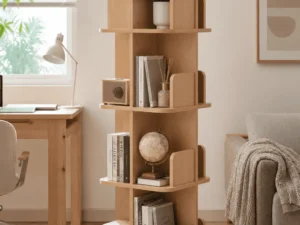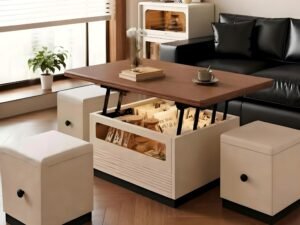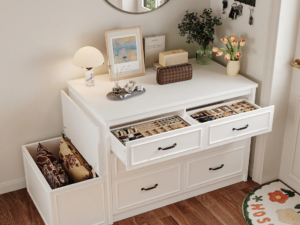
For importers, furniture brands, wholesalers and project contractors, sourcing a modern sideboard buffet is not simply a matter of choosing an attractive cabinet. A commercially successful model must meet target pricing, storage requirements, material standards, packaging limits, installation conditions and repeat-order quality expectations. For hotel, apartment, retail and e-commerce programs, these details directly affect landed cost and after-sales risk. As a panel furniture export factory, we evaluate sideboards from the manufacturing side: structure, materials, hardware, production consistency, flat-pack engineering, MOQ, lead time and container efficiency. This guide explains the key specifications professional buyers should confirm before placing an OEM, ODM or project furniture order.
Table of Contents
- Define the Application Before Selecting the Design
- Confirm Dimensions and Cabinet Construction
- Select the Right Panel Materials and Finishes
- Engineer Storage Layout and Hardware for Real Use
- Specify Compliance and Performance Requirements
- Optimize the Sideboard for Flat-Pack Export
- Evaluate MOQ and Real Production Cost
- Plan Sampling and Production Lead Time
- Control QC, Packaging and Container Loading
- Modern Sideboards for Hotels, Apartments and Commercial Projects
- Our OEM/ODM Sideboard Manufacturing Process
- What to Include in Your Sideboard RFQ
- Frequently Asked Questions
Why B2B Buyers Should Source a Modern Sideboard Buffet Differently
A consumer normally starts with appearance: color, size and style.
A professional buyer has to start several steps earlier.
Before a factory prices a modern sideboard buffet, the purchasing team should know where the product will be sold or installed, how it will be shipped, whether it will be assembled by consumers or contractors, what material requirements apply, and how many units are needed.
The same visual concept may require completely different engineering for:
- a furniture retailer selling RTA products;
- an online furniture brand shipping individual cartons;
- a hotel dining or guest-room project;
- an apartment or serviced-residence project;
- a wholesaler importing container quantities;
- a developer sourcing coordinated furniture packages.
This is why the lowest unit quotation is rarely the most useful starting point.
A professional sideboard buffet manufacturer should first help the buyer establish a manufacturable specification. Once the dimensions, panel structure, finish, hardware and packaging method are clear, the quotation becomes much more meaningful.
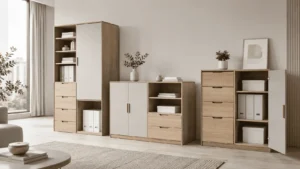
Buyers developing new models can review our modern sideboard buffet manufacturing range here. Modern sideboard buffet manufacturing range
1. Define the Application Before Selecting the Design
The first factory question should not be “Which finish do you like?”
It should be: Where will the sideboard be used and how will it be sold?
A sideboard designed for a furniture chain has different priorities from one manufactured for a hotel project.
Retail and Wholesale Programs
For importers, wholesalers and furniture stores, repeatability is critical. Buyers normally require:
- standardized sizes;
- stable color consistency;
- repeatable hardware;
- retail-ready carton information;
- predictable production costs;
- efficient container loading;
- clear assembly instructions;
- consistent replacement components.
The product should also fit the positioning of the buyer’s existing dining-room collection.
A 1,600 mm four-door sideboard in walnut melamine, for example, may need to coordinate with dining tables, TV stands, coffee tables and storage cabinets in the same collection.
Hotel and Hospitality Projects
Hotel and serviced-apartment furniture is normally evaluated around daily usage, project budgets and installation.
Important questions include:
- Will the sideboard be placed in a restaurant, lounge, suite or breakfast area?
- Is it used mainly as storage, display or service furniture?
- Will installers assemble the furniture on site?
- Does the design require cable access, minibar storage or adjustable shelving?
- Does the buyer require project-specific testing or material documentation?
Apartment and Rental Projects
Apartment furniture normally requires a balance between durability, price and installation efficiency.
For multi-unit projects, even a small unnecessary component can multiply into a significant project cost. Therefore, the best solution is often not to increase the specification everywhere, but to reinforce the areas that actually carry loads or experience repeated use.
That is factory engineering rather than decorative styling.
2. Confirm Dimensions and Cabinet Construction
A quotation based only on a reference image is unreliable.
Two sideboards that look almost identical can have very different material consumption, hardware costs, carton volume and assembly complexity.
Before requesting an accurate OEM quotation, confirm at least:
- overall width;
- overall depth;
- overall height;
- cabinet body thickness;
- back-panel construction;
- door quantity;
- drawer quantity;
- shelf quantity;
- adjustable or fixed shelves;
- leg or plinth structure;
- countertop construction;
- required wall anchoring;
- knock-down or semi-assembled structure.
Why Depth Matters More Than Many Buyers Expect
Increasing cabinet depth affects more than storage space.
It changes panel consumption, shelf load behavior, carton dimensions and container utilization. A deeper cabinet may also require structural adjustments to reduce movement during transportation.
Long Panels Need Production Attention
Wide modern sideboards often use long top panels, bottom panels and door fronts.
From a manufacturing perspective, these components require attention to:
- panel flatness;
- edge quality;
- drilling accuracy;
- connection points;
- center support;
- packaging reinforcement.
A visually clean minimalist sideboard may actually be more demanding to manufacture because long uninterrupted surfaces make alignment problems, uneven gaps and surface defects easier to notice.
For B2B orders, these structural decisions should be agreed before sample production rather than corrected after the purchase order.
3. Select the Right Panel Materials and Finishes
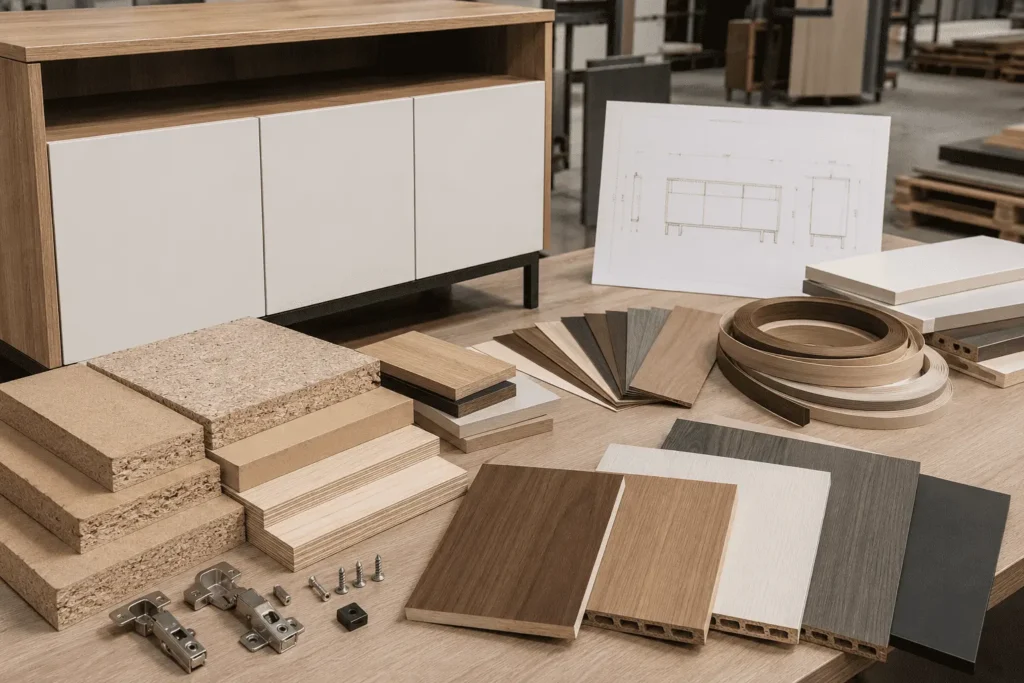
A reliable panel furniture manufacturer should not automatically recommend the most expensive board.
The correct material depends on the target market, design, finish, cost and expected usage.
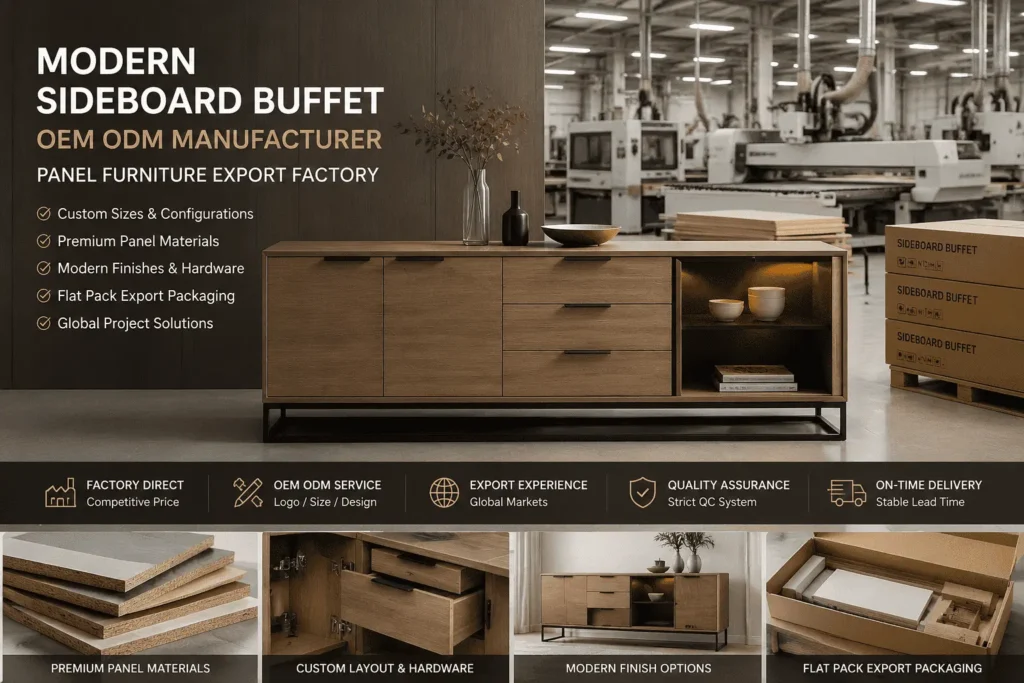
Common materials for a modern sideboard buffet include MDF, particleboard and plywood, while common surfaces include melamine, laminate, veneer and painted finishes. These are also materials and finish directions currently supported in our OEM/ODM manufacturing programs.
Particleboard
Particleboard is widely used for cost-controlled flat-pack furniture and works efficiently with melamine surfaces.
It can be suitable for:
- wholesale furniture;
- retail furniture;
- apartment packages;
- large-volume RTA programs.
Good engineering is essential around connectors, hinges and high-load areas.
MDF
MDF provides a smooth surface and is useful when the design requires painted finishes, routed profiles or decorative door treatments.
Typical applications include:
- lacquered sideboards;
- fluted doors;
- routed decorative fronts;
- premium painted collections.
However, a painted MDF product usually requires a different production process and cost structure from a standard melamine cabinet.
Plywood
Plywood may be specified for selected structures or projects where the buyer requires particular construction characteristics.
The grade, veneer, glue specification and intended application should always be clearly defined rather than assuming that all plywood performs identically.
Veneer and Decorative Surfaces
For contemporary hotel, residential and premium retail programs, natural-looking wood finishes remain important.
Before mass production, buyers should confirm:
- veneer or decorative paper reference;
- grain direction;
- color standard;
- gloss level;
- edge-band match;
- sample approval method.
For large projects, one approved control sample can become the visual benchmark used during production inspection.
Material Compliance for U.S. Orders
For furniture entering the United States, composite wood requirements deserve attention. The U.S. Environmental Protection Agency states that its TSCA Title VI formaldehyde requirements cover hardwood plywood, MDF and particleboard as well as finished goods containing regulated composite wood products. Buyers sourcing for the U.S. market should confirm the applicable documentation with their supplier before production. U.S. EPA Formaldehyde Emission Standards for Composite Wood Products
California buyers may also want their specification reviewed against the California Air Resources Board composite wood products program. California CARB Composite Wood Products Program
The destination market and contractual specification should always determine the final compliance requirement.
4. Engineer Storage Layout and Hardware for Real Use
A modern sideboard cabinet sells because it looks clean, but it performs because the internal layout works.
For professional buyers, storage planning should be treated as a product specification rather than an afterthought.
Common configurations include:
- four-door cabinets;
- three-door compact sideboards;
- drawers combined with doors;
- adjustable shelving;
- glass-door display sections;
- wine storage;
- open niches;
- cable-management openings;
- minibar compartments;
- concealed push-to-open doors.
Hinges and Drawer Slides
Hardware has a major influence on both user experience and after-sales claims.
The RFQ should state whether the product requires:
- standard hinges;
- soft-close hinges;
- concealed hinges;
- standard drawer slides;
- soft-close slides;
- push-to-open systems;
- buyer-nominated hardware brands.
For project furniture, hardware selection should reflect usage frequency rather than appearance alone.
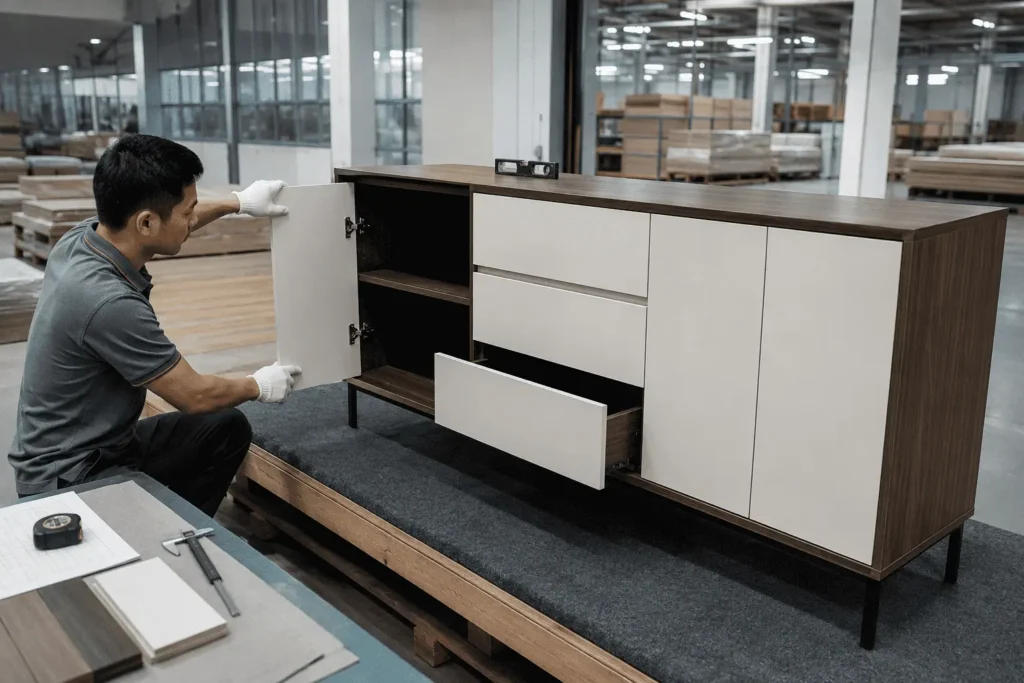
Door Alignment Is a Factory Issue
Large sideboard doors can reveal manufacturing variation very quickly.
QC should pay attention to:
- drilling position;
- hinge adjustment;
- uniform door gaps;
- drawer alignment;
- handle location;
- door opening clearance;
- cabinet squareness.
Small dimensional differences that are nearly invisible on individual components become obvious once four doors are aligned across one long cabinet.
That is why buyers should inspect a fully assembled sample before confirming bulk production whenever the design is new.
5. Specify Compliance and Performance Requirements Before Quotation
One frequent sourcing mistake is asking about testing only after the sample has been completed.
Commercial buyers should tell the factory the destination market and required standards during the RFQ stage.
For storage furniture, ISO 7170:2021 provides test methods for determining strength, durability and stability of fully assembled storage units, including movable and non-movable components. It does not itself define every buyer’s acceptance requirement, so the project specification still needs to identify the applicable performance criteria. ISO 7170:2021 Storage Furniture Test Methods
This is especially relevant for:
- hotel furniture;
- serviced apartments;
- commercial interiors;
- institutional projects;
- branded retail programs with internal testing standards.
Do not simply write “international standard required” in an inquiry.
Instead, provide the exact standard, test method or customer specification whenever available.
Responsible Material Sourcing
Some international buyers also require certified forest-based materials.
FSC explains that Chain of Custody certification tracks eligible forest-based material through the supply chain from sourcing through finished products. When FSC-certified material is a contractual requirement, it should therefore be discussed before the factory purchases panels or veneer. FSC Chain of Custody Certification
A good RFQ should clearly separate:
mandatory compliance requirements from preferred sustainability requirements.
That distinction prevents unnecessary pricing confusion.
6. Optimize the Modern Sideboard Buffet for Flat-Pack Export
For export furniture, packaging engineering can have almost as much commercial impact as the cabinet itself.
A flat-pack or KD structure can help:
- reduce shipping volume;
- improve container utilization;
- simplify warehouse storage;
- make overseas handling more practical;
- support retail or project installation.
Your factory should therefore review packaging while the product is being engineered, not after production is finished.
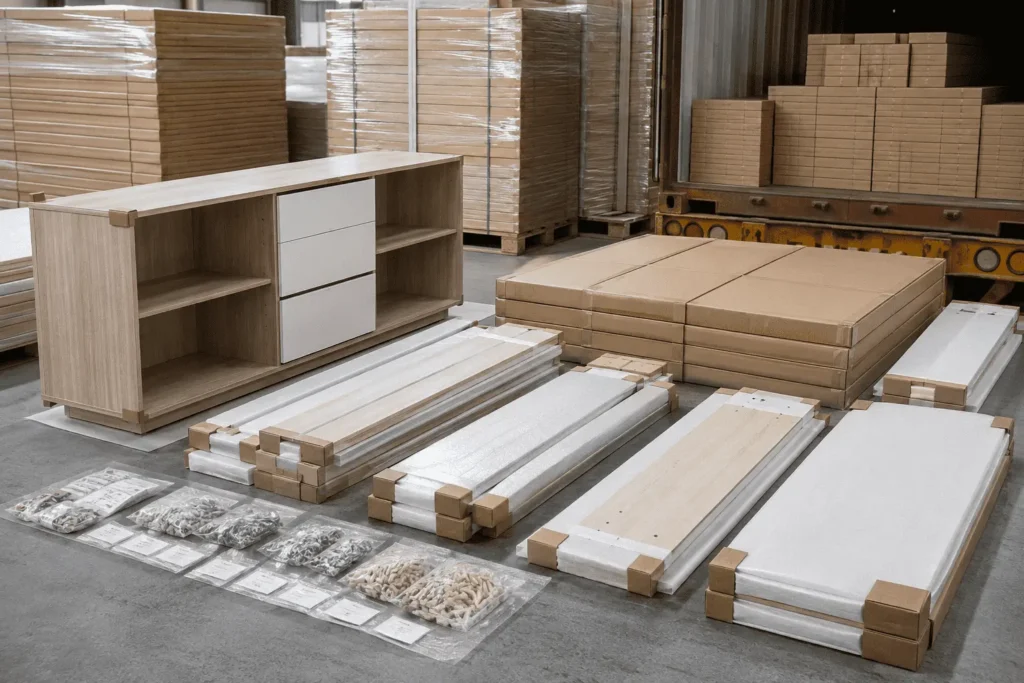
Our current OEM/ODM process includes flat-pack/KD packing, reinforced cartons, carton marks, assembly instructions and container-loading planning.
What We Check Before Finalizing the Carton
For sideboards, particular attention should be paid to:
- protection of long top and bottom panels;
- protection of corners and decorative fronts;
- separation of metal legs or handles from finished panels;
- hardware-bag organization;
- identification of each component;
- assembly instructions;
- carton SKU and box numbering;
- total package weight;
- handling direction;
- container loading arrangement.
A beautiful sideboard arriving with damaged corners is not a successful product.
Packaging Testing
For buyers building formal transit-testing programs, the International Safe Transit Association lists ISTA Procedure 2C specifically for individual packaged furniture products transported in a container. ISTA also provides broader test procedures for different distribution environments. ISTA Furniture and Packaged-Product Test Procedures
Wood Pallets and Dunnage
When solid-wood pallets or raw wood dunnage are used in international shipments, phytosanitary requirements may also apply. The International Plant Protection Convention’s ISPM 15 addresses raw wood packaging material used in international trade; the standard notes that processed wood packaging such as plywood is excluded from that specific raw-wood scope. IPPC ISPM 15 Wood Packaging Standard
For an exporter, packaging is therefore a combination of damage prevention, logistics efficiency and destination-market requirements.
7. Evaluate MOQ as a Manufacturing Variable, Not Just a Number
Professional buyers often ask, “What is your MOQ?” before sending a specification.
The question is important, but MOQ depends on more than cabinet quantity.
It can be affected by:
- custom panel color;
- veneer requirement;
- special hardware;
- custom metal legs;
- packaging print;
- carton dimensions;
- number of SKUs;
- production setup;
- total material purchase volume.
For standard export cooperation, our current website publishes a reference minimum order quantity of one container, while our factory and project pages also indicate low-MOQ support for selected market testing and project requirements. Final MOQ should therefore be confirmed against the actual sideboard specification and order structure.
How Buyers Can Improve the Commercial MOQ
If you are developing a collection instead of one isolated SKU, send the entire program to the factory.
For example:
- sideboard;
- TV stand;
- coffee table;
- shoe cabinet;
- dining storage cabinet.
Coordinated products may share board colors, edge bands, handles or hardware.
From a sourcing perspective, this is more useful than negotiating each SKU independently because the factory can review the complete material and production plan.
The objective should be commercially efficient volume, not simply the lowest possible order quantity.
8. Plan Sampling and Production Lead Time Before the Launch Date
Lead time should be separated into at least two stages:
sample development and mass production.
A new ODM sideboard may require structural discussion, drawing confirmation, finish matching and packaging development before the buyer approves the production sample.
For OEM programs based on complete drawings, development can be more straightforward, but technical review is still necessary.
A typical reference shown on our existing sideboard product information is approximately 35–45 days after deposit and drawing confirmation for relevant production orders. Actual lead time should always be reconfirmed in the quotation because material availability, quantity, finish, packaging and factory scheduling can change the production plan.
A Better Purchasing Timeline
Instead of asking only, “Can you deliver in 40 days?”, provide:
- required warehouse arrival date;
- destination port;
- target shipment date;
- required inspection date;
- sample approval deadline;
- packaging approval deadline.
The factory can then work backward from the commercial requirement.
For hotel and apartment projects, this is particularly important because installation schedules may be linked to room handover dates.
A furniture order that is completed in the factory on time can still become a project problem if inspection, booking, loading and destination delivery were not included in the planning.
9. Control QC, Packaging and Loading as One Process
Quality control for a modern sideboard buffet should not start at final inspection.
By final inspection, many problems are expensive to correct.
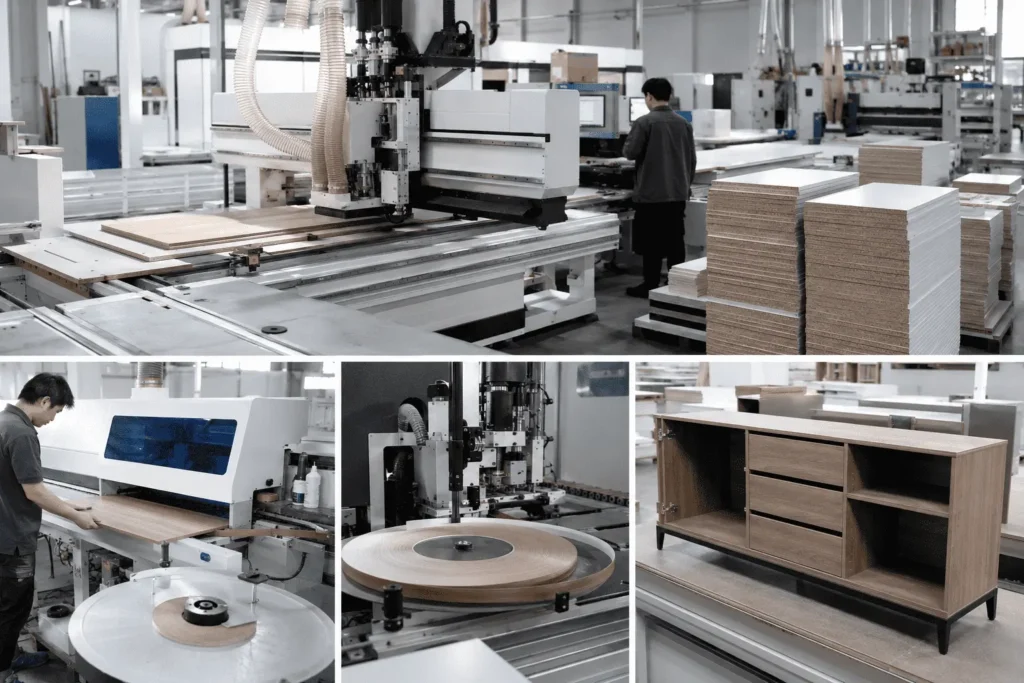
A more practical factory workflow includes controls during:
- incoming material preparation;
- CNC cutting and drilling;
- edge processing;
- surface finishing;
- hardware preparation;
- trial assembly;
- final appearance inspection;
- packaging;
- container loading.
Our current OEM/ODM manufacturing workflow similarly covers material review, sampling, bulk production, in-process QC, packing checks and loading preparation.
Sideboard-Specific QC Points
For sideboards, we recommend buyers include the following checkpoints in the approved specification:
- overall dimensions;
- panel thickness;
- surface color;
- grain direction;
- edge-band consistency;
- pre-drilled hole position;
- door and drawer gaps;
- cabinet stability;
- hinge function;
- drawer-slide function;
- shelf support;
- handle position;
- leg installation;
- hardware quantity;
- carton identification;
- assembly sequence.
If the buyer has a formal inspection standard or AQL requirement, send it before mass production.
Quality becomes easier to control when both buyer and factory agree in advance on what constitutes an acceptable product.
Modern Sideboard Buffet Solutions for Hotels and Apartments
The phrase modern sideboard buffet is often associated with residential dining rooms, but the same cabinet architecture works across many commercial interiors.
Hotel and Serviced Apartment Projects
Sideboard-style storage can be adapted for:
- dining areas;
- breakfast rooms;
- suites;
- lounge spaces;
- minibar zones;
- meeting rooms;
- serviced-apartment dining areas.
For project furniture, the factory can adjust dimensions, finish, internal layout and hardware to match room schedules and interior-design requirements.
Apartment and Rental Housing
For apartment projects, the priorities are often different:
- controlled project cost;
- durable surfaces;
- compact dimensions;
- efficient storage;
- simple assembly;
- coordinated finishes;
- repeatable production.
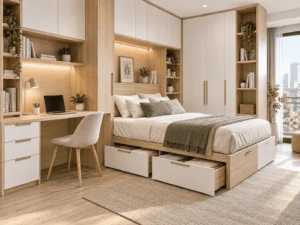
Where multiple room types are involved, a sideboard can also be coordinated with wardrobes, TV units, bedside tables, desks and shoe cabinets.
That broader manufacturing approach is important for buyers who want one commercial furniture manufacturer to supply several panel-furniture categories.
Our project manufacturing capability covers apartments, rental properties, hotels, serviced apartments, offices and other commercial spaces, including TV stands and sideboards. Project furniture manufacturing for hotels and apartments
OEM/ODM Modern Sideboard Buffet Manufacturing
There are two common ways international buyers work with our factory.
OEM Sideboard Manufacturing
OEM is suitable when you already have:
- technical drawings;
- existing product samples;
- dimensions;
- material specifications;
- hardware requirements;
- packaging standards;
- target pricing.
Our role is to review manufacturability, develop the sample, confirm technical details and move the approved specification into repeat production.
ODM Sideboard Development
ODM is more suitable when the buyer has:
- a reference image;
- target retail market;
- desired style;
- approximate dimensions;
- target price;
- functionality requirements.
The factory can then help convert those commercial requirements into a manufacturable product.
This may involve adjusting:
- board thickness;
- cabinet width;
- storage layout;
- support structure;
- door configuration;
- hardware;
- packaging size;
- assembly method.
Explore our OEM & ODM furniture manufacturing services for a broader overview of this process. OEM and ODM furniture manufacturing services
Starwood currently presents itself as a source panel furniture factory with 13+ years of manufacturing experience, exports to 20+ countries and production supporting more than 100 containers per year. Buyers who need to verify manufacturing capability can review our factory profile and production information before starting a new program. About our panel furniture factory
What to Send a Modern Sideboard Buffet Manufacturer for an Accurate Quote
“Please quote this sideboard” with one Pinterest image is rarely enough for an accurate B2B quotation.
For faster technical review, send the factory:
- reference photo or drawing;
- overall dimensions;
- required quantity;
- target market;
- preferred MDF, particleboard or plywood construction;
- finish or color reference;
- door and drawer configuration;
- required hardware;
- assembled or flat-pack requirement;
- packaging requirement;
- logo/private-label requirements;
- required testing or compliance;
- destination port;
- target delivery date;
- target price, if available.
If some information is not yet confirmed, identify it as open for factory recommendation.
This allows the engineering and sales teams to separate fixed specifications from cost-optimization opportunities.
For a new ODM development, a good factory should not merely reproduce the reference photo. It should review whether the product can be manufactured consistently, packed efficiently and supplied at a commercially realistic price.
That is the difference between buying a prototype and building a repeatable furniture program.
Choosing a Modern Sideboard Buffet Supplier: The Procurement Perspective
A successful sideboard program depends on more than styling.
For B2B sourcing, the strongest supplier should be able to connect:
design → engineering → materials → sample → mass production → QC → packaging → loading.
That is particularly important for panel furniture because many commercial problems originate at the interfaces between these stages.
A poorly engineered connector becomes an assembly complaint.
An uncontrolled veneer becomes a color complaint.
A weak carton becomes a freight-damage complaint.
An oversized package becomes a logistics-cost problem.
A delayed sample becomes a product-launch problem.
For importers, wholesalers, furniture brands and project contractors, the goal should therefore be to select an OEM ODM furniture supplier that understands the full commercial chain rather than evaluating factory price alone.
When sourcing from a panel furniture export factory, ask how the manufacturer controls repeat orders, component consistency, packaging revisions and project communication.
Those questions usually reveal more about future cooperation than a showroom photograph.
Send Us Your Modern Sideboard Buffet Project
If you are sourcing a modern sideboard buffet for wholesale, retail, hotel, apartment, serviced-residence or commercial furniture projects, send us your product requirements for technical review.
We can work from drawings, reference photos, existing samples or an initial product brief.
For an efficient quotation, please include:
- product dimensions;
- material and finish;
- quantity;
- target market;
- hardware requirements;
- packaging requirements;
- delivery schedule;
- any mandatory testing standards.
As an OEM/ODM panel furniture manufacturer, our objective is not only to quote the cabinet but to help make the product suitable for stable production, export packaging and repeat supply.
Planning a new sideboard collection or project? Send us your drawings, reference photos, target dimensions, materials, quantity and destination market. Ask for factory pricing, customization options and sample-development support.
Frequently Asked Questions About Modern Sideboard Buffet Manufacturing
What is the typical MOQ for a modern sideboard buffet order?
MOQ depends on the model, materials, finish, hardware and packaging. Our published export reference is generally container-based, while selected product-development or project requirements may be evaluated for lower MOQ support. Send your SKU quantity and specifications for confirmation.
Can you manufacture a modern sideboard buffet from our drawings?
Yes. OEM projects can be developed from technical drawings, samples, dimensions or detailed specifications. The factory reviews the structure, material, hardware, finish and packaging requirements before sample and mass production.
Do you provide ODM sideboard design support?
Yes. Buyers can provide reference photos, style direction, target dimensions, target market and budget. The product can then be developed around manufacturability, storage function, material selection and flat-pack requirements.
Which materials are commonly used for sideboard cabinets?
Common panel materials include MDF, particleboard and plywood. Surface options can include melamine, laminate, veneer and painted finishes. The appropriate specification depends on the design, target price, destination market and required performance.
Can modern sideboards be supplied as flat-pack furniture?
Yes. Many sideboard and buffet cabinet designs can be engineered as knock-down or flat-pack furniture for more efficient export shipping and overseas handling. The final structure depends on dimensions, design and installation requirements.
What is the production lead time?
A typical reference for relevant sideboard production is approximately 35–45 days after order and drawing confirmation, but final lead time depends on quantity, materials, finish, packaging and production scheduling. Confirm the shipment schedule in the final quotation.
Can you manufacture sideboards for hotel and apartment projects?
Yes. Sideboards and related storage furniture can be customized for hotels, serviced apartments, rental properties, residential developments and commercial interiors, with project-specific dimensions, finishes, hardware and packaging.
What information should we provide for a sideboard quotation?
Send reference photos or drawings, dimensions, materials, finish, quantity, target market, hardware requirements, packaging requirements, testing requirements, destination port and delivery schedule. The more complete the RFQ, the more accurate the factory quotation can be.