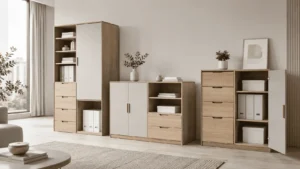

Target Buyer Groups:
Furniture importers, distributors, wholesalers, private-label brands, office furniture suppliers, hotel procurement companies, apartment developers, contractors, interior project companies, student housing operators and commercial furniture buyers.
Selecting a storage cabinet manufacturer is not simply a matter of comparing product photographs and factory prices. For importers, furniture brands, contractors and project buyers, the real purchasing decision involves cabinet structure, panel specifications, hardware life, production repeatability, packaging performance, container efficiency and delivery control.
A storage cabinet that looks acceptable in a sample room may still create serious commercial problems if shelves bend, doors become misaligned, cartons fail during shipment or replacement parts cannot be identified on site.
This guide is written from the perspective of a panel furniture export factory. It explains the practical checks buyers should complete before sourcing storage cabinets for homes, offices, hotels, apartments, student housing and other commercial projects.
Table of Contents
- Define the application before requesting a quotation
- Select panel materials based on the target market
- Review cabinet engineering, stability and load requirements
- Compare OEM and ODM manufacturing capabilities
- Confirm finishes, hardware and functional details
- Understand MOQ and quotation structure
- Plan samples, production lead time and project delivery
- Inspect quality control and export packaging
- Evaluate the factory as a long-term supply partner
- Storage cabinet applications by project type
- Recommended customization workflow
- Information buyers should send for an accurate quotation
- Frequently asked questions
- Request a storage cabinet quotation
1. Define the Application Before Requesting a Quotation
The first sourcing mistake is sending a factory a reference image without explaining where and how the cabinet will be used.
A storage cabinet for a residential living room does not require exactly the same structure as an office filing unit, hotel minibar cabinet, apartment wardrobe extension or student housing storage module. The application influences dimensions, panel thickness, shelf capacity, hardware, moisture resistance, locking systems, packaging and expected service life.
Before requesting pricing, identify the intended project environment.
Home and Residential Storage Cabinets
Residential programs usually require a balance between appearance, practical storage, retail pricing and simple assembly. Common products include:
- Living room storage cabinets
- Sideboards and buffet cabinets
- Entryway cabinets
- Shoe storage cabinets
- Bookcases with closed storage
- Drawer cabinets
- Utility cabinets
- Modular wall storage
- Home office cabinets
- Compact cabinets for small apartments
For retail or e-commerce programs, packaging dimensions and assembly clarity may be as important as the cabinet design itself. A product with too many loose parts, unclear hardware identification or oversized cartons can increase warehouse, delivery and customer-service costs.
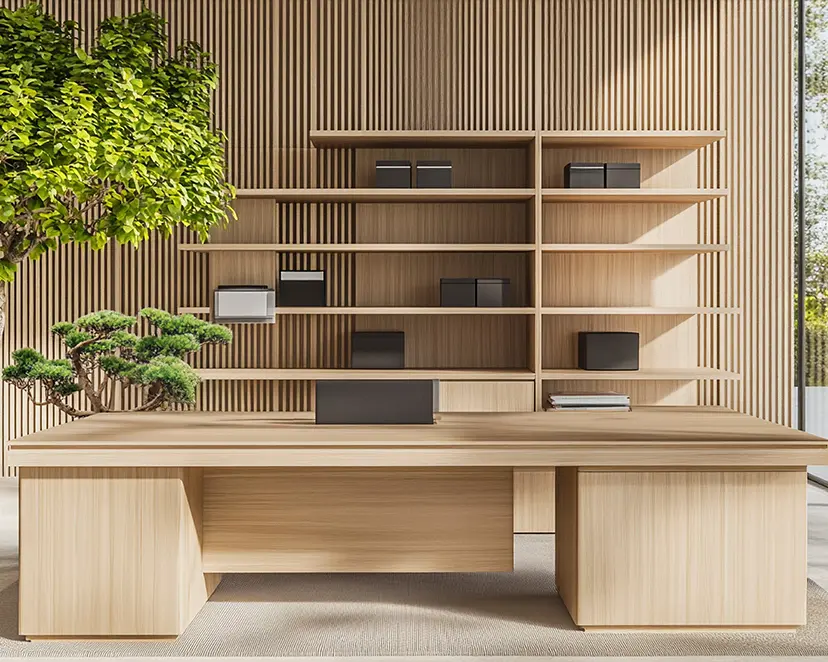
Office and Commercial Storage Cabinets
Office cabinets may need adjustable shelving, document storage, cable access, lockable doors, filing drawers or integration with desks and workstations.
When office use is expected, buyers should define:
- Required shelf load
- File format or binder dimensions
- Number of adjustable shelf positions
- Locking requirements
- Anti-tilt or wall-fixing requirements
- Frequency of door and drawer use
- Compatibility with office furniture collections
- Whether the cabinet is freestanding, mobile or wall-mounted
For office storage products, buyers can use the scope of ANSI/BIFMA X5.9 for storage units as a useful reference when establishing safety, durability and structural performance requirements.
Apartment and Rental Property Cabinets
Apartment projects normally focus on standardized dimensions, repeatable production, efficient installation and cost control across many units.
Suitable products include:
- Entryway storage
- Kitchen auxiliary cabinets
- Bathroom storage units
- Wardrobes and closet modules
- TV cabinets
- Multipurpose utility cabinets
- Compact work-from-home storage
- Wall-mounted cabinets
- Shoe cabinets
- Laundry storage
For rental properties, overly delicate finishes or complicated fittings can increase maintenance costs. Buyers should prioritize replaceable hardware, easy-to-clean surfaces and a structure that installers can assemble consistently.
Hotel and Serviced Apartment Cabinets
Hospitality storage cabinets may be used as wardrobes, minibar units, luggage storage, bedside storage, TV cabinets, bathroom cabinets or housekeeping furniture.
Hotel buyers should communicate room layouts, design specifications, installation schedules, fire-safety requirements where applicable, and the expected number of rooms. A hotel cabinet program is often more successful when several products use coordinated panels, finishes, handles and hardware.
For complete hospitality and residential project support, buyers can review our project furniture manufacturing capabilities.
2. Select Panel Materials Based on the Target Market
Material selection should be based on performance, price position, finish, shipment method and destination-market requirements—not only on the lowest board price.
As a panel furniture export factory, we commonly review MDF, particle board, plywood and other engineered panels according to the cabinet design and target market.
Particle Board
Particle board is widely used for cost-controlled flat-pack storage cabinets, wardrobes, office cabinets and apartment furniture.
Its commercial advantages include:
- Competitive material cost
- Good dimensional consistency
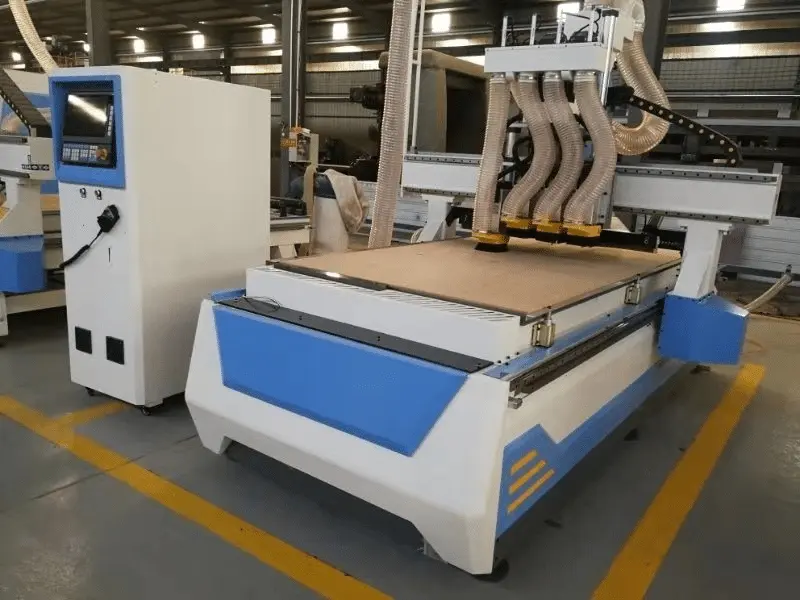
- Efficient CNC cutting and drilling
- Compatibility with melamine surfaces
- Suitable performance for many standard cabinet structures
- Good cost control for high-volume programs
Particle board is often a practical option when the structure has correct panel thickness, adequate connectors, suitable edge banding and properly engineered shelf spans.
However, it should not automatically be selected for every component. Long shelves, narrow fixing areas, wet environments or frequently moved cabinets may require structural adjustment or a different material.
MDF
MDF provides a smooth and consistent surface, making it suitable for painted, laminated, routed or decorative cabinet components.
Common applications include:
- Painted cabinet doors
- Decorative front panels
- Routed drawer fronts
- High-gloss or matte lacquer finishes
- Profiled panels
- Cabinet components requiring a smooth surface
MDF can deliver a more refined appearance, but buyers must consider weight, screw-holding design, humidity exposure and packaging protection.
Plywood
Plywood may be selected for projects requiring improved screw holding, lower panel thickness, stronger structural components or a different market position.
It is often considered for:
- Reinforced cabinet components
- Premium furniture collections
- High-use project furniture
- Selected shelves or internal frames
- Applications where stronger fixing performance is required
Plywood is not automatically necessary for the entire cabinet. A cost-effective commercial design may combine materials, using each panel type where it provides the most value.
Melamine, Laminate, Veneer and Painted Finishes
Melamine-faced panels are common in export storage cabinet programs because they offer stable colors, repeatable production and practical cleaning.
Other finish options include:
- High-pressure or decorative laminate
- Wood veneer
- UV finish
- Matte paint
- High-gloss paint
- PET or acrylic surfaces
- Printed wood-grain surfaces
- Buyer-specified colors and textures
Finish selection should be confirmed with physical samples. Digital images can help establish a direction, but screen colors are not reliable enough for mass-production approval.
Formaldehyde and Composite Wood Requirements
For cabinets entering the United States, buyers should confirm whether the composite wood panels and finished goods must meet the relevant formaldehyde requirements.
The U.S. Environmental Protection Agency explains that hardwood plywood, MDF and particleboard, together with finished goods containing these products, are covered by the TSCA Title VI composite wood requirements.
The quotation stage should therefore identify:
- Destination country
- Required emission standard
- Required panel certificates or supplier documentation
- Product labeling requirements
- Importer documentation requirements
- Whether third-party testing is required
For European Union sales, buyers should also assess product safety, traceability and operator responsibilities under the EU General Product Safety Regulation.
A responsible manufacturer should not claim that one material specification is suitable for every country. Compliance requirements must be reviewed against the buyer’s destination market and product category.
3. Review Cabinet Engineering, Stability and Load Requirements
A professional quotation should reflect the cabinet’s engineering—not only its exterior dimensions.
For storage cabinets, important technical points include:
- Overall width, height and depth
- Panel thickness
- Back-panel construction
- Shelf span
- Shelf fixing method
- Door weight
- Hinge quantity and position
- Drawer width and loading
- Connector type
- Wall-fixing method
- Base or leg structure
- Center-of-gravity control
- Knock-down construction
- Installation tolerance
Shelf Span and Load Capacity
A long shelf manufactured from an unsuitable panel thickness may bend over time. The risk increases when users store books, files, kitchen equipment or other dense items.
Buyers should provide an expected shelf load rather than requesting only “strong shelves.” The factory can then review:
- Shelf length
- Board thickness
- Material density
- Number of supports
- Fixed versus adjustable construction
- Front reinforcement
- Back-panel contribution
- Intended load distribution
Door and Drawer Alignment
Door gaps and drawer alignment are common inspection points for commercial storage cabinets.
Potential causes of inconsistency include:
- Inaccurate drilling
- Panel warping
- Weak cabinet squareness
- Insufficient hinge quantity
- Unstable drawer-slide mounting
- Incorrect connector position
- Assembly variation
- Packaging deformation
During sampling, the cabinet should be assembled using the same hardware concept and assembly sequence intended for mass production.
Stability and Anti-Tip Planning
Tall or narrow cabinets require particular attention to stability. Wall anchoring, adjustable feet, base depth and internal loading all influence performance.
ISO 7170:2021 provides test methods for evaluating the strength, durability and stability of fully assembled storage units, including movable and non-movable parts.
For freestanding storage units, ISO 7171:2019 specifically addresses stability test methods.
These standards do not replace the buyer’s market-specific legal assessment, but they provide a useful technical framework for defining testing and sample evaluation.
For project orders, the quotation and approval documents should clearly state whether wall fixing is required and whether anti-tip hardware is included in each carton.
4. Compare OEM and ODM Manufacturing Capabilities
Not every supplier offering customization provides the same level of engineering support.
A capable OEM ODM furniture supplier should be able to support both production from confirmed drawings and development from a buyer’s commercial brief.
OEM Storage Cabinet Manufacturing
OEM manufacturing is suitable when the buyer already has:
- Technical drawings
- Existing samples
- Product specifications
- Confirmed dimensions
- Material standards
- Hardware requirements
- Packaging artwork
- Target testing requirements
The factory’s responsibility is to review manufacturability, identify risk points, develop a sample and reproduce the approved specification during mass production.
ODM Storage Cabinet Development
ODM support is useful when the buyer has a market requirement but not a complete production drawing.
The buyer may provide:
- Reference images
- Target retail price
- Target factory price
- Intended market
- Preferred style
- Required functions
- Room dimensions
- Packaging limits
- Competitor product references
The factory can then help translate the brief into a manufacturable cabinet concept.
ODM development may include:
- Product positioning review
- Dimension planning
- Material recommendation
- Internal storage layout
- Hardware selection
- Knock-down structure development
- Cost optimization
- CAD or technical drawing preparation
- Sample production
- Packaging development
Our OEM and ODM furniture manufacturing service supports buyers from technical review and sampling through bulk production, quality control, export packing and shipment preparation.
Design Ownership and Confidentiality
Before development begins, commercial buyers should clarify:
- Who owns the supplied drawings
- Whether the design is exclusive
- Whether molds or special tooling are required
- Whether packaging artwork belongs to the buyer
- How samples and technical files will be controlled
- Whether the product may be shown publicly
- Whether a confidentiality agreement is required
These details are particularly important for private-label brands and market-exclusive collections.
5. Confirm Finishes, Hardware and Functional Details
Hardware decisions can significantly affect cabinet performance, cost and customer perception.
Typical storage cabinet hardware includes:
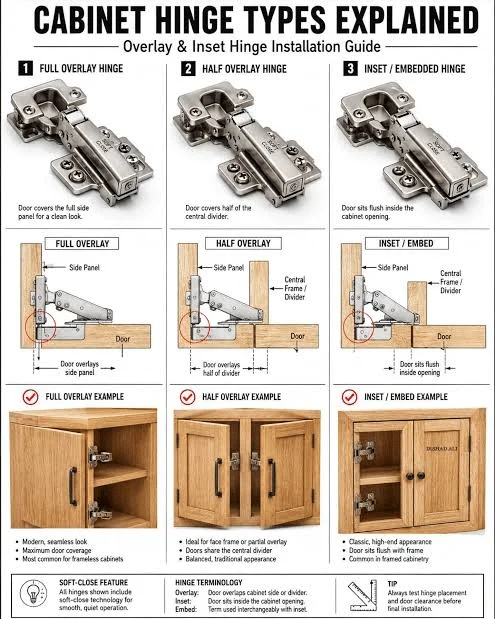
- Concealed hinges
- Soft-close hinges
- Drawer slides
- Push-open fittings
- Handles or knobs
- Locks
- Adjustable shelf pins
- Connecting fittings
- Cam locks and dowels
- Wall-fixing kits
- Adjustable feet
- Metal legs
- Glass-door fittings
- Cable-management accessories
Standard or Branded Hardware
A buyer may choose reliable standard hardware for price-sensitive programs or specify internationally recognized hardware for premium projects.
The request for quotation should state whether the buyer needs:
- Factory-standard hardware
- A named hardware brand
- A specific opening-cycle requirement
- Soft-close operation
- Corrosion-resistance testing
- Replacement hardware availability
- Customized colors or finishes
- Individual spare-part packing
Using a famous hardware brand does not correct weak cabinet engineering. The panel fixing area, drilling position, door dimensions and assembly method must also be suitable.
Finish Control
For repeat orders, the factory should control:
- Approved color reference
- Grain direction
- Gloss level
- Edge-band color
- Surface texture
- Door and body color matching
- Metal-part finish
- Lot-to-lot consistency
A signed physical sample, approved panel swatch or documented color standard is more reliable than approval based only on photographs.
6. Understand MOQ and Quotation Structure
MOQ should be evaluated together with production efficiency, material purchasing and container planning.
A very low advertised MOQ does not necessarily produce a commercially useful unit price. Small quantities may increase panel waste, setup costs, packaging cost and purchasing cost for special hardware.
Practical MOQ Factors
The MOQ may depend on:
- Cabinet model
- Color and finish
- Panel specification
- Hardware type
- Packaging artwork
- Carton printing
- Number of SKUs
- Loading quantity
- Destination market
- Whether materials are standard or custom
For factory-direct export programs, a practical starting point is generally container-based purchasing. Our standard website guidance lists a starting MOQ of one container, while mixed-SKU loading and project quantities can be reviewed case by case.
Buyers should ask whether the MOQ applies:
- Per model
- Per color
- Per finish
- Per packaging design
- Per order
- Per container
What an Accurate Quotation Should Include
A professional quotation should define:
- Product dimensions
- Materials and panel thickness
- Surface finish
- Hardware level
- Packaging method
- Quantity
- Unit price
- Trade term
- Loading quantity
- Sample cost
- Tooling cost, if applicable
- Production lead time
- Quotation validity
- Testing cost, if required
- Artwork or private-label requirements
A price without a clear specification cannot be compared fairly with another supplier’s price.
Buyers should be cautious when one quotation is substantially lower but does not specify panel thickness, back-panel construction, edge banding, hardware, carton strength or inspection requirements.
7. Plan Samples, Production Lead Time and Project Delivery
Cabinet sourcing should be planned backward from the required delivery or installation date.
A typical project may include:
- Technical review
- Quotation
- Drawing confirmation
- Material sourcing
- Sample production
- Sample delivery
- Buyer evaluation
- Sample modification
- Packaging testing
- Deposit and order confirmation
- Mass production
- Inspection
- Loading
- Ocean or land transport
- Customs clearance
- Local delivery
- Installation
Practical Planning Windows
The following ranges can be used as an early planning reference, but they are not a binding production commitment:
| Stage | Typical Planning Range |
|---|---|
| Initial technical review and quotation | 2–7 working days |
| Drawing or specification confirmation | 3–10 working days |
| Sample production | 15–30 days |
| Sample correction, when required | 7–20 days |
| Bulk production after final approval | 35–60 days |
| Final inspection and loading preparation | 3–7 days |
Actual timing depends on material availability, quantity, number of models, finish complexity, testing, packaging development and factory production schedules.
For large apartment or hotel projects, buyers should also confirm:
- Whether delivery will be one shipment or multiple phases
- Whether rooms or units require separate packing lists
- Whether cartons need floor, room or building identification
- Whether installation hardware should be packed by room
- Whether spare parts are required for each shipment
- Whether the factory must coordinate with an installer
A credible manufacturer should provide a project-specific schedule after reviewing the final bill of materials and quantity.
8. Inspect Quality Control and Export Packaging
Quality control must be connected to the approved product specification.
A generic statement such as “100% good quality” is not an inspection plan.
Incoming Material Inspection
Incoming checks may cover:
- Panel thickness
- Surface finish
- Color consistency
- Edge banding
- Hardware model
- Glass or mirror dimensions
- Metal-part finish
- Packaging material
- Labels and printed components
In-Process Inspection
During cabinet production, important control points include:
- Cutting dimensions
- CNC drilling position
- Edge-banding adhesion
- Surface damage
- Hole completeness
- Door and drawer alignment
- Hardware fitting
- Cabinet squareness
- Trial assembly
- Component identification
Pre-Shipment Inspection
Before shipment, inspection should verify:
- Approved dimensions
- Appearance
- Function
- Stability
- Shelf and drawer operation
- Hardware completeness
- Assembly instruction accuracy
- Carton marks
- Barcode and SKU information
- Packaging condition
- Quantity
- Loading preparation
A quality-management approach should rely on documented processes, responsibilities and corrective action rather than visual inspection alone. The ISO 9001 quality-management framework is a useful reference for buyers evaluating whether a factory manages quality systematically.
Flat-Pack Export Packaging
For panel furniture, packaging is part of product engineering.
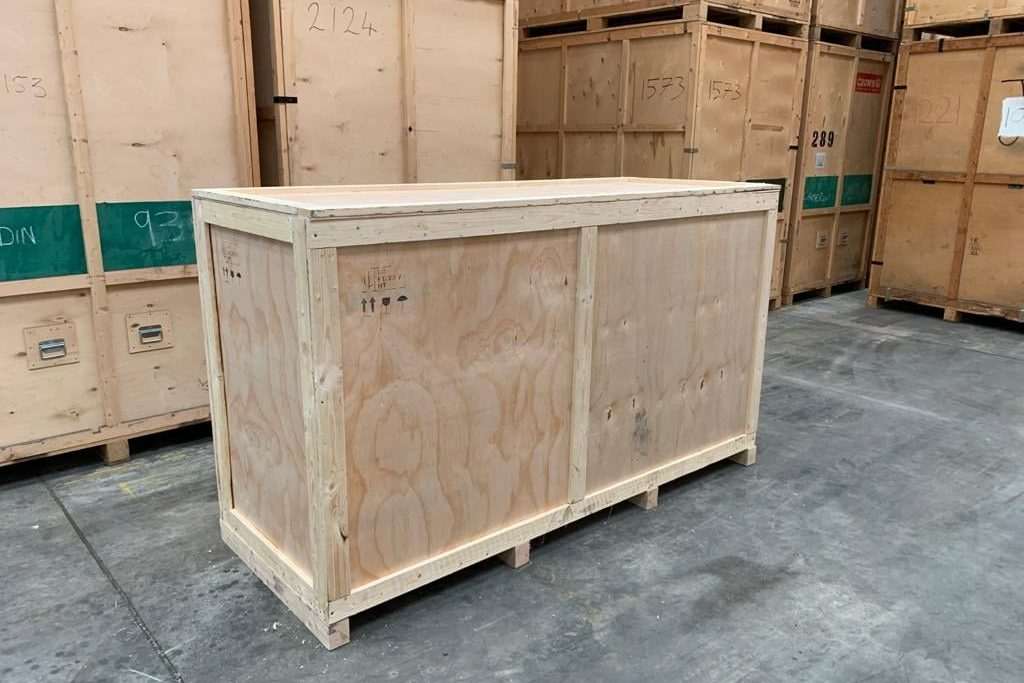
A cabinet may pass factory inspection but still fail commercially if panels are damaged in transit, hardware moves inside the carton or cartons become too heavy for warehouse handling.
A practical flat-pack package may include:
- Protective foam or paper
- Corner protection
- Panel separators
- Hardware bags
- Clearly numbered components
- Assembly instructions
- Reinforced cartons
- Strapping where suitable
- Palletization when required
- Carton labels
- Barcode labels
- Private-label artwork
The ISTA 2C furniture package procedure is specifically intended for individual packaged furniture products transported in a container and can be referenced when developing a packaging test plan.
Buyers should define what constitutes acceptable or unacceptable packaging damage before testing.
Container Loading
The lowest unit price may not produce the lowest landed cost.
Flat-pack cabinet dimensions affect:
- Carton volume
- Carton weight
- Pieces per container
- Warehouse handling
- Last-mile delivery
- Damage exposure
- Installation efficiency
During development, the factory should calculate estimated loading quantities and consider whether panel division, hardware placement or carton design can improve container efficiency without reducing structural performance.
Our flat-pack export packaging service covers panel protection, hardware organization, carton marking and container-loading preparation for international furniture orders.
When solid-wood pallets or raw-wood dunnage are used, buyers should confirm applicable phytosanitary requirements. The IPPC ISPM 15 standard addresses raw-wood packaging used in international trade; processed wood materials such as plywood are excluded from its scope.
9. Evaluate the Factory as a Long-Term Supply Partner
The best storage cabinet supplier is not necessarily the factory with the lowest first quotation. Buyers should evaluate whether the manufacturer can repeat approved products, manage changes and support future orders.
Factory Capabilities Buyers Should Verify
A panel furniture factory should be able to explain its capabilities in:
- CNC cutting and drilling
- Edge banding
- Surface processing
- Trial assembly
- Hardware fitting
- Quality inspection
- Flat-pack packaging
- Carton marking
- Container loading
- OEM documentation
- Repeat-order production
Starwood Industry Co., Ltd. has manufactured flat-pack panel furniture since 2013 for brands, importers, wholesalers, e-commerce sellers and commercial projects.
Our production scope includes bedroom furniture, storage cabinets, home office furniture, kitchen cabinets, bathroom cabinets, living room furniture and space-saving furniture.
Buyers can review our panel furniture factory profile and commercial furniture manufacturing capabilities before submitting a project.
Production Repeatability
A buyer should ask how the factory controls repeat orders.
Important controls include:
- Approved drawings
- Bill of materials
- Hardware codes
- Panel references
- Finish samples
- Packaging specifications
- Assembly instructions
- Inspection criteria
- Change records
- Golden samples
Without controlled reference documents, a factory may unintentionally change materials or details between orders.
Communication and Problem Solving
Furniture projects frequently require decisions during sampling and production. A reliable supplier should identify problems early rather than simply following an impractical drawing.
Useful technical feedback may involve:
- Reducing shelf span
- Increasing hinge quantity
- Changing the back-panel structure
- Adjusting drilling positions
- Dividing an oversized panel
- Improving hardware access
- Simplifying installation
- Reinforcing packaging
- Changing carton dimensions
- Replacing an unsuitable finish
The objective is not to change the buyer’s design unnecessarily. It is to make the product safer, more repeatable and more commercially practical.
Storage Cabinet Applications by Project Type
A specialized storage cabinet manufacturer should be able to adapt a common cabinet platform to different commercial applications.
Apartment and Rental Housing Projects
Recommended features include:
- Compact depth
- Easy-clean melamine surfaces
- Replaceable hardware
- Adjustable shelves
- Wall-fixing kits
- Neutral colors
- Coordinated room collections
- Simple installation
- Efficient flat-pack cartons
Office Projects
Recommended features include:
- Filing dimensions
- Lockable doors or drawers
- Adjustable shelves
- Cable access
- Durable hinges and slides
- Coordinated desk finishes
- Label holders
- Modular layouts
- Freestanding or wall-mounted options
Hotel and Serviced Apartment Projects
Recommended features include:
- Coordinated room finishes
- Minibar or hospitality storage
- Luggage and wardrobe functions
- Cable-management openings
- Replaceable doors and hardware
- Room-number carton labels
- Phased shipment planning
- Spare parts
- Installer-friendly construction
Student Housing
Recommended features include:
- Durable surfaces
- Simple hardware
- Compact dimensions
- Book and document storage
- Lockable personal storage
- Wall anchoring
- Easy replacement parts
- Repeatable assembly
- Cost-effective materials
Retail and E-Commerce Programs
Recommended features include:
- Optimized carton dimensions
- Clear assembly manuals
- Numbered components
- Barcode labeling
- Private-label artwork
- Parcel or container packaging strategy
- Spare hardware
- Customer-service part identification
- Market-fit color and dimensions
For a broader product selection, visit our OEM storage cabinet category.
Recommended OEM/ODM Customization Workflow
A structured development process reduces misunderstandings and protects the buyer’s schedule.
Step 1: Buyer Brief
Send:
- Product drawings or reference photos
- Required dimensions
- Target use
- Destination market
- Order quantity
- Target price
- Material preference
- Required finish
- Hardware requirements
- Packaging requirements
- Delivery schedule
Step 2: Factory Technical Review
The factory reviews:
- Structural feasibility
- Material suitability
- Shelf spans
- Door and drawer sizes
- Hardware compatibility
- Flat-pack construction
- Packaging limitations
- Loading quantity
- Cost risks
Step 3: Quotation and Specification
The quotation should be linked to a written specification. Any alternative material or cost-reduction proposal should be identified clearly.
Step 4: Drawing Confirmation
Confirm:
- Overall dimensions
- Internal layout
- Panel thickness
- Hole positions
- Hardware
- Finish
- Assembly method
- Wall fixing
- Packaging method
Step 5: Sample Production
The sample should verify:
- Appearance
- Dimensions
- Assembly
- Stability
- Door and drawer function
- Shelf performance
- Hardware
- Packaging concept
Step 6: Sample Improvement and Approval
Record every approved change. Do not rely only on chat messages or photographs.
Step 7: Mass Production
Production should follow the final drawing, bill of materials, approved sample and packaging specification.
Step 8: Inspection, Packing and Shipment
Complete final checks, carton verification, loading planning and shipping-document preparation.
Information Buyers Should Send for an Accurate Quotation
To receive a useful quotation from a storage cabinet factory, send as much of the following information as possible:
- Cabinet drawing or reference image
- Width, depth and height
- Internal shelf and drawer layout
- Panel material
- Panel thickness
- Finish and color
- Edge-band requirement
- Door type
- Drawer quantity
- Hardware level
- Handle or push-open requirement
- Locking requirement
- Expected shelf load
- Flat-pack or assembled structure
- Private-label requirement
- Carton-mark requirement
- Destination country
- Order quantity
- Required delivery date
- Testing or certification requirements
- Target price, when available
A detailed brief enables the manufacturer to identify risks and quote the correct structure. It also reduces later price changes.
Frequently Asked Questions
1. What types of storage cabinets can you manufacture?
We manufacture flat-pack panel storage cabinets for living rooms, dining rooms, entryways, home offices, hotels, apartments, rental properties, student housing and commercial spaces. Products can include sideboards, drawer cabinets, filing cabinets, shoe cabinets, modular storage units, utility cabinets, bookcases with doors and custom project cabinets.
2. Do you support both OEM and ODM storage cabinet projects?
Yes. For OEM projects, we manufacture according to the buyer’s drawings, samples and specifications. For ODM projects, we can support layout development, material selection, hardware matching, structure optimization, sampling and packaging development based on the buyer’s target market and budget.
3. What materials are available?
Common materials include particle board, MDF, plywood and other engineered panels. Available surfaces may include melamine, laminate, veneer, painted finishes and buyer-specified decorative materials. Final selection depends on design, price level, destination market and performance requirements.
4. What is the MOQ for custom storage cabinets?
MOQ depends on the model, color, material, hardware and packaging. A practical factory-direct export starting point is generally one container. Mixed-SKU container programs and project quantities can be discussed after the factory reviews product volume and production requirements.
5. How long does sample and bulk production take?
A typical sample may require approximately 15–30 days after specification confirmation. Bulk production may require approximately 35–60 days after final sample approval and order confirmation. Actual lead time is quoted according to quantity, finish, materials, testing and production schedules.
6. Can you manufacture cabinets for office projects?
Yes. We can manufacture office storage cabinets, filing units, bookcases, desk-side cabinets, wall storage, meeting-room cabinets and customized office storage systems. Locking, adjustable shelves, cable openings, drawer layouts and coordinated finishes can be developed according to the project.
7. Can you supply storage cabinets for hotels and apartments?
Yes. We support storage cabinets and other panel furniture for hotels, serviced apartments, rental properties, student housing and residential developments. We can coordinate dimensions, finishes, packaging labels and shipment schedules according to the project plan.
8. Do you provide flat-pack export packaging?
Yes. We provide KD, RTA and flat-pack packaging with protected panels, hardware kits, assembly instructions, carton marks, barcode labels and private-label options. Packaging specifications can be adjusted according to container shipping, warehouse handling or retail requirements.
9. Can you support compliant materials for the U.S. or European market?
We can review buyer-specified panel and documentation requirements according to the destination market. Buyers should confirm applicable regulations, emission limits, product-safety requirements and testing standards before order confirmation.
10. Can buyers inspect the products before shipment?
Yes. Inspection can be completed according to an agreed checklist, approved sample, drawings and packaging specification. Buyers may also arrange an independent third-party inspection when required.
Request a Storage Cabinet Catalog and Factory Quotation
Are you sourcing storage cabinets for a home furniture collection, office program, hotel, apartment development, student housing project or commercial interior?
Starwood Industry Co., Ltd. is a China-based commercial furniture manufacturer, OEM ODM furniture supplier and panel furniture export factory specializing in flat-pack furniture for international buyers.
Send us:
- Product drawings or reference photos
- Required dimensions
- Material and finish
- Estimated quantity
- Destination market
- Packaging requirements
- Required delivery schedule
Our team will review your project and provide technical suggestions, customization options and a factory quotation.
Start your project:
https://plywoodmfr.com/contact/
Learn about our factory:
https://plywoodmfr.com/the-company/
Review OEM/ODM services:
https://plywoodmfr.com/oem-odm-furniture-manufacturing-services/
Explore project furniture manufacturing:
https://plywoodmfr.com/project-furniture-manufacturing/
Browse storage cabinet products:
https://plywoodmfr.com/multi-functional-furniture-space-saving-solutions/multi-functional-storage-cabinet/