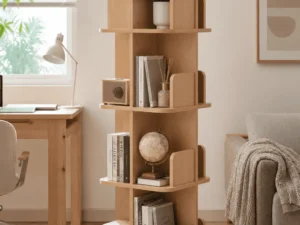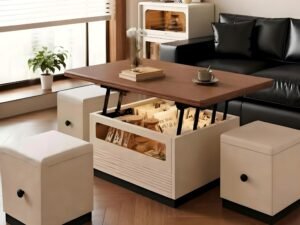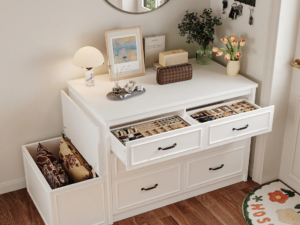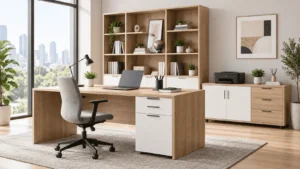
For importers, wholesalers, hotel developers, apartment operators, contractors, and commercial space buyers, choosing a contract furniture manufacturer is a supply chain decision, not a simple product purchase. Contract furniture orders usually involve repeated room sets, custom sizes, commercial-use durability, consistent finishes, organized carton marks, MOQ planning, strict lead time, export packing, and installation support. The real risk is not only a higher unit price. It is project delay, unstable quality, missing hardware, mixed cartons, damaged panels, unclear assembly instructions, and poor communication after deposit. This guide explains how B2B buyers can evaluate a China-based contract furniture factory before placing bulk orders.
Table of Contents
- What contract furniture means for B2B buyers
- Why contract furniture needs factory-based production control
- Main applications for contract furniture orders
- Check whether the supplier is a real panel furniture factory
- Confirm OEM/ODM capability before quotation
- Review materials, finishes, hardware, and commercial durability
- Discuss MOQ, sample approval, and lead time early
- Check packaging, carton marks, and installation logic
- Review QC, documents, and compliance support
- Compare total procurement cost, not only unit price
- Why work with Starwood as your contract furniture manufacturer
- Buyer checklist before sending an inquiry
- FAQ
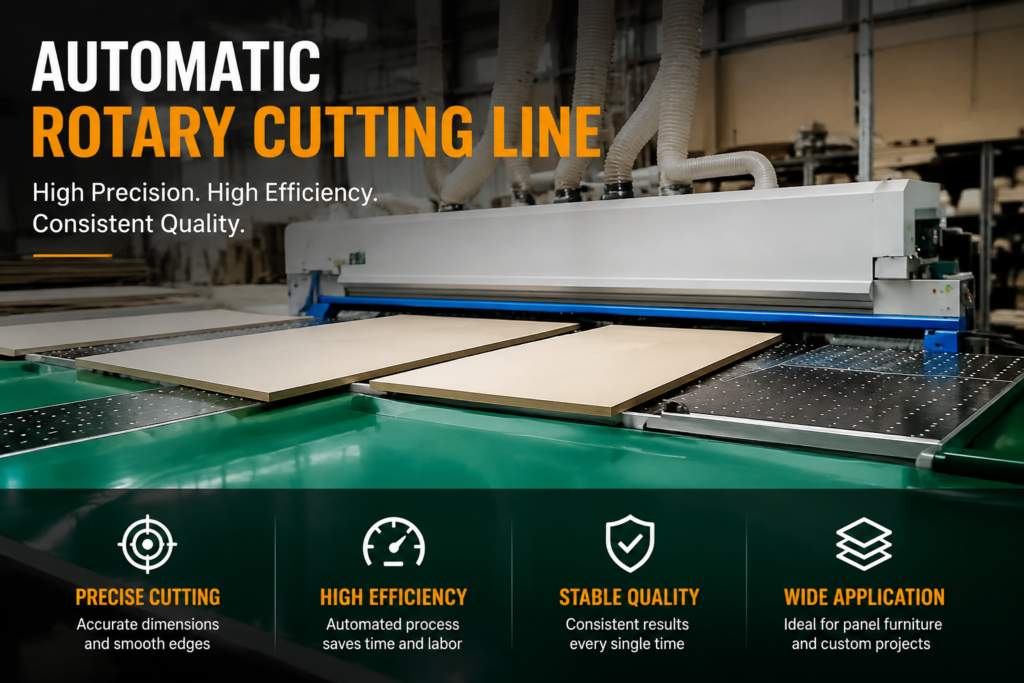
What Contract Furniture Means for B2B Buyers
Contract furniture refers to furniture supplied for commercial, hospitality, institutional, rental, or project-based use. It is commonly used in hotels, serviced apartments, rental housing, student accommodation, offices, staff dormitories, commercial interiors, real estate projects, and bulk furnishing programs.
Unlike retail furniture sold one piece at a time, contract furniture must meet project requirements. Buyers often need stable dimensions, repeated production, controlled finishes, durable materials, coordinated delivery, export-ready packaging, and clear installation information.
For a B2B buyer, a good contract furniture manufacturer should not only manufacture furniture. It should help you manage production risk from the first drawing to final container loading.
A reliable factory should support:
- Project specification review
- Product list and room layout discussion
- Material and finish recommendation
- OEM/ODM customization
- Sample or mock-up approval
- Bulk production planning
- Quality control
- Hardware matching
- Flat pack or KD packing
- Carton marks
- Container loading support
- Export document preparation
This is why contract furniture sourcing should be handled as a procurement project, not as a one-time catalog order.
For buyers looking for a China-based panel furniture factory, Starwood’s homepage introduces our positioning as a Flat-Pack Furniture Manufacturer in China for global brands, importers, wholesalers, and project buyers.
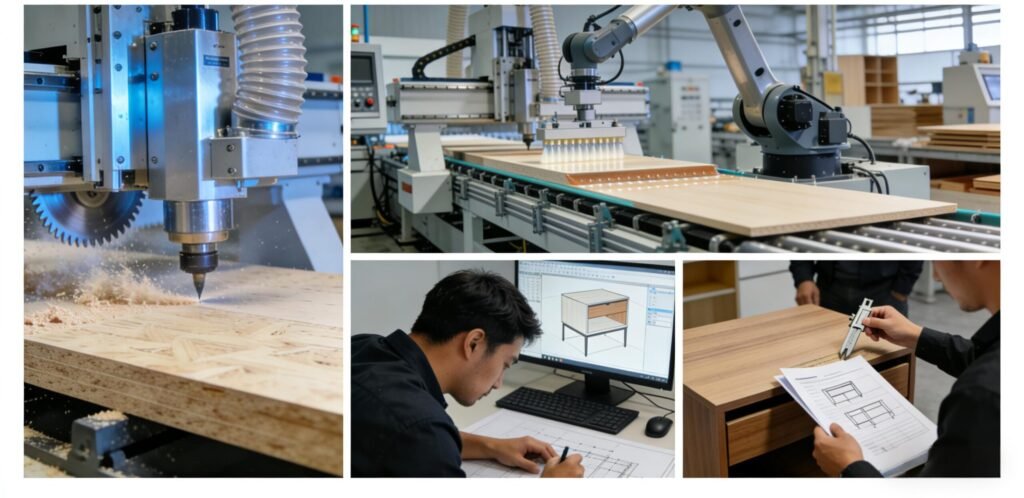
Why Contract Furniture Needs Factory-Based Production Control
Contract furniture projects usually involve volume, repetition, and schedule pressure. A small production issue can become a large project problem when repeated across hundreds of rooms or units.
For example, if one wardrobe has wrong drilling positions, it is a single defect. If 500 wardrobes have the same drilling problem, it becomes a project delay. If one carton is missing hardware, it can be solved quickly. If many cartons are not labeled clearly, installers may waste days sorting parts on site.
A strong commercial furniture manufacturer should understand how furniture is used after it leaves the factory. This includes shipping, warehousing, distribution, installation, repair, and repeat orders.
Contract furniture production should control:
- Product dimensions
- Panel thickness
- Cutting accuracy
- Edge banding quality
- Finish consistency
- Hardware stability
- Load-bearing structure
- Assembly process
- Packing protection
- Carton identification
- Loading sequence
- Shipment documents
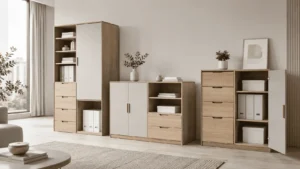
For flat pack panel furniture, these details are especially important. Furniture such as wardrobes, storage beds, kitchen cabinets, bathroom cabinets, desks, TV stands, shoe cabinets, bookshelves, and storage units depends on accurate processing and practical assembly.
A supplier that only gives a low price but cannot control production details may create higher cost for the buyer later.
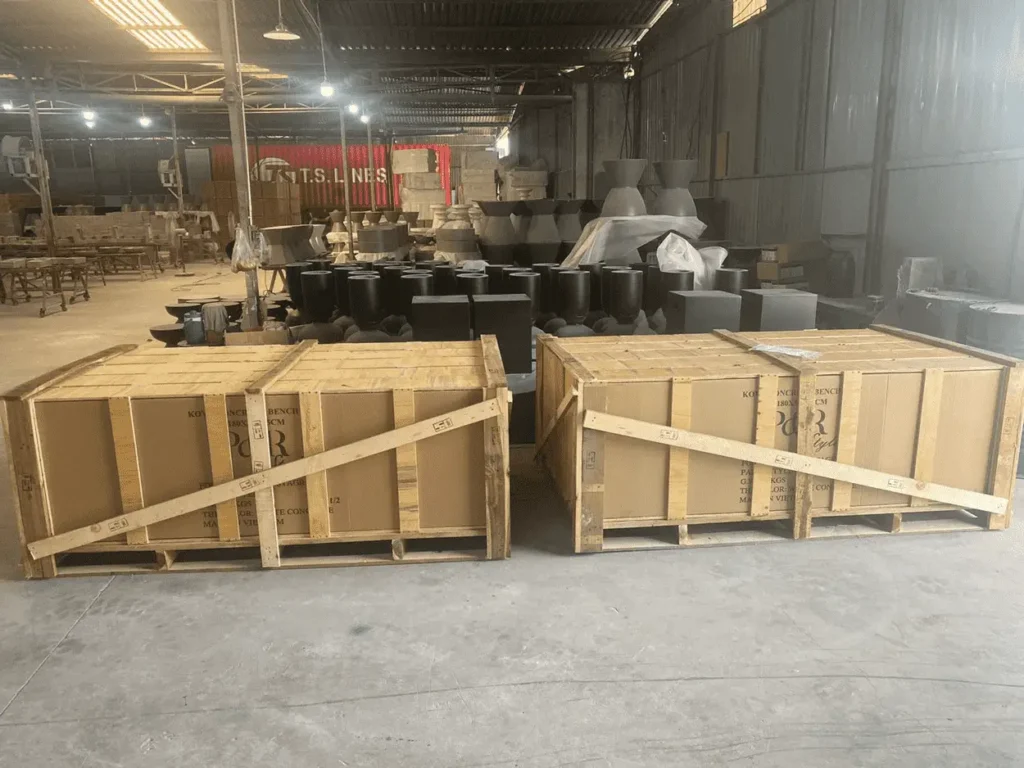
Main Applications for Contract Furniture Orders
Before choosing a contract furniture manufacturer, buyers should define where the furniture will be used. Different applications require different materials, finishes, hardware, packaging, and quality expectations.
Hotel Contract Furniture
Hotel furniture needs a balance of appearance, durability, cost control, and installation efficiency. Common hotel contract furniture includes:
- Wardrobes
- Bed frames
- Bedside tables
- TV panels
- Writing desks
- Luggage racks
- Minibar cabinets
- Bathroom cabinets
- Storage cabinets
- Restaurant or café furniture
Hotel buyers often need consistent finishes across many rooms. A sample room or mock-up approval is usually important before mass production. The factory should also support carton marks by room type, product code, or installation sequence.
Apartment and Serviced Residence Furniture
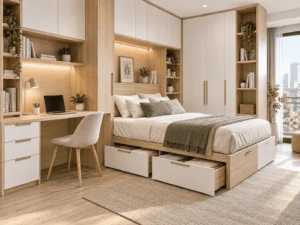
Apartment and serviced residence projects usually require furniture that is practical, durable, cost-controlled, and space-efficient. Common products include:
- Wardrobes
- Storage beds
- Shoe cabinets
- Kitchen cabinets
- Bathroom cabinets
- TV stands
- Desks
- Bookshelves
- Dining tables
- Multi-functional storage units
Flat pack panel furniture is often suitable for apartment projects because it reduces shipping volume and supports flexible installation. The factory should help optimize panel size, hardware selection, packaging, and container loading.
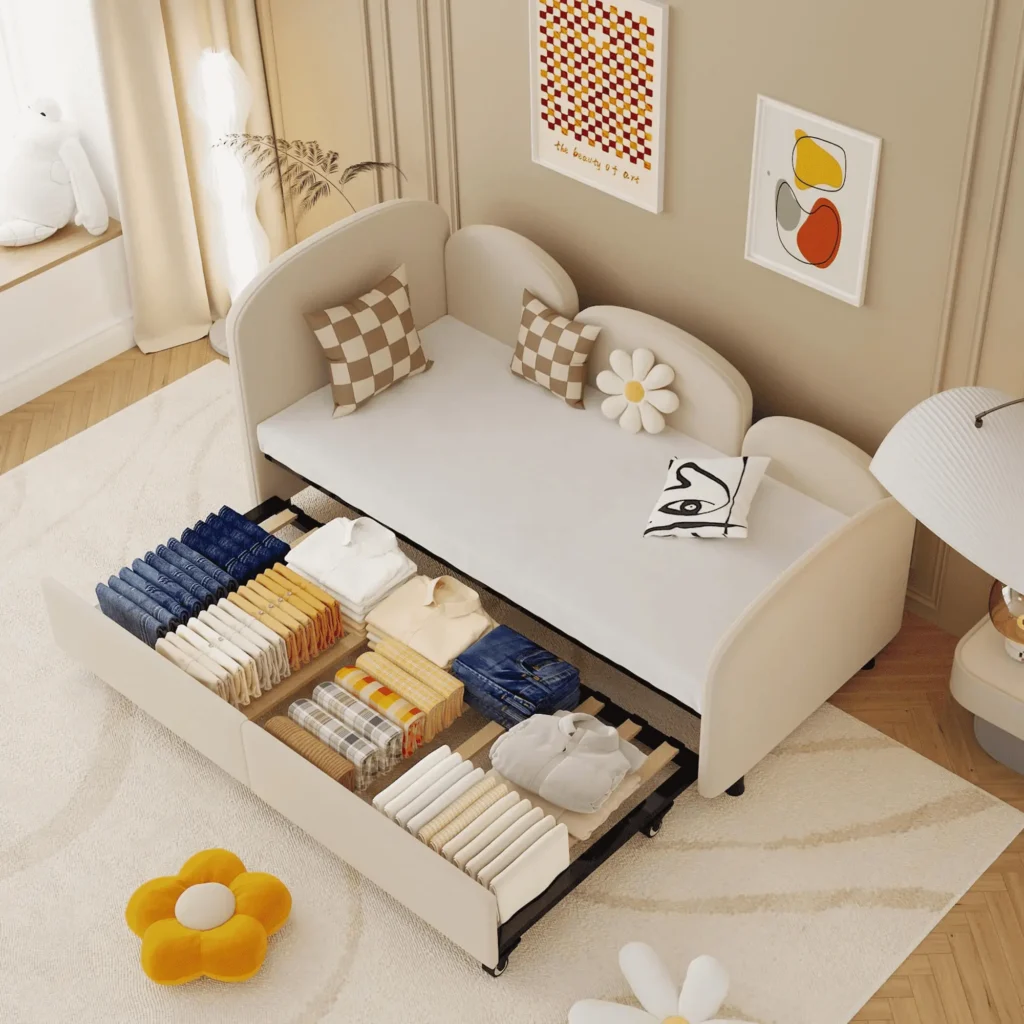
Rental Housing and Student Accommodation
Rental housing and student accommodation furniture should be easy to assemble, easy to maintain, and suitable for repeated daily use. Durability, replacement supply, and simple installation matter more than decorative complexity.
Typical products include beds, wardrobes, desks, shelving units, shoe cabinets, kitchen storage, and compact storage cabinets. A reliable factory should offer stable repeat production so the buyer can order replacements later.
Office and Commercial Spaces
Office and commercial furniture may include desks, storage cabinets, shelving units, pantry cabinets, reception counters, office storage systems, and customized panel furniture.
For commercial-use furniture, buyers should consider load-bearing needs, surface durability, hardware performance, edge banding quality, and long-term maintenance. Buyers can also review BIFMA’s furniture standards overview when discussing commercial furniture safety, performance, and sustainability expectations with suppliers.
1. Check Whether the Supplier Is a Real Panel Furniture Factory
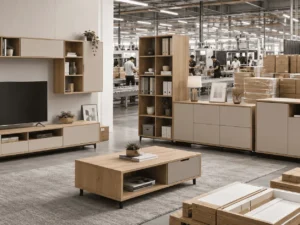
Before comparing quotations, confirm whether the supplier has real factory capability. Contract furniture orders require stronger control than small retail orders because the quantity is larger and mistakes are repeated.
A real panel furniture export factory should be able to show:
- CNC cutting and drilling equipment
- Edge banding machines
- Panel processing workflow
- Hardware matching process
- Sample or trial assembly area
- Production management process
- QC inspection points
- Packing area
- Export carton handling
- Container loading experience
For panel furniture, production accuracy matters. A cabinet, wardrobe, bed, desk, or shelf may fail during installation if the hole position is wrong or if the connector does not match the panel thickness.
Before placing an order, ask the factory for:
- Factory photos or videos
- Production equipment list
- Main product categories
- Similar project experience
- Sample policy
- QC process
- Packing method
- Export market experience
- Lead time range
- MOQ requirement
- Container loading examples
You can review Starwood’s factory background on the Starwood Factory Page. Starwood is a China-based flat pack panel furniture manufacturer serving brands, importers, wholesalers, e-commerce sellers, and commercial project buyers.
2. Confirm OEM/ODM Capability Before Quotation
Most contract furniture buyers do not want standard catalog products only. They need furniture that fits project layouts, room types, brand positioning, price targets, and installation requirements.
This is why OEM/ODM capability is important.
OEM Contract Furniture
OEM manufacturing is suitable when the buyer already has drawings, samples, dimensions, material specifications, or a design package. The factory manufactures according to the buyer’s confirmed requirements.
OEM contract furniture is common for:
- Hotel room furniture
- Apartment furniture packages
- Office furniture programs
- Student housing furniture
- Rental housing furniture
- Private-label furniture collections
- Commercial interior projects
The buyer should prepare:
- Product drawings
- Dimensions
- Room layout
- Material requirements
- Finish samples
- Hardware requirements
- Quantity by item
- Packaging requirements
- Target delivery schedule
ODM Contract Furniture
ODM development is suitable when the buyer has a project need but does not have complete technical drawings. The factory helps review the application scenario, recommend materials, optimize structure, develop samples, and prepare production solutions.
ODM support is useful for:
- New apartment projects
- Hotel renovation furniture
- Rental property furniture programs
- Student accommodation furniture
- Space-saving furniture systems
- Commercial storage solutions
- New furniture brand collections
A practical ODM process usually includes:
- Buyer sends project type, reference photos, target budget, and product needs
- Factory reviews usage scenario and production feasibility
- Material and finish options are discussed
- Initial quotation is prepared
- Sample or mock-up product is developed
- Buyer reviews and gives feedback
- Structure or finish is adjusted if needed
- Final sample is approved
- Bulk production starts
- QC, packing, and shipment are arranged
For customized contract furniture, review our OEM & ODM Furniture Manufacturing Services to understand how Starwood supports product development, sampling, mass production, QC, export packing, and shipment preparation.
3. Review Materials, Finishes, Hardware, and Commercial Durability
Contract furniture quotations must be based on clear material details. If the buyer only asks for “best price for hotel furniture” or “apartment furniture quotation,” suppliers may quote different materials, thicknesses, finishes, and hardware levels. The lowest price may not be a fair comparison.
Common materials for contract panel furniture include:
- MDF
- Particle board
- Plywood
- Melamine board
- Laminated panels
- Engineered panels
- Veneer or printed finish panels
- Metal accessories when required
Board Thickness
Board thickness affects strength, price, product weight, and long-term performance. Contract furniture is often used frequently, so buyers should not focus only on reducing thickness to lower cost.
Confirm:
- Main side panel thickness
- Door panel thickness
- Shelf thickness
- Back panel material
- Drawer panel structure
- Load-bearing panels
- Bed frame support structure
- Wall-fixing requirements
For wardrobes, storage beds, desks, and cabinets, the structure must match the expected usage. A rental apartment, student dormitory, or hotel room may require stronger hardware and more practical design than a light-use retail item.
Surface Finish
Finish consistency is critical in contract furniture projects. A hotel, apartment, or commercial space may use the same finish across many rooms. If one batch is darker or lighter than another, the whole project can look inconsistent.
Buyers should confirm:
- Color sample
- Texture direction
- Gloss level
- Scratch resistance expectations
- Cleaning requirements
- Edge banding color match
- Batch color control
- Sample approval standard
Edge Banding
Edge banding affects both appearance and durability. Poor edge banding can lead to peeling, rough edges, visible glue lines, and moisture problems.
Before bulk production, check:
- Edge banding thickness
- Color matching
- Glue quality
- Corner finishing
- Edge smoothness
- Moisture-sensitive areas
Hardware
Hardware affects installation speed and long-term user experience. Hinges, slides, handles, cam locks, screws, wall anchors, adjustable feet, and connectors should be confirmed before mass production.
For contract orders, standardized hardware is usually better because it reduces installation errors and simplifies future replacement.
For buyers importing composite wood products or finished goods containing composite wood into the United States, the U.S. EPA provides a useful reference on Formaldehyde Emission Standards for Composite Wood Products. This is especially relevant when discussing MDF, particle board, hardwood plywood, and finished goods containing these materials.
4. Discuss MOQ, Sample Approval, and Lead Time Early
MOQ and lead time should be discussed before the buyer and factory spend too much time on detailed development.
A contract furniture manufacturer needs to plan material purchasing, board cutting, surface finish, hardware sourcing, carton production, labor, QC, and container loading. If the order has many SKUs, the production plan becomes more complex.
What Affects MOQ?
MOQ may depend on:
- Product category
- Number of SKUs
- Board material
- Custom finish
- Hardware selection
- Carton printing
- Private-label packaging
- Mixed-container planning
- Project quantity
- Production setup cost
- Container loading efficiency
For export contract furniture, MOQ is often planned by container or total project quantity. Buyers should send the full product list instead of asking MOQ for one product only. A factory may be able to combine wardrobes, desks, beds, cabinets, and storage units into one container plan.
Sample Approval
Sample approval is one of the most important steps in contract furniture sourcing. A sample helps confirm structure, dimensions, materials, finishes, hardware, assembly, and packaging.
For hotel or apartment projects, a sample room or mock-up set may be required. This allows the buyer, contractor, or developer to check appearance, size, function, and installation before bulk production.
Before approving the sample, check:
- Dimensions
- Board thickness
- Finish color
- Texture direction
- Edge banding
- Hardware
- Assembly method
- Stability
- Packaging
- Assembly instructions
Lead Time
Lead time should be divided into sample lead time and bulk production lead time.
A practical contract furniture timeline includes:
- Inquiry and technical review
- Product list confirmation
- Drawing or layout review
- Material and finish selection
- Quotation
- Sample production
- Sample approval
- Deposit payment
- Bulk material preparation
- Mass production
- QC inspection
- Packing
- Container booking
- Loading
- Shipment document preparation
For projects with opening dates, handover dates, or installation deadlines, tell the factory early. Lead time planning should match the project schedule, not only the factory schedule.
5. Check Packaging, Carton Marks, and Installation Logic
For contract furniture, packaging is not just a shipping detail. It directly affects damage rate, warehouse handling, installation speed, and after-sales cost.
Poor packaging can lead to:
- Damaged panels
- Scratched surfaces
- Broken corners
- Missing hardware
- Mixed cartons
- Installation confusion
- Project delay
- Higher labor cost
A professional panel furniture export factory should discuss packaging before mass production, not after products are finished.
Export Packaging Should Include
Buyers should confirm:
- Carton strength
- Panel protection
- Corner protection
- Foam, paper, or honeycomb protection
- Hardware bag labeling
- Assembly instruction placement
- SKU labels
- Carton marks
- Barcode or logistics label requirements
- Pallet or non-pallet loading
- Container loading sequence
- Drop-test expectations if required
Carton Marks for Contract Orders
Contract furniture projects often need cartons marked by project information. Depending on the project, cartons may be identified by:
- Project name
- Building
- Floor
- Room type
- Unit number
- Product code
- Color or finish
- Carton number
- Quantity
- Destination
Clear carton marks help warehouse teams and installers find the correct product quickly. This reduces site confusion and installation labor.
For structured logistics identification, buyers may refer to the GS1 Logistic Label Guideline. Not every contract furniture order needs GS1 labels, but clear logistic unit identification is useful for export furniture, warehouse handling, and project delivery.
Assembly Instructions
Flat pack contract furniture should include clear assembly instructions. This is especially important for wardrobes, beds, desks, cabinets, shelving, and storage units.
Good assembly instructions should include:
- Part list
- Hardware list
- Step-by-step diagrams
- Panel direction
- Screw and connector identification
- Safety notes
- Wall-fixing instructions when required
- Maintenance notes if needed
For large projects, simple and clear instructions reduce installation mistakes and save labor time.
6. Review QC, Documents, and Compliance Support
Quality control should start before production. For contract furniture, quality issues are costly because products are repeated across many rooms or units.
A practical QC process should include:
- Incoming material inspection
- Board thickness checking
- Color and finish confirmation
- Cutting accuracy check
- Drilling position check
- Edge banding inspection
- Hardware matching
- Trial assembly
- Surface defect inspection
- Packing verification
- Carton mark checking
- Final inspection
- Loading supervision if required
Pre-Production Control
Before mass production, buyers should approve the final specifications. This includes:
- Drawings
- Dimensions
- Materials
- Board thickness
- Finish samples
- Hardware list
- Packaging method
- Assembly instructions
- Carton marks
- Inspection standard
For serious B2B orders, every confirmed detail should be recorded. Clear records reduce arguments and help the factory control mass production.
When discussing quality management with suppliers, ISO 9001 is a useful reference because it is a globally recognized quality management standard. For furniture buyers, the important point is whether the factory has repeatable processes, inspection records, corrective action, and stable production control.
Export Documents
Buyers should confirm whether the factory can support:
- Commercial invoice
- Packing list
- Bill of lading information
- Carton quantity
- Gross weight and net weight
- CBM
- Product description
- Loading photos
- Container number
- Seal number
- Country of origin information if required
Import requirements vary by market and product. The International Trade Administration provides a useful reference on China import requirements and documentation. Buyers should also confirm final requirements with their freight forwarder or customs broker.
Responsible Material Sourcing
For buyers with sustainability or responsible sourcing requirements, documentation should be discussed before quotation. The Forest Stewardship Council explains FSC Chain of Custody Certification as a system used to verify forest-based materials along the supply chain.
If a hotel brand, apartment operator, or commercial buyer requires FSC-related documentation, this must be confirmed early. Buyers should not make environmental claims without supporting documents.
7. Compare Total Procurement Cost, Not Only Unit Price
In contract furniture sourcing, the lowest FOB price is not always the best business decision. A low unit price can become expensive if it causes defects, damage, delays, installation problems, or customer complaints.
When comparing factories, consider total procurement cost.
| Factor | Why It Matters |
|---|---|
| Factory capability | Determines whether the supplier can handle bulk and repeated production |
| Material clarity | Prevents unfair quotation comparison |
| Finish consistency | Protects hotel, apartment, and commercial interior quality |
| Hardware stability | Reduces installation and after-sales problems |
| Packaging quality | Reduces shipping damage |
| Carton marks | Improves warehouse and site installation efficiency |
| Lead time control | Protects opening, handover, and delivery schedules |
| QC process | Reduces defect risk |
| Export support | Helps shipment and customs preparation |
| Communication | Prevents mistakes before production |
A strong commercial furniture manufacturer should help you reduce project risk, not only reduce unit price.
For B2B buyers, the best factory is the one that can support stable supply, clear communication, practical production, and repeat orders.
8. Use a Clear Contract Furniture Inquiry Format
A good inquiry saves time for both the buyer and the factory. If the inquiry is too general, the quotation may be inaccurate.
Instead of sending only “Please quote hotel furniture,” prepare a structured inquiry.
Product Information
Include:
- Product name
- Product photos or reference links
- Drawings or dimensions
- Material requirements
- Board thickness
- Finish color
- Edge banding requirement
- Hardware requirement
- Assembly method
- Packing requirement
- Quantity per item
Project Information
Include:
- Project type
- Hotel, apartment, office, rental housing, or commercial space
- Number of rooms or units
- Room type list
- Product list by room
- Delivery schedule
- Installation schedule
- Target budget
- Required documentation
Packaging and Shipment Information
Include:
- Destination country
- Destination port
- Container type if known
- Carton mark requirement
- Private-label requirement
- Room-based packing requirement
- Pallet or non-pallet preference
- Inspection requirement
- Shipment deadline
A complete inquiry allows the factory to give more accurate feedback and avoid repeated clarification.
Why Work with Starwood as Your Contract Furniture Manufacturer?
Starwood Industry Co., Ltd. is a China-based flat pack panel furniture manufacturer supporting global brands, importers, wholesalers, e-commerce sellers, hotel projects, apartment projects, and commercial furniture buyers.
We manufacture OEM and ODM panel furniture for:
- Hotels
- Serviced apartments
- Rental housing
- Student accommodation
- Offices
- Commercial spaces
- Real estate projects
- Furniture importers
- Wholesalers
- Private-label furniture brands
Our product scope includes:
- Wardrobes
- Storage beds
- Kitchen cabinets
- Bathroom cabinets
- TV stands
- Shoe cabinets
- Desks
- Bookshelves
- Kids’ room furniture
- Bedroom furniture
- Dining furniture
- Multi-functional furniture
- Space-saving furniture
- Project-based panel furniture
As a contract furniture manufacturer, Starwood supports material selection, custom sizing, sample development, OEM/ODM production, quality control, export packing, carton marks, and shipment preparation.
As an OEM ODM furniture supplier, we help buyers turn drawings, reference photos, room layouts, product lists, and project specifications into practical furniture production.
As a panel furniture export factory, we focus on flat pack and KD furniture solutions for efficient shipping, bulk order planning, and export-ready delivery.
Learn more about our factory: Starwood Factory Page
Learn more about customization: OEM & ODM Furniture Manufacturing Services
Learn more about hotel, apartment, and commercial project supply: Project Furniture Manufacturing
Visit our homepage: Flat-Pack Furniture Manufacturer in China
Buyer Checklist Before Sending a Contract Furniture Inquiry
To receive a more accurate quotation, prepare the following information before contacting a factory.
Project Details
- Project type
- Hotel, apartment, office, dormitory, or commercial space
- Project location
- Number of rooms or units
- Product list by room type
- Required delivery schedule
- Installation schedule
- Budget range
- Special packing requirement
Product Details
- Product name
- Reference photos
- Drawings or dimensions
- Materials
- Board thickness
- Surface finish
- Edge banding
- Hardware
- Assembly method
- Color sample
- Quantity per item
Business and Shipment Details
- Buyer type
- Importer, wholesaler, developer, contractor, or brand
- Destination country
- Destination port
- Container type
- Private-label requirements
- Carton marks
- Inspection requirements
- Required documents
- Target loading date
The more complete your inquiry is, the faster the factory can provide a practical solution.
Final CTA: Start Your Contract Furniture Order
Looking for a reliable contract furniture manufacturer for hotels, apartments, rental housing, student accommodation, offices, or commercial spaces?
Send us your project layout, product list, reference photos, drawings, dimensions, material requirements, finish samples, target quantity, packing needs, and delivery schedule. Our team can review your project, suggest suitable panel furniture solutions, prepare quotation details, arrange samples, and support export-ready bulk production.
Contact Starwood Industry Co., Ltd. today and start your contract furniture order with a China-based OEM/ODM panel furniture factory.
Website: https://plywoodmfr.com/
Factory: https://plywoodmfr.com/the-company/
OEM/ODM Service: https://plywoodmfr.com/oem-odm-furniture-manufacturing-services/
Project Furniture: https://plywoodmfr.com/project-furniture-manufacturing/
FAQ
What is a contract furniture manufacturer?
A contract furniture manufacturer produces furniture for hotels, apartments, rental housing, student accommodation, offices, commercial spaces, and project-based buyers. The factory usually supports custom sizes, OEM/ODM production, bulk orders, consistent finishes, export packing, carton marks, and project delivery.
What is the difference between contract furniture and regular furniture?
Regular furniture is often sold as standard retail products. Contract furniture is produced for commercial or project use, where buyers need repeated production, stronger durability, consistent finishes, clear specifications, organized packing, and reliable delivery schedules.
What products are commonly included in contract furniture orders?
Common contract furniture products include wardrobes, beds, bedside tables, desks, TV stands, shoe cabinets, kitchen cabinets, bathroom cabinets, storage cabinets, bookshelves, dining furniture, and multi-functional panel furniture.
Can contract furniture be customized?
Yes. Contract furniture can be customized by dimensions, materials, finishes, board thickness, edge banding, hardware, structure, packaging, carton marks, and room layouts. Buyers can send drawings, product lists, reference photos, or project specifications.
Is flat pack furniture suitable for contract furniture projects?
Yes. Flat pack panel furniture is suitable for hotels, apartments, rental housing, student housing, offices, and commercial spaces because it supports efficient shipping, flexible installation, custom sizing, and cost-controlled bulk production.
What should buyers check before choosing a contract furniture manufacturer?
Buyers should check factory capability, material details, board thickness, finish consistency, hardware, sample quality, MOQ, lead time, QC process, packaging, carton marks, loading plan, and export document support.
What is the MOQ for contract furniture manufacturing?
MOQ depends on product category, material, finish, hardware, SKU quantity, packaging, and container loading plan. For export contract furniture, MOQ is often planned by container or total project quantity.
How long does contract furniture production take?
Lead time depends on drawing confirmation, material approval, sample production, sample approval, bulk production, QC inspection, packing, container booking, and shipment preparation. Buyers should confirm sample lead time and bulk production lead time separately.
Can Starwood support OEM/ODM contract furniture manufacturing?
Yes. Starwood supports OEM and ODM panel furniture manufacturing for hotels, apartments, rental housing, student accommodation, offices, commercial projects, importers, wholesalers, and furniture brands.