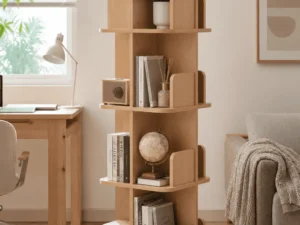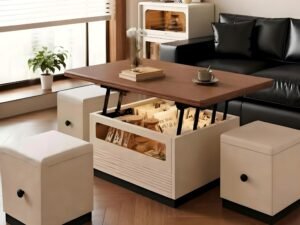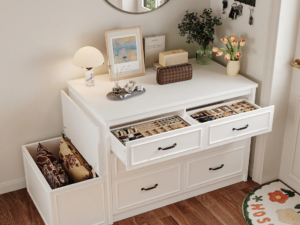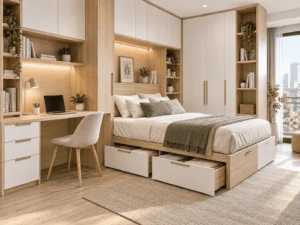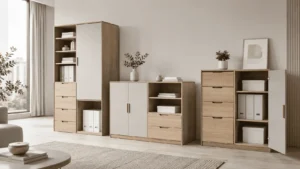
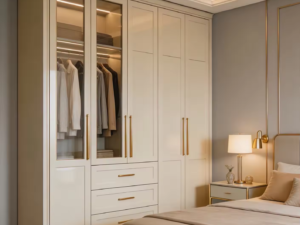
Choosing the right OEM wardrobe manufacturer is not only about finding a factory that can produce wardrobes at a competitive price. For furniture brands, importers, wholesalers, hotel contractors, apartment developers, and private label sellers, the real value lies in stable engineering, reliable materials, export-ready packaging, clear communication, and the ability to repeat quality across bulk orders.
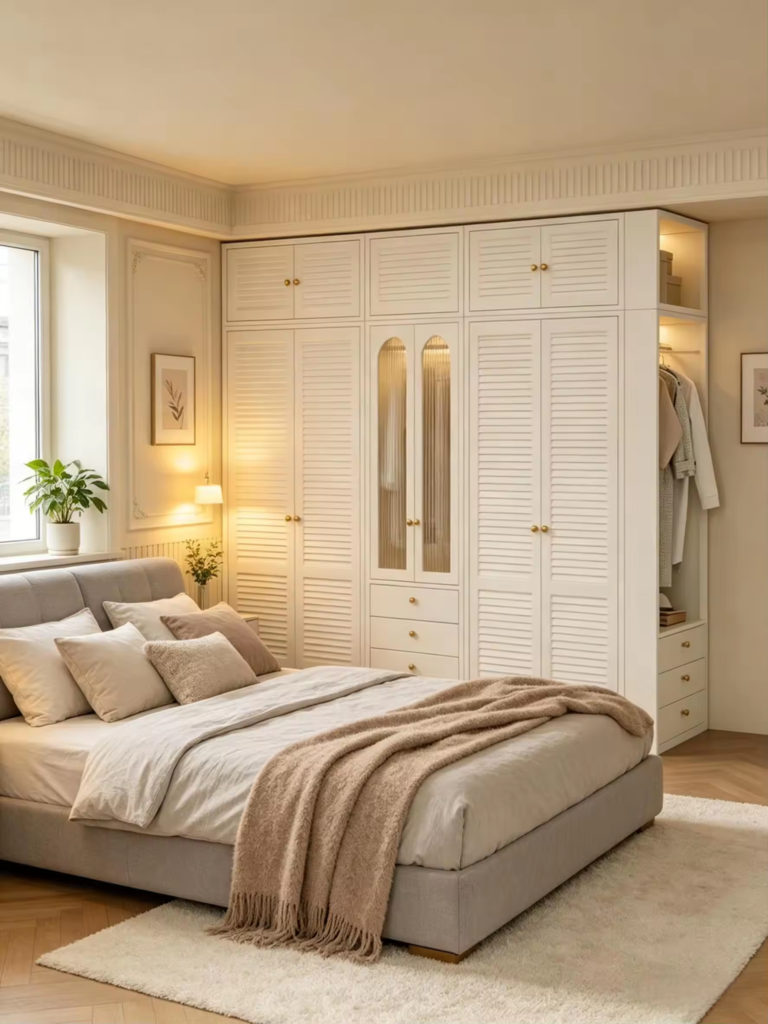
A wardrobe looks simple from the outside. But behind every successful OEM wardrobe project, buyers must confirm panel materials, dimensions, structure, door systems, hardware, finishes, packing method, MOQ, lead time, safety requirements, labeling, assembly instructions, and container loading efficiency. If one detail is not controlled, the final cost may increase through damage claims, delayed shipment, poor assembly experience, or inconsistent repeat orders.
This guide explains how to evaluate an OEM wardrobe manufacturer from a practical B2B sourcing perspective. It is written for industry buyers who need dependable custom wardrobe production for retail collections, private label programs, hotels, apartments, rental housing, student accommodation, and large-scale residential projects.
For buyers looking for a China source factory for panel furniture, you can also explore our OEM & ODM panel furniture manufacturing service page here: https://plywoodmfr.com/oem-odm-furniture-manufacturing-services/
Table of Contents
- What Is an OEM Wardrobe Manufacturer?
- Why Furniture Brands and Importers Choose OEM Wardrobe Production
- Key Application Scenarios for OEM Wardrobes
- Material Options for Custom Wardrobe Manufacturing
- MOQ, Lead Time, Sampling, and Bulk Order Planning
- Packaging and Export Requirements for Flat Pack Wardrobes
- 7 Smart Tips for Choosing the Right OEM Wardrobe Manufacturer
- Custom Wardrobe Manufacturing Process
- Quality Control Checklist for B2B Wardrobe Buyers
- FAQ: OEM Wardrobe Manufacturer
- Final CTA: Start Your Wardrobe OEM Project
What Is an OEM Wardrobe Manufacturer?
An OEM wardrobe manufacturer produces wardrobes according to the buyer’s design, brand requirements, dimensions, material specifications, hardware standards, and packaging needs. OEM means “Original Equipment Manufacturer.” In the furniture industry, this usually means the buyer already has a product concept, drawing, reference sample, target market, or price range, and the factory turns that requirement into stable production.
For example, a furniture brand may need a two-door wardrobe with melamine particle board, metal hanging rails, soft-close hinges, customized carton marks, and private label assembly instructions. An importer may need a full bedroom furniture program including wardrobes, beds, nightstands, dressing tables, and storage cabinets. A hotel buyer may need wardrobes customized for room layout, wall space, fire safety considerations, and long-term maintenance.
A professional wardrobe OEM supplier should not only cut panels and pack cartons. The factory should help buyers review structure, optimize material usage, improve packaging, reduce assembly complexity, control production consistency, and support export documentation.
If you need a long-term manufacturing partner instead of a one-time supplier, learn more about our factory background here: https://plywoodmfr.com/the-company/
Why Furniture Brands and Importers Choose OEM Wardrobe Production
B2B wardrobe buyers often choose OEM production because standard catalog products do not always match their market, price segment, packaging method, or project requirements. OEM production gives buyers more control over product positioning.
A furniture brand may want to build a private label bedroom collection with its own color system, handle design, carton artwork, and user manual. An importer may need sizes adjusted for local apartments. A hotel contractor may need wardrobes that match headboards, desks, luggage racks, and bathroom vanities. An e-commerce seller may need compact flat pack cartons that reduce shipping cost and improve warehouse handling.
OEM wardrobe production also helps buyers protect product consistency. Once the sample is confirmed, the factory can repeat the same structure, drilling pattern, edge banding, finish, hardware, and packaging method in future bulk orders. This is important for brands that rely on repeat SKUs and long-term sales channels.
A capable private label wardrobe manufacturer can support:
- Custom dimensions for different room sizes
- Sliding door, hinged door, mirror door, or open wardrobe designs
- MDF, particle board, plywood, or mixed panel structures
- Melamine, laminate, veneer-look, UV, or painted finish options
- Hardware options based on target price and durability
- Carton marks, logo labels, manuals, and retail-ready packaging
- Export packing suitable for sea freight and container loading
- QC inspection before shipment
For brands building a complete furniture line, OEM wardrobe production can be combined with bedroom furniture, living room storage, kitchen cabinets, and apartment furniture programs. Explore our broader manufacturing capability here: https://plywoodmfr.com/
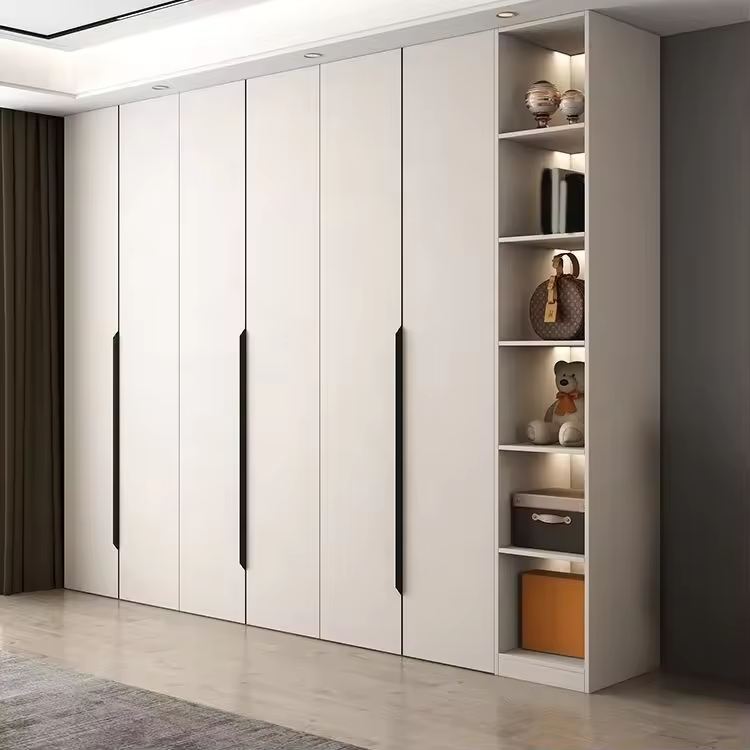
Key Application Scenarios for OEM Wardrobes
The best wardrobe design depends on where and how the product will be used. Before contacting an OEM wardrobe manufacturer, buyers should define the application scenario clearly.
Retail Furniture Collections
Retail buyers usually need wardrobes that are visually attractive, easy to assemble, and suitable for repeated stock programs. The key concerns are price competitiveness, stable appearance, carton strength, replacement parts, and repeat production consistency.
For retail channels, a wardrobe may need several variations in width, height, number of doors, drawer layout, color, and handle style. A factory with flexible panel furniture production can help create coordinated collections instead of isolated SKUs.
Private Label Furniture Brands
Private label buyers need more control over branding. The wardrobe may require custom carton design, logo labels, manual templates, hardware bags, barcode labels, SKU coding, and packaging artwork. A reliable private label wardrobe manufacturer should keep these brand details consistent across every production run.
Private label buyers should also confirm whether the factory can support product photography samples, showroom samples, color swatches, replacement parts, and repeat order record management.
Hotel and Hospitality Projects
Hotel wardrobes must balance appearance, durability, installation efficiency, and long-term maintenance. The buyer may require wardrobes for guest rooms, serviced apartments, staff rooms, or back-of-house storage areas. Dimensions must match the room layout, and finishes should coordinate with beds, desks, luggage racks, wall panels, and bathroom furniture.
For hospitality projects, buyers should provide floor plans, room types, quantity breakdown, material requirements, finish references, and installation conditions. The factory can then advise on structure, panel thickness, hardware, packing sequence, and delivery batches.
Apartment and Rental Housing Projects
Apartment wardrobes often need practical storage, space-saving structure, durable finishes, and cost control. For student housing, rental apartments, and urban compact homes, flat pack wardrobes can reduce transportation cost and simplify site delivery.
A strong OEM bedroom furniture factory can coordinate wardrobes with beds, desks, shoe cabinets, kitchen storage, and other apartment furniture. This helps developers and contractors maintain a consistent design language while simplifying procurement.
E-Commerce and Online Furniture Programs
E-commerce wardrobe buyers care about carton size, parcel weight, assembly difficulty, product images, damage control, and after-sales parts. Poor packaging or unclear assembly instructions can lead to negative reviews and high return costs.
For online sales, the factory should design packaging with corner protection, hardware separation, readable instructions, and clear part numbering. The product should also be tested for assembly logic before mass production.
Material Options for Custom Wardrobe Manufacturing
Material selection affects price, weight, strength, appearance, compliance, and long-term user satisfaction. A professional OEM wardrobe manufacturer should explain the advantages and limits of each material instead of simply quoting the cheapest option.
Particle Board
Particle board is widely used in flat pack wardrobes because it offers good cost efficiency and stable processing performance. It is suitable for retail wardrobes, rental furniture, apartment projects, and price-sensitive programs. With melamine paper, it can offer many color and texture options.
Buyers should confirm board density, thickness, edge banding quality, screw holding performance, and formaldehyde emission requirements.
MDF
MDF provides a smooth surface and is suitable for painted panels, routed details, decorative doors, and certain premium finishes. It is heavier than particle board and may increase packing weight, but it can provide better surface consistency for some designs.
MDF is often used for wardrobe doors, drawer fronts, decorative panels, or visible surfaces where a smoother appearance is required.
Plywood
Plywood offers stronger structural performance in many applications and can be useful for specific wardrobe components, high-strength panels, or project furniture. However, plywood cost and surface treatment vary depending on grade and source.
For buyers focused on durability, humidity resistance, or project-specific strength, plywood may be considered for selected parts rather than the entire wardrobe.
Melamine and Laminate Finishes
Melamine is common for flat pack wardrobes because it is cost-effective, easy to clean, and available in many colors. Laminate finishes can provide stronger surface performance and a more premium look, depending on the specification.
Popular wardrobe finishes include white, oak, walnut, grey, black, beige, linen texture, stone-look, and matte woodgrain. Buyers should request color boards and confirm color tolerance before bulk production.
Hardware and Accessories
Wardrobe hardware may include hinges, sliding rails, handles, drawer slides, hanging rods, shelf supports, connectors, anti-tip kits, mirrors, LED lighting, and soft-close systems. Hardware has a direct impact on user experience and durability.
For project buyers, it is often better to specify hardware grade early. For retail buyers, the factory can recommend a balanced hardware solution based on target price and expected product positioning.
Responsible Sourcing and Material Compliance
For brands selling into sustainability-conscious markets, responsible material sourcing is increasingly important. For additional reference, the Forest Stewardship Council furniture guidance explains how certified timber can support brand trust and responsible sourcing.
For U.S.-bound products using composite wood panels, buyers should pay attention to formaldehyde emission rules. The U.S. EPA TSCA Title VI page provides official information about composite wood product formaldehyde standards, while the California Air Resources Board composite wood products program explains California requirements for hardwood plywood, particleboard, MDF, and finished goods containing these materials.
MOQ, Lead Time, Sampling, and Bulk Order Planning
MOQ and lead time are key questions for every B2B wardrobe buyer. However, the correct answer depends on product complexity, material availability, finish, hardware, packaging requirements, and order volume.
Typical MOQ Considerations
For OEM wardrobes, MOQ is usually influenced by board purchasing, color paper availability, hardware sourcing, carton printing, and production line efficiency. A simple wardrobe using common materials may have a lower MOQ than a fully customized private label wardrobe with special color, unique handles, printed cartons, and multiple sizes.
For export orders, many buyers plan by container quantity because wardrobes are large-volume products. A practical MOQ may be based on one 20GP or 40HQ container, depending on product size and packing method.
Before requesting a quotation, buyers should prepare:
- Product drawings or reference images
- Target dimensions
- Board thickness and finish requirements
- Hardware level
- Quantity per SKU
- Target market
- Packaging requirements
- Expected delivery schedule
- Compliance requirements
- Shipping terms
Sampling Lead Time
Sampling usually takes longer when the project includes new structure, special finish, new hardware, or private label packaging. A simple structure sample may move faster, while a full collection sample may require several rounds of adjustment.
Sampling is not only for appearance confirmation. It should also verify drilling accuracy, assembly sequence, panel strength, carton layout, hardware matching, and instruction clarity.
Bulk Production Lead Time
Bulk lead time depends on order volume, material readiness, production schedule, QC process, and packing requirements. For repeat orders, lead time can often be more stable because the structure, material, and packaging have already been confirmed.
A reliable wardrobe OEM supplier should provide a realistic production plan rather than overpromising. For importers and project buyers, stable lead time is often more valuable than a very low quote that cannot be delivered on schedule.
Packaging and Export Requirements for Flat Pack Wardrobes
Wardrobes are heavy and panel-based, so packaging quality is critical. Poor packing can cause corner damage, surface scratches, missing hardware, broken mirrors, or assembly complaints.
A professional OEM wardrobe manufacturer should design export packaging based on product weight, carton size, shipping route, loading method, and buyer sales channel.

Standard Export Packing Elements
Common flat pack wardrobe packaging may include:
- Strong outer cartons
- Foam or honeycomb board protection
- Corner protectors
- Layer separation sheets
- Hardware bags
- Clear part labels
- Assembly instructions
- Carton marks
- Barcode or SKU labels
- Drop-test considerations for e-commerce programs
- Palletizing when required
For international shipping, buyers should also consider wooden packaging rules when pallets or wood packaging materials are used. The IPPC ISPM 15 standard explains phytosanitary measures for wood packaging material used in international trade.
Container Loading Efficiency
Wardrobes can take significant container space. A small change in panel layout, carton dimension, or packing direction can affect loading quantity and final landed cost. For importers, container loading efficiency should be discussed early during product development.
A good factory can help buyers optimize carton dimensions, reduce unnecessary air space, and plan loading by SKU. This is especially important when wardrobes are shipped together with beds, nightstands, dressers, shoe cabinets, or other bedroom furniture.
Shipping Terms and Trade Clarity
For international buyers, shipping terms should be clearly agreed in the quotation and contract. The ICC Incoterms 2020 page provides official information on trade terms that define responsibilities related to cost, risk, transport, and customs arrangements.
Common furniture export terms include EXW, FOB, CIF, and sometimes DDP depending on the buyer’s logistics setup. B2B buyers should confirm what is included in the price before comparing quotations.
7 Smart Tips for Choosing the Right OEM Wardrobe Manufacturer
1. Check Whether the Factory Understands Panel Furniture Engineering
A wardrobe is a structural product. The manufacturer must understand panel cutting, edge banding, drilling, hardware positioning, load-bearing shelves, hanging rail support, anti-tip requirements, and assembly logic.
When evaluating an OEM wardrobe manufacturer, ask how the factory reviews drawings before quotation. A responsible factory should check whether the structure is practical for production, packing, assembly, and long-distance shipping.
The lowest price is not always the best choice. A poorly engineered wardrobe may save material cost but create problems in assembly, stability, packaging, or customer complaints.
2. Confirm Material Options and Compliance Support
Different markets have different expectations for material quality and compliance. U.S. buyers may need composite wood emission compliance. EU buyers may care about product safety, material traceability, and responsible sourcing. Hotel and apartment buyers may require stronger durability and easier maintenance.
Ask the factory to provide clear material specifications, including board type, thickness, finish, edge banding, hardware, glue, and packaging materials. If your market requires formaldehyde testing, FSC-related sourcing, or other documentation, confirm this before sampling.
For general quality management, ISO explains that ISO 9001 is a globally recognized quality management standard used to help organizations improve performance and meet customer expectations. While not every furniture project requires ISO certification, buyers should still evaluate whether the factory has systematic quality control procedures.
3. Review OEM and ODM Capability Separately
OEM and ODM are related but different. OEM production means the buyer provides the design or specification. ODM development means the factory helps create or adjust products based on market needs.
A strong OEM bedroom furniture factory should be able to support both. For example, if you provide a wardrobe drawing, the factory should produce according to your design. If you only provide a target market, price level, and style direction, the factory should help develop a market-fit wardrobe collection.
This is useful for brands that want to launch new bedroom furniture lines but do not have a complete technical design team.
4. Ask About MOQ Flexibility for New Product Testing
For new buyers, MOQ can be a major concern. A high MOQ may create inventory pressure, especially for private label programs or new markets. A factory with flexible MOQ support can help buyers test demand before scaling up.
However, buyers should understand that very low MOQ may increase unit cost because material purchasing, machine setup, packaging printing, and production management still require minimum efficiency. The best approach is to discuss trial order quantity, repeat order plan, and future volume forecast openly.
A professional private label wardrobe manufacturer will help balance MOQ, cost, and risk.
5. Evaluate Packaging Before Confirming Bulk Production
Many wardrobe problems happen after production, during transport and assembly. Before placing a bulk order, ask the factory to show the packing method, carton structure, hardware packing, label system, and assembly manual.
For e-commerce channels, packaging should be stronger because cartons may go through multiple handling points. For hotel and apartment projects, packing may need to be organized by room type, floor, or installation sequence.
Good packaging is not an extra detail. It is part of product quality.
6. Confirm Quality Control Steps
A reliable wardrobe OEM supplier should inspect materials, cutting accuracy, edge banding, drilling positions, surface finish, hardware matching, trial assembly, carton packing, and final loading.
For larger orders, buyers may also arrange third-party inspection before shipment. The factory should be willing to cooperate with inspection requirements and provide production updates.
Important QC points include:
- Correct board thickness and color
- Smooth edge banding
- Accurate hole drilling
- Door alignment
- Drawer movement
- Hardware completeness
- Mirror protection
- Anti-tip accessory inclusion
- Manual accuracy
- Carton strength
- Label correctness
- Loading condition
For wardrobes sold in the U.S. as clothing storage units, buyers should also review applicable safety expectations. The U.S. Consumer Product Safety Commission has published information about mandatory safety standards intended to reduce furniture tip-over risks for dressers, armoires, wardrobes, and other clothing storage units.
7. Choose a Factory That Can Support Long-Term Programs
The best OEM factory is not only a supplier for one order. It should become part of your supply chain.
Long-term cooperation requires stable communication, repeatable quality, transparent quotation, clear production schedule, and problem-solving ability. If you are building a furniture brand, developing hotel furniture, or sourcing for apartment projects, you need a factory that can support updates, new colors, additional SKUs, replacement parts, and repeat shipments.
Starwood Industry Co., Ltd. supports global buyers with OEM and ODM panel furniture manufacturing, including wardrobe production, bedroom furniture, storage cabinets, and project furniture. To discuss your wardrobe OEM needs, visit: https://plywoodmfr.com/oem-odm-furniture-manufacturing-services/
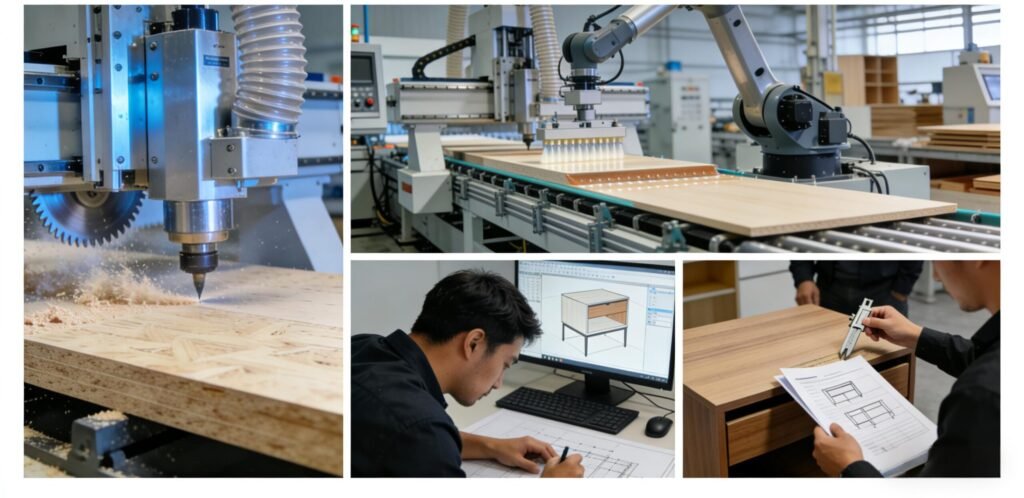
Custom Wardrobe Manufacturing Process
A clear customization process helps buyers reduce errors and control project timing. Below is a practical workflow for OEM wardrobe production.
Step 1: Project Brief
The buyer provides drawings, reference photos, room dimensions, target price, target market, order quantity, material preference, and packaging requirements. For hotel and apartment projects, floor plans and room schedules are helpful.
Step 2: Technical Review
The factory reviews the structure, panel thickness, hardware system, finish, packing method, and production feasibility. If needed, the factory suggests adjustments to improve strength, reduce cost, simplify assembly, or improve container loading.
Step 3: Quotation
The quotation should include material specification, product size, finish, hardware, packing method, MOQ, lead time, payment terms, and shipping terms. Buyers should compare quotations based on the same specification, not only the unit price.
Step 4: Sample Production
The sample confirms design, material, finish, hardware, assembly, and packing method. For private label buyers, carton marks, labels, manuals, and hardware bag layout may also be checked at this stage.
Step 5: Sample Review and Adjustment
The buyer reviews the sample and provides comments. The factory adjusts drawings, structure, finish, hardware, or packaging before bulk production.
Step 6: Bulk Production
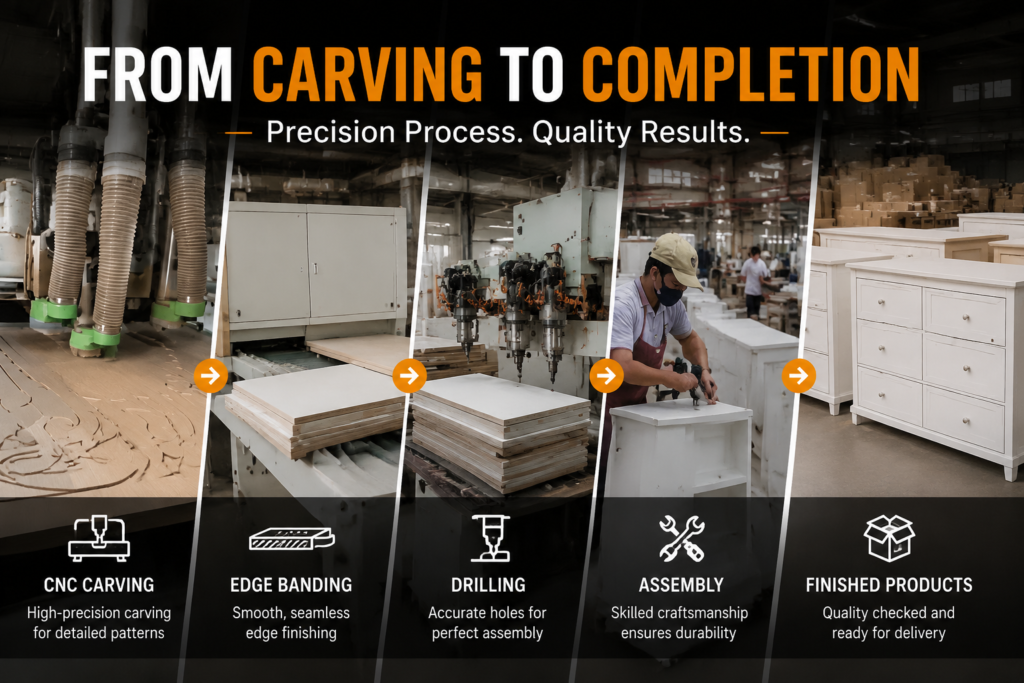
After sample approval and deposit confirmation, the factory begins material preparation, cutting, edge banding, drilling, surface checking, hardware preparation, packing, and production tracking.
Step 7: QC Inspection
Quality control should cover material, processing, assembly, appearance, packing, and loading readiness. For large orders, buyers may request production photos, inspection reports, or third-party inspection.
Step 8: Packing and Shipment
Products are packed according to the confirmed packing method. The factory prepares carton marks, loading plan, shipping documents, and container loading support.
Quality Control Checklist for B2B Wardrobe Buyers
Before shipment, buyers should confirm the following points with the OEM wardrobe manufacturer:
- Are the dimensions consistent with approved drawings?
- Is the panel material the same as the approved sample?
- Is the finish color within acceptable tolerance?
- Is the edge banding clean and secure?
- Are drilling holes accurate and easy to assemble?
- Are doors aligned properly?
- Are drawers and sliding parts smooth?
- Are hanging rails strong enough for intended use?
- Are mirrors or glass parts protected properly?
- Are anti-tip kits included where required?
- Are all hardware bags complete?
- Are assembly instructions clear and correct?
- Are carton marks and labels correct?
- Is packaging strong enough for export shipping?
- Has the loading plan been confirmed?
This checklist is especially important for importers, wholesalers, hotel buyers, and apartment contractors because one missing detail can affect hundreds or thousands of units.
Why Work With Starwood for OEM Wardrobe Manufacturing?
Starwood Industry Co., Ltd. is a China-based panel furniture source factory supporting global brands, importers, wholesalers, e-commerce sellers, and commercial project buyers. Our manufacturing scope includes wardrobes, bedroom furniture, cabinets, storage furniture, small-space furniture, kitchen cabinet programs, and other flat pack panel furniture.
As an OEM wardrobe manufacturer, we support buyers with:
- OEM production based on buyer drawings or samples
- ODM development for new bedroom furniture collections
- MDF, particle board, plywood, and engineered panel options
- Melamine and custom finish selection
- Hardware and accessory sourcing
- Private label packaging support
- Sampling before bulk production
- Export-ready flat pack packaging
- QC inspection and shipment support
- Furniture programs for retail, wholesale, hotel, apartment, and project use
If you are looking for OEM wardrobe development services, contact our team with your drawings, reference photos, target market, quantity, and packaging requirements.
Start your project here: https://plywoodmfr.com/oem-odm-furniture-manufacturing-services/
FAQ: OEM Wardrobe Manufacturer
What does an OEM wardrobe manufacturer do?
An OEM wardrobe manufacturer produces wardrobes according to the buyer’s design, dimensions, materials, finish, hardware, packaging, and brand requirements. The factory may support drawing review, sampling, bulk production, QC inspection, export packing, and shipment coordination.
What is the difference between OEM and ODM wardrobe manufacturing?
OEM wardrobe manufacturing follows the buyer’s existing design or specification. ODM wardrobe manufacturing means the factory helps develop or improve a product based on the buyer’s target market, style direction, room size, price level, and functional needs.
What materials are commonly used for OEM wardrobes?
Common wardrobe materials include particle board, MDF, plywood, and engineered wood panels. Surface finishes may include melamine, laminate, veneer-look texture, painted finish, or other customized options depending on budget and market requirements.
What is the typical MOQ for OEM wardrobe production?
MOQ depends on product size, material, finish, hardware, packaging, and order complexity. For export wardrobe projects, MOQ is often discussed by SKU quantity or container quantity. Buyers should contact the factory with product details to receive an accurate MOQ.
How long does OEM wardrobe sampling take?
Sampling time depends on design complexity, material availability, hardware sourcing, and packaging requirements. A simple sample may be faster, while a private label wardrobe collection with special finish and printed packaging may require more time.
Can wardrobes be customized for hotel and apartment projects?
Yes. Wardrobes can be customized for hotels, serviced apartments, rental housing, student housing, and residential projects. Buyers can provide room layouts, dimensions, finishes, quantity schedules, and installation requirements for project-based production.
Can I add my own logo and private label packaging?
Yes. A private label wardrobe manufacturer can usually support logo labels, carton marks, barcode labels, SKU coding, assembly manuals, hardware bags, and retail-ready packaging according to buyer requirements.
What should I prepare before requesting a quotation?
Prepare product drawings, reference images, dimensions, material requirements, finish colors, hardware expectations, quantity per SKU, target market, packaging requirements, and shipping terms. Clear information helps the factory quote faster and more accurately.
How can I reduce damage during wardrobe shipping?
Use export-ready flat pack packaging, strong cartons, corner protection, foam or honeycomb board, proper hardware bags, clear labels, and optimized container loading. Packaging should be confirmed before bulk production.
Why choose Starwood as an OEM wardrobe manufacturer?
Starwood supports OEM and ODM panel furniture manufacturing for global brands, importers, wholesalers, e-commerce sellers, hotel buyers, and apartment projects. We provide custom wardrobe production, material selection, sampling, QC, export packaging, and scalable manufacturing support.
Final CTA
Looking for a reliable OEM wardrobe manufacturer for your furniture brand, import business, hotel project, apartment development, or private label collection?
Send us your wardrobe drawings, reference photos, target market, quantity, material requirements, and packaging needs. Our team can support you with custom wardrobe development, private label production, export-ready packing, and scalable OEM/ODM panel furniture manufacturing.
Contact Starwood Industry Co., Ltd. today to discuss your next wardrobe OEM project:
https://plywoodmfr.com/oem-odm-furniture-manufacturing-services/