When a hotel developer, apartment contractor, furniture importer or wholesale brand searches for an OEM kitchen cabinet manufacturer, the goal is rarely to buy a single kitchen. The real requirement is repeatable production, stable materials, reliable lead time, export-ready packaging and a supplier that can convert drawings, samples or market ideas into a scalable cabinet program.
For B2B buyers, kitchen cabinets are not only decorative furniture. They are part of a project delivery system. A delay in cabinet production may affect installation schedules. A poor material decision may increase after-sales claims. Weak packaging may create container damage, replacement costs and customer complaints. This is why choosing the right OEM or ODM cabinet factory is a procurement decision, not only a price comparison.
Starwood Industry Co., Ltd supports OEM and ODM panel furniture manufacturing for global brands, importers, wholesalers and commercial projects. For kitchen cabinet buyers, this means custom sizes, private-label options, flat-pack structures, material selection, finish matching, export packaging and project-based production support.
This guide explains how professional buyers can evaluate an OEM kitchen cabinet manufacturer for hotel kitchens, apartment projects, rental housing, retail cabinet lines and wholesale distribution.
Table of Contents
- What Is an OEM Kitchen Cabinet Manufacturer?
- Why B2B Buyers Choose OEM/ODM Kitchen Cabinet Production
- Application Scenarios for OEM Kitchen Cabinets
- Materials Used in Project Kitchen Cabinets
- MOQ, Lead Time and Production Planning
- Customization Workflow for OEM/ODM Cabinet Orders
- Export Packaging, Quality Control and Logistics
- 7 Buying Tips Before Confirming a Cabinet Factory
- Why Work with Starwood for OEM Kitchen Cabinet Projects
- FAQ
What Is an OEM Kitchen Cabinet Manufacturer?
An OEM kitchen cabinet manufacturer produces kitchen cabinets according to the buyer’s specifications, drawings, samples, brand requirements or target market standards. OEM means the buyer usually controls the product concept, dimensions, brand identity and sales channel, while the factory handles engineering, material sourcing, production, quality control and packaging.
In practical B2B trade, OEM kitchen cabinet manufacturing may include:
- Custom cabinet sizes for project layouts
- Plywood, MDF or particle board cabinet carcasses
- Melamine, PVC, painted, veneer or laminate finishes
- Soft-close hinges and drawer slides
- Flat-pack or assembled cabinet structures
- Private-label packaging
- Project-based material matching
- Bulk production for hotels, apartments and wholesale programs
ODM kitchen cabinet manufacturing is slightly different. In an ODM model, the factory may provide existing cabinet designs, structure suggestions or product development support. Buyers can then modify the size, color, hardware, packaging or branding to suit their target market.
For many importers and developers, the best supplier is a factory that can support both OEM and ODM. This creates flexibility: the buyer can provide exact drawings for one project, then use the factory’s existing design experience for another product line.
Why B2B Buyers Choose OEM/ODM Kitchen Cabinet Production
B2B cabinet buyers often need consistency across many units, not only one attractive showroom display. OEM/ODM production allows buyers to control cost, structure, branding and project requirements while working directly with a factory.
For importers and wholesalers, OEM production helps build a repeatable cabinet product line. A buyer can define standard base cabinets, wall cabinets, tall units, corner units and drawer units, then order them in bulk under their own brand. This is useful for distributors selling RTA or flat-pack kitchen cabinets.
For contractors and project buyers, OEM production supports layout-specific manufacturing. Apartment kitchens, hotel pantry cabinets, staff accommodation kitchens and rental housing projects often require repeated cabinet modules with small adjustments for different room types.
For furniture brands, ODM support can shorten product development time. Instead of building every structure from the beginning, the buyer can adapt existing cabinet systems with new finishes, hardware and packaging.
Kitchen cabinet planning also needs to consider space efficiency, accessibility and user workflow. For design reference, the National Kitchen & Bath Association provides professional kitchen and bath planning guidelines for designers and specifiers: NKBA Kitchen and Bath Planning Guidelines. In B2B cabinet sourcing, such references help buyers communicate layout expectations more clearly with suppliers.
Application Scenarios for OEM Kitchen Cabinets
A professional OEM kitchen cabinet manufacturer should understand different project scenarios. The cabinet structure, material, packing method and order planning may change depending on the buyer’s business model.
Hotel and Serviced Apartment Kitchens
Hotel and serviced apartment projects usually require compact, durable and easy-to-maintain kitchen cabinets. The design may include base cabinets, wall cabinets, tall pantry units, sink cabinets and integrated appliance spaces. For these projects, buyers often prioritize consistent finish, quick installation, moisture resistance and replacement-part management.
Flat-pack kitchen cabinets are commonly used because they reduce shipping volume and allow installers to assemble cabinets on site. For hotels and serviced apartments, this can help control container cost and simplify project logistics.
Apartment and Rental Housing Projects
Apartment projects often require hundreds or thousands of repeated cabinet sets. The key procurement concerns are stable lead time, accurate dimensions, consistent color matching and clear installation labeling.
For apartment developers, cabinet production should be planned early. Final drawings, finish boards, hardware specifications and packing requirements should be confirmed before mass production. This reduces site delays and avoids mismatched cabinet batches.
Wholesale and Distribution Programs
Wholesalers need cabinet systems that can be sold repeatedly. A factory may produce standard SKUs such as base cabinets, wall cabinets, sink cabinets, drawer cabinets and tall storage units. These products can be packed under the buyer’s brand and shipped by container.
For wholesale programs, MOQ, carton labeling, barcode requirements, instruction manuals and replacement-parts support are especially important.
Retail and Private-Label Cabinet Lines
Retail cabinet brands may require customized packaging, brand labels, installation guides, color cards and product photography. OEM production allows the buyer to build a branded cabinet line without operating its own factory.
A reliable OEM kitchen cabinet manufacturer should help buyers convert a product concept into production-ready specifications, including board thickness, finish, edge banding, drilling positions, hardware and carton structure.
Contractor and Builder Projects
Contractors need practical cabinet solutions that are easy to install and consistent across units. They usually care about project coordination, delivery schedule, packing sequence and after-sales support.
For contractor orders, the supplier should provide clear packing lists, cabinet codes and installation references. When cabinets arrive at the job site, installers should be able to identify each unit quickly.
Materials Used in Project Kitchen Cabinets
Material selection directly affects cost, durability, appearance and market positioning. A professional OEM kitchen cabinet manufacturer should explain the advantages and limits of each material instead of offering only the lowest price.
Plywood Cabinet Carcass
Plywood is often selected for kitchen cabinet carcasses because of its structural stability and good screw-holding strength. It is suitable for project kitchens where buyers want a more durable cabinet body. Plywood can be combined with melamine, veneer, laminate or painted finishes depending on the target market.
For hotel, apartment and premium wholesale cabinet projects, plywood is often used when buyers need stronger cabinet construction and better long-term performance.
MDF Cabinet Doors
MDF is widely used for cabinet doors because it provides a smooth surface for painting, PVC wrapping or thermofoil finishes. It is suitable for shaker doors, slab doors and decorative routed designs. MDF doors can create a clean and modern appearance, especially for retail cabinet lines and apartment projects.
Particle Board Cabinet Components
Particle board is often used for cost-sensitive flat-pack kitchen cabinets. When combined with melamine surface treatment and proper edge banding, it can be suitable for wholesale, rental housing and price-competitive markets.
For B2B buyers, the decision should depend on target price, expected service life, climate conditions, cabinet structure and end-user positioning.
Surface Finishes
Common kitchen cabinet finishes include:
- Melamine
- PVC film
- Painted finish
- Laminate
- Wood veneer
- UV finish
- PET or acrylic-style high-gloss finish
Each finish has different cost, durability, color consistency and maintenance characteristics. For bulk project orders, buyers should always confirm physical color samples before mass production.
Hardware
Kitchen cabinet hardware may include hinges, drawer slides, handles, shelf pins, adjustable legs, wall hanging brackets and connectors. Soft-close hinges and slides are often preferred for hotel, apartment and retail cabinet programs because they improve user experience and reduce noise.
For cabinet durability, buyers can also review recognized industry testing concepts. The Kitchen Cabinet Manufacturers Association explains cabinet quality certification and testing areas such as structural performance, drawer operation, door operation and finish performance here: KCMA A161.1 Quality Certification.
Formaldehyde and Compliance Considerations
For buyers importing composite wood products into regulated markets, material compliance is important. The U.S. Environmental Protection Agency explains TSCA Title VI formaldehyde emission standards for composite wood products, including hardwood plywood, MDF, particleboard and finished goods containing these products: EPA Formaldehyde Emission Standards for Composite Wood Products.
This does not mean every project requires the same certification package. However, professional B2B buyers should confirm the destination market, compliance requirements and documentation expectations before ordering.
For buyers who need responsible wood sourcing, the Forest Stewardship Council provides information about FSC certification and responsible forest management: FSC Certification. If FSC material is required, buyers should state this clearly during quotation because it may affect material availability, price and lead time.
MOQ, Lead Time and Production Planning
MOQ and lead time are central to B2B cabinet sourcing. A low unit price is not useful if the production schedule cannot match the project deadline.
For many export cabinet projects, MOQ is usually planned by container, especially for flat-pack kitchen cabinets. Container-based orders help optimize loading efficiency, material purchasing and production planning. For mixed cabinet SKUs, the factory and buyer should confirm whether the order can be consolidated by finish, board type and hardware specification.
Typical planning items include:
- Cabinet type and quantity
- Final drawings or cabinet list
- Material and finish confirmation
- Hardware specification
- Packaging method
- Carton marks and labeling
- Sample approval
- Deposit payment
- Production schedule
- Inspection and shipment
Lead time depends on order quantity, material availability, finish complexity and factory capacity. For standard flat-pack kitchen cabinet production, buyers should allow time for sampling, sample confirmation, bulk production, inspection, packing and container loading.
For project orders, it is better to confirm production details earlier than to rush after the construction schedule becomes urgent. Cabinet production involves many steps, and late changes to color, drilling, hardware or dimensions can affect the entire batch.
Customization Workflow for OEM/ODM Cabinet Orders
A clear customization process reduces communication errors. Below is a practical workflow for working with an OEM kitchen cabinet manufacturer.
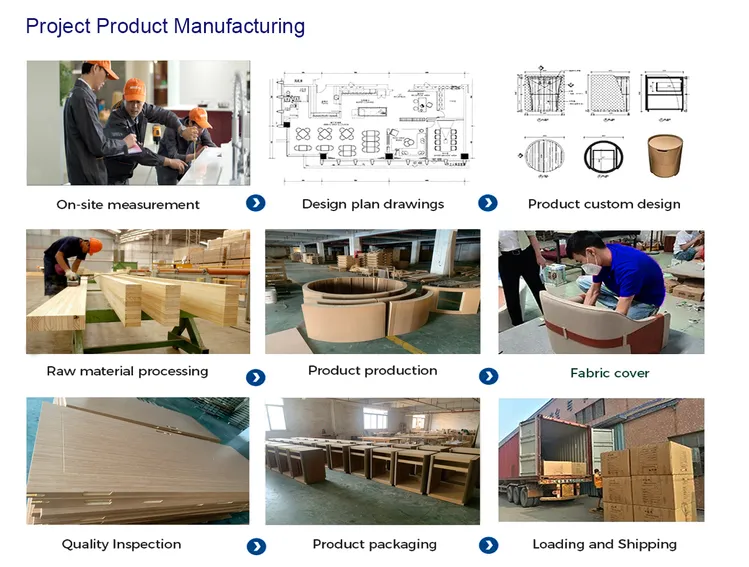
Step 1: Send Project Requirements
The buyer provides drawings, cabinet lists, reference photos, target price, destination market, order quantity and packing requirements. For hotel or apartment projects, room layouts and repeated unit types are useful.
Step 2: Confirm Material and Structure
The factory recommends suitable materials based on budget, usage scenario and market requirements. This may include plywood carcass, MDF doors, particle board panels, melamine finish, PVC finish, painted doors or other specifications.
Step 3: Quotation and Technical Review
The factory prepares a quotation based on dimensions, materials, hardware, finish, packaging and order volume. Buyers should review not only the unit price, but also what is included in the price.
Important quotation details include:
- Board thickness
- Surface finish
- Edge banding
- Hardware brand or grade
- Packing method
- MOQ
- Lead time
- Payment terms
- Sample cost
- Shipping port
- Inspection standard
Step 4: Sample Production
Samples help confirm structure, color, finish, hardware and assembly method. For private-label cabinet programs, the sample stage can also include carton design, instruction manual review and label confirmation.
Step 5: Sample Approval
After the buyer approves the sample, the factory can proceed with bulk material preparation. Any changes should be confirmed in writing before mass production.
Step 6: Mass Production
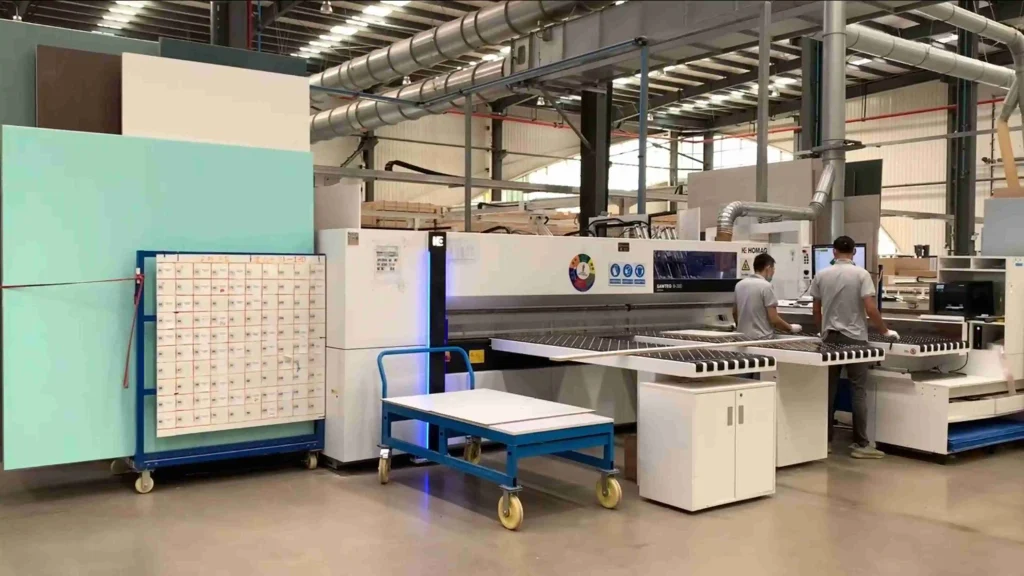
The factory produces panels, doors, cabinet components and accessories according to approved specifications. CNC cutting, drilling, edge banding, finishing and packing should follow the confirmed production documents.
Step 7: Quality Inspection
Quality control should check dimensions, finish, edge banding, drilling accuracy, hardware, carton marks and packing condition. For large project orders, buyers may arrange internal inspection or third-party inspection before shipment.
International buyers can also refer to general quality management principles from ISO 9001, which focuses on quality management systems and consistent processes: ISO 9001 Quality Management.
Step 8: Export Packing and Shipment
After inspection, cabinets are packed for export and loaded into containers. Packing lists, carton labels and loading photos help buyers manage receiving and installation.
Export Packaging, Quality Control and Logistics
Kitchen cabinets are large, panel-based products. Proper packaging is essential for international shipping.
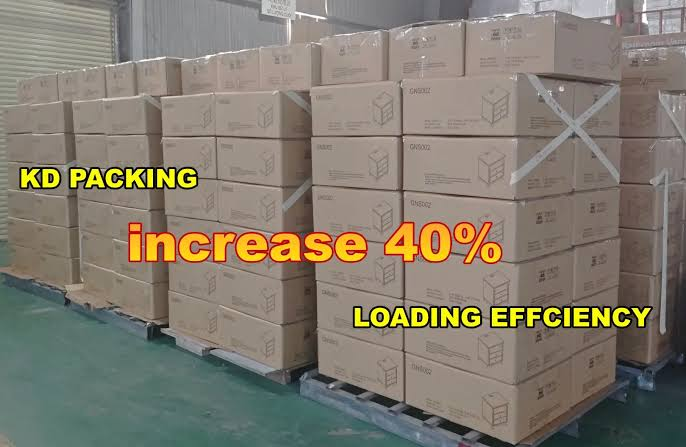
A reliable OEM kitchen cabinet manufacturer should design packaging to protect panels, corners, edges, hardware and decorative surfaces. Flat-pack packaging can reduce shipping volume, but it must still be strong enough for container handling and long-distance transport.
Common export packaging features include:
- Strong outer cartons
- Foam or corner protection
- Protective film for glossy or painted surfaces
- Hardware bags packed separately
- Clear carton marks
- Cabinet code labels
- Installation instruction sheets
- Palletizing when required
For apartment and hotel projects, packing sequence can also matter. If cabinets are packed by room, unit type or building phase, installation teams can work more efficiently on site.
Logistics planning should include the shipping port, container loading method, documentation, destination customs requirements and delivery schedule. Buyers should confirm whether the shipment is full container load or mixed container.
7 Buying Tips Before Confirming an OEM Kitchen Cabinet Manufacturer
1. Check Whether the Factory Understands B2B Project Requirements
A project buyer needs more than a catalog. The supplier should understand drawings, repeated unit types, container planning, project deadlines and installation requirements.
Ask whether the factory has experience with apartments, hotels, wholesale cabinet programs or private-label furniture orders.
2. Confirm Materials Before Comparing Prices
Two quotations may look similar but use different materials. One factory may quote plywood carcasses, while another may quote particle board. One may include soft-close hardware, while another may use basic hinges.
Before comparing prices, confirm:
- Board material
- Board thickness
- Door material
- Surface finish
- Edge banding
- Hardware
- Packing method
- Included accessories
3. Ask About MOQ Clearly
MOQ affects purchasing strategy. If the MOQ is one 20-foot container, buyers should plan SKUs and finishes carefully. Too many colors or cabinet types in one small order may increase cost and reduce production efficiency.
For wholesale cabinet lines, it may be better to start with a focused selection of high-demand cabinet modules.
4. Review the Customization Capability
A good OEM kitchen cabinet manufacturer should support custom dimensions, finishes, hardware, packaging and private labels. For ODM projects, the factory should also provide design suggestions and structure recommendations.
Customization should be practical, not only promotional. The supplier should explain which changes are easy, which changes increase cost and which changes require new tooling or longer lead time.
5. Confirm Lead Time and Critical Dates
For project orders, late delivery can create real costs. Confirm the timeline for sampling, approval, bulk production, inspection and shipment.
Buyers should also consider seasonal capacity, material purchasing time and shipping schedules.
6. Evaluate Packaging for Export Risk
Cabinet panels can be damaged if packaging is weak. Ask for packaging photos, carton structure, hardware packing method and container loading references.
For high-value finishes, protective film and corner protection are important.
7. Build Communication Around Written Specifications
The best way to avoid disputes is to confirm details in writing. Cabinet drawings, quotation sheets, sample approval records, packing requirements and inspection standards should be documented.
Professional buyers should avoid relying only on verbal promises. A clear specification sheet protects both buyer and factory.
Why Work with Starwood for OEM Kitchen Cabinet Projects
Starwood Industry Co., Ltd is a professional flat-pack furniture manufacturer in China, supporting OEM and ODM panel furniture production for importers, wholesalers, brands and commercial projects.
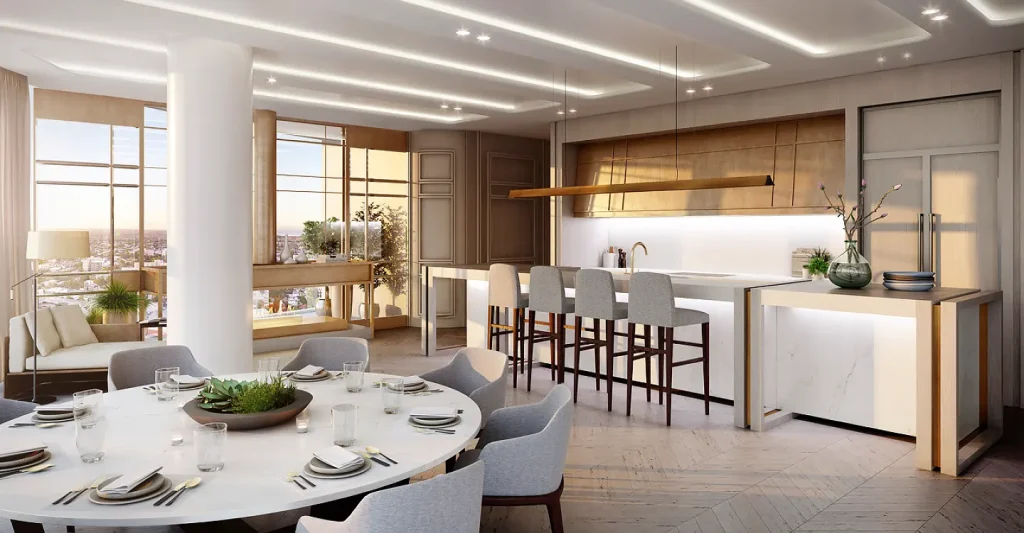
For kitchen cabinet buyers, Starwood can support:
- OEM and ODM kitchen cabinet manufacturing
- Custom cabinet size and layout development
- Plywood, MDF, particle board and engineered board options
- Melamine, PVC, painted and other finish choices
- Flat-pack kitchen cabinet structures
- Export-ready packaging
- Private-label and project packaging support
- Production for apartments, hotels, wholesalers and distributors
Buyers can also explore Starwood’s OEM/ODM service page here: OEM & ODM Furniture Manufacturing Services.
If you are sourcing kitchen cabinets for a hotel, apartment project, retail cabinet line or wholesale furniture program, Starwood can help review your drawings, recommend suitable materials and prepare a factory-direct quotation.
Call to Action
Looking for a reliable OEM kitchen cabinet manufacturer for your next B2B project?
Contact Starwood Industry Co., Ltd
Website: https://plywoodmfr.com
OEM/ODM Service: https://plywoodmfr.com/oem-odm-furniture-manufacturing-services/
Email: hwinnie168@gmail.com
WhatsApp / Phone: +86 136 9199 4727
FAQ
What is an OEM kitchen cabinet manufacturer?
An OEM kitchen cabinet manufacturer produces cabinets according to the buyer’s drawings, specifications, brand requirements or project needs. The buyer controls the product concept and market positioning, while the factory handles material sourcing, production, quality control and packaging.
What is the difference between OEM and ODM kitchen cabinets?
OEM kitchen cabinets are made according to the buyer’s own design or specification. ODM kitchen cabinets are based on the factory’s existing design, structure or development support, which the buyer can modify with custom size, finish, hardware or branding.
What materials are commonly used for OEM kitchen cabinets?
Common materials include plywood, MDF, particle board and engineered panels. Plywood is often selected for stronger cabinet carcasses, MDF is widely used for painted or PVC cabinet doors, and particle board is often used for cost-effective flat-pack cabinet programs.
What is the MOQ for OEM kitchen cabinet orders?
MOQ depends on the cabinet type, finish, material and customization level. For export flat-pack kitchen cabinet orders, MOQ is often planned by container to improve production and shipping efficiency. Buyers should confirm MOQ during quotation.
How long does OEM kitchen cabinet production take?
Lead time depends on order quantity, material availability, finish complexity and production schedule. Buyers should allow time for sample production, sample approval, bulk production, inspection, packing and container loading.
Can kitchen cabinets be customized for hotel and apartment projects?
Yes. OEM kitchen cabinets can be customized for hotel rooms, serviced apartments, rental housing, residential developments and contractor projects. Customization may include cabinet size, layout, finish, hardware, packing method and installation labeling.
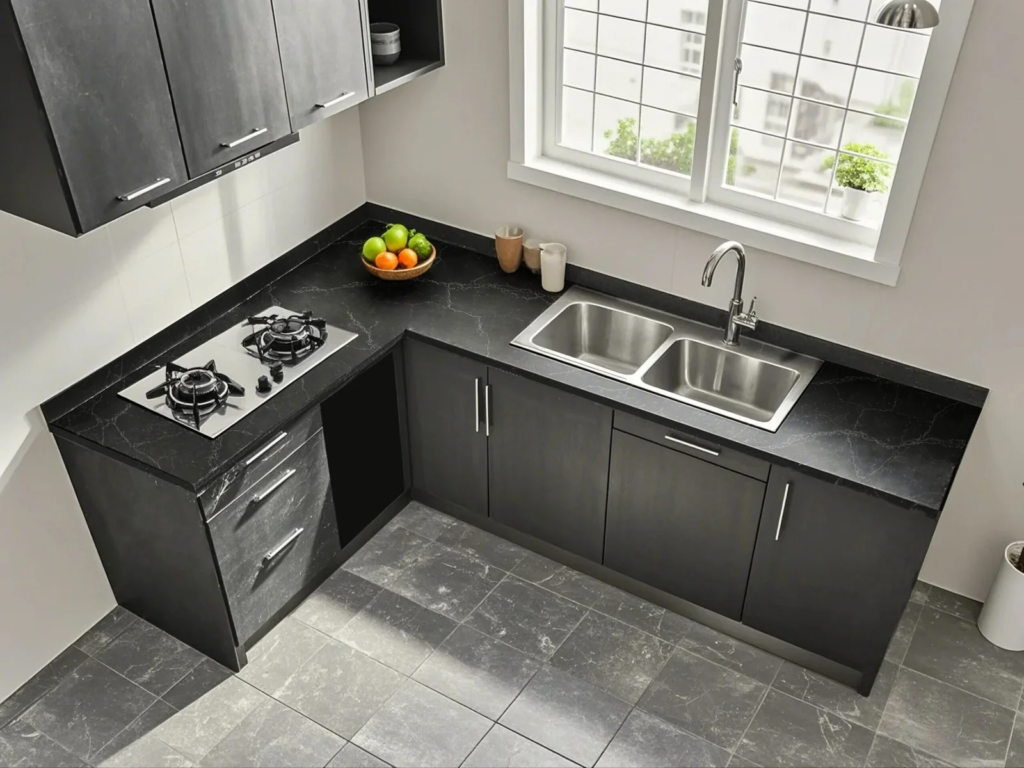
Do you provide flat-pack kitchen cabinets for export?
Yes. Flat-pack kitchen cabinets are suitable for international shipping because they help reduce container volume and support on-site assembly. Export packaging can include reinforced cartons, hardware bags, cabinet labels and installation instructions.
Can buyers use their own brand on the packaging?
Yes. Private-label packaging can be supported for wholesale, retail and brand customers. Buyers can request custom carton marks, labels, instruction manuals and other branding elements before mass production.