Bathroom Vanity Materials Guide for Importers, Contractors and Furniture Brands
Bathroom furniture must withstand one of the most challenging environments in interior spaces: constant humidity, temperature fluctuations, and water exposure. For importers, contractors, hotel developers, and furniture brands, selecting the right bathroom vanity materials directly impacts product durability, warranty claims, and long-term customer satisfaction.
Unlike standard living room furniture, bathroom cabinets require moisture-resistant structures, stable materials, and professional finishing processes. As a result, manufacturers typically combine engineered panels, waterproof adhesives, and surface laminates to produce reliable bathroom vanity cabinets.
This guide explores the most common materials used in bathroom vanity manufacturing, explaining their advantages, limitations, and best applications for B2B projects such as hotels, apartments, and residential developments.
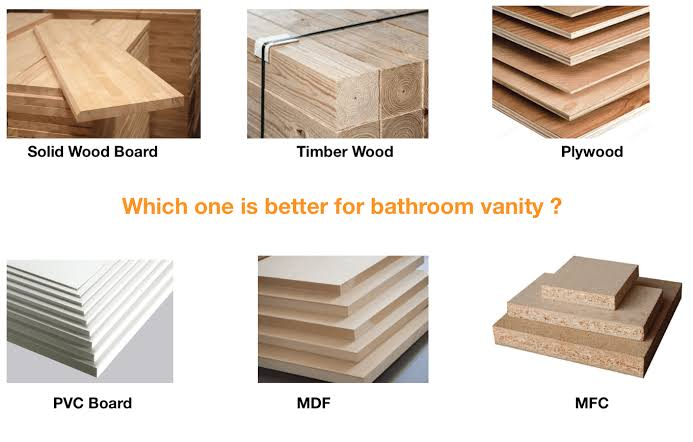
Table of Contents
- Why Bathroom Vanity Materials Matter
- Key Factors When Selecting Bathroom Cabinet Materials
- 7 Best Materials Used in Bathroom Vanity Cabinets
- Plywood vs MDF vs Solid Wood Comparison
- Materials Recommended for Hotel and Apartment Projects
- How Manufacturers Improve Moisture Resistance
- Choosing the Right Material for Your Market
- FAQ for Importers and Contractors
Why Bathroom Vanity Materials Matter in Cabinet Manufacturing
Bathroom cabinets operate in environments where humidity levels often exceed 70–80%. Materials that perform well in dry spaces may fail quickly in bathrooms.
According to the Forest Stewardship Council, responsibly sourced wood materials must also meet sustainability standards to ensure environmental compliance in global furniture trade.
In addition, research published by the Wood Products Council highlights that engineered wood panels—such as plywood and MDF—are widely used in cabinetry due to their structural stability and cost efficiency.
For B2B buyers sourcing bathroom furniture internationally, material selection affects:
- product lifespan
- shipping durability
- manufacturing cost
- moisture resistance
- market positioning
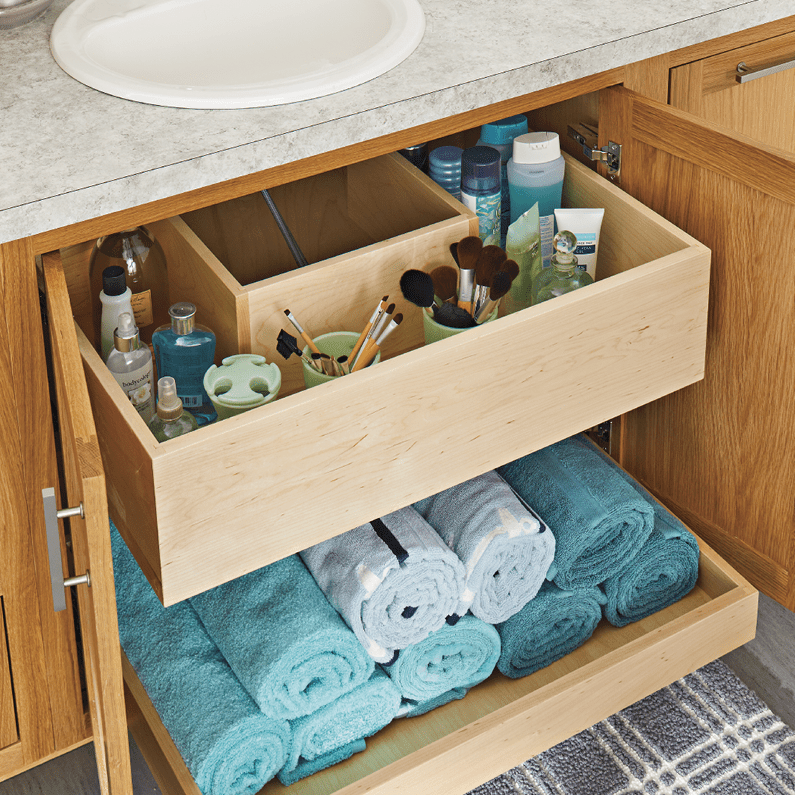
Key Factors When Choosing Bathroom Vanity Materials
Before selecting a material, importers and project buyers should consider several technical factors.
Moisture Resistance
Bathroom furniture must resist swelling, delamination, and warping.
Organizations like the American Wood Council emphasize that engineered wood panels can achieve excellent moisture resistance when properly sealed and laminated.
Structural Stability
Cabinets should maintain shape under heavy sinks and countertops.
Surface Durability
Bathroom cabinets typically use melamine, laminate, or lacquer finishes to improve durability.
Manufacturing Efficiency
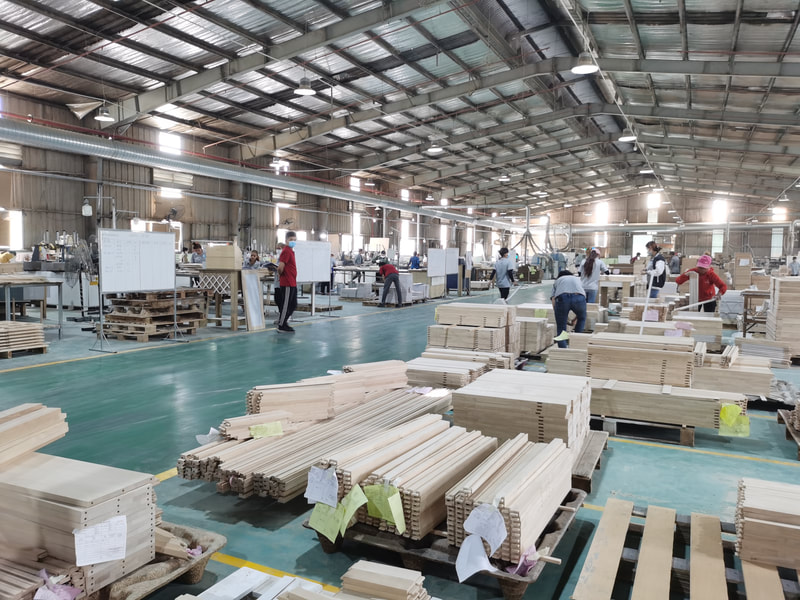
For OEM production, manufacturers prefer materials compatible with CNC cutting and automated panel processing.

7 Best Bathroom Vanity Materials Used in Manufacturing
Below are the most common materials used in bathroom vanity cabinets for residential and commercial projects.
1. Plywood
Plywood is widely considered one of the best materials for bathroom cabinets.
Advantages:
- high strength
- excellent moisture resistance
- stable layered structure
- long lifespan
Because plywood is constructed from cross-laminated wood veneers, it resists expansion and contraction better than solid wood.
Industry guidelines from the APA – The Engineered Wood Association confirm that plywood panels offer superior structural stability for cabinetry applications.
Typical applications:
- premium vanity cabinets
- hotel bathroom furniture
- high-humidity markets
2. MDF (Medium Density Fiberboard)
MDF is one of the most common materials in furniture manufacturing.
Advantages:
- smooth surface for painting
- consistent density
- lower cost compared to plywood
However, MDF requires waterproof sealing and surface finishing to prevent moisture damage.
Many manufacturers use moisture-resistant MDF for bathroom furniture.
3. Solid Wood
Solid wood provides a premium aesthetic and natural appearance.
Common species include:
- oak
- maple
- walnut
- teak
However, solid wood may expand or contract in humid environments unless properly treated.
For this reason, many bathroom cabinets combine solid wood frames with engineered panels.
4. Marine Plywood
Marine plywood is specifically designed for high humidity and water exposure environments.
It uses waterproof adhesives and higher-quality veneers.
Advantages:
- excellent durability
- strong moisture resistance
- suitable for luxury projects
Marine plywood is commonly used in premium hospitality furniture.
5. Particle Board with Laminate
Particle board is a cost-effective solution often used in budget cabinetry.
Advantages:
- low material cost
- compatible with laminate surfaces
- suitable for flat-pack furniture
However, moisture resistance depends heavily on surface lamination and edge sealing.
6. Engineered Wood Panels
Engineered panels include:
- melamine boards
- laminated particle board
- composite panels
According to research by the Wood Machinery Manufacturers of America, these materials are widely used in modern automated furniture production.
Advantages:
- consistent quality
- precise machining
- efficient mass production
7. Aluminum Frame Cabinets
Some modern bathroom cabinets combine aluminum frames with panel inserts.
Advantages:
- corrosion resistance
- lightweight structure
- contemporary aesthetics
These designs are common in modern luxury bathroom furniture.
Plywood vs MDF vs Solid Wood Bathroom Vanity Materials Comparison
| Material | Durability | Cost | Moisture Resistance |
|---|---|---|---|
| Plywood | High | Medium | High |
| MDF | Medium | Low | Medium |
| Solid Wood | High | High | Medium |
| Marine Plywood | Very High | High | Very High |
| Particle Board | Low | Low | Low |
For export furniture, plywood and engineered panels are typically the most practical choices.
Best Bathroom Vanity Materials for Hotel and Apartment Projects
Hospitality and multi-unit residential developments require furniture that balances durability and cost.
Recommended materials include:
Plywood cabinet boxes
Moisture resistant MDF doors
Laminate or melamine surfaces
Soft-close hardware systems
This combination provides:
- durability
- consistent quality
- scalable manufacturing
How Manufacturers Improve Moisture Resistance of Bathroom Vanity Materials
Modern bathroom cabinet factories use several techniques to enhance durability.
These include:
Edge banding sealing
Waterproof adhesives
Melamine or laminate surfaces
UV lacquer finishing
Moisture-resistant core materials
These technologies help prevent swelling and structural failure in humid environments.
How to Choose the Right Bathroom Vanity Materials for Your Market
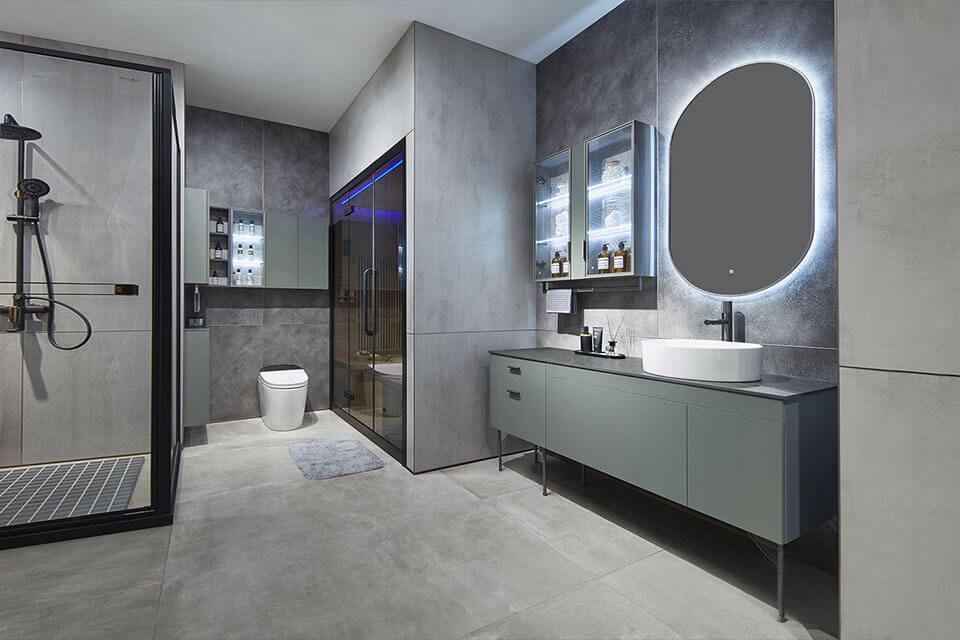
Different markets require different product strategies.
North America
Plywood cabinets are widely preferred due to durability expectations.
Europe
Engineered panels and modern laminate finishes are popular.
Middle East
Luxury finishes and moisture-resistant materials are common.
Southeast Asia
Marine plywood or waterproof panels are recommended.
Selecting the right material helps brands position their products effectively.
Conclusion
Selecting the right bathroom vanity materials is essential for producing durable and reliable bathroom cabinets. Different bathroom vanity materials offer unique advantages in terms of cost, structural stability, and moisture resistance.
For most international furniture brands and contractors, the most practical bathroom vanity materials include plywood, engineered wood panels, and moisture-resistant MDF. These materials allow manufacturers to balance durability, production efficiency, and competitive pricing.
Understanding the differences between bathroom vanity materials helps importers choose products that perform well in demanding environments such as hotels, apartments, and residential developments.
CTA
Looking for a professional manufacturer specializing in high-quality bathroom vanity materials and cabinet production?
Our factory provides OEM and ODM manufacturing services for global importers, furniture brands, contractors, and hospitality projects.
Contact us today to request:
• product catalog
• material specifications
• custom bathroom vanity solutions
• project quotations
FAQ
What is the best material for bathroom vanity cabinets?
Plywood and marine plywood are widely considered the best materials due to their structural strength and moisture resistance.
Is MDF suitable for bathroom cabinets?
Yes, moisture-resistant MDF can be used when sealed properly with waterproof coatings or laminates.
What materials are used in hotel bathroom furniture?
Most hotel vanity cabinets use plywood structures combined with laminated panels and soft-close hardware systems.
Are engineered wood cabinets durable?
Yes. When manufactured correctly with waterproof finishes, engineered wood cabinets provide excellent durability and cost efficiency.
What is the best material for bathroom vanity cabinets?
Plywood and marine plywood are widely considered the best materials due to their structural strength and moisture resistance.
Is MDF suitable for bathroom cabinets?
Yes, moisture-resistant MDF can be used when sealed properly with waterproof coatings or laminates.
What materials are used in hotel bathroom furniture?
Most hotel vanity cabinets use plywood structures combined with laminated panels and soft-close hardware systems.
Are engineered wood cabinets durable?
Yes. When manufactured correctly with waterproof finishes, engineered wood cabinets provide excellent durability and cost efficiency.
External Link Section
The durability of modern bathroom vanity materials is supported by industry standards and research from several international organizations.
For example, the Forest Stewardship Council (FSC) promotes responsible wood sourcing and sustainable forestry practices:
https://fsc.org
The APA – The Engineered Wood Association provides technical guidance on plywood performance and structural durability:
https://www.apawood.org
According to the American Wood Council, engineered wood panels such as plywood and laminated boards provide excellent stability in cabinet applications:
https://awc.org
Manufacturing technologies used in panel furniture production are also supported by research from the Wood Machinery Manufacturers of America (WMMA):
https://www.wmma.org
Industry statistics and manufacturing insights for furniture production are also published by the Kitchen Cabinet Manufacturers Association (KCMA):
https://www.kcma.org
These organizations help define quality standards for materials used in bathroom vanity cabinets worldwide.