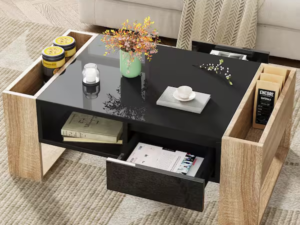
If you’re sourcing a coffee table with storage for retail programs, apartment packages, or hotel suites, remember that “nice design” is only the starting line. It is just the starting line. You should consider other critical factors as well. Think about other critical factors as well. Best-selling B2B programs win on five measurable outcomes:
- Fit (dimensions that match real floorplans)
- Function (storage access + safe mechanisms)
- Finish (scratch/stain/heat resistance with stable color)
- Ship-ability (RTA/flat-pack packaging that arrives intact)
- Repeatability (batch consistency and predictable lead time)
This article is written as a procurement spec sheet—so you can benchmark suppliers, reduce returns, and accelerate OEM/ODM quoting.
Table of Contents
- What makes a storage coffee table “project-grade”
- Dimensions that fit apartments & hotel suites (clearance rules)
- Load rating, hinge/strut classes, anti-tip & safety notes
- Finish standards (scratch, stain, heat) + acceptance criteria
- What to include in the RFQ (drawings, tolerances, packaging)
- Buyer keyword map (how buyers search & benchmark competitors)
- External resources (authority links)
- FAQ
What makes a storage coffee table “project-grade”
A “project-grade” living room coffee table is engineered to survive bulk delivery. It can withstand repeated daily use. The table ensures fast installation without wobble. There is no misalignment or mechanism failure.

Project-grade checklist (what to require)
Structure & stability
- Anti-wobble joint design (consistent drilling + reliable connectors)
- Solid base geometry (no rocking on uneven floors)
- Reinforced corners and load-bearing points
Usability
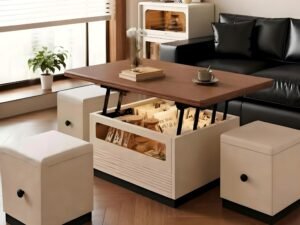
- Storage access that works in real rooms (lift-top clearance, drawer travel)
- Smooth hardware action (no squeaks, no sudden drop)
Manufacturability
- Parts standardized across SKUs (lower defect rate and faster assembly)
- Repeatable finish system (color and sheen consistency)
Delivery & returns
- Packaging designed for your channel: project pallets vs parcel shipment
- Spare parts plan (hardware bags and replacement panels)
B2B reality: a “minimal coffee table” can look perfect in photos. However, it can fail as a program if it arrives scratched. It might wobble after assembly or generate support tickets.
Dimensions that fit apartments & hotel suites (clearance rules) (Flat-Pack Furniture Manufacturer)
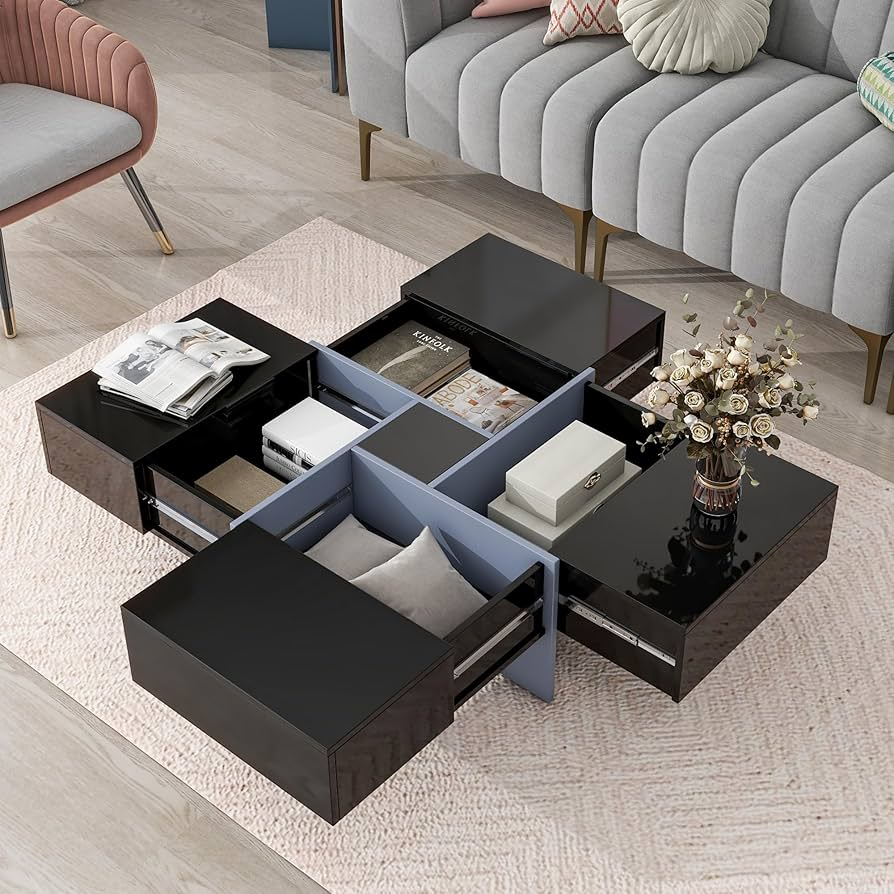
For apartment and hospitality buyers, the main reason a coffee table for small living room underperforms is clear. It doesn’t fit the circulation path.
Apartment-friendly sizing rules (recommended ranges)
Coffee table height (H):
- Target: 40–46 cm (about 15.7–18.1 in)
- Why: aligns with common sofa seat heights and feels ergonomic for reach
Top size (L × W):
- Compact programs: 90–110 × 45–60 cm
- Standard programs: 110–130 × 55–70 cm
Clearance rules (critical for hotel suites & apartments)
- Sofa-to-table gap: 35–45 cm (easy to walk but close enough to reach)
- Main walkway clearance: 80–90 cm minimum where possible
- Drawer/lift-top “open” clearance: verify it does not block entry paths
Storage mechanism sizing notes
- Lift-top needs vertical and forward clearance—great for multi-function use but must be validated in tight footprints.
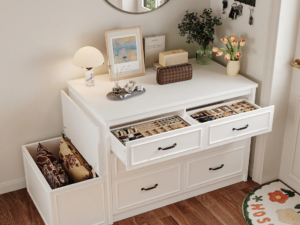
- Drawer storage needs lateral clearance; better for narrow rooms if drawer sides don’t hit seating.
- Ottoman coffee table with storage is often used as a soft alternative in hospitality zones—confirm durability expectations match.
RTA/Flat-Pack considerations tied to dimensions
- Keep carton sizes manageable for handling and last-mile delivery
- Avoid oversized panels that increase damage risk and shipping costs
- For programs benchmarked against “ikea coffee table with storage” or “coffee table with storage ikea,” buyers typically want easy assembly. They also prefer compact cartons. Therefore, prioritize a clean RTA design.
Load rating, hinge/strut classes, anti-tip & safety notes
Storage coffee tables introduce moving parts, which means you must specify performance and safety—not just appearance.
Load rating (what to specify)
Top static load (when closed):
- Value tier: 20–30 kg
- Mid tier: 30–50 kg
- Project/hospitality: 50 kg+ (depending on design)
Shelf/interior load (storage compartment):
- Common: 10–20 kg per compartment (define per structure)
Lift-top working load (when open):
- Define safe working load + deflection limit (no sag, no sudden drop)
Hinge/strut classes (how buyers should benchmark)
- Basic hinges/struts: entry retail, light duty
- Mid-grade: smoother action, better cycle life
- Project-grade: stable torque, consistent performance, safer motion control
Buyers often compare programs from “coffee table walmart,” “coffee table wayfair,” “target coffee tables,” or “amazon coffee tables.” They frequently overlook a hidden difference. This difference is typically hardware class + QC discipline.
Safety notes (anti-tip & pinch points)
- Pinch-point control for lift tops (avoid finger-trap gaps)
- Slow-close / controlled motion prevents sudden drops
- Anti-tip guidance for tall storage pieces in a living room furniture set (e.g., matching console/bookcase): include wall anchor recommendations where relevant
Finish standards (scratch, stain, heat) + acceptance criteria
In export programs, finish issues create the most visible defects—especially on dark tones, high-gloss, glass tops, and stone patterns.
Finish types buyers commonly request
- Wood-look melamine / laminate (stable and cost-efficient)
- Veneer + clear coat (premium look, requires stricter control)
- High-gloss / stone pattern (luxury look, higher packaging requirements)
- Glass top options (coffee table glass, coffee table glass top, coffee glass table top) (needs edge safety and scratch control)
- Specialty SKUs like led coffee table, coffee table with fridge, or sobro coffee table style concepts (higher complexity, higher QC)
Performance standards to define (simple, procurement-friendly)
Scratch resistance
- Define acceptable micro-scratch level under standardized lighting
- For gloss/stone patterns, require protective film and “no-rub zones” in packaging
Stain resistance
- Define quick-clean performance for coffee/tea/oil
- Particularly important for hotel suites and short-term rentals
Heat resistance
- Define short-term and moderate heat exposure expectations (common consumer use)
Acceptance criteria (what “pass” looks like)
- Color/shade tolerance: approved against a “golden sample”
- No edge chipping, no lifting edge banding
- No visible panel mismatch across the set (critical for 3 piece rectangle coffee table and 2 end tables programs)
- Hardware action smooth, no noise, no looseness after functional test
What to include in the RFQ (drawings, tolerances, packaging)
A good RFQ reduces pricing surprises and accelerates sampling. For OEM/ODM programs, require the following:
1) Product definition
- Product type: coffee table / coffee table with storage / living room coffee table
- Target channel: retail / e-commerce / apartment / hotel
- Target price tier: value / mid / premium
- Reference benchmarks: “farmhouse coffee table with storage,” “large coffee table with storage,” “circular coffee table with storage,” “solid wood coffee table with storage,” “wooden coffee table with storage” (use as style references, not as exact copies)
2) Drawings & specs
- 2D drawings with all dimensions
- 3D file if available
- Tolerances for key joints and door/drawer gaps
- Load rating targets (top, shelf, lift-top working load)
3) Material & finish
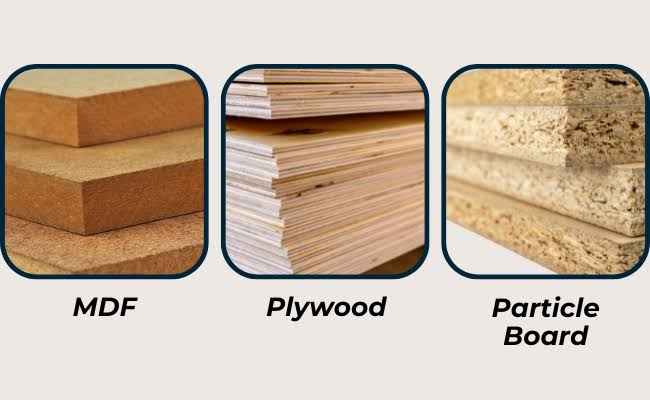
- Board type (plywood/MDF/particle board) + thickness
- Surface finish system (melamine/laminate/veneer/paint)
- Edge banding type and thickness
- Color reference + gloss level requirement
4) Hardware list
- Hinges/struts/slides/fasteners with tier requirement
- Spare parts plan (minimum % recommended for projects)
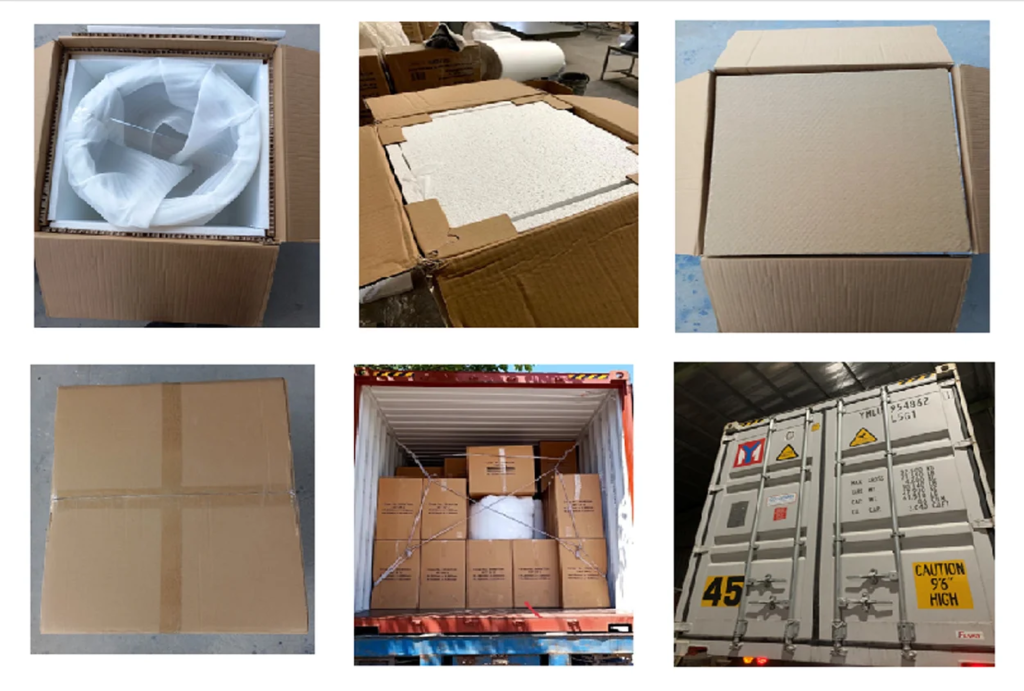
5) Packaging level (must be explicit)
- Packaging tier: basic / project / parcel (e-commerce)
- Inner protection: film, foam, corner protectors, interleaf sheets
- Drop-test / transit simulation expectations (especially for parcel) 国际安全运输协会
- Carton marks, barcode labels, and kitting requirements
6) QC requirements
- In-line checkpoints (cutting, edge banding, drilling, assembly)
- Sampling plan and final inspection requirements
- Photo standards for pre-shipment QC report (lighting + angles)
CTA: Send your target market + price tier to get a spec template
Share your market. Include your target market (US/UK/EU/UAE/AU). Provide your target landed cost range and preferred finish (oak/stone/gloss/matte). We’ll provide a procurement-ready spec template for quoting and sampling.
Buyer keyword map (how industry buyers actually search)
Even in B2B sourcing, buyers often start by benchmarking consumer-facing queries to understand price bands and feature expectations. Here’s how your target customers search and what it usually means:
- “ikea coffee table with storage” → compact cartons + easy assembly + value tier benchmark
- “coffee table crate and barrel” / “west elm round coffee table” / “pottery barn round coffee table” → higher finish expectations, tighter color consistency
- “coffee table nearby” → urgent replenishment / local stock pressure (use as lead time angle)
- “coffee table storage” / “coffee table with seating” → multi-function demand
- “pallet coffee table” → rustic/farmhouse look (often needs a cleaner export-friendly interpretation)
- “extendable coffee table” → mechanism complexity; quote carefully and define test cycles
- “modern farmhouse coffee table” / “modern style coffee tables” → top-selling aesthetics for many English-speaking markets
- “small glass coffee table” / “coffee table with glass top” → packaging and glass safety must be specified
Use these terms as “intent signals” in your product line planning, not as a design-copy roadmap.
External Resources (Authority Outbound Links)
For compliance, sustainability, quality systems, and packaging performance, B2B buyers often align requirements with recognized organizations:
- US formaldehyde compliance (EPA TSCA Title VI).
If your program uses composite wood products, review EPA’s formaldehyde emission standards guidance:
https://www.epa.gov/formaldehyde/formaldehyde-emission-standards-composite-wood-products US EPA - Implementation FAQs for regulated stakeholders (EPA)
For practical compliance questions and documentation expectations:
https://www.epa.gov/formaldehyde/frequent-questions-regulated-stakeholders-about-implementing-formaldehyde-standards US EPA - FSC Chain of Custody (sustainability traceability)
If buyers require certified sourcing, check FSC’s chain-of-custody overview:
https://fsc.org/en/chain-of-custody 森林管理委员会 - ISO 9001 standard overview (quality management baseline)
Many OEM/ODM contracts require ISO 9001 alignment—see ISO’s official standard page:
https://www.iso.org/standard/62085.html 国际标准化组织 - ISTA test procedures (parcel shipping performance)
For e-commerce/parcel channels, ISTA procedures are commonly referenced to simulate transit:
https://ista.org/test_procedures.php 国际安全运输协会 - ASTM standards organization (product performance references)
For test-method frameworks commonly referenced across industries:
https://www.astm.org/ ASTM International | ASTM
FAQ
1) What makes a coffee table with storage “project-grade”?
Project-grade means it’s engineered for bulk delivery and repeated daily use. It features stable joints and reliable hardware. The finish is consistent, and the packaging is export-safe. Quality control is repeatable across batches.
2) What dimensions work best for apartments and hotel suites?
Most programs target a height of 40–46 cm. They aim for compact top sizes around 90–110 × 45–60 cm. They maintain 35–45 cm sofa clearance for safe walkway space. Always validate lift-top/drawer opening clearance.
3) How do I specify load ratings for storage coffee tables?
Define top static load, interior shelf load, and (if lift-top) working load when open. Request deflection limits and a functional test plan for the mechanism.
4) Which finishes reduce returns in e-commerce?
Matte wood-look finishes with strong scratch/stain resistance generally perform best. High-gloss and stone patterns can sell well but require stricter surface QC and anti-scratch packaging.
5) What should I include in an RFQ to get accurate OEM/ODM quotes?
Include drawings, tolerances, load rating targets, board/finish system, hardware tier, packaging level, QC requirements, target market, and price tier. The clearer the RFQ, the faster sampling and fewer surprises.