Table of Contents
- Why contractors search for a project kitchen cabinet manufacturer
- What buyers should check before requesting a quotation
- Kitchen cabinet applications for B2B projects
- Materials used in export project kitchen cabinets
- Factory capability for OEM/ODM project orders
- MOQ, lead time and quotation details
- Packaging, loading and export delivery
- 7-step OEM/ODM customization process
- How to choose the right supplier
- FAQ for project buyers
- Inquiry CTA
Why Contractors Search for a Project Kitchen Cabinet Manufacturer
For contractors, developers, hotel groups and apartment project buyers, sourcing kitchen cabinets is not only about style. The real buying decision is about stable quality, accurate dimensions, repeatable production, export packaging, predictable lead time and supplier communication. A reliable project kitchen cabinet manufacturer should understand drawings, BOQ, room schedules, material approvals, sample confirmation and container loading. This guide is written from a factory procurement viewpoint to help B2B buyers source flat panel kitchen cabinets, PVC wrapped MDF doors, quartz countertop cabinet sets and OEM/ODM panel furniture for commercial projects.
When a buyer searches Google, they rarely search only “kitchen cabinet ideas.” More often, a professional buyer searches with direct purchasing terms such as project kitchen cabinet manufacturer, apartment kitchen cabinet factory, OEM kitchen cabinet supplier, flat panel kitchen cabinet manufacturer, PVC wrapped MDF cabinet door factory or panel furniture export factory. These search terms show commercial intent. The buyer may already have drawings, an estimated quantity, a target delivery date and a project location.
At PlywoodMFR, our content and service structure should make Google understand that the website is not a general furniture blog. It should be recognized as a commercial furniture manufacturer, OEM ODM furniture supplier and panel furniture export factory serving B2B project buyers.
For procurement teams working with wood-based furniture, it is also common to review responsible sourcing and material compliance references. Buyers may use external standards such as FSC furniture sourcing, PEFC sustainable furniture guidance, and the U.S. EPA’s Formaldehyde Emission Standards for Composite Wood Products when checking wood supply chain requirements. FSC and PEFC provide furniture-related sourcing guidance, while EPA TSCA Title VI applies to composite wood products such as hardwood plywood, MDF and particleboard used in finished goods.
What Buyers Should Check Before Requesting a Quotation
A serious project buyer usually does not only ask, “What is your best price?” A useful RFQ should help the factory calculate material cost, hardware cost, production difficulty, packing volume and delivery risk. Before asking a project kitchen cabinet factory for pricing, prepare the following information:
Project type: apartment, hotel, serviced apartment, student housing, staff dormitory, office pantry, villa development or modular building.
Layout type: straight line kitchen, L-shape kitchen, U-shape kitchen, compact kitchenette or full residential kitchen.
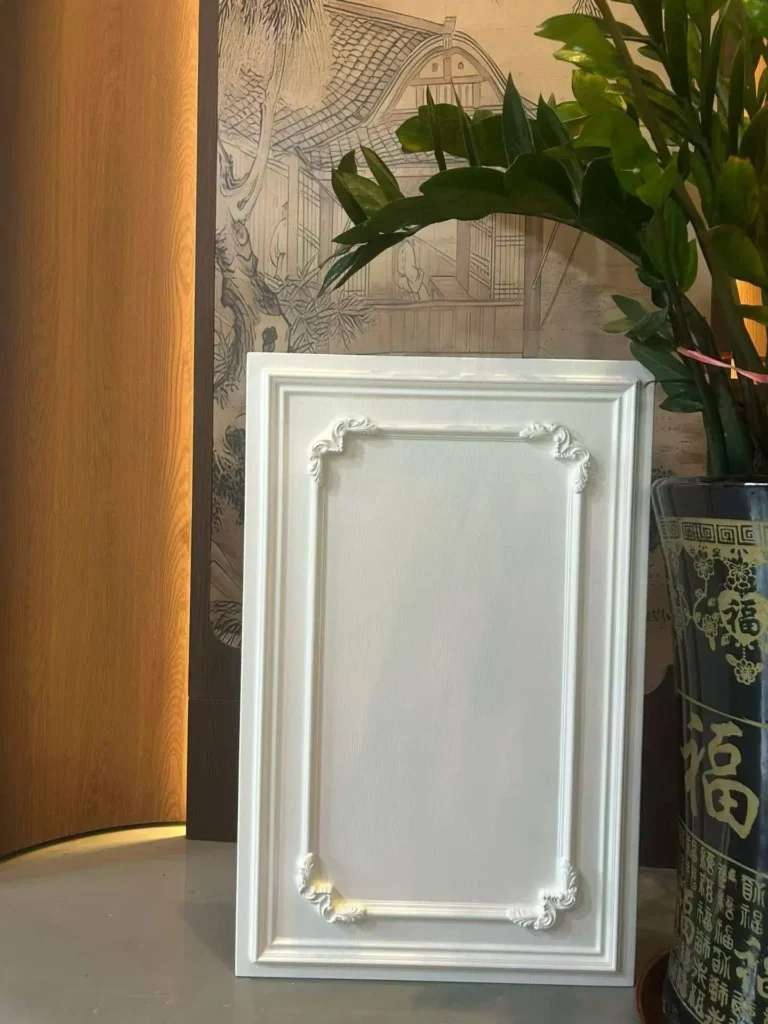
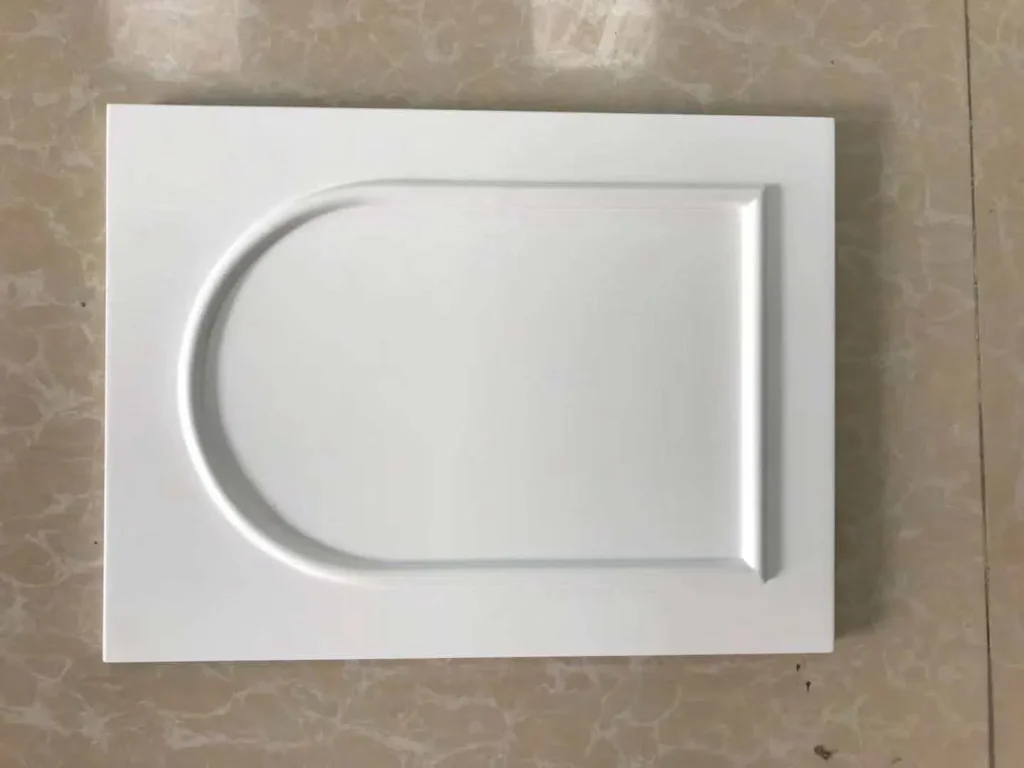
Door style: modern flat panel door, PVC wrapped MDF decorative profile door, arched profile MDF door, carbon steel door, PET door, melamine door, UV lacquer door or HPL surface.
Countertop requirement: quartz countertop, artificial stone countertop, laminate countertop or buyer-supplied countertop.
Cabinet body material: plywood, particle board, MDF or moisture-resistant board.
Hardware grade: standard soft-close hinges, branded hinges, drawer slides, pull-out baskets, handles, aluminum profiles and sink accessories.
Packing method: flat pack, knock-down pack, semi-assembled pack or fully assembled pack.
Quantity: number of kitchens, room schedule, building phases and estimated container volume.
Destination: port, country, required Incoterms and delivery deadline.
For export orders, trade terms should be confirmed clearly at quotation stage. The International Chamber of Commerce explains that Incoterms rules are eleven three-letter trade terms reflecting business-to-business practice in contracts for sale and purchase of goods. This is important when comparing FOB, CIF, EXW or DDP quotations from different furniture suppliers.
Kitchen Cabinet Applications for B2B Projects
A project kitchen cabinet manufacturer usually serves repeated-unit projects instead of single-home retail orders. This changes the way the factory designs, quotes and produces the furniture. The goal is not only to make one beautiful kitchen. The goal is to make 50, 200 or 1,000 kitchens consistent in size, color, drilling position, hardware function and packing label.
Apartment Kitchen Cabinets
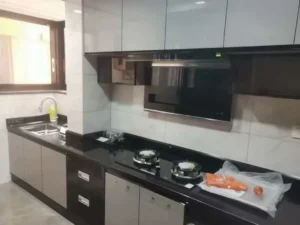
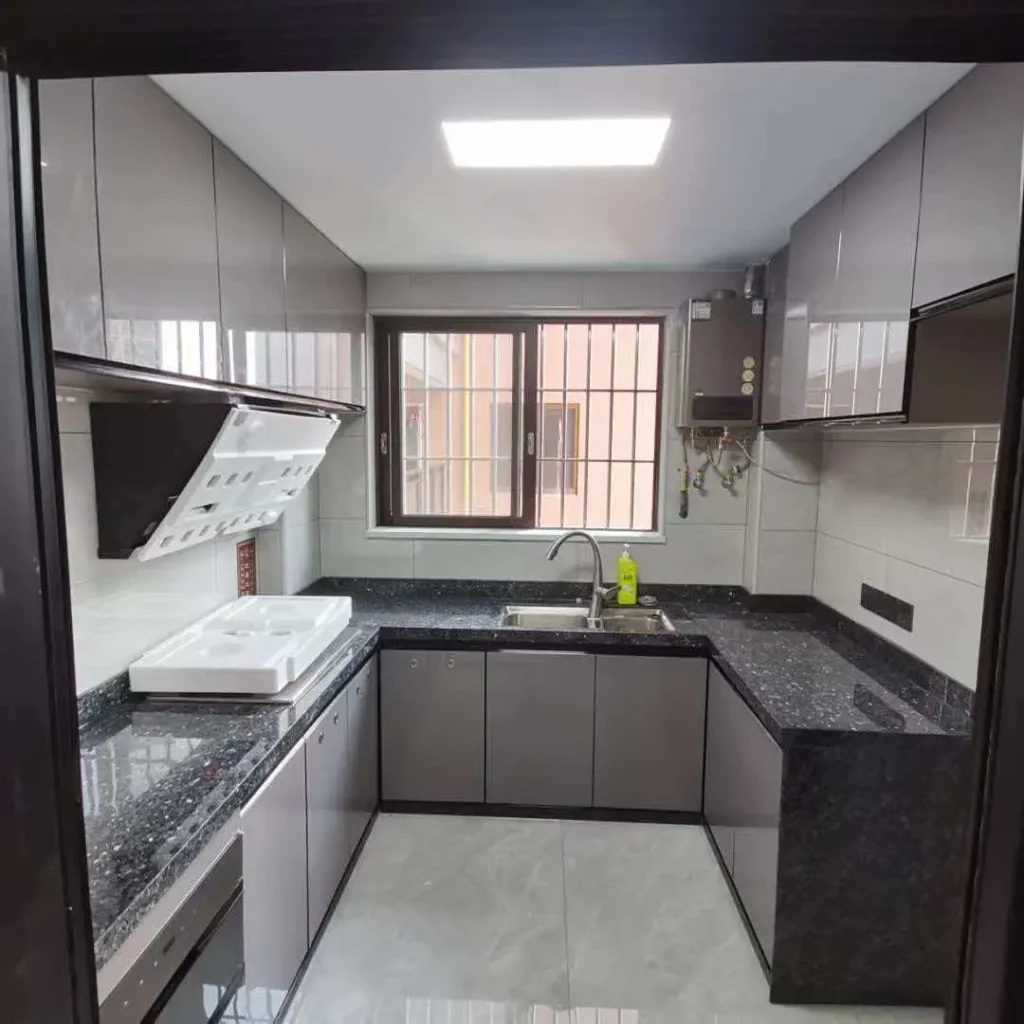
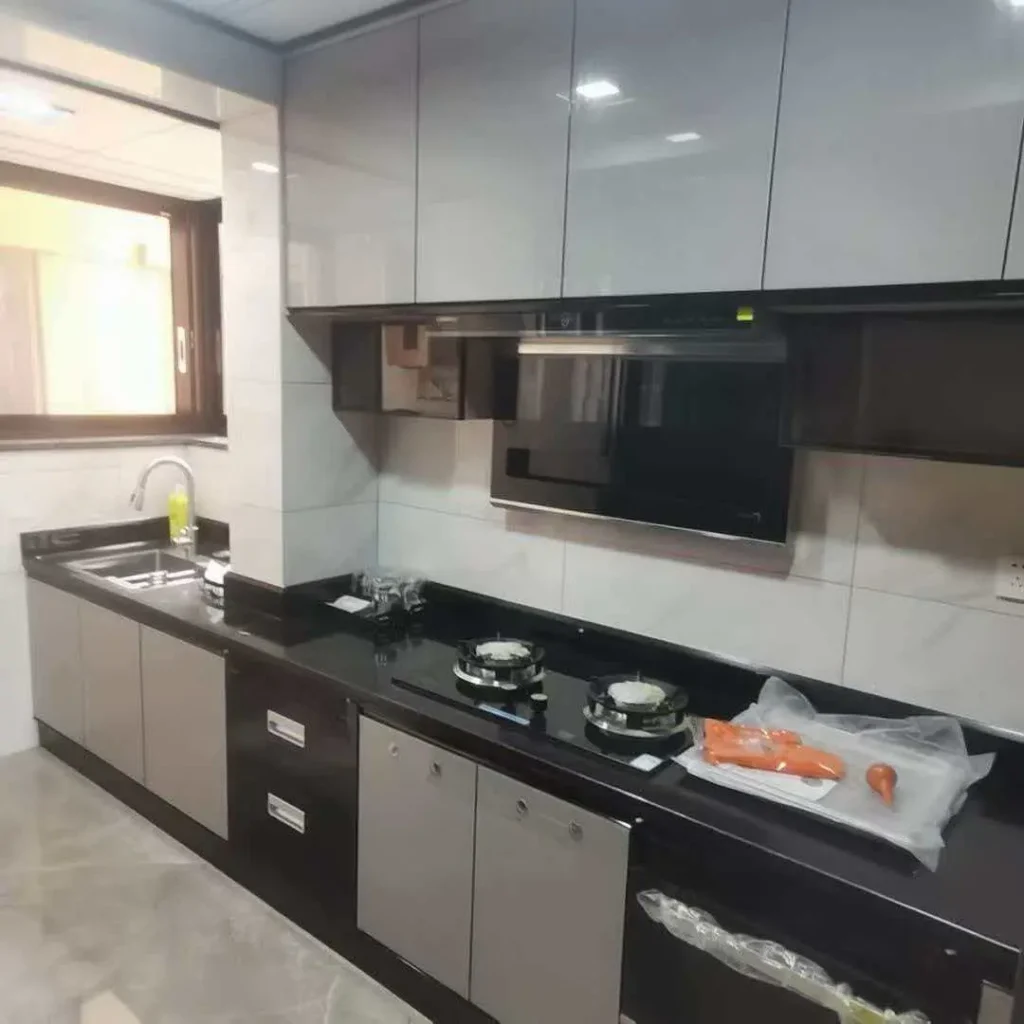
Apartment developers often choose modern flat panel kitchen cabinets with quartz countertops because the design is clean, easy to match with interiors and suitable for repeated unit production. In the image references, the modern flat panel kitchen with grey tones and quartz countertop is a typical procurement direction for apartment projects. The buyer usually cares about cost control, installation speed, color consistency and damage reduction during transportation.
For apartment projects, the most searched B2B keywords are:
apartment kitchen cabinet manufacturer
apartment kitchen cabinet factory
OEM apartment kitchen cabinets
flat panel apartment kitchen cabinet supplier
kitchen cabinets with quartz countertop factory
Hotel and Serviced Apartment Kitchen Cabinets
Hotel apartment projects require a more controlled appearance. Doors, panels and countertops must match the brand standard across rooms. Many buyers prefer neutral colors, handleless doors, soft-close hardware and durable countertops. A factory must pay attention to batch consistency because even a small color difference between phases may become a complaint after installation.
Useful search terms include:
hotel kitchen cabinet manufacturer
hotel apartment kitchen cabinet factory
serviced apartment kitchen cabinet supplier
OEM hotel kitchen cabinets
commercial furniture manufacturer for hotel projects
Compact Kitchenettes and Staff Housing
Compact kitchens are common in studios, dormitories, worker accommodation, staff housing and rental units. These projects may require small straight-line layouts, simple upper cabinets, base cabinets, sink cabinets and wall panels. The key is not complicated design; the key is fast production, cost efficiency and accurate packing by room number.
Search terms include:
compact kitchen cabinet factory
straight line kitchen cabinet manufacturer
bulk kitchen cabinet supplier for contractors
panel furniture export factory for apartment projects
U-Shape and L-Shape Project Kitchens
U-shape and L-shape kitchens need more accurate shop drawings. Corner cabinets, countertop joints, sink locations and appliance openings must be checked carefully before mass production. For U-shape kitchens, factories should confirm wall dimensions, installation tolerance and countertop seam position before cutting panels.
Search terms include:
U-shape kitchen cabinet manufacturer
L-shape kitchen cabinet factory
custom modular kitchen cabinet factory
project kitchen cabinet OEM manufacturer
Materials Used in Export Project Kitchen Cabinets
Material selection is one of the first decisions for B2B buyers. A factory should not recommend only one material for every project. The right material depends on target market, budget, local regulation, usage environment and buyer positioning.
Cabinet Carcass Materials
For project kitchen cabinets, common carcass materials include plywood, particle board and MDF. Plywood is often selected for better screw-holding strength and moisture resistance. Particle board is widely used for cost-controlled apartment and rental projects. MDF is commonly used for door panels, especially PVC wrapped MDF doors and painted doors.
For U.S.-bound orders, buyers should pay attention to formaldehyde emission compliance. The U.S. EPA states that TSCA Title VI covers composite wood products including hardwood plywood, MDF and particleboard, as well as finished goods containing these products. This is highly relevant for an export panel furniture manufacturer supplying kitchen cabinets, wardrobes, vanities and other board-based furniture.
Door Panel Options
The project images show several useful product directions for B2B buyers.
Modern Flat Panel Doors
Flat panel kitchen cabinets are one of the easiest styles for project procurement. They are simple, modern, cost-efficient and suitable for hotels, apartments and rental properties. Flat doors can be produced with melamine, PET, PVC, UV, lacquer or HPL finishes.
PVC Wrapped MDF Doors
PVC wrapped MDF doors are useful when buyers want decorative profiles, arched profiles or molded shapes. The image references include PVC wrapped MDF decorative profile doors and arched profile doors. This style is suitable for buyers looking for a softer residential look, classic rental apartments, villas or hospitality interiors.
Carbon Steel Door Kitchen Cabinets
Some projects use carbon steel door finishes or metal-look cabinet doors for stronger visual contrast and durability. These are especially suitable for modern kitchens, compact units and projects requiring a darker industrial look.
Aluminum Frame and Glass Doors
For higher-end projects, buyers may add aluminum frame doors, glass doors or display cabinets. These increase the unit price but can improve the overall project value.
Countertop Options
Quartz countertop is widely requested in B2B project kitchens because it gives a clean and durable appearance. For export projects, the buyer should confirm countertop thickness, edge profile, sink cutout, faucet hole, backsplash height, packing method and whether the countertop ships together with the cabinets.
Common search terms include:
quartz countertop kitchen cabinet supplier
kitchen cabinet with quartz countertop factory
apartment kitchen cabinets with quartz countertop manufacturer
OEM quartz countertop kitchen cabinets
Hardware and Accessories
Hardware affects user experience and complaint rate. A low-cost hinge may reduce the purchase price but increase after-sales problems. For project orders, buyers should define hinge type, slide type, drawer load requirement, handle finish, adjustable legs, wall hanging brackets and soft-close function before quotation.
For commercial furniture and contract project products, buyers may also review recognized furniture performance references. BIFMA sponsors furniture safety, performance and sustainability standards, and its compliant registry helps identify products that conform to established industry standards. While kitchen cabinets have their own project requirements, BIFMA is useful for buyers sourcing broader hotel, office or contract furniture packages.
Factory Capability for OEM/ODM Project Orders
A good OEM ODM furniture supplier is not only a workshop that cuts boards. For project kitchen cabinets, the factory must manage communication, engineering, procurement, production, inspection and export packing as one system.
Drawing Review and Engineering Support
Before production, our factory team checks the buyer’s drawings, room schedule and material requirements. For apartment and hotel projects, drawings are often adjusted several times before approval. The factory should help identify missing dimensions, unclear appliance sizes, wrong hinge direction, countertop conflicts and installation risks.
A practical factory review usually includes:
cabinet width, height and depth
sink cabinet position
appliance opening sizes
wall cabinet height
countertop overhang
side panel exposure
door swing direction
drawer quantity
handle position
plinth height
packing label by room or unit number
This engineering step is important because correcting a drawing before production is much cheaper than correcting 300 wrong cabinets after shipment.
OEM and ODM Flexibility
OEM means the buyer already has drawings, specifications or brand standards. The factory produces according to those requirements.
ODM means the buyer provides project needs, target budget and style direction, while the factory helps develop the cabinet structure, materials and finish proposal.
For B2B buyers, the most efficient model is often a combination of both. The buyer sends drawings and preferred style, while the project kitchen cabinet manufacturer optimizes the structure, material thickness, packing method and production solution.
Buyers can review our service structure through the OEM/ODM furniture manufacturing services page and project production scope through project furniture manufacturing.
Batch Production Control
Project orders require repeatability. If one kitchen sample looks good but mass production is inconsistent, the buyer still has a problem. Factory batch control should include board color confirmation, edge banding matching, drilling template control, hardware checking, countertop matching and final packing inspection.
Quality management systems are important because they help factories deliver consistent products and improve processes. ISO describes ISO 9001 as a globally recognized quality management standard used to improve performance and meet customer expectations. Buyers can use this as a reference when evaluating factory management, even when project-specific inspection standards are also required.
MOQ, Lead Time and Quotation Details
MOQ and lead time should be discussed in a practical way. A factory may accept a small mock-up order, but the unit price for a small sample quantity will be higher than a container order. For real project pricing, the buyer should provide estimated quantity and project phase schedule.
Practical MOQ Reference
For sample or mock-up room: 1–3 sets can usually be discussed for material and design confirmation.
For small project orders: 20–50 kitchen sets may be workable depending on material and finish.
For stable export pricing: one 20GP or 40HQ container is more efficient for production, packing and freight cost control.
For hotel or apartment development: phased delivery can be arranged according to building schedule.
The final MOQ depends on door finish, board color, hardware, countertop, packing method and whether customized molds or special materials are required.
Practical Lead Time Reference
Sample or mock-up production: usually 7–15 days after drawing and material confirmation.
Mass production: commonly 25–45 days after deposit, approved drawings and confirmed sample.
Large project phased production: schedule should be agreed according to quantity, material availability and shipping plan.
Special finishes, imported hardware, custom profiles or quartz countertop processing may extend the lead time. The safest way is to confirm the production calendar before signing the purchase order.
What a Buyer Should Send for Accurate Pricing
To get a fast and accurate quotation from a project kitchen cabinet factory, send the following:
floor plan or cabinet elevation drawings
quantity by layout or room type
material requirement
door finish and color reference
countertop specification
hardware grade
packing requirement
destination port
target Incoterms
project deadline
installation method
special compliance requirement
A clear RFQ saves time for both sides. It also helps the factory suggest cost-saving alternatives without lowering the project standard.
Packaging, Loading and Export Delivery
For B2B project furniture, packaging is not a small detail. Poor packing creates claims, delay and installation problems. A professional panel furniture export factory should design packing based on shipping method, cabinet structure and site installation sequence.
Flat Pack and Knock-Down Packing
Flat pack is efficient for container loading and long-distance export. It reduces volume and freight cost, especially for apartment projects with many repeated cabinets. Each panel can be labeled according to cabinet number, room number or unit type.
Knock-down packing usually includes separated panels, hardware kits, assembly drawings and installation labels. This is suitable when the buyer has local installation teams.
Semi-Assembled Packing
Semi-assembled packing can reduce site assembly time, but it increases shipping volume. It may be useful for urgent hotel projects, local contractors with limited assembly labor or premium units where faster installation is required.
Export Packing Details
Practical export packing may include:
EPE foam
corner protectors
five-layer cartons
honeycomb board
wooden pallet if required
hardware bag labeling
cabinet code labels
room-by-room packing list
countertop wooden crate if needed
container loading photos
For quartz countertops, special attention should be paid to edge protection, vertical packing, cutout reinforcement and crate marking.
Shipping Terms
Most B2B furniture buyers request EXW, FOB, CIF or DDP quotations depending on their purchasing experience. For international trade, the official ICC Incoterms rules are a useful reference when buyers and suppliers define responsibilities, risk transfer and cost structure.
7-Step OEM/ODM Customization Process
A practical process helps both buyer and factory reduce misunderstanding. For project kitchen cabinets, we recommend the following 7-step workflow.
Step 1: Project Information Collection
The buyer sends project type, drawings, quantity, target style, material preference and destination. If drawings are not ready, the buyer can send reference images, unit size and room layout.
Step 2: Material and Structure Proposal
The factory suggests suitable carcass material, door finish, countertop option, hardware grade and packing method. For example, a rental apartment may use melamine flat panel doors with quartz countertop, while a higher-end serviced apartment may use PET doors, better hinges and thicker countertop.
Step 3: Quotation and Technical Clarification
The quotation should clearly list material, cabinet scope, countertop scope, hardware, packing, lead time and trade terms. Any unclear item should be confirmed before sample production.
Step 4: Shop Drawing and Sample Confirmation
For project orders, shop drawings are more important than catalog pictures. The buyer should approve cabinet dimensions, door direction, handle position, countertop details and color samples before mass production.
Step 5: Mock-Up Room or Sample Set
Many hotel and apartment buyers require one mock-up kitchen before bulk order. This allows the developer, contractor and designer to check function, color, installation and user experience.
Step 6: Mass Production and QC
After approval, the factory starts batch production. QC should check panel cutting, edge banding, drilling, door matching, hardware fitting, countertop processing and packing labels.
Step 7: Loading, Documents and After-Sales Support
Before shipment, the factory provides packing list, loading photos and export documents. For project buyers, after-sales support should include replacement parts, installation guidance and clear communication if site teams need clarification.
This process is especially important for buyers searching for an OEM ODM furniture supplier rather than a retail cabinet seller. OEM/ODM project production depends on repeatable systems, not only product appearance.
How to Choose the Right Project Kitchen Cabinet Manufacturer
Choosing the right supplier is a commercial decision. The cheapest quotation may not be the best project cost if it causes delay, damage or installation problems. A good project kitchen cabinet manufacturer should help the buyer control total risk.
Check Real Project References
The image cases show practical project styles: modern flat panel kitchens, quartz countertop kitchens, compact kitchen layouts, U-shape kitchen projects, straight-line kitchen projects and PVC wrapped MDF cabinet door profiles. These references are more useful for contractors than studio-style product renderings because they show real production and installation directions.
When checking supplier cases, look for:
repeated project layouts
clear cabinet structure
consistent door color
finished countertop details
sink and appliance coordination
practical installation space
export-ready product scope
Check Material Matching Ability
A factory should be able to match the project budget with the right material. Not every project needs premium materials, but every project needs the correct material. For example, cost-controlled rental projects may use melamine board and standard hardware. Hotel apartment projects may need PET doors, better hinges and stronger packing. Villa projects may use PVC wrapped MDF decorative doors or lacquered profiles.
Check Communication Speed
Project buyers often work under construction deadlines. Slow communication can become a real cost. A good factory should answer drawing questions, quotation revisions and material alternatives quickly.
Check Export Experience
Export orders require packing, labeling, documents, container loading and shipping coordination. A local workshop may produce cabinets but may not understand export packing. A true panel furniture export factory should understand container loading, pallet requirements, carton marking and destination documentation.
Check Internal Factory Pages
To help Google and buyers understand the full company structure, this article should connect with important internal pages. Buyers who want to know the background can visit the company page. Buyers looking for OEM and ODM cooperation can visit OEM/ODM furniture manufacturing services. Buyers planning hotel, apartment or contractor projects can visit project furniture manufacturing. The homepage PlywoodMFR should position the website clearly as a panel furniture export factory for B2B buyers.
FAQ for Project Buyers
What is the best material for project kitchen cabinets?
The best material depends on project budget, target market and usage environment. Plywood is often selected for stronger screw holding and better moisture resistance. Particle board is suitable for cost-controlled apartment projects. MDF is commonly used for PVC wrapped doors, decorative profile doors and painted doors. For export orders, buyers should also confirm formaldehyde emission requirements for the destination market.
Can you manufacture OEM kitchen cabinets based on our drawings?
Yes. For OEM project orders, buyers can send cabinet drawings, BOQ, room schedules, finish references and hardware requirements. The factory can review dimensions, suggest material solutions, prepare quotation, make samples and arrange mass production after approval.
What is the MOQ for apartment or hotel kitchen cabinet projects?
MOQ depends on material, finish, hardware and packing method. A mock-up room can usually start with 1–3 sets for approval. For project pricing, 20–50 sets or container-based orders are more efficient. Large apartment and hotel projects can be arranged by phase.
How long does production take for project kitchen cabinets?
Sample or mock-up production usually takes about 7–15 days after drawing and material confirmation. Mass production commonly takes 25–45 days after deposit and approved sample. The final lead time depends on quantity, material availability, countertop processing and shipping schedule.
Can kitchen cabinets and quartz countertops be shipped together?
Yes, they can be shipped together if the buyer requests a complete cabinet package. The factory should confirm countertop thickness, edge profile, sink cutout, faucet hole, backsplash and crate packing. Quartz countertops need stronger edge protection and careful loading.
Why should contractors choose a panel furniture export factory instead of a retail cabinet supplier?
A retail supplier usually focuses on individual home orders, while a panel furniture export factory is better for repeated project production, OEM/ODM customization, container loading, export packing and room-by-room labeling. For contractors, developers and hotel buyers, this reduces procurement risk and improves installation efficiency.
Final Inquiry CTA
If you are sourcing kitchen cabinets for an apartment, hotel, serviced apartment, dormitory, office pantry or contractor project, send us your drawings, BOQ, quantity, finish requirement, hardware grade, countertop specification and destination port.
Our team can help you review the project, recommend materials, prepare OEM/ODM quotation, arrange sample confirmation and plan mass production.
Start your project inquiry through PlywoodMFR, learn more about our factory capability, or send your OEM/ODM requirements through our furniture manufacturing services.