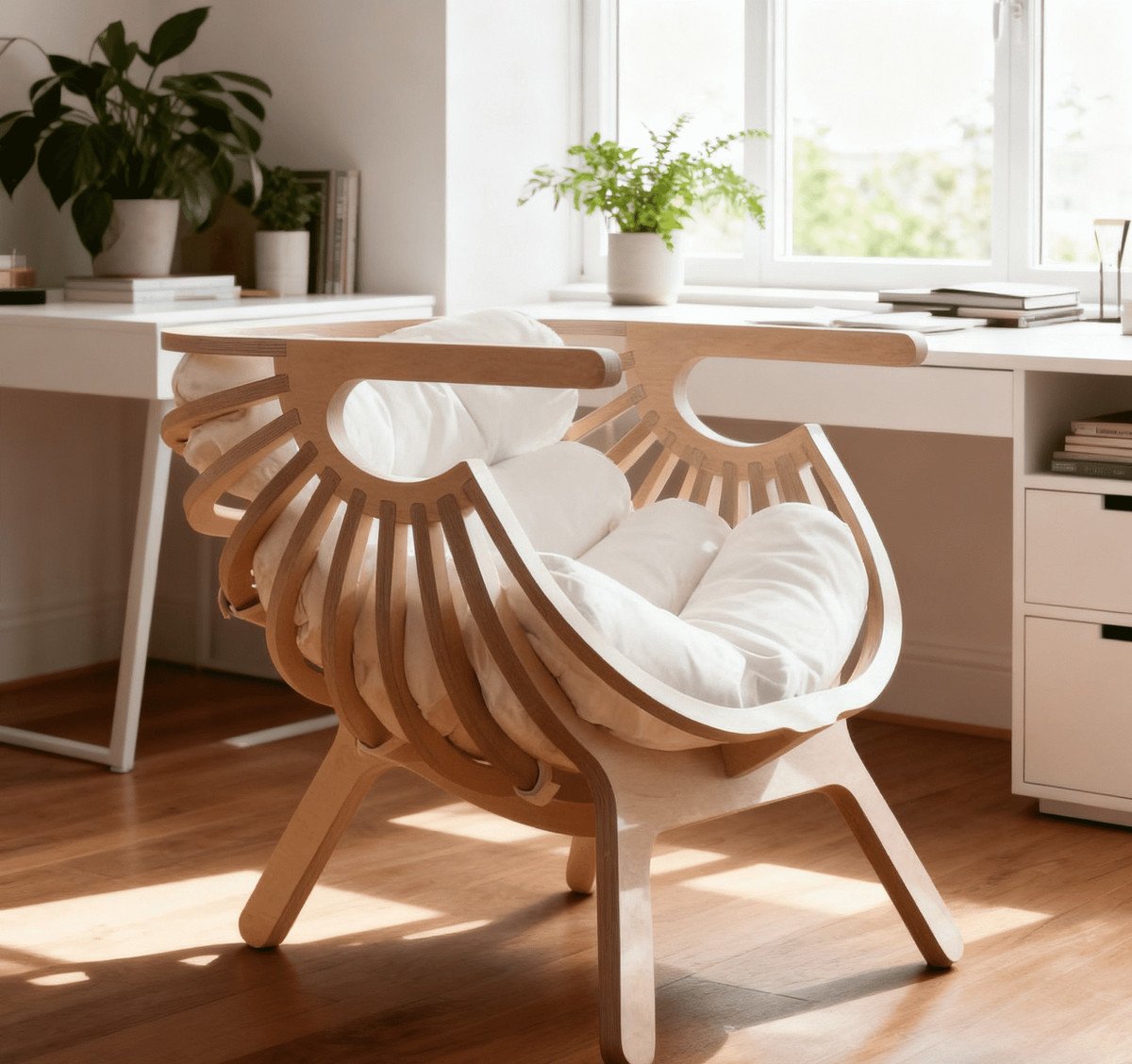
Molded plywood chairs are widely recognized for their curved forms, lightweight visual appearance and ability to combine wood surfaces with upholstered seating.
Unlike conventional panel furniture, these chairs may require curved lamination, dedicated molds, pressing equipment, precise structural joints and specialized finishing processes. The final manufacturing method depends heavily on the shell geometry, bending radius, veneer direction, upholstery design and required performance standard.
Important: The chair shown on this page is presented as a design and sourcing reference. This specific model is not currently manufactured as a standard product by Starwood.
Our core manufacturing capability focuses on flat-pack panel furniture, cabinet systems, storage furniture and project-based furniture programs.
A molded plywood chair uses multiple layers of wood veneer or thin plywood that are shaped under pressure to create curved structural components.
Depending on the design, molded plywood can be used for:
The process differs significantly from normal CNC-cut flat panels because the material must maintain a controlled curve after pressing and finishing.
For buyers, this means a molded plywood chair should not be evaluated only by its appearance. The manufacturing method, tooling, material thickness, glue system, bending radius and structural testing all influence whether a design is commercially practical.
Some chair designs use one continuous molded plywood shell to form the seat and backrest.
This approach can create a clean and minimal appearance, but the mold geometry, plywood construction and pressing process must be carefully developed to control:
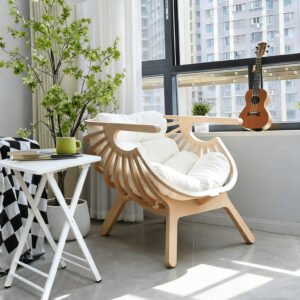
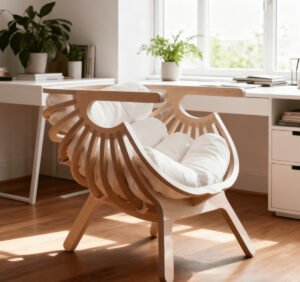
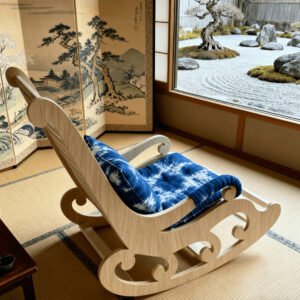
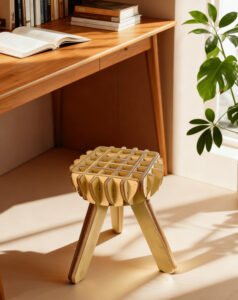
The concept shown in the images on this page uses multiple curved wooden elements to create a sculptural open structure around the seat.
This type of design may require each curved component to maintain consistent geometry so that the finished chair appears symmetrical and the different parts align correctly.
Important considerations include:
This type of construction is generally more specialized than standard flat-pack panel furniture.
Molded plywood seating is often combined with:
When upholstery is added, buyers should also confirm foam density, fabric performance, seam design, cushion attachment and replacement requirements.
For hospitality or other commercial applications, the required fabric and performance standards should be specified before product development begins.

Material selection affects both the appearance and performance of a molded plywood chair.
The number, thickness and orientation of veneer layers influence the stiffness and bending behavior of the finished component.
A manufacturer normally needs to evaluate the required curvature before confirming the plywood construction.
Visible surfaces may use decorative veneer such as:
The exact species and grade should be confirmed with the supplier before sampling.
Typical finish directions may include:
For bulk furniture orders, an approved finish sample is normally important because natural veneer can show variation in grain and tone.
A visually simple curved plywood chair can involve a relatively complex production process.
Curved components may require dedicated molds or tooling.
The tooling must match the required geometry and allow the laminated material to be pressed consistently.
Wood laminations can partially return toward their original shape after pressure is released.
This behavior must be considered when determining mold shape and finished dimensions.
Poor lamination may cause:
The connection between the molded shell, ribs, legs and supporting frame is critical.
A design that looks attractive in a rendering may still require significant engineering before it is suitable for production.
Curved components can be more difficult to sand, stain and finish consistently than standard flat panels.
Complex internal curves and narrow spaces may require additional manual finishing.
When evaluating a supplier for this type of chair, buyers should request more than a visual quotation.
A useful sourcing checklist includes:
Providing this information at the beginning of a sourcing project can make supplier evaluation more efficient.
A chair intended for residential use may have different requirements from seating intended for restaurants, cafés, hotels or other commercial environments.
Commercial buyers may need to define requirements related to:
These requirements should be discussed with a capable seating manufacturer before sampling.
A visual reference image alone is not enough to confirm that a chair is suitable for commercial use.
No. This specific sculptural molded plywood chair is currently shown as a design and sourcing reference rather than a standard Starwood production model.
We do not want buyers to assume that every furniture image published on our website represents an existing production SKU.
Starwood’s core manufacturing focus is flat-pack panel furniture and cabinet-based furniture programs.
Our current manufacturing scope is better suited to products such as:
If your project requires products within these categories, our factory can review drawings, dimensions, materials, packaging requirements and order quantities.
For products that fit our actual manufacturing capability, we support OEM and ODM panel furniture development based on buyer requirements.
A typical project may begin with:
Inquiry → Drawing / Reference → Feasibility Review → Quotation → Sample → Approval → Bulk Production → QC → Packing → Shipment
Buyers can provide:
We then evaluate whether the product fits our equipment, material system and production process.
This feasibility review is important because not every furniture design is suitable for every factory.
Although both products may contain plywood or engineered wood, their manufacturing processes can be very different.
Often requires:
Typically relies more heavily on:
Our production strength is primarily in the second category.
This distinction is especially important for importers and project buyers comparing factories in China. A factory that works with plywood does not automatically have the equipment and experience required for every type of molded plywood seating.
Before paying for tooling or samples, ask the supplier to explain how the product will actually be manufactured.
Useful questions include:
A technically credible supplier should be able to discuss these questions clearly rather than simply confirming that every design is possible.
If you reached this page while sourcing furniture for a dining, apartment, residential or commercial project, you can also explore our actual panel furniture manufacturing range.
Starwood focuses on OEM and ODM flat-pack furniture programs for importers, wholesalers, retailers and project buyers.
Our manufacturing capabilities include panel cutting, CNC machining, edge finishing, hardware preparation, assembly checking and export-oriented packaging for products that fit our production system.
Explore Our Furniture Products
or
Contact Our Factory With Your Project Brief
No. The chair shown here is currently presented as a design and sourcing reference. It is not a standard product manufactured by our factory.
The page is intended to help furniture buyers understand molded plywood chair structures, material considerations and sourcing questions. It also helps buyers distinguish molded plywood seating production from conventional flat-panel furniture manufacturing.
Our core capability is flat-pack panel furniture. Depending on the design, plywood may be used together with MDF, particle board and other engineered panel materials. Feasibility must be evaluated according to the product structure.
Yes. If the design falls within our panel furniture manufacturing capability, you can send drawings, dimensions, reference images, quantity and material requirements for feasibility review.
Our main manufacturing range includes bedroom furniture, storage furniture, dining tables and cabinets, home office furniture, kitchen and cabinet systems, kids’ room furniture and other flat-pack panel furniture programs.
Yes, for products that match our actual production capability. We can review buyer drawings, structures, materials, finishes, packaging and other project requirements before confirming feasibility.
If you are sourcing flat-pack panel furniture, cabinets, storage furniture, dining furniture or project furniture, send us your product list, drawings or reference images.
Our team will review whether the project fits our manufacturing capability before quotation and sampling.