For furniture distributors, importers, and wholesale kitchen cabinet buyers, expanding a product line is not simply about adding more designs. It requires balancing product variety, inventory investment, manufacturing consistency, shipping costs, and reliable replenishment.
Modular kitchen furniture offers a practical way to grow kitchen cabinet collections while keeping sourcing and inventory more manageable. By combining standardized cabinet structures with customizable dimensions, finishes, storage accessories, and packaging, distributors can serve different customer segments without developing every kitchen configuration from scratch.
As an OEM and ODM panel furniture manufacturer in China, Starwood Industry Co., Ltd. supports international buyers sourcing flat-pack kitchen cabinets, modular storage products, and customized furniture programs.
This guide explains how distributors can use modular kitchen furniture to build competitive product collections, manage procurement risks, and develop scalable supply relationships.
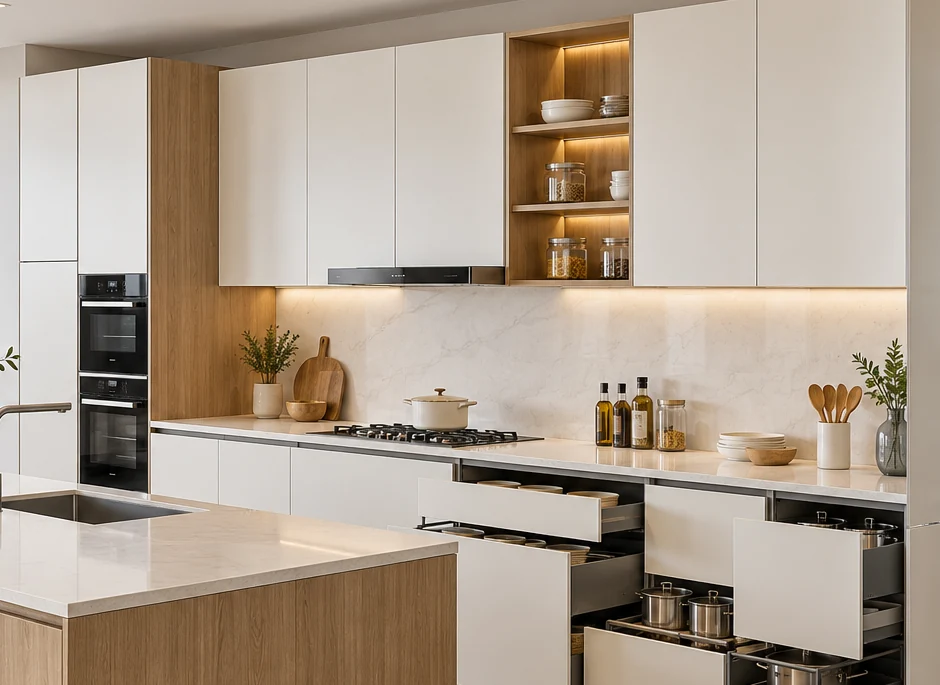
Table of Contents
- What Is Modular Kitchen Furniture?
- Why Modular Kitchen Furniture Makes Product Line Expansion Easier
- How to Build a Profitable Modular Kitchen SKU Strategy
- Inventory Management and Faster Replenishment
- Materials, Hardware, and Quality Requirements
- Flat-Pack Packaging and International Logistics
- Modular Kitchen Furniture for Different B2B Markets
- OEM and ODM Manufacturing Support
- MOQ, Lead Times, and Wholesale Pricing
- A Practical Distributor Sourcing Scenario
- Supplier Evaluation Checklist
- Frequently Asked Questions
- Request a Modular Kitchen Furniture Proposal
What Is Modular Kitchen Furniture?
Modular kitchen furniture is a cabinet and storage system built around standardized or repeatable components that can be combined into different kitchen layouts.
Instead of manufacturing each kitchen as a completely independent design, modular production uses compatible cabinet units, doors, shelves, drawers, and accessories to create multiple configurations.
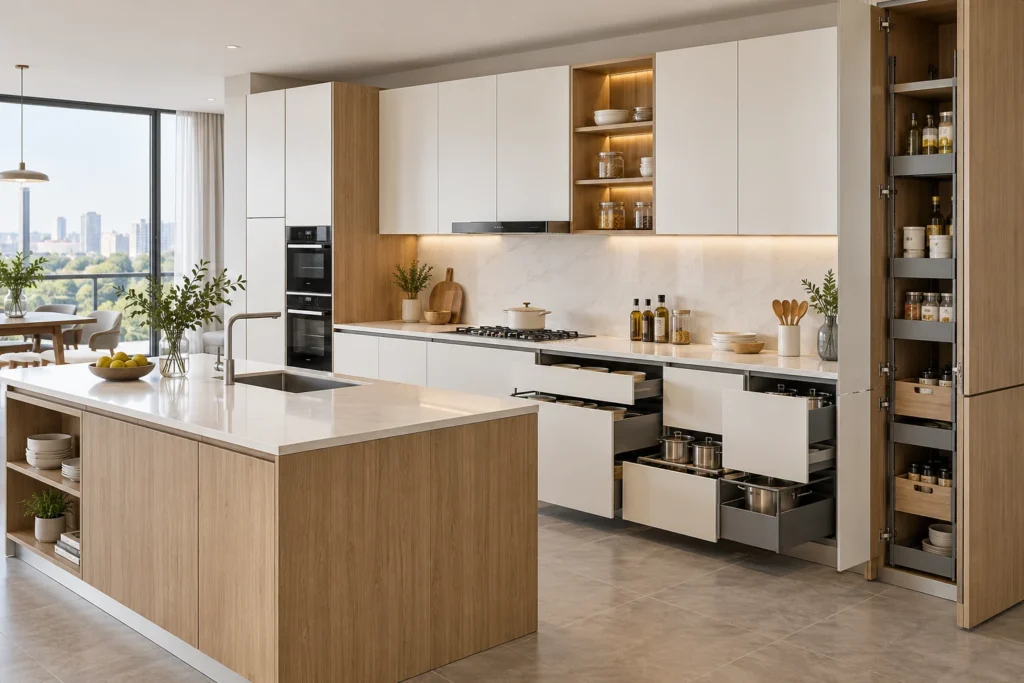
Typical modular kitchen furniture products include:
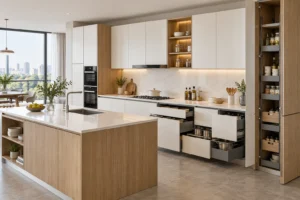
- Base cabinets for sinks, drawers, and cooking areas.
- Wall cabinets for dishes and everyday storage.
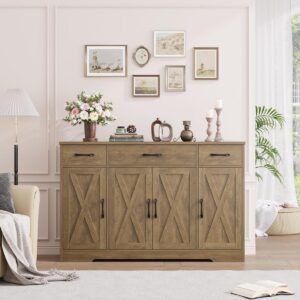
- Tall pantry cabinets for food and appliances.
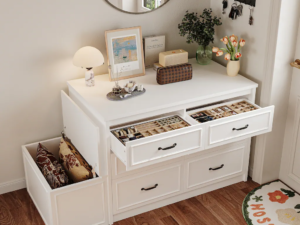
- Drawer cabinets with organized storage systems.
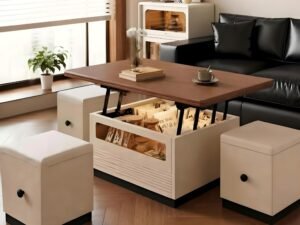
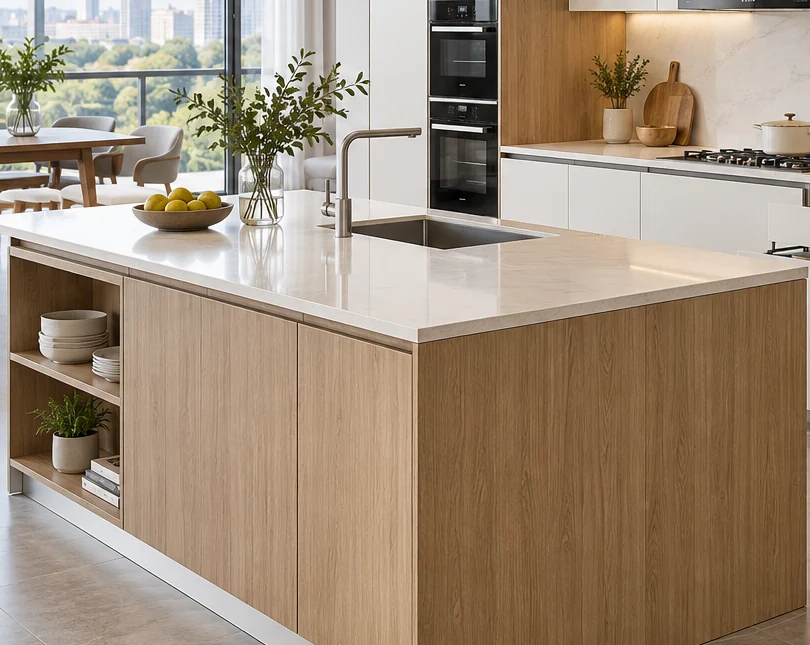
- Kitchen islands and multifunctional storage units.
- Corner cabinets, pull-out baskets, and related accessories.
For distributors, the commercial advantage lies in offering multiple configurations from a controlled range of components.
A customer may require a compact apartment kitchen, while another needs a larger kitchen with additional pantry storage. A well-designed modular system can accommodate both requirements by combining compatible units.
Modular Kitchen Furniture vs. Fully Customized Cabinets
Fully customized kitchen cabinets are often designed around a specific installation, with unique measurements, finishes, and technical details.
Modular kitchen furniture generally follows a more repeatable manufacturing structure.
This distinction affects procurement.
With highly customized cabinets, distributors may need separate production drawings, material calculations, quotations, and quality checks for individual projects.
With standardized modular cabinets, selected components can be reused across different product configurations.
However, modular furniture is not automatically cheaper or faster. The benefits depend on component compatibility, order volume, the level of customization, and the manufacturer’s production arrangements.
For importers exploring different cabinet systems, our kitchen furniture manufacturing solutions include modular cabinet structures, RTA kitchen furniture, storage units, and export-oriented customization.
Why Modular Kitchen Furniture Makes Product Line Expansion Easier
Furniture distributors typically face a difficult purchasing decision.
A broader catalog can attract more customers, but every additional product also creates inventory, purchasing, warehouse, and after-sales responsibilities.
Modular kitchen furniture helps distributors separate customer-facing variety from manufacturing complexity.
Expand Design Choices Without Completely New Structures
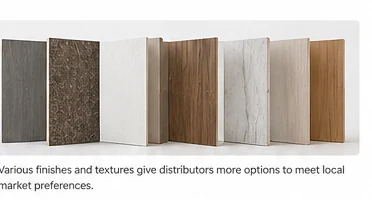
Consider a distributor offering three kitchen cabinet finishes:
- White melamine for value-focused apartment projects.
- Natural oak-look panels for mainstream residential buyers.
- Matte gray surfaces for contemporary kitchen retailers.
If these finishes are compatible with the same underlying cabinet construction, the distributor may create multiple collection options without redesigning all components.
This approach can simplify factory communication and product development.
It also allows distributors to test demand for new finishes before committing to a broad collection.
Serve More Customer Segments
The same modular cabinet family may be offered in different combinations for:
Furniture wholesalers: Standardized collections suitable for bulk distribution.
Kitchen cabinet retailers: Coordinated cabinet ranges with multiple finishes, doors, and storage options.
Property developers: Repeatable kitchen configurations for apartments and rental housing.
Contractors: Cabinet systems developed around approved project drawings and installation requirements.
E-commerce furniture brands: Ready-to-assemble cabinet products with appropriate carton dimensions and assembly documentation.
Product specifications must still be adjusted to each market’s requirements.
Build Opportunities for Additional Sales
A distributor selling base and wall cabinets may also offer matching pantry units, drawer systems, shelving, and kitchen islands.
These complementary products can increase the value of a complete kitchen order.
For example, a customer purchasing standard cabinets may later require a tall pantry unit or a matching storage cabinet.
Compatible modular products make these add-on sales easier to present.
The important purchasing consideration is whether the added product uses common finishes, hardware, or components rather than creating unnecessary SKU complexity.
How to Build a Profitable Modular Kitchen SKU Strategy
A successful modular kitchen product line should begin with market demand, not the largest possible catalog.
Distributors should identify products that are likely to generate repeat orders and then build complementary combinations around them.
Start With Core Cabinet Modules
A practical initial assortment may contain several standard product families.
| Product Category | Typical Application | Distributor Value |
|---|---|---|
| Base cabinets | General kitchen storage | Core repeat-order product |
| Wall cabinets | Upper kitchen storage | Complements base cabinets |
| Drawer cabinets | Utensil and cookware storage | Functional upgrade |
| Tall pantry cabinets | Food and appliance storage | Higher-value product option |
| Kitchen islands | Open-plan kitchens | Premium collection expansion |
| Storage accessories | Internal cabinet organization | Add-on sales opportunity |
Not every market requires the complete range.
For compact urban apartments, base cabinets, wall cabinets, and slim pantry storage may be more important than large kitchen islands.
For premium residential retailers, coordinated door finishes and upgraded storage accessories may create greater differentiation.
Develop a Good-Better-Best Collection
One purchasing strategy is to organize products into three price-positioning levels.
Entry-Level Collection
Focus on practical cabinet structures, standard melamine finishes, basic hardware, and accessible wholesale pricing.
This collection can be positioned for budget-conscious housing projects, rental properties, and volume-oriented retailers.
Mid-Range Collection
Introduce additional finishes, upgraded hinges, drawer slides, and organized storage solutions.
This range may suit mainstream furniture retailers and residential renovation channels.
Premium Collection
Offer more distinctive finishes, specialized internal storage, refined hardware, and greater customization.
Premium positioning can support higher selling prices, but distributors should calculate the added procurement and inventory costs before expanding.
Avoid Unnecessary SKU Proliferation
More SKUs do not automatically create better sales.
Each new SKU may require individual packaging, product photography, instructions, warehouse space, spare parts, and purchasing forecasts.
A better approach is to distinguish between:
- Core stock SKUs that sell consistently.
- Optional SKUs available through scheduled replenishment.
- Custom-order configurations produced for confirmed projects.
For example, a distributor might stock popular white and oak-look cabinets while offering specialty colors through an OEM production program.
This structure can reduce exposure to slow-moving inventory while preserving customer choice.
Standardize Product Data
Before launching a modular kitchen collection, buyers should request consistent product information.
Each SKU should have a clear product code, dimensions, board specification, finish code, hardware list, packaging dimensions, gross weight, and assembly instructions.
Standardized data improves purchasing accuracy and helps distributors manage products across catalogs, ERP systems, warehouses, and sales channels.
Inventory Management and Faster Replenishment
Inventory control is one of the strongest commercial reasons to evaluate modular kitchen furniture.
Traditional product expansion can require significant investment in separate cabinet designs and components.
Modular systems may allow distributors to concentrate purchasing volume on selected repeatable cabinet families.
Reduce Inventory Duplication
When cabinet dimensions and components are standardized, multiple product configurations may share common specifications.
For example, compatible cabinet structures may use similar internal shelves, fittings, and hardware.
This can reduce the number of unique components that must be managed.
However, the actual inventory benefit depends on whether those components are genuinely interchangeable and available separately.
Buyers should confirm component compatibility with the manufacturer rather than assuming that all modules within a collection share the same parts.
Establish Clear Replenishment Rules
A distributor should classify products according to sales performance, demand variability, and replenishment risk.
High-demand cabinet models can receive priority in inventory planning.
Lower-demand finishes may be ordered according to confirmed customer requirements.
The key purchasing variables include:
- Average monthly sales by SKU.
- Demand during peak renovation periods.
- Factory manufacturing lead time.
- International transit and customs clearance time.
- Required safety stock.
- Warehouse storage capacity.
A useful starting formula is:
Reorder Point = Expected Demand During Replenishment Lead Time + Safety Stock
For example, if a cabinet SKU sells 80 units per month and total replenishment takes two months, expected lead-time demand would be approximately 160 units.
The distributor would then add safety stock based on demand variation and supply risk.
This is an illustrative calculation, not a recommended inventory level for every business.
Coordinate Replenishment With the Factory
Distributors can improve repeat-order planning by sharing rolling demand forecasts with their kitchen cabinet supplier.
A forecast can identify upcoming purchase quantities, preferred finishes, seasonal demand, and requested shipping windows.
For larger programs, buyers should discuss whether the factory can maintain approved technical specifications and component records for future orders.
Consistent specifications are especially important when replacement cabinets must match products purchased several months earlier.
Materials, Hardware, and Quality Requirements
Materials are a central purchasing consideration because cabinet durability, appearance, cost, and regulatory requirements can vary between markets.
A reliable kitchen cabinet supplier should help buyers compare material options against the intended product positioning.
Common Panel Materials
Particle Board
Particle board is commonly used for cost-sensitive cabinet programs with suitable surface finishes.
Its performance depends on panel grade, density, moisture resistance, edge sealing, and intended use.
MDF
Medium-density fiberboard provides a relatively consistent surface and is frequently selected for cabinet doors and decorative panels.
It can accommodate several finishing processes, depending on the application.
Plywood
Plywood may be considered for cabinet construction where the buyer specifies particular structural or performance requirements.
Performance and price depend on construction, wood species, adhesive system, grade, and surface treatment.
Melamine-Faced Panels
Melamine-faced engineered panels are practical for many standardized kitchen furniture collections because they offer a range of colors and decorative finishes.
Buyers should review surface quality, edge-banding compatibility, cleaning requirements, and the panel’s suitability for kitchen environments.
Match Finish Selection With Market Positioning
Common cabinet finish options include melamine, laminate, veneer, lacquer, and PET surfaces.
Finish selection should consider the target selling price, visual appearance, cleaning performance, moisture exposure, and production consistency.
Distributors should request actual finish samples before approving mass production.
Digital photographs alone may not accurately represent color, texture, gloss, or surface quality.
Check Hardware Compatibility
Hinges and drawer slides can significantly influence the customer’s perception of cabinet quality.
Before placing a bulk order, confirm:
- Hinge type and opening angle.
- Drawer slide load requirements.
- Soft-close functionality, if specified.
- Hardware finish and corrosion resistance.
- Replacement-part availability.
- Hardware installation and assembly tolerances.
Buyers should also check whether a selected hardware specification can be maintained across repeat orders.
Verify Destination-Market Requirements
Importers must evaluate the applicable regulations for their destination market.
For example, the U.S. Environmental Protection Agency explains that certain composite wood products, including hardwood plywood, MDF, and particleboard, are covered by formaldehyde emission requirements under TSCA Title VI.
Buyers sourcing cabinets for the United States should review the EPA’s formaldehyde emission standards for composite wood products and request appropriate supplier documentation.
Where responsible sourcing claims are relevant, the Forest Stewardship Council’s chain-of-custody guidance provides information about traceability and certification.
A supplier should not be described as FSC-certified, ISO-certified, or compliant with a particular market standard without supporting evidence for the relevant business, product, or material.
For manufacturing quality-management evaluation, buyers can consult the ISO 9001 quality management standard.
Independent certification, inspection records, and applicable product testing should be assessed separately.
Flat-Pack Packaging and International Logistics
International kitchen furniture sourcing requires careful evaluation of shipping volume, product protection, warehouse handling, and installation.
Packaging affects the total landed cost of imported furniture.
Why RTA Kitchen Cabinets Matter
Ready-to-assemble, or RTA, kitchen cabinets are supplied with components designed for assembly after delivery.
Compared with many assembled cabinet structures, flat-pack configurations can reduce unused shipping space and support more efficient storage.
The amount saved depends on the cabinet construction, packaging design, and container-loading plan.
Distributors should request actual carton measurements and loading calculations rather than relying on generalized shipping-saving percentages.
Evaluate the Complete Packaging System
A practical export packaging specification should address:
Panel Protection
Surface protection, corner guards, and suitable internal separation help reduce abrasion and impact damage.
Hardware Organization
Screws, fittings, hinges, and other components should be packed logically and checked against the approved bill of materials.
Carton Identification
Clear labels should identify the SKU, finish, carton number, quantity, and handling information as needed.
Assembly Documentation
Instructions should explain assembly sequences, component identification, and required tools.
Replacement Procedures
Distributors should confirm how damaged panels, missing hardware, and replacement parts will be handled.
These details are especially important for retail and e-commerce channels.
Compare Landed Costs Rather Than Factory Prices Alone
A lower factory quotation does not necessarily produce the lowest total purchasing cost.
Distributors should consider factory price, packaging, inland transportation, freight, insurance, customs costs, import duties, warehousing, potential damage, and after-sales expenses.
For international contract terms, the International Chamber of Commerce’s Incoterms rules explain the allocation of delivery responsibilities, costs, and risks between buyers and sellers.
Importers should agree on the applicable Incoterms rule, named place, and current edition before confirming a purchase order.
For U.S. imports, customs classification and applicable duties must also be reviewed. The U.S. Customs and Border Protection import guidance provides a starting point for importers evaluating customs obligations.
Ask for a Container Loading Plan
Before finalizing a large modular kitchen furniture order, request:
- Carton dimensions and weights.
- Packing list by SKU.
- Estimated loading quantity by container type.
- Product protection specifications.
- Label and barcode requirements.
- Loading arrangement and handling considerations.
This information helps distributors evaluate actual logistics efficiency and warehouse receiving requirements.
Modular Kitchen Furniture for Different B2B Markets
Modular kitchen furniture is suitable for several purchasing channels, but product specifications should follow the intended application.
Wholesale Distributors and Importers
Wholesale distributors generally benefit from consistent product specifications and repeatable collections.
A controlled range of base cabinets, wall cabinets, pantry storage, and matching finishes can provide a foundation for expansion.
Private-label cartons and coordinated product documentation may also support local distribution.
Kitchen Cabinet Retailers
Retailers often require more design flexibility and stronger visual merchandising.
They may prefer coordinated cabinet families with different door styles, worktop compatibility, and internal storage accessories.
Sample displays, product photography, finish boards, and assembly demonstrations can help retailers communicate the collection.
Apartment and Rental Housing Projects
Multi-unit residential developments commonly require repeatable dimensions, standardized finishes, practical installation, and predictable purchasing costs.
Modular cabinets can be developed around approved apartment kitchen layouts.
However, project orders may require additional drawing reviews and site-specific adjustments.
Buyers sourcing cabinets alongside wardrobes, storage units, and other residential furniture can explore our project furniture manufacturing services.
Hotels and Serviced Apartments
Hospitality buyers may need compact kitchenette units, storage furniture, or coordinated cabinet systems.
The specifications should reflect room configuration, usage frequency, cleaning requirements, and any relevant safety or building standards.
Hotel project requirements can differ significantly from ordinary residential kitchen programs.
E-Commerce Furniture Brands
For online retailers, carton handling and assembly experience are critical.
Buyers should evaluate shipping dimensions, protective packaging, product instructions, spare parts, and the practicality of customer assembly.
A design suitable for container-based wholesale distribution may require packaging changes before it becomes suitable for individual parcel delivery.
OEM and ODM Manufacturing Support
Choosing the right manufacturing arrangement can determine whether a modular kitchen collection becomes a sustainable product line.
There are two common cooperation models.
OEM Kitchen Furniture Manufacturing
OEM manufacturing is appropriate when the buyer already has an established product design.
The buyer provides drawings, dimensions, structural requirements, finish specifications, or samples.
The factory reviews manufacturing feasibility and prepares a quotation based on approved requirements.
A typical OEM program may include:
- Technical drawing review.
- Material and hardware confirmation.
- Sample development.
- Production specification approval.
- Bulk manufacturing.
- Quality inspection.
- Export packaging and shipment preparation.
OEM cooperation is particularly useful for distributors with existing product catalogs or private-label collections.
ODM Modular Kitchen Development
ODM cooperation is suitable when a buyer needs additional support developing a new product collection.
The buyer may provide target market information, reference images, desired functions, and a target wholesale price.
The factory can then review potential cabinet structures, materials, finish options, and packaging arrangements.
ODM development does not remove the need for product approval.
Distributors should still review samples, drawings, specifications, and packaging details before confirming bulk production.
Manufacturing Support From Starwood
Starwood Industry Co., Ltd. focuses on export-oriented panel furniture manufacturing for international trade buyers and project customers.
Its kitchen furniture scope includes flat-pack cabinets, RTA kitchen furniture, modular storage units, pantry cabinets, and customized panel furniture.
For OEM and ODM programs, buyers can discuss dimensions, material selection, finishes, hardware, cabinet construction, private-label packaging, and export requirements.
The company also supports sampling, production follow-up, quality control, and shipment preparation.
Learn more about our OEM and ODM furniture manufacturing services for distributors seeking coordinated kitchen and panel furniture programs.
MOQ, Lead Times, and Wholesale Pricing
For wholesale buyers, the most important supplier questions often concern minimum order quantity, production schedule, and landed purchasing cost.
These factors should be discussed early in the quotation process.
What Determines MOQ?
There is no universal MOQ for modular kitchen furniture.
Minimum order requirements depend on several factors, including the cabinet construction, panel finish, hardware selection, quantity per design, production setup, and packaging specifications.
A standard cabinet using an established material and finish may have different purchasing requirements from a custom product requiring a special board color or hardware component.
Buyers should ask whether MOQ is calculated by individual SKU, color, cabinet family, total order quantity, or container volume.
For a trial order, distributors can also ask whether compatible product models can be combined into one production program.
Any mixed-SKU or low-MOQ arrangement must be confirmed by the supplier.
What Affects Production Lead Time?
Lead time generally depends on the production requirements and the factory’s confirmed schedule.
Important variables include material availability, sample approval, technical complexity, order quantity, hardware sourcing, packaging preparation, and production capacity.
New ODM developments may require more preparation than approved repeat orders.
For accurate purchasing plans, request separate estimates for:
- Technical review and quotation.
- Sampling and sample approval.
- Material purchasing.
- Bulk production.
- Quality inspection and packing.
- Shipment preparation.
Shipping and customs clearance should be included separately when calculating total replenishment lead time.
How Should Distributors Compare Quotations?
A proper kitchen cabinet quotation should identify the complete product specification.
The buyer should be able to compare cabinet dimensions, board material, panel thickness, surface finish, hardware brand or grade, packing method, order quantity, and delivery terms.
A cheaper quotation based on lower-grade hardware or different panel construction is not directly comparable with a higher-specification product.
For larger programs, request a detailed quotation by SKU rather than only a price for a complete kitchen set.
This gives distributors better visibility into product costs and future replenishment planning.
A Practical Distributor Sourcing Scenario
Consider a furniture importer planning to enter the modular kitchen cabinet market.
The company currently distributes wardrobes, storage cabinets, and other flat-pack panel furniture.
It wants to introduce a new kitchen range without committing to a large number of untested products.
The following is an illustrative purchasing scenario, not a documented customer case.
Step 1: Identify the Target Market
The importer primarily serves apartment renovation contractors and mid-range furniture retailers.
Its customers prefer neutral finishes, practical storage, and straightforward installation.
Step 2: Select the Initial Product Range
The buyer develops a core assortment of base cabinets, wall cabinets, drawer cabinets, and pantry units.
Two finishes are selected for the first commercial collection.
Additional storage accessories remain available as optional products.
Step 3: Standardize Technical Specifications
The importer confirms cabinet construction, material grades, hardware requirements, assembly details, and product dimensions.
Where possible, compatible components are used across the collection.
Step 4: Review Factory Samples
The buyer checks dimensions, surface quality, edge banding, door alignment, drawer movement, hardware installation, and assembly instructions.
Any required changes are documented before bulk production.
Step 5: Confirm a Trial Order
The importer evaluates MOQ, individual SKU quantities, packaging, landed costs, and the expected delivery schedule.
The factory confirms production feasibility and shipping arrangements.
Step 6: Evaluate Market Response
After the first collection enters the market, the distributor monitors sales by product family and finish.
Slow-moving products are reviewed before the next order.
Popular cabinets receive priority for replenishment, and additional finishes are considered only when demand supports expansion.
The purpose of this strategy is not to maximize the number of SKUs immediately.
It is to create a product range that can grow through measured purchasing decisions.
Supplier Evaluation Checklist for Modular Kitchen Distributors
Before selecting a kitchen cabinet manufacturer, distributors should evaluate the supplier’s ability to support both initial orders and repeat production.
Factory and Manufacturing Capabilities
Confirm whether the supplier manufactures the relevant cabinet categories and supports the required production structures.
Request information about panel processing, CNC cutting, edge banding, drilling, assembly checks, quality control, and packaging.
A factory visit or independent inspection may be appropriate for larger orders.
Product Development Capabilities
Determine whether the supplier can review technical drawings, suggest suitable materials, develop samples, and manage approved product specifications.
For ODM programs, clarify design ownership, tooling responsibilities, and approval procedures before development begins.
Quality Control and Documentation
Ask for documented inspection criteria and sample approval procedures.
Important checks may include dimensions, surface appearance, edge sealing, hardware installation, carton contents, and packing condition.
Distributors should also specify any required testing, compliance documentation, or third-party inspection before confirming the purchase contract.
Export and After-Sales Support
Evaluate the supplier’s ability to provide export cartons, carton marks, loading plans, shipping documents, assembly instructions, and replacement parts.
A modular furniture supplier should understand that repeat orders must remain compatible with previously approved products.
Commercial Communication
A reliable sourcing partnership requires clear discussion of pricing, changes in specifications, production schedules, quality issues, and shipment requirements.
Distributors should request written confirmation of technical and commercial details rather than relying only on verbal agreements.
Frequently Asked Questions About Modular Kitchen Furniture
What is modular kitchen furniture?
Modular kitchen furniture consists of standardized or repeatable cabinet units and storage components that can be combined into different kitchen layouts. Typical products include wall cabinets, base cabinets, drawer units, pantry cabinets, and kitchen islands.
Why is modular kitchen furniture suitable for distributors?
Modular kitchen furniture can help distributors offer more cabinet configurations while maintaining a controlled product range. Compatible structures, coordinated finishes, and repeatable specifications may simplify purchasing, inventory planning, and replenishment.
Can modular kitchen cabinets be manufactured with private labels?
Yes. Many OEM and ODM cabinet manufacturing programs can support private-label packaging, carton marks, barcode labels, and customized product documentation. Available options depend on the supplier and confirmed order specifications.
What is the MOQ for wholesale modular kitchen cabinets?
MOQ varies according to cabinet design, materials, finishes, hardware, packaging, and production requirements. Buyers should request the minimum order quantity for each SKU or cabinet family and ask whether mixed-SKU orders are available.
Are modular kitchen cabinets suitable for apartment and hotel projects?
Modular cabinets can be used in apartments, rental properties, and certain hospitality applications when their dimensions, materials, installation methods, and technical specifications match the project requirements. Custom adjustments may be necessary.
What materials are commonly used in modular kitchen furniture?
Common materials include particle board, MDF, plywood, and other engineered wood panels. Available finishes may include melamine, laminate, veneer, lacquer, and PET surfaces. Material selection should follow the target market, budget, durability requirements, and applicable regulations.
What is the difference between modular kitchen furniture and RTA kitchen cabinets?
Modular describes a system of compatible cabinet units and components. RTA, or ready-to-assemble, describes a product supplied for assembly after delivery. A cabinet system can be both modular and RTA, but the terms describe different characteristics.
Can a distributor customize cabinet dimensions and finishes?
Yes. OEM and ODM kitchen cabinet manufacturing can support customized dimensions, cabinet structures, finishes, and hardware when technically and commercially feasible. Buyers should confirm specifications, MOQ, sampling, and lead time before ordering.
How can distributors reduce shipping costs for modular kitchen furniture?
Distributors can evaluate flat-pack structures, efficient carton dimensions, coordinated container loading, and packaging design. Actual savings depend on product dimensions, shipping arrangements, freight rates, and total landed costs.
How do I request a modular kitchen furniture quotation?
Prepare a product list, drawings or reference images, desired dimensions, materials, finishes, hardware requirements, estimated quantities, destination market, packaging specifications, and target price range. This information helps the manufacturer prepare a more accurate proposal.
Expand Your Modular Kitchen Product Line With a Manufacturing Partner
For distributors, modular kitchen furniture is more than a cabinet design category.
It is a purchasing strategy that can connect product development, inventory planning, material selection, manufacturing consistency, and international logistics.
The right collection begins with core cabinet modules, coordinated product specifications, and a clear understanding of the target market.
As demand develops, distributors can expand through additional finishes, storage accessories, kitchen islands, and customized project solutions.
Working with an export-oriented panel furniture manufacturer can help buyers manage product development and repeat production within a coordinated sourcing process.
Looking for a modular kitchen furniture manufacturer in China?
Starwood Industry Co., Ltd. supports international distributors, importers, wholesalers, furniture brands, and project buyers sourcing OEM and ODM kitchen cabinets, flat-pack storage systems, and customized panel furniture.
Explore our modular kitchen storage solutions or review our OEM/ODM manufacturing capabilities.
Tell us your distribution channel, target market, estimated order quantity, and target price range for a tailored modular kitchen furniture proposal.
Send your drawings, product list, reference photos, or purchasing requirements to info@plywoodmfr.com, or contact our team via WhatsApp at +86 136 9199 4727.
Starwood Industry Co., Ltd. — OEM & ODM Panel Furniture Manufacturing for International Buyers.