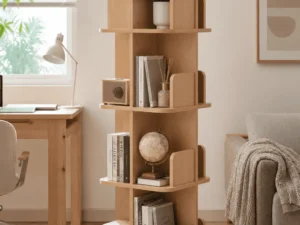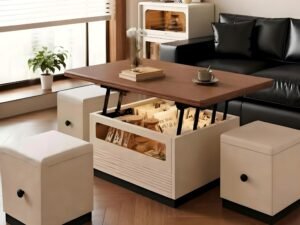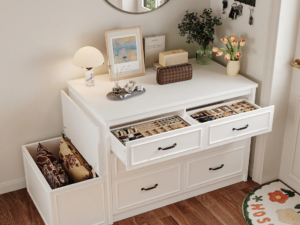
For importers, wholesalers, apartment developers, hotel project buyers, contractors, and furniture brands, choosing an entryway storage furniture factory is not only about selecting attractive hallway cabinets. In real B2B procurement, buyers need stable materials, accurate dimensions, OEM/ODM customization, export-ready packaging, predictable MOQ, practical lead time, and repeatable quality control. This guide is written from a panel furniture export factory perspective to help buyers source entryway shoe cabinets, hallway storage cabinets, hall trees, entryway benches, console cabinets, and custom flat-pack storage furniture with fewer sourcing risks.
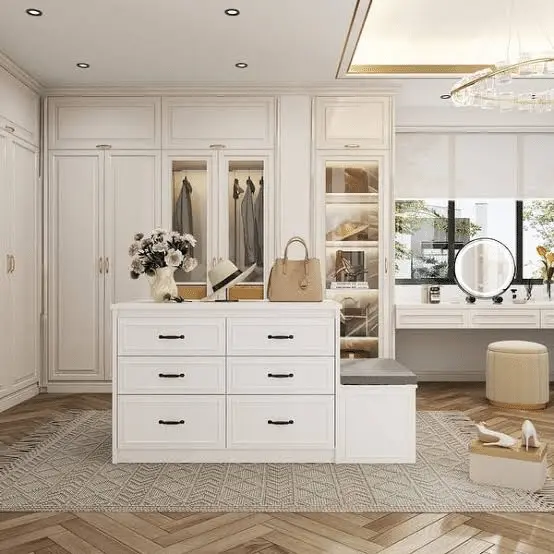
Table of Contents
- Why Buyers Search for Entryway Storage Furniture Factories
- Common B2B Applications for Entryway Storage Furniture
- What a Real Factory Should Be Able to Manufacture
- Materials for Export Entryway Storage Furniture
- OEM/ODM Customization Options Buyers Should Confirm
- MOQ, Sampling, Lead Time, and Bulk Production
- Export Packaging and Container Loading
- Quality Control Points for Entryway Furniture Orders
- 7 Factory Checks Before You Place an OEM Order
- Inquiry Checklist for Faster Quotation
- Why Work With Starwood as Your Panel Furniture Export Factory
- FAQ
- Final CTA
Why Buyers Search for Entryway Storage Furniture Factories
Entryway furniture is a high-frequency storage category for apartments, rental housing, hotels, serviced apartments, dormitories, e-commerce furniture brands, and retail furniture channels. Buyers often search for terms such as entryway storage furniture manufacturer, entryway storage furniture factory, OEM shoe cabinet supplier, hallway storage cabinet manufacturer, and flat pack entryway furniture supplier because they are not looking for a single decorative product. They need a supply solution.
From a factory point of view, entryway storage furniture has three important procurement characteristics.
First, the product must solve a real space problem. Entryways, hallways, foyers, and apartment corridors are usually narrow. Buyers need slim shoe cabinets, wall storage, bench cabinets, coat hook systems, and vertical storage structures that improve daily use without wasting floor space.
Second, the product must be export-friendly. Most B2B buyers prefer flat-pack or KD structures because they improve container loading, reduce shipping volume, and make international distribution more efficient.
Third, the product must be repeatable. A hotel project, apartment project, or retail chain program may require hundreds or thousands of units with consistent color, structure, hardware, carton marks, and installation instructions.
This is why a professional panel furniture export factory is more suitable than a general furniture trading company when buyers need long-term OEM/ODM supply.
Common B2B Applications for Entryway Storage Furniture
Apartment and Rental Housing Projects
Apartment developers and rental property operators often need entryway cabinets that are compact, durable, and easy to install. In these projects, the entryway area must handle shoes, coats, umbrellas, keys, bags, cleaning tools, and daily-use items. A good entryway storage cabinet helps keep the room organized and improves the tenant experience.
Common products for apartment projects include slim shoe cabinets, shoe benches, wall-mounted cabinets, compact hall trees, mirror cabinets, and multifunctional storage units. For large apartment projects, buyers should provide room layouts, corridor widths, wall positions, and target budget before quotation. This allows the factory to recommend practical dimensions and avoid over-designed structures.
For more complete project furniture capability, buyers can review our project manufacturing page: Project Furniture Manufacturing.
Hotel and Serviced Apartment Projects
Hotels and serviced apartments need entryway storage furniture that looks clean, matches the interior concept, and performs under frequent guest use. Unlike home furniture, hospitality furniture must consider cleaning frequency, replacement convenience, hardware durability, carton protection, and consistent finish across multiple rooms.
Typical hotel entryway items include luggage storage benches, coat hook panels, compact shoe cabinets, mirror-console combinations, wall shelves, and hallway cabinets. Buyers may also request custom laminate colors, moisture-resistant panels, metal legs, anti-scratch surfaces, or branded carton labels.
As a commercial furniture manufacturer, the factory should understand that hotel buyers care about both design consistency and operational durability.
Retail, Wholesale, and E-commerce Furniture Programs
For retail and e-commerce channels, entryway storage furniture must balance appearance, cost, carton size, assembly difficulty, and product photography. A good-looking hall tree or shoe cabinet may fail commercially if the carton is too large, the hardware is confusing, or the assembly process creates too many customer complaints.
For this reason, importers and e-commerce brands should ask the factory about flat-pack structure, hardware bags, instruction manuals, spare parts, carton drop protection, barcode labels, and private-label packaging before placing orders.
You can view our existing entryway product category here: Entryway Furniture Manufacturer.
Student Housing and Dormitory Projects
Student housing and dormitory projects require strong, simple, and cost-controlled furniture. Entryway storage units should avoid fragile decorative parts and complicated hardware. Buyers usually prefer clean melamine finishes, standard panel thickness, reinforced structure, and easy replacement parts.
For dormitory projects, we often recommend modular shoe cabinets, open shelves, coat hook panels, compact storage benches, and slim cabinets with simple assembly.
What a Real Factory Should Be Able to Manufacture
A reliable entryway storage furniture factory should be able to manufacture more than one product style. Buyers should check whether the supplier can support a complete range of hallway and foyer furniture, including:
- Shoe cabinets
- Slim shoe racks with doors
- Entryway benches with storage
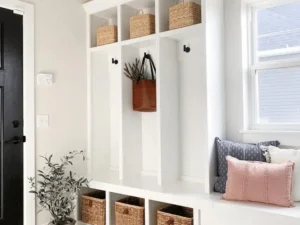
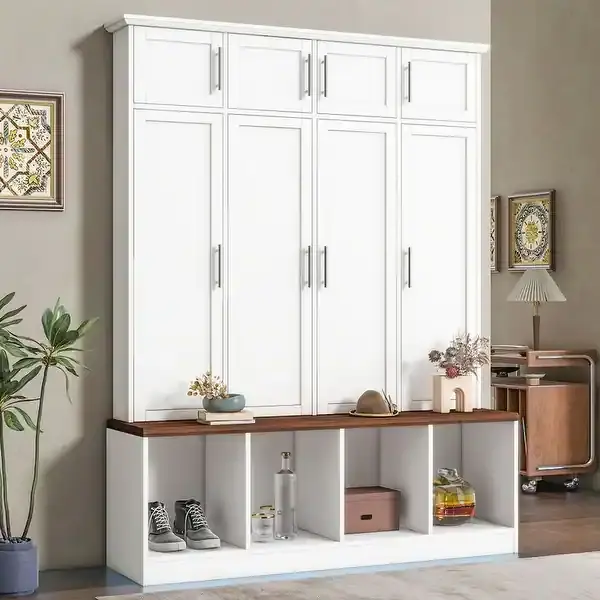
- Hall trees with coat hooks and cubbies
- Wall-mounted hallway cabinets
- Console tables and console cabinets
- Mirror cabinet sets
- Coat rack storage units
- Multifunctional storage benches
- Narrow hallway cabinets
- Apartment entryway storage systems
- Custom project entryway furniture
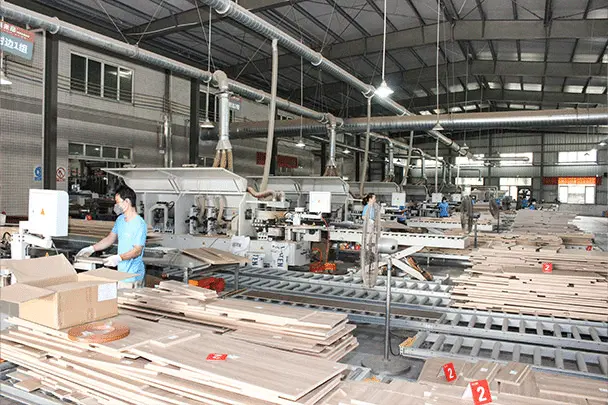
From a manufacturing perspective, entryway furniture is not difficult only because of the cabinet body. The real challenge is coordination. The factory must control panel cutting, drilling accuracy, edge banding, finish consistency, hardware fitting, packing protection, and loading efficiency.
For buyers planning a broader furniture program, it is better to work with a factory that can coordinate entryway furniture with bedroom, living room, kitchen storage, bathroom cabinets, and space-saving furniture. This makes color matching, material planning, production scheduling, and container loading more efficient.
You can learn more about our OEM and ODM service process here: OEM & ODM Furniture Manufacturing Services.
Materials for Export Entryway Storage Furniture
Material selection directly affects price, durability, carton weight, screw-holding strength, surface finish, and buyer market positioning. B2B buyers should not only ask “What is the cheapest material?” They should ask which material fits the project use scenario.
MDF
MDF is commonly used for painted surfaces, smooth decorative panels, doors, and modern cabinet designs. It offers good surface flatness and is suitable for matte, high-gloss, PVC, or painted finishes. For entryway storage furniture, MDF can be used for doors, side panels, shelves, and decorative elements.
However, buyers should confirm moisture conditions, target market, and surface treatment. If the entryway is close to outdoor moisture, cleaning areas, or humid climates, material selection should be discussed carefully.
Particle Board
Particle board with melamine or laminate finish is a cost-effective option for large-volume retail and project orders. It is widely used in flat-pack furniture because it supports efficient cutting, consistent surface finish, and competitive pricing.
For importers and apartment projects, particle board can be suitable when the product structure is properly engineered and the surface finish is well protected. Buyers should check panel density, surface quality, edge banding, drilling accuracy, and formaldehyde emission documentation.
For buyers selling into the U.S. market, composite wood products may need to meet EPA formaldehyde requirements. A practical reference is the U.S. EPA page on Formaldehyde Emission Standards for Composite Wood Products.
Plywood
Plywood can offer stronger structural performance and better screw-holding ability in certain applications. It may be used for higher-grade storage cabinets, shelves, structural parts, or markets where buyers prefer stronger board performance.
For buyers that require responsible sourcing documentation, FSC chain-of-custody information can be reviewed through the Forest Stewardship Council: FSC Chain of Custody.
Melamine, Laminate, Veneer, and Painted Finish
Most export entryway storage furniture uses melamine or laminate because these finishes are practical, cost-controlled, and easy to clean. Veneer or painted finishes can be used for higher-end projects, boutique hotel projects, or branded retail collections.
When selecting finishes, buyers should confirm:
- Color sample approval
- Surface scratch resistance
- Edge banding color match
- Batch-to-batch color consistency
- Cleaning requirements
- Replacement part availability
- Packaging protection for glossy or dark surfaces
For California-related market requirements, buyers can also review the California Air Resources Board’s composite wood product program: CARB Composite Wood Products Program.
OEM/ODM Customization Options Buyers Should Confirm
A professional OEM ODM furniture supplier should help buyers convert market requirements into manufacturable products. Entryway storage furniture can be customized in many ways, but each customization affects cost, MOQ, lead time, sampling, and packaging.
Custom Dimensions
Dimensions are critical for entryway furniture because hallways and foyer spaces are often narrow. Buyers may need slim-depth shoe cabinets, taller vertical cabinets, shorter benches, or wall-mounted structures.
For project buyers, we recommend sending:
- CAD drawings
- Room layout dimensions
- Reference photos
- Target user group
- Quantity by room type
- Target price range
- Required finish and hardware level
This helps the factory quote accurately and reduce unnecessary sampling revisions.
Custom Structure
Entryway furniture can include closed doors, flip-down shoe storage, open shelves, drawers, coat hooks, seating benches, mirror panels, umbrella storage, and wall-mounted parts.
From a factory-side view, structure should be reviewed for:
- Stability
- Assembly sequence
- Hardware availability
- Carton size
- Loading efficiency
- Installation difficulty
- Replacement part management
- User safety
A product that looks good in a rendering may still need structure optimization before mass production.
Custom Finish and Color
Importers and furniture brands often need market-specific colors such as white, oak, walnut, black, grey, natural wood grain, or two-tone combinations. Hotel and apartment buyers may require a finish that matches other room furniture.
Before bulk production, buyers should approve color boards, surface samples, edge banding samples, and hardware samples. This is especially important when one project includes entryway cabinets, wardrobes, TV cabinets, desks, and kitchen storage units.
Hardware and Accessories
Hardware affects daily use. For entryway furniture, typical hardware includes hinges, drawer slides, coat hooks, handles, adjustable feet, wall fixing parts, mirror fittings, anti-tip kits, and connectors.
Buyers should not select hardware only by the lowest price. A weak hinge or poor connector can create after-sales problems after export. For commercial projects, hardware durability should match the project use frequency.
For office or commercial furniture reference, buyers may review BIFMA’s furniture standards overview: BIFMA Standards Overview. While not every entryway cabinet requires BIFMA testing, the standards are useful as a benchmark for durability and performance thinking in commercial furniture procurement.
Branding and Private Label Packaging
For importers, distributors, and retail brands, OEM service often includes logo labels, carton marks, branded manuals, barcode labels, SKU labels, and customized packaging layout.
A good factory should confirm these details before production, not after goods are packed.
MOQ, Sampling, Lead Time, and Bulk Production
MOQ
MOQ depends on product complexity, material, finish, hardware, packaging, and whether the buyer uses standard models or new custom development. For export panel furniture, many B2B orders are discussed by container quantity because container loading efficiency affects total landed cost.
For standard or semi-custom entryway furniture, MOQ may be easier to arrange. For special colors, new hardware, unique structures, private-label packaging, or project-specific sizes, MOQ may be higher.
Buyers should discuss MOQ based on:
- One model quantity
- Mixed container possibility
- Trial order quantity
- Sample order
- Full project quantity
- Repeat order plan
- Packaging and label requirements
Sampling
Sampling is important for OEM/ODM orders. A sample allows buyers to check structure, dimensions, color, finish, hardware, assembly, packaging, and photo quality before mass production.
For new entryway storage furniture projects, buyers should confirm:
- Sample cost
- Sample lead time
- Sample freight
- Revision process
- Approved sample storage
- Color sample approval
- Hardware confirmation
- Packaging test sample
A clear sampling process reduces mass production risk.
Lead Time
Lead time depends on order quantity, material availability, finish complexity, hardware sourcing, sample approval speed, production schedule, and packaging requirements. For repeat orders with approved materials and stable structures, lead time is usually easier to control. For new OEM development, buyers should allow more time for sample review and adjustment.
A practical timeline often includes:
- Product brief and quotation
- Technical review
- Sample production
- Sample approval
- Material preparation
- Mass production
- QC inspection
- Export packing
- Container loading
- Shipment documents
Factory communication should be clear at each stage. Delays often happen when specifications are incomplete or changed too late.
Export Packaging and Container Loading
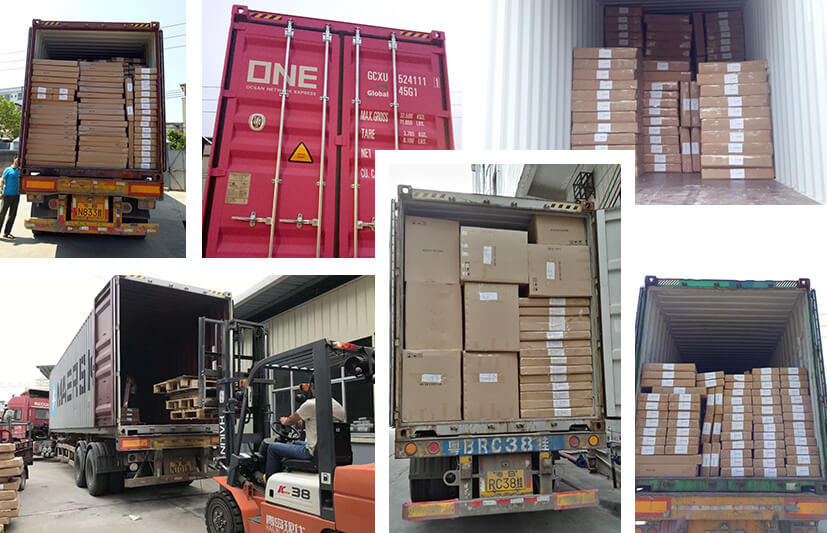
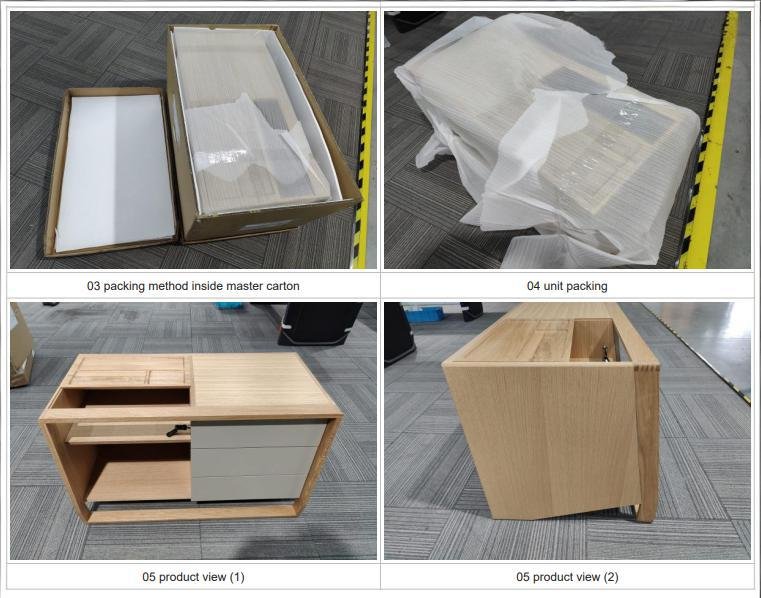
Flat-pack export packaging is one of the most important points in B2B furniture procurement. Entryway storage furniture usually includes long panels, doors, hardware, mirrors, hooks, shelves, and sometimes seating parts. If the packaging is weak, the buyer may face damaged panels, missing hardware, corner crushing, assembly complaints, and replacement costs.
A reliable factory should consider:
- Carton strength
- Edge and corner protection
- Foam or honeycomb protection
- Hardware bag separation
- Clear assembly instruction
- Product labels and carton marks
- Drop and vibration risk
- Container loading sequence
- Pallet or non-pallet loading
- Replacement part support
Buyers can review ISTA test procedure information as a packaging performance reference: ISTA Test Procedures.
If solid wood pallets or wood packaging are used for international shipment, buyers may also need to consider phytosanitary wood packaging rules. A useful reference is the International Plant Protection Convention page on adopted ISPM standards: IPPC Adopted Standards.
For factory-specific packaging capability, see our page: Flat-Pack Export Packaging.
Quality Control Points for Entryway Furniture Orders
Entryway storage furniture looks simple, but QC must be detailed. Buyers should confirm whether the factory checks both product quality and packaging quality before shipment.
Important QC points include:
Panel Accuracy
Panel size, drilling position, hole alignment, edge banding, and connector position must be accurate. If drilling is inaccurate, the cabinet may be difficult to assemble or unstable after installation.
Surface Finish
Surface defects are easy to notice on entryway furniture because it is placed near the entrance of a room. Buyers should check scratches, color difference, glue marks, edge damage, bubbles, stains, and inconsistent gloss.
Hardware Fitting
Hinges, slides, handles, hooks, connectors, wall fixing parts, and anti-tip kits should be checked before packing. Missing or low-quality hardware can create serious customer complaints.
Structure Stability
Benches, hall trees, and tall shoe cabinets need stable structure. If the product is tall or wall-mounted, anti-tip hardware and installation instructions are important.
Assembly Test
For new OEM designs, the factory should assemble the product before mass production and again during inspection. This helps identify wrong holes, missing parts, unclear instructions, or unstable structures.
Packaging Test
Packaging should protect long panels, doors, corners, mirrors, and hardware. For dark finishes and high-gloss surfaces, protection must be stronger because scratches are more visible.
For general quality management reference, buyers can review ISO 9001 information from ISO: ISO 9001 Quality Management. A furniture factory should have practical internal QC procedures even when a buyer does not require formal certification.
7 Factory Checks Before You Place an OEM Order
1. Does the Factory Understand B2B Project Use?
A factory that only thinks like a product seller may focus on appearance. A project-oriented factory should ask about use scenario, room layout, installation conditions, target market, order quantity, packaging, and delivery schedule.
For apartments, hotels, student housing, and rental properties, the product must be practical, repeatable, and easy to install.
2. Can the Factory Support OEM and ODM Development?
OEM means the buyer provides the design, drawing, sample, or specification. ODM means the factory helps develop products based on market needs, room function, target price, and structure requirements.
For entryway storage furniture, ODM capability is useful when buyers want a new product line for narrow hallways, compact apartments, hotel rooms, or e-commerce storage collections.
3. Are Materials and Emission Documents Clear?
For MDF, particle board, plywood, and other composite panels, buyers should confirm material grade, thickness, finish, edge banding, supplier documentation, and market compliance requirements. If the products are sold into regulated markets, buyers should request relevant documents before mass production.
4. Is the Packaging Suitable for Export?
A low factory price can become expensive if packaging causes damage. Buyers should check carton structure, protection method, hardware packing, labels, and container loading plan. For flat-pack entryway storage furniture, packaging is part of the product solution.
5. Is MOQ Realistic for Your Business Model?
Importers, wholesalers, e-commerce sellers, and project contractors may have different MOQ expectations. A good factory should explain MOQ based on production reality, not give unclear promises.
Buyers should also ask whether mixed container orders are possible for coordinated entryway furniture, storage cabinets, bedroom furniture, and living room furniture.
6. Is Lead Time Based on Real Production Planning?
Buyers should be careful with unrealistic lead time promises. A reliable factory should consider material purchasing, sample approval, production capacity, finishing, QC, packaging, and shipment schedule.
7. Can the Factory Communicate Clearly?
Good B2B cooperation depends on communication. Buyers should evaluate how quickly the factory responds, whether specifications are confirmed in writing, whether technical questions are answered clearly, and whether the supplier can provide practical suggestions before problems happen.
Inquiry Checklist for Faster Quotation
To receive a faster and more accurate quotation for OEM entryway storage furniture, buyers should send the following information:
- Product type: shoe cabinet, hall tree, bench cabinet, console cabinet, mirror cabinet, or custom storage unit
- Target dimensions
- Reference photo, drawing, or CAD file
- Material preference: MDF, particle board, plywood, melamine, laminate, veneer, painted finish
- Surface color and finish
- Hardware requirement
- Quantity or container plan
- Target market
- Project type: retail, wholesale, hotel, apartment, dormitory, e-commerce, or contractor project
- Packaging requirement
- Private label requirement
- Testing or compliance requirement
- Target price level
- Delivery schedule
- Destination port or country
The more complete the inquiry, the more accurate the factory quotation will be.
Why Work With Starwood as Your Panel Furniture Export Factory
Starwood Industry Co., Ltd. is a China-based flat-pack panel furniture manufacturer serving global brands, importers, wholesalers, e-commerce sellers, and commercial project buyers. Our product range covers entryway furniture, bedroom furniture, living room furniture, kitchen storage, bathroom cabinets, home office furniture, kids’ room furniture, and space-saving storage solutions.
For entryway storage furniture, we support OEM and ODM development for shoe cabinets, hallway storage cabinets, hall trees, entryway benches, mirror cabinets, console cabinets, and multifunctional storage units. We can customize dimensions, materials, finishes, hardware, packaging, carton marks, and private-label details according to buyer requirements.
Our factory-side value is not only making cabinets. We help buyers develop manufacturable products, control cost, improve flat-pack structure, prepare export packaging, and support repeatable bulk supply for retail, wholesale, apartment, hotel, and commercial projects.
You can learn more about our company here: About Our Factory.
FAQ
1. Are you an entryway storage furniture manufacturer or a trading company?
We are a panel furniture manufacturer in China, producing flat-pack entryway storage furniture for importers, wholesalers, retailers, e-commerce brands, apartment projects, hotel projects, contractors, and commercial furniture buyers.
2. What types of entryway storage furniture do you manufacture?
We manufacture shoe cabinets, slim shoe racks, hallway storage cabinets, entryway benches, hall trees, coat hook cabinets, console cabinets, mirror cabinet sets, and multifunctional entryway storage units.
3. Do you provide OEM and ODM service?
Yes. We support OEM production based on buyer drawings, samples, or specifications, and ODM development based on target market, room size, style direction, function, price level, and packaging requirements.
4. What materials can be used for entryway furniture?
Common materials include MDF, particle board, plywood, melamine board, laminate panels, veneer finishes, painted panels, metal hardware, mirrors, hooks, handles, hinges, drawer slides, and wall fixing accessories.
5. Can entryway storage furniture be customized for apartments and hotels?
Yes. We can customize size, depth, structure, color, finish, hardware, packaging, and installation details for apartment projects, hotel rooms, serviced apartments, student housing, rental properties, and commercial interiors.
6. What is the MOQ for OEM entryway furniture?
MOQ depends on product structure, material, finish, hardware, packaging, and customization level. For export orders, many buyers discuss MOQ by container quantity or mixed container plan. Please send your product details for a practical quotation.
7. Can you support flat-pack export packaging?
Yes. We specialize in flat-pack panel furniture and can support export packaging, carton labels, hardware bags, assembly instructions, private-label packaging, and container loading planning.
8. How long does sampling take?
Sample lead time depends on design complexity, material availability, finish requirement, and hardware selection. For new OEM/ODM products, the sampling process should include structure review, sample production, buyer approval, and possible revision before mass production.
9. What information should I send for a quotation?
Please send product drawings or reference photos, dimensions, material preference, finish requirement, hardware details, quantity, target market, packaging requirement, and project schedule. This helps us provide a faster and more accurate quotation.
10. Do you supply entryway furniture for commercial projects?
Yes. We supply entryway storage furniture for apartments, hotels, serviced apartments, student housing, rental properties, retail chains, e-commerce brands, wholesalers, and contractors.
Final CTA
Looking for a reliable entryway storage furniture factory for OEM or ODM supply?
Send us your product drawings, reference photos, dimensions, material requirements, quantity, target market, and packaging needs. Our team can review your project, recommend practical manufacturing solutions, and provide a factory quotation for bulk entryway storage furniture, shoe cabinets, hallway cabinets, hall trees, and custom flat-pack panel furniture.
Start your OEM/ODM entryway furniture project here: Contact Starwood
Explore factory service: OEM & ODM Furniture Manufacturing Services
View entryway products: Entryway Furniture Manufacturer
For apartment and hotel projects: Project Furniture Manufacturing