If you are sourcing kitchen cabinets for wholesale, hotel apartments, rental housing, real estate projects, contractor supply or private-label furniture programs, choosing the right custom kitchen cabinet manufacturer is a purchasing decision, not only a design decision. A reliable OEM kitchen cabinet factory should understand drawings, material selection, production accuracy, export packaging, MOQ planning, lead time control and repeat-order quality. This guide is written for B2B buyers who need practical factory-side sourcing advice before sending an RFQ or placing a sample order.
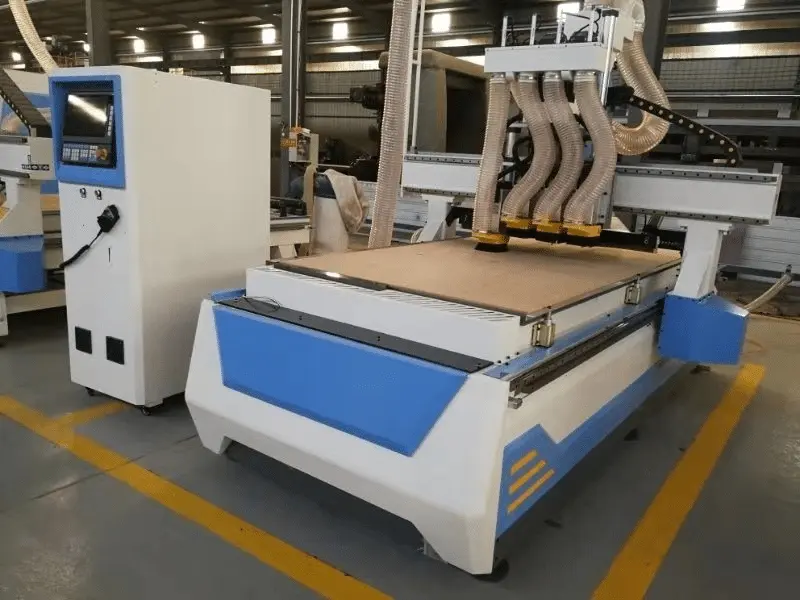
Table of Contents
- Why B2B Buyers Search for a Custom Kitchen Cabinet Manufacturer
- What a Real Custom Kitchen Cabinet Factory Should Do
- Main Application Scenarios for Custom Kitchen Cabinet Orders
- Materials Buyers Should Confirm Before Quotation
- OEM/ODM Customization Options for Cabinet Projects
- MOQ, Sample Time and Bulk Production Lead Time
- Export Packaging and Container Loading Details
- Factory Quality Control Points Buyers Should Check
- 9 Smart OEM Tips for Choosing the Right Supplier
- Why Choose a Panel Furniture Export Factory
- Buyer RFQ Checklist
- FAQ
- Final Inquiry CTA
Why B2B Buyers Search for a Custom Kitchen Cabinet Manufacturer
For importers, wholesalers, contractors, furniture brands and project procurement teams, kitchen cabinets are not simple decoration products. They are part of a complete supply chain system involving design drawings, panel materials, hardware, packaging, installation and after-sales risk.
That is why many buyers search for terms such as custom kitchen cabinet manufacturer, custom kitchen cabinet factory, custom kitchen cabinet OEM, OEM kitchen cabinet manufacturer and panel furniture export factory. These search terms usually come from buyers who already know what they need: a factory that can produce according to drawings, support bulk orders and deliver stable quality for commercial projects.
A custom kitchen cabinet supplier for B2B buyers should not only provide nice product photos. The supplier should be able to review the cabinet structure, suggest suitable materials, confirm drilling logic, prepare samples, control mass production and design export-ready packaging.
For apartment projects, the focus is repeatable cabinet modules and cost control. For hotel kitchenettes, the focus is appearance consistency and space efficiency. For wholesalers, the focus is stable specifications and repeat orders. For private-label brands, the focus is product differentiation, packaging and brand presentation.
In real factory cooperation, the buyer is not only purchasing cabinets. The buyer is purchasing production reliability.
What a Real Custom Kitchen Cabinet Factory Should Do
A real custom kitchen cabinet factory should be able to support the complete production process from inquiry to shipment. The difference between a general seller and a professional manufacturer becomes clear when the buyer asks detailed questions.
Review Drawings Before Quotation
Before quoting, the factory should review cabinet drawings, sizes, structure, material requirements, hardware position and packaging method. If there is a potential production problem, the factory should point it out before sampling.
For example, a tall pantry cabinet may look simple in a drawing, but the factory needs to consider board thickness, shelf loading, back panel stability, hinge quantity and carton size. A sink cabinet may need special structure adjustment because of plumbing space. A drawer cabinet needs accurate slide positioning and load matching.
A good factory does not only quote. It helps buyers avoid future problems.
Match Materials with Market Positioning
Different buyers have different product goals. A rental apartment cabinet may need practical melamine panels and cost control. A hotel apartment project may need better surface finish and stronger hardware. A retail cabinet program may need attractive packaging and easy assembly instructions.
A custom kitchen cabinet manufacturer should recommend materials according to the buyer’s target market, not only according to the lowest price.
Support OEM and ODM Production
OEM production is suitable when the buyer already has drawings, samples, specifications or brand requirements. ODM production is suitable when the buyer has a market idea but needs factory support for structure, material selection, finish matching and cost optimization.
Starwood Industry Co., Ltd. supports OEM/ODM panel furniture manufacturing for global brands, importers, wholesalers and project buyers. You can review the service page here: OEM & ODM Furniture Manufacturing Services.
Control Production and Export Packing
Kitchen cabinet manufacturing requires accurate cutting, clean edge banding, precise drilling, correct hardware matching and strong packaging. For export orders, the factory must also consider carton strength, hardware bags, assembly instructions, labels, loading photos and container loading.
A factory with export experience understands that product quality and packaging quality must work together.
Main Application Scenarios for Custom Kitchen Cabinet Orders
A professional custom kitchen cabinet manufacturer should understand how different buyers use the products. The same cabinet design may not be suitable for every market or project.
Apartment and Rental Housing Projects
Apartment projects usually need many repeated cabinet sets. Buyers may need base cabinets, wall cabinets, sink cabinets, drawer units, pantry cabinets and compact storage cabinets for multiple units.
For rental housing, the key purchasing points are stable quality, easy cleaning, practical hardware and controlled cost. Cabinets should be strong enough for frequent use and simple enough for quick installation.
Packaging should also be planned by unit, room type or cabinet type. This helps project installation teams reduce confusion on site.
Hotel and Serviced Apartment Kitchens
Hotel apartments and serviced apartments often require compact kitchen cabinets with clean design, good surface finish and reliable hardware. The cabinets may be used in small kitchenettes, studio rooms, long-stay rooms or staff accommodation.
For this type of project, buyers usually care about appearance consistency, color matching, door gap control and installation efficiency. A factory should keep approved color samples and production records for future repeat orders.
Wholesale and Distribution
Wholesalers and distributors need cabinets that are easy to stock, easy to ship and easy to sell. Standardized dimensions, stable materials and simple assembly are very important.
For distribution programs, the custom kitchen cabinet supplier should keep specifications stable across multiple orders. Changing board thickness, color tone or hardware without approval can create serious customer complaints.
Retail and Private Label Programs
Retail buyers need more than products. They need packaging, instruction manuals, SKU labels, carton marks, barcode labels and consistent product information.
A custom kitchen cabinet OEM factory should support private-label requirements such as logo labels, branded manuals, model numbers, retail-ready cartons and hardware kits.
For retail and e-commerce programs, clear instructions and organized hardware bags can reduce customer service pressure.
Contractor and Project Furniture Supply
Contractors need predictable lead time, organized packing and clear shipment documents. For hotel, apartment and commercial projects, cabinets should be delivered according to project schedule and installation plan.
Starwood also supports broader project furniture manufacturing for buyers who need kitchens, wardrobes, bathroom cabinets, storage cabinets and other panel furniture categories together. Learn more here: Project Furniture Manufacturing.
Materials Buyers Should Confirm Before Quotation
Material selection affects cost, durability, surface appearance, weight, packaging and compliance. Before asking for price, buyers should confirm the material direction.
Particle Board
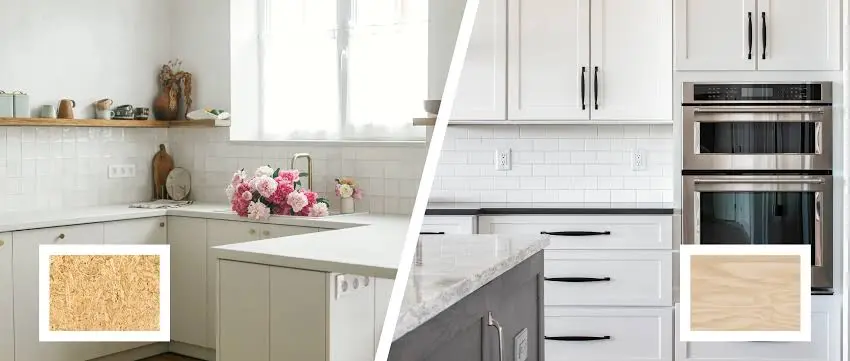
Particle board is widely used for cost-effective kitchen cabinet production. It is suitable for large-volume orders, rental housing, wholesale programs and price-sensitive markets.
With melamine surface and good edge banding, particle board can provide a practical balance between appearance and cost. Buyers should confirm board thickness, density, surface texture and edge banding quality.
MDF
MDF has a smooth surface and is commonly used for cabinet doors, painted panels, PET doors and decorative fronts. It is suitable when buyers need a cleaner surface or modern appearance.
For many cabinet programs, MDF may be used for doors while the cabinet carcass uses particle board, plywood or melamine board depending on budget and application.
Plywood
Plywood is often selected when buyers need stronger structure, better screw holding or higher product positioning. It may be used for cabinet carcasses, shelves, structural parts or project cabinet systems.
Plywood cost can vary depending on grade, thickness, veneer and performance requirement. Buyers should confirm the exact specification before quotation.
Melamine Board
Melamine board is very common for custom kitchen cabinet manufacturing. It offers many wood grains, solid colors and surface textures. It is easy to clean and suitable for flat-pack cabinet production.
For apartment kitchens, rental housing and modular cabinet programs, melamine board is often a practical choice.
Laminate, PET, Veneer and Painted Finish
For higher-end cabinet programs, buyers may request laminate, PET, veneer or painted finishes. These options can improve appearance but may increase MOQ, production time and packaging requirements.
Before mass production, buyers should approve actual physical samples. Digital images are not enough for color confirmation.
Compliance and Documentation
For U.S. market sourcing, composite wood products may need to meet formaldehyde emission requirements. The U.S. EPA explains that hardwood plywood, medium-density fiberboard and particleboard, as well as finished goods containing these materials, are covered under TSCA Title VI requirements. Buyers can review the official EPA page here: EPA Formaldehyde Emission Standards for Composite Wood Products.
If products are supplied into California-related markets, buyers may also need to review CARB composite wood product requirements. Reference: CARB Composite Wood Products Publications.
For buyers requesting responsible sourcing, FSC chain of custody certification may be relevant. FSC explains that chain of custody certification verifies FSC-certified material through the supply chain from forest to market. Reference: FSC Chain of Custody Certification.
Buyers should tell the factory the destination market and required documents before quotation. Compliance requirements can affect material selection, cost, MOQ and lead time.
OEM/ODM Customization Options for Cabinet Projects
Custom kitchen cabinet production is more than changing the color. A strong OEM cabinet factory should support structure, dimensions, materials, hardware, packaging and branding.
Custom Cabinet Dimensions
Buyers can customize base cabinet width, wall cabinet height, sink cabinet structure, drawer cabinet size, pantry cabinet height, corner cabinet design and kitchen island dimensions.
For project orders, the best approach is often to standardize several cabinet modules instead of making every unit different. Standardization helps reduce production cost, installation errors and after-sales claims.
Door Style and Front Design
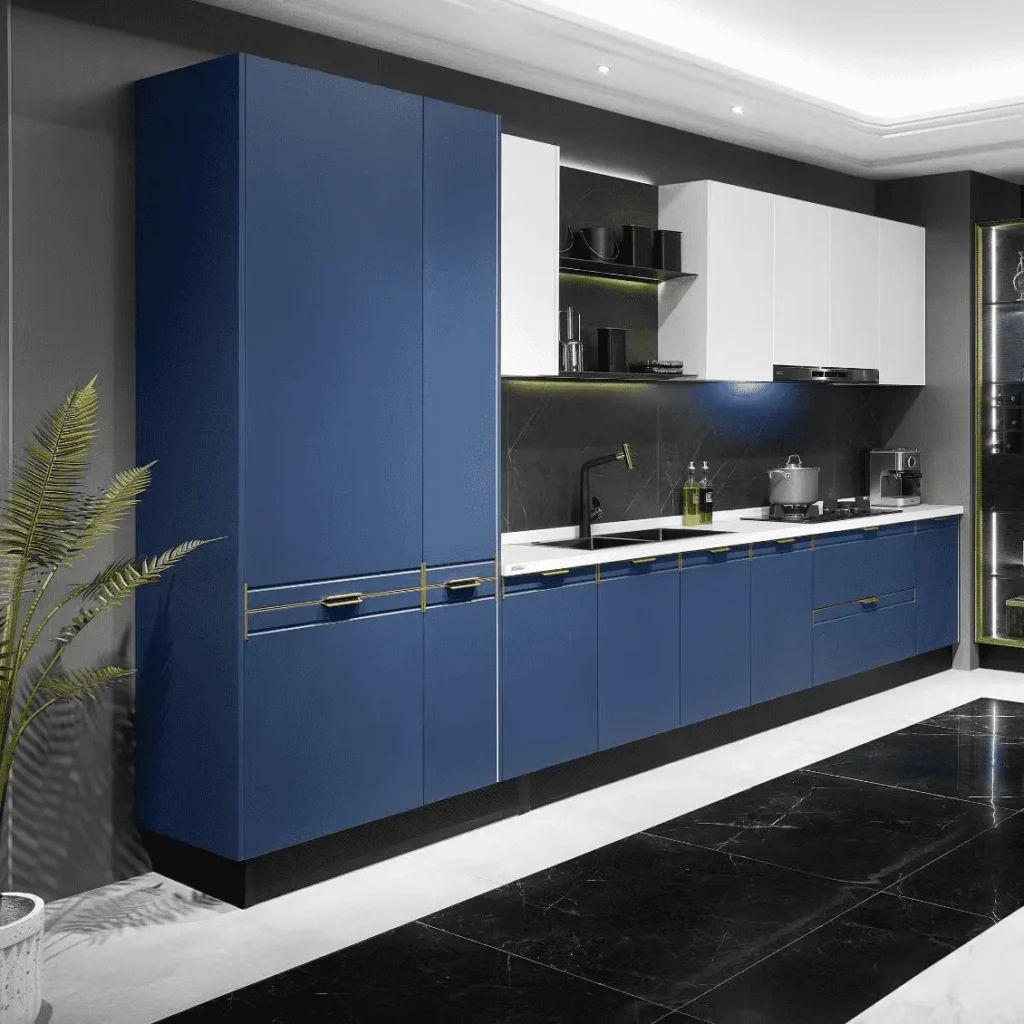
Door panels decide much of the cabinet appearance. Common choices include slab doors, shaker-style doors, handleless doors, framed-look doors, matte doors, high-gloss doors and wood-grain doors.
The factory should confirm whether the selected door style is suitable for the target cost and production method. Some premium door designs may require higher MOQ or longer finish processing time.
Hardware and Functional Parts
Hardware affects daily use. Buyers should confirm hinges, drawer slides, handles, shelf supports, cam locks, screws, wall mounting accessories and soft-close options.
For hotel and apartment projects, durable hardware can reduce maintenance cost. For retail cabinets, hardware kits must be packed clearly so end users can assemble the product easily.
Surface Finish and Color Matching
Surface consistency is important for repeat orders. Buyers should provide color codes, physical samples or approved finish boards. The factory should keep confirmed samples for future production.
For large projects, cabinet doors, side panels and exposed panels should follow the same approved finish standard.
Private Label Packaging
Many importers, wholesalers and retailers need private-label support. A custom kitchen cabinet OEM factory can provide carton marks, logo labels, barcode labels, SKU labels, assembly instructions, hardware bags and model numbers.
Good packaging helps buyers manage overseas warehouses, retail channels and project installation sites.
MOQ, Sample Time and Bulk Production Lead Time
MOQ and lead time are important for every B2B buyer, but they depend on product details.
MOQ Planning
The MOQ for custom kitchen cabinets depends on material type, finish, color, hardware, cabinet structure, packaging design and customization level.
Standard melamine cabinet modules usually have easier MOQ planning. Special colors, painted finishes, PET doors, custom hardware and private packaging may require higher MOQ because the factory needs to purchase materials and set up production.
For export orders, container-based purchasing is usually more cost-effective. Buyers can plan by 20GP, 40GP or 40HQ container depending on product mix and order size.
Sample Development
For new OEM or ODM cabinet projects, sample development is strongly recommended. A sample helps confirm structure, dimensions, drilling, hardware, finish, packaging and assembly.
A practical sample process usually includes:
Requirement discussion
Drawing review
Material selection
Quotation confirmation
Sample production
Trial assembly
Packaging review
Buyer approval
Pre-production adjustment
Skipping the sample stage may save time at the beginning, but it increases risk during bulk production.
Bulk Production Lead Time
Bulk production lead time depends on order quantity, material availability, finish process, factory schedule and packaging complexity.
A reliable custom kitchen cabinet manufacturer should explain the production schedule clearly. Buyers should know when materials will be purchased, when cutting starts, when edge banding and drilling are arranged, when QC is done and when loading is planned.
For project orders, buyers should allow enough time for sample approval, production, inspection, shipment and site installation.
Export Packaging and Container Loading Details
For international cabinet orders, packaging is not only protection. It is part of the product system.
Flat-Pack and Knock-Down Packaging
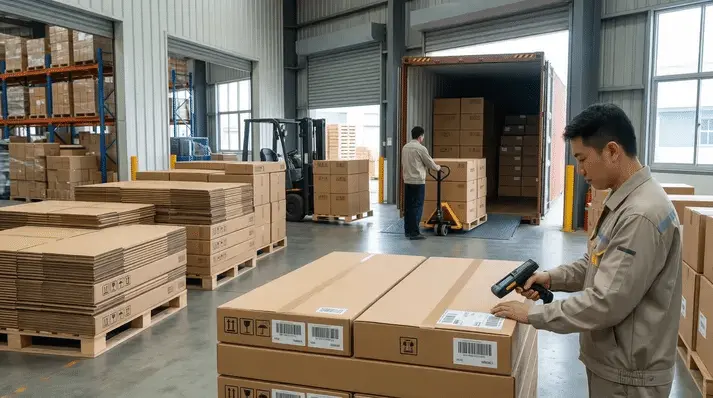
Flat-pack packaging is suitable for export kitchen cabinets because it reduces shipping volume and improves container loading efficiency. However, the packaging must protect panels, edges, corners, hardware and surface finish.
Common packaging details include reinforced cartons, foam protection, corner guards, edge protection, hardware bags, instruction manuals, model labels and carton marks.
For RTA cabinet programs, each carton should be easy to identify and easy to assemble.
Carton Marks for Project Orders
For apartment and hotel projects, carton marks should follow the installation logic. Cartons may be marked by building, floor, room, unit type, cabinet type or installation sequence.
This helps contractors and installation teams find the correct cabinets faster. A well-planned carton system can reduce site confusion and installation delays.
Container Loading
Flat-pack kitchen cabinets can improve loading efficiency, but only when carton sizes and product mix are planned carefully. The factory should consider carton strength, product weight, loading sequence and damage prevention.
Loading photos, packing lists and carton details are useful for importers and project buyers. They help with customs clearance, warehouse receiving and project tracking.
Wood Packaging Requirements
If wooden pallets, crates or wood supports are used for international shipment, buyers should check ISPM 15 requirements. USDA APHIS explains that regulated wood packaging material used to support, protect or carry cargo must be treated and certified under ISPM 15. Reference: USDA APHIS Wood Packaging Material Guidance.
Even when cabinets are packed in cartons, any wooden pallet or support material should be confirmed before shipment.
Factory Quality Control Points Buyers Should Check
A serious custom kitchen cabinet factory should control quality from material inspection to final loading.
Board Thickness and Material Check
Before production, the factory should check board thickness, surface condition, color, density and material labels. If the buyer requires specific documents or test reports, they should be confirmed before mass production.
Cutting Accuracy
Kitchen cabinets rely on accurate panel cutting. If panel size is wrong, the cabinet may have poor gaps, weak structure or difficult assembly.
CNC cutting helps improve consistency for repeat orders and project quantities.
Edge Banding Quality
Edge banding is critical for kitchen cabinets. Poor edge banding can cause peeling, rough edges, water sensitivity or poor appearance.
Buyers should pay attention to edge banding thickness, glue line, trimming quality and corner finishing.
Drilling Accuracy
Custom kitchen cabinets require accurate drilling for hinges, drawer slides, cam locks, dowels, screws and shelf supports.
Wrong drilling positions can cause installation problems, missing alignment and after-sales complaints. During sampling, the cabinet should be assembled and checked.
Hardware Fitting
Hinges, drawer slides, handles and connectors must match the board thickness and cabinet structure. A good factory will test hardware fitting during sampling and random inspection.
Surface Inspection
Surface scratches, color difference, glue marks, dents and edge defects should be checked before packing. Dark colors, high-gloss finishes and visible side panels need extra attention.
Packing Inspection
Before shipment, the factory should check carton labels, hardware bags, instruction manuals, model numbers, quantity and packing list accuracy.
For B2B buyers, missing hardware or wrong carton marks can create large after-sales problems.
Sustainability Reference for Commercial Furniture Buyers
For commercial furniture and project buyers, sustainability references may appear in tender documents or buyer requirements. BIFMA states that the ANSI/BIFMA e3 Furniture Sustainability Standard is used to assess environmental, health, wellness and social impacts of furniture products. Buyers can review the official BIFMA reference here: ANSI/BIFMA e3 Furniture Sustainability Standard.
Even if a project does not require certification, this type of standard helps buyers ask better questions about materials, durability, packaging and responsible manufacturing.
9 Smart OEM Tips for Choosing the Right Supplier
Tip 1: Ask Whether the Supplier Is a Real Manufacturer
A real custom kitchen cabinet manufacturer should understand production details, not only sales language. Ask about cutting, edge banding, drilling, hardware packing, QC inspection and export packaging.
If the supplier cannot explain the production process clearly, the buyer should be careful.
Tip 2: Send a Complete RFQ
A complete RFQ saves time and improves quotation accuracy. Buyers should send cabinet drawings, dimensions, materials, finish requirements, hardware details, order quantity, packaging request, destination market and target price if available.
A vague inquiry usually leads to a vague quotation.
Tip 3: Confirm the Application Scenario
Tell the factory whether the cabinets are for wholesale, retail, apartment projects, hotel projects, rental housing or contractor supply. The application affects material choice, hardware level, packaging and cost structure.
A good factory can suggest different solutions for different scenarios.
Tip 4: Compare Materials Before Comparing Price
Two cabinets may look similar but use different board thickness, density, surface finish, hardware and packaging. Buyers should compare specifications before comparing prices.
The lowest price may not be the best total purchasing cost.
Tip 5: Approve a Sample Before Bulk Orders
For new custom cabinet projects, sample approval is important. The sample should be assembled, checked and reviewed for structure, finish, hardware, drilling and packaging.
A sample helps both buyer and factory reduce bulk production risk.
Tip 6: Check Packaging Before Shipment
Packaging affects damage rate, installation efficiency and customer satisfaction. Ask for carton layout, hardware bag photos, instruction manual, carton marks and protection method before mass production.
For retail and e-commerce programs, packaging quality can directly affect reviews and returns.
Tip 7: Ask About Repeat Order Control
B2B buyers usually need repeat orders. A reliable factory should keep drawings, material codes, finish samples, hardware specifications and packing records.
Repeat order control helps maintain stable quality and reduces communication cost.
Tip 8: Check Project Delivery Experience
For apartment, hotel and contractor orders, the factory should understand project delivery logic. This includes carton marks by room, floor, unit or cabinet type, clear packing lists, loading photos and installation-friendly packaging.
A factory with project experience can help buyers reduce site confusion.
Tip 9: Choose a Factory That Supports More Panel Furniture Categories
Many buyers do not only need kitchen cabinets. They may also need wardrobes, bathroom cabinets, storage cabinets, desks, TV cabinets, beds or full apartment furniture packages.
Working with an OEM/ODM panel furniture export factory can help buyers keep materials, finishes, packaging and communication more consistent across different product categories.
Why Choose a Panel Furniture Export Factory
A panel furniture export factory can provide better support for B2B buyers who need scalable production, custom dimensions, flat-pack packaging and long-term supply.
Starwood Industry Co., Ltd. is a China-based flat-pack panel furniture manufacturer supporting OEM/ODM production for global brands, importers, wholesalers, e-commerce sellers, real estate projects, hospitality projects and commercial spaces.
Our manufacturing focus includes kitchen cabinets, storage cabinets, wardrobes, bathroom cabinets, bedroom furniture, living room furniture, space-saving furniture and project furniture.
A buyer may start with custom kitchen cabinets and later expand to apartment wardrobes, bathroom vanities, storage furniture or complete project furniture packages. Working with one panel furniture factory helps control color consistency, material coordination, packaging style and shipment planning.
Useful internal pages:
Home – Flat-Pack Furniture Manufacturer in China
About Our Factory
OEM & ODM Furniture Manufacturing Services
Project Furniture Manufacturing
Kitchen Cabinet Manufacturer in China
Buyer RFQ Checklist
Before contacting a custom kitchen cabinet manufacturer, prepare the following information:
Product type: base cabinet, wall cabinet, sink cabinet, drawer cabinet, pantry cabinet or full kitchen set
Application: wholesale, retail, hotel, apartment, rental housing, contractor project or private label
Quantity: sample order, trial order, container order or project quantity
Dimensions: width, height, depth and layout drawings
Material: particle board, MDF, plywood, melamine board or required panel type
Finish: melamine, laminate, PET, lacquer, veneer, matte, gloss or custom color
Door style: slab door, shaker door, handleless door or customized design
Hardware: hinges, drawer slides, handles, connectors and soft-close request
Packaging: flat-pack, RTA, retail-ready carton, private label or project carton marks
Compliance: TSCA Title VI, CARB, FSC-related request, E1 or buyer-specific standard
Lead time: sample deadline, production deadline and shipment schedule
Destination: country, port and shipping method
Documents: commercial invoice, packing list, loading photos, certificates or test reports if required
The more complete the RFQ, the faster the factory can provide a realistic quotation.
FAQ
1. Are you a custom kitchen cabinet manufacturer or supplier?
We are a China-based OEM/ODM panel furniture manufacturer supporting custom kitchen cabinets, flat-pack cabinets, storage cabinets and project furniture for importers, wholesalers, contractors, hotel buyers, apartment developers and furniture brands.
2. Can you produce custom kitchen cabinets according to drawings?
Yes. Buyers can provide CAD drawings, cabinet lists, reference photos, samples or dimensions. We can review the structure, material, finish, hardware, packaging and production details before quotation and sampling.
3. Do you support OEM kitchen cabinet manufacturing?
Yes. We support OEM production based on buyer drawings, specifications, samples, brand requirements and packaging standards.
4. Do you support ODM cabinet development?
Yes. For buyers who have a market idea but no complete drawings, we can support ODM development, including structure planning, material selection, finish matching, hardware options, sample production and packaging suggestions.
5. What materials can be used for custom kitchen cabinets?
Common options include particle board, MDF, plywood, melamine board, laminate, PET, veneer and painted finishes. The best choice depends on target market, budget, durability requirement and project application.
6. What is the MOQ for custom kitchen cabinet orders?
MOQ depends on material, finish, hardware, customization level and packaging requirements. Container-based orders are usually more efficient for export production. Buyers can send product details for a practical MOQ suggestion.
7. Can you make kitchen cabinets for hotel and apartment projects?
Yes. We support custom kitchen cabinets for hotels, serviced apartments, rental housing, student housing, real estate projects and contractor supply.
8. Can you provide private-label packaging?
Yes. We can support logo labels, barcode labels, SKU labels, carton marks, hardware bags, instruction manuals and buyer-specific packaging requirements.
9. How do you control quality before shipment?
We check materials, cutting accuracy, edge banding, drilling positions, hardware fitting, surface finish, packing details, carton labels and loading preparation. For new projects, sample approval is recommended before mass production.
10. What should I send for a quotation?
Please send drawings or reference photos, cabinet dimensions, materials, finish requirements, hardware details, quantity, packaging request, destination market, compliance needs and target price if available.
Final Inquiry CTA
Looking for a reliable custom kitchen cabinet manufacturer, OEM cabinet factory or panel furniture export supplier for your next wholesale, retail, hotel, apartment or contractor project?
Send us your drawings, cabinet list, reference photos, materials, finish requirements, order quantity, packaging request and destination market. Our factory team can review your project and provide practical suggestions for material selection, structure optimization, MOQ, sample development, lead time, export packaging and quotation.
Contact Starwood Industry Co., Ltd. today to start your custom kitchen cabinet OEM/ODM project.