Table of Contents
- What is a soft-close mechanism
- Market trends and demand growth for soft-close cabinets
- Core benefits: quieter kitchens and longer cabinet life
- How to choose kitchen cabinets with soft-close features
- Customer feedback and market acceptance
- Export sales strategies to promote soft-close kitchen cabinets
- FAQ
Introduction: Why “Soft Close” Sells in Today’s Kitchen
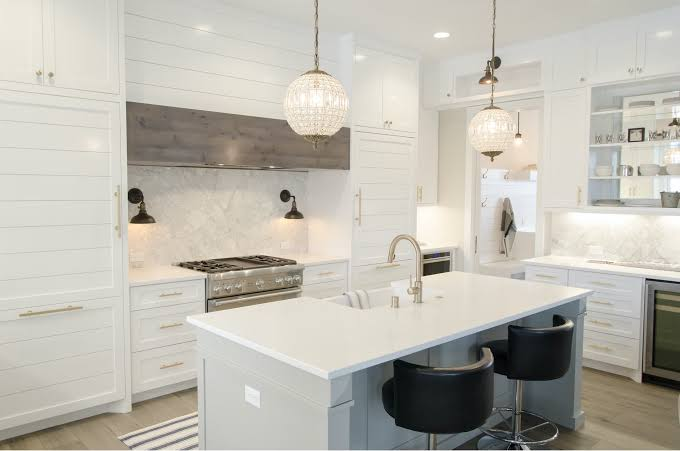
In modern kitchens, consumers don’t only compare cabinet door styles or kitchen cabinet colors. They also compare how the kitchen feels in daily use. This emphasis on user experience is why soft close kitchen cabinets are a high-impact feature. They shine in retail showrooms, online listings, and contract projects.
For B2B buyers, soft close is not a “nice extra.” It is a measurable lever. It can improve customer satisfaction and reduce complaints. It can also increase perceived value. This is especially true for assembled kitchen cabinets, kitchen RTA cabinets, and project packages where durability and repeatable quality matter.
This article explains what soft-close mechanisms are. It addresses why demand is rising and how to source reliably. The article also covers how to market the feature effectively for retail programs, OEM/ODM manufacturing, and hotel/apartment projects. It does all of this without turning your product page into a technical manual.
1. What Is a Soft-Close Mechanism
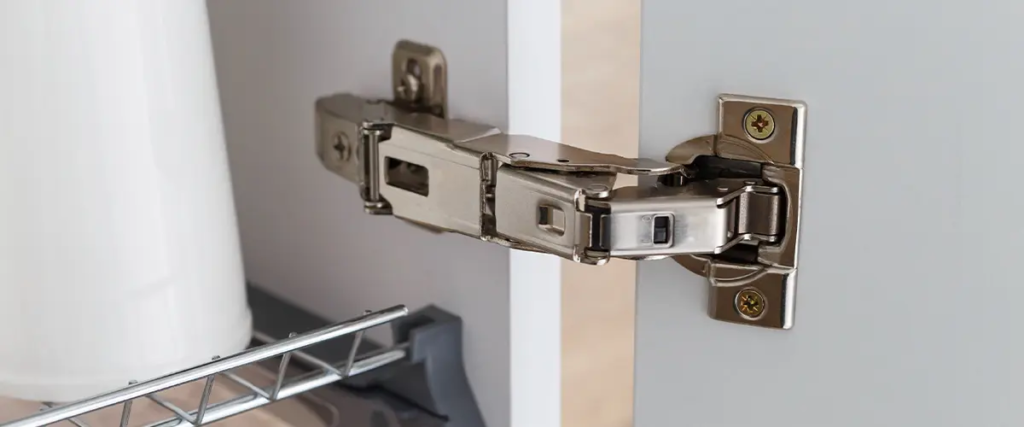
A soft-close mechanism is a damping system built into cabinet hardware. It slows a cabinet door or drawer during the final closing phase. Instead of slamming, the door closes gently and quietly. In practice, soft close is most commonly integrated into:
1.1 Soft-close hinges for cabinet doors
Soft-close hinges include a damper (often hydraulic or spring-assisted damping) that absorbs the closing force. The mechanism may be integrated into the hinge cup or added as a clip-on damper.
- Common use cases: base cabinets, tall kitchen cabinet doors, pantry doors
- Buyer-relevant detail: hinge adjustability (3D adjustment) and consistent damping performance
1.2 Soft-close drawer slides
Soft-close slides (side-mount, undermount, concealed) have a closing damper. They also have a “catch” function that pulls the drawer into a final soft shut.
- Common use cases: kitchen bottom cabinets with drawers, trash pull-outs, utensil drawers
- Buyer-relevant detail: rated load, travel smoothness, and cycle durability
1.3 Soft close vs. self close vs. push-to-open
- Self-close: pulls the door shut but may still slam
- Soft-close: slows and cushions the last phase to prevent impact
- Push-to-open: handleless opening system; can be combined with soft close in premium builds
B2B takeaway: Soft close is a hardware-level upgrade that is instantly “demo-able.” A customer can feel the difference in 2 seconds. This makes it one of the easiest features to justify in a showroom or in a short product video.
For a durability benchmark, major hinge systems in the market are designed to withstand long-cycle opening and closing tests. These tests are often expressed in cycles. Blum, for example, states its hinge systems are designed for 200,000 opening and closing cycles. This type of publicly stated metric helps buyers position soft-close as “engineered quality,” not just a marketing phrase.
External reference: Blum hinge overview (cycle claim) https://www.blum.com/is/en/products/hingesystems/overview/ Julius Blum GmbH
2. Market Trends and Demand Growth for Soft-Close Cabinets
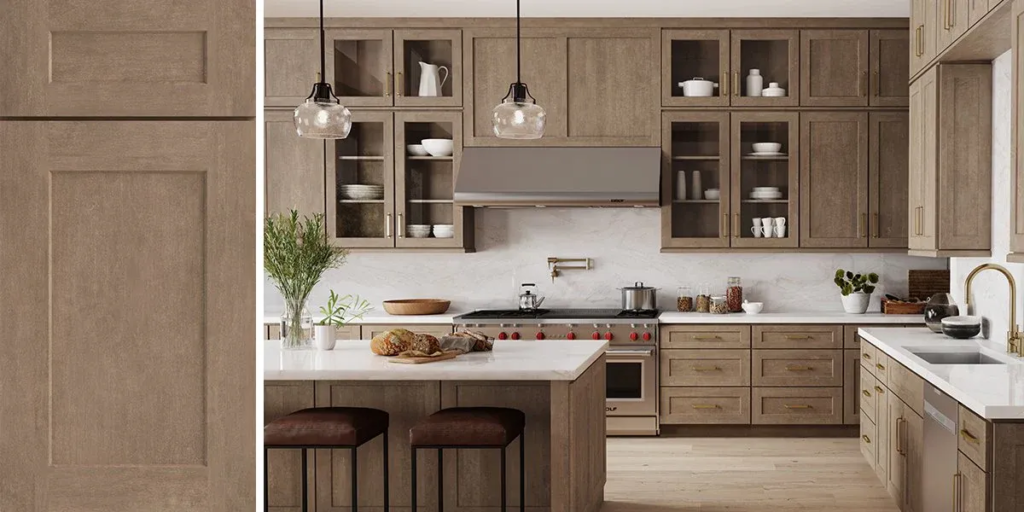
Soft close demand is expanding across three buyer segments: mainstream retail, e-commerce, and projects (multi-family apartments, hotels, serviced residences).
2.1 Consumer expectations have shifted from “feature” to “standard”
In many markets, soft close has become part of the “modern kitchen baseline.” Buyers still compare average cost of kitchen cabinets, but they also compare user experience. A kitchen that feels quieter, smoother, and more premium often wins even if cabinet door style is similar.
2.2 Kitchen design trends favor comfort and reduced friction
Industry trend reporting emphasizes usability, wellness, and comfort. Hardware upgrades such as soft close align naturally with this direction because they reduce noise and daily friction points.
External reference: NKBA press release about the 2026 Kitchen Trends Report (industry-based research direction)
https://nkba.org/press/nkba-kbis-releases-annual-2026-kitchen-trends-report/ nkba.org
2.3 Compliance and “spec readiness” matter more in B2B sourcing
For North America, many buyers require compliance with composite wood formaldehyde standards (materials commonly used in cabinet boxes and components). While soft close itself is hardware, it is often purchased together with compliant cabinet construction and materials.
External references for compliance context:
- EPA formaldehyde emission standards overview https://www.epa.gov/formaldehyde/formaldehyde-emission-standards-composite-wood-products US EPA
- CARB composite wood products program (finished goods include cabinets) https://ww2.arb.ca.gov/our-work/programs/composite-wood-products-program 加州空气资源委员会
B2B takeaway: Soft close is easiest to sell when it is part of a complete “modern kitchen cabinet quality system.” This system includes smooth hardware, durable structure, compliance-ready materials, and a retail-friendly design.
3. Core Benefits: Less Noise, Longer Life, Higher Value
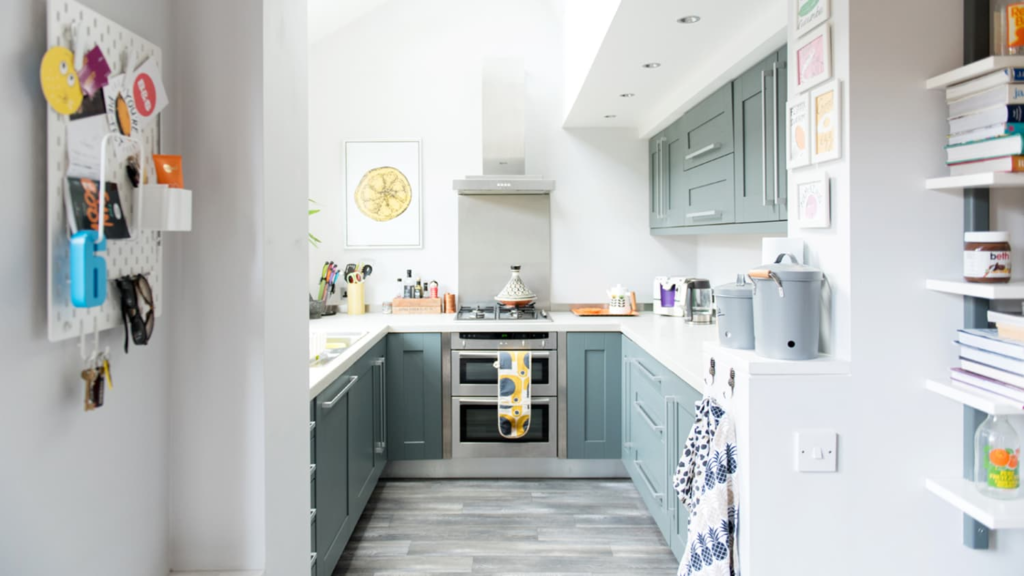
Soft-close is popular because it delivers clear benefits across user experience, durability, and perceived quality.
3.1 Reduced noise (a top customer satisfaction driver)
A slamming cabinet door creates repetitive noise that is more noticeable in open-plan living. In apartments and hotels, noise complaints can escalate quickly. Soft close provides:
- quieter daily use
- fewer late-night disturbances
- a “premium feel” customers notice instantly
This is the reason soft close helps sell both cheap cabinets for kitchen upgrades. It acts as a value improvement. It also helps sell high end kitchen cabinets as a premium expectation.
3.2 Longer service life and fewer warranty claims
Repeated impact is a long-term problem for cabinet doors and drawer boxes. Slam forces can contribute to:
- hinge screw loosening
- cabinet door misalignment
- edge damage (especially around door kitchen cabinets)
- drawer front stress and rail wear
Soft close reduces impact at the final closing stage. Over thousands of uses, that difference shows up as fewer service calls and fewer negative reviews.
3.3 Higher perceived value (better conversion and margin)
Soft close improves perceived quality without requiring expensive visible upgrades. Even if a customer is mainly shopping by kitchen cabinet price, soft-close justifies moving “one tier up.” This reduces hesitation in checkout.
Retail impact examples:
- A showroom can demonstrate soft close in seconds
- E-commerce listings can show it in a 5-second clip
- Project buyers can spec it as a tenant comfort feature
4. How to Choose Kitchen Cabinets with Soft-Close Features
This section is written for retailers, OEM/ODM buyers, and project specifiers who need repeatable sourcing criteria.
4.1 Decide the product format first: Assembled vs. RTA
Your soft-close selection should match the product format.
Assembled kitchen cabinets
Best for: project delivery, local warehousing, fast installation
Key focus: alignment accuracy, hinge mounting quality, reduced on-site labor
Kitchen RTA cabinets (flat pack)
Best for: cross-border shipping, scalable distribution, online retail
Key focus: consistent drilling, clear instructions, hardware kit accuracy
Soft close performs best when manufacturing tolerances are stable. If your RTA program is aimed at high-volume e-commerce, invest in robust packaging and straightforward assembly to reduce returns.
4.2 Hardware sourcing: hinge and slide standards
When evaluating soft-close systems, ask suppliers about:
- cycle testing references or durability specs
- adjustment range (helps installers align doors quickly)
- spare parts availability for long programs
- consistent damping performance across temperature changes (important for some regions)
Pro tip for buyers: If you sell door-heavy designs, confirm hinge count. This includes tall pantry doors and high cabinet doors. Also, check the door weight range. For drawers, confirm load rating and smoothness at full extension.
4.3 Match hardware to cabinet door handles and pulls
Soft close is not isolated—customers experience it together with handles. For modern programs, buyers often source:
- modern kitchen cabinet handles and pulls
- kitchen cabinet door knobs
- cabinet door handles kitchen (finishes that resist fingerprints)
If your cabinet line includes dark finishes, select handles and pulls that complement the finish. For example, choose modern black kitchen cabinets or kitchen cabinets navy blue. Ensure they hold up in humid environments.
4.4 Box construction and material strategy
Soft close works best when the cabinet structure is stable. For panel construction, common material pathways include:
- plywood casework
- MDF or particleboard panels (often with melamine or laminate surfaces)
- reinforced hinge areas to reduce screw pull-out risk
If you supply to North America, plan early for composite wood compliance expectations and documentation.
Compliance references:
- EPA TSCA Title VI overview https://www.epa.gov/formaldehyde/formaldehyde-emission-standards-composite-wood-products US EPA
- CARB program overview https://ww2.arb.ca.gov/our-work/programs/composite-wood-products-program 加州空气资源委员会
- US regulation text (40 CFR Part 770) https://www.ecfr.gov/current/title-40/chapter-I/subchapter-R/part-770 eCFR
4.5 Color and style choices that pair well with soft close
Soft close is most valuable when the overall style feels modern. In many retail markets, these remain strong:
- modern white kitchen cabinets
- kitchen with gray cabinets
- kitchen cabinets navy blue
- modern black kitchen cabinets
- warm wood tones (country kitchen cabinets updated with modern hardware)
Avoid pushing a dated kitchen cabinet style with soft close as the only upgrade—customers see the mismatch. Instead, use soft close to reinforce a modern, refined presentation.
4.6 Maintenance and consumer education (reduces complaints)
Retailers often receive questions like:
- best degreaser for kitchen cabinets
- diy painting kitchen cabinets
- kitchen cabinets refacing
Soft-close hardware performs best when doors and drawers stay aligned, and cleaning avoids harsh chemicals that can damage finishes. Provide a simple care guide: mild detergent, microfiber cloth, avoid abrasive pads, and clean spills quickly—especially around sink base cabinets.
5. Customer Feedback and Market Acceptance
In product reviews and buyer conversations, soft close generates repeatable “positive language.” For retailers and manufacturers, this matters because it strengthens SEO, listing conversion, and brand trust.
5.1 What customers say (common patterns)
- “So quiet—no more slamming.”
- “Feels expensive and smooth.”
- “Kids can’t slam the doors anymore.”
- “The drawers glide nicely and shut gently.”
These phrases are powerful because they are sensory and immediate, not technical. They also help your SEO content feel natural and human.
5.2 Market acceptance in projects (apartments and hotels)
For projects, soft close often becomes a “no-brainer” when paired with:
- apartment kitchen packages
- hotel kitchenette programs
- serviced residence upgrade tiers
A small upgrade can reduce noise complaints and perceived wear during turnover cycles.
6. Export Sales Strategies to Promote Soft-Close Kitchen Cabinets
Soft close is easy to demonstrate—but B2B buyers still need reasons to trust supply stability and performance. Below are strategies to help you sell soft close as a sourcing-ready solution.
6.1 Product positioning: sell benefits, then specs
A strong sales page or catalog should follow this order:
- Outcome: quiet closing, premium feel
- Durability: reduced impact, longer life
- Manufacturing control: stable drilling, consistent damping
- Compliance readiness: material standards if required
- Program support: OEM/ODM, packaging, spare parts, long-term supply
6.2 Build SKU tiers for retailers and brands
Instead of one “soft close cabinet,” design a tiered program:
- Entry: basic cabinets for kitchen with soft-close hinges only
- Core: soft-close hinges + soft-close drawers in key areas
- Premium: full soft-close + upgraded finishes + optimized storage accessories
This tiering helps retailers defend margin while meeting “soft close expectation” at every price tier.
6.3 Bundle soft close with modern add-ons for stronger conversion
Soft close pairs well with other modern keywords that shoppers already search:
- led under cabinet kitchen lights
- under cabinet lights for kitchen
- kitchen countertops and cabinets bundles
- kitchen cabinets with sink base cabinet solutions
- kitchen cabinet island storage upgrades
- kitchen cabinet trash pull-out solutions
When you build these into a “modern kitchen package,” your product becomes a solution, not just a cabinet.
6.4 Use recognized standards and credible references (without overclaiming)
For institutional buyers and serious retailers, references matter. Consider mentioning:
- performance standards and certification pathways (for assembled cabinets)
- compliance frameworks for composite wood products in certain markets
- sustainability chain-of-custody options if relevant
Authoritative references you can link on your site:
- KCMA certifications overview https://kcma.org/certifications kcma.org
- KCMA A161.1 standard document (performance and construction) https://kcma.org/sites/default/files/2024-08/KCMA%20A161.1%202022%20High%20Res.pdf kcma.org
- FSC chain of custody https://fsc.org/en/chain-of-custody 森林管理委员会
6.5 OEM/ODM communication checklist (reduces sampling loops)
When a buyer requests “soft close kitchen cabinets,” clarify these points early:
- market destination and channel (retail, e-commerce, project)
- format: assembled kitchen cabinets or kitchen RTA cabinets
- door style: shaker, slab, handleless, etc.
- preferred kitchen cabinet colors and finish system
- hinge and slide preference (brand level or equivalent performance)
- packaging and damage tolerance expectations
- spare parts plan for warranty support
This reduces revisions and helps you quote faster and more accurately.
6.6 Content strategy:
B2B buyers search differently than consumers. In addition to standard product pages, create:
- “Soft close hinge vs soft close drawer slide” explainer page
- “Assembled kitchen cabinets vs RTA cabinets for export” guide
- “How to choose cabinet door handles kitchen for humid climates” guide
- “Project checklist for apartment kitchen cabinet packages” page
Use long-tail keywords naturally in headings and paragraphs. For example:
- “prefab kitchen cabinets” and “used kitchen cabinets near me” (as comparison terms)
- “kitchen cabinet installers near me” (as a retail partner angle)
- “kitchen cabinet painters” and “diy painting kitchen cabinets” (as care/aftermarket education)
- “wood kitchen cabinets at home depot” and “cabinet city kitchen and bath” (as competitor research signals, used carefully and neutrally)
You do not need to mention competitors in a salesy way. You can reference them as “common comparison searches” in your SEO strategy.
FAQ
Q1. Are soft close kitchen cabinets worth it for mid-range retail programs?
Yes. Soft close is one of the fastest-to-demonstrate upgrades. It often improves reviews. It reduces slamming damage. It also increases perceived value with minimal cost increase versus visible design changes.
Q2. Can soft close be applied to both doors and drawers?
Yes. Soft close can be integrated into cabinet hinges for doors and into drawer slides for drawers. Many modern lines offer both.
Q3. Do soft close systems work well in kitchen RTA cabinets?
They can, but quality depends on precise drilling, stable panel construction, and clear installation instructions. Hardware kit accuracy is critical for e-commerce and distribution.
Q4. What should project buyers check when specifying soft close?
Confirm hinge count per door size, drawer load rating, spare parts availability, packaging protection, and consistent performance across batches. For some markets, confirm composite wood compliance expectations.
Q5. Does soft close require special maintenance?
Not usually. Regular alignment checks during installation and gentle cleaning are typically enough. Avoid harsh chemicals on finishes.