(B2B OEM/ODM Guide for E-Commerce & Project Buyers)
Returns are not just a customer-service issue. They are a profit leak that affects every part of the supply chain. This includes replacement parts, reverse logistics, review damage, and brand credibility. For RTA (flat-pack) coffee table programs, most returns are preventable. Buyers can ensure this by specifying the right packaging level. They should also determine the appropriate parts-kitting system and conduct verification tests upfront.
This article is written from an export manufacturer’s viewpoint for B2B buyers. It targets retailers, importers, wholesalers, marketplaces, and project procurement teams. These groups source coffee table and coffee table with storage SKUs for volume.

Table of Contents
- Why returns happen (missing parts, mis-drill, weak cartons)
- Packaging level (foam density, corner protectors, film)
- Parts-kitting & labeling system (one-bag-per-step)
- Drop-test mindset (what to ask suppliers)
- Bonus: Return-proofing checklist for OEM/ODM orders
- External standards & resources (authority links)
- FAQ
Why returns happen (missing parts, mis-drill, weak cartons)
1) Missing parts = “I can’t finish assembly”
In e-commerce, one missing cam lock or dowel can become a full refund—because the customer can’t complete the build. For storage products like a coffee table ottoman with storage or lift-top mechanisms, small hardware errors become significant issues. Customers perceive it as “unsafe” or “defective.”
Buyer actions to reduce this:
- Require a 100% parts count checkpoint before sealing cartons
- Ask for photo evidence of hardware kits (per carton)
- Request spare hardware (e.g., +1–2 critical pieces) for each set
2) Mis-drill / misalignment = wobbly table, bad reviews
Misaligned holes cause wobble, uneven gaps, or drawer binding—especially common in higher-demand styles like:
- farmhouse coffee table with storage
- circular coffee table with storage
- large coffee table with storage
Buyer actions:
- Specify tolerance requirements for drilling alignment
- Require a “first-article” check at mass production start
- Ask for in-line inspection at drilling stations (not only final QC)
3) Weak cartons = transit damage (the #1 silent killer)
If your carton is not engineered for parcel handling, the product may arrive damaged. It could have crushed corners, chipped edges, or scratched surfaces. Once the customer sees damage, they usually won’t accept spare parts—they want a return.
If you’re selling on channels where customers compare prices across brands (e.g., search behaviors like coffee table walmart, coffee table wayfair, amazon coffee tables, target coffee tables), a small damage-rate difference can decide who wins the Buy Box.
Buyer actions:
- Define packaging tier in the PO (basic vs e-commerce vs project-grade)
- Require corner protection and surface film for sensitive finishes
- Ask for drop-test standard alignment (see Drop-test section)
Packaging level (foam density, corner protectors, film)
The fastest way to reduce returns is to stop treating packaging as an afterthought. For RTA programs, packaging is part of the product design.
Packaging Tier 1: Basic Export (container-focused)
Best for bulk shipments to distributors who can handle minor carton wear.
Typical features:
- Standard corrugated carton
- Minimal foam
- Basic corner guards
Risk: Higher damage in parcel networks.
Packaging Tier 2: E-Commerce / Parcel-Ready (recommended for marketplaces)
Best for direct-to-consumer delivery where cartons are dropped, slid, and stacked.
Must-have features:
- Corner protectors (top + bottom, thicker on long edges)
- Foam density spec (not “foam,” but measurable thickness and compression resistance)
- Surface protection film for glossy/stone-look panels
- Reinforced seams/tape pattern
- Internal “no-rub” separation (especially for glass tops)
This tier matters if your SKUs include:
- coffee glass table top
- coffee table glass / coffee table glass top / coffee table with glass top
- Stone-pattern or high-gloss panels (scratch-prone)
Packaging Tier 3: Project / Hospitality Grade (damage + install protection)
Used for hotel/apartment projects where site delays are expensive.
Adds:
- Stronger internal bracing
- Clear carton markings & handling symbols
- Spare parts & installation notes
Pro buyer tip:
Don’t pick packaging solely by carton cost. Pick it by landed cost + damage rate + return rate. A slightly higher packaging level often pays back quickly.
Parts-kitting & labeling system (one-bag-per-step)
Returns often happen because customers feel assembly is “too hard.” Your goal is to make it error-proof.
The “One-Bag-Per-Step” system (works extremely well)
Instead of one mixed hardware bag, create:
- Bag A: Step 1 hardware only
- Bag B: Step 2 hardware only
- Bag C: Step 3 hardware only
…and so on.
Why it reduces returns:
- Customers don’t confuse parts
- Fewer support tickets
- Lower assembly mistakes = fewer “defect” claims
Labeling that matters (not decorative labeling)
- Each panel gets a discreet label (A, B, C…) matching the manual
- Pre-sorted screws with printed codes
- QR code linking to a short assembly video
For competitive categories (e.g., minimal coffee table, modern farmhouse coffee table, modern style coffee tables), assembly experience becomes a “hidden differentiator.”
Storage products need extra clarity
For coffee table storage designs (drawers/lift-top/ottoman storage):
- Mark drawer rails left/right clearly
- Provide “stop points” in instructions (tighten only after alignment)
Drop-test mindset (what to ask suppliers)
If you sell RTA furniture via parcel networks, you must think like a packaging engineer—even if you outsource testing.
What to align with: ISTA and ASTM test thinking
ISTA provides transit test procedures used widely in packaging validation, including the 3-series for distribution simulation. 国际安全运输协会+1
ASTM D4169 is a well-known standard practice for performance testing of shipping containers and systems. ASTM International | ASTM
Buyer questions to ask (copy/paste into RFQ)
- Which test approach do you follow for parcel-ready cartons (ISTA style / equivalent)? 国际安全运输协会
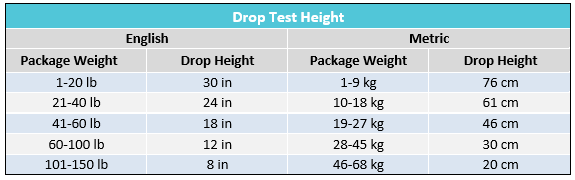
- What is your target drop height and number of drops for this carton size and weight?
- Do you test “as shipped” (sealed carton, full hardware, full protection) like ASTM D4169 performance logic? ASTM International | ASTM
- After testing, what is the acceptance criteria? (No broken panels, no exposed corners, no functional failure)
- Do you adjust foam density/corner protection based on failure points?
Why this matters
Most “damage” complaints are not product defects—they are packaging design defects. When you validate packaging, you lower:
- Refunds
- Replacement shipments
- Negative reviews
- “Never again” buyer perception
Bonus: Return-Proofing Checklist for OEM/ODM Orders (Coffee Table Programs)
Use this checklist when you place a PO for coffee table or coffee table with storage:
A) Product & structure
- Confirm load rating and wobble tolerance
- Confirm storage mechanism durability (hinge/strut/slide tier)
B) Finish & surface risk
- Define finish type (matte, wood tone, stone pattern, gloss)
- Define scratch protection method (film + interleaf + foam zones)
C) RTA assembly experience
- One-bag-per-step kitting
- Panel labeling system aligned with manual
- QR video optional
D) Packaging level (must be written in PO)
- Basic export / e-commerce parcel-ready / project grade
- Foam density + corner protector spec
- Tape pattern and carton strength requirement
E) QC checkpoints
- Parts count verification
- Drilling alignment in-line check
- Surface inspection under consistent lighting
Keyword Coverage
Buyers commonly benchmark your SKUs against market searches. These searches include terms like coffee table nearby or coffee table wayfair. Other examples are coffee table walmart, coffee table target, or amazon coffee tables. They also compare against premium references. Examples include coffee table crate and barrel, pottery barn round coffee table, or west elm round coffee table. Your program should be engineered for both price competitiveness and low-return execution.
For product-line planning, include variety:
- 36 inch round coffee table, small wood coffee table, large wood coffee table
- extendable coffee table (small-space winners)
- ottoman coffee tables / coffee table with seating (project bundles)
- “Tech-feature” SKUs like led coffee table or coffee table with fridge (niche, but marketing-friendly)
For storage-driven SEO and buyer intent, employ long-tail phrases. Utilize examples such as:
wooden coffee table with storage. Consider solid wood coffee table with storage. Think about large coffee table with storage. Examine ikea coffee table with storage. Review coffee table with storage ikea.
These phrases often indicate that buyers are comparing structures and price tiers rather than focusing purely on style.
CTA: Get an RTA packaging proposal
Want to reduce your return rate on flat-pack coffee table programs? Share your target market, carton size/weight, finish type (wood/stone/gloss), and sales channel (retail vs marketplace vs project). We’ll provide an RTA packaging proposal including protection layout, kitting plan, and QC checkpoints.
External Resources
To align your RTA coffee table packaging and labeling with recognized industry standards, here are official references B2B buyers commonly use:
- ISTA test procedures (transit simulation framework)
Use the ISTA test procedures for packaging validation programs. Select the appropriate test procedures. Review ISTA’s official test procedures page:
https://ista.org/test_procedures.php 国际安全运输协会 - ASTM D4169 (performance testing of shipping containers)
For a widely cited approach to packaging performance testing, see ASTM D4169:
https://www.astm.org/d4169-22.html ASTM International | ASTM - ISO 780 (handling symbols for distribution packaging)
For standard pictorial markings used on transport packages, see ISO 780:2015:
https://www.iso.org/standard/59933.html 国际标准化组织 - GS1 General Specifications (barcodes, IDs, logistics labeling rules)
For barcode and identification key usage rules, refer to GS1’s General Specifications. These rules apply across supply chains. For more details, visit:
https://www.gs1.org/standards/barcodes-epcrfid-id-keys/gs1-general-specifications gs1.org - ISO 9001 overview (quality management baseline)
Many OEM/ODM programs require ISO 9001 as a quality management baseline:
https://www.iso.org/iso-9001-quality-management.html 国际标准化组织
6) US formaldehyde compliance overview (EPA)
For composite wood product formaldehyde guidance in the US:
https://www.epa.gov/formaldehyde gs1.org
FAQ
1) Why do RTA coffee tables get returned most often?
Most returns are caused by missing hardware, misaligned drilling, assembly confusion, or transit damage from weak cartons—not “bad design” alone.
2) What packaging level should I choose for marketplace/e-commerce sales?
For parcel networks, choose an e-commerce parcel-ready packaging tier. It should have reinforced corners and defined foam density. Ensure it includes surface film and internal separation to prevent rubbing.
3) How does “one-bag-per-step” kitting reduce returns?
It prevents part confusion, reduces assembly mistakes, and lowers support tickets—making customers less likely to file “defective” return claims.
4) What testing should buyers request for flat-pack coffee table cartons?
Align packaging validation with recognized approaches. Use ISTA transit simulation thinking and ASTM D4169 performance-testing logic. Then define pass/fail criteria.
5) What’s the fastest way to improve a coffee table program’s return rate?
Upgrade packaging to parcel-ready, standardize kitting/labeling, and add in-line QC checks for drilling alignment and parts count before sealing cartons.