Portable and Flat-Pack Wardrobe Closets for E-Commerce and Rental Projects
Portable wardrobe solutions used to be seen as “temporary furniture.” Not anymore. In today’s cross-border e-commerce and fast-turn rental market, portable closet wardrobe formats have become strategic SKUs. Flat-pack wardrobe designs are especially popular for brands targeting value-conscious consumers. RTA wardrobe closet designs also attract property managers and short-term rental hosts.
From a manufacturing and sourcing perspective, wardrobes are a sweet spot. They are large enough to create a meaningful AOV (average order value). Yet, they are simple enough to standardize across finishes, sizes, and packaging systems. The winning products share three traits:
- They ship efficiently (parcel-friendly or optimized LTL).
- They install quickly with low tool requirements.
- They survive real-world delivery abuse with fewer returns.
This article is written for B2B buyers—online brands, importers, wholesalers, and project contractors. They need a practical OEM/ODM playbook. This playbook covers what structures to choose, which specs truly matter, and how packaging engineering reduces damage and return rates.
Table of Contents
- Why Portable & Flat-Pack Wardrobes Are in High Demand
- What Today’s E-Commerce Buyers Expect (Including Walmart Channels)
- Why Rentals and Short-Term Hosts Prefer “Moveable + Rebuildable” Storage
- Types of Portable Wardrobe Closets: Fabric vs. Panel Flat-Pack
- OEM Structure Selection: Strength, Stability, and Cost
- Advantages of Flat-Pack (RTA) Design for Online Sales
- Packaging Engineering That Cuts Freight Losses and Returns
- Key Specs Buyers Care About (and How to Specify Them)
- Compliance & Material Trust: Emissions and Responsible Sourcing
- How OEM/ODM Factories Support Online Brands End-to-End
- Buyer Checklist for Sampling and First Purchase Order
- FAQ
1) Why Portable & Flat-Pack Wardrobes Are in High Demand
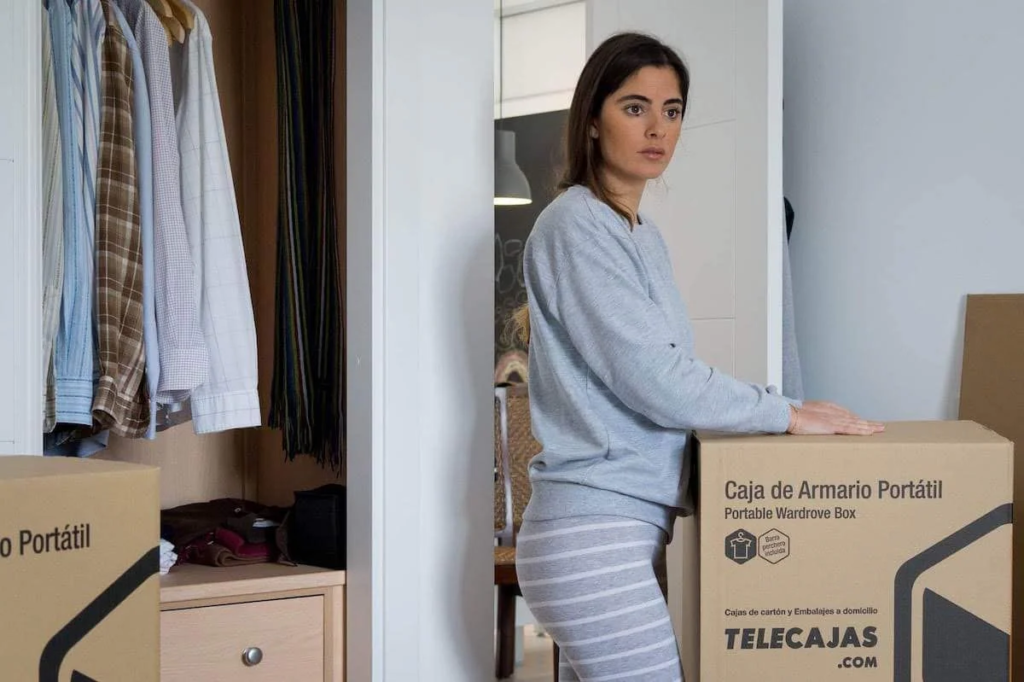
Two forces are pushing wardrobes into a “must-stock” category:
- Consumers are buying big furniture online with higher expectations. They want a wardrobe closet for hanging clothes that arrives intact. It should look clean on camera. It also shouldn’t require a professional installer.
- Rentals, apartments, and flex living keep growing. Tenants want storage that moves with them; landlords want furniture that is easy to replace, standardize, and reconfigure across units.
This is exactly where wardrobes outperform traditional dressers in e-commerce. A wardrobe offers a vertical storage promise (hanging + shelves + drawers). It keeps the footprint manageable. This is especially true in SKUs like narrow wardrobe closet, small wardrobe closet, and corner wardrobe closet.
If your goal is to build a repeatable, scalable online assortment, you should imagine an “affordable wardrobe closet“. This comes with a premium unboxing experience. In such cases, flat-pack is rarely optional. It’s the engineering foundation that makes margins and customer satisfaction coexist.
2) What Today’s E-Commerce Buyers Expect (Including Walmart Channels)
Online shoppers are no longer impressed by “flat-pack” alone. They expect:
- Damage-resistant delivery
- Simple assembly
- Accurate product photos
- Clear installation instructions
- A fair return experience
For brands selling on major marketplaces, packaging and labeling requirements can be strict. Walmart, for example, publishes supplier packaging and labeling guidance for Walmart.com suppliers, emphasizing conformance to their supply chain packaging expectations. supplierone.helpdocs.io+1
What this means for wardrobe sellers:
If you want to compete in “wardrobe closet walmart”-style channels, consider packaging as a component of product design. Make sure packaging design is not an afterthought. Packaging design is critical and should not be an afterthought. This applies to similar retail fulfillment networks as well.
3) Why Rentals and Short-Term Hosts Prefer “Moveable + Rebuildable” Storage
In rental environments—especially furnished apartments and short-term rentals—wardrobes solve a very specific operational problem:
- Tenants need storage immediately (often day one).
- Hosts need furniture that can be rebuilt after moving.
- Property managers need standardized parts for maintenance.
Portable wardrobes reduce turnover headaches. A closet armoire wardrobe that ships flat can be replaced quickly after damage or style refresh. If the wardrobe has modular parts such as shelves, a hanging rod, and drawer modules, it can be adapted. The same base product can then be used across different unit types: studio, 1BR, and 2BR.
For project buyers, the best-performing SKUs are usually:
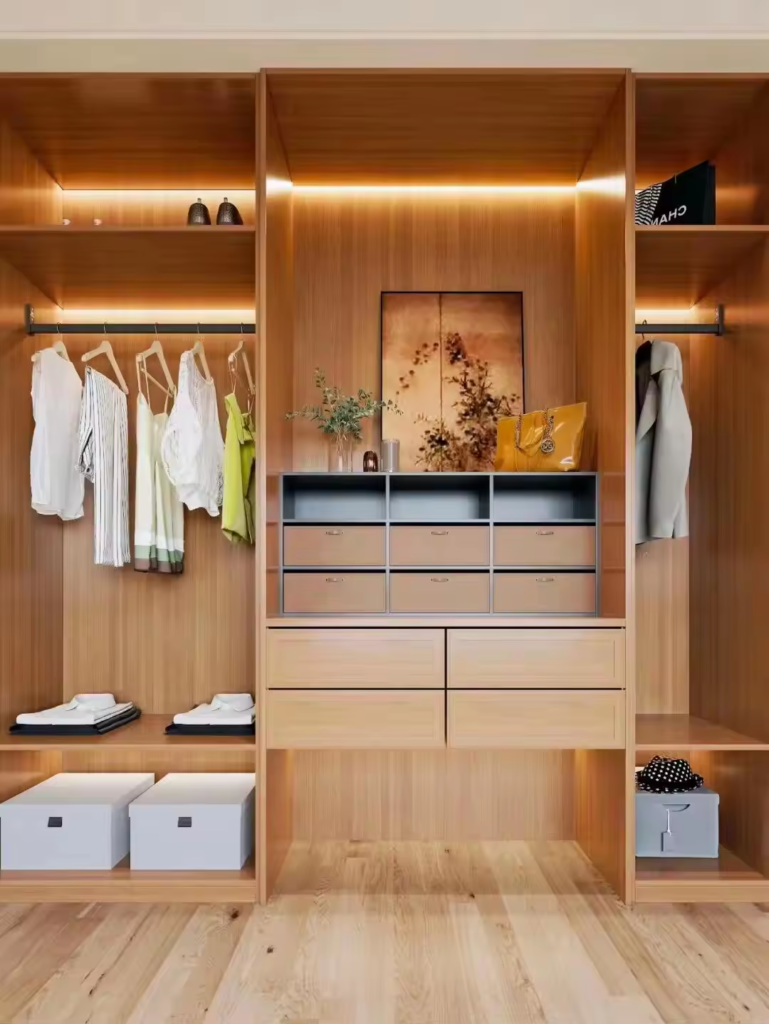
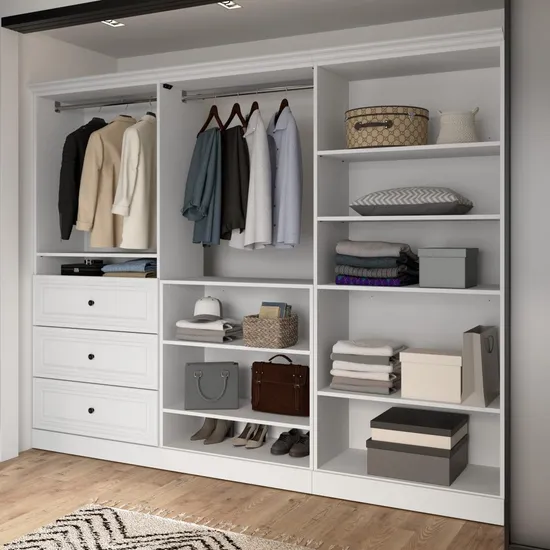
- white wardrobe closet (easy to match interiors)
- wood wardrobe closet look (warm grain, modern matte)
- wardrobe closet drawers option (tenant-friendly organization)
4) Types of Portable Wardrobe Closets: Fabric vs. Panel Flat-Pack
A) Fabric “portable closet wardrobe”
Pros
- Low landed cost
- Lightweight parcel shipping
- Ultra-fast setup
Cons
- Lower perceived value
- Limited stability and load capacity
- Shorter service life (zippers, fabric tears)
Fabric wardrobes can work for entry-level price points, student housing, or temporary needs. But they typically struggle in two areas that matter to brands: review durability and returns.
B) Panel-based flat-pack wardrobe (RTA)
This is the category where serious long-term demand sits.
Pros
- Higher perceived value and better photography
- Better stability and capacity
- Easier to build a “family” of SKUs: modern wardrobe closet, white closet wardrobe, wooden armoire wardrobe closet, even built in wardrobe closet-style visual designs
Cons
- Requires packaging engineering and hardware management
- Must be designed for repeatable assembly (and disassembly)
If your customers include hosts, landlords, or anyone who relocates, panel-based RTA wins. It is rebuildable. This feature is a major selling point that basic wardrobes or heavy pre-assembled armoires can’t match.
5) OEM Structure Selection: Strength, Stability, and Cost
When developing an RTA wardrobe, OEM buyers should decide structure first—before choosing finishes.
The most common RTA wardrobe structures
- MDF / particle board carcass + back panel
Good for cost and clean surfaces (especially paint-grade white). - Melamine-faced board (MFC)
Good scratch resistance and consistent color. - Plywood + veneer / laminate
Stronger screw holding, more premium positioning, better long-life performance in rentals.
For e-commerce, structure selection must account for:
- Edge protection needs (board edges are damage hotspots)
- Screw retention under reassembly (rentals move frequently)
- Package drop and vibration resistance (parcel networks are harsh)
A useful approach is to standardize one “platform” carcass and create variations:
- Add drawers (turn a wardrobe armoire closet into a higher AOV SKU)
- Add mirrored door
- Offer a “compact” short wardrobe closet
- Offer a “tall” hanging-only version for capsule wardrobes
Load-bearing: don’t guess—spec it
Your B2B spec sheet should define:
- Hanging rod static load (kg/lb)
- Shelf static load and recommended distribution
- Anti-tip requirements and wall anchor inclusion
These details reduce disputes and improve customer reviews because expectations are set clearly.
6) Advantages of Flat-Pack (RTA) Design for Online Sales
Flat-pack is not just about shipping cheaper. A well-engineered RTA wardrobe impacts your entire e-commerce P&L.
1) Lower shipping and warehouse cost
A wardrobe is bulky; reducing cubic volume lowers:
- Container loading cost
- Domestic warehousing fees (pallet positions)
- Last-mile surcharges
2) Lower damage rate when packaging is engineered correctly
Damage drives:
- Refunds
- Replacements
- Negative reviews
- Marketplace penalties
Packaging standards like ASTM D4169 provide widely recognized methods for performance testing shipping containers and systems. ASTM International and e-commerce-focused test protocols are instrumental. Specifically, ISTA 3L is designed to simulate hazards from retailer fulfillment operations to end consumers.
You don’t need to “over-test” every SKU, but you do need a packaging validation mindset. Even basic drop/vibration test routines dramatically improve consistency when you scale.
3) Easier returns (and fewer destroyed returns)
Returns are a reality. Flat-pack wardrobes can be repacked more predictably if:
- Inner protection is modular
- Hardware is separated and labeled
- Instructions explain “how to re-pack for returns” in one small panel
When you cut return damage, you preserve resale or refurb value—particularly relevant for rental suppliers and B2B project buyers.
7) Packaging Engineering That Cuts Freight Losses and Returns
Packaging is where many wardrobe programs win or fail.
A) Carton design: box size, compression, and handling
Wardrobes often ship in 1–3 cartons depending on size. Your carton strategy should balance:
- Maximum carton weight limits (marketplace rules, parcel constraints)
- Panel protection (especially corners and edges)
- Stacking strength (warehouse compression)
Walmart’s supplier resources emphasize meeting packaging expectations within their supply chain environment. supplierone.helpdocs.io+1
B) Internal protection: protect what actually breaks
Most wardrobe damage comes from:
- Crushed corners
- Edge chipping
- Hardware tearing through panels
- Door panel surface scratching
Proven tactics:
- Corner protectors (paper or plastic)
- Honeycomb paper wraps for doors and side panels
- Foam only where needed (avoid cost blow-up)
- Separate “beauty surfaces” from “structural surfaces” inside the pack
C) Hardware kitting and separation
Hardware chaos causes missing parts, assembly frustration, and returns.
Best practice:
- Two-bag system: main hardware + spare parts bag
- Clearly labeled bags that match steps in the manual
- Separated hinges to avoid metal scratching panels
- Anti-tip kit bundled visibly (and mentioned on the carton)
D) Instruction and language strategy
If you sell cross-border:
- Provide icon-based steps + minimal text
- Add QR code to video
- Print multi-language on one booklet or separate leaflets based on region
For marketplaces, the manual is part of customer experience. A great manual can rescue a “difficult assembly” product by guiding the user through it calmly.
8) Key Specs Buyers Care About (and How to Specify Them)
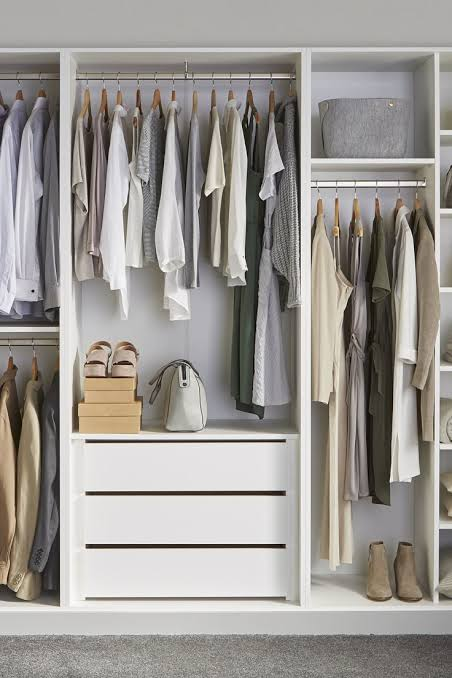
Here’s what professional buyers evaluate when choosing a bedroom wardrobe closet SKU for e-commerce and rental projects.
1) Load capacity and stability
- Hanging rod capacity (static + recommended)
- Shelf load (static + recommended)
- Back panel stiffness (improves racking resistance)
- Anti-tip solution (included hardware + clear instruction)
2) Assembly time
Assembly time is a conversion factor. If your product can be built in:
- 30–45 minutes (compact)
- 60–90 minutes (full wardrobe with drawers)
…you are competitive.
To achieve this, OEM should engineer:
- Fewer panel types (symmetry)
- Pre-drilled holes that actually align
- Cam-lock + dowel layout that prevents mistakes
3) Tool requirements
“Tool-less” is a marketing dream, but not always realistic. Instead:
- Keep tool set minimal (1 screwdriver + included Allen key)
- Avoid requiring power drill for normal assembly
- Design forgiving tolerances
4) Finish, feel, and visual consistency
Online reviews punish:
- Color mismatch
- Uneven gloss
- Visible edge seams
For top performers, the “unboxing first impression” matters:
- Doors should arrive flawless
- Handles should feel solid
- Drawer runners should operate smoothly (if included)
5) Dimensional fit for real rooms
Apartment buyers search specific phrases:
- small wardrobe closet
- narrow wardrobe closet
- corner wardrobe closet
- wardrobe closet for hanging clothes
Build SKUs around real constraints:
- Door swing clearance
- Hanging length (coats vs shirts)
- Drawer depth that doesn’t waste interior volume
9) Compliance & Material Trust: Emissions and Responsible Sourcing
If you export panel furniture, compliance and sourcing credibility are no longer “nice-to-have.”
Formaldehyde emissions (US market sensitivity)
In the U.S., EPA TSCA Title VI regulates formaldehyde emissions for composite wood products, aligning with California’s approach and providing compliance clarity. US EPA+2联邦登记册+2
What buyers want from factories
- Test reports from qualified labs
- Traceability of board suppliers
- Clear statements in product documentation (where appropriate)
Responsible sourcing (FSC chain of custody)
FSC chain-of-custody certification is one recognized way to verify forest-based materials through the supply chain from source to finished goods. 森林管制委员会+1
For online brands, these credentials:
- Support retail onboarding
- Improve listing trust
- Help with institutional procurement requirements (hotels, apartments)
10) How OEM/ODM Factories Support Online Brands End-to-End
For online brands and project buyers, the right factory is not only a “producer.” They are a product commercialization partner.
A) Small MOQ sampling and rapid prototyping
Strong OEM/ODM programs offer:
- Low MOQ trial orders (especially for first SKU)
- Sampling with packaging mock-ups
- Quick iteration on fit/finish issues
B) Retail-ready packaging & artwork
Services buyers typically need:
- Color box design (or brown box with label system)
- Barcode and carton marks
- Icon-based handling symbols
- Photo-ready instruction layout
If you plan to sell on large platforms, you need packaging and labeling compliance. It is part of your launch readiness. Walmart’s supplier guidance is one example of why this matters. supplierone.helpdocs.io+1
C) Drop-test mindset and packaging validation
You don’t need to run every test standard on every batch. Aligning packaging design with recognized testing approaches improves consistency at scale. These approaches include ASTM shipping performance testing and ISTA e-commerce simulation standards. ASTM International | ASTM+1
D) “From design to shipment” execution
An end-to-end furniture export workflow typically includes:
- Product engineering (structure + hardware)
- Packaging engineering (carton + inner protection)
- Pre-production sample approval
- Mass production
- In-line QC + final inspection
- Container loading plan (maximize cube)
- Export documentation support
This is the type of service model many buyers look for. It is especially sought after when sourcing “project-ready” wardrobes. These are intended for apartments, hotels, and rental operators.
11) Buyer Checklist for Sampling and First Purchase Order
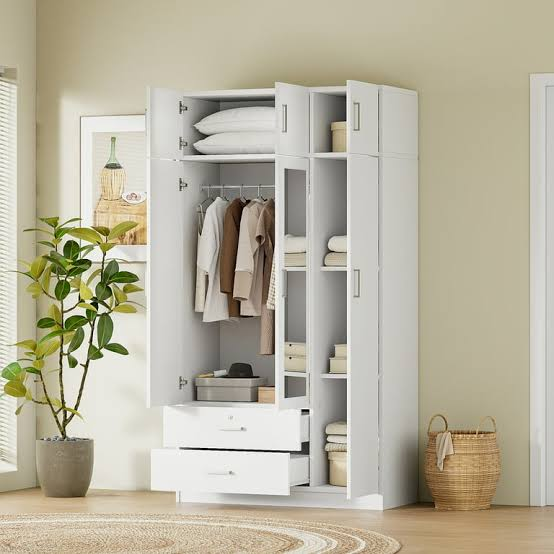
Use this checklist when developing a wardrobe wooden closet, white armoire wardrobe closet, or any RTA wardrobe line:
Product
- Confirm overall dimensions + internal hanging height
- Define hanging rod diameter/material and load rating
- Specify shelf thickness and max load recommendation
- Define drawer runner type (if applicable)
- Confirm anti-tip kit and warning labeling
Packaging
- Decide carton count (1/2/3 cartons) based on weight limits
- Confirm corner/edge protection method
- Separate hardware and protect surfaces from metal contact
- Add spare hardware bag + clear bag labeling
- Include re-pack guidance (reduces return damage)
Documentation
- Manual languages + QR video link
- Exploded parts diagram + part numbering aligned to bags
- Customer service card (short troubleshooting)
Compliance & sourcing
- Board emission compliance documentation (US/EU as required) US EPA+1
- Responsible sourcing claims supported (FSC CoC if used) 森林管制委员会
FAQ

Q1: What’s the best choice for e-commerce: portable fabric wardrobe or flat-pack panel wardrobe?
Panel-based flat-pack wardrobes usually win for long-term brand building. They photograph better and feel more premium. Additionally, they can be packaged to reduce damage and returns. This is especially beneficial for rentals and repeat customers.
Q2: How many cartons should an RTA wardrobe ship in?
Typically 1–3 cartons. The best choice depends on weight limits, panel length, and damage risk. Splitting into two cartons often improves handling and reduces corner crush issues.
Q3: What specs matter most to buyers for a wardrobe closet for hanging clothes?
Hanging height, rod load capacity, stability/anti-tip solution, assembly time, and surface durability are usually the top decision drivers.
Q4: How can brands reduce returns on flat-pack wardrobes?
Reduce missing parts (hardware kitting), reduce damage (edge/corner protection), and reduce assembly frustration (clear manuals + QR video). Performance-oriented packaging aligned with recognized test approaches helps. ASTM International | ASTM+1
Q5: What compliance topics should buyers watch for in wood-based wardrobes?
For the U.S., composite wood formaldehyde emission compliance is a common requirement and should be supported by documentation. US EPA+2联邦登记册+2
Q6: Does FSC certification matter for wardrobes?
It matters when your customers (or retail channels) demand verified responsible sourcing. FSC chain-of-custody is one recognized framework for traceability through the supply chain. 森林管制委员会+1
Authority External Links
- If you sell through large retail fulfillment networks, it’s worth aligning carton labeling and packaging details with channel expectations. Walmart provides supplier packaging and labeling guidance here. supplierone.helpdocs.io+1
- To evaluate your packaged wardrobe’s performance in an e-commerce fulfillment-to-consumer chain, ISTA publishes simulation test protocols. These include ISTA 3L. ista.org
- For general distribution performance testing of shipping containers and systems, ASTM D4169 is a widely recognized reference. It is commonly used in packaging engineering. ASTM International | ASTM
- For U.S. market compliance planning on composite wood formaldehyde emissions, EPA provides a practical regulatory overview of TSCA Title VI requirements. US EPA+2联邦登记册+2
- If your customers request responsible wood sourcing verification, FSC explains how chain-of-custody certification works. It supports traceability from forest-based materials to finished goods. 森林管制委员会+1
Closing: What to Source First
If you are building an online assortment or bidding rental/apartment projects, start with a “core trio”:
- Modern wardrobe closet (white) — fastest mover, easiest styling
- Wood wardrobe closet look (warm grain) — higher perceived value
- Narrow wardrobe closet — solves apartment constraints and converts well
From there, scale with drawers, mirrors, and modular interior options. Keep the engineering disciplined: structure first, packaging second, aesthetics third. That sequence turns wardrobes from “just another SKU” into a reliable profit line. It makes them a repeatable profit line for e-commerce and rental channels.
ABOUT US
Starwood Industry Co., Ltd. (plywoodmfr.com) is a professional flat-pack (RTA) panel furniture manufacturer based in Jiangmen, Guangdong, China, operating since 2013. We specialize in OEM & ODM production. Our materials include MDF, plywood, particle board, and melamine boards. We serve both modern homes and commercial projects. Flat-Pack Furniture Manufacturer
Our core product lines include bedroom furniture sets, wardrobes & closets, and living room TV units and storage solutions. We also have extended capabilities covering dining furniture, kitchen cabinets, bathroom vanities, kids’ furniture, and home office furniture. Flat-Pack Furniture Manufacturer
With advanced production lines, CNC machining, and automatic edge-banding, we manage quality and cost from panel cutting to final packing. Our engineering and QC teams monitor each order for stable structure, clean finishing, and safe export packaging. We support flexible MOQs, mixed container loading, and customized packaging for new collections, private-label programs, and trial orders. Flat-Pack Furniture Manufacturer
Starwood works closely with furniture brands, wholesalers, importers, e-commerce sellers, interior designers, and real estate developers. From CAD drawings, sampling, and color matching to mass production, flat-pack packaging, and logistics coordination, we provide a one-stop solution. Our products are exported to the USA, Europe, the UK, Australia, and the Middle East. They also reach other global markets. This distribution helps partners deliver stylish, space-saving, and affordable RTA furniture to customers worldwide. Flat-Pack Furniture Manufacturer
Ready to develop your next RTA wardrobe, closet, or panel furniture program? Share your target market, dimensions, finishes, packing requirements, and estimated volume. Our team will respond with a practical solution, sample plan, and quotation.
Email: hwinnie168@gmail.com
Phone: +86-13691994727
Address: No.150 Yongshen Road, Pengjiang Area, Jiangmen City, Guangdong Province, China Flat-Pack Furniture Manufacturer