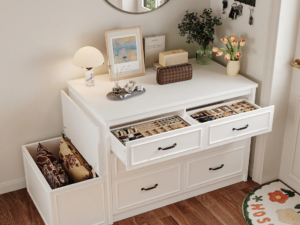
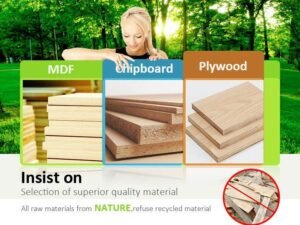
When importers, project contractors, wholesalers, and hotel developers compare cabinet materials, one question comes up repeatedly: MDF vs plywood cabinets—which one is the better commercial choice?
The answer depends on where the cabinets will be installed, how the product will be used, what finish is required, and how the project balances budget against durability. In export furniture manufacturing, this decision affects not only product performance, but also freight cost, claim rate, installation efficiency, and long-term buyer satisfaction.
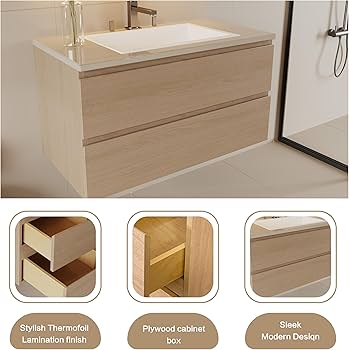
For bathroom vanities, kitchen cabinets, hotel guestroom casegoods, and apartment projects, both MDF and plywood can be viable. But they are not interchangeable. MDF usually offers a smoother painted surface and better machining consistency, while plywood is often preferred for improved screw holding, lighter weight, and stronger moisture tolerance in demanding environments. Industry and regulatory references also distinguish these materials clearly. The U.S. EPA’s composite wood standards cover MDF and hardwood plywood as separate regulated categories under formaldehyde rules, while California CARB applies emission standards to both composite wood panels and finished goods containing them, including cabinets.
In this guide, we compare MDF and plywood from a B2B sourcing perspective: durability, moisture resistance, cost, finishing results, OEM/ODM flexibility, MOQ, lead time, packaging, and recommended applications. If you are sourcing for retail distribution, private label, hotel fit-out, or apartment developments, this article will help you choose the right cabinet substrate with fewer after-sales risks.
Table of Contents
- What Are MDF and Plywood?
- MDF vs Plywood Cabinets: Quick Comparison
- Moisture Resistance and Bathroom Performance
- Surface Finish, Paint Quality, and Design Options
- Durability, Screw Holding, and Structural Stability
- Cost, Freight, and Total Procurement Value
- Best Applications for MDF Cabinets
- Best Applications for Plywood Cabinets
- MOQ, Lead Time, Packaging, and OEM/ODM Process
- How B2B Buyers Should Choose
- FAQ
- Final Recommendation
What Are MDF and Plywood?
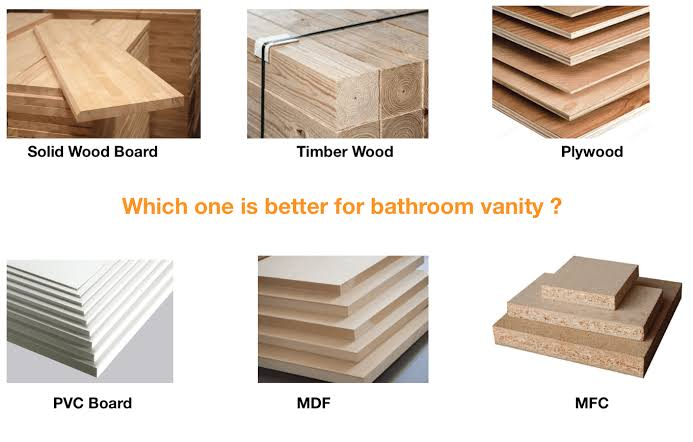
MDF (medium-density fiberboard) is an engineered wood panel made from wood fibers bonded with resin under heat and pressure. The EPA identifies MDF as a regulated composite wood product category under formaldehyde emission standards.
Plywood is made by bonding thin layers of wood veneer with alternating grain direction. APA explains plywood as a built-up panel product used across construction and industrial applications, and the cross-laminated structure is one reason buyers value it for dimensional stability and strength.
From a cabinet manufacturing standpoint, the difference is important:
- MDF is dense, smooth, and stable for machining and paint.
- Plywood is layered, lighter for its strength, and generally more forgiving in humid or variable environments.
The U.S. Forest Service’s Wood Handbook is widely used by architects, engineers, and manufacturers as a reference on wood and wood-based materials, including how moisture, construction, and end use affect performance.
MDF vs Plywood Cabinets: Quick Comparison
1) Surface quality
MDF usually delivers the smoother painted finish. Because it has no face veneer grain telegraphing, it is often preferred for matte lacquer, shaker doors, routed profiles, and modern painted bathroom vanities.
2) Moisture performance
Plywood generally performs better in humid spaces, especially where repeated moisture exposure, poor ventilation, or installation abuse are likely. That aligns with APA’s emphasis on plywood product classifications and bond durability for moisture-related service conditions.
3) Screw holding
Plywood usually has the advantage for hinges, drawer slides, and repeated assembly/disassembly because layered veneers tend to hold fasteners more reliably than fiberboard in many cabinet applications. The Wood Handbook supports the broader principle that wood-based material construction influences fastening behavior and end-use performance.
4) Cost
MDF is often more economical for painted programs and price-sensitive volume orders. However, the best sourcing decision is not based on panel cost alone. Claim risk, freight, hardware performance, and service environment matter more in B2B procurement.
5) Weight
Many buyers assume MDF is always the “value” option, but its density can increase unit weight. For export projects, that may affect shipping efficiency and installation handling.
Moisture Resistance and Bathroom Performance
For bathroom cabinets, the most important question is not simply “Which is cheaper?” but “Which material is safer for the actual moisture conditions?”
Bathrooms in hotels, apartments, and residential developments are exposed to:
- steam
- wet mops
- countertop water splash
- plumbing condensation
- inadequate ventilation
- transportation and site storage humidity
In these conditions, plywood cabinets usually offer better tolerance than standard MDF cabinets. Plywood’s layered construction and durable bond systems are one reason it is widely selected where moisture resistance matters. APA specifically notes that panel specifications and bond classifications relate to moisture resistance and durability.
MDF can still be used successfully in bathrooms, but the specification must be right:
- moisture-resistant MDF grade if required
- sealed edges
- quality primer and paint or PVC finish
- proper sink cutout sealing
- controlled installation conditions
- correct hardware and mounting design
For powder rooms, dry-zone vanities, and decorative painted fronts, MDF may still be commercially viable. For family bathrooms, hospitality bathrooms, and high-turnover rental units, many professional buyers move toward plywood carcasses to reduce swelling claims and edge damage.
This is especially relevant for importers selling into markets with stricter compliance expectations. EPA TSCA Title VI and California CARB both regulate emissions from composite wood products and finished goods containing them, including cabinets, so buyers should confirm supplier compliance documents during procurement.
B2B recommendation:
For a plywood bathroom vanity, plywood box construction with either plywood or MDF doors can be a very practical balance between durability and finish quality.
Surface Finish, Paint Quality, and Design Options
If your target market prefers painted shaker vanities, fluted fronts, routed patterns, or smooth contemporary lacquer finishes, MDF is often easier to finish at a premium visual level.
Why buyers use MDF for painted components:
- very smooth face
- no veneer core void concerns on the face
- clean routing for decorative door styles
- uniform density for repeatable machining
- strong consistency in mass production
That is why many OEM/ODM cabinet programs use a hybrid structure:
- plywood cabinet box
- MDF painted doors
- plywood or solid wood reinforcement where needed
For exporters serving wholesalers and private-label retailers, this hybrid solution often reduces complaints while maintaining showroom appeal.
Plywood, by contrast, is ideal when the buyer wants:
- natural wood veneer appearance
- melamine-faced cabinet boxes
- lighter structural panels
- better screw holding for larger modules
- a more durable substrate in humid conditions
For decorative plywood, buyers may also refer to the ANSI/HPVA HP-1 standard for hardwood and decorative plywood, which describes nationally recognized quality criteria, test methods, moisture content, and product marking practices.
Durability, Screw Holding, and Structural Stability
In long-term commercial use, cabinet performance depends on more than the face finish. Project buyers usually care about:
- hinge stability
- drawer slide retention
- shelf sag resistance
- transport damage rate
- installer handling
- wall-mount reliability
- plumbing cutout integrity
- claim frequency after installation
In these areas, plywood often has the better reputation, especially for cabinet boxes, side panels, and load-bearing sections. Because plywood uses cross-laminated veneers, it is commonly chosen where structure and fastener holding matter. APA and the USDA Forest Products Laboratory both frame wood-based panel performance in terms of construction, moisture behavior, and intended end use.
MDF is not “weak” by default. It can perform well when used in the right place. But in export cabinet programs, failures usually happen at the edges, cutouts, hinge zones, and water-exposed areas. That is why many experienced buyers specify:
- plywood for cabinet box
- MDF for painted doors or decorative panels
- solid wood or plywood reinforcement for hardware zones
For hotel and apartment projects, this approach usually gives a better balance of appearance, durability, and claim control.
Cost, Freight, and Total Procurement Value
Many sourcing decisions begin with FOB price. That is natural, but professional buyers know that the lowest panel price is not always the lowest total cost.
Where MDF may save money
- painted cabinet programs
- promotional retail lines
- high-volume standard SKUs
- projects with limited moisture exposure
- decorative fronts requiring routing detail
Where plywood may save money indirectly
- fewer moisture claims
- better performance in bathrooms and kitchens
- improved fastener retention
- lower replacement rate
- easier confidence for contractors and developers
When comparing quotations, B2B buyers should review:
- panel specification and thickness
- edge sealing method
- hardware brand and fixing method
- compliance certificates
- carton protection level
- installation environment
- target customer segment
A cheaper MDF vanity can become more expensive if the market has high humidity, long inventory cycles, or frequent reinstallation. On the other hand, a fully plywood specification may be unnecessary for dry-area painted cabinets sold into mid-range retail channels.
Best practice: compare total procurement value, not only board price.
Best Applications for MDF Cabinets
MDF cabinets are usually a strong fit for:
Painted bathroom vanities
Especially where the design priority is a smooth painted finish and the project environment is relatively controlled.
Decorative doors and fronts
Routed shaker doors, grooved patterns, fluted panels, and modern lacquer styles are often easier to standardize on MDF.
Cost-sensitive wholesale programs
For importers selling mid-range painted cabinetry, MDF can help maintain target pricing.
Bedroom, living room, and dry-zone cabinetry
In low-moisture areas, MDF can be a good option when appearance is prioritized.
OEM private-label collections
If your brand requires a consistent painted finish across multiple SKUs, MDF often improves production consistency.
Best Applications for Plywood Cabinets
Plywood cabinets are usually the stronger choice for:
Bathroom vanity carcasses
Especially for family-use bathrooms, hotel bathrooms, serviced apartments, and humid regions.
Kitchen cabinet boxes
Where durability, screw holding, and long-term use are critical.
Hotel and apartment projects
Project buyers often prefer the risk reduction of plywood in high-use environments.
Export markets with stronger durability expectations
For commercial channels where installation quality varies, plywood can provide more tolerance.
Premium and semi-custom cabinet programs
Buyers seeking better structure and perceived material value often specify plywood.
If the buyer also wants sustainability positioning, requesting FSC chain-of-custody certified material can strengthen the offer for tenders and commercial procurement. FSC notes that chain-of-custody certification helps verify responsible sourcing through the supply chain.
Material Compliance and Buyer Risk Control
For cabinet importers, material choice should always be linked with compliance and documentation.
Important checkpoints include:
- TSCA Title VI compliance for composite wood products in the U.S. market
- CARB compliance when relevant to California or buyer requirements
- panel grade confirmation
- veneer and core description
- test reports where needed
- FSC or other sourcing documentation if specified
EPA explains that MDF, particleboard, and hardwood plywood are covered under composite wood rules, and CARB likewise applies formaldehyde emission requirements to composite wood products and finished goods such as cabinets.
For B2B buyers, asking for these documents before production is much easier than dealing with customs or retailer compliance issues later.
MOQ, Lead Time, Packaging, and Customization Process
As a board-based furniture export manufacturer, we usually recommend that buyers evaluate cabinet material together with supply chain execution.
Typical application scenarios
- bathroom vanity programs for importers
- hotel guestroom and bathroom cabinetry
- apartment fit-out projects
- builders’ package supply
- distributor and wholesaler lines
- OEM/ODM retail collections
MOQ
Typical MOQ depends on finish, hardware, and packaging method. For standard OEM projects, MOQ is often based on model count, color count, and material mix, not just total quantity. Hybrid programs using plywood carcass plus MDF doors may help buyers reach commercial pricing while keeping performance at the required level.
Lead time
Lead time usually depends on:
- material confirmation
- finish approval
- sample cycle
- order quantity
- carton design
- inspection requirements
For repeat programs, lead time is usually more stable once BOM and packaging standards are fixed.
Packaging
For export bathroom and kitchen cabinets, strong packaging matters almost as much as the panel itself. We recommend:
- full foam or corner protection
- reinforced carton structure
- clear hardware labeling
- moisture barrier where needed
- pallet option for project orders
- drop-test-oriented packaging design for retail programs
Customization process
A practical OEM/ODM process usually follows:
- buyer shares drawings, reference images, or target market specs
- manufacturer confirms material, structure, dimensions, and finish
- quotation and engineering review
- sample or mock-up approval
- carton and labeling confirmation
- pilot order or mass production
- QC inspection and shipment booking
For B2B buyers, this process is where material decisions should be finalized. Changing from MDF to plywood after sampling may affect pricing, weight, hardware method, and finish detailing.
How B2B Buyers Should Choose
Choose MDF cabinets when:
- you want the best painted finish
- the installation environment is relatively dry
- the project is price-sensitive
- routed door design is important
- the buyer accepts proper sealing and controlled use conditions
Choose plywood cabinets when:
- the cabinets are for bathrooms or kitchens
- durability matters more than the lowest panel cost
- hardware performance is critical
- the market has humidity concerns
- the buyer wants stronger long-term confidence
Choose a hybrid solution when:
- you want a premium painted look with better box durability
- you need a cost-performance balance
- you supply hotels, apartments, developers, or demanding wholesalers
- you want MDF doors but plywood carcasses
For many professional buyers, hybrid construction is the most commercial answer: plywood where structure matters, MDF where finish quality matters.
CTA
If you are comparing MDF vs plywood cabinets for your market, project, or private-label line, the best choice depends on moisture exposure, finish requirements, budget target, and expected claim risk.
Ask our engineers which material suits your market. We can recommend the right construction for wholesalers, importers, hotel projects, apartment developments, and OEM/ODM cabinet programs.
FAQ
Is MDF or plywood better for bathroom cabinets?
For most bathroom cabinet boxes, plywood is usually the safer option because it generally handles humid conditions better than standard MDF. MDF can still be used for painted doors or controlled dry-zone applications when edges and surfaces are properly sealed. APA and the USDA Wood Handbook both support the importance of panel construction and moisture-related service conditions in product selection.
Why do many manufacturers use MDF doors with plywood boxes?
Because MDF often gives a smoother painted finish, while plywood usually provides better structural performance and moisture tolerance for cabinet carcasses. This hybrid structure is common in export cabinet manufacturing for balancing appearance and durability.
Is plywood always more expensive than MDF?
Not always in total cost. Plywood often has a higher panel cost, but it may reduce claims, replacements, and long-term performance issues in bathrooms and kitchens.
Are MDF and plywood cabinets both regulated for formaldehyde emissions?
Yes. The EPA identifies MDF and hardwood plywood among the regulated composite wood product categories, and CARB also regulates composite wood products and finished goods containing them, including cabinets.
What should importers ask a cabinet supplier before ordering?
Ask for panel specification, compliance documents, moisture strategy, hardware method, edge sealing details, packaging standard, sample approval process, and production lead time.
Further Reading
For buyers who want to review material standards, compliance requirements, and technical references in more detail, the following resources are useful starting points:
- U.S. EPA Formaldehyde Emission Standards for Composite Wood Products
Useful for understanding U.S. compliance requirements for MDF, plywood, and other composite wood materials used in cabinets.
https://www.epa.gov/formaldehyde/formaldehyde-emission-standards-composite-wood-products - California Air Resources Board (CARB) – Composite Wood Products Program
A helpful reference for buyers supplying products into California or working with customers who require CARB compliance.
https://ww2.arb.ca.gov/our-work/programs/composite-wood-products-program - APA – The Engineered Wood Association: Plywood
A practical technical resource for understanding plywood construction, performance, and applications.
https://www.apawood.org/plywood - USDA Forest Products Laboratory – Wood Handbook
A widely referenced handbook covering wood properties, engineered wood materials, and performance considerations.
https://www.fpl.fs.usda.gov/documnts/fplgtr/fpl_gtr190.pdf - ANSI/HPVA HP-1 Standard for Hardwood and Decorative Plywood
Useful for buyers who want to better understand decorative plywood quality standards and technical criteria.
https://www.decorativehardwoods.org/sites/default/files/2022-01/ansi-hpva-hp-1-2020.pdf - FSC – Chain of Custody Guidance for Furniture Businesses
Helpful for importers, wholesalers, and project buyers interested in responsible wood sourcing and certified supply chains.
https://fsc.org/en/businesses/furniture
In the MDF vs plywood cabinets decision, the best choice is not about picking the cheapest material—it is about choosing the right construction for your market, application, and long-term performance goals. MDF is ideal for projects that require a smooth painted finish and detailed door designs, while plywood is often the better option for cabinet structures exposed to higher humidity and heavier daily use. For many importers, wholesalers, hotel contractors, and apartment developers, the most practical solution is a hybrid specification that combines plywood durability with MDF finish quality. If you are planning a new cabinet line or sourcing for an upcoming project, contact our team for material recommendations, OEM/ODM support, and project-based quotations. We can help you match the right cabinet construction to your target market, budget, and quality expectations.