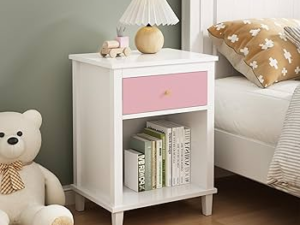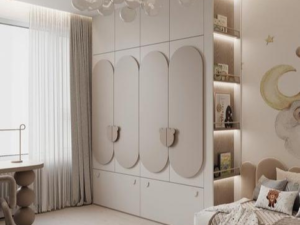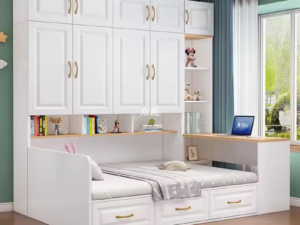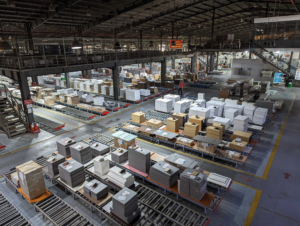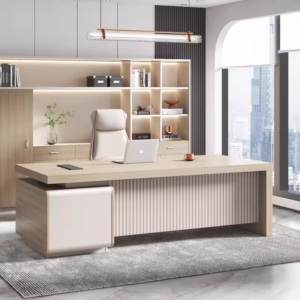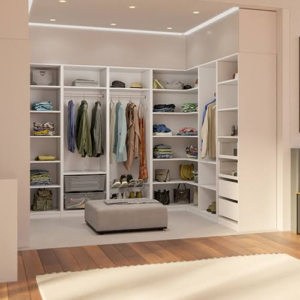
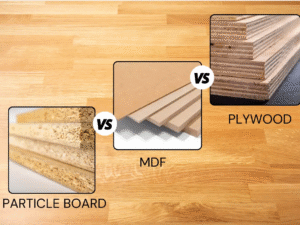
When sourcing living room furniture or building a complete living room furniture set, choosing the right panel material is crucial. This choice is one of the most important decisions you will make as a B2B buyer.
The material you select affects:
- Product durability and stability
- Surface finish quality and consistency
- Packaging performance during export shipping
- Return rate for e-commerce channels
- Final retail positioning (entry-level vs premium)
- Your brand reputation and repeat orders
Many buyers start with a simple question:
“Which is better—plywood, MDF, or particle board?”
But in reality, the correct answer depends on your market, channel, price target, packaging method, and the type of living room furniture you sell (TV stand, coffee table, sideboard, display cabinet, wall unit, etc.).
In this guide, we’ll compare plywood vs MDF vs particle board using a clear decision chart. We’ll share practical recommendations from an OEM/ODM panel furniture export manufacturer perspective. This will ensure you can control costs without sacrificing performance.
Table of Contents (TOC)
- Material Options for Panel Living Room Furniture
- Strength, Weight, Cost Comparison Table
- Surface Finish Compatibility
- Shipping & Damage Risk by Material
- Best Choice by Channel (Retail / E-commerce / Project)
- Factory Recommendation for Export Orders
- Buyer Quick Checklist
- FAQ (Schema-ready)
Material Options for Panel Living Room Furniture
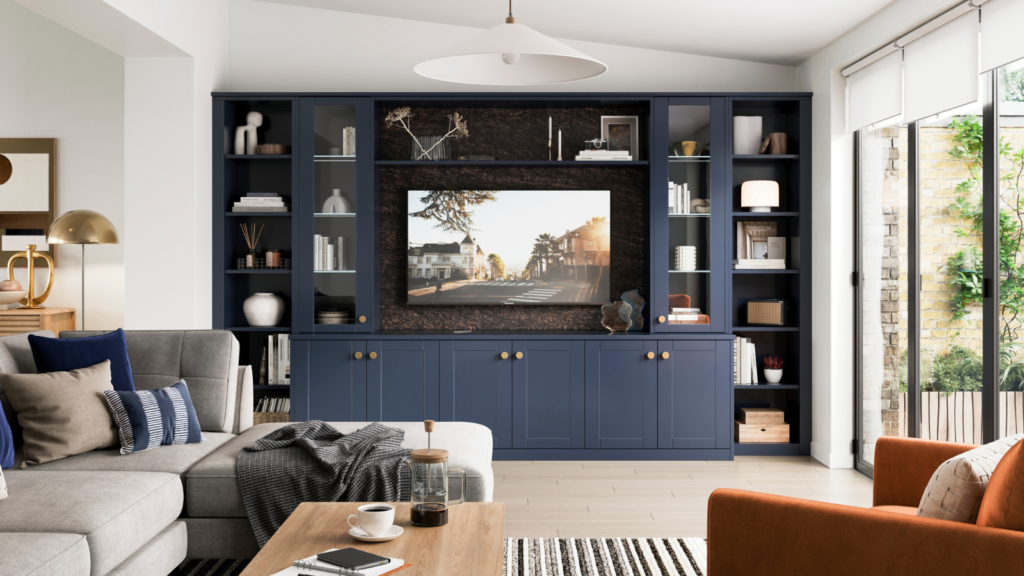
Panel furniture dominates modern furniture for living room markets because it offers:
- Clean, contemporary styling
- Efficient manufacturing
- Stable sizing and mass production
- Easy packaging for export and distribution
- Strong value positioning for mid-range buyers
For living room furniture sets furniture, the most common engineered wood boards include:
1) Plywood (Recommended for Export Stability)
Plywood is made from multiple thin wood veneers layered and glued together with alternating grain direction. This structure gives plywood strong mechanical stability and good resistance to warping.
Typical use in living room furniture:
- TV stands and media consoles
- Sideboards and storage cabinets
- Coffee tables with structural frames
- Shelving systems and wall units
- Premium living room furniture set lines
2) MDF (Medium-Density Fiberboard)
MDF is made from wood fibers bonded under heat and pressure. It has a smooth surface and uniform density, making it ideal for painted finishes and clean modern aesthetics.
Typical use:
- Painted cabinet doors and drawer fronts
- Decorative panels and premium shapes
- Contemporary living room furniture designs
- Mid-range living room sets furniture collections
3) Particle Board (Chipboard)
Particle board is made from wood chips and resin pressed into sheets. It is widely used for cost-effective panel furniture.
Typical use:
- Entry-level living room furniture set programs
- RTA furniture for large-scale retail
- Budget-friendly TV stands and shelving
OSB (Oriented Strand Board) — Optional Material
Some buyers also ask about OSB for special market positioning. OSB can be cost-effective, but it has a distinct texture. It is usually not the first choice for visible premium furniture surfaces.
Strength, Weight, Cost Comparison Table (Buyer Decision Chart)
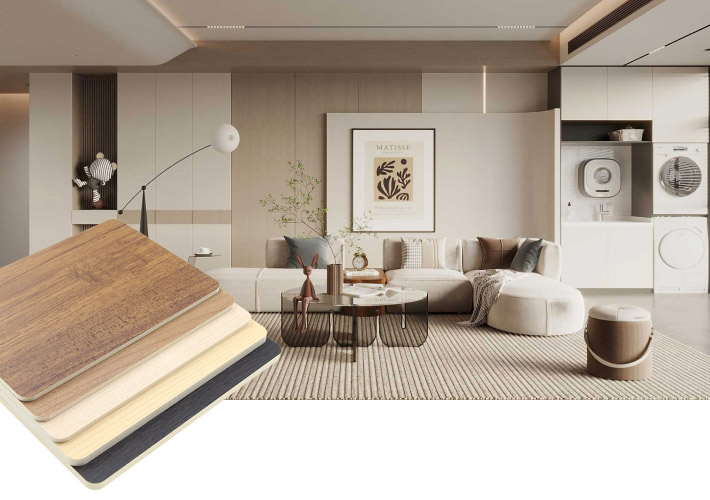
Below is a practical comparison chart designed for wholesale buyers, importers, retail brands, and project procurement teams.
Tip: Always evaluate the material with the intended finish + packaging + shipping route. A board that performs well locally may behave differently in long-distance export.
Quick Comparison Table
Plywood vs MDF vs Particle Board for Living Room Furniture
1) Strength & Load Capacity
- Plywood: ⭐⭐⭐⭐⭐ (Strongest, best screw holding)
- MDF: ⭐⭐⭐⭐☆ (Good density, moderate screw holding)
- Particle Board: ⭐⭐⭐☆☆ (Weaker screw holding, depends on grade)
2) Weight
- Plywood: Medium
- MDF: Heavy (higher density)
- Particle Board: Medium to heavy (varies by density)
3) Cost Level
- Plywood: $$–$$$ (mid to premium)
- MDF: $$ (mid)
- Particle Board: $ (most cost-effective)
4) Moisture Resistance
- Plywood: ⭐⭐⭐⭐☆ (better performance)
- MDF: ⭐⭐⭐☆☆ (swells if exposed to moisture)
- Particle Board: ⭐⭐☆☆☆ (most sensitive to moisture)
5) Edge Durability
- Plywood: ⭐⭐⭐⭐☆
- MDF: ⭐⭐⭐☆☆
- Particle Board: ⭐⭐☆☆☆
6) Best for Export
- Plywood: Excellent
- MDF: Good with correct packaging
- Particle Board: Riskier for long shipping if packaging is weak
Why This Chart Matters for Buyers
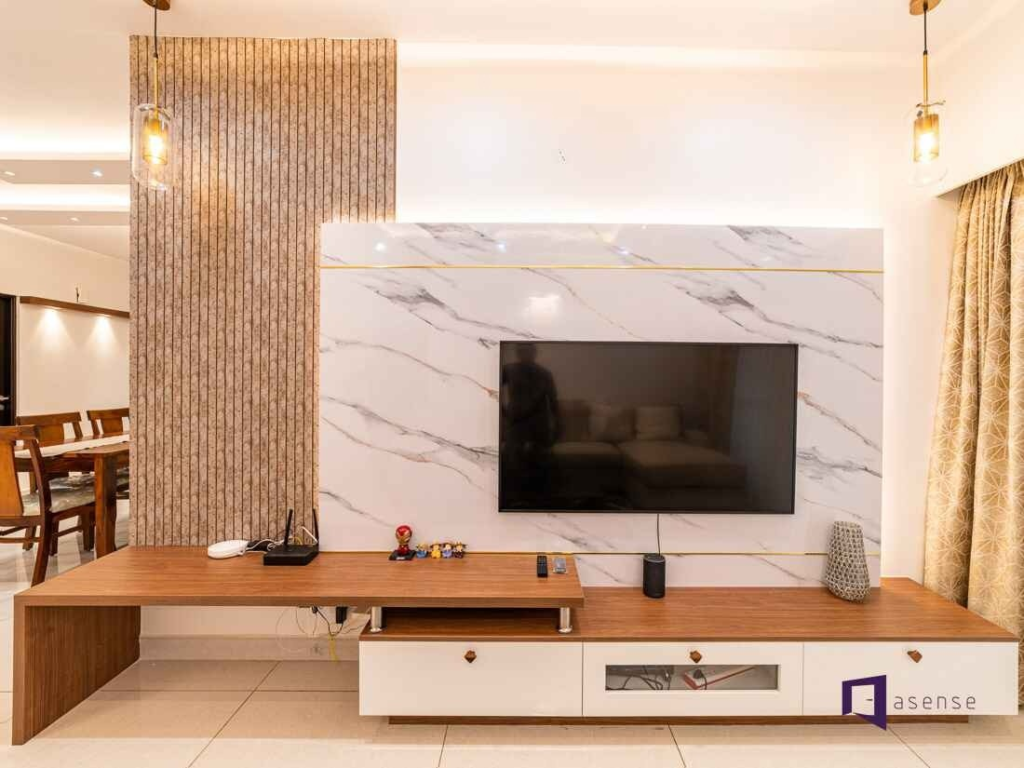
If you sell “best living room furniture” in your market, the material choice will directly affect customer satisfaction. It will also impact repeat sales.
If you target inexpensive living room furniture or clearance programs, the material must support:
- Competitive cost
- Acceptable performance
- Low damage rate
- Stable mass production
There is often a hidden risk for buyers. They search terms like “amazon living room furniture” or “living room furniture sets for sale”. Returns are frequently caused by poor packaging. Weak joints or edge damage also contribute to this risk, especially in e-commerce logistics.
Surface Finish Compatibility (Melamine, Veneer, Laminate, Paint)
Finish selection is where many living room furniture sourcing projects succeed—or fail.
Even if two suppliers quote the same material, the finish system can create major differences in:
- Color consistency
- Scratch resistance
- Water resistance
- Edge banding performance
- Overall perceived value
To learn more about furniture material safety and emissions requirements, reference CARB Phase 2 guidelines. You can also check TSCA Title VI for additional details. These guidelines are commonly required in the US market.
External reference: California Air Resources Board (CARB) https://ww2.arb.ca.gov/our-work/programs/formaldehyde-emission-standards-composite-wood-products
Plywood Finish Compatibility
Best matches:
- Melamine paper lamination
- Wood veneer
- HPL (High Pressure Laminate)
- PVC edge banding
Why buyers choose plywood:
- Strong structure supports heavier cabinets
- Better performance for export furniture
- Premium wood look possible with veneer
MDF Finish Compatibility
Best matches:
- Painted finish (PU/NC)
- PVC wrap / foil
- Melamine (depending on density)
Key advantage:
MDF gives a smooth, uniform surface that is excellent for modern matte paint looks. This is why many contemporary living room furniture lines use MDF for doors or decorative fronts.
Particle Board Finish Compatibility
Best matches:
- Melamine
- Laminate
- PVC edge banding
Limitations:
Particle board edges can be more fragile. Screw holding is weaker. Therefore, the structure design and hardware selection become more critical.
To understand wood-based panel standards and technical definitions, you can reference APA – The Engineered Wood Association.
External reference: APA https://www.apawood.org/
Shipping & Damage Risk by Material
For export buyers, the biggest hidden cost is not always the board price—it’s the damage rate.
Damage claims typically come from:
- Corner impact during handling
- Edge chipping
- Carton compression
- Moisture exposure
- Incorrect stacking in warehouses
For packaging guidance and international handling recommendations, you can reference ISTA packaging test standards (commonly used for drop testing).
External reference: ISTA https://ista.org/
Plywood Shipping Performance
Pros:
- Better structural strength
- Lower risk of breakage at screw points
- Good for larger cabinets and long panels
Best for:
- Long-distance shipments
- Mixed container loading
- Contract furniture deliveries
MDF Shipping Performance
Pros:
- Great surface quality
- Works well for premium finishes
Risks:
- Heavy weight increases freight costs
- Can swell if moisture exposure occurs
- Requires stronger packaging for corners and edges
Particle Board Shipping Performance
Pros:
- Best cost advantage for high-volume programs
Risks:
- Higher edge damage risk
- Weaker screw holding increases assembly failures
- Needs optimized RTA structure and packaging engineering
For buyers in the EU/UK markets, it’s also important to consider sustainability and responsible sourcing. You can reference FSC certification as a common procurement requirement.
External reference: FSC https://fsc.org/en
Best Choice by Channel (Retail / E-commerce / Project)

This section is where B2B buyers get the most value—because the “best” material depends on your sales model.
1) Retail Stores & Distribution
Retail buyers often focus on:
- Visual quality on showroom floor
- Competitive pricing
- Stable supply and color consistency
Recommended material strategy:
- Plywood for premium storage cabinets
- MDF for painted modern styles
- Particle board for entry-level series with strict QC + packaging
If you’re competing with large retail programs (like clearance-driven sets), cost control matters—but you still need durability to avoid returns.
2) E-commerce (Amazon-Style Logistics)
E-commerce buyers care most about:
- Flat pack efficiency
- Easy assembly
- Low return rate
- Strong packaging
- Spare parts availability
Recommended material strategy:
- Plywood for high-rating products
- Particle board for price-driven SKUs, but only with reinforced packaging
- MDF for premium painted items, with moisture-proof packing solutions
If your customer searches “best living room furniture” online, the real driver is reviews. One packaging failure can destroy conversion.
3) Contract Projects (Hotel / Apartment / Real Estate)
Project buyers care most about:
- Structural stability
- Consistent batch quality
- On-time delivery
- Documentation and after-sales support
Recommended material strategy:
- Plywood as the safest choice for export contract furniture
- MDF as a design-focused add-on for decorative parts
- Particle board only if project budget is strict and installation team is experienced
For compliance and safety, buyers may also consider regulations like REACH in the EU.
External reference: ECHA REACH https://echa.europa.eu/regulations/reach
Factory Recommendation for Export Orders (OEM/ODM View)
As an export manufacturer, our recommendation is to choose material based on total landed cost, not only raw board cost.
Recommended Material Mix for a Living Room Furniture Set
A balanced OEM solution for many buyers is:
- TV Stand / Sideboard: Plywood structure + melamine finish
- Coffee Table: Plywood or MDF top + reinforced base
- Display Shelf: Particle board or MDF with edge protection
- Decorative Panels: MDF for paint-ready surfaces
This mix helps you control cost while maintaining performance where it matters most.
How to Reduce Cost Without Lowering Quality
Instead of downgrading material, buyers can optimize:
- Panel thickness engineering
- Internal structure reinforcement
- Hardware upgrades (soft-close optional)
- RTA packaging design
- Edge banding quality
What Buyers Should Ask Their Supplier Before Ordering
Before confirming a living room furniture set order, ask:
- What board grade and density are used?
- What is the edge banding thickness and glue system?
- What packaging level is included in the quote?
- Is RTA available and what hardware is included?
- What QC standard is followed (AQL / internal checklist)?
Buyer Quick Checklist
Here is a practical checklist for professional procurement teams:
- MOQ: Confirm minimum order quantity per SKU and per finish
- Lead time: Confirm production schedule after deposit
- Material options: Plywood / MDF / particle board / OSB availability
- RTA availability: Flat pack design + assembly instructions
- Finish options: Melamine / veneer / laminate / paint compatibility
- Packaging level: Standard vs reinforced export packaging
- QC standard: AQL, inline inspection, final inspection reports
- Custom branding: Logo, carton design, barcode, manuals
FAQ
Q1: Which material is best for living room furniture export orders?
For most export projects, plywood is the safest option due to its strength, screw holding, and shipping stability.
Q2: Is MDF good for living room furniture sets?
Yes. MDF is excellent for modern painted designs. It provides smooth surfaces. However, it requires moisture control. Its weight also demands stronger packaging.
Q3: Why do some low-cost living room furniture sets use particle board?
Particle board is cost-effective. It is widely used for entry-level programs. However, it needs proper structure engineering. Reinforced packaging is necessary to reduce damage and returns.
Q4: What is the best material for e-commerce living room furniture?
Plywood offers the best balance for reviews and durability. Particle board can work for budget SKUs if RTA structure and packaging are optimized.
Q5: How can I reduce return rates for living room furniture sets?
Focus on RTA design, hardware quality, packaging reinforcement, and clear assembly instructions—these factors often matter more than board type alone.