
When buyers search for a living room furniture manufacturer, many suppliers appear similar at first glance. Almost every factory says it offers good quality, OEM service, competitive pricing, and on-time delivery. But for serious buyers in the B2B market, especially importers, wholesalers, e-commerce brands, hotel groups, apartment developers, and project contractors, the real question is much more specific:
Can this manufacturer deliver stable quality, commercial-grade execution, and smooth cooperation order after order?
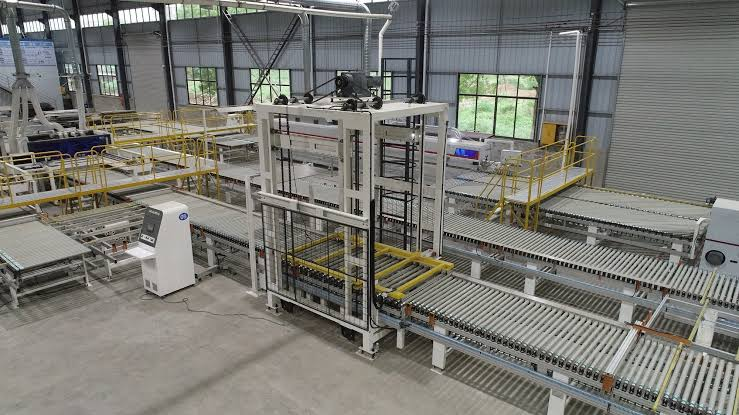
That is the difference between a supplier that only looks good online and a manufacturer that can actually support your business.
In the living room furniture category, buyers often need more than standalone products. They may require coordinated collections across sofas, coffee tables, TV stands, sideboards, lounge chairs, and storage units. They may also need private label support, custom dimensions, project-based finishes, export-safe packaging, knock-down structures, and documentation suitable for international markets. For that reason, choosing the right factory is a strategic sourcing decision, not a simple quotation exercise.
This article shares 10 proven checks to help industry buyers evaluate a reliable living room furniture manufacturer in China. It is written from a practical sourcing perspective for businesses that care about consistency, customization, scalability, and long-term cooperation.
Table of Contents
- Why the Right Manufacturer Matters in B2B Furniture Sourcing
- Check 1: Confirm the Factory’s Real Product Focus
- Check 2: Evaluate OEM and ODM Capability
- Check 3: Review Material Control and Compliance Awareness
- Check 4: Inspect Manufacturing Equipment and Process Stability
- Check 5: Ask About Quality Control at Every Stage
- Check 6: Verify Experience with Hotel and Apartment Projects
- Check 7: Assess Export Packaging and Container Planning
- Check 8: Compare Communication Speed and Technical Clarity
- Check 9: Test Sampling, Lead Time, and Order Flexibility
- Check 10: Look for Long-Term Value, Not Just the Lowest Price
- Why China Remains a Strong Source for Living Room Furniture
- Final Thoughts
- FAQ
Why the Right Manufacturer Matters in B2B Furniture Sourcing
Living room furniture is one of the most commercially important categories in residential and project furnishing. It combines design impact, practical use, storage value, and high visual relevance in showrooms, apartments, hospitality spaces, and online retail listings.
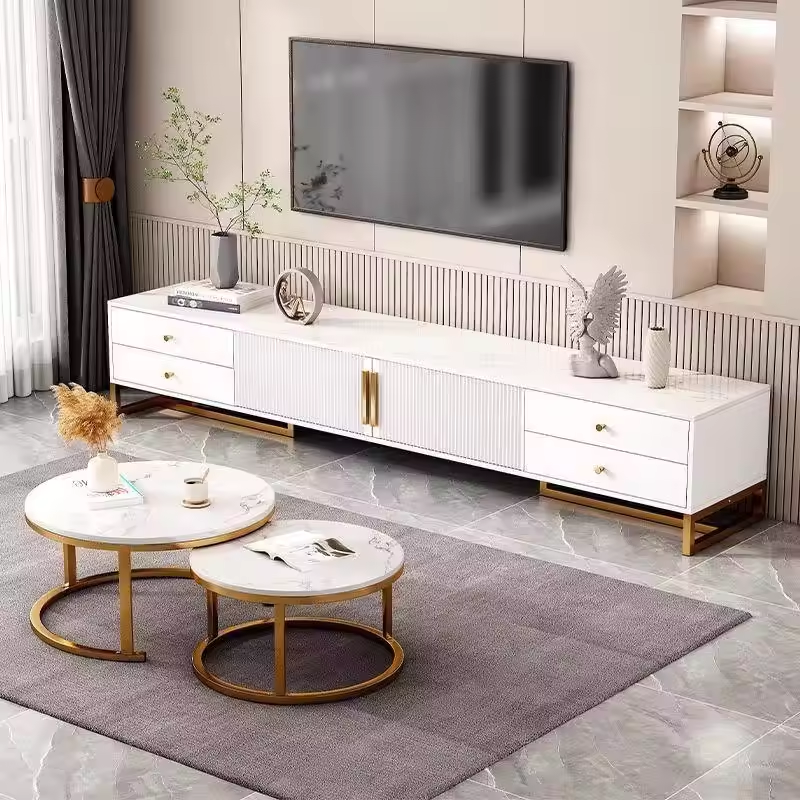
For B2B buyers, the challenge is that this category is also operationally demanding. Products often involve multiple materials, such as engineered wood, plywood, veneer, hardware, upholstery, foam, glass, or metal. Buyers may also need matching collections, flat-pack designs, custom finishes, and specific packing methods for overseas shipping. A weak supplier may quote attractively at the beginning but cause problems later through inconsistent finishing, poor hardware fit, weak packaging, unclear drawings, unstable dimensions, or delayed production.
A reliable manufacturer reduces these risks. More importantly, a reliable factory helps buyers scale.
That is especially true for:
- Distributors that need consistent replenishment
- Retailers and e-commerce sellers that need packaging-friendly products
- Hotel and apartment buyers that need project coordination
- OEM/ODM clients that need confidential development and stable execution
- Importers that want lower defect rates and fewer claims
Check 1: Confirm the Factory’s Real Product Focus
The first check is simple but often ignored. Buyers should confirm whether the supplier truly specializes in the products they want to buy.
Some factories list many product categories online, but actual production strength may be concentrated in only one or two segments. A reliable living room furniture manufacturer should be able to clearly explain its core categories, such as:
- TV stands and media consoles
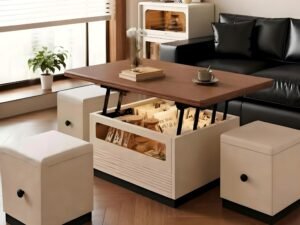
- Coffee tables with storage
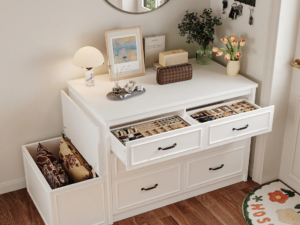
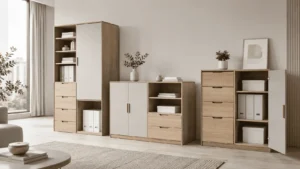
- Sideboards and storage cabinets
- Living room chairs
- Modular furniture
- Flat-pack living room furniture
- Custom plywood or panel furniture solutions
If your project involves panel furniture, storage furniture, RTA products, or coordinated cabinet collections, it is better to work with a supplier whose production system is already aligned with those structures. That reduces engineering errors and improves consistency.
A practical question to ask is:
Which living room products do you produce repeatedly at stable volume, and which ones are only occasional custom orders?
The answer will tell you more than the catalog.
Check 2: Evaluate OEM and ODM Capability
In B2B sourcing, OEM and ODM are not marketing words. They are execution systems.
A factory with real OEM capability should be able to support:
- Custom dimensions
- Material substitutions
- Hardware changes
- Packaging adjustments
- Logo or label requirements
- Assembly instruction customization
- Cost-down engineering
- Sample development based on drawings or reference images
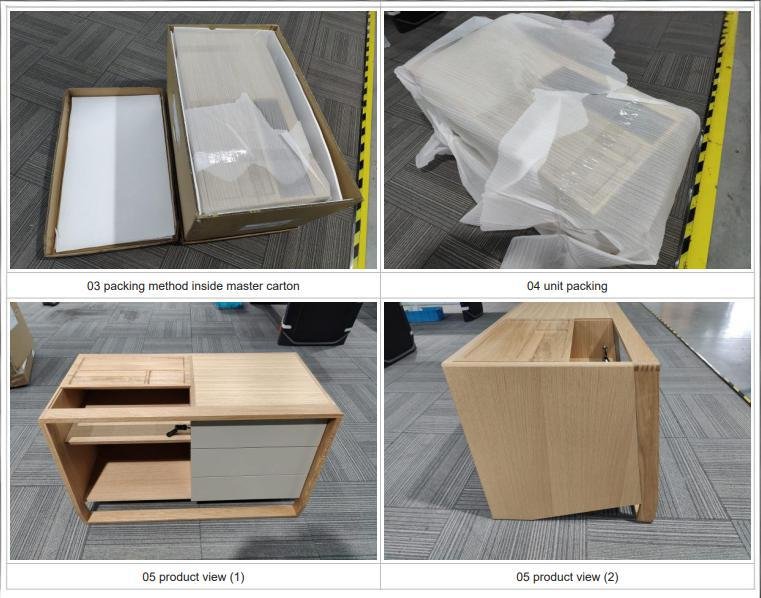
A factory with strong ODM capability should also help buyers improve existing concepts by recommending structure optimization, finish alternatives, packaging improvements, and market-friendly adjustments.
For hotel, apartment, and developer projects, this becomes even more important. Standard catalog products are often not enough. Buyers may need corridor-depth control, anti-tip structures, project color matching, or coordinated furniture specifications across multiple rooms or units.
A reliable supplier should discuss customization in a structured way, not vaguely. If the factory cannot clearly explain what can be changed, what affects cost, what affects lead time, and what needs sample confirmation, its OEM/ODM system is probably immature.
Check 3: Review Material Control and Compliance Awareness
For modern living room furniture, materials influence not only appearance, but also durability, safety, shipping performance, and market acceptance.
Buyers should ask what panels, finishes, hardware systems, and packaging materials the factory usually uses. More importantly, they should evaluate whether the supplier shows awareness of compliance requirements in destination markets.
For example, the U.S. EPA regulates formaldehyde emission standards for composite wood products under TSCA Title VI, and California CARB also regulates composite wood products used in finished goods sold in that market. US EPA+2加州空气资源委员会+2
If your business sells into markets that are sensitive to emissions, traceability, or sustainability, the manufacturer should at least understand how those requirements affect material sourcing and documentation.
Sustainability-minded buyers may also care about wood traceability and chain-of-custody systems. FSC identifies furniture as a key category for certified wood sourcing and supply-chain transparency. 森林管理委员会
This does not mean every buyer needs the same certification scope. It means a professional manufacturer should be able to discuss:
- Panel grade options
- Surface finish choices
- Formaldehyde-related market requirements
- Material traceability where needed
- Packaging material suitability for export
The goal is not to make the product sound technical. The goal is to prevent later compliance and reputation problems.
Check 4: Inspect Manufacturing Equipment and Process Stability

A good catalog can hide a weak workshop. That is why buyers should always assess production process stability.
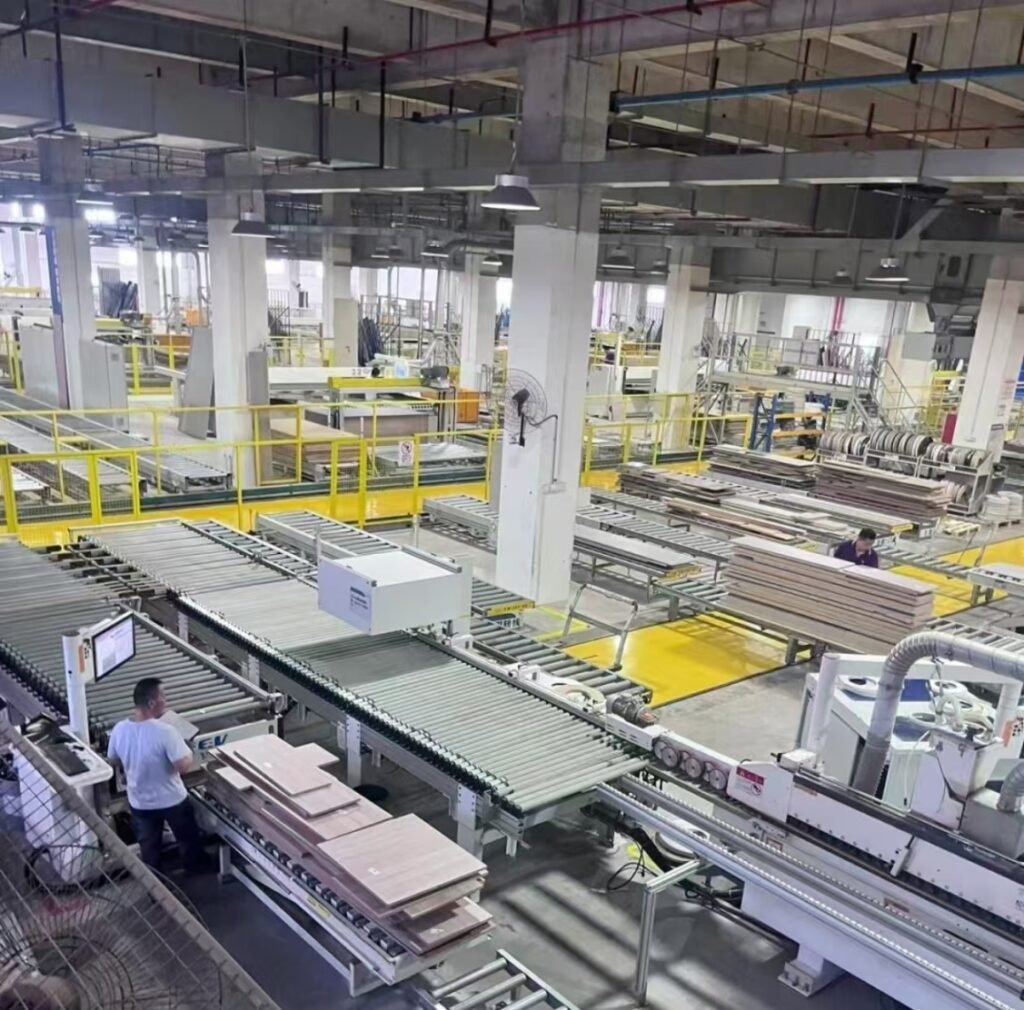
For living room panel furniture and storage furniture, process consistency matters in cutting, drilling, edge banding, surface finishing, hardware installation, and final assembly fit. Small errors at each stage can become visible defects at destination warehouses or customer sites.
Ask the manufacturer to explain its main production flow. A professional factory should be able to describe how it manages:
- Panel cutting accuracy
- CNC machining
- Hole-position consistency
- Edge sealing quality
- Surface finish inspection
- Hardware fit testing
- Trial assembly before packing
- Batch tracking
For project buyers, this is especially important. In hotels, serviced apartments, and multi-unit residential projects, repeated dimensional errors create installation delays and on-site rework costs. A reliable factory thinks in terms of repeatability, not only unit production.
You do not need the most expensive factory. You need the one with the most controlled production rhythm.
Check 5: Ask About Quality Control at Every Stage
Many suppliers say they have quality control. Fewer can explain it clearly.
A reliable manufacturer should have inspection points before, during, and after production. Buyers should ask for the QC logic, not just the phrase “we inspect everything.”
A better supplier will usually divide control into stages such as:
Incoming Material Check
Raw panels, hardware, upholstery materials, glass, foam, and cartons are checked before use.
In-Process Inspection
Dimensions, drilling, surface treatment, assembly fit, and finishing consistency are checked during production.
Pre-Packing Inspection
The factory checks product appearance, structure, accessory completeness, label accuracy, and packing protection before sealing cartons.
Final Shipment Review
The supplier verifies model mix, carton marks, quantity, and loading arrangement.
This matters even more when the products are shipped flat-pack. A knock-down unit may look fine in the factory, but if one fitting bag is incomplete or one panel is mislabeled, the entire product becomes a complaint at the destination.
If the supplier can share sample QC photos, inspection checklists, or standard defect examples, that is usually a good sign.
Check 6: Verify Experience with Hotel and Apartment Projects

Project business is different from regular wholesale. Hotel and apartment orders usually involve stricter coordination, tighter schedules, and more functional requirements.
For example, a hotel or serviced apartment project may need:
- Matching finishes across multiple furniture categories
- Compact layouts for guest rooms or studios
- Stronger hardware for frequent use
- Project-based labeling and room identification
- Installation-friendly packaging
- Repeat orders aligned with construction phases
A supplier that has only done general retail orders may not fully understand these demands. That does not mean the factory is bad. It simply means its experience may not match your application.
Project buyers should ask:
- Have you supplied furniture for hotels, apartments, or commercial projects?
- Can you support coordinated specifications across multiple products?
- Can you adjust dimensions for project layouts?
- Can you handle phased deliveries or repeat batches?
- Can you prepare export-safe, installation-friendly packing?
A reliable partner will discuss these issues professionally and realistically, rather than giving a generic yes to everything.
Check 7: Assess Export Packaging and Container Planning
Export packaging is one of the most overlooked areas in furniture sourcing. Yet for international buyers, it directly affects claim rates, customer satisfaction, warehouse handling, and logistics cost.
Living room furniture often includes long panels, corners, decorative surfaces, hardware bags, glass elements, or fragile finished edges. Without proper protection, even a well-made product can arrive damaged.
Buyers should review:
- Carton strength
- Corner protection
- Internal foam layout
- Panel separation methods
- Hardware bag labeling
- Assembly instruction packing
- Drop resistance logic
- Pallet or non-pallet loading method
- Container space efficiency
If raw wood packaging material is used in international shipments, buyers should also be aware of ISPM 15 phytosanitary rules. The International Plant Protection Convention states that ISPM 15 applies to wood packaging material made from raw wood, while processed wood products such as plywood are excluded. 国际植物保护公约+1
This is relevant for importers because packaging decisions can affect customs smoothness and total shipping performance.
For flat-pack furniture exporters, packaging is not just protection. It is part of the product system.
Check 8: Compare Communication Speed and Technical Clarity
In B2B cooperation, communication quality often predicts order quality.
A strong supplier usually responds with structure. Instead of saying “no problem,” it will ask the right questions:
- What is your target market?
- What are your packaging requirements?
- Do you need knock-down construction?
- What dimensions are required?
- What materials or finishes are preferred?
- Is the order for retail, wholesale, e-commerce, or project use?
- Do you need branding or private label support?
That kind of response shows technical understanding.
On the other hand, vague communication usually creates downstream errors. If quotations are unclear, drawings are incomplete, or revisions are not tracked properly, buyers may later face disputes over size, finish, accessories, or delivery scope.
For OEM/ODM buyers, this is especially critical. Development projects need disciplined communication from sampling through mass production.
A reliable living room furniture manufacturer should feel like a solutions partner, not just a quotation sender.
Check 9: Test Sampling, Lead Time, and Order Flexibility
Before starting mass production, buyers should test the supplier through real workflow.
Sampling reveals much more than photos ever can. It shows how the factory handles interpretation, detail control, packaging logic, material substitution, and revision feedback.
Ask practical questions such as:
- How long does sampling take?
- What sample cost policy do you use?
- Can sample fees be refunded after bulk order?
- What details can be adjusted after sample review?
- What is your normal production lead time?
- What affects lead time most?
- Can you support mixed models in one container?
- What is your MOQ by model or finish?
This is where many suppliers become transparent or exposed.
A strong manufacturer will explain lead time according to product structure, order complexity, finish range, and production schedule. It will also communicate limitations honestly. That is a positive sign, because realistic planning is far better than overpromising.
Check 10: Look for Long-Term Value, Not Just the Lowest Price
Price matters. But in furniture export, the cheapest quotation is rarely the lowest landed cost.
A lower unit price can be offset by:
- Higher defect rates
- Poor packaging damage
- Longer lead times
- Unstable finish quality
- Weak spare-parts support
- Slow communication
- Reordering inconsistency
- Customer complaints and after-sales claims
Serious buyers should compare suppliers on total operating value, including:
- Product consistency
- OEM support
- Packaging reliability
- Documentation quality
- Project responsiveness
- Communication efficiency
- Scalability for future orders
The right supplier helps you protect margin, not just reduce initial cost.
That is especially true in hotel furnishing, apartment projects, distribution channels, and private label business, where repeatability matters more than one-time savings.
Why China Remains a Strong Source for Living Room Furniture
China continues to be a major sourcing base for living room furniture because of its mature manufacturing ecosystem, supply-chain depth, hardware access, panel processing capability, and export experience.
For buyers in panel furniture, flat-pack furniture, project furniture, and OEM/ODM development, China offers several advantages:
- Broad material and hardware supply networks
- Strong customization capacity
- Mature export operations
- Flexible development for mixed product lines
- Competitive manufacturing efficiency
- Scalable output for repeat business
That said, the market is wide, and supplier quality varies. The real advantage is not “China” by itself. The real advantage is finding the right factory inside China.
For buyers who need performance-oriented standards for certain furniture applications, BIFMA notes that it sponsors safety, performance, and sustainability standards for furniture, including seating and casegoods categories. BIFMA
That is why disciplined supplier selection still matters. Market opportunity is strong, but supplier screening remains the decisive step.
Final Thoughts
A reliable living room furniture manufacturer is not defined by a polished catalog or a low quotation alone. For professional buyers, reliability is built on specialization, process control, technical communication, OEM/ODM execution, packaging strength, and the ability to support real business scenarios.
If you are sourcing for:
- wholesale distribution,
- private label retail,
- e-commerce programs,
- apartment furnishing,
- hotel projects, or
- custom OEM/ODM development,
then supplier selection should be handled as a commercial risk-control process.
The best results usually come from manufacturers that understand both the product and the buyer’s business model.
Instead of asking only, “What is your price?”, ask the better question:
Can this factory help us build a repeatable, scalable, lower-risk furniture supply chain?
That is how professional buyers choose the right partner.
CTA / Inquiry Prompt
Looking for a trusted China factory for living room furniture? Contact us for catalogs, OEM/ODM support, sample planning, and project-based quotations for wholesale, apartment, and hotel furnishing programs.
FAQ Section
1. What should I look for in a living room furniture manufacturer?
Look for real product specialization, stable production processes, clear OEM/ODM capability, export packaging experience, quality control procedures, and good communication speed.
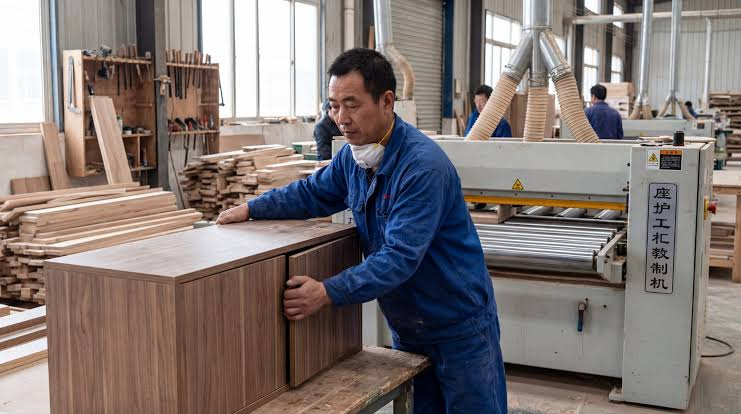
2. Why is OEM/ODM capability important for B2B buyers?
Because many buyers need custom dimensions, finishes, packaging, private label details, or project-based modifications that standard catalog products cannot fully meet.
3. Is China a good source for living room furniture?
Yes, especially for panel furniture, flat-pack furniture, storage cabinets, TV stands, coffee tables, and coordinated living room collections. The key is selecting a manufacturer with the right specialization and process control.
4. What is the advantage of flat-pack living room furniture for importers?
Flat-pack furniture usually improves container efficiency, reduces shipping volume, and makes it easier to support wholesale, e-commerce, and project distribution models.
5. How can buyers reduce risk before placing a bulk order?
Request samples, review drawings carefully, confirm materials and packaging, evaluate QC procedures, and test the supplier’s communication quality before mass production.
6. What matters most for hotel and apartment furniture projects?
Consistency, dimension accuracy, finish coordination, installation-friendly packaging, schedule control, and the ability to support repeat project requirements.
For your reference:
When buyers evaluate engineered wood or panel-based furniture for the U.S. market, it is useful to review the EPA’s formaldehyde standards for composite wood products:
U.S. EPA – Formaldehyde Emission Standards for Composite Wood Products: https://www.epa.gov/formaldehyde/formaldehyde-emission-standards-composite-wood-products US EPA
For buyers shipping products into California, CARB’s composite wood products program is another important compliance reference:
California Air Resources Board – Composite Wood Products Program: https://ww2.arb.ca.gov/our-work/programs/composite-wood-products-program 加州空气资源委员会
If sustainable sourcing and wood traceability matter to your purchasing policy, FSC provides a useful reference for furniture-related certified sourcing:
Forest Stewardship Council – Furniture: https://fsc.org/en/businesses/furniture 森林管理委员会
For international shipping teams using wood packaging material, ISPM 15 remains a key logistics reference:
International Plant Protection Convention – Regulation of Wood Packaging Material in International Trade: https://www.ippc.int/en/publications/640/ 国际植物保护公约
For performance-oriented furniture buyers, BIFMA offers an overview of furniture safety and performance standards:
BIFMA – Standards Overview: https://www.bifma.org/page/standardsoverview BIFMA
If your team needs the regulatory text behind U.S. composite wood requirements, the eCFR reference is also useful:
Electronic Code of Federal Regulations – 40 CFR Part 770: https://www.ecfr.gov/current/title-40/chapter-I/subchapter-R/part-770 电子联邦法规