Lift-top designs are one of the highest-converting SKUs in the “coffee table with storage” category. They are especially popular for small apartments, multi-unit housing, and hospitality suites. But for B2B buyers, lift-top mechanisms can also become a high-risk item. A tiny tolerance issue can lead to problems. A weak gas strut might cause issues. Even one packaging mistake can translate into mass returns, bad reviews, and project delays.
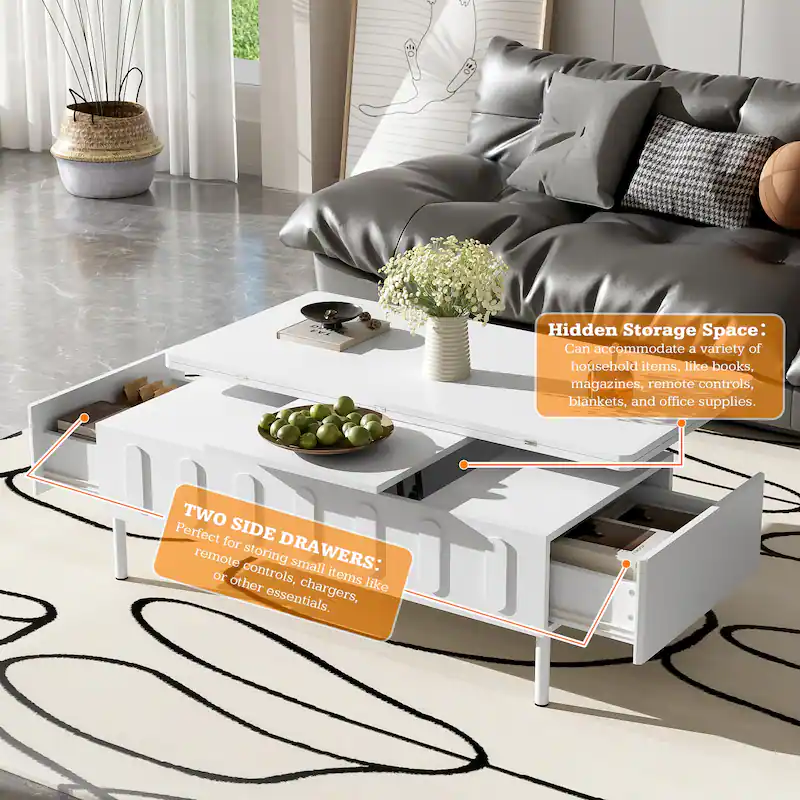
This article is written for industry buyers. These include importers, wholesalers, retail brands, project contractors, hotel/apartment procurement teams, and e-commerce operators. They source panel furniture through OEM/ODM. They want a clear quality risk-control plan before placing a bulk order.
If you sell or source products like a coffee table ottoman with storage, this testing logic applies. It also applies to a large coffee table with storage. It also applies to a circular coffee table with storage or a farmhouse coffee table with storage. Additionally, the logic extends to a solid wood coffee table with storage look-alike (panel build).
Table of Contents
- Why Lift-Top Coffee Tables Fail in B2B Programs
- H2: Common Failures (Wobble, Drop, Pinch Points, Gas Strut Fatigue)
- 12 Failure Modes Buyers Should Test
- H2: 10-Cycle vs 20,000-Cycle — What’s Realistic by Channel
- H2: Safety Checklist for Apartments/Hospitality
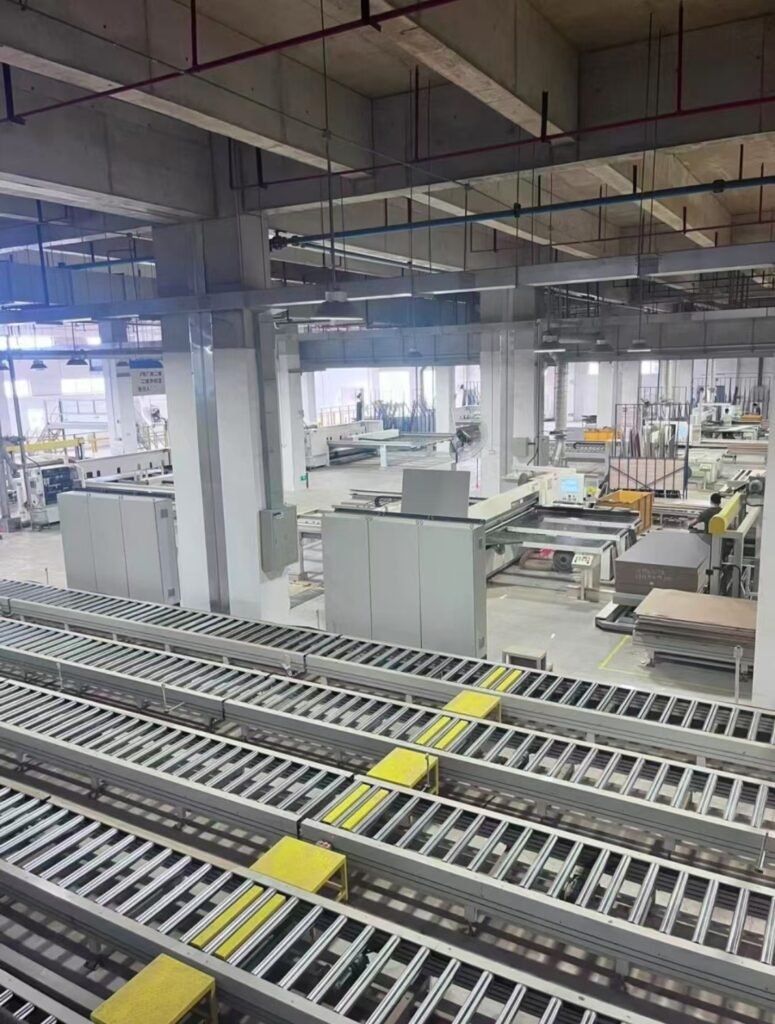
- H2: Factory QC Checkpoints You Should Require
- Packaging Notes (Export + E-Commerce)
- Buyer RFQ Test Requirements Template
- External Resources (Authority Links)
- FAQ
Why Lift-Top Coffee Tables Fail in B2B Programs

A lift-top living room coffee table combines moving hardware, load-bearing surfaces, and RTA joints. That means more variables than a minimal coffee table or a simple small wood coffee table. In B2B programs, failures usually come from four root causes:
- Tolerance stack-up: drilling alignment, bracket positioning, panel thickness variation
- Hardware fatigue: gas struts, hinges, pivot arms, screws loosening under repeated use
- User behavior: leaning, kids climbing, opening from one side, slamming shut
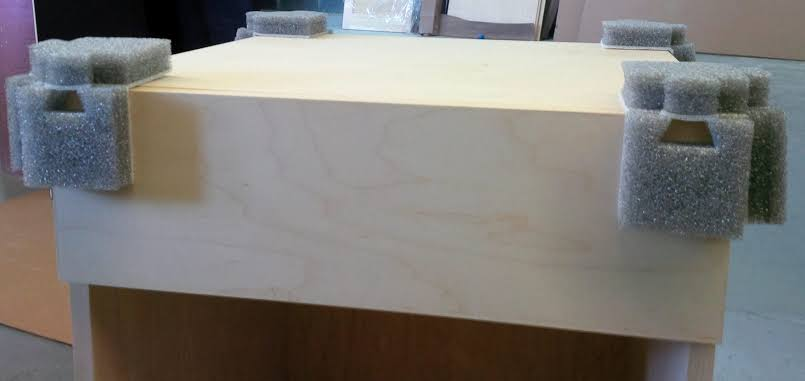
- Packaging/transport damage: corner crush leads to misalignment, which causes wobble and sticking
For e-commerce channels (e.g., “coffee table Walmart”, “coffee table Wayfair”, “Target coffee tables”, “Amazon coffee tables”), the cost of a single design weakness compounds quickly through returns and replacements. For projects, the risk is schedule disruption: a hotel room can’t be handed over if furniture isn’t safe and consistent.
Common Failures (Wobble, Drop, Pinch Points, Gas Strut Fatigue)
Below are the most frequent complaints we see in factory-side QA and buyer feedback loops:
- Wobble after assembly: RTA joint design + uneven floors + tolerance issues
- Top drops suddenly: weak struts, poor damping, or bracket slip
- Pinch points: unsafe gaps that can injure fingers, especially in hospitality/apartments
- Gas strut fatigue: lift becomes weak, noisy, or uneven after repeated use
- Misalignment: top doesn’t sit flush, rubs the frame, or closes unevenly
These are predictable and testable before mass production—if you standardize what to test and what to accept.
12 Failure Modes Buyers Should Test Before Mass Order
Use this as a buyer checklist for any lift-top coffee table with storage program. This applies to designs similar to the IKEA coffee table with storage style. It also includes the “wooden coffee table with storage” look using melamine/veneer panels.
1) RTA Joint Loosening (Wobble Growth Over Time)
What happens: table feels solid on day 1, but wobbles by week 3.
Test: assemble, then re-tighten check after cycling; measure wobble growth.
Buyer requirement: specify joint type and torque guidance.
2) Uneven Lift (Left/Right Height Mismatch)
What happens: top lifts skewed, binds, or closes unevenly.
Test: lift from center and from one corner; record left/right height difference.
Buyer requirement: max allowed mismatch (e.g., small mm-level tolerance).
3) Sudden Drop / No Damping
What happens: top falls quickly; safety risk and customer complaint.
Test: controlled release test; confirm damping.
Buyer requirement: “no free-fall” standard.
4) Gas Strut Fatigue & Weak Lift Force
What happens: lift becomes heavy, doesn’t stay up, or one side fails.
Test: cycle test + hold test (top must stay open for set time).
Buyer requirement: strut brand/spec tier options.
5) Pinch Points (Finger Trap Gaps)
What happens: gap closes on fingers. High-risk for apartments/hospitality.
Test: safety gap check throughout motion path.
Buyer requirement: define “safe gap” expectations and add covers where needed.
6) Bracket Slip / Screw Pull-Out
What happens: hinge arm shifts; top becomes unstable.
Test: apply load at open position; check for movement or screw pull-out.
Buyer requirement: pre-drill standard + correct fastener spec.
7) Surface Damage at Contact Points (Chipping/Scratching)
What happens: lift arms rub edges; finish chips.
Test: cycle with load + inspect contact points.
Buyer requirement: add buffers, pads, or revise clearance.
8) Top Not Flush When Closed (Gaps/Uneven Reveal)
What happens: closed position looks cheap; complaints for “modern style coffee tables”.
Test: measure gap consistency on all sides.
Buyer requirement: define cosmetic tolerance.
9) Excess Noise (Squeak/Metal Click)
What happens: noisy mechanism in hotel rooms is unacceptable.
Test: cycle in quiet environment; note squeak and clicking.
Buyer requirement: lubrication plan or bushings.
10) Load Capacity Failure (Open-Position Weakness)
What happens: people lean on lifted top; joints stress.
Test: open-position load test (static + short duration).
Buyer requirement: realistic load target per channel.
11) Drawer/Storage Misfit (If Included)
What happens: drawer rubs; storage lid misaligns in “coffee table storage” designs.
Test: check drawer slides alignment; open/close with load.
Buyer requirement: standardized drill jigs + slide tier.
12) Packaging-Induced Misalignment (Corner Crush → Mechanism Binding)
What happens: shipping damage causes the mechanism to bind, even if design is fine.
Test: packaging drop/impact simulation + reassembly.
Buyer requirement: packaging level must match channel risk.
10-Cycle vs 20,000-Cycle — What’s Realistic for Each Channel
Many suppliers will claim “tested” but won’t define the test. As a buyer, you need channel-based realism:
Retail Showroom / Sampling
- 10–50 cycles are useful only to catch assembly errors or obvious binding.
- Not enough for fatigue or looseness issues.
E-Commerce (High Return Sensitivity)
- Aim for a mid-to-high cycle test because customer behavior is unpredictable.
- Practical buyer expectation: thousands of cycles (set a program standard).
Apartment / Multi-Unit Housing
- Furniture will be used daily; stability matters more than novelty.
- Require higher cycle + open-position load tests because users lean and slam.
Hotel / Hospitality
- The harshest environment for noise, wobble, and safety risks.
- Require higher cycle + strict cosmetic and noise criteria.
Procurement reality: you don’t need one “perfect” number for all buyers. What you need is a documented test method aligned with your channel and warranty exposure.
Safety Checklist for Apartments/Hospitality
If your programs serve apartments, student housing, or hospitality suites, safety is not optional. Use this checklist:
Motion Safety
- No uncontrolled drop
- No sharp pinch points along the lifting path
- Stable open position (does not collapse under normal use)
Stability & Anti-Tip Behavior
- Confirm table remains stable when top is open and loaded
- Confirm base geometry resists tipping when pulled from one side
Edge & Corner Protection
- Rounded or reinforced corners reduce injuries and shipping damage
- For small living room programs, compact sizes should not compromise base stability
User Instructions
- Clear “how to lift” guidance reduces misuse
- Include warnings for leaning/sitting if required by your channel policies
Factory QC Checkpoints You Should Require
For OEM/ODM buyers, the fastest way to reduce claims is to force QC upstream—before final packing.
1) Incoming Hardware Inspection
- Strut force consistency and visual defect check
- Bracket alignment and coating quality
- Screw/fastener spec verification
2) CNC Drilling Alignment Verification
- Hole position checks with gauges
- Test assembly on first-off samples each batch
3) Edge Banding & Panel Quality
- Adhesion and seam checks
- Corner chipping inspection
- Surface defect inspection under consistent lighting
4) Mechanism Assembly Check
- Verify arm symmetry and clearance
- Verify damping / no free-fall
- Noise check
5) Pre-Pack Drop-Risk Review
- Protect high-risk corners
- Ensure internal cushioning prevents panel-to-panel rubbing
- Confirm accessory bag count and labeling
Packaging Notes
Packaging decides whether your coffee table arrives as “premium” or “problem.”
- For glossy or dark finishes, use anti-scratch film. These finishes are popular in modern farmhouse coffee tables and premium looks. Apply interleaf and corner protection as well.
- For large coffee table with storage cartons, control carton strength and internal bracing to prevent corner crush.
- For parcel-heavy channels, prioritize packaging that survives multi-drop handling.
Buyer RFQ Test Requirements
When you request quotations, add this line to your RFQ/PO:
“Supplier must provide lift-top mechanism testing records. These records should include the cycle test method. They must also cover open-position stability/load test and damping/no free-fall verification. Additionally, they should include a pinch point review and wobble growth checks after cycling. Lastly, packaging impact simulation with reassembly validation is required.”
This single paragraph prevents most “we didn’t agree on testing” disputes.
CTA: Request Our Lift-Top Test Checklist
Want the exact checklist we use for OEM/ODM lift-top programs (including acceptance criteria by channel and packaging level options)?
Request our lift-top test checklist for your target market and price tier.
External Resources
Use these official resources when aligning compliance, testing language, and buyer documentation:
- ASTM (materials & performance test standards reference)
https://www.astm.org/ - ISO 9001 (quality management baseline)
https://www.iso.org/iso-9001-quality-management.html - BIFMA (commercial furniture performance/safety references widely used in projects)
https://www.bifma.org/ - ISTA (packaging testing and distribution simulation—common in e-commerce logistics)
https://ista.org/ - US EPA Formaldehyde (TSCA Title VI composite wood products guidance)
https://www.epa.gov/formaldehyde
6) European Panel Federation (wood-based panel industry context)
https://europanels.org/
FAQ
Q1: What is the most common lift-top coffee table issue in bulk orders?
Wobble after assembly is common, as is misalignment after shipping. Joint design, drilling tolerance, and packaging corner crush often cause these issues.
Q2: How many cycles should a lift-top coffee table be tested for?
It depends on the channel. Basic sampling cycles only catch early defects. E-commerce and hospitality programs should require higher cycle and stability tests. These tests should be aligned with warranty risk.
Q3: What safety checks matter most for apartments and hotels?
No sudden drop, minimized pinch points, stable open position, and strong base stability. Clear user instructions also reduce misuse and claims.
Q4: How do I reduce returns for coffee table with storage sold online?
Standardize RTA instructions, label parts by step, prevent shipping damage with stronger packaging, and require mechanism stability/damping verification.
Q5: What factory QC checkpoints should buyers require?
Incoming hardware inspection, drilling alignment verification, edge banding/surface checks, mechanism assembly clearance checks, and pre-pack packaging verification.
Q6: Can lift-top designs be produced as flat-pack (RTA)?
Yes. Most lift-top programs can be engineered for RTA. Success depends on joint design. It also relies on labeling and packaging protection for the mechanism and corners.